

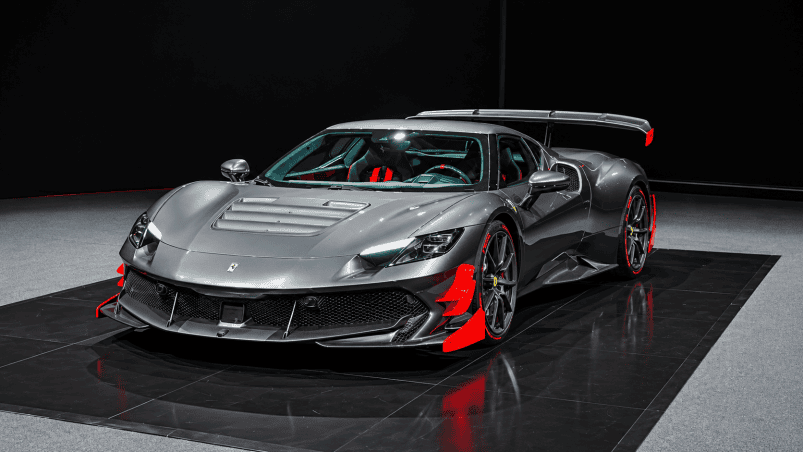
Ferrari is taking its 296 platform in a radically different direction with the new 296 Challenge Stradale, a track-focused derivative that abandons hybrid assistance in favor of reduced weight, increased aerodynamic performance, and a more uncompromising driving experience. Explored in detail by Top Gear, the latest addition to Ferrari’s mid-engined lineup draws heavily from the 296 Challenge Evo race car, bringing competition-inspired engineering to a road-legal package.
Unlike the 296 Speciale, which represents a more performance-oriented evolution of the standard GTB, the Challenge Stradale places greater emphasis on circuit capability and driver involvement.
Aggressive Aerodynamics Inspired by Racing
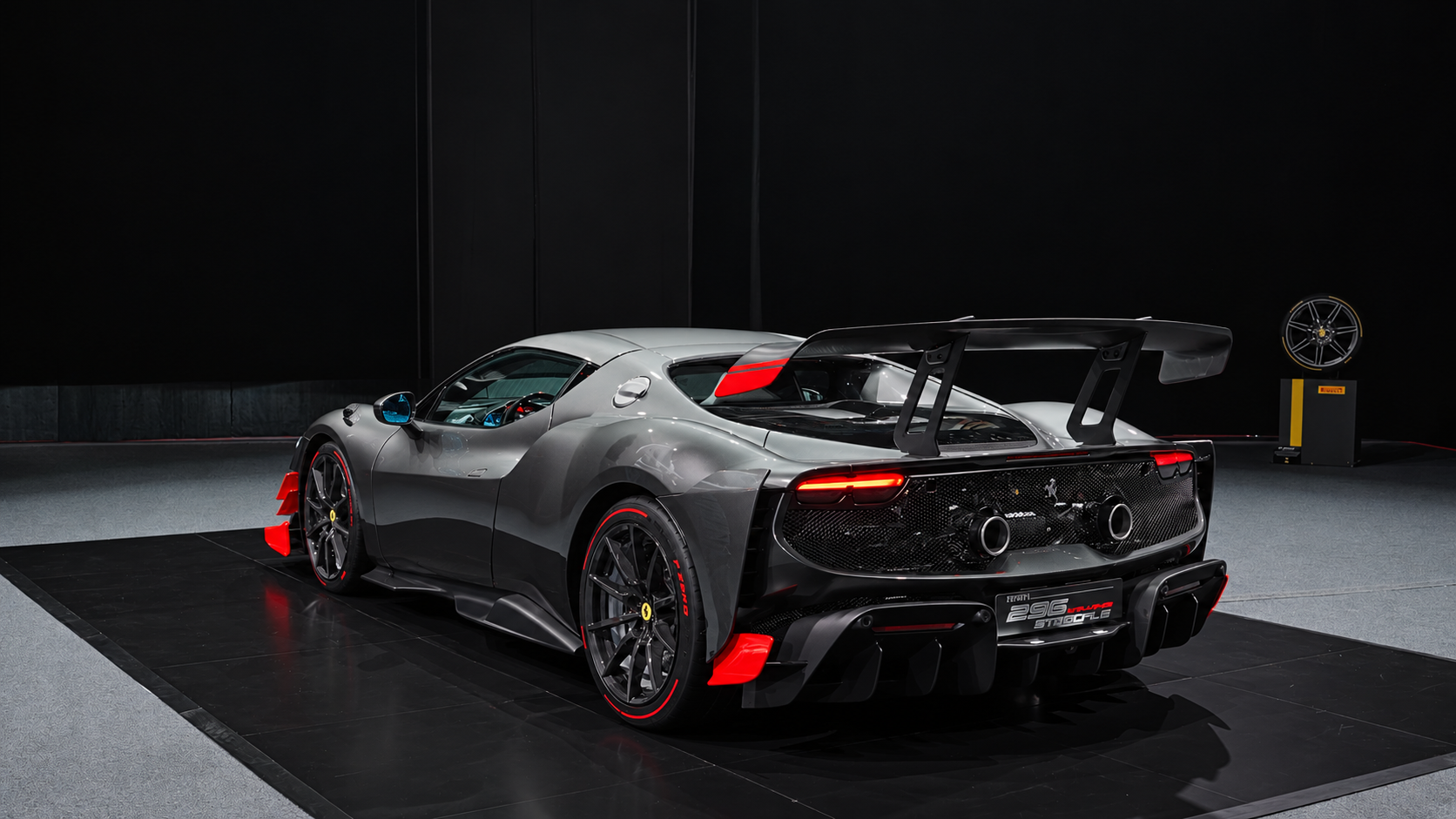
The most striking transformation is its aerodynamic package. Ferrari has extensively reworked the bodywork with additional vents, flicks, ducts, and a prominent rear wing, prioritizing downforce over the elegant proportions of the standard 296 GTB.
The revised front-end channels hot air from the radiators through openings in the bonnet while retaining a reduced but usable luggage compartment. Additional outlets ahead of the front wheels help manage airflow along the body, while an aggressive rear diffuser and extensive ventilation improve aerodynamic efficiency.
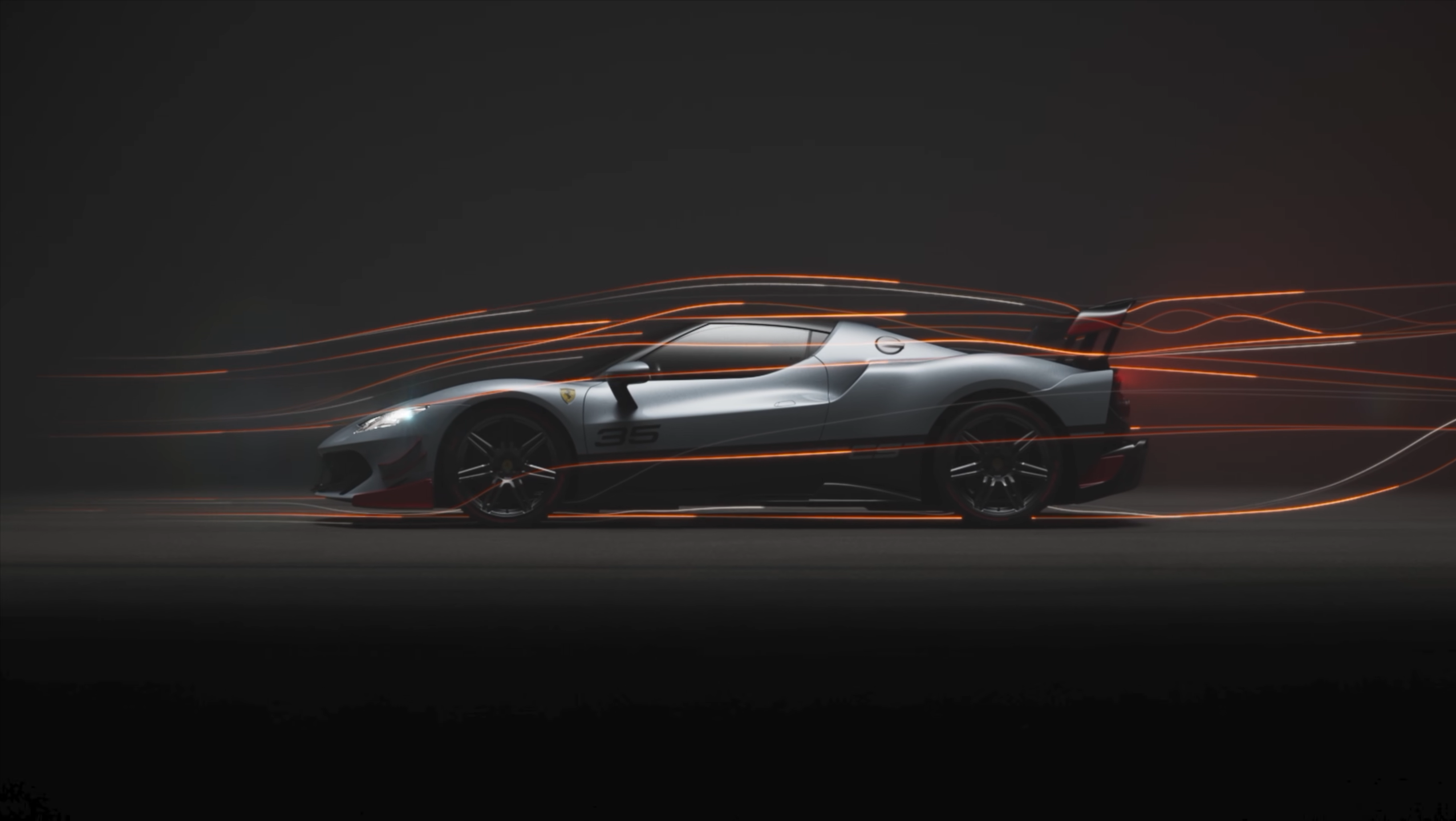
The results are substantial. Ferrari claims approximately 671 kg of downforce at 155 mph, with the rear wing alone contributing around 250 kg. Overall downforce is reportedly 72 percent greater than the standard 296 GTB.
Hybrid-Free V6 Performance
Under the engine cover sits the familiar 3.0-liter, twin-turbocharged 120-degree V6, producing 670 horsepower. Although this represents a reduction of approximately 200 hp compared with the hybrid-assisted 296 Speciale, removing the electric motors and battery system saves considerable weight.
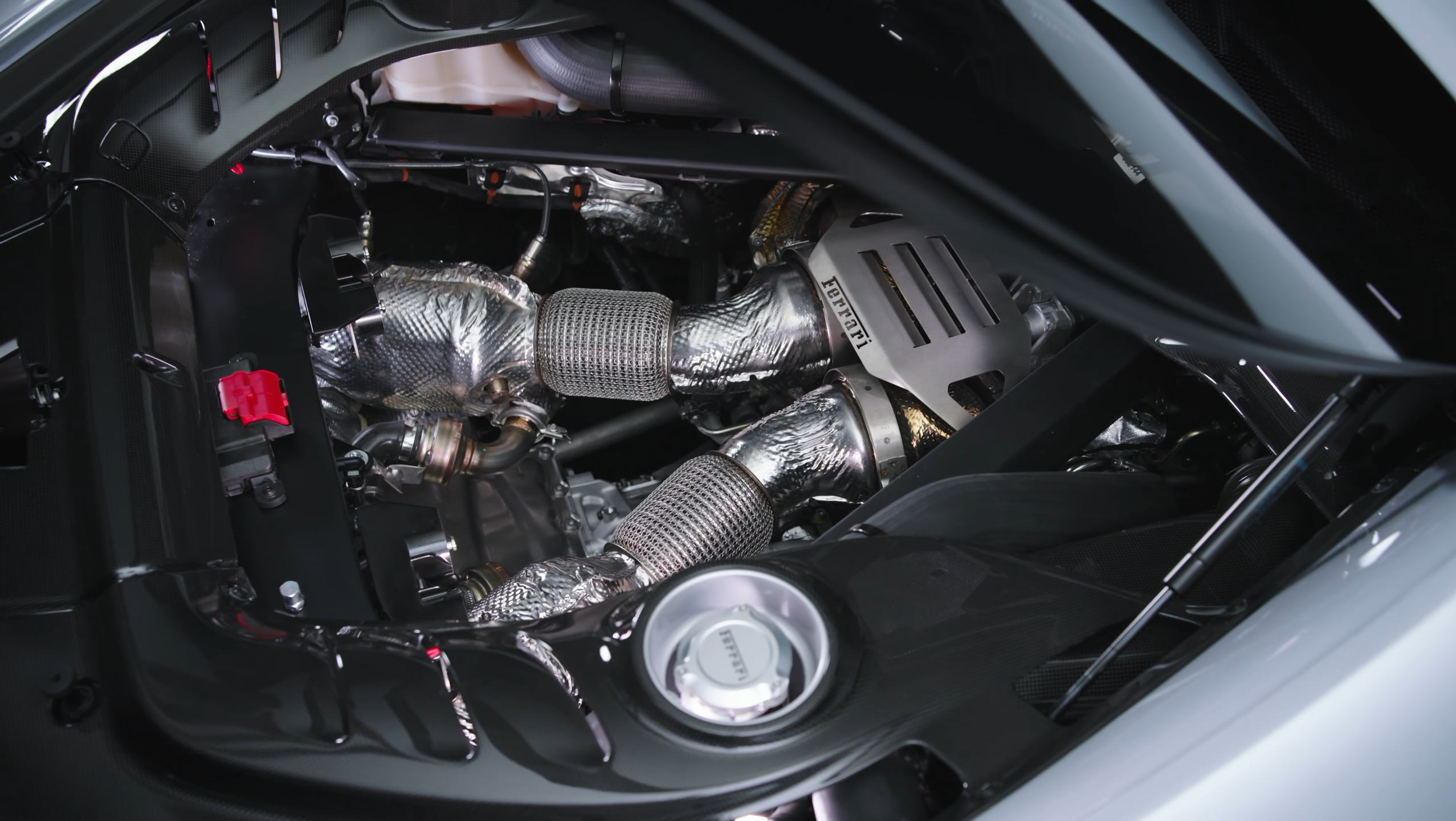
The Challenge Stradale is approximately 140 kg lighter than the 296 GTB and around 70–80 kg lighter than the Speciale. Its revised torque delivery and racing-derived turbochargers help preserve performance without electrification. Power is transmitted through Ferrari’s eight-speed dual-clutch transmission.
Weight Reduction and Chassis Improvements
Chassis modifications further reinforce its track-focused intentions. Stiffer springs, revised adaptive dampers, optional carbon-fiber wheels, and carbon-ceramic brakes improve responsiveness and handling. The optional carbon-fiber wheels alone save approximately 2 kg per corner.
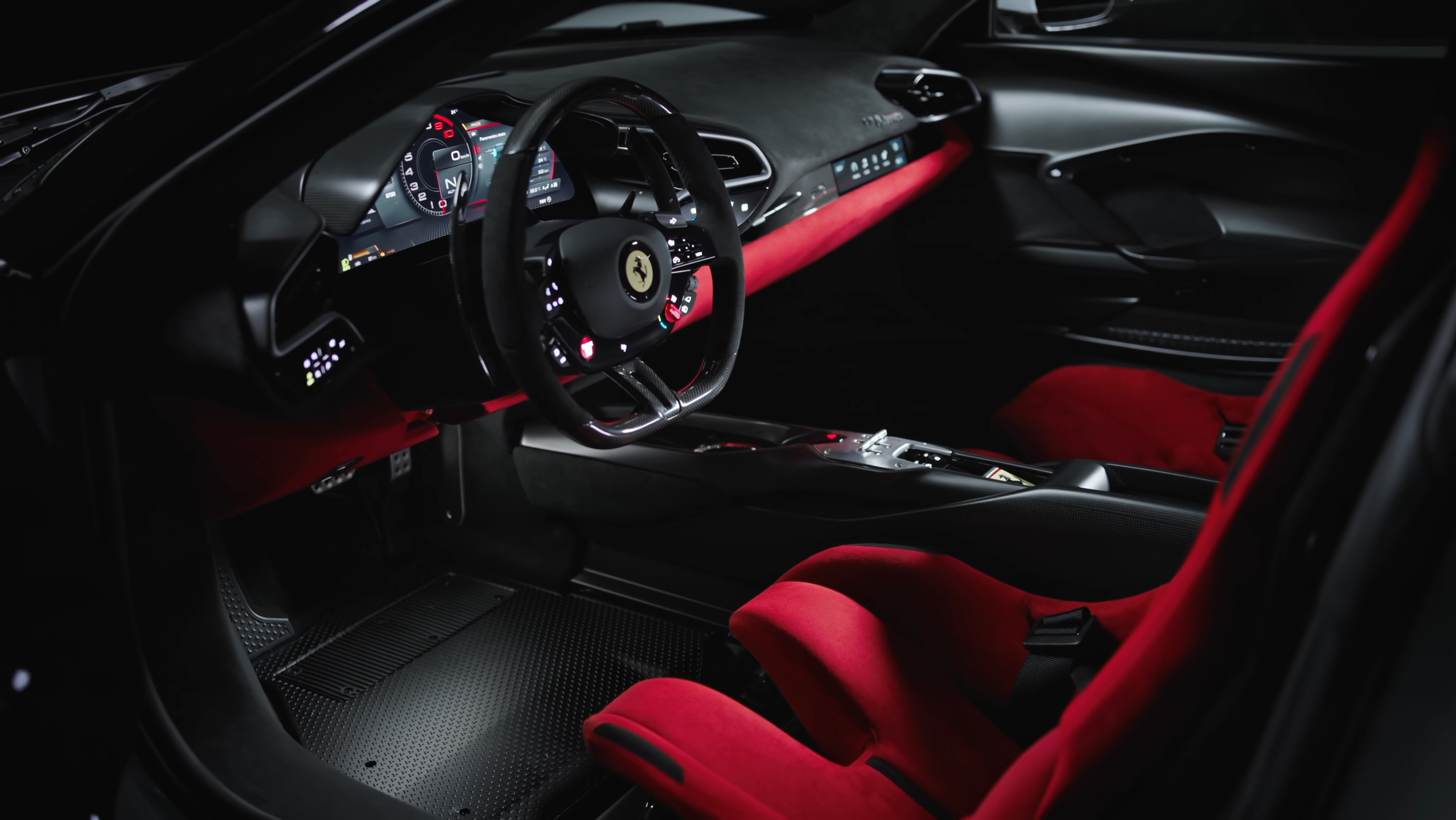
Inside, extensive Alcantara, additional carbon-fiber trim, harness provisions, and a more stripped-back presentation establish a distinctly competition-inspired atmosphere. Despite its racing intentions, the car retains road-going conveniences and driver-assistance technology.
A Different Philosophy Within Ferrari’s Lineup
Interestingly, Ferrari has positioned the Challenge Stradale alongside the 296 Speciale rather than as a replacement. While the Speciale represents the ultimate evolution of the road-going 296, the Challenge Stradale prioritizes track capability and driver involvement.
With production unrestricted and an anticipated starting price of approximately $307,000 to $320,000, the 296 Challenge Stradale represents an intriguing return to Ferrari’s traditional lightweight, driver-focused special editions. It may sacrifice hybrid-assisted power and some of the standard car’s visual elegance, but its racing-derived engineering makes it one of the most distinctive interpretations of the 296 platform.
Source: Top Gear