
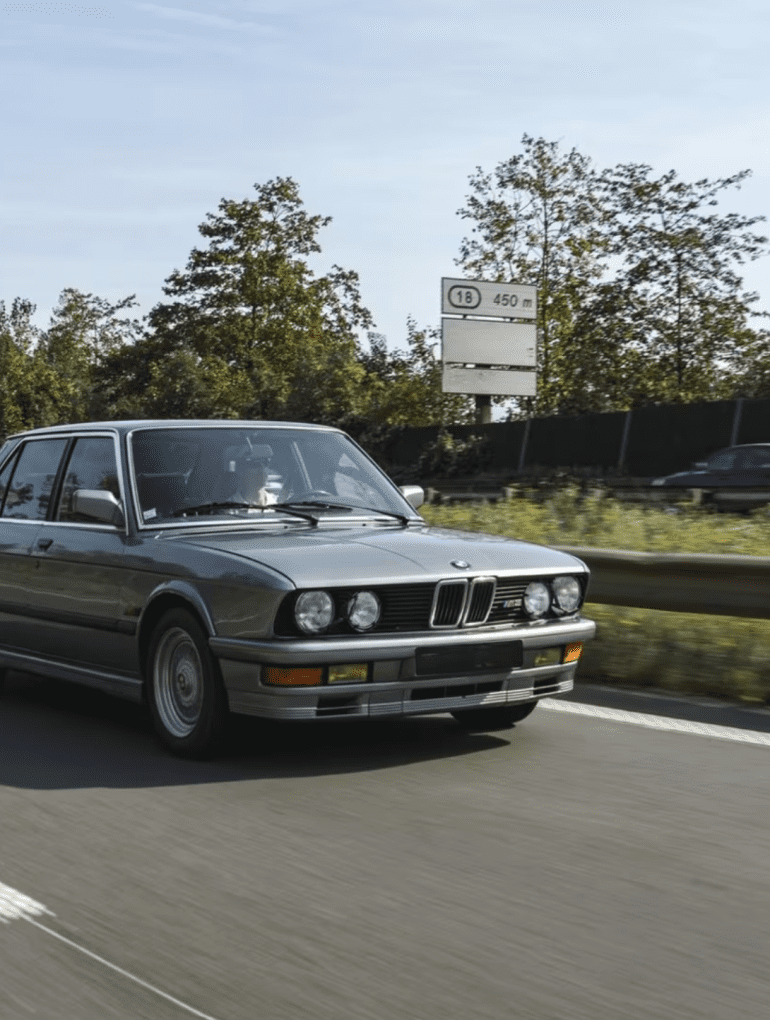

Amsterdam, February 1985. BMW unveiled the M5 at the Motor Show, the first production car bearing the M5 badge. The name signified a revolutionary concept: a luxurious four-door sedan powered by a high-performance engine. Based on the E28 5 Series platform, the M5 combined the practicality of a family car with the performance of a genuine sports machine. The 3.5-liter M88/S38 inline six, derived from the M1 supercar engine, produced 282 horsepower in European specification, making the M5 the world’s fastest production sedan at introduction. This was BMW’s statement that performance and everyday usability weren’t mutually exclusive, that serious power could coexist with four-door practicality. Production began in October 1984, with customer deliveries commencing in 1985. The M5 succeeded immediately, establishing a template for high-performance sedans that persists four decades later. Approximately 2,241 examples were built through June 1988, establishing the rarity and desirability that defines the model today.
Background and Origins
The E28 5 Series debuted in 1981 as BMW’s executive sedan, replacing the earlier E12 generation. The platform was conventional but capable, providing an excellent foundation for performance variants. In 1980, BMW introduced the M535i, a precursor combining the 528i platform with a 218 horsepower engine. The M535i proved popular among customers wanting sedan practicality with genuine performance, but BMW recognized opportunities for something more extreme.
Development of the M5 began in 1983 under BMW Motorsport. The brief was ambitious: create the ultimate high-performance sedan using the M1 supercar’s engine. The M88/3 inline six from the M1 was substantially modified, producing 282 horsepower while maintaining reliability suitable for daily driving. BMW wanted to prove that a luxury four-door sedan could deliver supercar performance without compromising comfort or practicality.
The prototype debuted at Amsterdam in February 1985, with production beginning in October 1984. However, customer deliveries didn’t commence until early 1985, making the M5 a late-1985 model year for most markets. The reception was overwhelming, with waiting lists extending months into the future. Enthusiasts recognized immediately that the M5 established an entirely new class of vehicle: the performance sedan.
Design and Engineering
The M5 was based on the standard E28 5 Series steel monocoque with a 2,625mm wheelbase. The structure was unchanged from regular 5 Series models, though BMW reinforced critical areas to handle the increased power and improved suspension geometry. The platform provided excellent rigidity while maintaining the comfortable proportions that defined executive sedans.
Front suspension used MacPherson struts with lower A-arms, coil springs, and telescopic dampers. The geometry was optimized for sporting driving while maintaining acceptable ride quality for daily use. The rear employed a semi-trailing arm arrangement with coil springs and dampers. Anti-roll bars front and rear controlled body roll effectively during spirited driving. The suspension was substantially firmer than standard 5 Series models, creating a noticeably more responsive platform.
Braking was by ventilated discs measuring 300mm front and 260mm rear with dual-piston calipers. ABS became standard during production, providing progressive braking control on slippery surfaces. Power steering was standard, with a quick ratio providing responsive feedback without excessive effort.
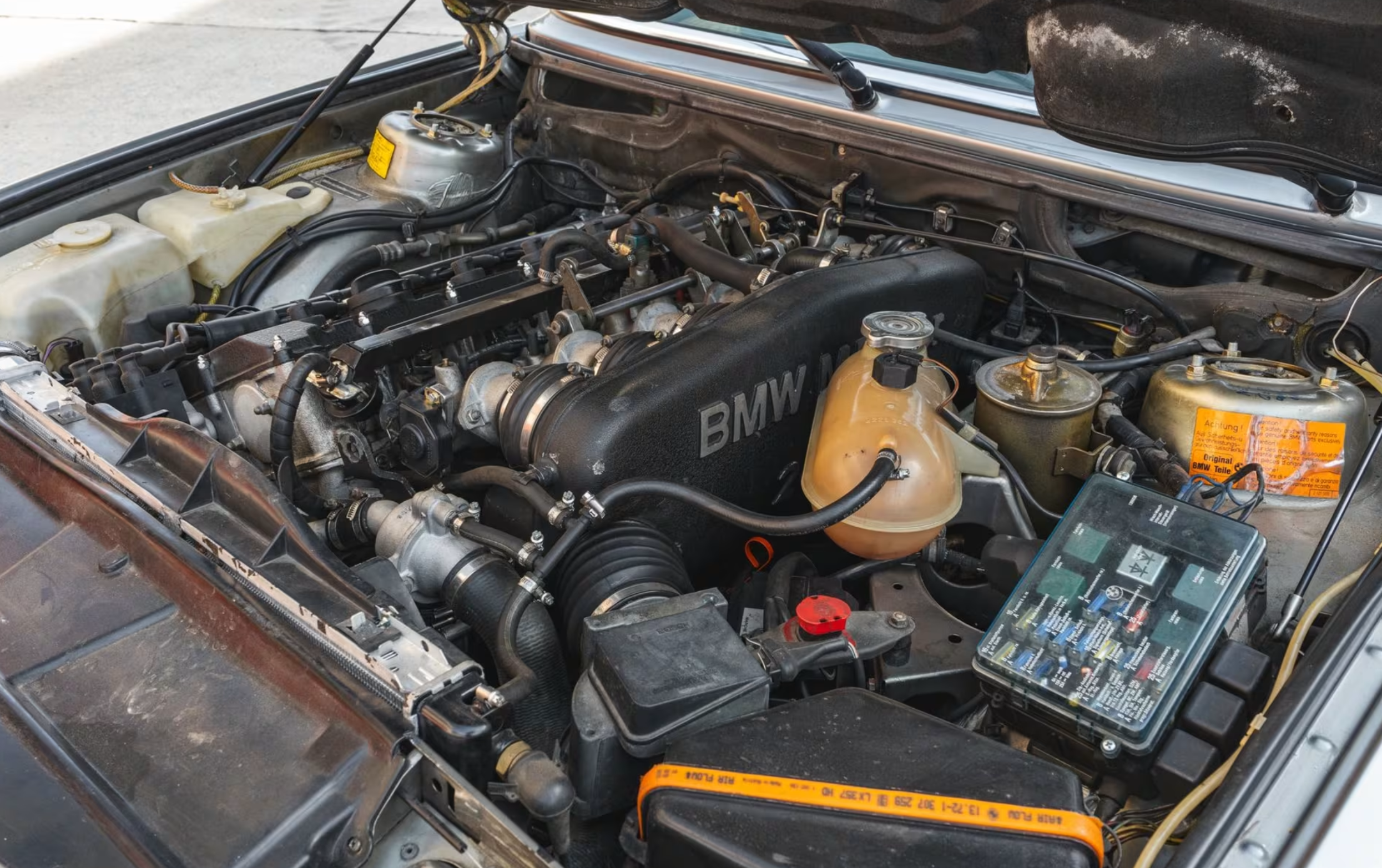
The engine was BMW’s M88/3 inline six, a naturally aspirated masterpiece displacing 3,453cc with an 93.4mm bore and 84mm stroke. The all-aluminum engine featured dual overhead camshafts per bank with four valves per cylinder. The S38 variant used in later cars featured revised internals and improved breathing. A modified M1 fuel injection system controlled by a sophisticated Bosch engine management computer optimized performance and reliability.
In European specification, output was 282 horsepower at 6,500 rpm and 251 lb-ft of torque at 4,500 rpm. North American versions equipped with catalytic converters produced 256 horsepower, a meaningful power loss reflecting emissions regulations. The power delivery was linear and progressive, encouraging drivers to explore the 6,500 rpm redline. The engine’s mechanical precision and reliability meant the M5 could be driven hard daily without concern.
Transmission was a Getrag 280/5 five-speed manual with close ratios and a 3.45:1 final drive. The shift action was short and mechanical, with satisfying engagement accompanying each gear change. A limited-slip differential transferred power to the rear wheels, providing adequate traction for the engine’s power without resorting to all-wheel drive.
Styling
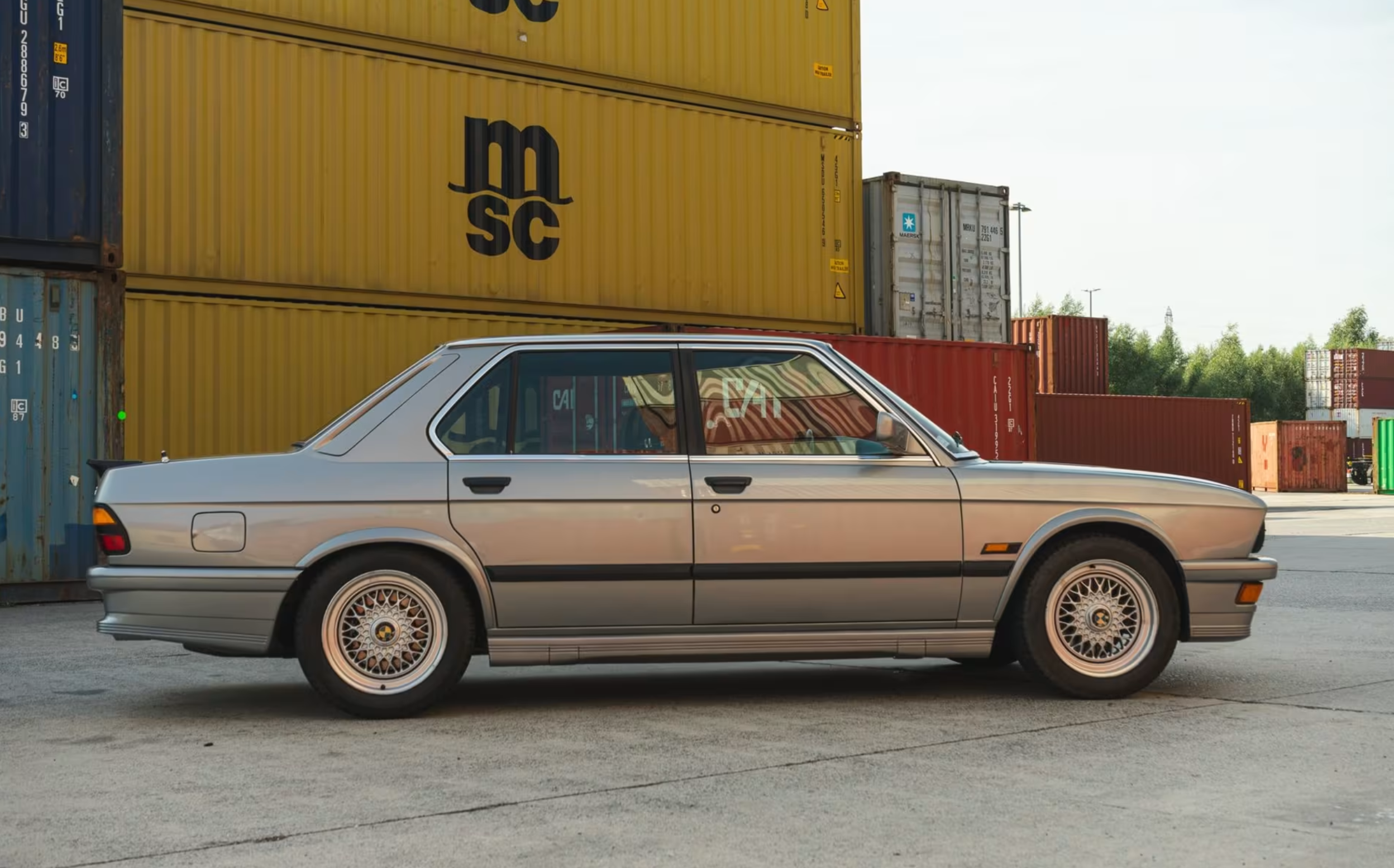
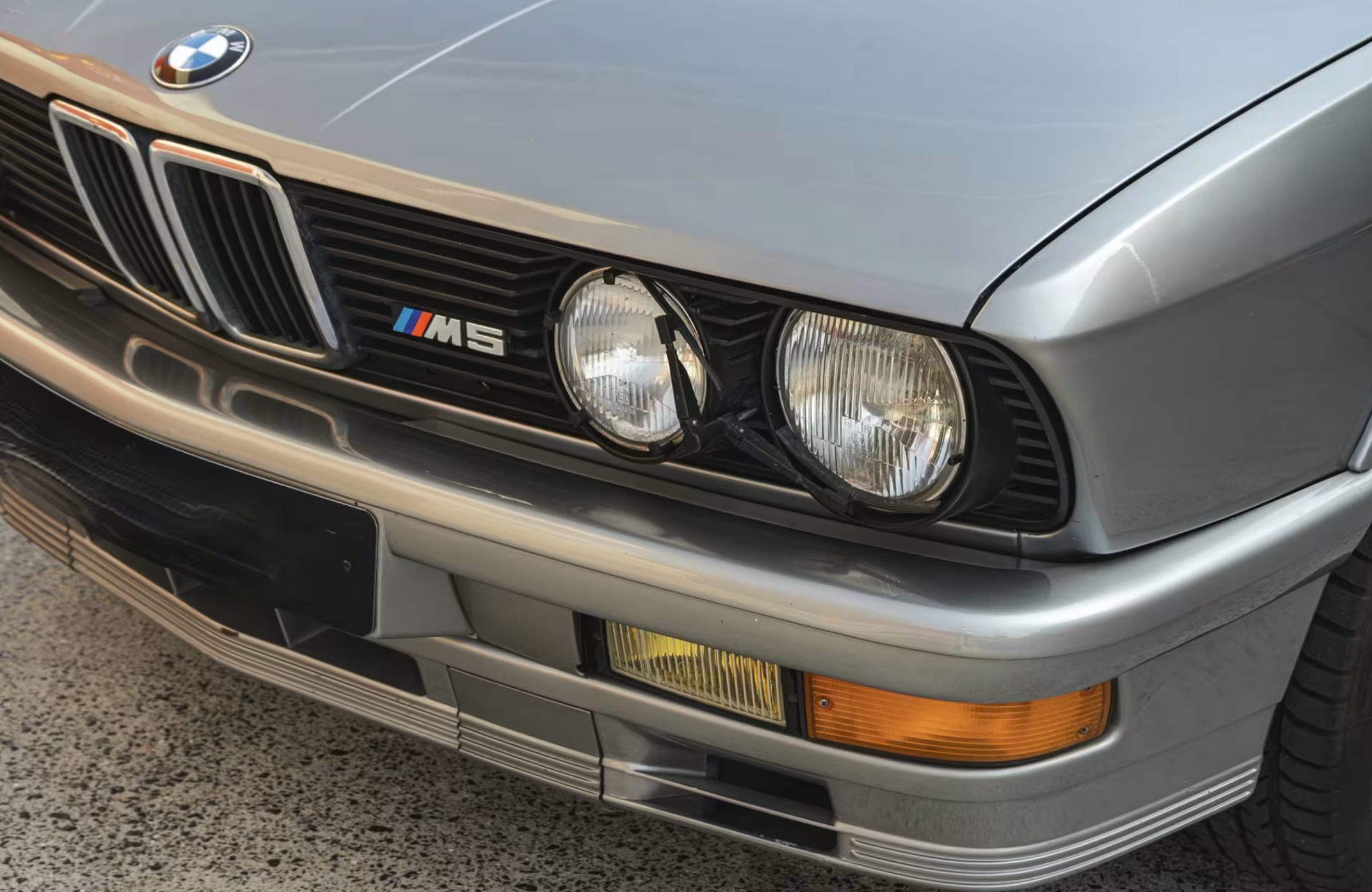
Externally, the M5 was subtly aggressive compared to standard 5 Series models. The front featured the same four-headlight design as other E28 variants, but a black grille adorned with a small M5 badge signaled performance intent. The hood was shared with lower-powered models, lacking distinctive cooling ducts or functional scoops. This understated approach was deliberate, maintaining the executive sedan’s refined proportions.
Side profile featured a pronounced forward lean suggesting aggression. Black trim around the windows and door handles replaced the chrome found on standard 5 Series, creating a purposeful appearance. The overall stance was lower and more planted than regular models, though distinguishing the M5 from 535i variants required careful observation.
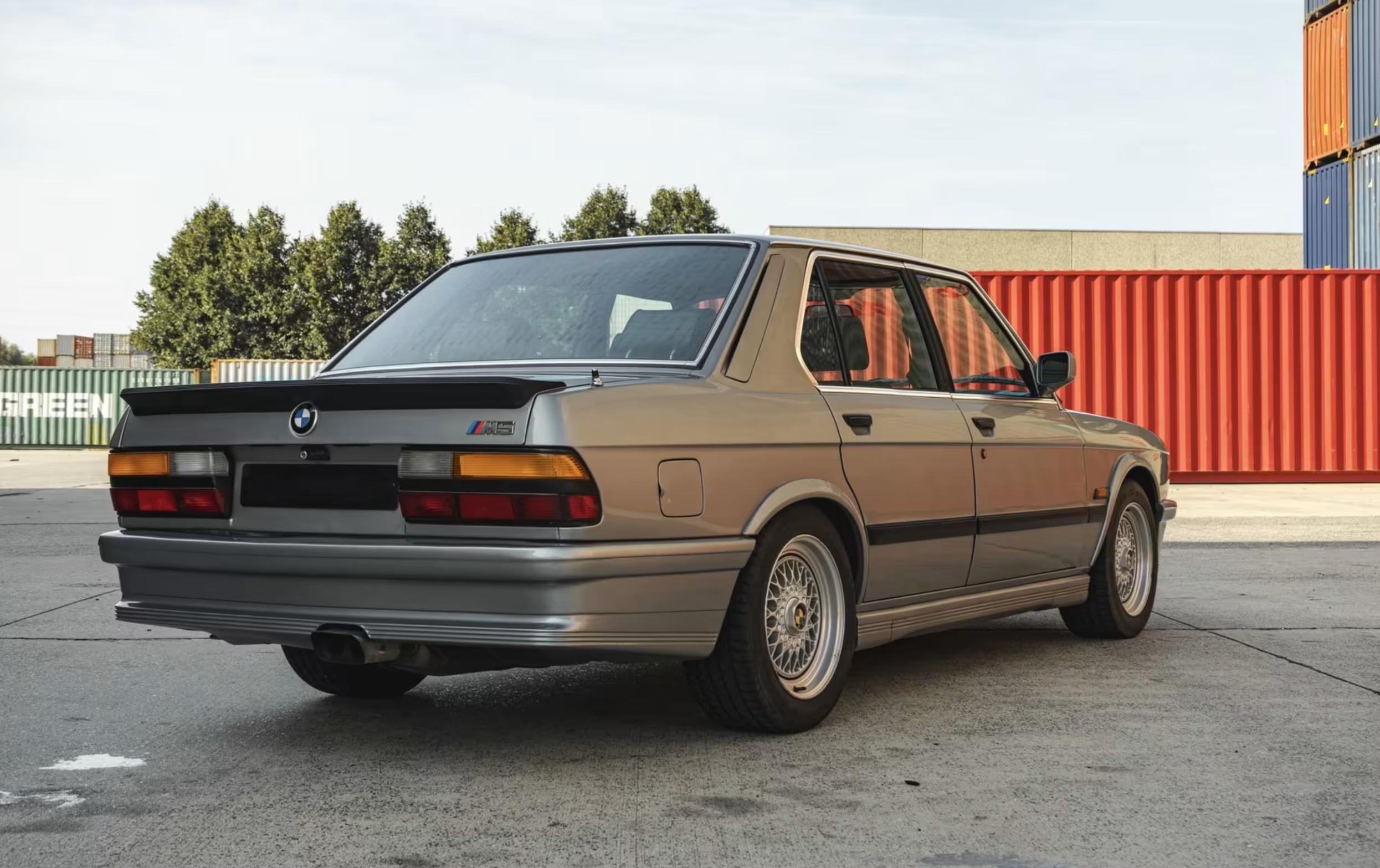
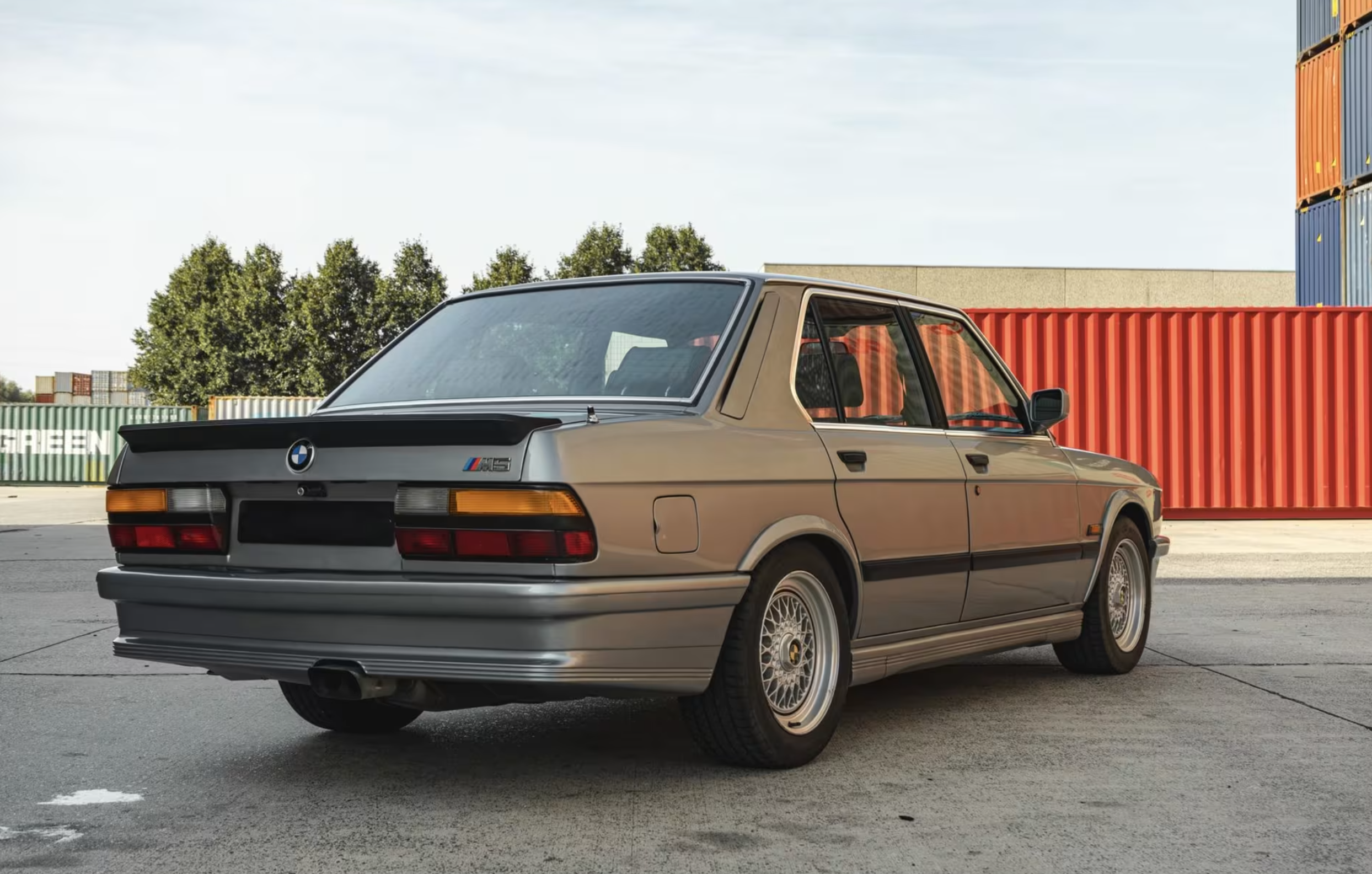
At the rear, an optional flat spoiler on the trunk lid provided modest aerodynamic refinement. The center-mounted dual exhaust outlet, inherited from the earlier M535i, provided distinctive visual and acoustic signature. Standard wheels were 15-inch BBS multi-spoke alloy units wearing 205/55 VR15 Michelin tires.
Interior
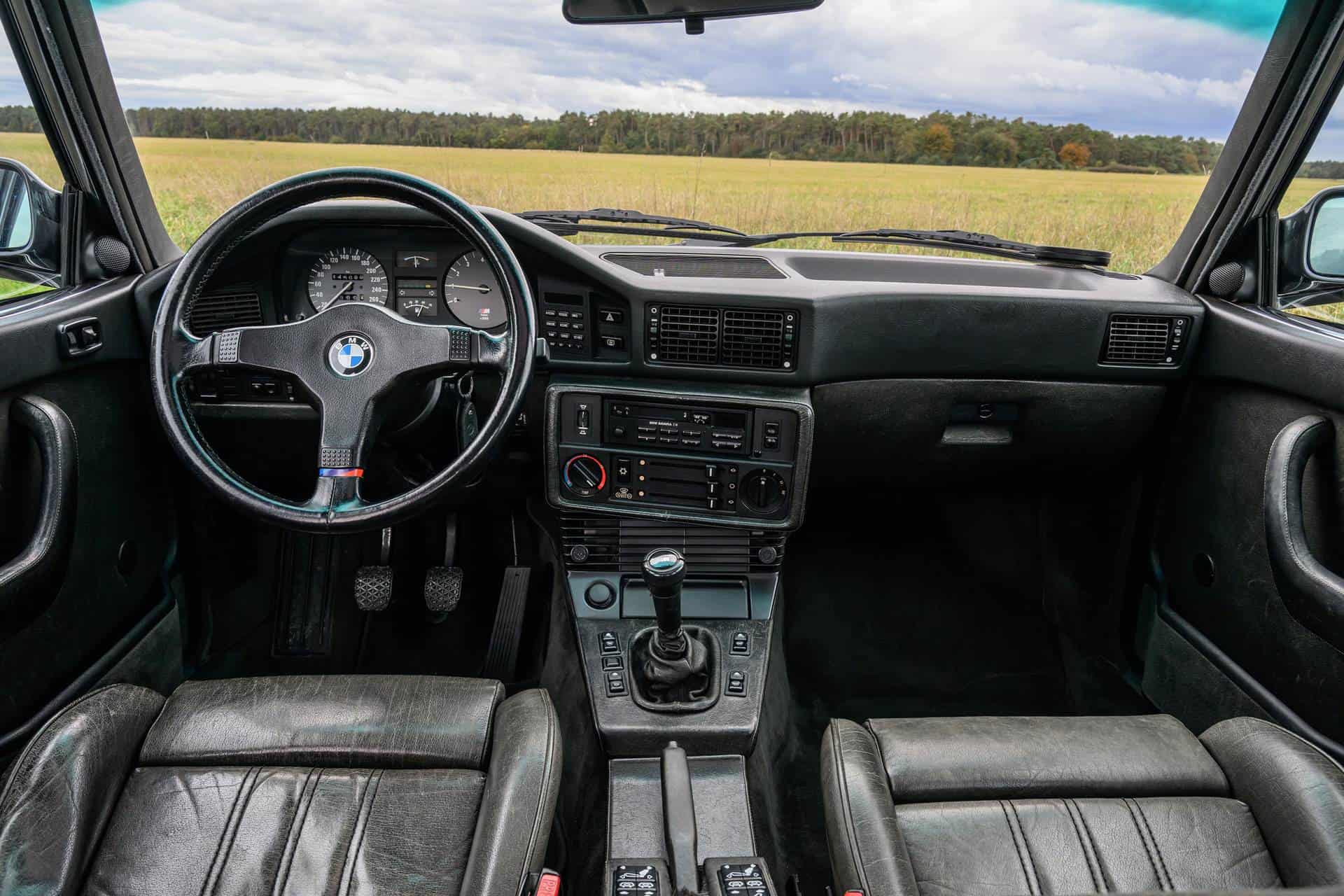
The cabin was trimmed in either cloth or leather upholstery, with the M-specific interior providing subtle but distinctive sporting character. Front seats were bucket-style designs with aggressive bolstering, providing excellent lateral support during spirited driving. The driving position was low and forward, with excellent visibility. Rear seats accommodated three adults comfortably, making the M5 genuinely practical for family use.
The dashboard featured a characteristic slanted center console angled toward the driver, housing audio and air conditioning controls. An on-board computer sat beside the tachometer, displaying fuel consumption and driving efficiency data. A short-throw gear lever with weighted knob sprouted from the transmission tunnel, while a sports steering wheel with M emblem enhanced the purposeful atmosphere.
Standard equipment included air conditioning, power windows, central locking, and power steering. The overall cabin balance combined sporting intent with genuine luxury, creating an atmosphere distinct from both raw sports cars and conventional luxury sedans.
Specifications
- Engine: M88/S38 inline six, 3,453cc (93.4mm x 84mm), DOHC per bank, four valves per cylinder
- Power: 282 bhp at 6,500 rpm (Euro), 256 bhp (North America)
- Torque: 251 lb-ft at 4,500 rpm
- Transmission: Getrag five-speed manual, 3.45:1 limited-slip differential
- Chassis: Steel monocoque, 2,625mm wheelbase
- Suspension: MacPherson struts (front), semi-trailing arms (rear)
- Brakes: Vented discs 300mm (front), 260mm (rear), ABS
- Wheels: 15-inch BBS multi-spoke alloy, Michelin 205/55 VR15
- Weight: 1,430 kg
- Performance: 152 mph top speed, 0-60 mph in 6.3 seconds
Production and Legacy
BMW built 2,241 M5 E28 examples between October 1984 and June 1988 at Dingolfing. Each car was hand-built, with assembly taking several weeks per vehicle. The limited production reflected BMW’s intention to create something genuinely exclusive and special.
The M5 proved that sedan practicality and performance weren’t mutually exclusive. It established a template for high-performance four-door cars that competitors scrambled to replicate. Enthusiasts recognized immediately that the M5 had created an entirely new vehicle category.
Today, E28 M5s are extraordinarily valuable and sought after. Clean examples command prices reflecting their status as segment founders. The combination of M1 engine heritage, 282 horsepower, and practical four-door design has created devoted following among collectors and enthusiasts.
The BMW M5 E28 represented a watershed moment in automotive history, proving that luxury and performance could coexist. It celebrated practicality without sacrificing engagement. The M5 remains one of BMW’s greatest achievements, a naturally aspirated masterpiece that defined the high-performance sedan for generations.