
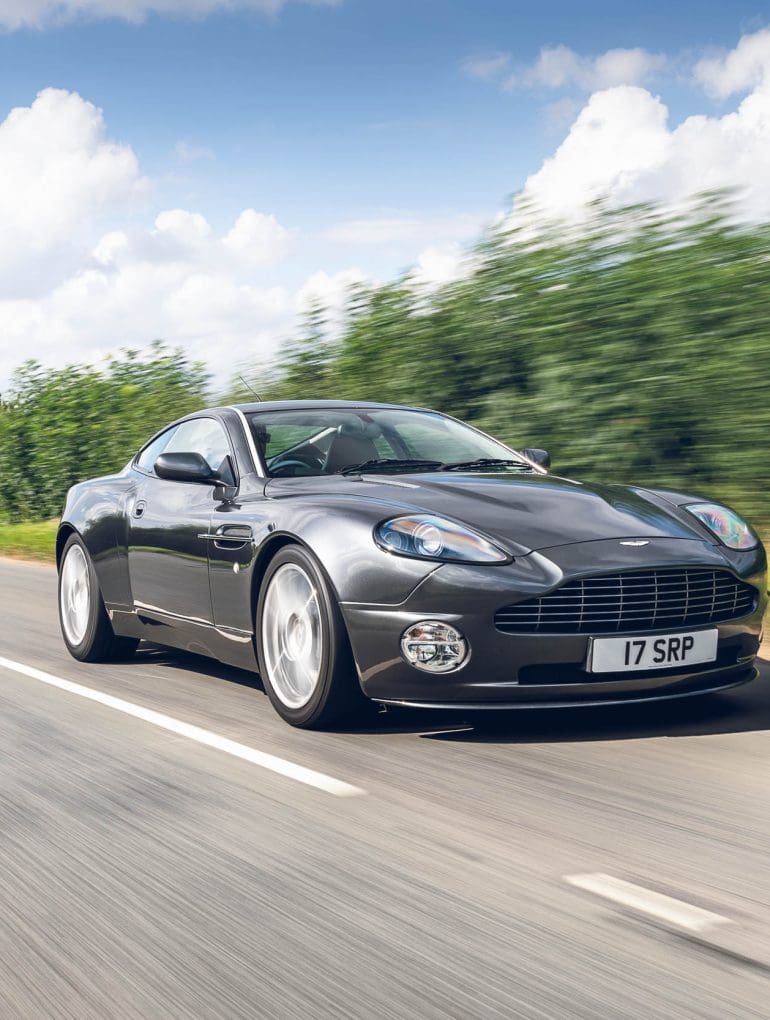

Geneva Motor Show, March 2001. Aston Martin unveiled the V12 Vanquish, the brand’s triumphant return to supercar development after a decade focused on building accessible luxury coupes. The Vanquish represented a fundamental reimagining of Aston Martin’s purpose: a flagship grand tourer combining quintessentially British elegance with genuine supercar performance.
The naturally aspirated 5.9-liter V12 produced 460 horsepower at 6,500 rpm and 400 lb-ft of torque, delivering 190 mph capability while maintaining the four-seat practicality and refined craftsmanship expected from a modern Aston Martin. This was Newport Pagnell celebrating mechanical tradition: a hand-built V12 masterpiece engineered to rival Ferrari, Porsche, and Lamborghini while emphasizing British design heritage and meticulous construction.
The revolutionary carbon-fiber monocoque chassis, developed in partnership with Lotus, provided the technological foundation for world-class handling alongside the visceral naturally aspirated V12 soundtrack. Within weeks of launch, Aston Martin faced a three-year waiting list as customers recognized the Vanquish as an automotive masterpiece. Production ran from 2001 through 2007, with approximately 2,578 examples built, establishing the Vanquish as one of the most iconic Aston Martins ever created.
Background and Origins
The Vanquish project began in 1998 as “Project Vantage,” a concept vehicle unveiled at the Detroit Auto Show that immediately captured automotive industry imagination. The concept’s radical carbon-fiber and aluminum platform combined with aggressive styling and F1-style paddle-shift transmission established the design direction that would guide production development. Aston Martin management recognized immediately that transforming the concept into production was essential, committing to development with remarkable confidence.
Development proceeded methodically under Ian Callum’s design leadership, the legendary stylist responsible for the graceful proportions that would define the production Vanquish. Rather than pursue revolutionary change, Callum refined the concept’s essential proportions while incorporating production practicality and manufacturing reality. The design emphasized elegant simplicity over aggressive theater, celebrating Aston Martin’s heritage through understated sophistication.
When Ulrich Bez assumed CEO responsibilities in 2000, he mandated substantial interior refinement before production commenced, demanding quality levels befitting the Vanquish’s position as Aston Martin’s ultimate expression. This decision delayed launch by several months but resulted in an interior reflecting genuine luxury and meticulous craftsmanship throughout. The production-ready Vanquish unveiled at Geneva in March 2001 represented a complete realization of the original concept’s promise.
Design and Engineering
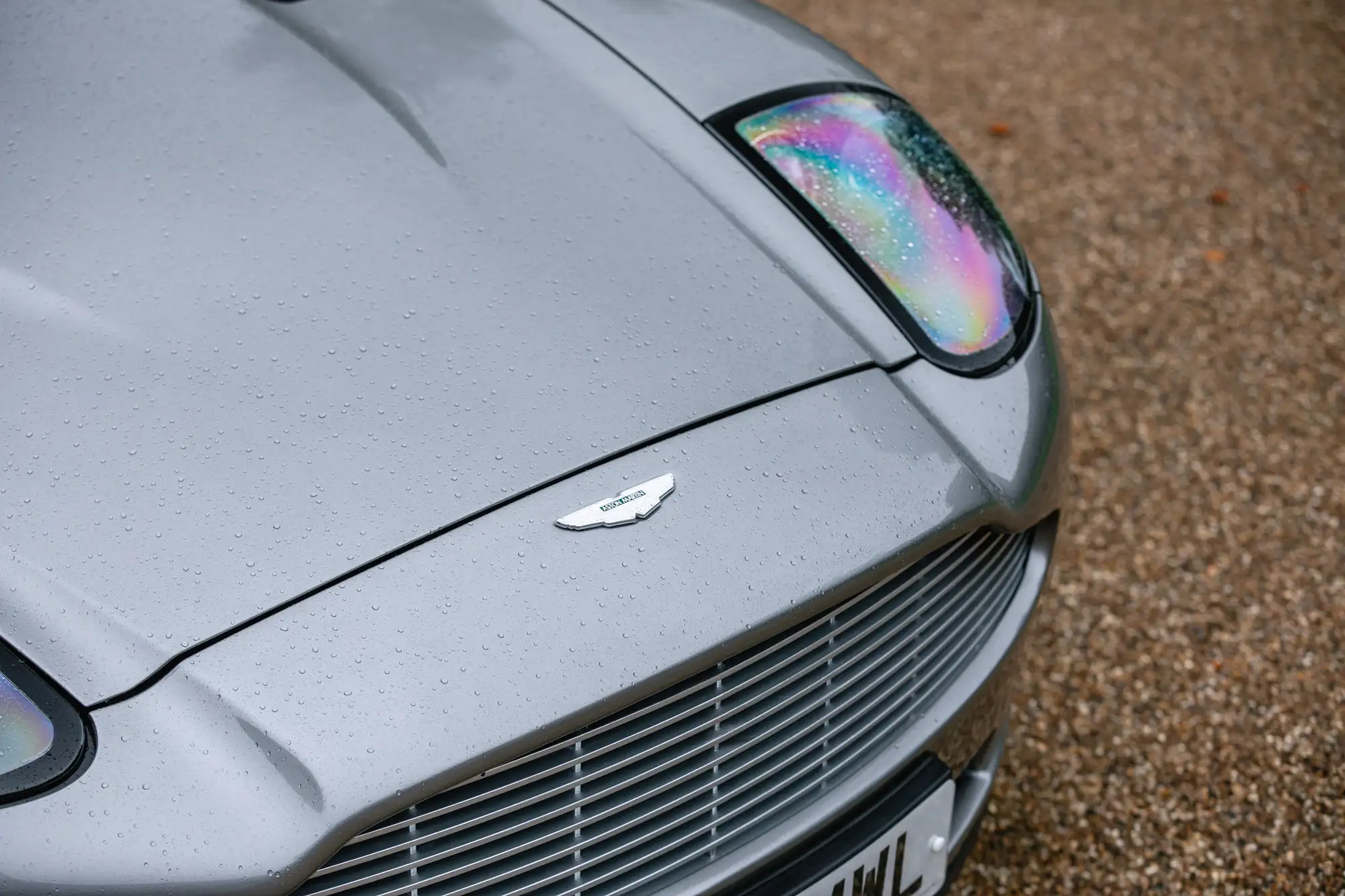
The Vanquish utilized an advanced chassis architecture developed in partnership with Lotus. The core structure featured a carbon-fiber transmission tunnel bonded to extruded aluminum front and rear bulkheads, creating an exceptionally rigid yet lightweight foundation. The platform incorporated single-piece composite inner body sections with carbon-fiber windscreen pillars, establishing a high-strength safety cell meeting contemporary crash standards. Aluminum subframes front and rear carried the engine, suspension, and steering, optimizing weight distribution while maintaining structural integrity.
Suspension employed independent double wishbones front and rear with coil springs and sophisticated dampers. The geometry was tuned for responsive handling while maintaining the ride refinement expected from a grand tourer, a demanding compromise requiring meticulous engineering. The power steering was electrically assisted, providing light control yet maintaining adequate feedback during spirited driving. Ventilated disc brakes with four-piston calipers provided confident stopping power adequate for the Vanquish’s performance envelope.
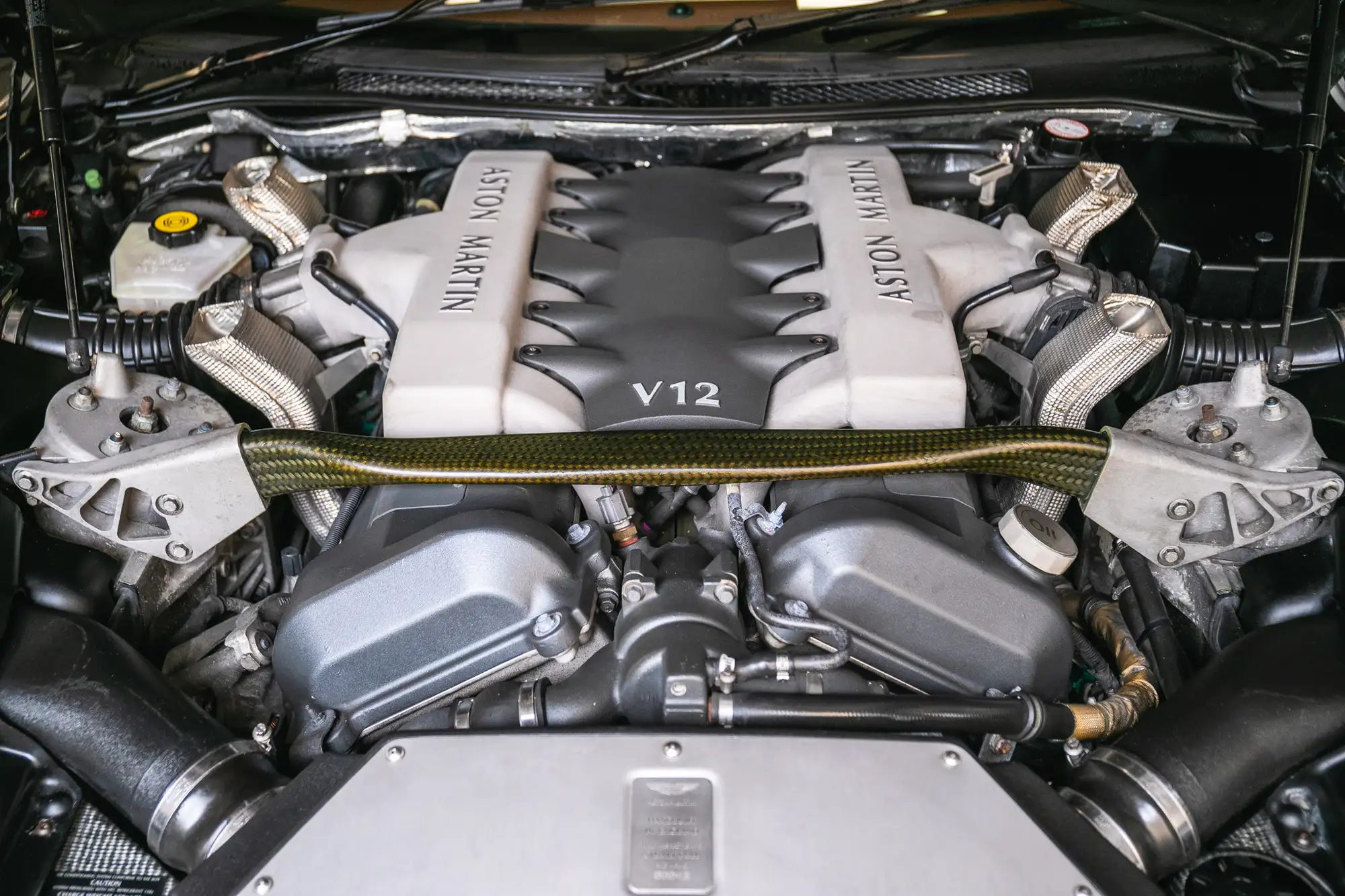
The naturally aspirated 5.9-liter V12 represented the evolution of Aston Martin’s flagship powerplant. Displacing 5,935cc through a 89mm bore and 79.5mm stroke configuration, the all-aluminum engine featured dual overhead camshafts per bank controlling four valves per cylinder—48 valves total. With an increased 10.5:1 compression ratio optimized for premium fuel, output was 460 horsepower at 6,500 rpm and 400 lb-ft of torque at 5,000 rpm. The power delivery was linear and progressive, emphasizing the engine’s naturally aspirated character while remaining accessible throughout the rev range.
The revolutionary six-speed paddle-shift transmission operated in two primary modes: Select Shift Manual (SSM) allowing driver-controlled gear selection and Auto Shift Manual (ASM) featuring computer-controlled automation. Both modes offered Sport settings enabling aggressive shift dynamics and extended engine rev ranges before automatic upshifts. The sophisticated electronic control system managed gear changes in approximately 250 milliseconds, delivering almost imperceptible transitions between gears. This represented a genuine innovation for 2001, presaging technologies that would become industry standard within subsequent decades.
Styling
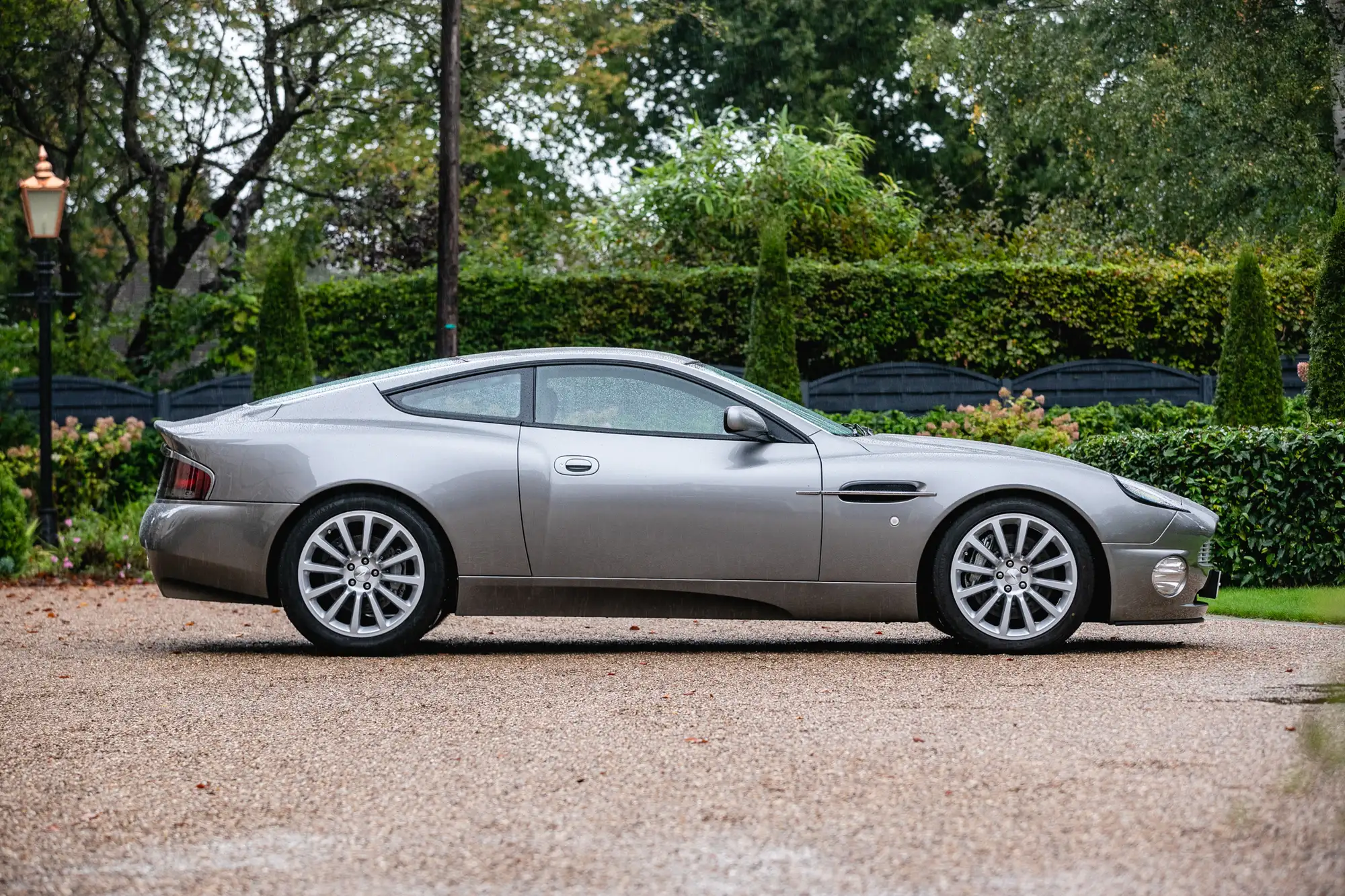
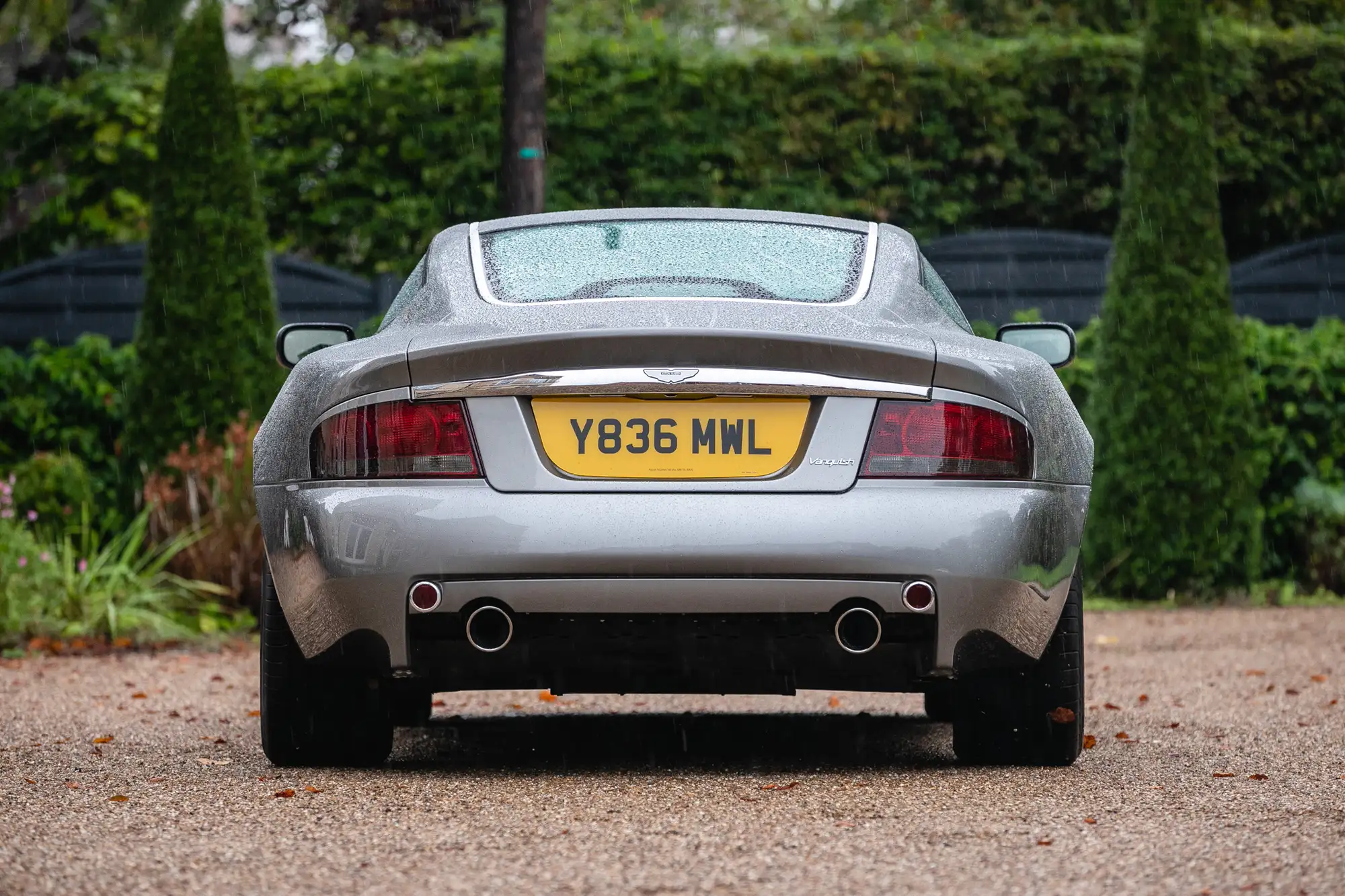
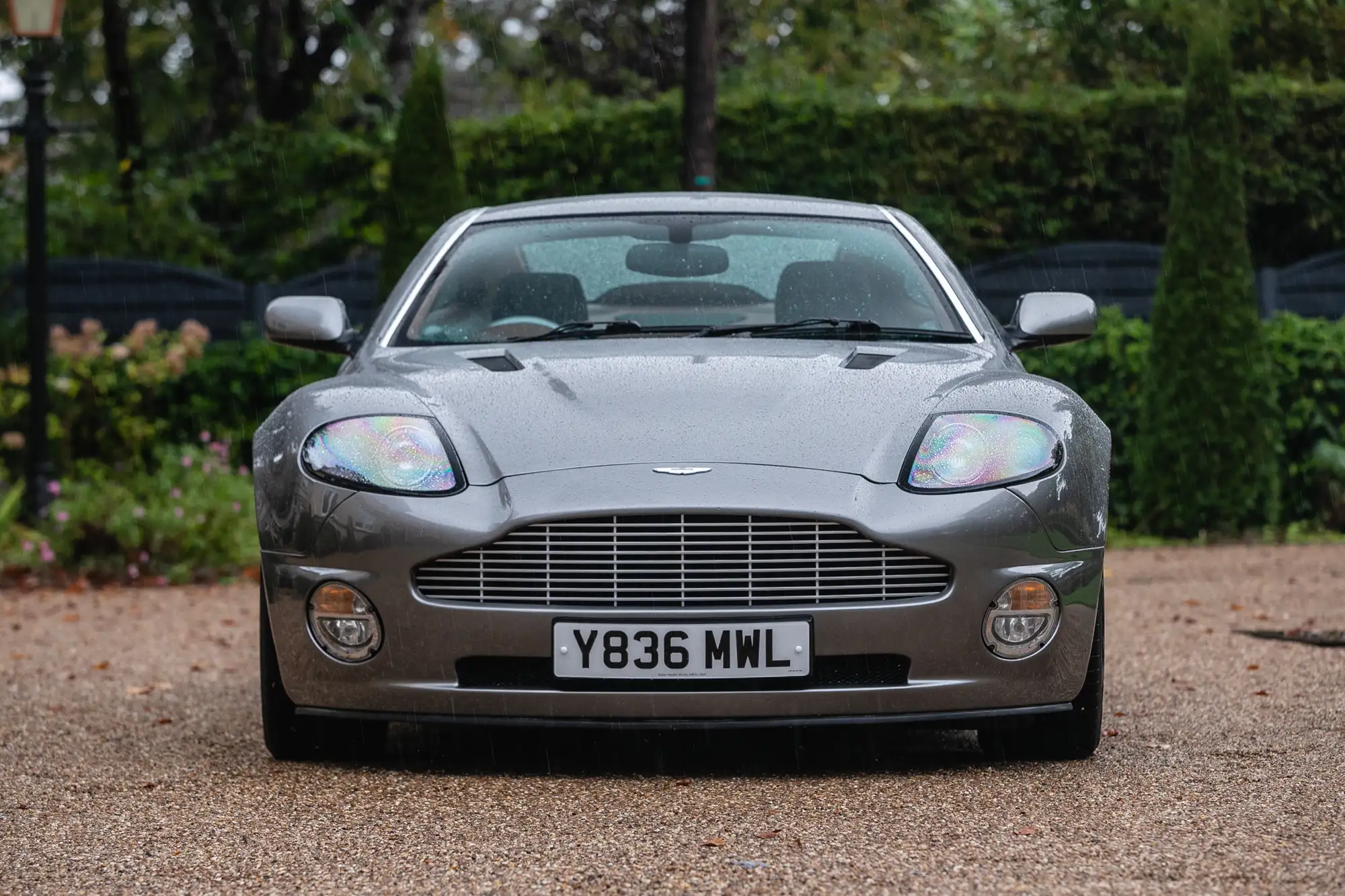
Ian Callum’s design created timeless proportions emphasizing elegant simplicity and purposeful proportion. The long hood accommodated the mid-mounted V12 while establishing classical sports car proportions. The low-slung profile emphasized agility despite the substantial dimensions, with a 2,820mm wheelbase providing balanced proportions. The windshield was large and steeply raked, creating an aggressive stance while providing excellent forward visibility. The profile featured sculpted surfaces without excessive graphic ornamentation, allowing the fundamental proportions to dominate.
Swan-wing doors opened upward and forward, a theatrical detail celebrating the Vanquish’s supercar status while maintaining practical ingress accessibility. The rear featured subtle aerodynamic refinements including an integrated spoiler and diffuser, functional elements integrated seamlessly without excessive visual drama. The overall appearance emphasized that genuine performance didn’t require aggressive styling—elegant proportions and meticulous detailing defined the Vanquish character.
Interior
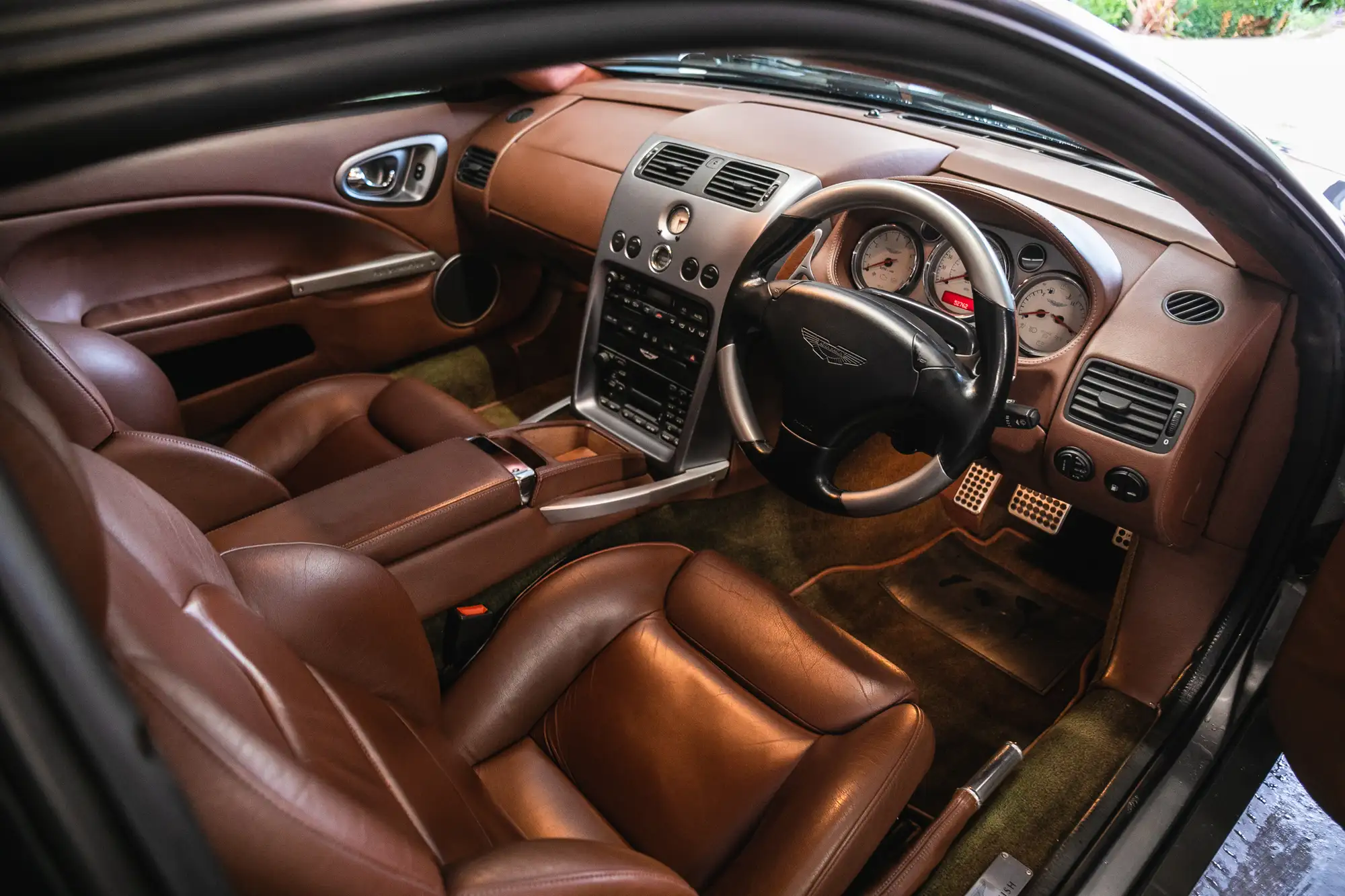
The cabin emphasized hand-crafted luxury. Connolly leather upholstery covered supportive sport seats, while Wilton carpeting and genuine wood trim throughout reinforced Aston Martin heritage. The driving position was commanding yet comfortable, with all controls falling naturally to hand. The distinctive three-spoke steering wheel featured the traditional Aston Martin badge.
Remarkably for a supercar, the Vanquish accommodated four passengers in genuine comfort through optional 2+2 seating, providing genuine practicality for extended journeys. Alternatively, the pure 2+0 configuration prioritized driver engagement and performance. The overall atmosphere balanced racing-derived functionality with genuine luxury appropriate for a British grand tourer exceeding $300,000 at introduction.
Specifications
- Engine: V12 naturally aspirated, 5,935cc, DOHC per bank, four valves per cylinder
- Power: 460 hp / 466 PS at 6,500 rpm
- Torque: 400 lb-ft / 542 N·m at 5,000 rpm
- Transmission: Six-speed paddle-shift semi-automatic, rear-wheel drive
- Chassis: Carbon-fiber and aluminum monocoque, 2,820mm wheelbase
- Suspension: Independent double wishbones (front and rear), coil springs
- Brakes: Ventilated discs, four-piston calipers (front and rear), ABS
- Wheels: 19-inch alloy, performance tires
- Weight: 1,765 kg dry / 1,839 kg curb weight
- Performance: 190 mph top speed, 0-60 mph in 4.7 seconds
Production and Legacy
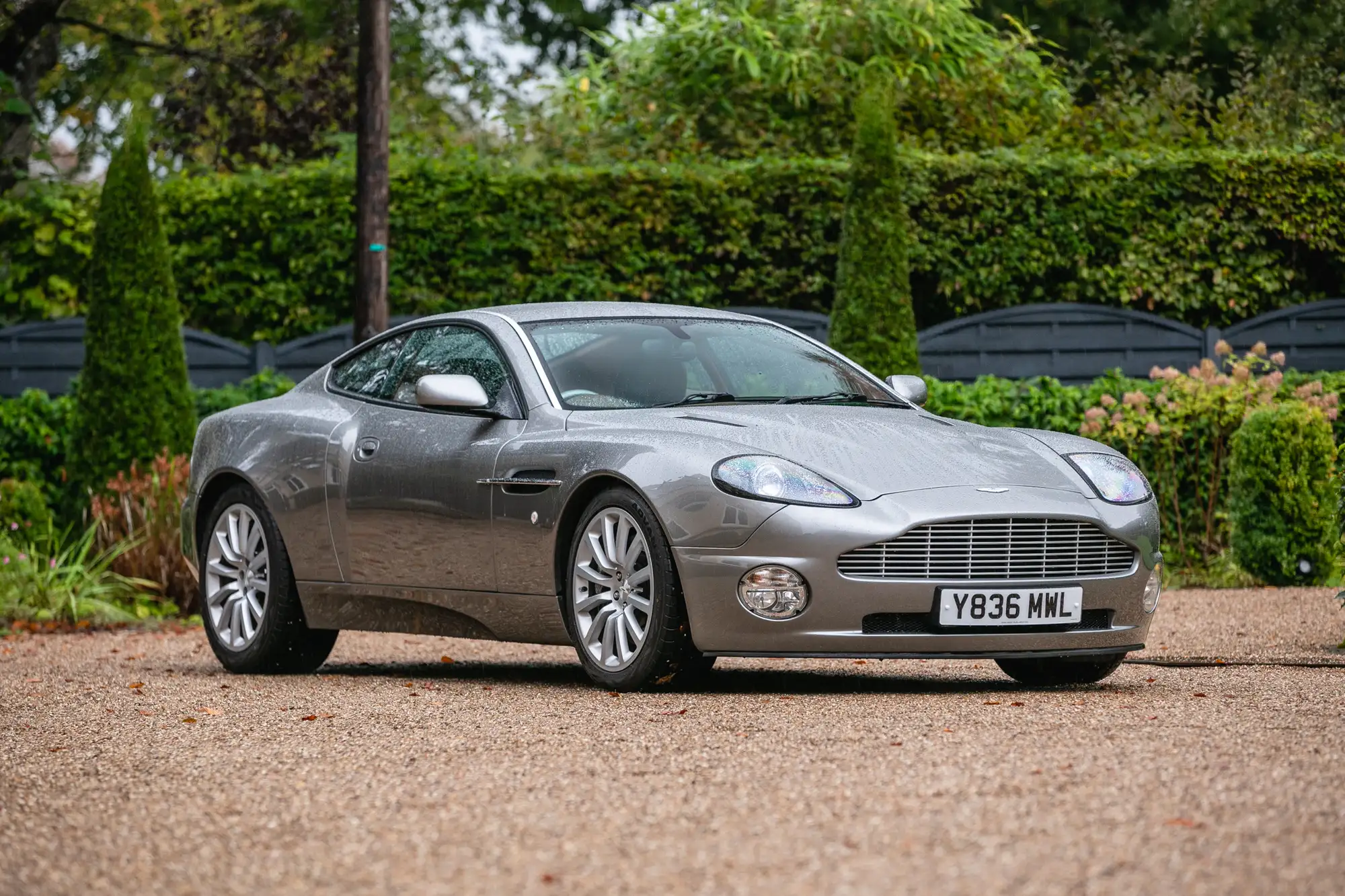
Aston Martin hand-assembled 2,578 Vanquish examples at Newport Pagnell between 2001 and 2007, with each car receiving meticulous individual attention. The extended production run reflected sustained customer demand despite the car’s limited annual capacity. Various special editions emerged throughout production, including the Ultimate 50-car limited edition finished in unique metallic black, celebrating the Vanquish’s place in Aston Martin history.
The Vanquish achieved iconic status through appearances in James Bond films, particularly in Die Another Day (2002), where the car featured adaptive camouflage technology. The