

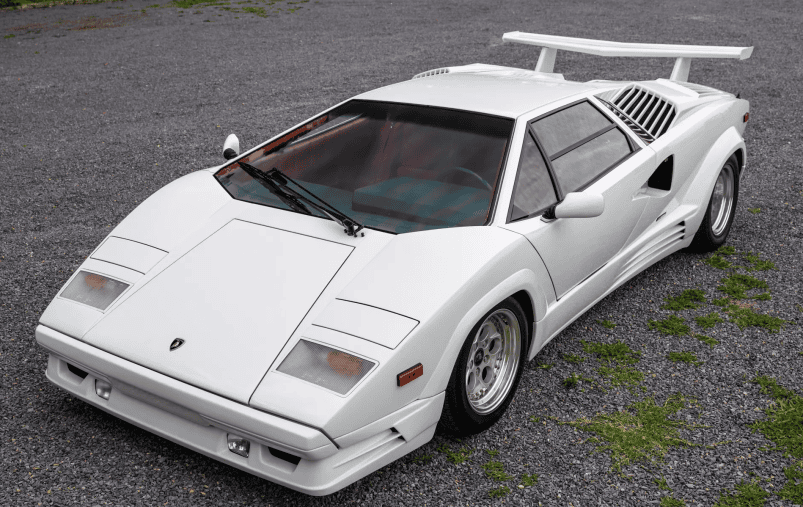
Monza, September 1988. Lamborghini marked its 25th birthday by presenting the final evolution of its most famous car during the Italian Grand Prix weekend. The Countach 25th Anniversary was based on the 5000 Quattrovalvole, but its bodywork was extensively reworked by a young Horacio Pagani, then Lamborghini’s composites expert. Under the engine cover sat the same 5.2-liter, 48-valve V12, producing 449 hp in European specification, enough to push the car to a claimed 183 mph. More refined, better equipped and easier to live with than earlier versions, the 25th Anniversary became the most commercially successful Countach of all. Lamborghini initially planned to build just 170 examples, but demand pushed production to 657 before the last one left Sant’Agata on July 4, 1990, bringing the Countach’s long production run to a close.
Background and Origins
Automobili Lamborghini was founded in 1963, and as its 25th anniversary approached, the company wanted to celebrate. A completely new flagship, the P132 project that would become the Diablo, was already under development, but delays meant it wouldn’t be ready until 1990. Instead, Lamborghini decided to give the Countach one final update.
The job went to Horacio Pagani, the Argentine engineer who ran Lamborghini’s composites department and would later found his own supercar company. Pagani had already used the Countach as a test bed for his ideas, including the composite-bodied Countach Evoluzione prototype developed in the mid-1980s, and several of those ideas made it into the new car. Former World Rally Champion Sandro Munari also helped refine the chassis and suspension, particularly to suit the car’s Pirelli P Zero tires. The result was the Countach 25th Anniversary, presented in September 1988 with a “25” badge wrapped in a laurel wreath.
Design and Engineering
The 25th Anniversary used the same basic layout as every Countach before it. It was built around a tubular steel spaceframe chassis with a floorpan made from a mix of steel and fiberglass composite, with fuel tanks totaling 120 liters housed in the sills. The engine was mounted longitudinally behind the cabin, but the five-speed gearbox sat ahead of it between the seats, with a driveshaft running back through the engine to the rear differential. The arrangement was devised by engineer Paolo Stanzani to improve weight distribution.
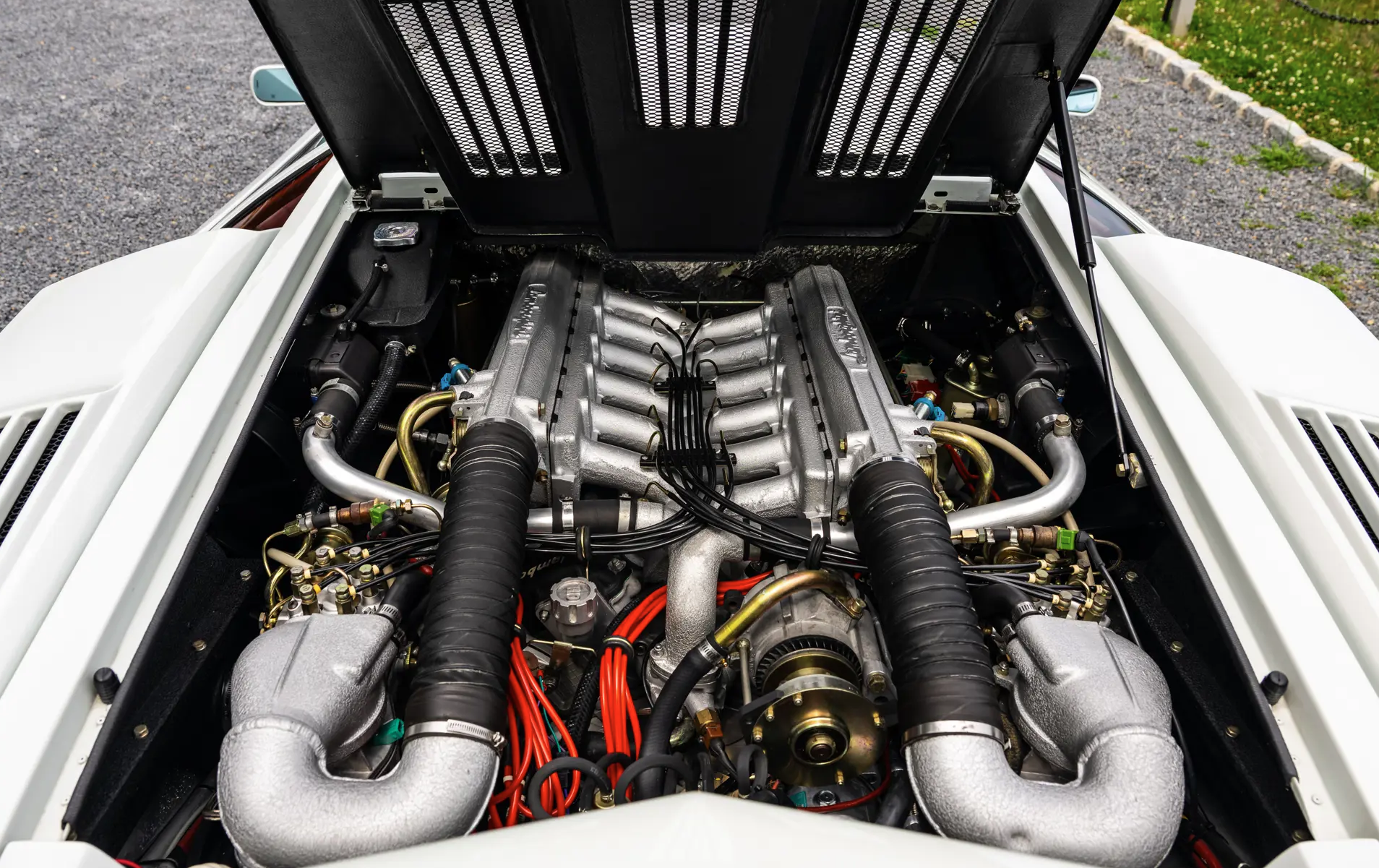
The engine was the 5,167cc V12 from the Quattrovalvole, with four overhead camshafts and four valves per cylinder. European cars used six Weber 44 DCNF carburetors and produced 455 PS (449 hp) at 7,000 rpm and 369 lb-ft of torque at 5,200 rpm, the same output as the Quattrovalvole. US-market cars used Bosch KE-Jetronic fuel injection and produced 420 hp. Power went to the rear wheels through a single-plate clutch and the five-speed manual gearbox. Lamborghini quoted a top speed of 295 km/h (183 mph), and the 25th Anniversary could reach 62 mph in under five seconds.
Styling
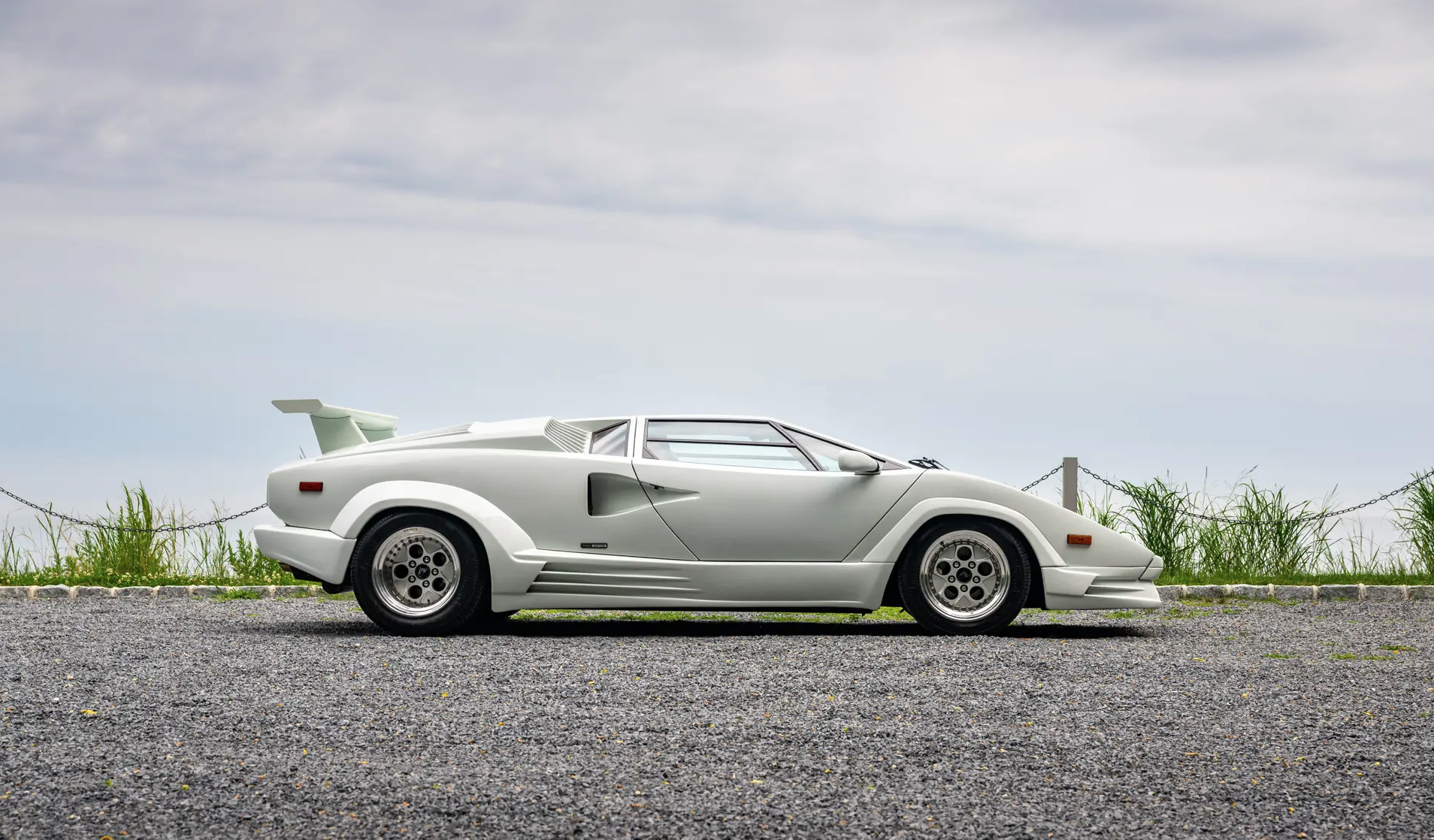
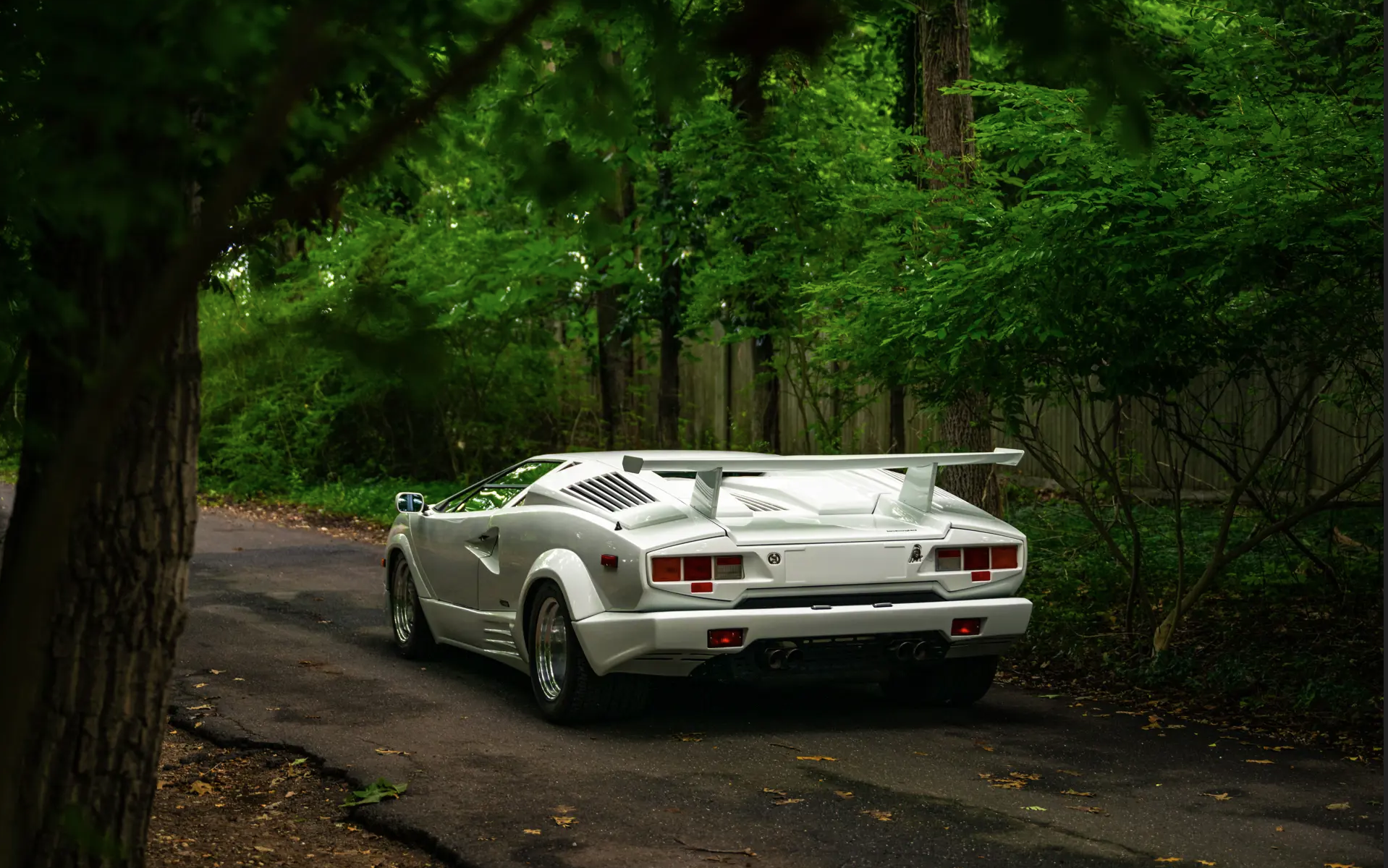
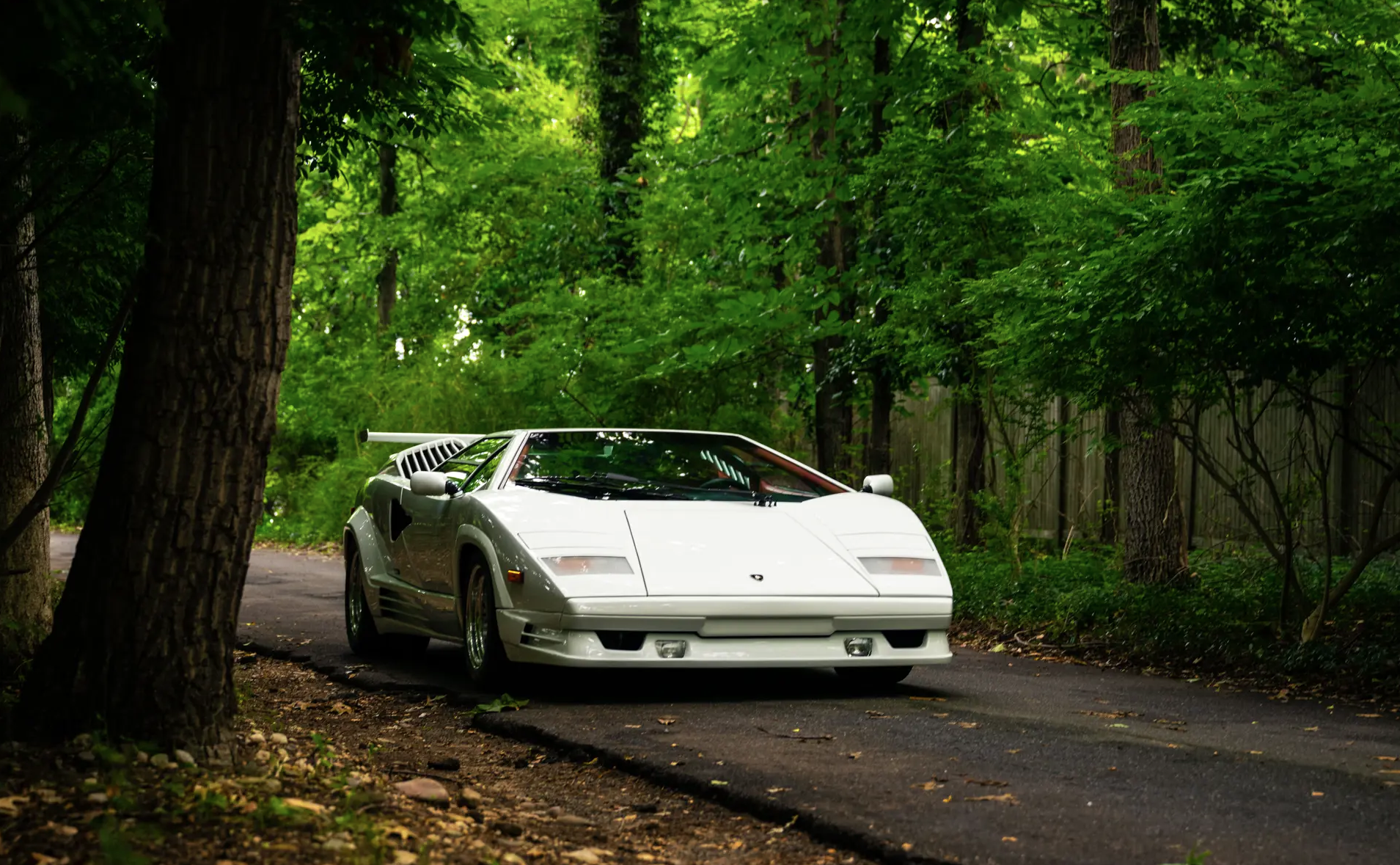
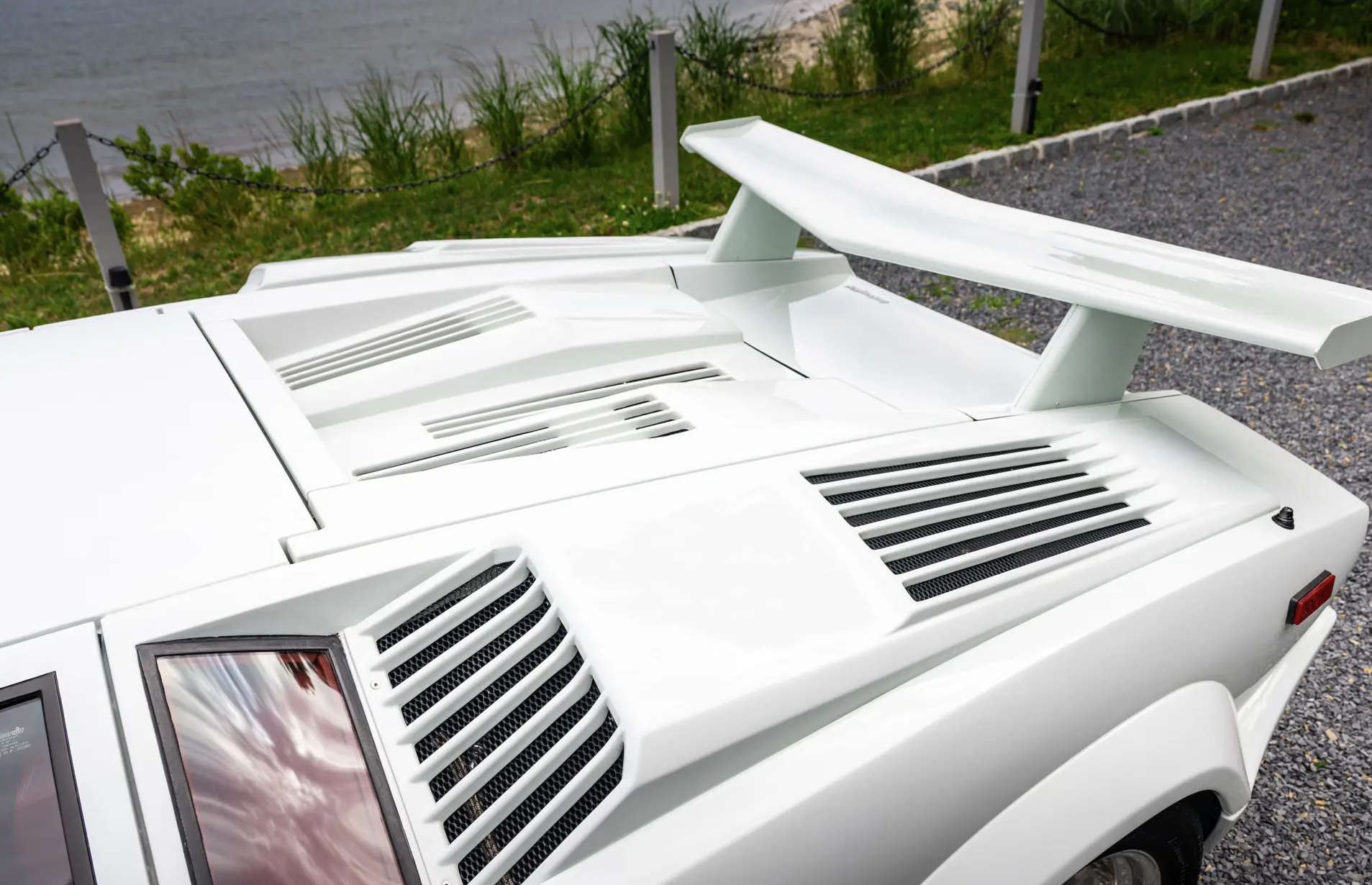
The Countach’s basic wedge shape, designed by Marcello Gandini at Bertone, stayed the same, but Pagani gave it a much more aggressive look. The front bumper and lower apron were redesigned with additional ducts to channel air to the brakes. Large horizontal strakes now ran through the side air intakes, the wheel-arch extensions were revised, and the rear intakes were enlarged. A new rear bumper, fitted to cars for every market, completed the update. The fuel-injected cars also received a revised engine cover with raised side sections and three banks of cooling vents, which improved rear visibility. Two-piece forged 15-inch OZ wheels were standard, and the famous rear wing was optional. Some critics thought the changes looked like a body kit, but the 25th Anniversary was undeniably the most dramatic Countach of all.
Interior
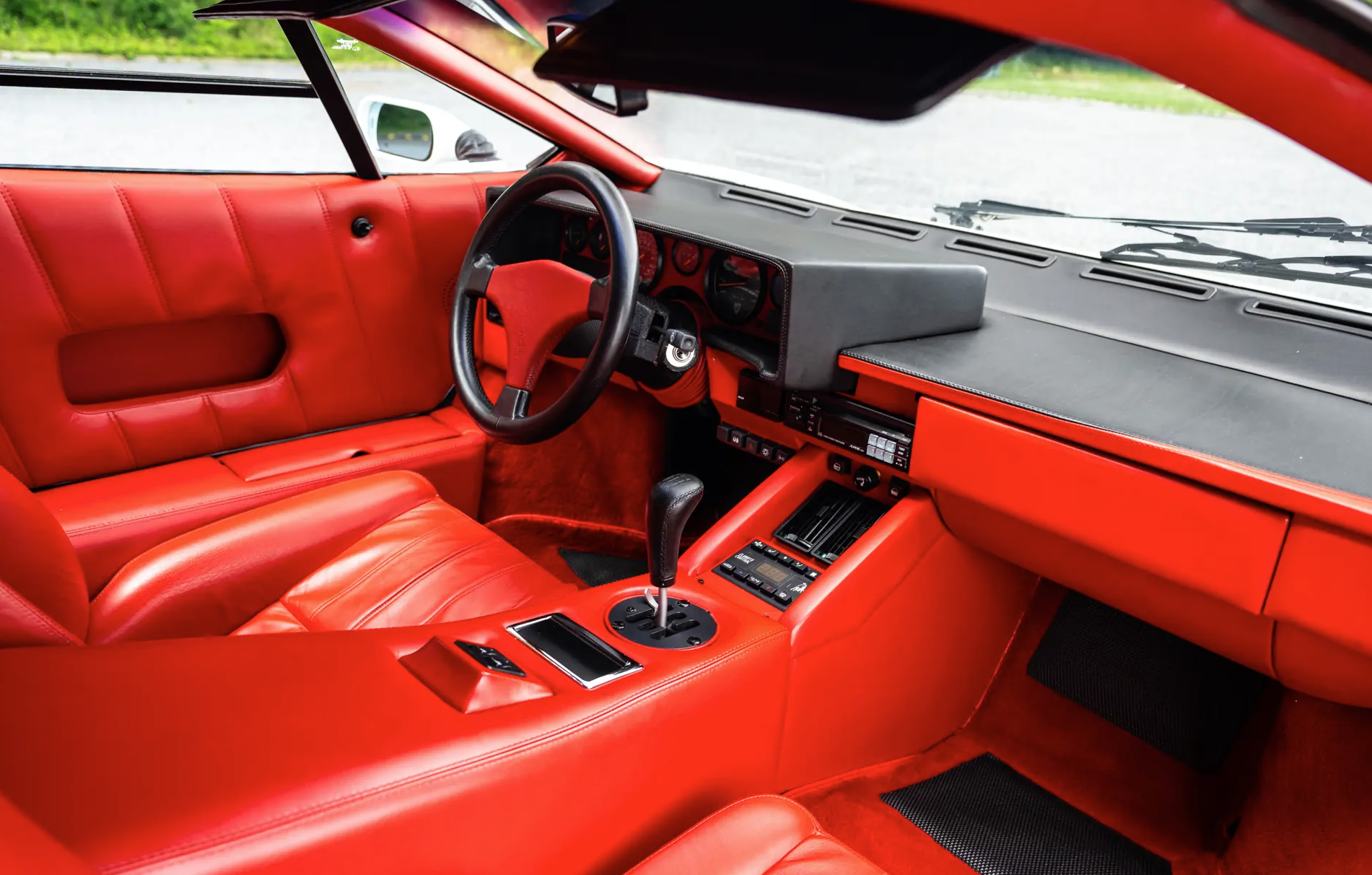
Inside, the 25th Anniversary was reworked more than any previous Countach. The cabin received new pleated seats, matching door panels and a redesigned three-spoke steering wheel. For the first time, the seats were electrically adjustable, while the windows also gained electric operation. These changes made the 25th Anniversary more comfortable and better equipped than earlier Countachs, although visibility remained limited and climbing over the wide sills still required some practice.
Specifications
- Engine: 60-degree V12, 5,167cc, DOHC per bank, 48 valves, six Weber 44 DCNF carburetors (Europe) or Bosch KE-Jetronic fuel injection (US)
- Power: 449 hp (455 PS) at 7,000 rpm (Europe), 420 hp (US)
- Torque: 369 lb-ft at 5,200 rpm
- Transmission: Five-speed manual, rear-wheel drive
- Chassis: Tubular steel spaceframe
- Body: Aluminum panels, fiberglass composite components and Kevlar front and rear hoods
- Wheels: Two-piece forged OZ, 15 inches
- Performance: 0-62 mph in under 5 seconds, top speed of 183 mph (295 km/h)
Production and Legacy
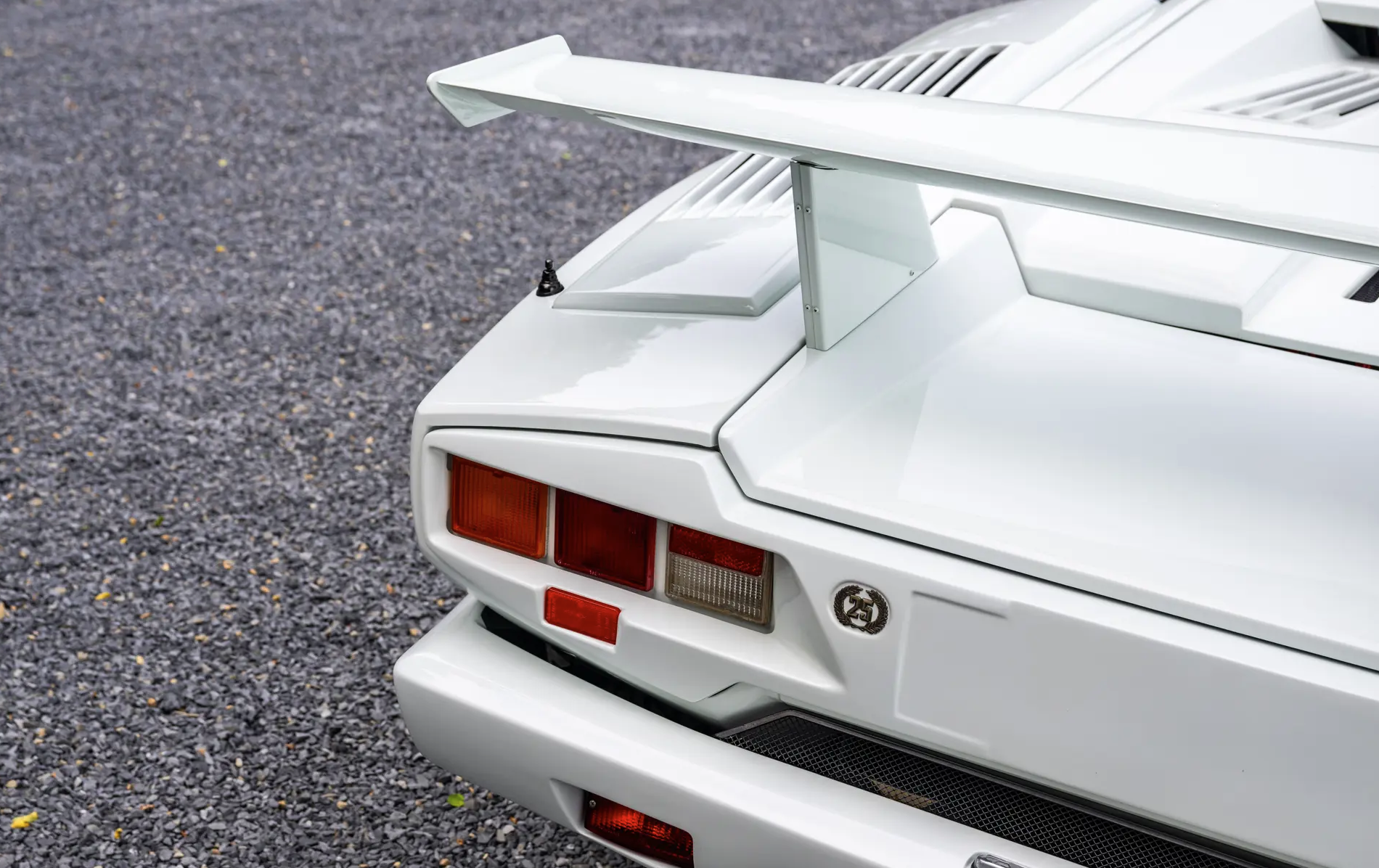
The 25th Anniversary was built from September 1988 to July 1990, and with 657 cars built, it was the best-selling version of the Countach. The final car, chassis 12085, was completed on July 4, 1990. It was the 1,997th and final Countach built, and it was never sold to a customer, going straight into Lamborghini’s museum.
The 25th Anniversary was the end of an era. It brought the Countach to its most refined and most dramatic form, and it bridged the gap between the original poster car and the Diablo. It also marked an important early step in Horacio Pagani’s career, and his experience with composite materials contributed to Lamborghini’s development of the Diablo. Today, many enthusiasts regard the 25th Anniversary as the best Countach to drive.