
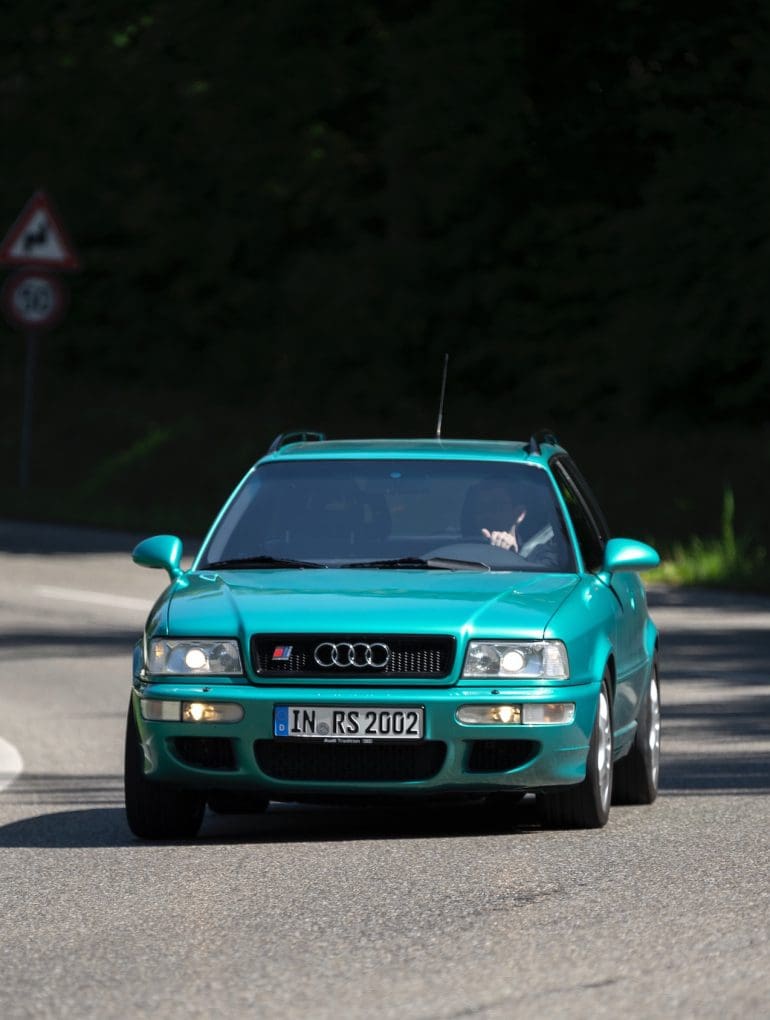

Geneva, March 1994. Audi unveiled the RS2 Avant, a high-performance estate car developed in partnership with Porsche. The collaboration seemed unlikely: Audi’s practical family wagon transformed by Porsche engineers into a 315-horsepower, quattro all-wheel drive weapon. The turbocharged 2.2-liter inline five borrowed heavily from the S2 Coupe but featured extensive Porsche modifications including revised turbocharger, intercooler, and engine management. Porsche’s Rossle-Bau facility in Zuffenhausen handled final assembly, installing unique bodywork, upgraded brakes, and distinctive wheels. The result accelerated faster to 30 mph than a McLaren F1. Only 2,891 were built between 1994 and 1995, making the RS2 Avant among the rarest modern Audis and the foundation for every RS model that followed.
Background and Origins
By the early 1990s, Audi had established quattro all-wheel drive as a performance hallmark through rallying success and the Sport Quattro homologation special. However, the company lacked a standalone performance division like BMW’s M or Mercedes-Benz’s AMG. Audi’s existing S models were quick but not genuinely extreme.
In 1992, Audi approached Porsche with an unusual proposal. Porsche’s consulting division, struggling during the sports car market downturn, had spare engineering capacity and assembly space. Audi wanted to create an ultra-high-performance wagon, something faster and more practical than any competitor offered. Porsche would handle development, component specification, and final assembly. Audi would provide the base vehicle and mechanical components.
The project began in late 1992 under Porsche engineer Helmuth Bott. The base vehicle was the B4 Audi 80 Avant wagon, chosen for its practical body style and suitability for quattro all-wheel drive. Porsche’s brief was simple: extract maximum performance while maintaining everyday usability and Audi’s reputation for quality.
Development progressed rapidly. Porsche modified the turbocharged inline five extensively, increasing output from 230 to 315 horsepower. The suspension received complete redesign with lowered ride height and firmer settings. Brakes were upgraded to Porsche-spec components, while unique bodywork provided the necessary visual distinction.
The RS2 Avant debuted at Geneva in March 1994, with deliveries beginning in June. Production continued until July 1995, ending after exactly 2,891 examples. Every car passed through Porsche’s Rossle-Bau facility in Zuffenhausen for final assembly, creating the unusual situation of Audis being built at Porsche’s factory.
Design and Engineering
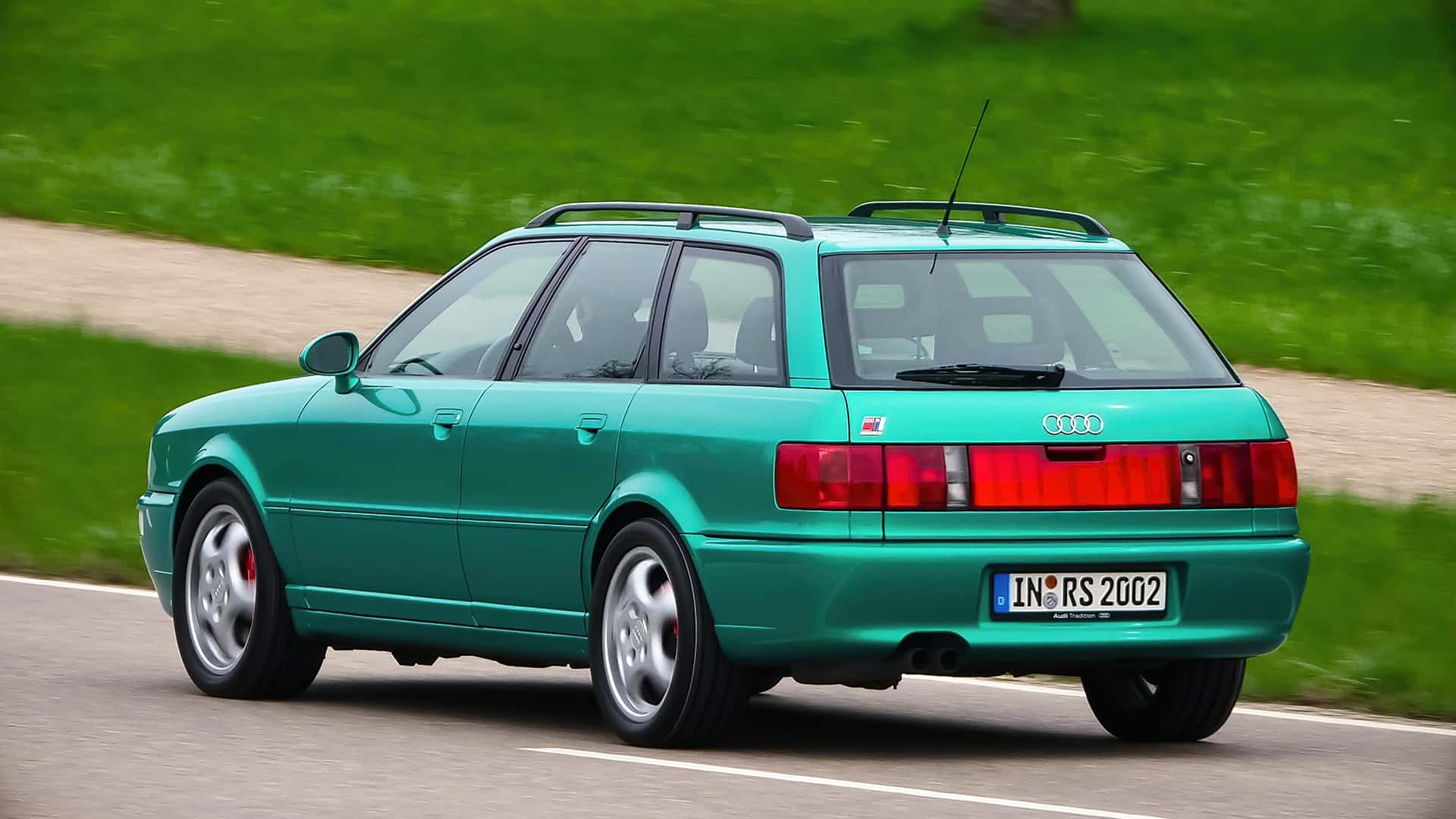
The RS2 was based on the B4 Audi 80 Avant’s steel monocoque with a 2,612mm wheelbase. The structure was standard Audi, though reinforced in critical areas to handle increased power and performance. Independent suspension at all four corners provided the foundation for Porsche’s modifications.
Front suspension used MacPherson struts with lower A-arms, coil springs, and gas-pressure dampers. Porsche revised the geometry, lowered the ride height by 40mm, and fitted stiffer springs with uprated dampers. The rear employed a torsion beam axle with trailing arms and coil springs, similarly modified for improved body control and reduced ride height.
Braking was by Porsche components throughout. Massive vented discs measuring 322mm front and 299mm rear came from the 968 Club Sport, with four-piston aluminum calipers painted bright red. ABS was standard, providing excellent stopping power that matched the RS2’s devastating acceleration.
The steering was Audi’s rack-and-pinion setup with power assistance, unchanged from the S2 but benefiting from the revised suspension geometry. The quick ratio and improved suspension delivered more precise response than standard 80 Avants.
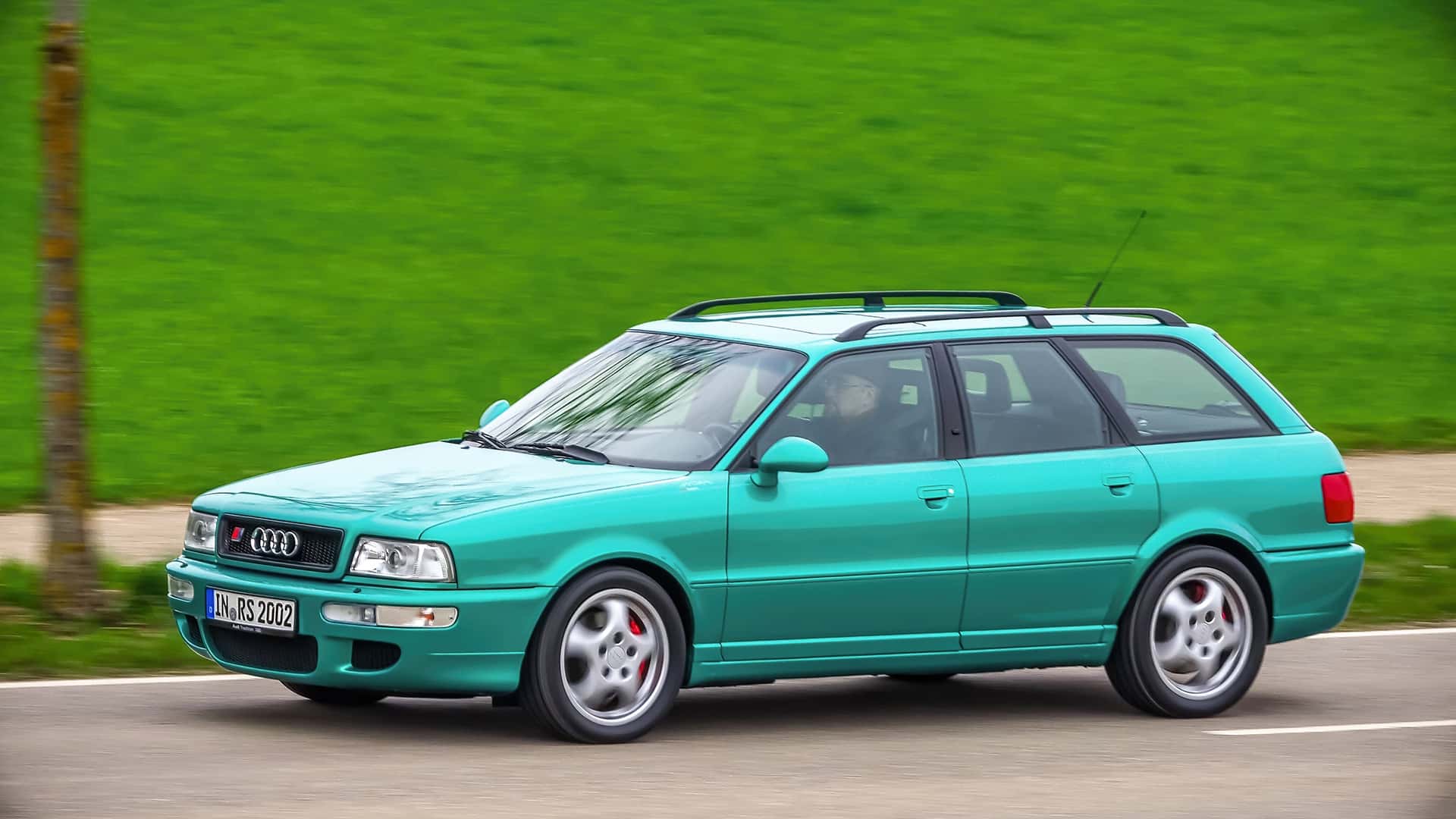
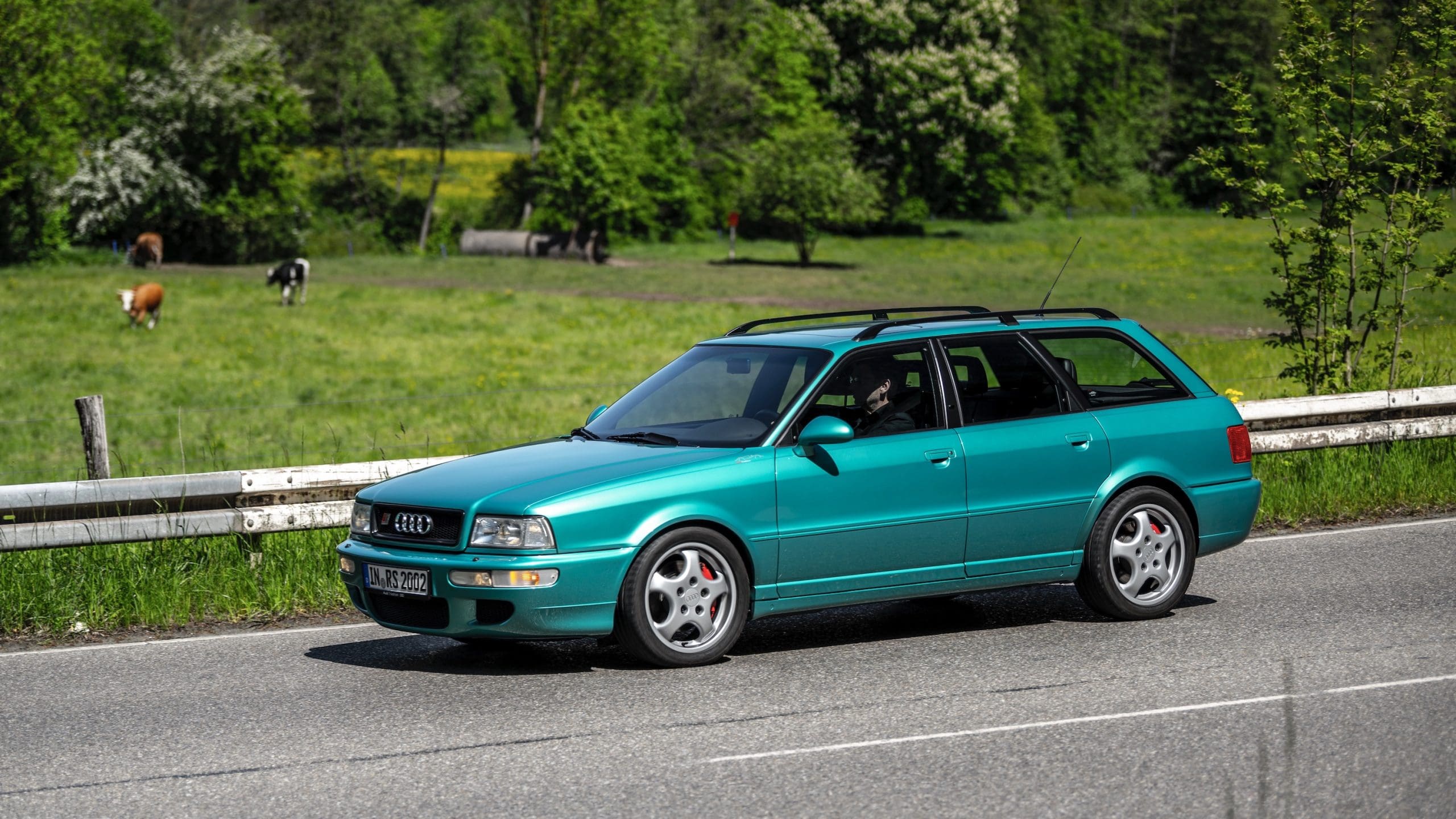
Wheels were perhaps the most distinctive feature: 8×17-inch Porsche Cup Design units, identical to those fitted to the 964 Turbo. These iconic five-spoke wheels wore 245/40 ZR17 Dunlop SP Sport tires, the widest rubber ever fitted to an Audi wagon at that time.
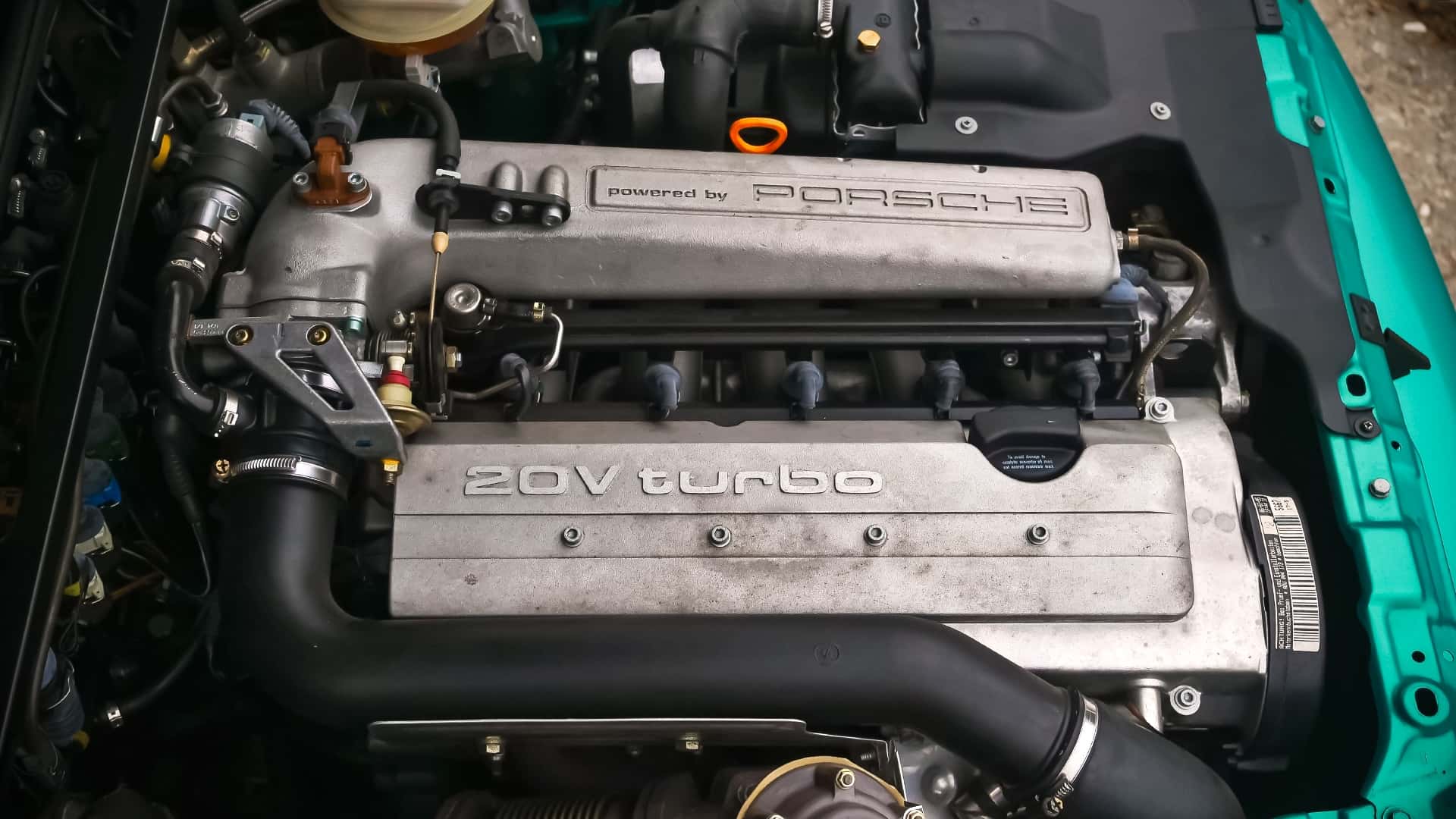
The engine was Audi’s legendary turbocharged inline five, code-named ADU. Displacing 2,226cc with an 81mm bore and 86.4mm stroke, this all-aluminum unit featured a DOHC head with five valves per cylinder and variable intake valve timing. Porsche’s modifications were extensive: a larger KKK K24 turbocharger replaced the standard unit, a more efficient intercooler improved charge cooling, and revised engine management increased boost pressure.
With a 9.3:1 compression ratio and sophisticated Bosch Motronic engine management, output was 315 horsepower at 6,500 rpm and 302 lb-ft at 3,000 rpm. The broad torque curve delivered effortless acceleration from virtually any engine speed, while the turbo spooled quickly enough to minimize lag.
Transmission was a six-speed manual, the first ever fitted to an Audi. The Getrag gearbox featured close ratios optimized for performance, with quattro permanent all-wheel drive distributing power through a Torsen center differential. The default split was 50:50 front-to-rear, though up to 75 percent could be transferred to either axle as needed.
Styling
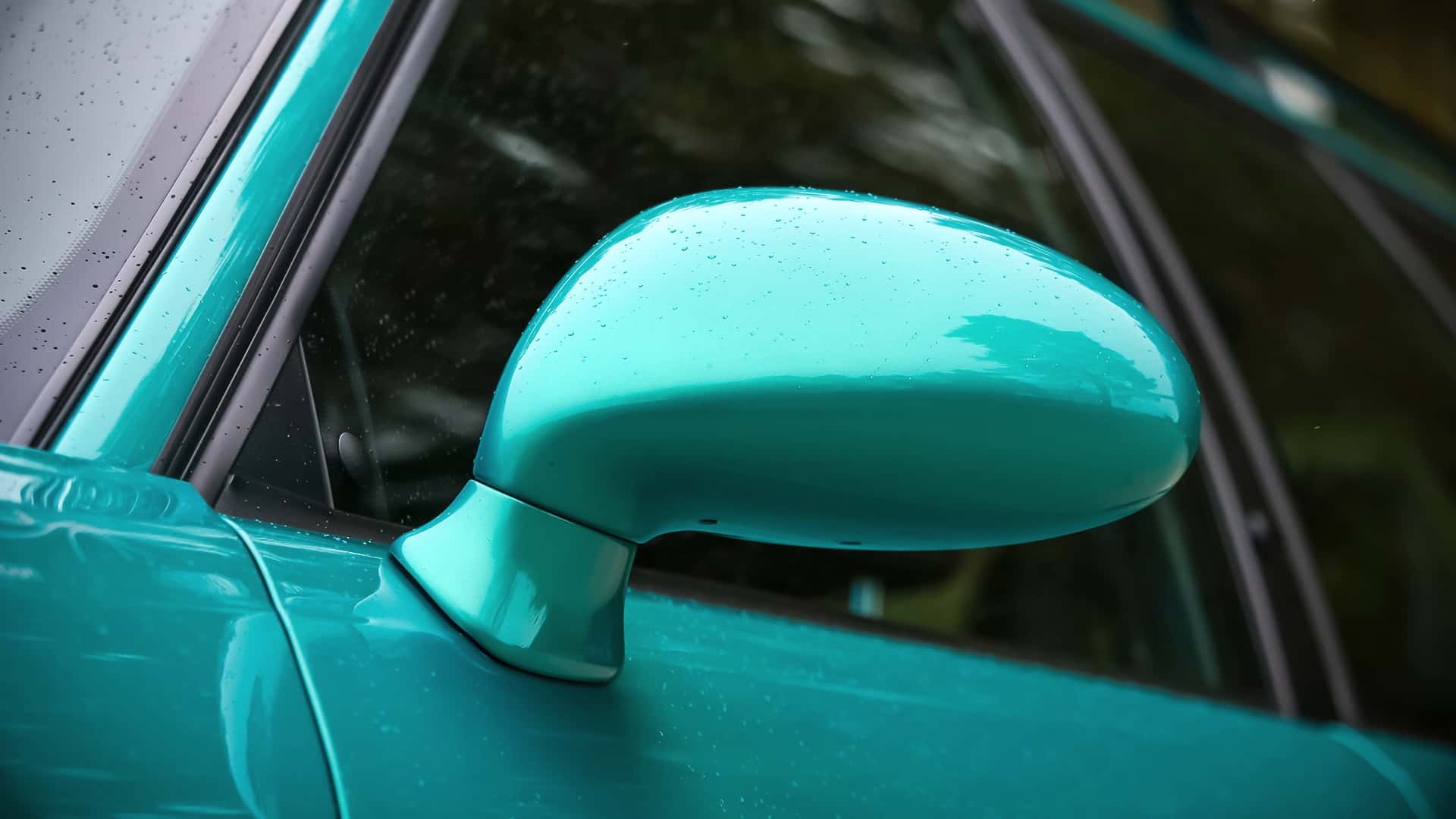
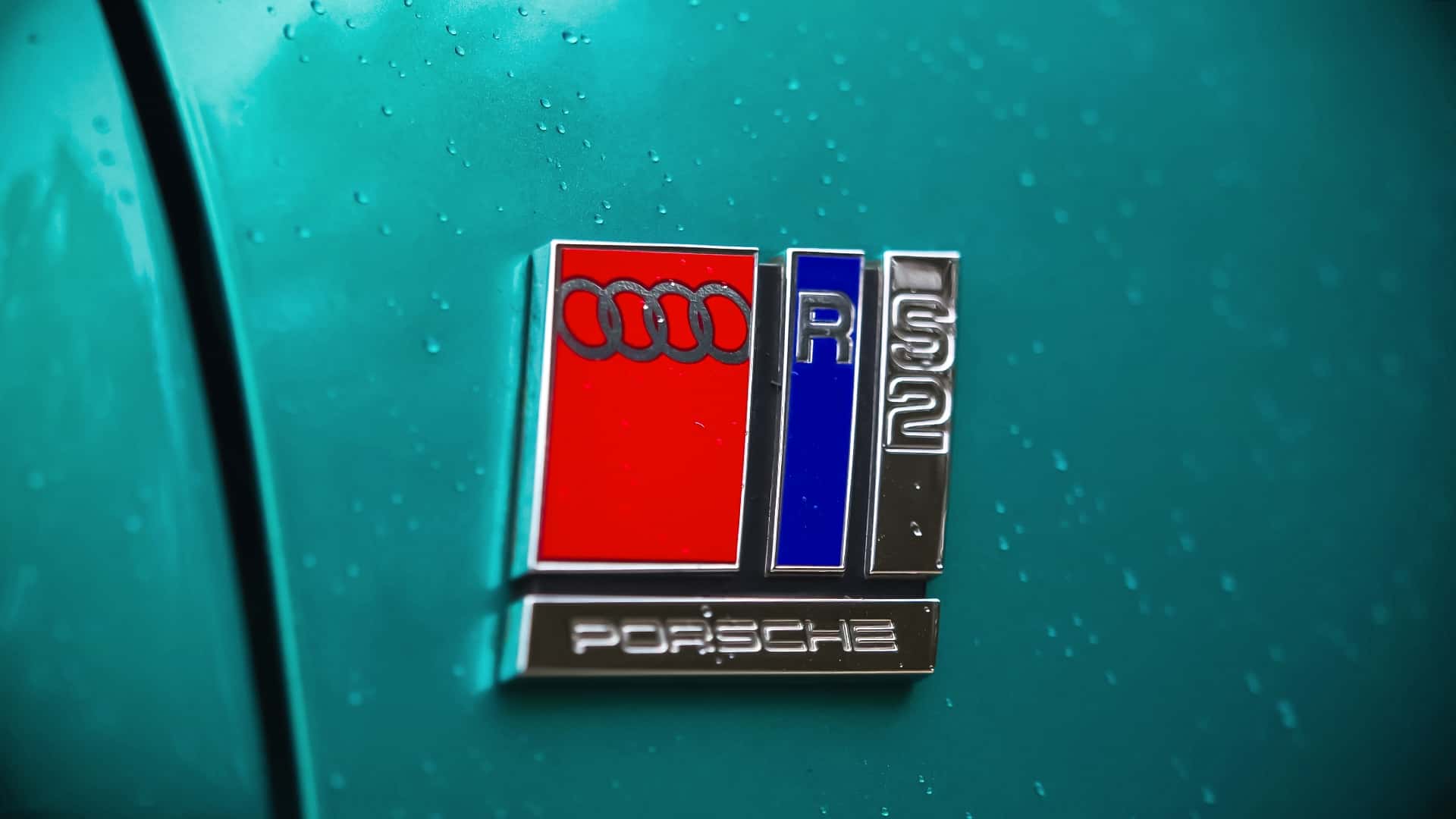
Externally, the RS2 was subtly aggressive. Porsche designed unique body-colored bumpers front and rear, eliminating the standard 80’s black plastic trim. The front bumper incorporated a deeper air dam with additional cooling ducts. A discreet RS2 badge appeared on the grille.
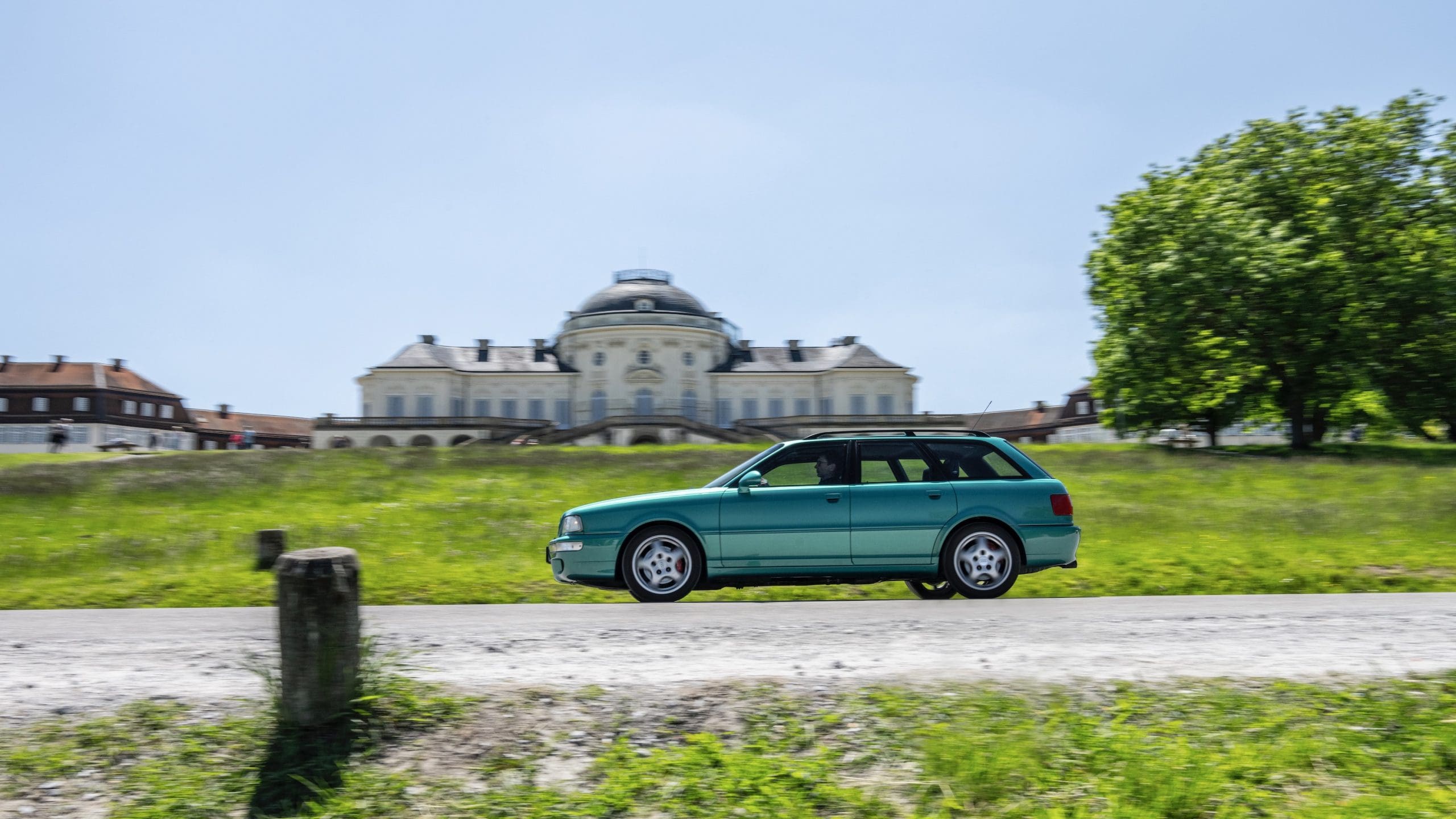
The side profile was dominated by those massive Porsche Cup wheels filling the arches. Porsche-designed side skirts ran beneath the doors, painted body color. At the rear, a subtle roof spoiler sat atop the tailgate, while a deeper rear bumper housed dual exhaust outlets and a diffuser-style lower section.
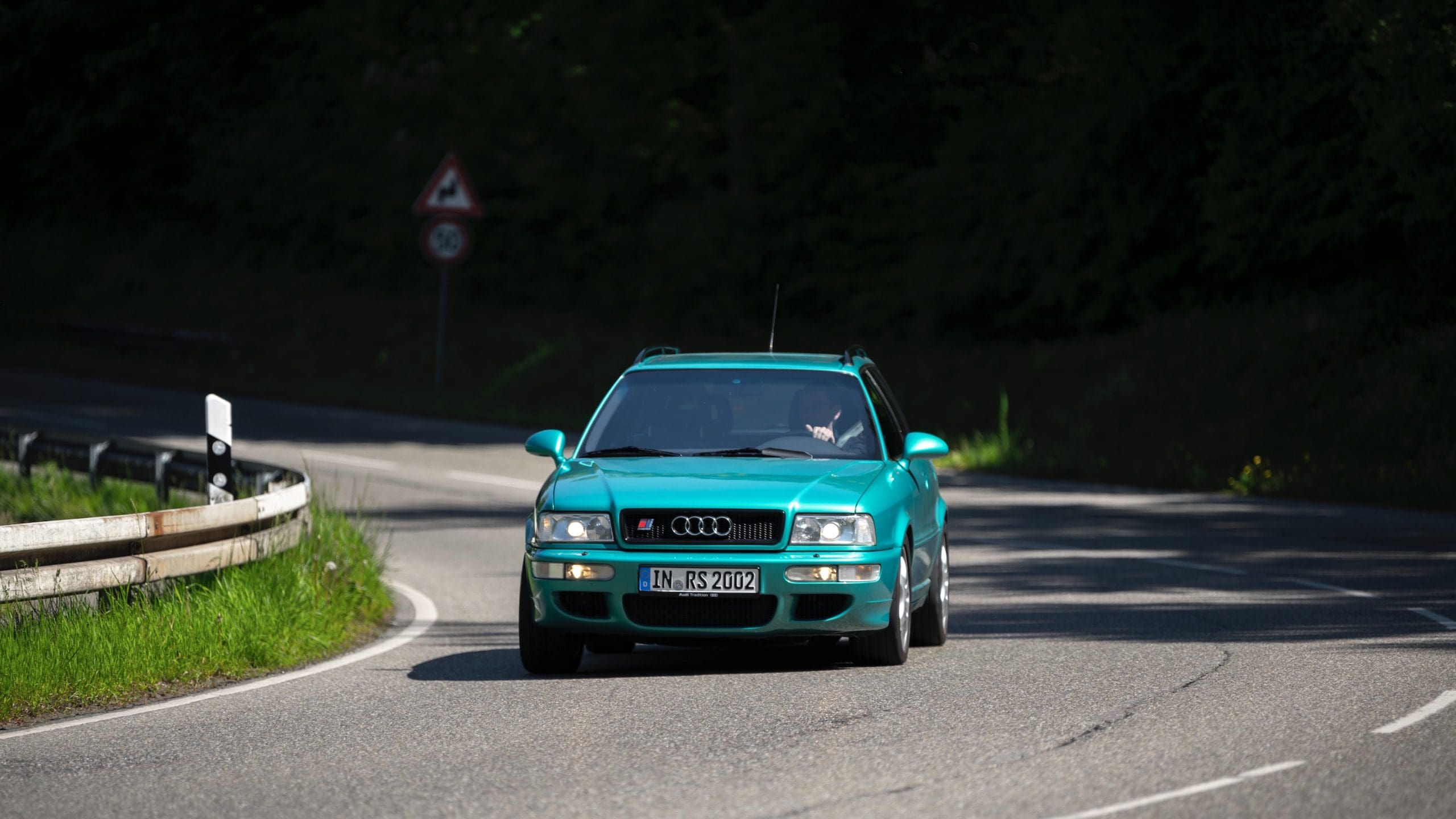
The overall effect was purposeful without being ostentatious. Only enthusiasts recognized the significance of the Porsche wheels and RS2 badges. To casual observers, this was simply a well-equipped Audi wagon. That sleeper quality became part of the RS2’s appeal.
Color choices were limited. Most examples were finished in dark colors: Nogaro Blue, black, green, or silver. A handful received brighter shades including red. Every RS2 featured body-colored bumpers and trim, eliminating the standard 80’s black plastic components.
Interior
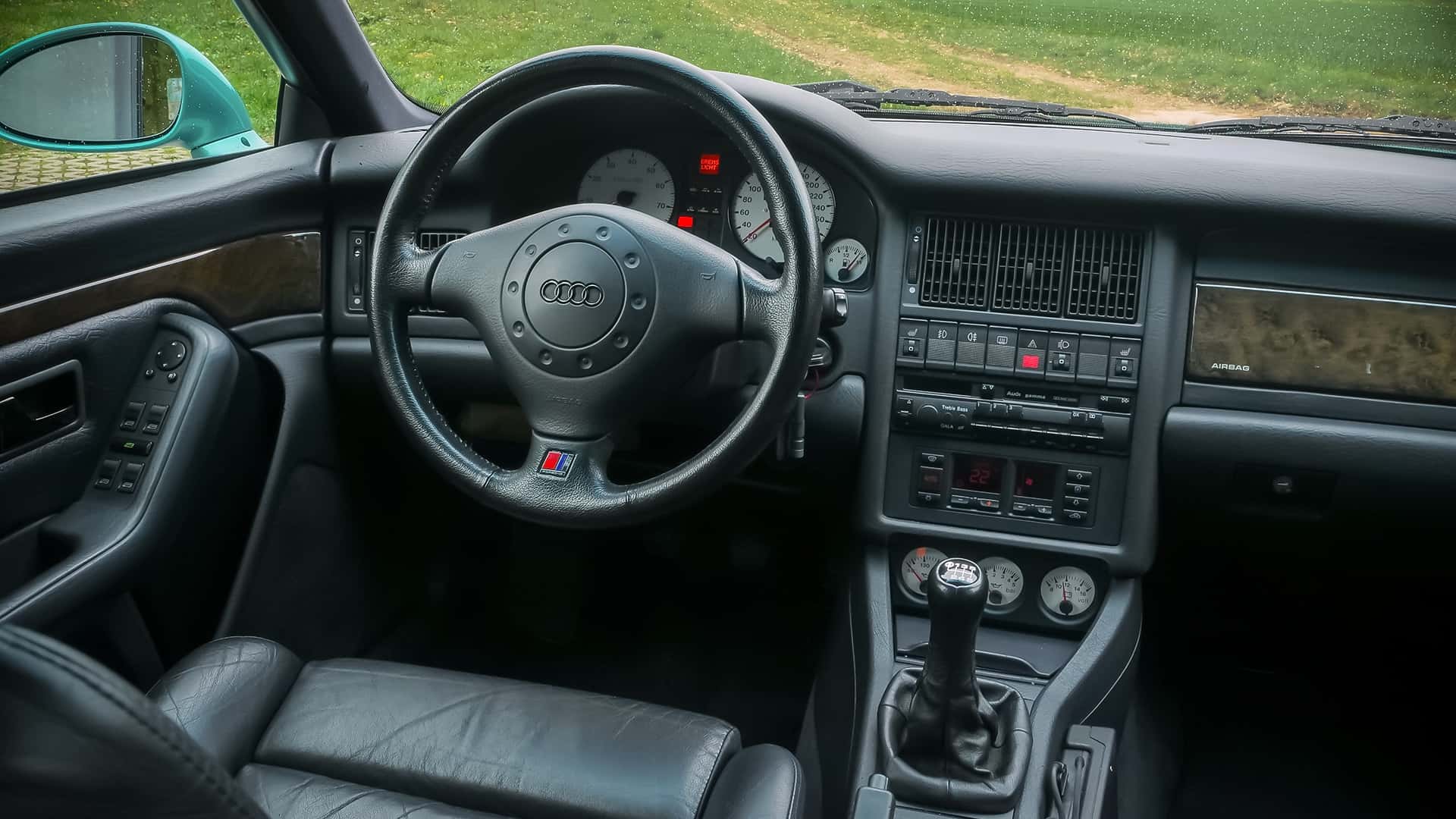
The cabin was trimmed in black Recaro sport seats with striking blue and green fabric inserts. The aggressive bolstering provided excellent support during hard driving. RS2 logos were embroidered on the seat backs. The driving position was excellent, with all controls falling easily to hand.
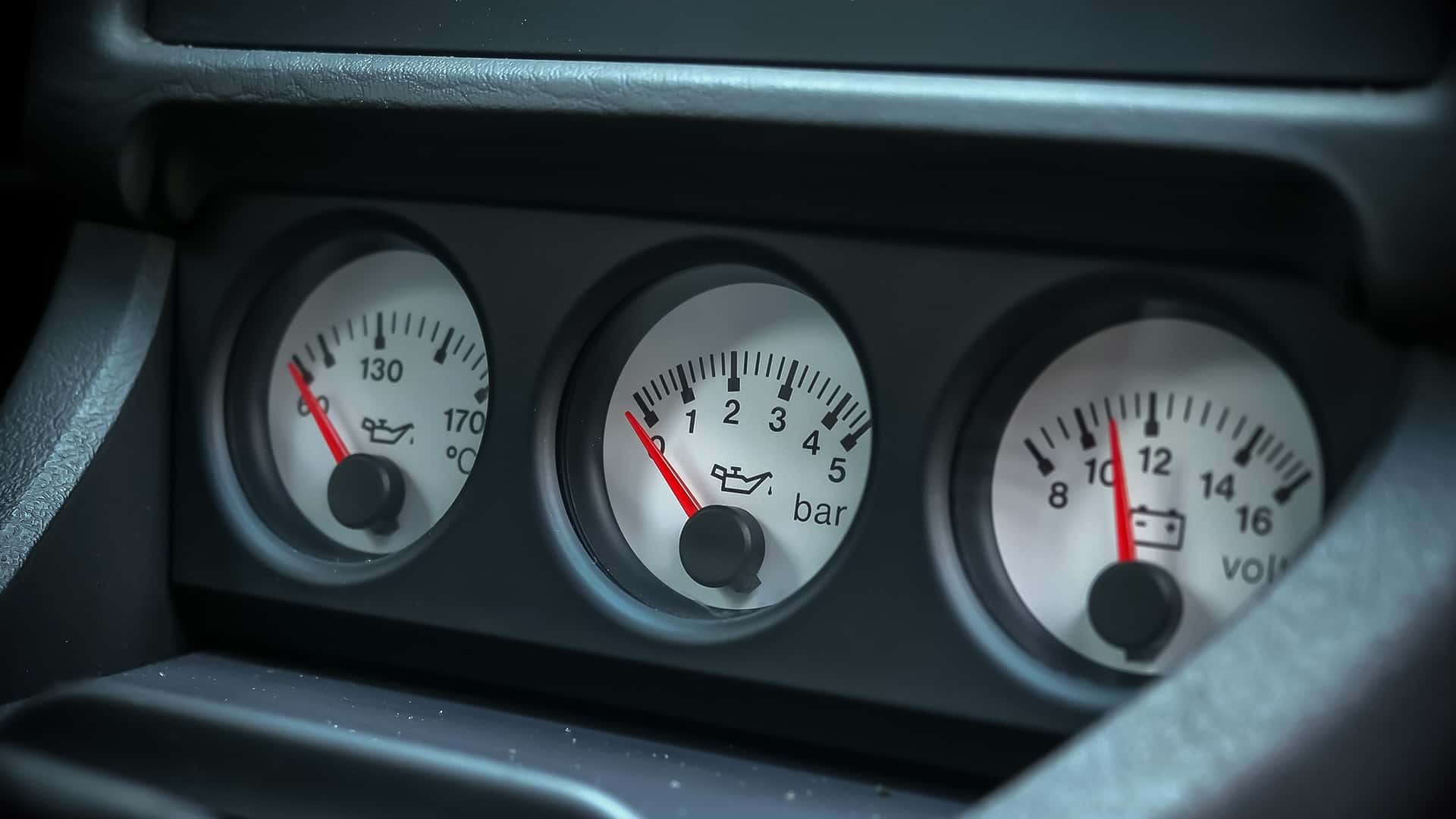
The dashboard retained the standard 80 Avant’s layout but received unique RS2 instrument faces. A 300 km/h speedometer and 7,200 rpm tachometer sat ahead of the driver. Porsche-designed auxiliary gauges for boost pressure and oil temperature occupied the center stack.
A leather-wrapped three-spoke steering wheel faced the driver, while the six-speed gear lever sprouted from the center console with a distinctive chrome surround. Alcantara trimmed the door inserts and lower dashboard. Carbon-look trim accented various interior surfaces, a fashionable detail in the mid-1990s.
Standard equipment was comprehensive: climate control, electric windows, central locking, and an upgraded audio system. The rear seats folded flat, creating a massive cargo area that could swallow track day equipment, mountain bikes, or family luggage with equal ease. This practical versatility distinguished the RS2 from two-seat sports cars.
Specifications
- Engine: ADU turbocharged inline five, 2,226cc (81mm x 86.4mm), DOHC, five valves per cylinder, KKK K24 turbocharger
- Power: 315 bhp at 6,500 rpm
- Torque: 302 lb-ft at 3,000 rpm
- Transmission: Six-speed manual, quattro AWD with Torsen center differential
- Chassis: Steel monocoque, 2,612mm wheelbase
- Suspension: MacPherson struts (front), torsion beam axle (rear)
- Brakes: Porsche vented discs 322mm (front), vented discs 299mm (rear)
- Wheels: Porsche Cup Design 8×17, Dunlop SP Sport 245/40 ZR17
- Weight: 1,595 kg
- Performance: 163 mph top speed, 0-60 mph in 4.8 seconds
Competition History
The RS2 Avant was designed as a road car but saw limited motorsport use. Several privateer entries competed in touring car races and hillclimb events throughout Europe during the late 1990s. The combination of quattro all-wheel drive, turbocharged power, and practical estate body made it popular for rally and rallycross events where all-weather capability mattered.
The RS2’s real competition was on public roads, where its devastating point-to-point performance embarrassed exotic sports cars. The famous statistic: the RS2 accelerated from 0-30 mph faster than a McLaren F1, thanks to quattro traction and turbo torque overwhelming the supercar’s rear-wheel drive.
Production and Legacy
Porsche’s Rossle-Bau facility in Zuffenhausen assembled exactly 2,891 RS2 Avants between June 1994 and July 1995. Each car received a numbered plaque on the center console identifying its production sequence. The majority went to Germany, with smaller numbers distributed across Europe. None were officially sold in the United States, though some have been imported under classic car provisions.
The RS2 established the template for every Audi RS model that followed: turbocharged power, quattro all-wheel drive, subtle styling, and devastating performance wrapped in practical bodywork. It proved that estate cars could be genuinely exciting, that practicality and performance weren’t mutually exclusive.
The Porsche partnership gave the RS2 credibility and engineering excellence Audi couldn’t achieve alone in 1994. The combination of brands created something greater than either company could produce independently. Those Porsche wheels, brakes, and the Zuffenhausen assembly became legend, creating a mystique that persists decades later.
Today, clean RS2 Avants command strong prices as enthusiasts recognize them as the foundation of Audi’s RS division and one of the greatest Q-cars ever built. The combination of rarity, Porsche involvement, and genuine performance capability makes them increasingly collectible. The RS2 represented a watershed moment when Audi transformed from a conservative luxury brand into a performance powerhouse, proving that fast wagons could compete with sports cars while carrying the family and luggage. It remains the ultimate expression of practical performance, the car that launched a thousand imitators but has never been truly equaled.