
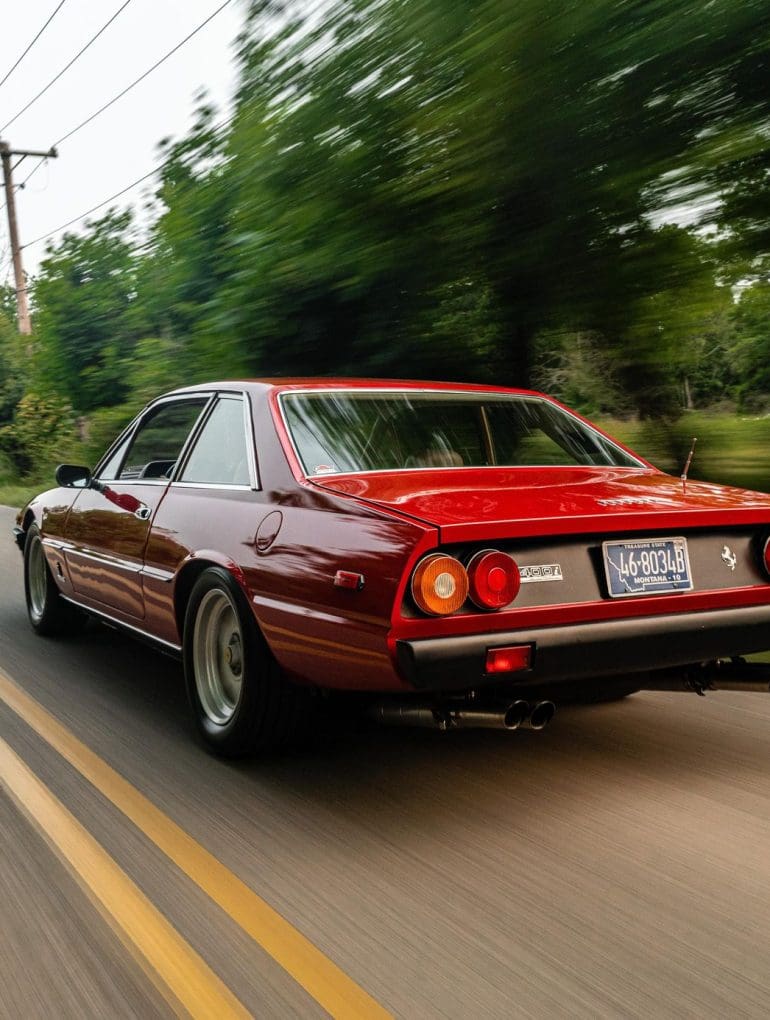

Turin, November 1979. Ferrari unveiled the 400i at the Motor Show, replacing the carburetor-fed 400 with a fuel-injected variant designed to satisfy increasingly stringent emissions regulations worldwide. The “i” designation stood for “injection,” marking the first time a Ferrari production car employed fuel injection rather than traditional carburetors. By 1984, the 400i had evolved significantly from its 1979 introduction, with revisions introduced in October 1982 that transformed both mechanically and aesthetically. The 4.8-liter V12 now produced 315 horsepower through revised camshaft profiles and exhaust headers. The cabin featured completely revised upholstery, new door panels, electronic switchgear, and a redesigned dashboard. This was Ferrari’s most accessible V12 grand tourer, available with either a five-speed manual or optional three-speed General Motors automatic transmission. The 1984 specification represented the 400i at its most refined.
Background and Origins
The 400 debuted in 1976, evolving from the 365 GT4 2+2 introduced in 1972. Designed by Pininfarina’s Leonardo Fioravanti, the elegant 2+2 grand tourer combined family usability with Ferrari’s legendary V12 performance. The original 400 used twin banks of three Weber carburetors, producing 340 horsepower.
By 1979, emissions regulations tightened globally. Ferrari replaced the Webers with Bosch K-Jetronic fuel injection, improving emissions compliance while simplifying maintenance. The 400i arrived as Ferrari’s most expensive model, yet also the most practical, offering genuine four-seat accommodation and automatic transmission availability.
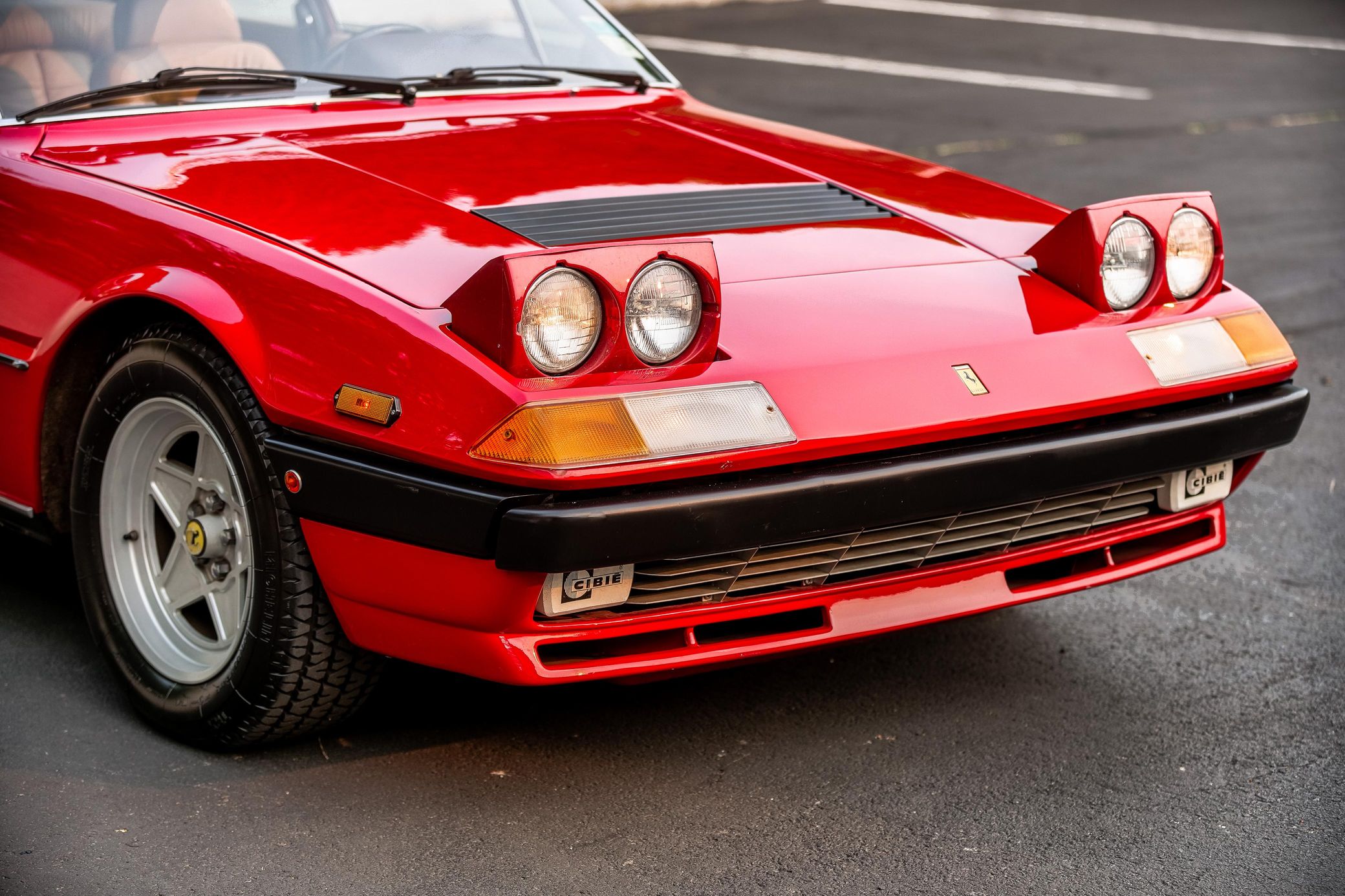
Three years later, in October 1982, Ferrari introduced significant updates. Revised camshaft profiles and exhaust manifolds increased horsepower to 315. The interior received a complete overhaul with new upholstery, revised door panels, redesigned center console, and modern electronic switchgear. External modifications included a narrower grille with exposed fog lights, body-colored trim replacing chrome, new mirrors bearing Ferrari shields, rear fog lights integrated into the bumper, and metric-sized wheels for Michelin TRX tires. By 1984, these improvements had been refined through two years of production.
Design and Engineering
The 400i was based on the 365 GT4 2+2’s steel monocoque platform with a 2,700mm wheelbase. The structure was designed for comfort and practicality rather than performance theater. The front-mounted engine and substantial wheelbase created inherently stable handling characteristics.
Front suspension used independent unequal-length double wishbones with coil springs and anti-roll bar. The 1984 specification included gas-filled shock absorbers introduced during the 1982 revision, improving ride quality and damping responsiveness. The rear employed semi-trailing arms with coil springs.
Braking was by ventilated discs measuring 300mm front and 280mm rear with dual-circuit hydraulics and power assistance. The system provided adequate stopping power for the 400i’s modest performance.
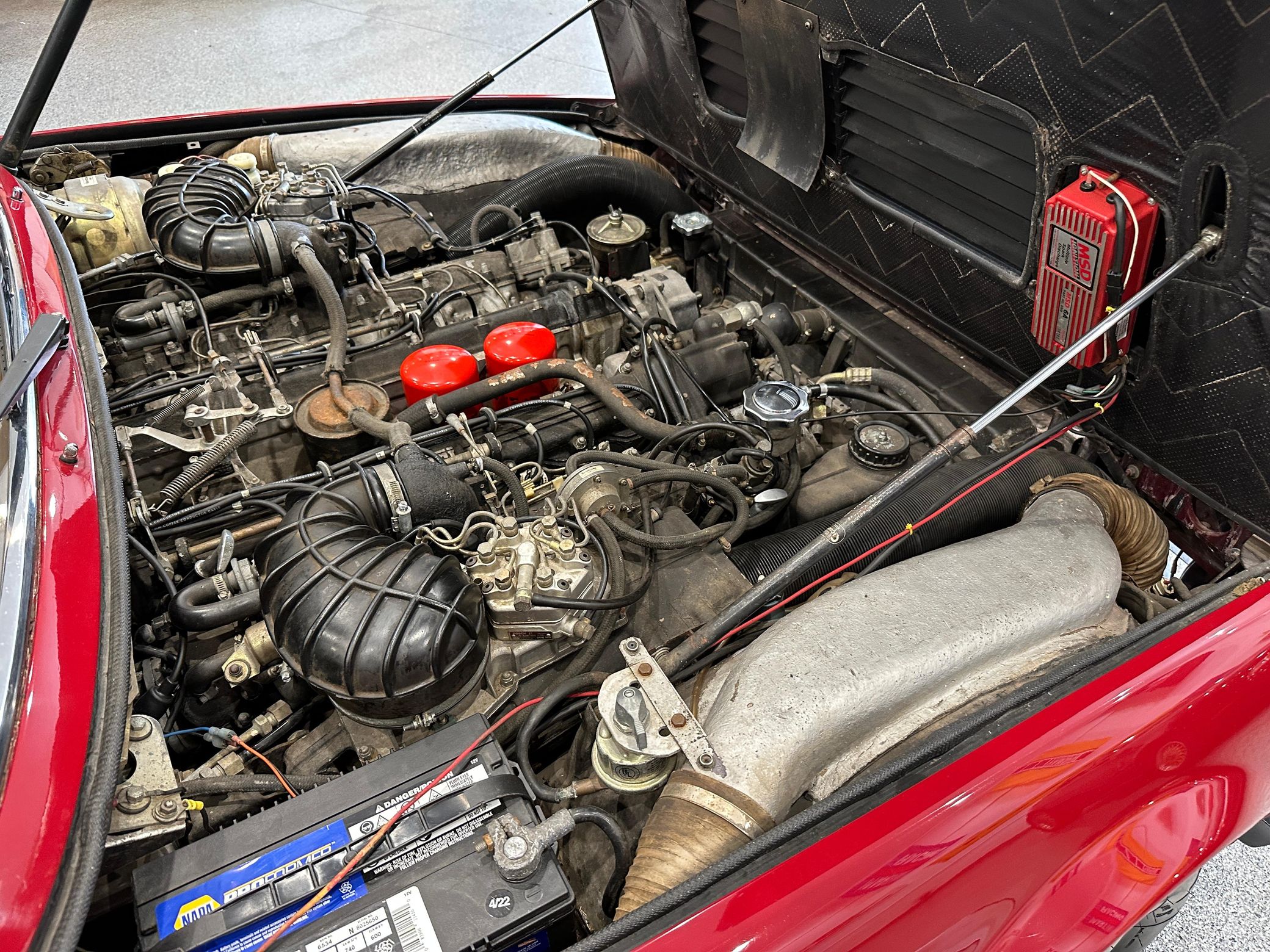
The engine was Ferrari’s legendary V12, displacing 4,823cc with an 81mm bore and 78mm stroke. All-aluminum construction featured dual overhead camshafts per bank controlling four valves per cylinder. The Bosch K-Jetronic fuel injection was purely mechanical, requiring no electronic controls beyond ignition.
By 1984, the engine benefited from the 1982 revisions. New camshaft profiles and revised exhaust manifolds increased output to 315 horsepower at 6,400 rpm and 304 lb-ft of torque at 4,200 rpm. The power delivery was smooth and linear, with broader torque delivery across the rpm range.
Transmission options were a five-speed manual with traditional gate shifter or a three-speed General Motors Turbo-Hydramatic automatic. The automatic featured a unique Ferrari bell housing and tailshaft, allowing broader market appeal while maintaining mechanical simplicity.
Styling
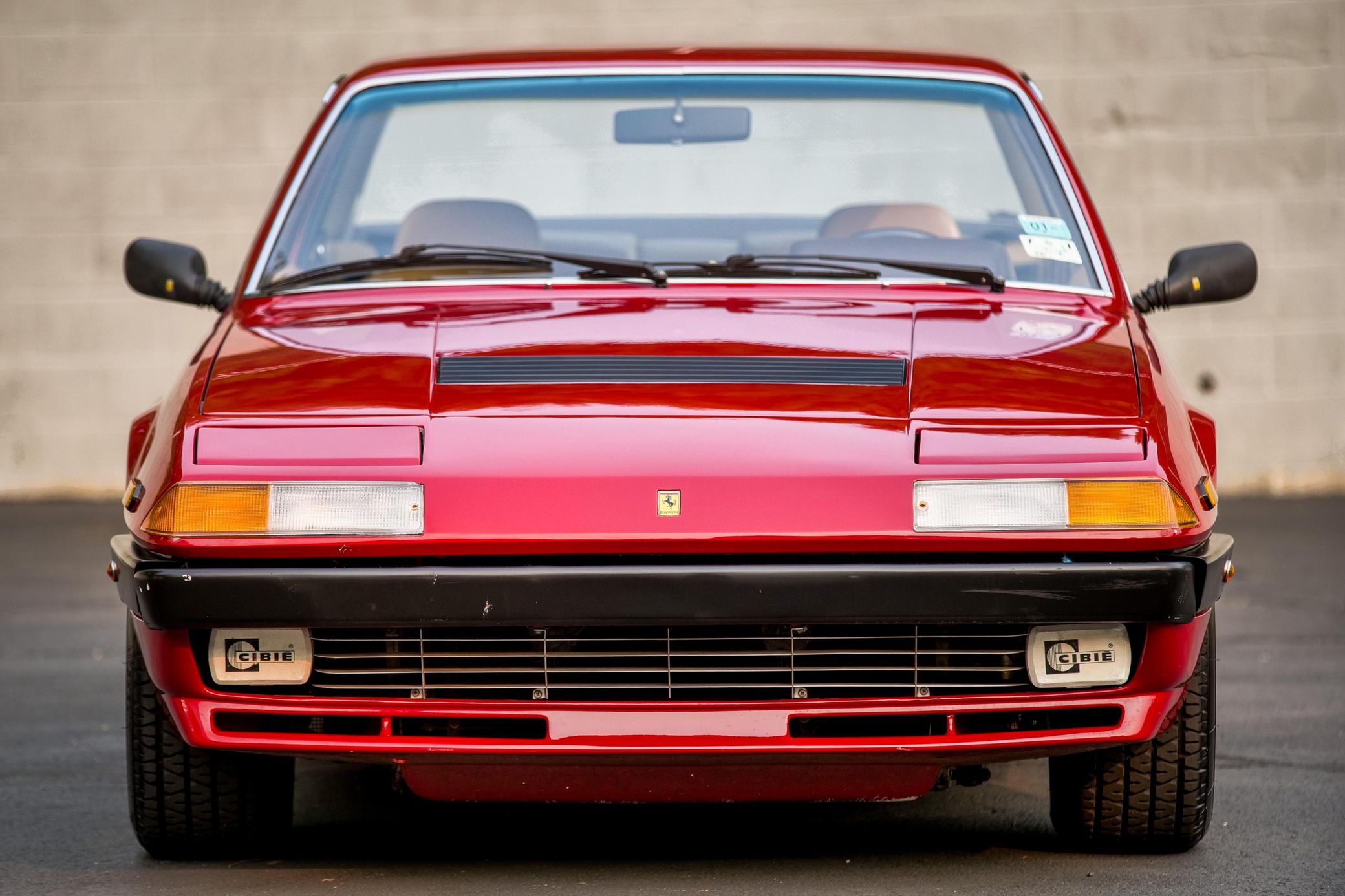
By 1984, the 400i featured the completely revised exterior introduced in October 1982. The long hood, short rear deck, and cab-forward proportions suggested performance while maintaining elegant proportions. The front bumper was updated with a narrower grille that exposed rectangular fog lights. The side profile remained uncluttered, featuring pronounced wheel arches and a gentle character line.
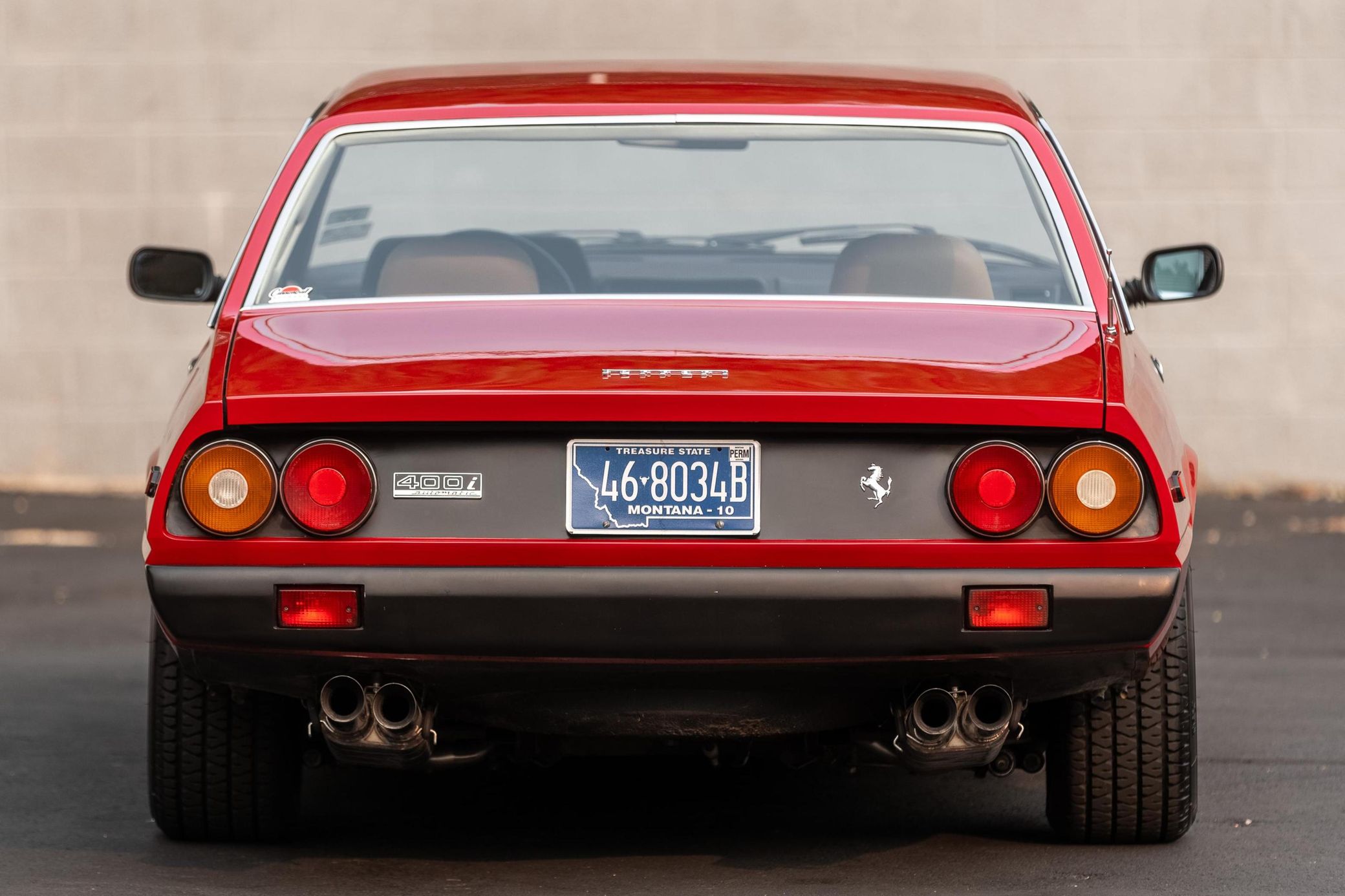
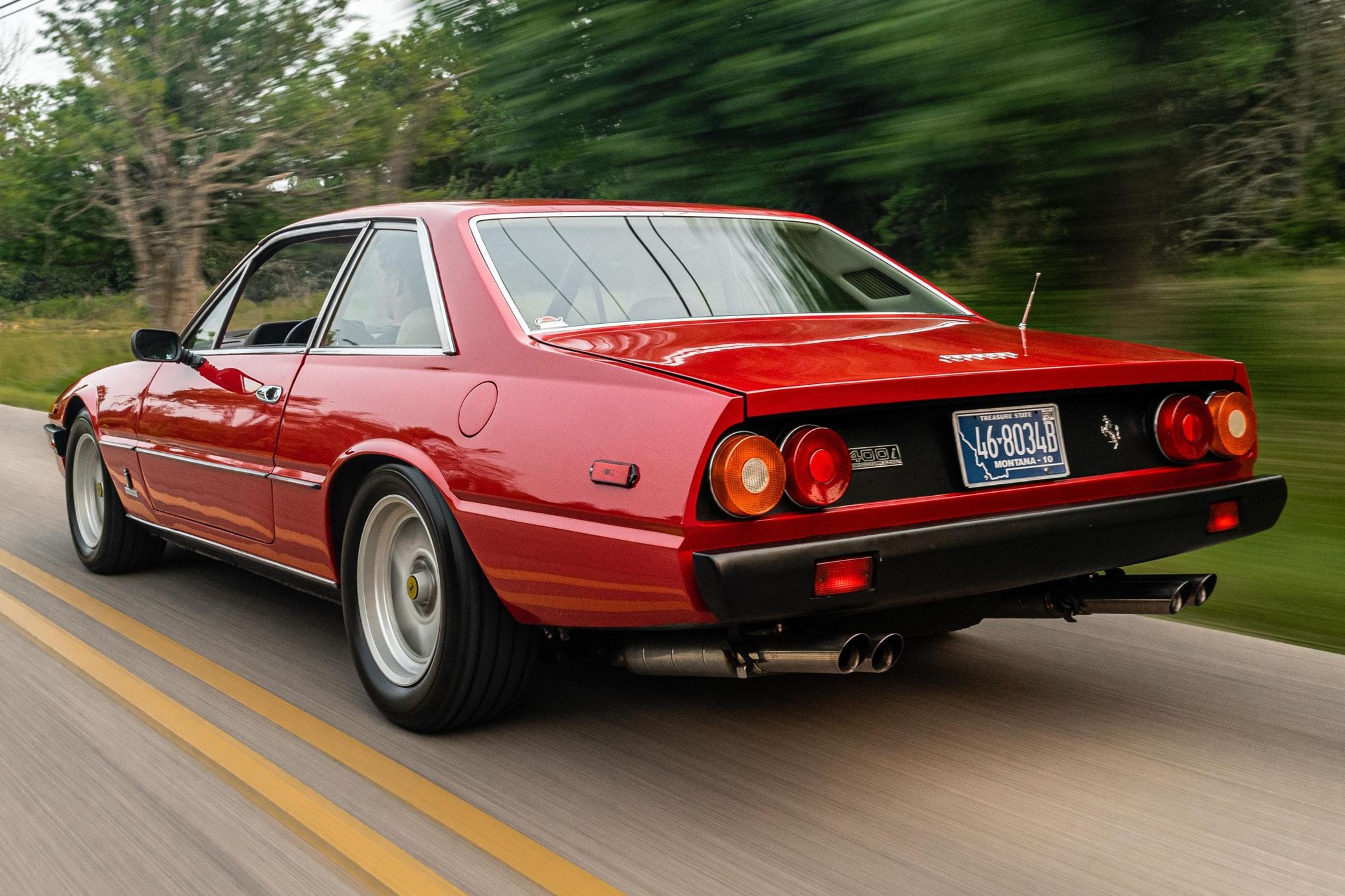
At the rear, the tail panel was now body-colored instead of matte black. New exterior mirrors bore small Ferrari shields. The overall appearance was more cohesive than the original 1979 design. Body panels were steel, hand-fitted over the monocoque structure.
Standard wheels were metric-sized 15-inch alloy units accommodating Michelin TRX tires. The tire profile was distinctly square-sided, providing precise feedback. Color choices included traditional Ferrari shades: Rosso Corsa red, Grigio Argento silver, Blu Scuro blue, and various metallics.
Interior
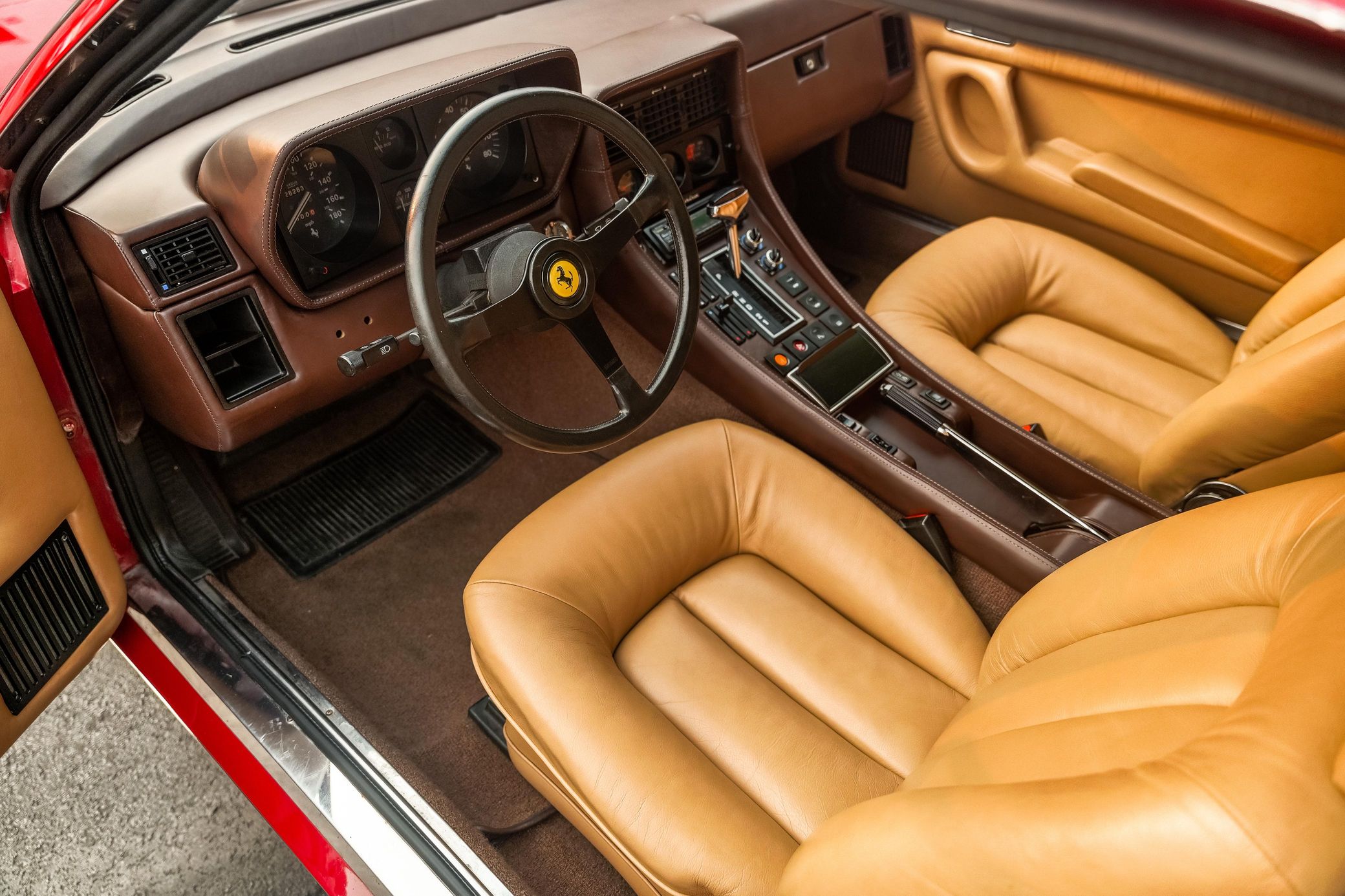
The 1984 cabin reflected the comprehensive 1982 revision. The interior was completely redesigned with new upholstery patterns, refreshed door panels, and a modern center console. Front seats provided genuine support for long-distance touring. The driving position was upright and forward, with excellent visibility. Rear seats accommodated four adults on extended journeys.
The dashboard featured completely revised Veglia gauges including tachometer, speedometer, oil pressure, water temperature, and fuel level. Electronic switchgear replaced mechanical controls throughout the cabin. Climate control was standard, though air conditioning remained optional. The overall atmosphere blended sporting intent with genuine comfort, creating a refined ambiance.
Specifications
- Engine: Ferrari V12, 4,823cc (81mm x 78mm), DOHC per bank, four valves per cylinder, Bosch K-Jetronic fuel injection
- Power: 315 bhp at 6,400 rpm
- Torque: 304 lb-ft at 4,200 rpm
- Transmission: Five-speed manual or three-speed GM automatic
- Chassis: Steel monocoque, 2,700mm wheelbase
- Suspension: Double wishbones (front), semi-trailing arms (rear), gas-filled dampers
- Brakes: Ventilated discs 300mm (front), 280mm (rear)
- Wheels: 15-inch metric alloy, Michelin TRX tires
- Weight: 1,814 kg
- Performance: 152 mph top speed, 0-60 mph in 6.9 seconds
Production and Legacy
Ferrari built approximately 1,305 400i models between 1979 and 1985, with roughly 883 automatic examples produced. By 1984, the model had matured significantly, with nearly six years of production refinement informing every detail.
The 400i was never sold in the United States, as Enzo Ferrari believed emerging environmental and safety regulations made turbocharged eight-cylinder cars more appropriate for American markets.
The 1984 400i proved that Ferrari could build practical grand tourers without sacrificing brand identity. The refined interior, updated exterior, and revised engine demonstrated Ferrari’s commitment to continuous improvement. The post-1982 specification represents the 400i at its most refined and desirable before production ended in 1985.
The Ferrari 400i represented a watershed moment when the company proved supercars could be practical. It celebrated everyday usability without sacrificing mechanical authenticity. The 1984 400i remains one of Ferrari’s most significant achievements, a grand touring masterpiece that democratized the Prancing Horse experience.