
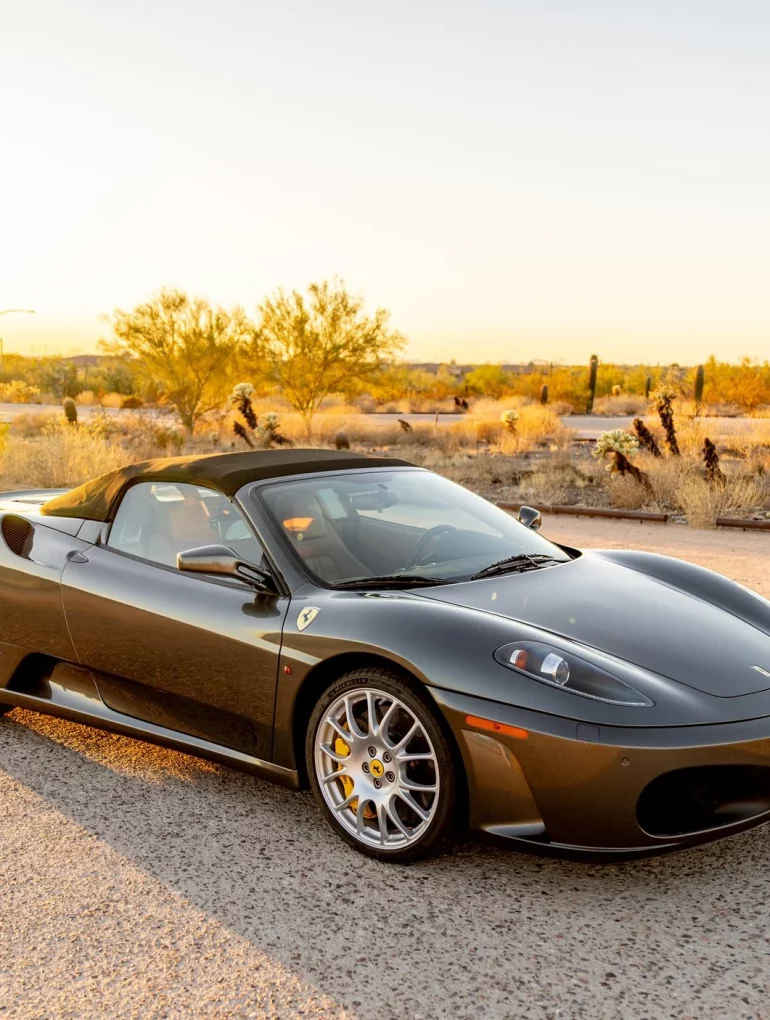

Paris, September 2004. Ferrari unveiled the F430 at the Motor Show, a mid-engine sports car that represented a fundamental shift in the company’s engineering philosophy. The “430” designation referenced the car’s 4.3-liter naturally aspirated V8 engine, a completely new unit sharing no components with its 360 Modena predecessor. Producing 490 horsepower at 8,500 rpm and 343 lb-ft of torque, the F430 delivered ninety additional horsepower compared to the 360. More importantly, the F430 introduced technologies directly derived from Ferrari’s Formula 1 program: an electronic differential (E-Diff), a steering wheel-mounted manettino allowing adjustable vehicle dynamics, and a six-speed F1-style paddle-shift transmission capable of gear changes in 150 milliseconds. This was Ferrari’s statement that road cars could benefit directly from racing technology. Production ran from 2004 to 2009, with approximately 17,500 examples built across coupe, Spider convertible, and track-focused Scuderia variants.
Background and Origins
The 360 Modena debuted in 1999, establishing itself as Ferrari’s most modern mid-engine sports car. By 2004, Ferrari recognized the 360 needed substantial improvements to compete against Lamborghini’s Gallardo and Porsche’s 911 Turbo. The F430 project began in 2002 with the explicit goal of translating Formula 1 technology into a production car.
Designing the F430 fell to Pininfarina, with significant input from renowned designer Frank Stephenson. Rather than dramatic styling changes, the goal was evolutionary refinement focused on mechanical innovation. The aluminum chassis platform was carried over from the 360, providing proven structure while engineers focused on powertrain development.
The all-new V8 engine was the centerpiece, developed collaboratively with Maserati but entirely distinct from any previous Ferrari unit. The 4.3-liter displacement increased significantly over the 360’s 3.6 liters, with cylinder spacing of just 104 millimeters creating a remarkably compact block. A flat-plane crankshaft optimized for high-revving performance, combined with continuously variable timing, maximized torque delivery across the entire rev range.
The F430 debuted at Paris in September 2004, with deliveries commencing in early 2005. The Spider convertible variant debuted in March 2005 at Geneva. In 2007, the track-focused Scuderia variant arrived with 510 horsepower and Michael Schumacher’s suspension tuning.
Design and Engineering
The F430 was based on a tubular aluminum chassis with a 2,600mm wheelbase. The proven structure allowed Ferrari to focus on powertrain development rather than fundamental platform redesign.
Front suspension used unequal-length double wishbones with adaptive dampers and coil springs. The rear employed a similar arrangement with adaptive suspension adjusting for different driving conditions. Electronic sensors monitored suspension travel, body movement, and steering angle, allowing real-time damping adjustment. Anti-roll bars controlled body roll effectively.
Braking was by ventilated discs measuring 370mm front and 330mm rear with Brembo calipers. Carbon-ceramic braking was optional, providing superior fade resistance. The system featured a new molybdenum-enhanced cast iron alloy for improved heat dissipation.
The engine was Ferrari’s new 4.3-liter V8, displacing 4,307cc with a 92mm bore and 81mm stroke. The all-aluminum block and head featured dual overhead camshafts per bank controlling four valves per cylinder. The flat-plane crankshaft, con rods, and pistons were newly designed for optimal high-revving performance.
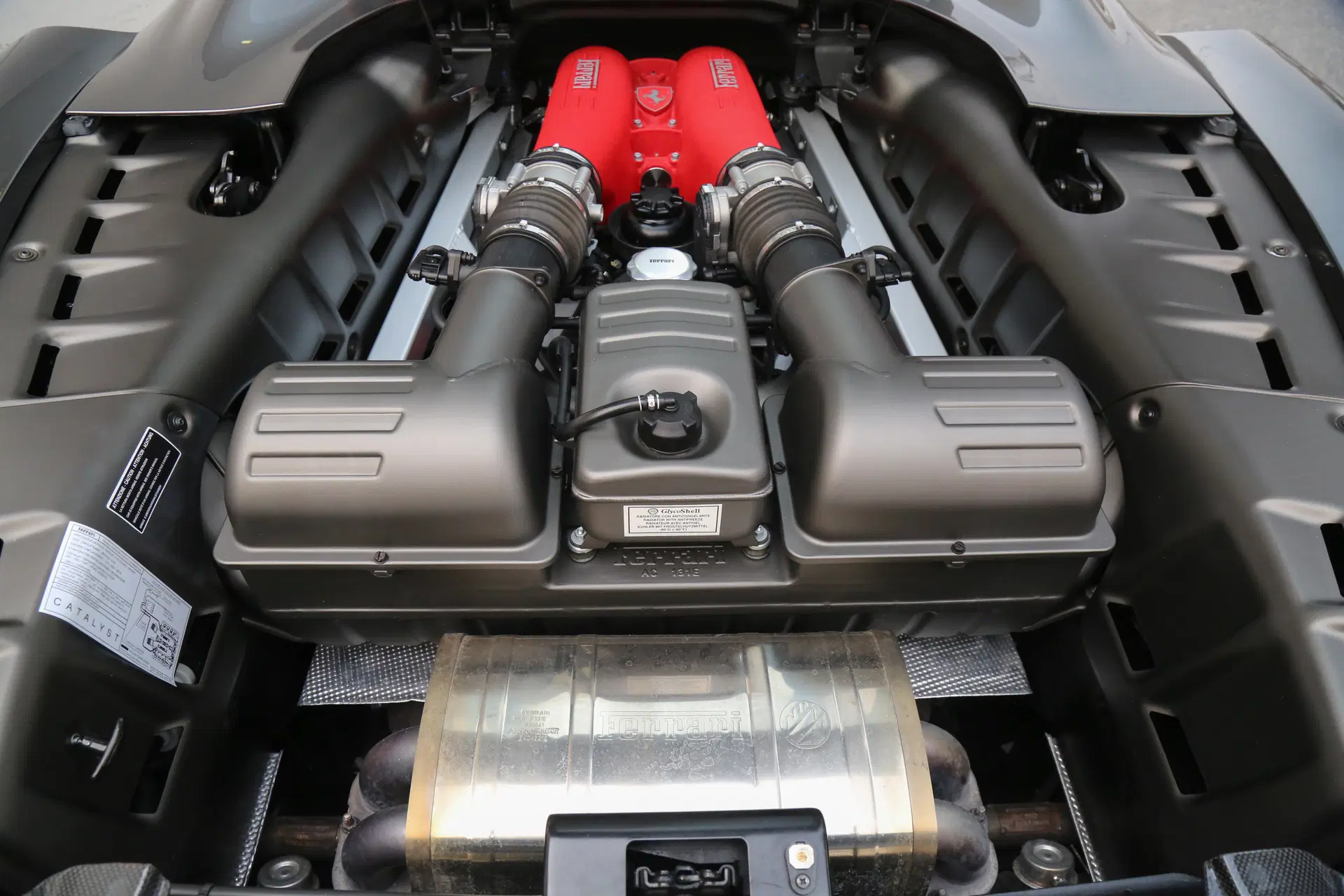
With an 11.3:1 compression ratio and a rotating intake plenum optimizing intake resonance, output was 490 horsepower at 8,500 rpm and 343 lb-ft of torque at 5,250 rpm. Two Bosch Motronic ME7 electronic control units managed fuel injection and ignition, ensuring Euro 4 and LEV2 emissions compliance while delivering uncompromised performance.
Transmission options were a six-speed manual or optional F1-style paddle-shift transmission. The paddle system shifted gears in 150 milliseconds using a sophisticated single-clutch system borrowed directly from Ferrari’s F1 program. A limited-slip differential transferred power to the rear wheels.
The F430 introduced the electronic differential (E-Diff), previously reserved for Ferrari’s F1 cars. This sophisticated system adjusted differential lock-up electronically, improving traction during acceleration and cornering grip under extreme forces. The system effectively eliminated wheelspin by transferring torque to whichever rear wheel had better traction.
Styling
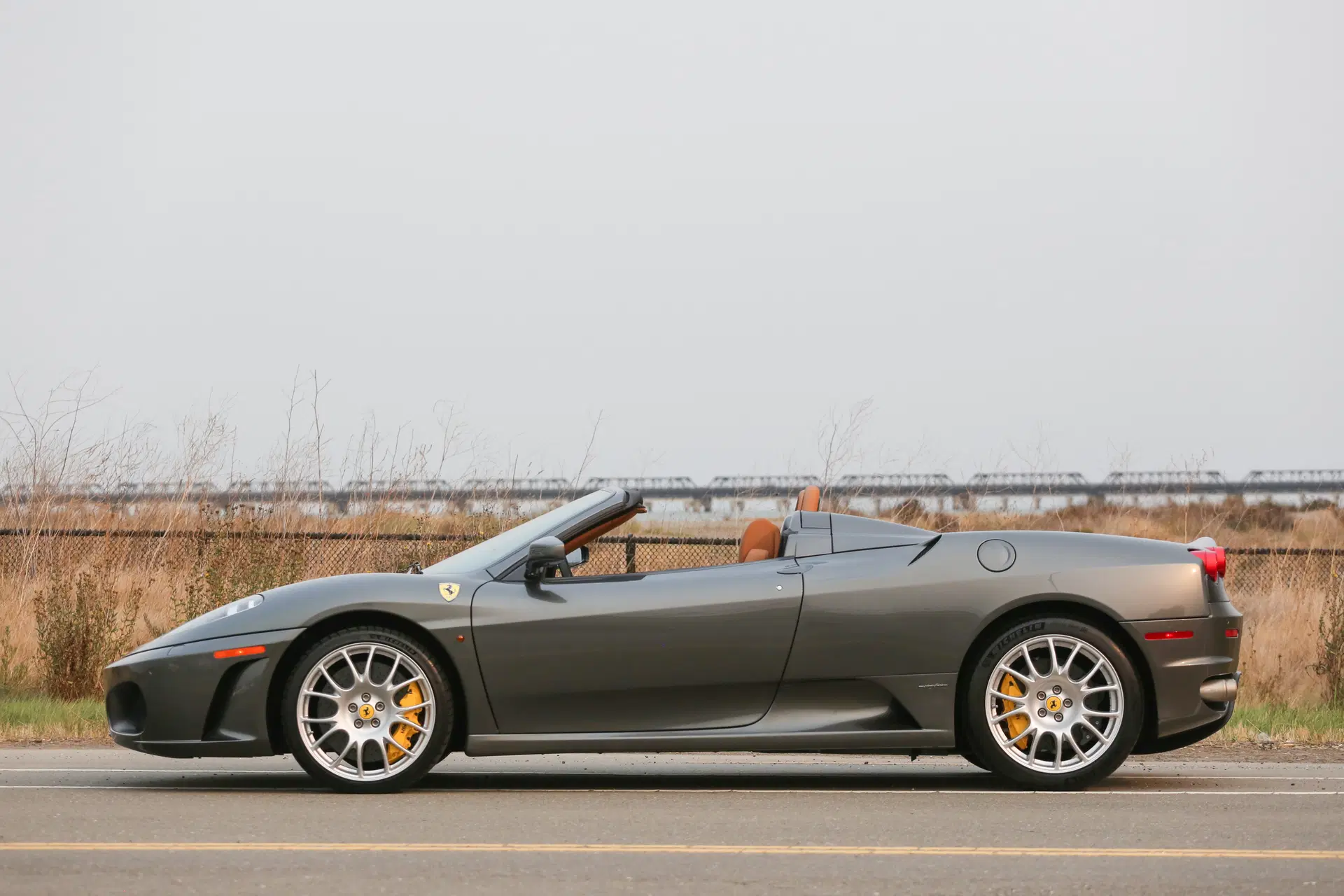
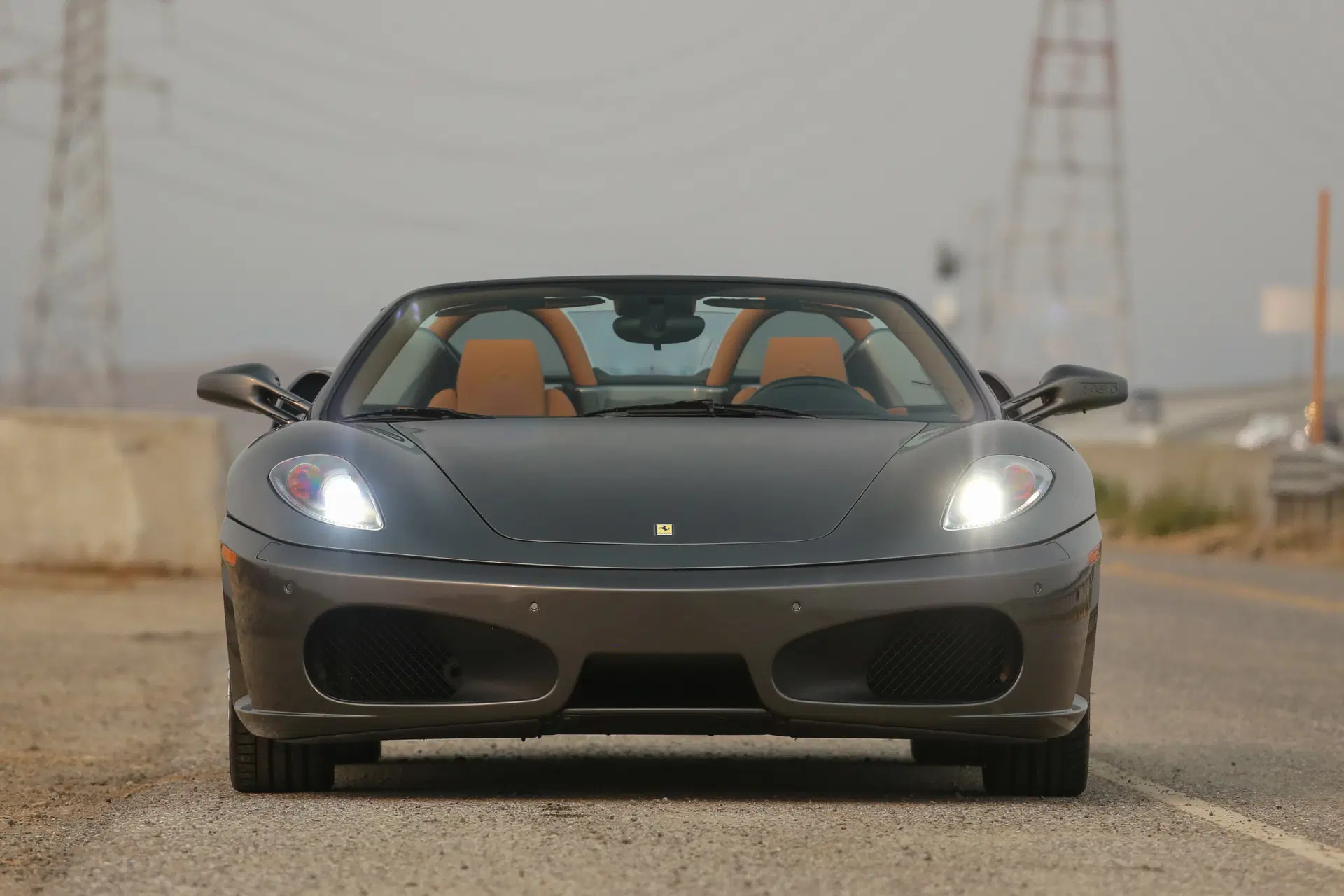
Pininfarina’s design refined the 360 Modena’s proportions rather than revolutionizing them. The long hood, mid-mounted engine, and short rear deck created classic sports car proportions. Pop-up headlights kept the nose clean, while the side profile emphasized aerodynamic efficiency.
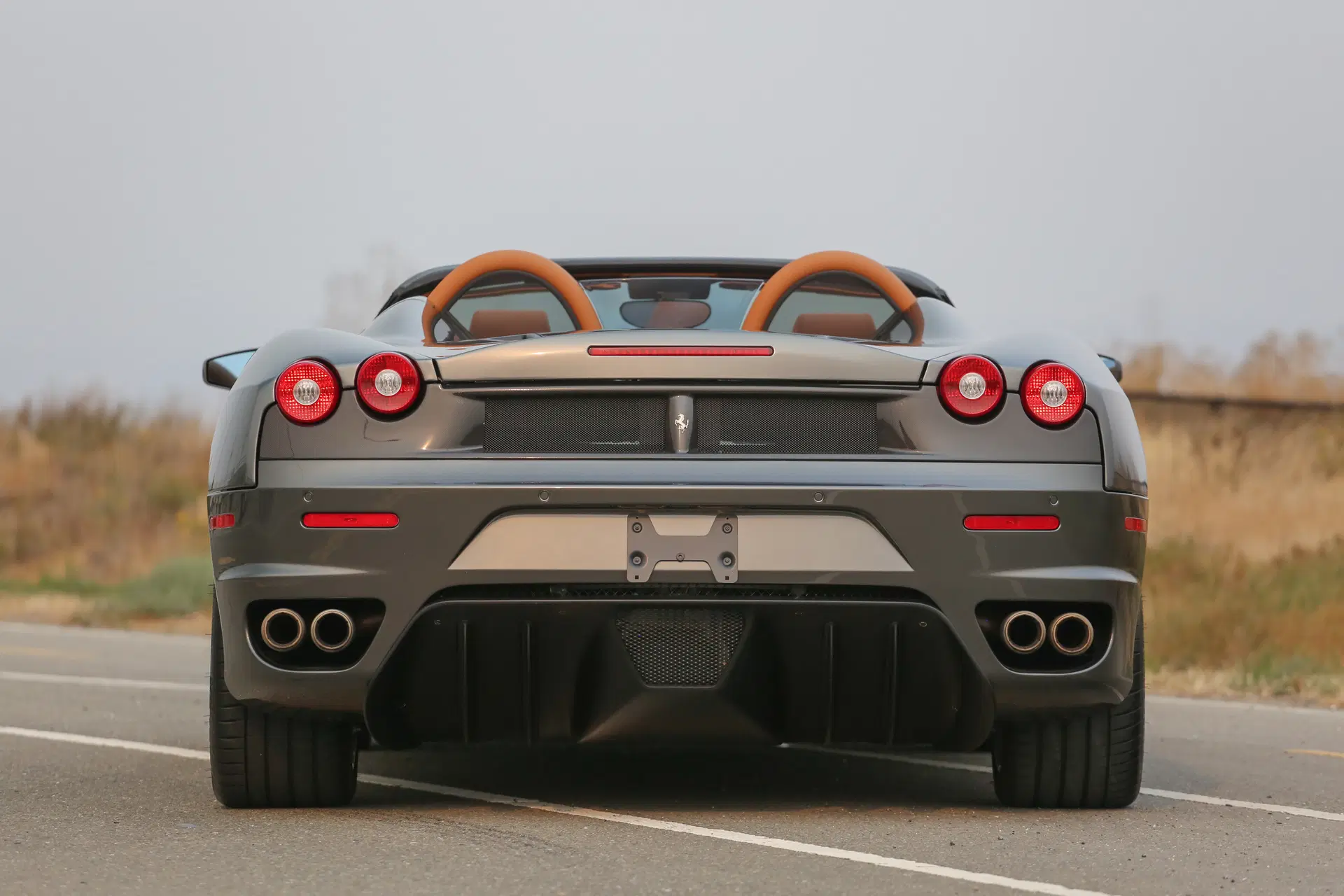
The front bumper featured large air intakes for brake and engine cooling, functional elements integrated seamlessly. The side profile was uncluttered, allowing elegant proportions to dominate. At the rear, quad exhaust outlets emerged from a diffuser, with a fixed wing providing downforce without excessive drag. The 50 percent increase in downforce compared to the 360 improved high-speed stability dramatically.
Standard wheels were 19-inch alloy units wearing Michelin or Pirelli tires.
Interior
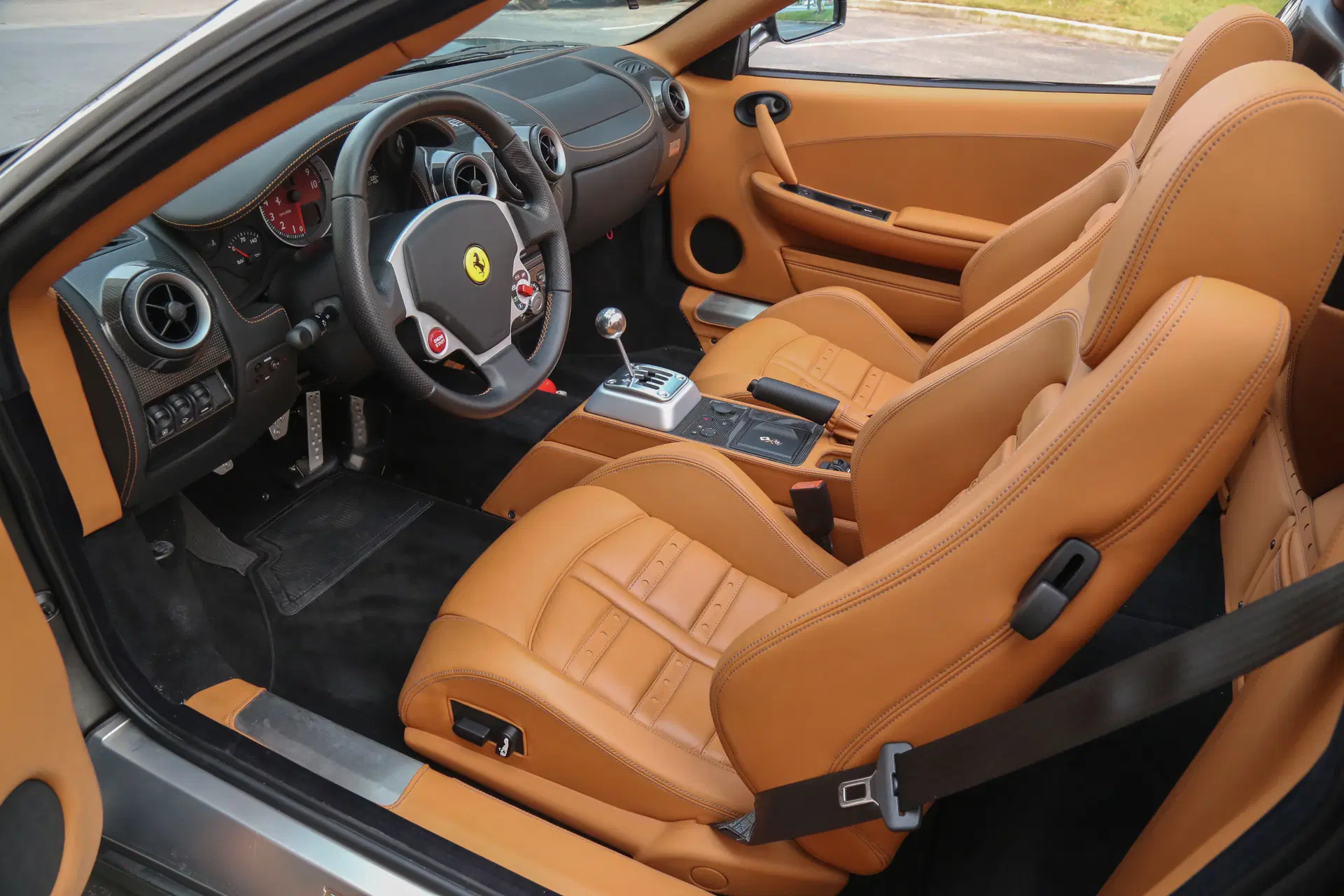
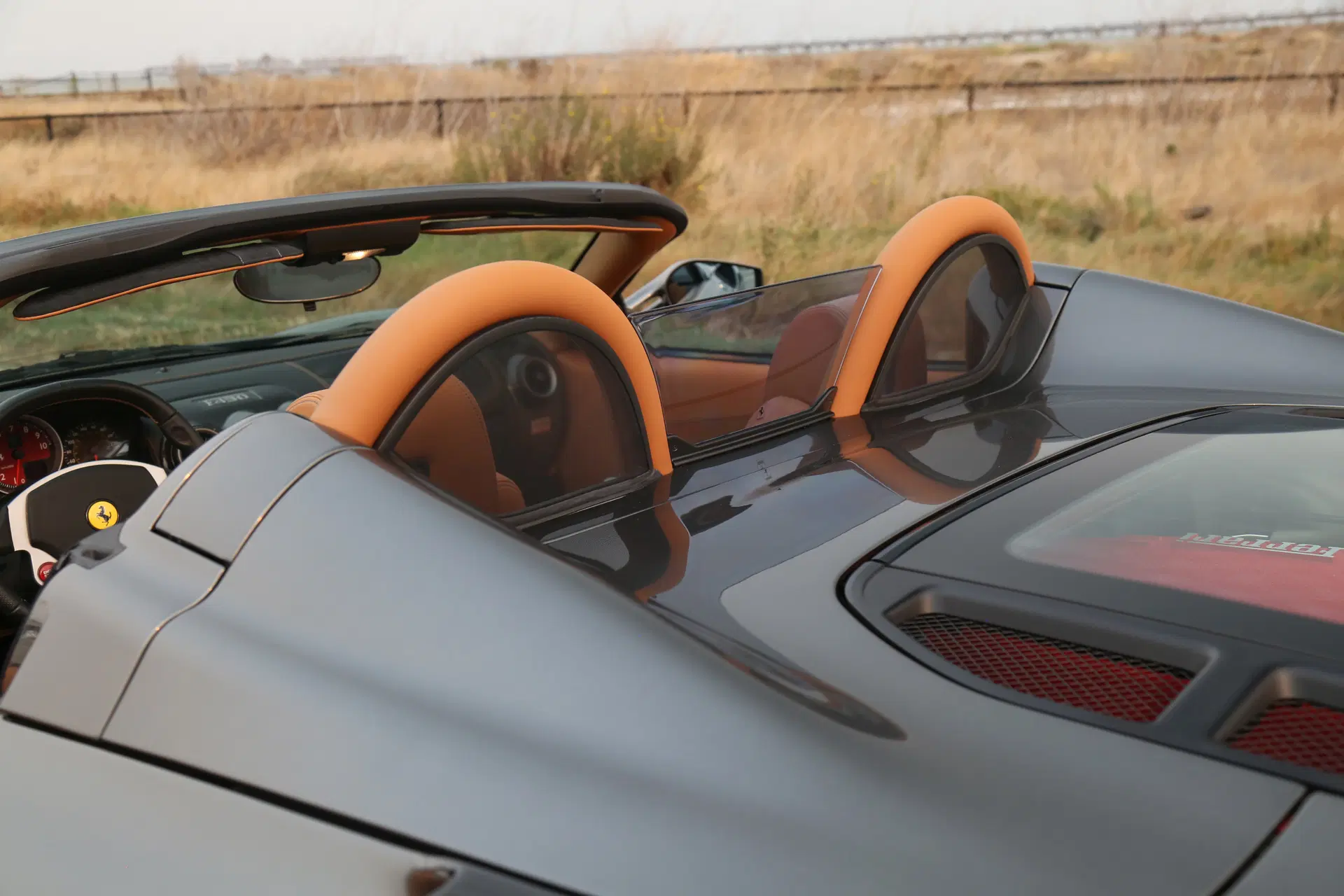
The cabin was trimmed in leather with complementary cloth accents and extensive personalization options through Ferrari’s Scaglietti customization program. Two individual bucket seats provided excellent lateral support. The driving position was low and forward, with excellent visibility.
The most striking cabin feature was the steering wheel-mounted manettino, inherited directly from Ferrari’s F1 program. The five-position dial allowed drivers to select driving modes: Ice, Wet, Sport, Race, and CST-Off, each adjusting suspension stiffness, traction control intervention, E-Diff behavior, and F1 transmission shift speed. This innovation allowed drivers to tailor the F430’s character for any condition without exiting the car.
The dashboard featured comprehensive instrumentation with an integrated onboard computer. Climate control, premium audio, and satellite navigation were standard.
Specifications
- Engine: V8, 4,307cc (92mm x 81mm), DOHC per bank, four valves per cylinder
- Power: 490 bhp at 8,500 rpm
- Torque: 343 lb-ft at 5,250 rpm
- Transmission: Six-speed manual or F1-style paddle-shift (150ms shifts)
- Chassis: Aluminum tubular frame, 2,600mm wheelbase
- Suspension: Double wishbones (front and rear), adaptive dampers
- Brakes: Ventilated discs 370mm (front), 330mm (rear), optional carbon-ceramic
- Wheels: 19-inch alloy, Michelin/Pirelli tires
- Weight: 1,450 kg
- Performance: 196 mph top speed, 0-60 mph in 3.6 seconds
Production and Legacy
Ferrari built approximately 17,500 F430 models between 2004 and 2009, comprising roughly 8,500 coupes, 7,500 Spiders, and 1,500 Scuderias. Assembly took place at Maranello with meticulous hand-finishing reflecting Ferrari’s quality standards. The extended production run reflected robust customer demand and the F430’s broad appeal.
The F430 proved that Formula 1 technology could enhance road car performance without sacrificing practicality or reliability. It established templates for electronic differential systems and adjustable vehicle dynamics that influenced automotive development globally.
Today, F430 examples are increasingly appreciated by collectors. The combination of 490 horsepower V8 authenticity, F1-derived technology, and genuine usability has created strong demand.
The Ferrari F430 represented the zenith of mid-engine V8 development before forced induction became mandatory. It demonstrated that naturally aspirated engines could deliver exotic performance, that racing innovation could improve road car behavior. The F430 remains one of Ferrari’s greatest achievements, a mid-engine masterpiece proving technology and elegance weren’t mutually exclusive.