
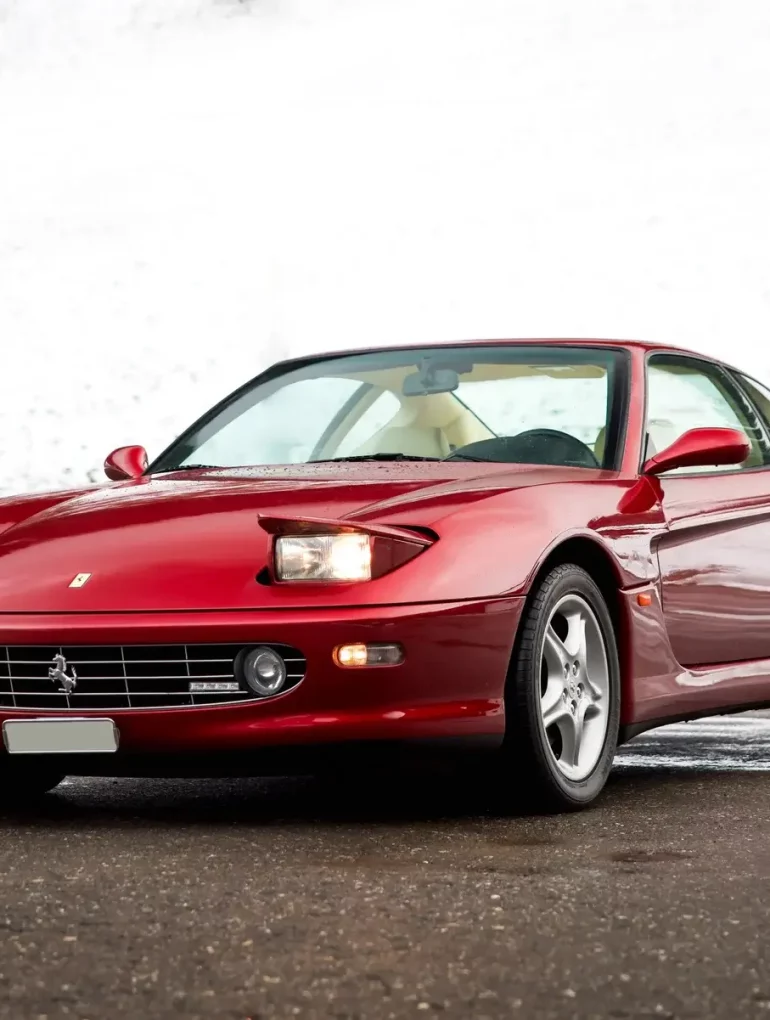

Geneva Motor Show, March 1998. Ferrari introduced the 456M, the refined evolution of its distinguished front-engine 2+2 grand tourer celebrating that naturally aspirated V12 power combined with practical comfort could define authentic grand touring excellence. The designation “M” stood for Modificata, signifying systematic improvements over the original 456 GT while maintaining the core character that established the model’s legendary appeal. The 5.5-liter naturally aspirated V12 produced 442 PS (436 horsepower) at 6,250 rpm and 406 lb-ft of torque at 4,500 rpm, delivering 192 mph capability from a 2+2 coupe configuration proving that four-seat practicality could coexist with genuine supercar performance.
This was Maranello celebrating that mechanical refinement and elegant proportion could create something enduring: the 456M could accelerate from 0-60 mph in approximately 5.0 seconds, establishing credentials rivaling contemporary high-performance machines while maintaining the comfort expected from Ferrari’s grand touring tradition. Production ran from 1998 through 2003, with 1,338 examples built—688 manual GT models and 650 automatic GTA variants—establishing the 456M as one of Ferrari’s most distinctive modern front-engine V12 grand tourers.
Background and Origins
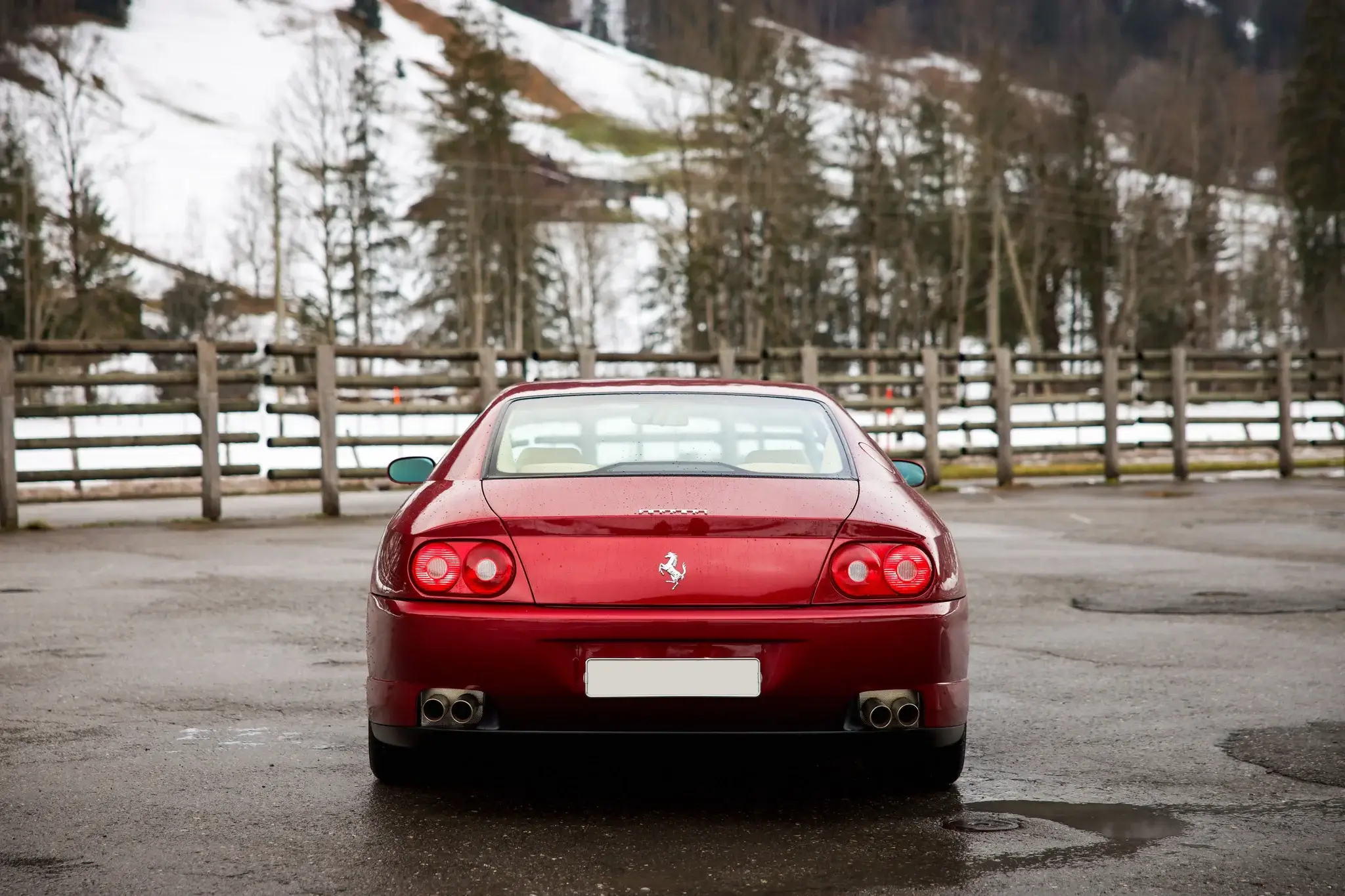
The 456M represented a systematic evolution of the 456 GT, which Ferrari had introduced in 1992. Rather than develop an entirely new platform, management determined that aerodynamic optimization, improved cooling systems, a carbon-fiber bonnet, and refined interior appointments would maintain competitive positioning while honoring the original design philosophy.
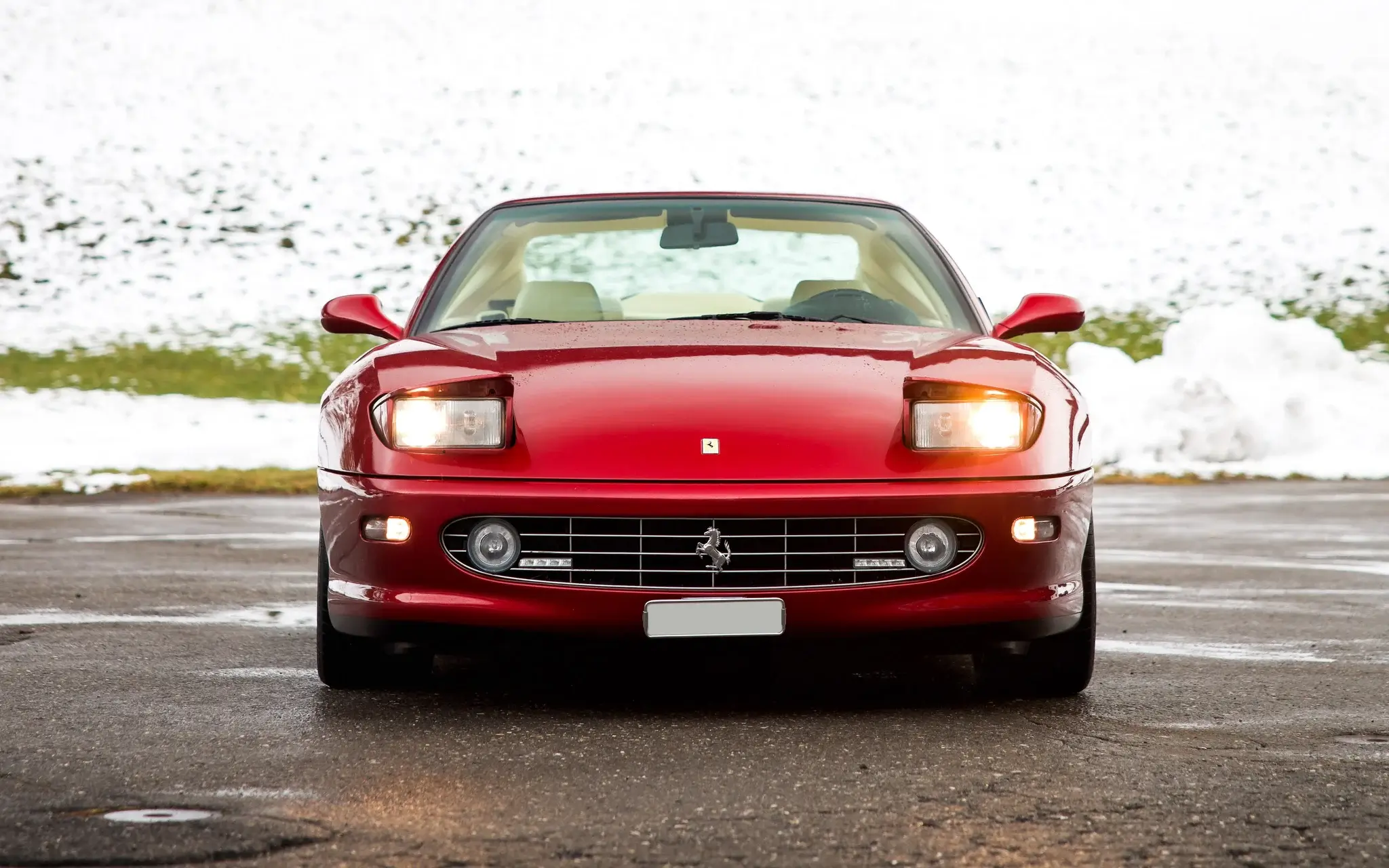
Pininfarina, with Ken Okuyama leading the 456M’s styling and aerodynamic revisions, developed the visual and engineering updates. The result retained the fundamental architecture of the 456 while receiving meaningful refinements established through testing and customer feedback. The firing order of the V12 was altered to improve smoothness and balance, representing one of the most significant mechanical changes beneath the surface.
Design and Engineering
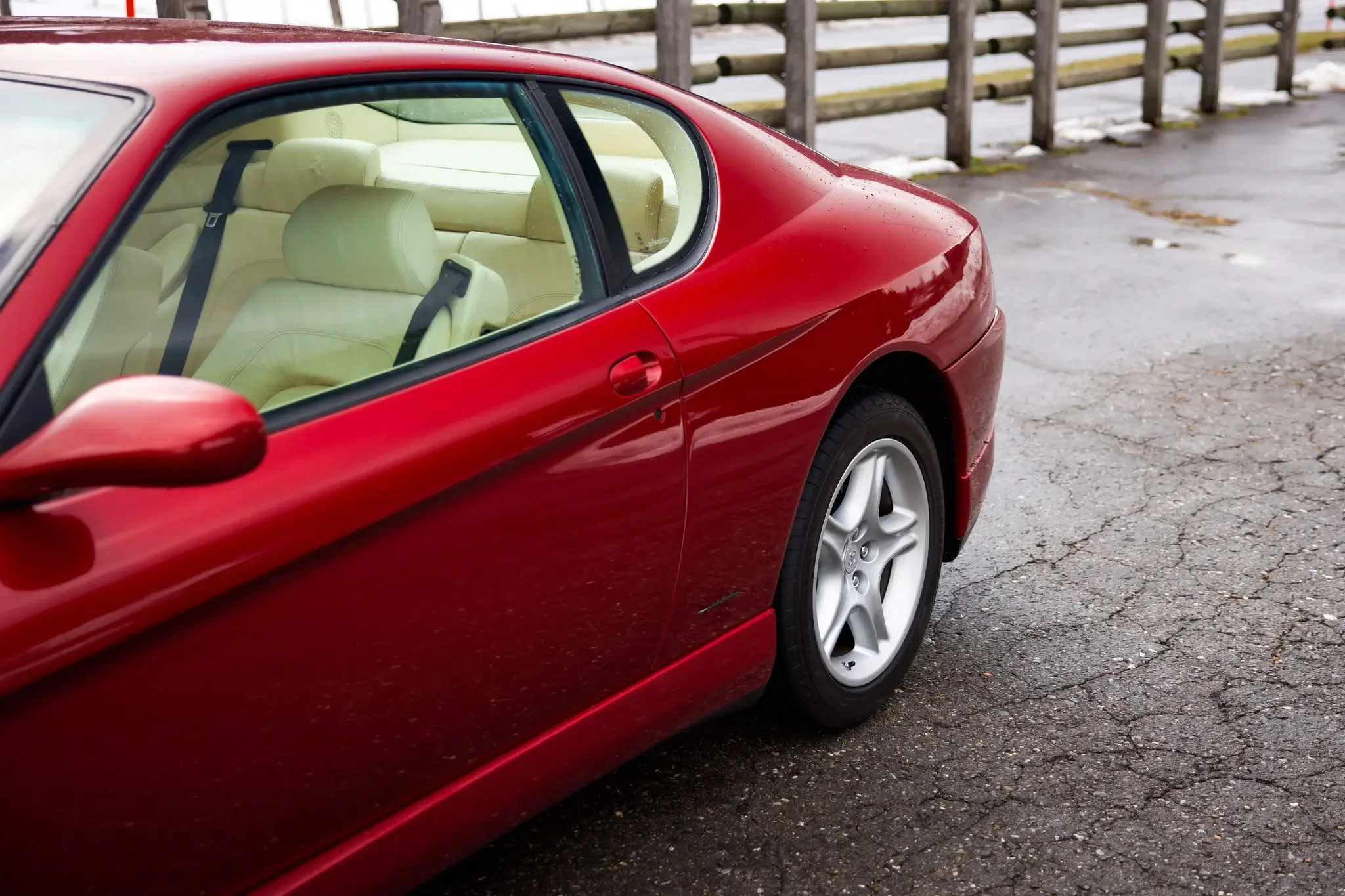
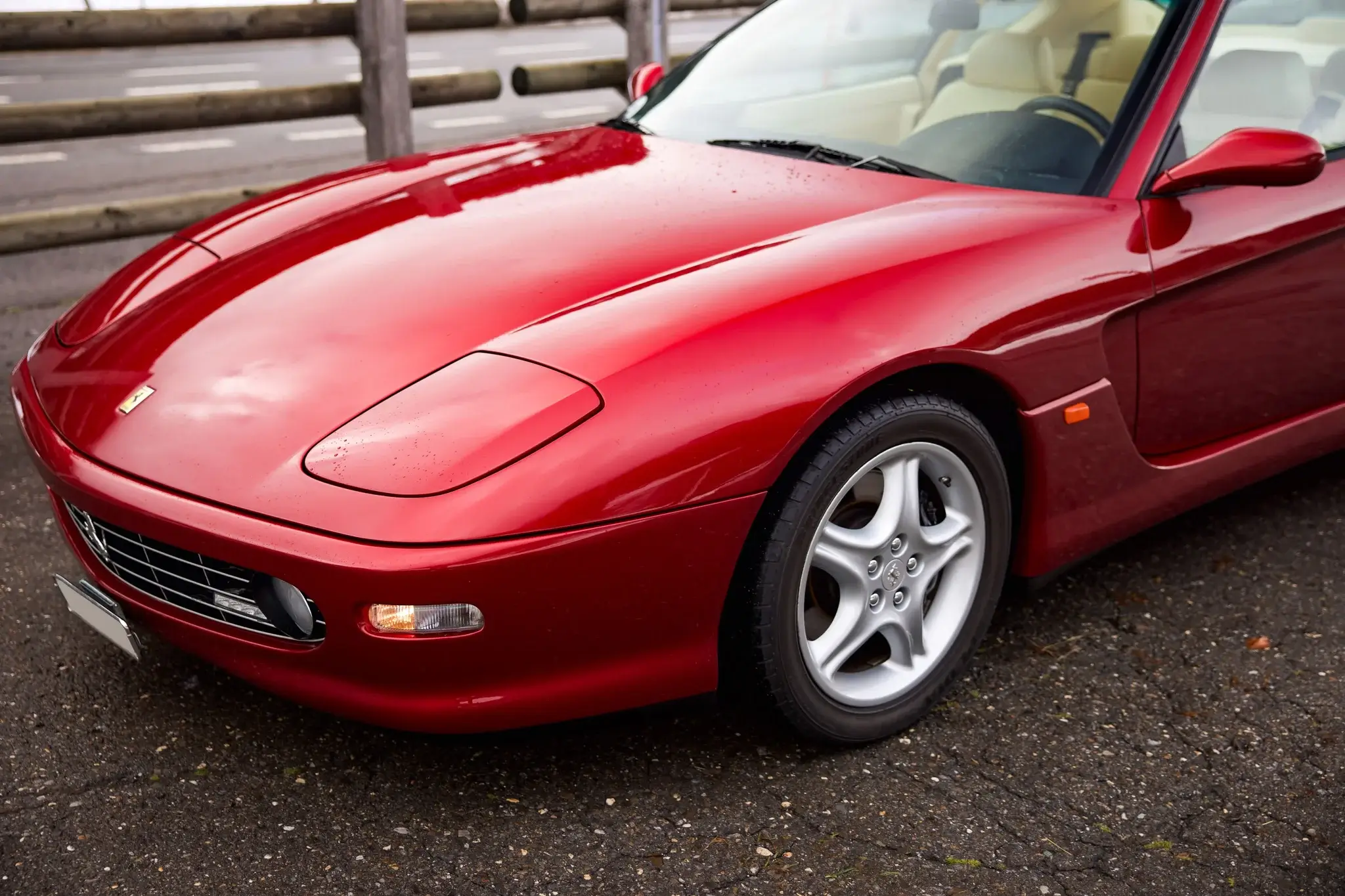
The 456M retained Pininfarina’s elegant proportions established by the original 456, but systematic aerodynamic refinement created meaningful improvements. The redesigned front end removed the distinctive twin hood scoops from the original 456, replacing them with a carbon-fiber bonnet that marked Ferrari’s first commercial application of carbon fiber for a primary body panel. Revised bumpers and grille treatment optimized cooling performance while a fixed rear spoiler replaced the motorized unit of the earlier model. Integrated ducting improved aerodynamic efficiency while reducing lift at high speed. The overall proportions suggested that genuine performance required refined engineering rather than theatrical styling drama. The front-mounted longitudinal engine arrangement established the 2+2 silhouette that defined the model’s grand touring character throughout its production cycle.
The chassis employed independent double-wishbone suspension front and rear with self-leveling rear suspension and electronically controlled dampers providing selectable settings. Coil springs and sophisticated dampers maintained the refinement expected from a luxury grand tourer. Anti-roll bars provided cornering control without excessive harshness. Braking was by ventilated discs with four-piston Brembo calipers and ABS, providing powerful stopping power adequate for the V12’s acceleration. Rack-and-pinion steering provided direct feedback and engaging control characteristics. Traction control completed the performance-oriented chassis setup.
The 456M’s 5.5-liter F116C naturally aspirated V12 represented mature naturally aspirated engineering celebrating mechanical authenticity. Displacing 5,474 cubic centimeters with four valves per cylinder—48 total valves—and dual overhead camshafts for each cylinder bank, the engine produced 442 PS (436 horsepower) at 6,250 rpm and 406 lb-ft of torque at 4,500 rpm. The 65-degree V angle and dual overhead camshaft configuration established the mechanical character defining Ferrari’s grand touring V12 tradition. With 10.6:1 compression ratio and sophisticated Bosch Motronic M5.2 fuel management, the revised firing order improved smoothness and balance. Dry-sump lubrication maintained oil supply during aggressive driving.
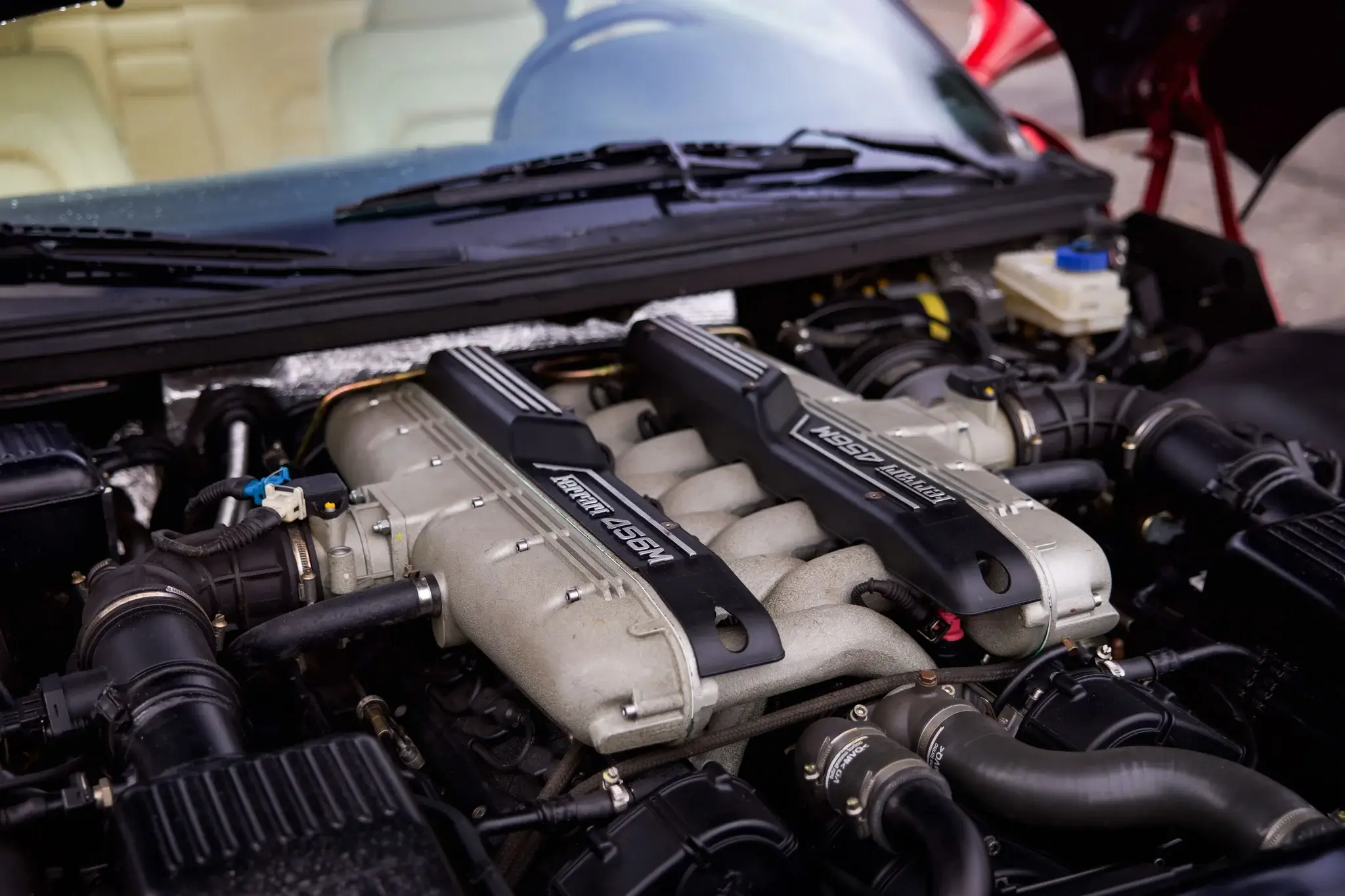
The power delivery was distinctly high-revving in character, requiring disciplined driving through the six-speed manual transmission (GT) or available four-speed automatic (GTA) to exploit full performance potential. The mechanical limited-slip differential helped maintain traction under acceleration, establishing handling balance suited to both spirited driving and practical grand touring applications. This emphasis on mechanical directness reflected Ferrari philosophy celebrating driver connection and engineering authenticity.
Weight management achieved through the carbon-fiber bonnet, aluminum body panels, and tubular steel space-frame construction established the 456M at approximately 1,690 kilograms, establishing a power-to-weight ratio demonstrating competitiveness with contemporary high-performance machines. Acceleration from 0-60 mph required about 5.0 seconds (with factory specifications stating 0-100 km/h in 5.2 seconds for the GT and 5.5 seconds for the GTA), with top speed reaching 192 mph, establishing exceptional performance credentials that made the 456M the fastest four-seat production car in the world at its launch.
Styling
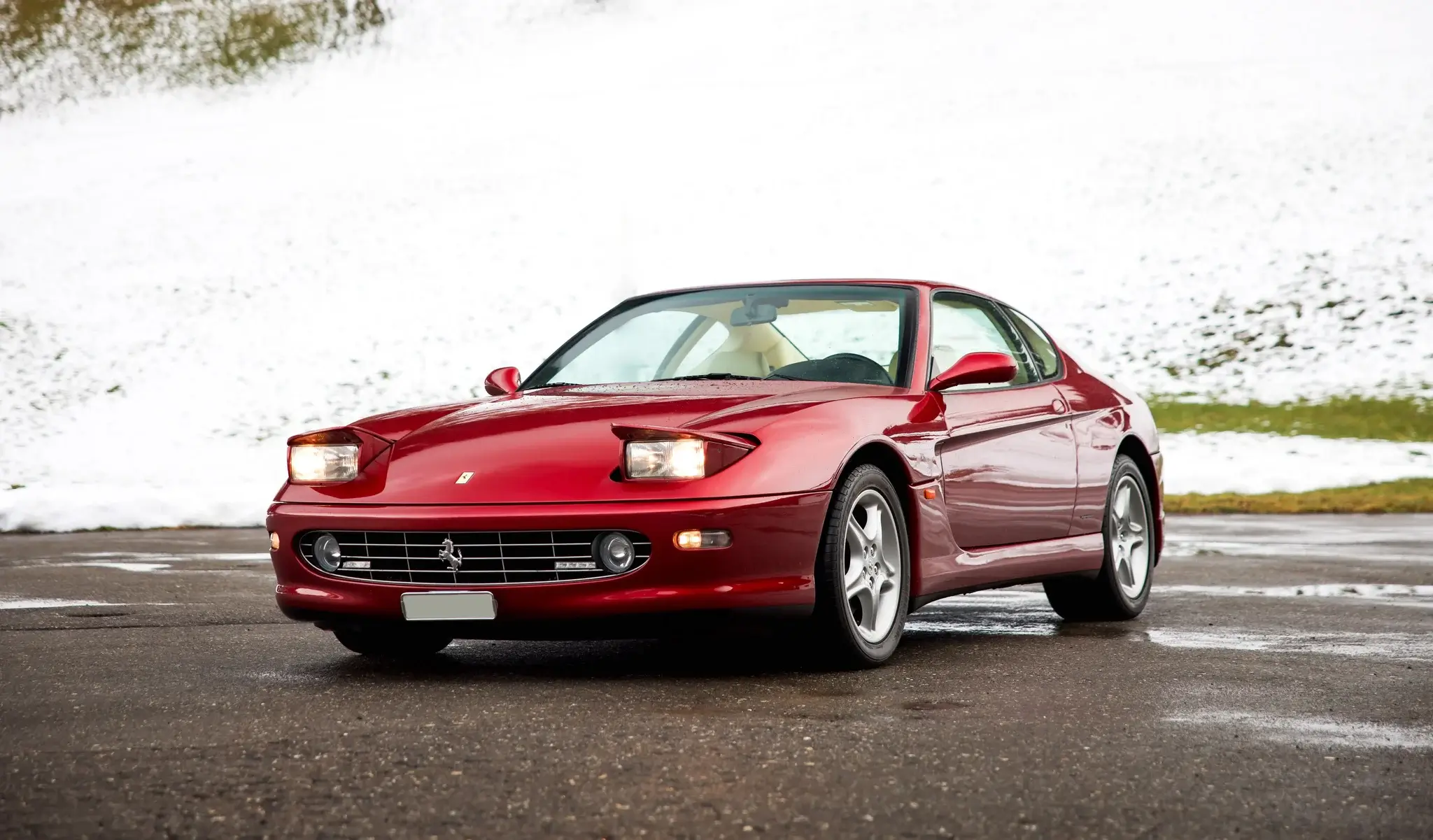
Pininfarina’s proportions created timeless visual elegance reflecting the form-follows-function principle inherent to grand touring design. The streamlined profile, with the distinctive removal of the twin hood scoops and adoption of the carbon-fiber bonnet, suggested performance through refined engineering rather than aggressive styling. The long hood accommodating the front-mounted engine established classic grand tourer proportions, while the practical 2+2 cabin emphasized versatile usability. The fixed rear spoiler replaced the motorized element, simplifying the mechanical complexity while maintaining aerodynamic purpose.
Interior
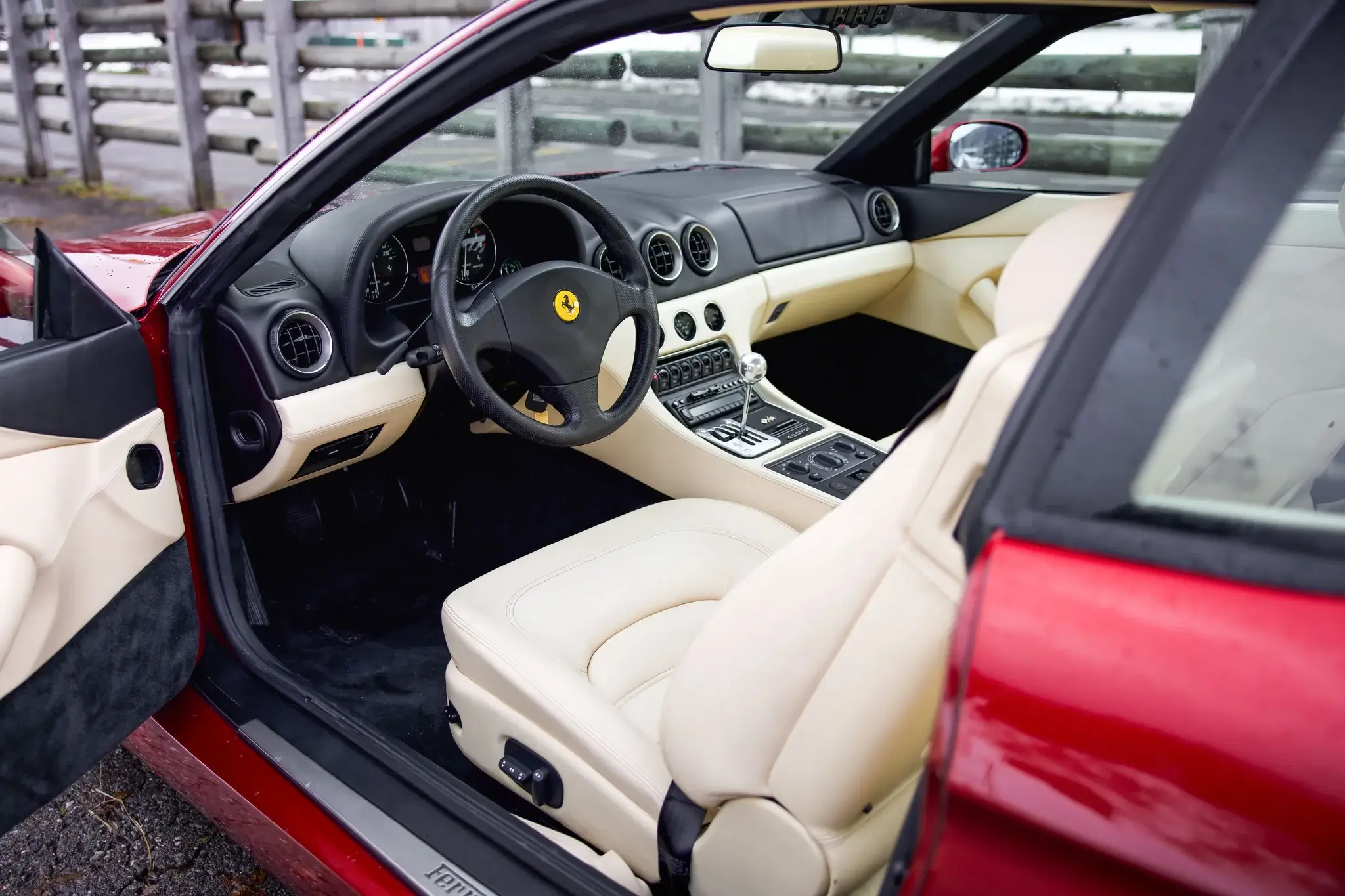
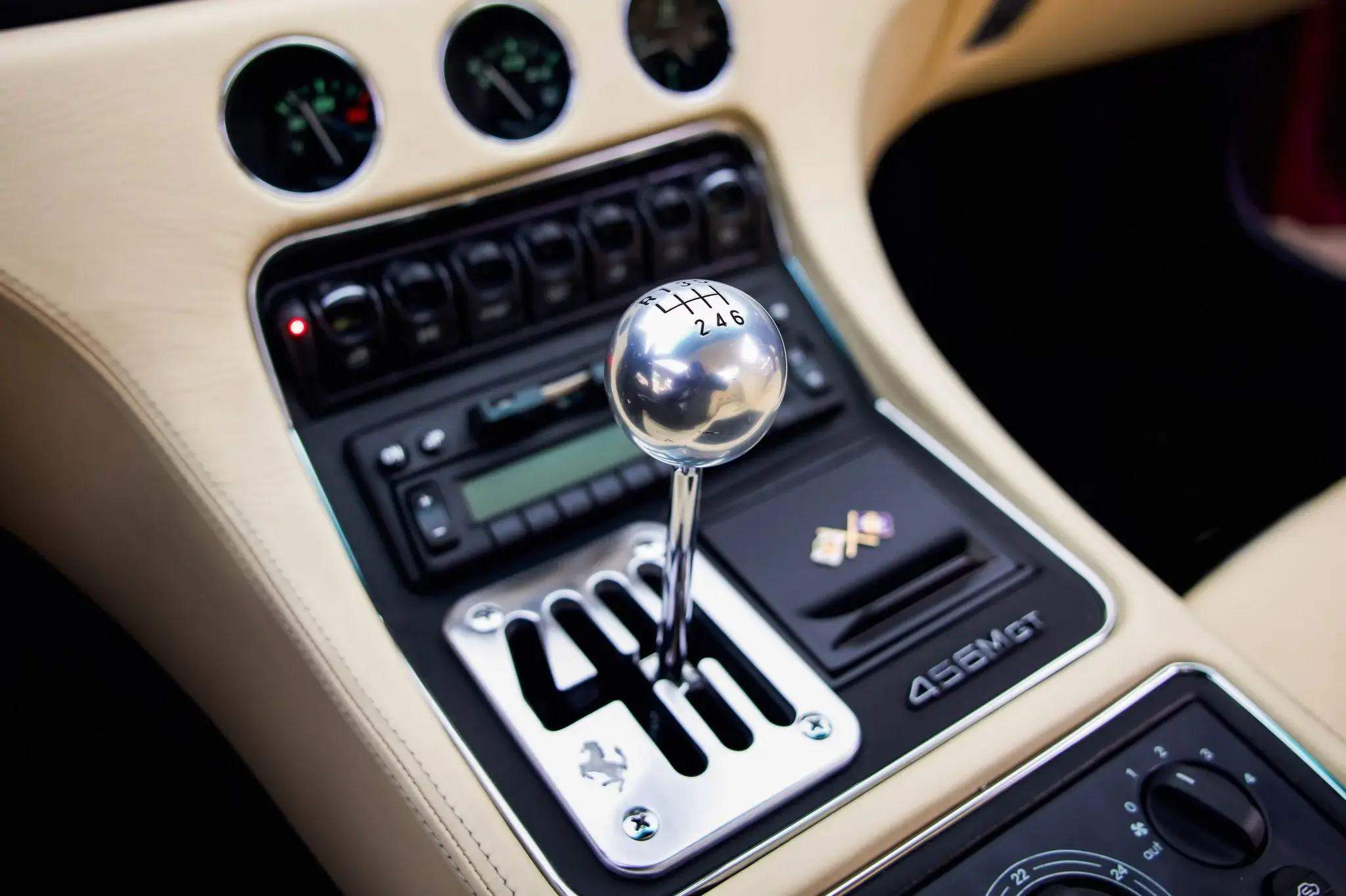
The cabin emphasized driver engagement combined with luxury appointments reflecting Ferrari’s quality standards. High-quality Connolly leather seating provided excellent support during spirited driving while maintaining comfort for extended grand touring journeys. The 456M received redesigned seats with improved ergonomics and updated interior revisions compared to the original 456 GT. The dashboard featured simplified gauge layout moving from five small gauges to three central instruments, improving readability. A new three-spoke steering wheel and upgraded Becker stereo system—positioned in front of the shifter rather than behind it—established updated convenience standards. The driving position was commanding and well-balanced, with all controls falling naturally to hand.
Comprehensive analog instrumentation displayed essential engine parameters including large tachometer, speedometer, oil pressure gauge, oil temperature gauge, coolant temperature gauge and fuel level indicator. Standard equipment included functional climate control, quality audio system, and sophisticated trim materials reflecting contemporary luxury standards. The overall atmosphere balanced performance-focused engineering with genuine automotive refinement appropriate for customers pursuing authentic Italian grand touring credentials combined with practical four-seat accommodation.
Specifications
- Engine: Ferrari F116C naturally aspirated V12, 5,474cc, DOHC per bank, four valves per cylinder
- Power: 442 PS / 436 hp at 6,250 rpm
- Torque: 406 lb-ft / 550 N·m at 4,500 rpm
- Transmission: Six-speed manual (GT) or four-speed automatic (GTA), rear-wheel drive
- Chassis: Tubular steel space-frame with aluminum body panels and carbon-fiber bonnet, 2,600mm wheelbase
- Suspension: Independent double wishbones (front and rear) with self-leveling rear suspension, coil springs, electronically controlled dampers
- Brakes: Ventilated discs, four-piston Brembo calipers, ABS
- Wheels: 17-inch forged alloy with 255/45 ZR17 front and 285/40 ZR17 rear tires
- Weight: Approximately 1,690 kg / 3,726 lbs
- Performance: 192 mph / 309 km/h top speed, 0-60 mph in approximately 5.0 seconds (0-100 km/h in 5.2 seconds factory specification)
Production and Legacy
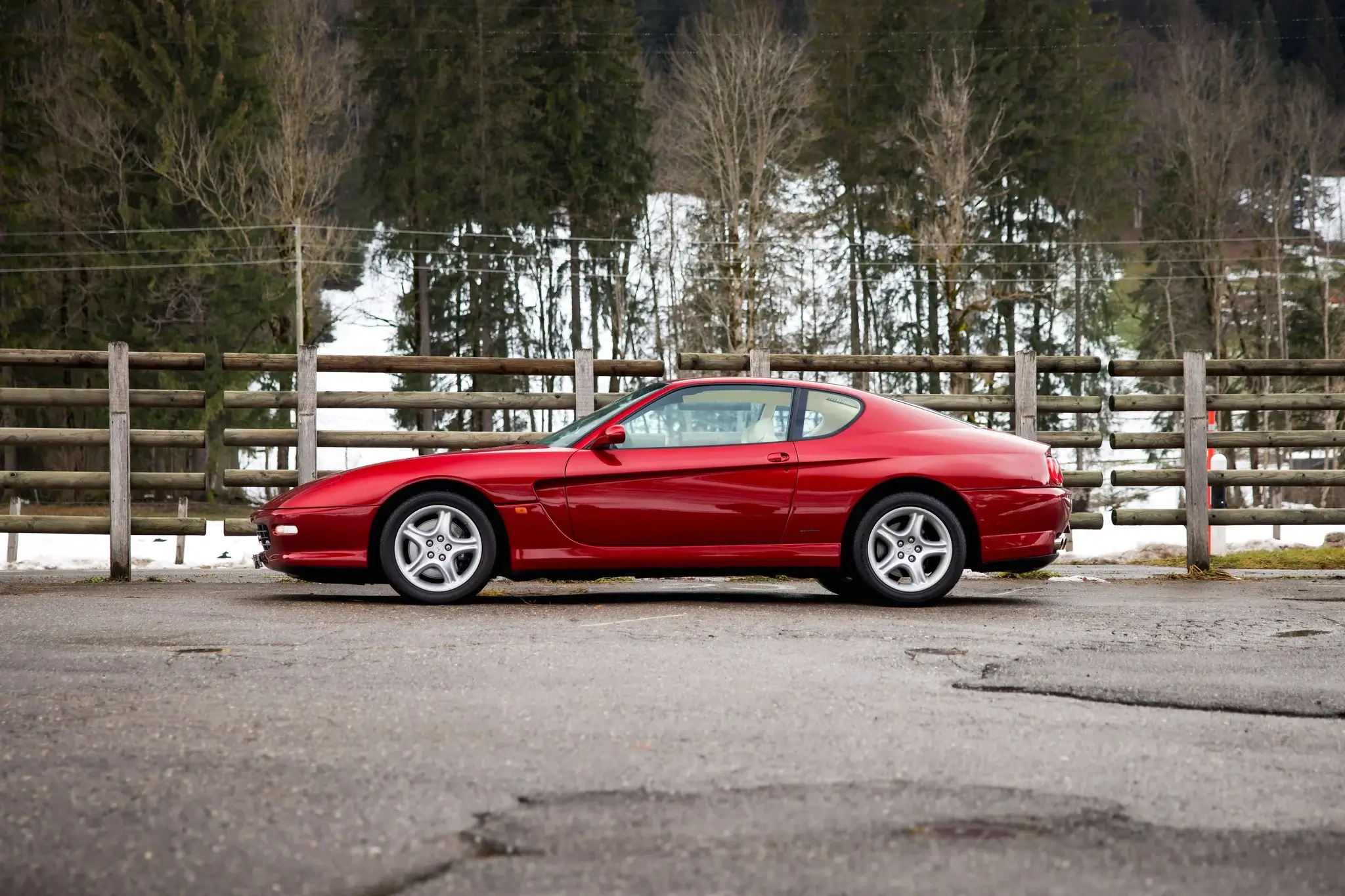
Ferrari produced 1,338 examples of the 456M between 1998 and 2003, comprising 688 manual GT models and 650 automatic GTA variants. The 456M was also the final Ferrari to feature pop-up headlights, establishing a distinctive place in the marque’s design evolution. Late in production, from 2002 through 2003, Ferrari offered a Carrozzeria Scaglietti personalization program producing 30 particularly distinctive cars, with 10 equipped with the manual transmission. Each car received meticulous assembly reflecting Ferrari’s manufacturing standards. The extended five-year production cycle reflected sustained customer appeal for Italian grand touring credentials combined with naturally aspirated V12 power and practical four-seat accommodation.
The 456M proved that naturally aspirated engineering combined with refined design could establish genuine performance credentials within practical grand touring parameters. The combination of high-revving character, mechanical sophistication, and practical versatility established lasting appeal extending far beyond conventional performance car enthusiasts.
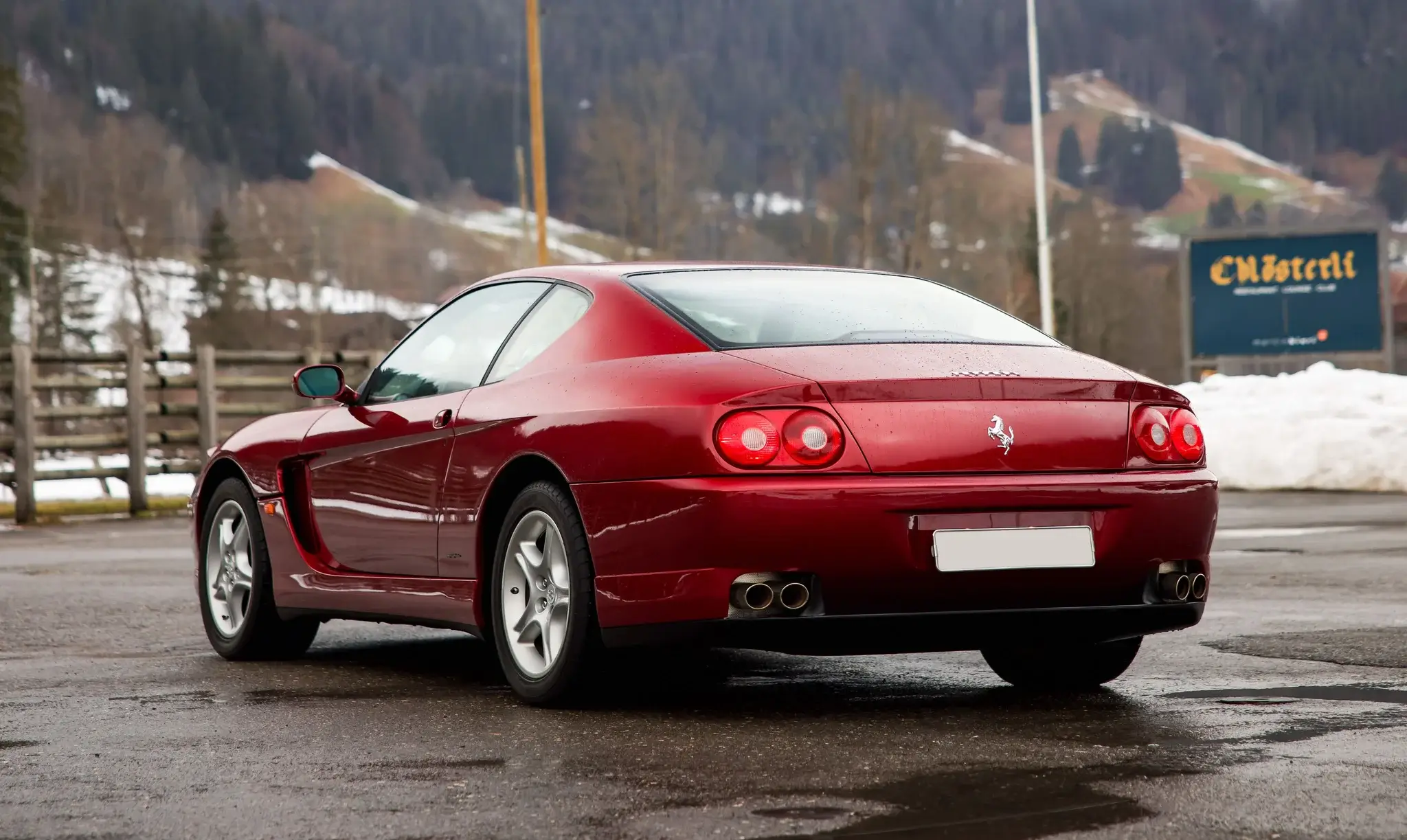
The 456M has developed a strong following among collectors, particularly for the 688 examples equipped with the six-speed manual transmission. The rarity of manual GT examples makes them increasingly sought after in today’s market. The combination of naturally aspirated V12 performance, design elegance, and practical grand touring character ensures lasting appeal among serious Ferrari enthusiasts.
The Ferrari 456M GT represented Maranello at its most refined, proving that mechanical excellence and elegant proportion could create something enduring. It remains one of the greatest front-engine grand tourers ever created, establishing an enduring legacy within Italian automotive performance tradition.