

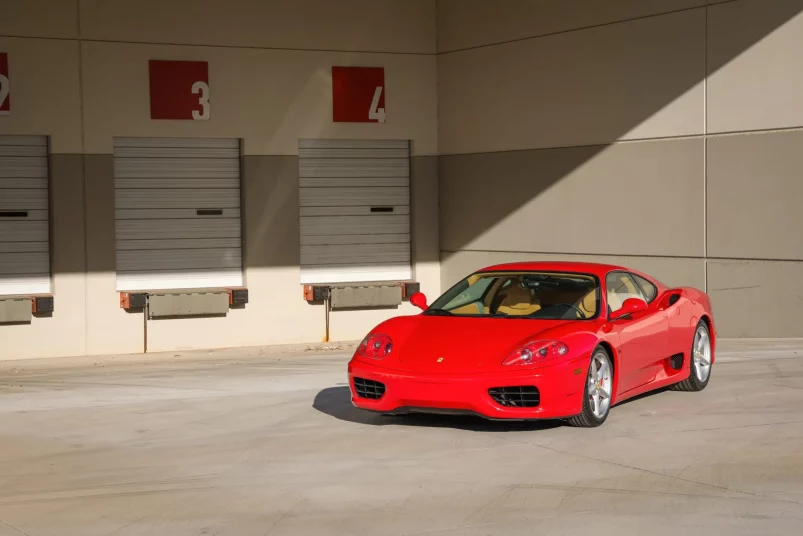
Geneva, March 1999. Ferrari unveiled the 360 Modena at the Geneva Motor Show, the successor to the F355 and one of the most important cars in the company’s modern history. It was Ferrari’s first road car built around an all-aluminum spaceframe chassis with aluminum bodywork, developed with American aluminum specialist Alcoa. Its mid-mounted 3.6-liter V8 produced 395 hp at 8,500 rpm and 275 lb-ft of torque at 4,750 rpm, sent to the rear wheels through either a six-speed manual or Ferrari’s F1 electrohydraulic gearbox. The 360 was larger and stiffer than the F355, and it generated significant downforce without a conventional rear wing. It also became one of Ferrari’s best-selling models of its time, with 8,800 coupes built, along with the Spider and Challenge Stradale versions that followed.
Background and Origins
The F355, introduced in 1994, had been a major commercial success for Ferrari, but by the late 1990s the company wanted its next V8 berlinetta to be more spacious, more comfortable and easier to live with, while also being faster and more precise. Under chairman Luca di Montezemolo, Ferrari started with a clean sheet, replacing the F355’s steel structure with an aluminum spaceframe and abandoning its pop-up headlights. According to Ferrari’s original press material, the new car was expected to represent about 65 percent of the company’s annual production, which at the time was about 3,500 cars.
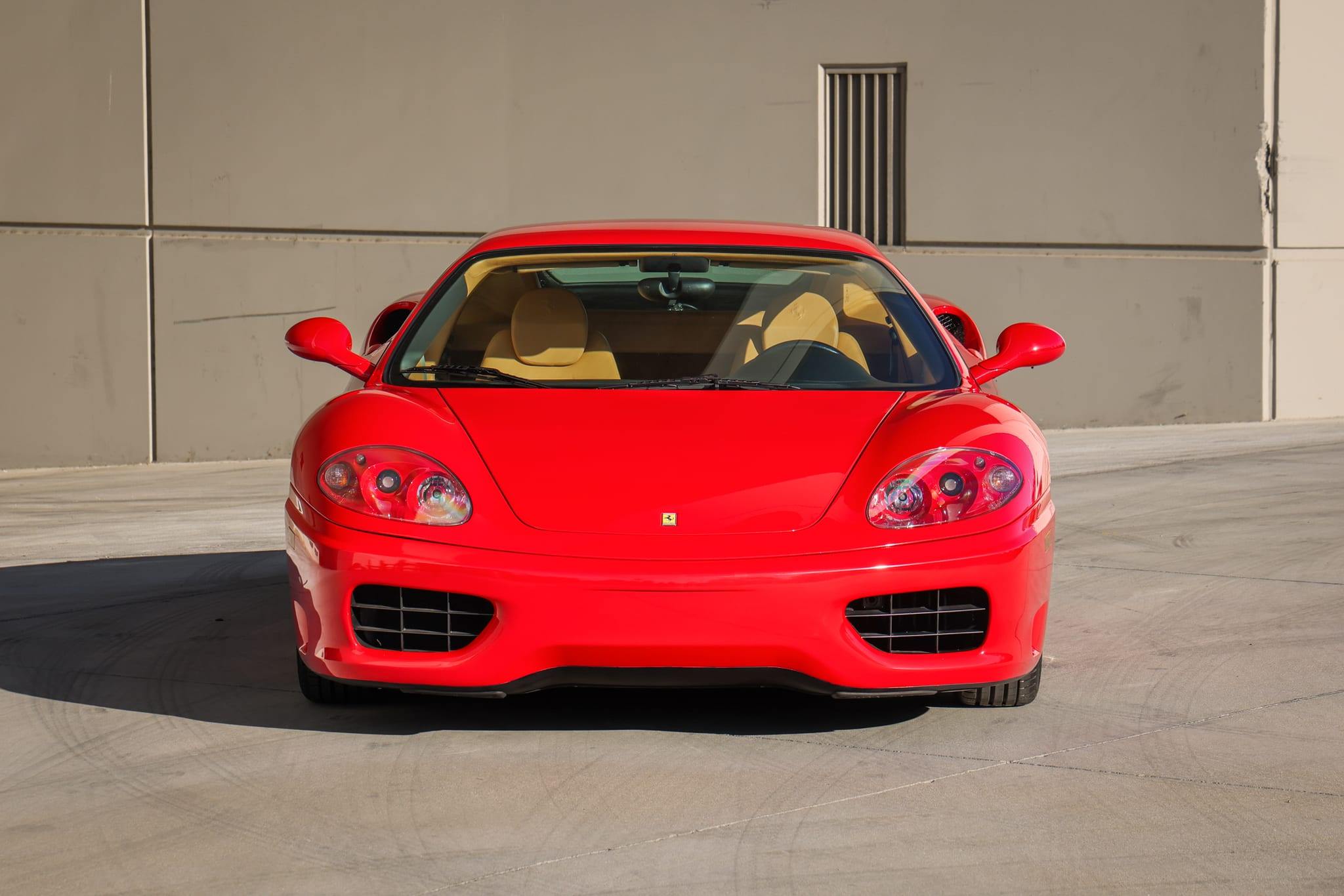
The most significant decision was to build the car from aluminum. Ferrari designed the chassis and worked with Alcoa to develop and produce it, using extruded and cast aluminum components joined into a spaceframe and covered with aluminum panels. Ferrari presented the car to Modena mayor Giuliano Barbolini on March 3, 1999, before its official press launch at Geneva on March 9. The name referred to the engine’s 3.6-liter displacement and to Modena, the city where Enzo Ferrari was born.
Design and Engineering
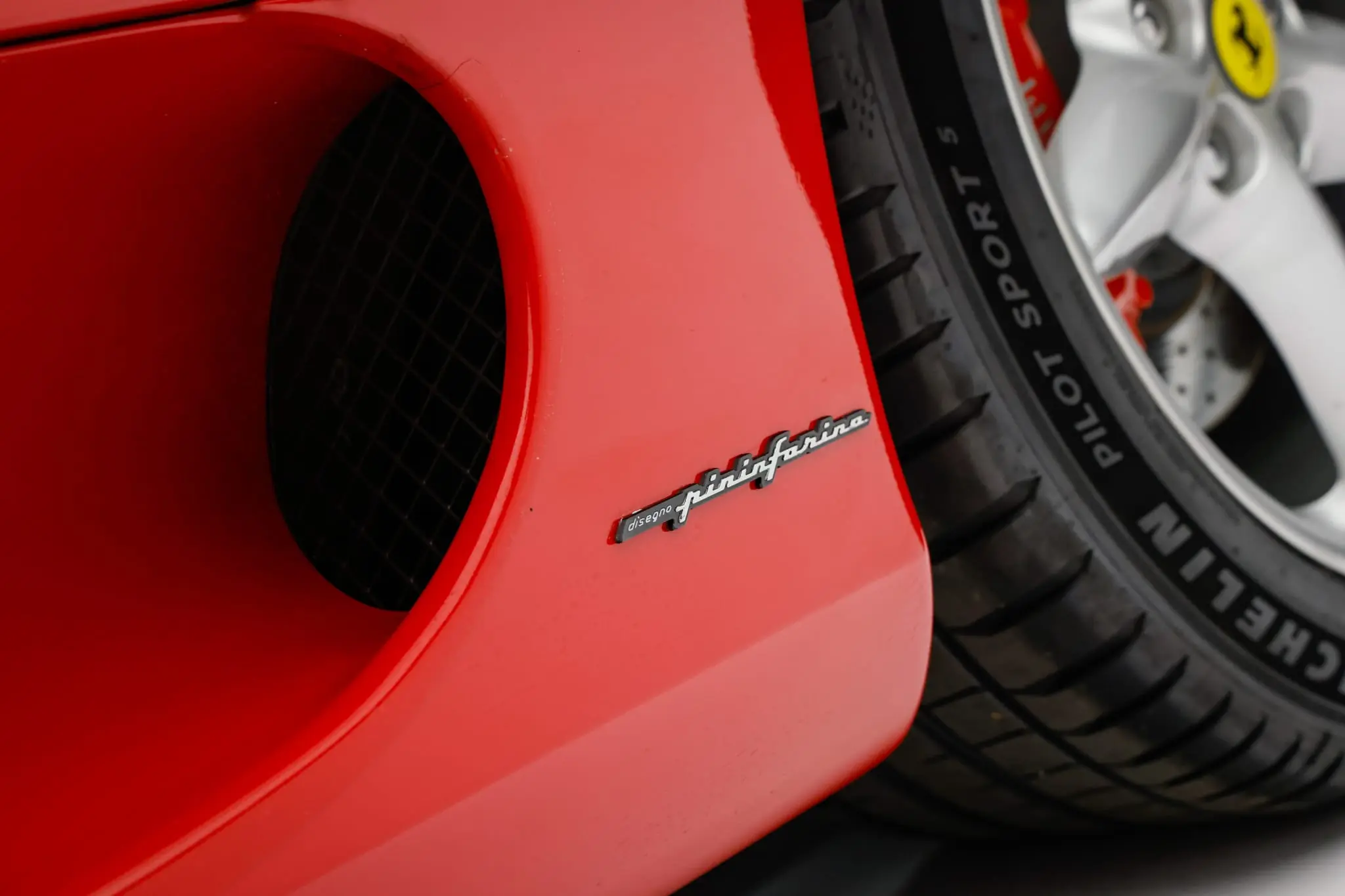
The aluminum spaceframe was about 40 percent stiffer than the F355’s steel structure and 28 percent lighter, despite a roughly 10 percent increase in the car’s overall dimensions. Ferrari quoted a dry weight of 1,290 kilograms, with a curb weight of about 1,390 kilograms. The wheelbase grew to 2,600 millimeters, and the suspension used double wishbones at all four corners with electronically controlled adaptive dampers. Bosch ABS and ASR traction control were standard.
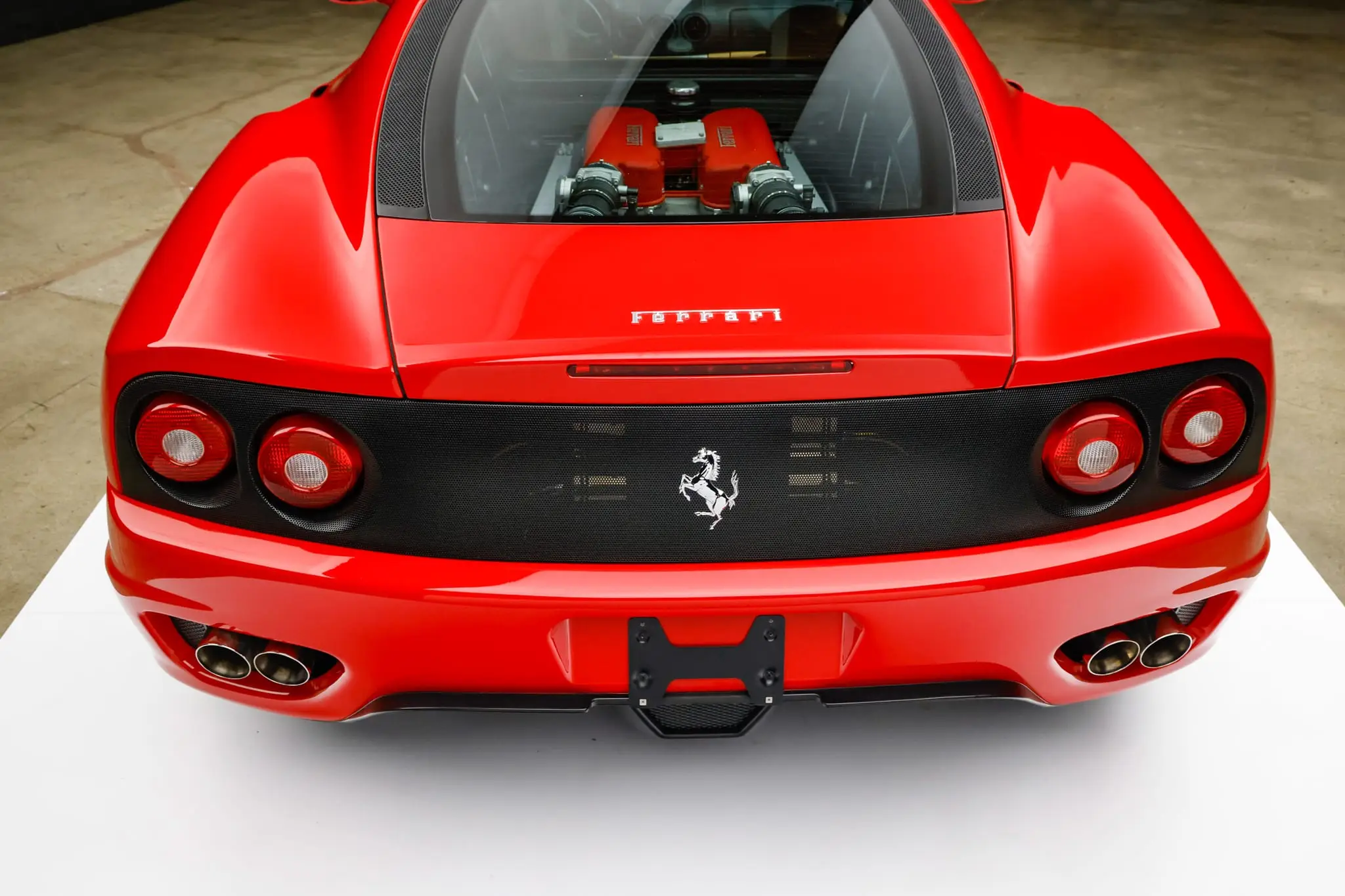
The engine was the Tipo F131, a 3,586-cubic-centimeter 90-degree V8 with a flat-plane crankshaft, five valves per cylinder, titanium connecting rods and dry-sump lubrication. Developed from the F355’s engine, it was enlarged and revised to produce 395 hp at 8,500 rpm and 275 lb-ft at 4,750 rpm. An important layout change was the gearbox, which was now mounted longitudinally rather than transversely as in the F355, helping create room for the rear underbody aerodynamics. Buyers could choose a six-speed manual with Ferrari’s classic gated shifter or the second-generation F1 gearbox, an electrohydraulic single-clutch automated manual operated by paddles behind the steering wheel. Most customers chose the F1 transmission. Ferrari quoted 0-62 mph in about 4.5 seconds and a top speed of about 183 mph.
Styling
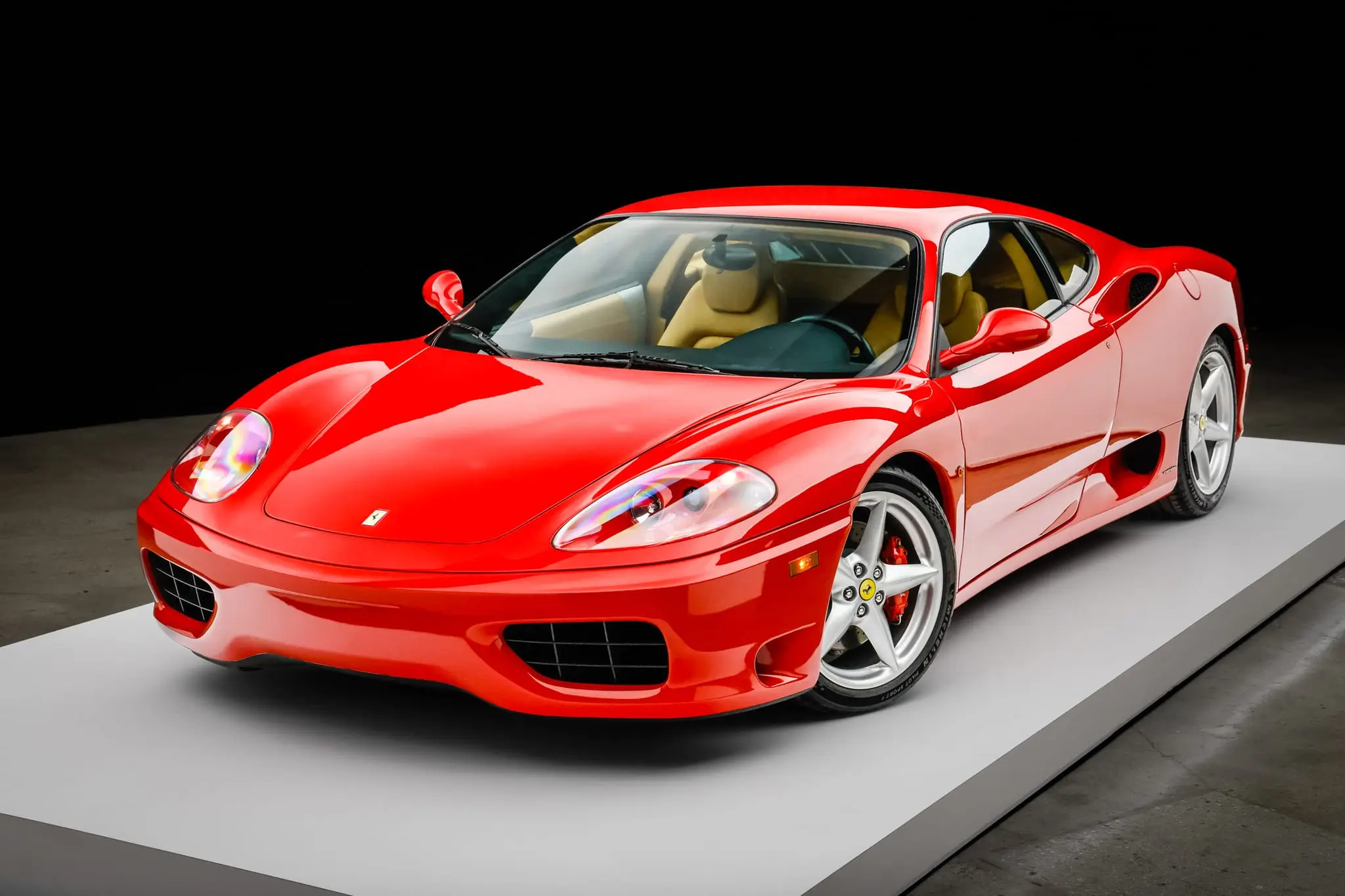
The 360 was designed by Pininfarina, whose design operations were then led by Lorenzo Ramaciotti, with Goran Popović among those credited for the car’s styling. It marked a clear break from the F355. The pop-up headlights were replaced by fixed units under clear covers, and the front had two large air intakes for the radiators instead of a conventional central grille.
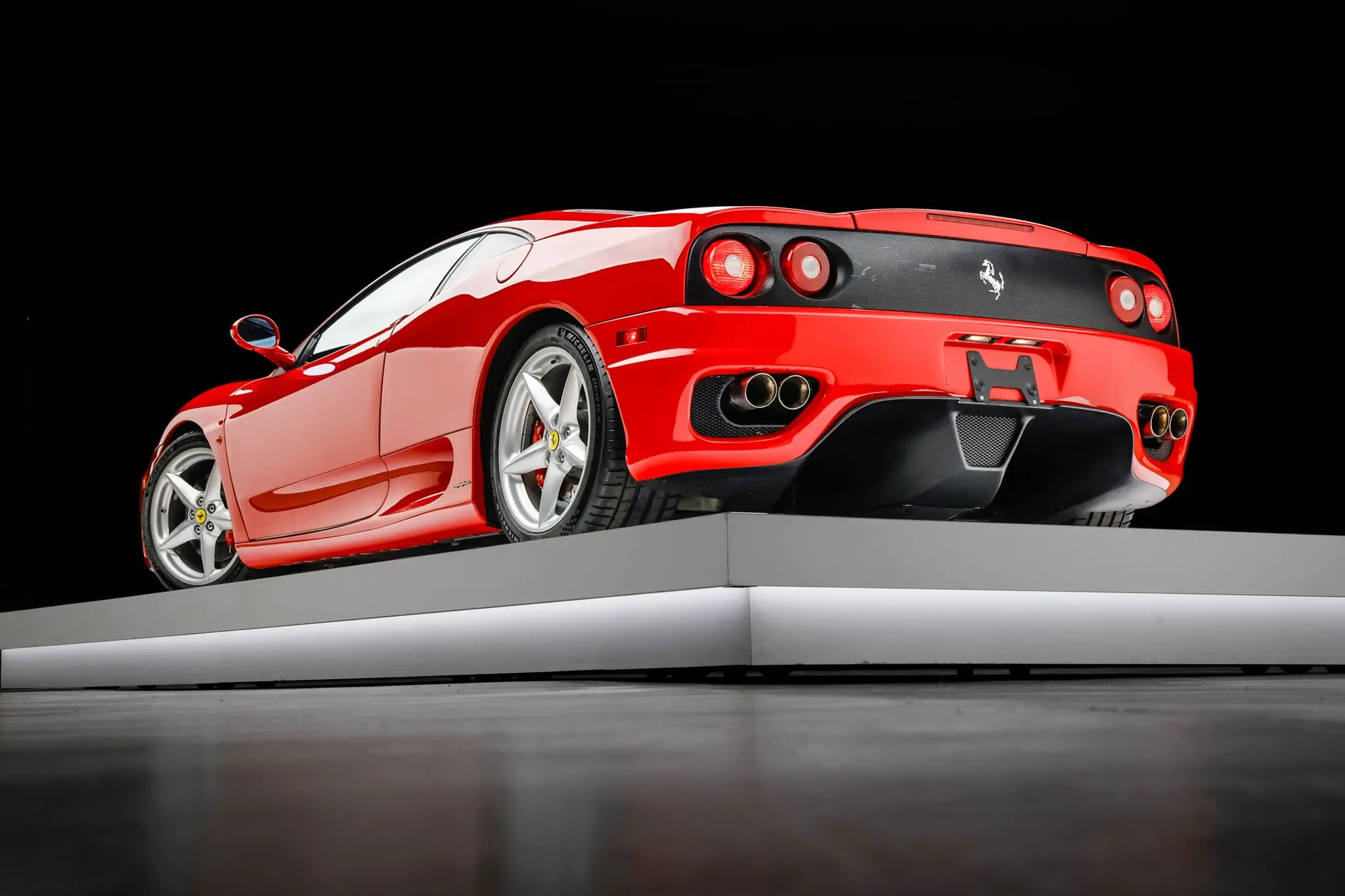
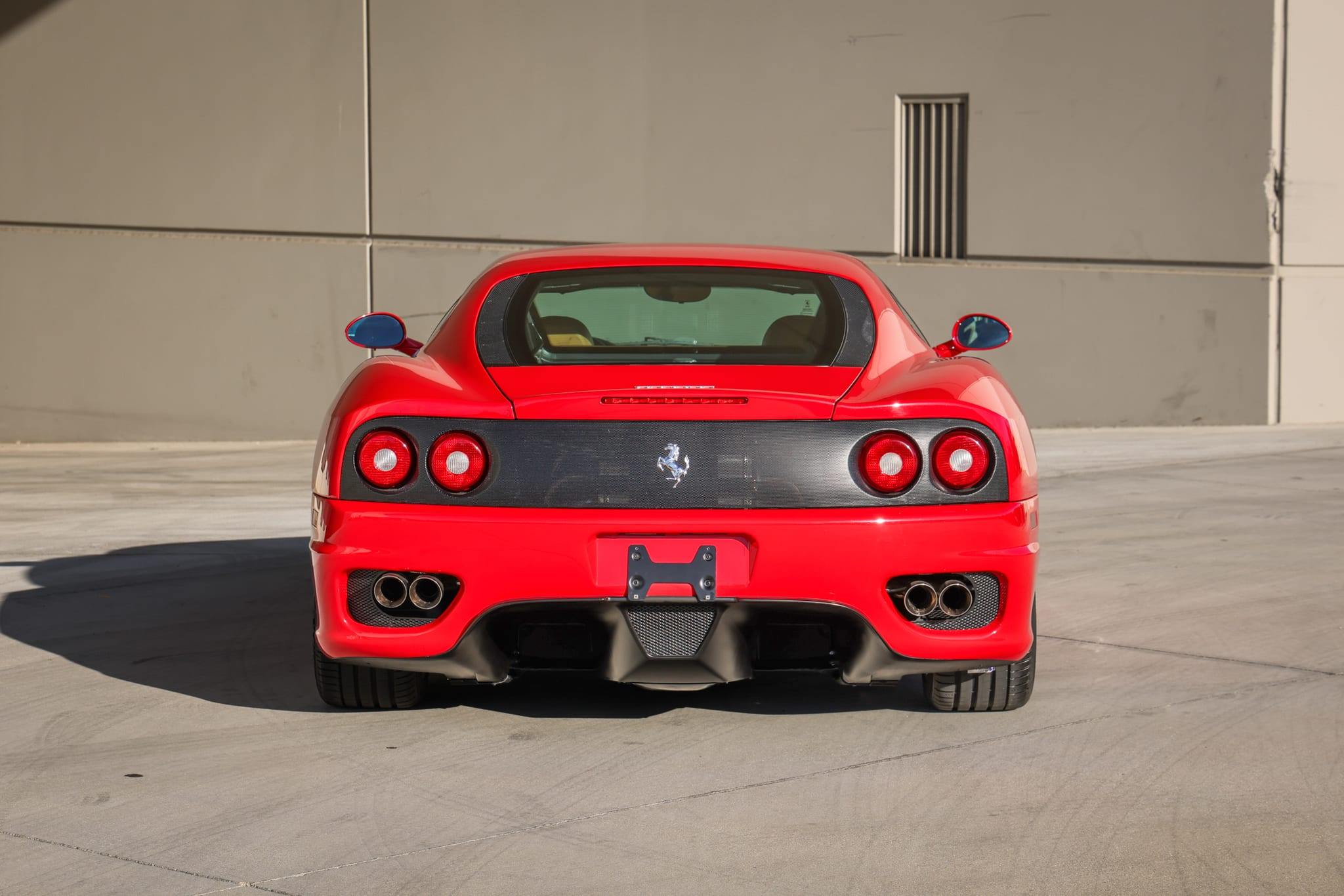
The body was refined over more than 5,000 hours of wind-tunnel development. Rather than using a large rear spoiler, Ferrari gave the 360 a carefully developed underbody with front venturi sections and twin rear diffusers, which generated about 180 kilograms of downforce at high speed. At the rear, the V8 was displayed under a glass engine cover, a feature that became a signature of Ferrari’s mid-engined V8 models.
Interior
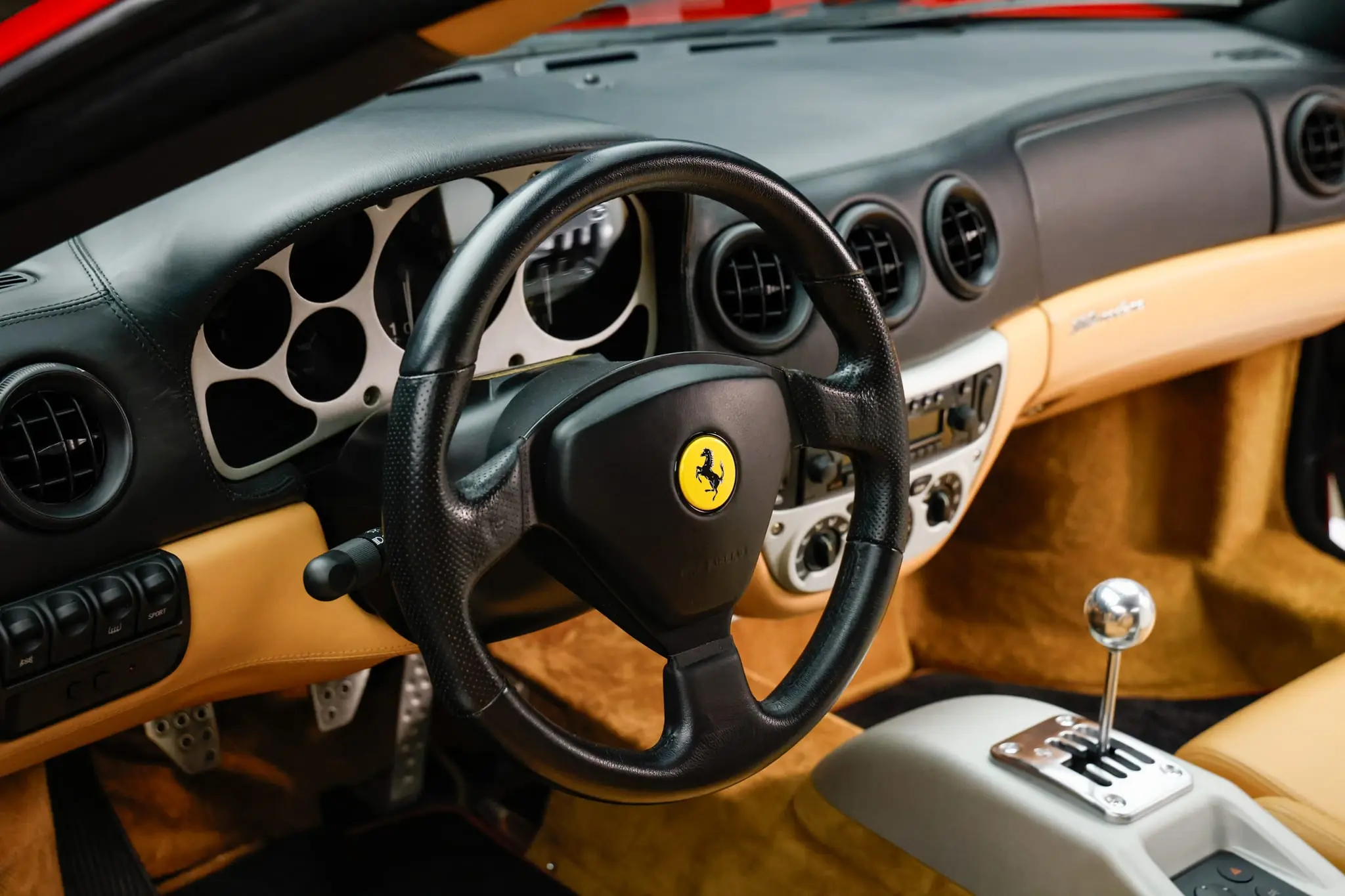
The 360’s cabin was roomier and more comfortable than the F355’s, with more space for occupants and a useful storage area behind the seats. Leather upholstery and aluminum details gave the interior a modern, high-quality feel, and the driving position was improved compared with earlier Ferrari V8 models. Cars with the F1 gearbox used paddles behind the steering wheel, while manual cars kept the traditional polished gate. The combination of a more spacious cabin, better ergonomics and an easier-to-drive gearbox made the 360 one of the most usable Ferraris of its era.
Racing History
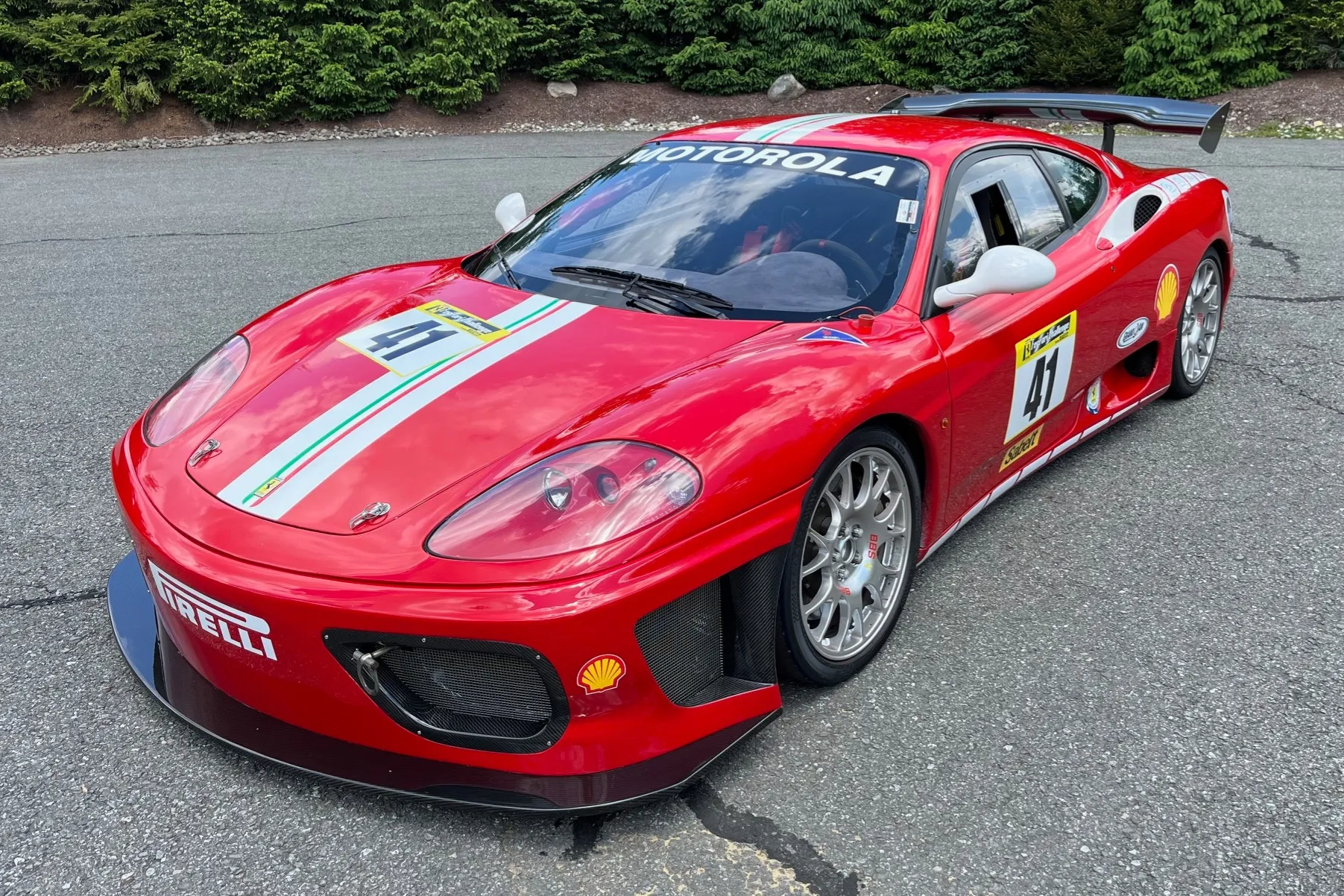
The 360 quickly became the foundation of Ferrari’s customer racing program. In 2000, Ferrari introduced the 360 Challenge for its one-make Ferrari Challenge series, where it replaced the F355 Challenge. The same year, JMB Racing developed an N-GT version of the 360 Challenge for the FIA GT Championship, giving Ferrari a competitive entry in the newly established category. The car’s breakthrough came in 2001, when Christian Pescatori and David Terrien won the N-GT drivers’ championship for JMB, defeating strong Porsche opposition. In 2002, JMB finished second in the teams’ standings to Freisinger Motorsport’s Porsche 911 GT3-RS, and Pescatori was runner-up in the drivers’ championship.
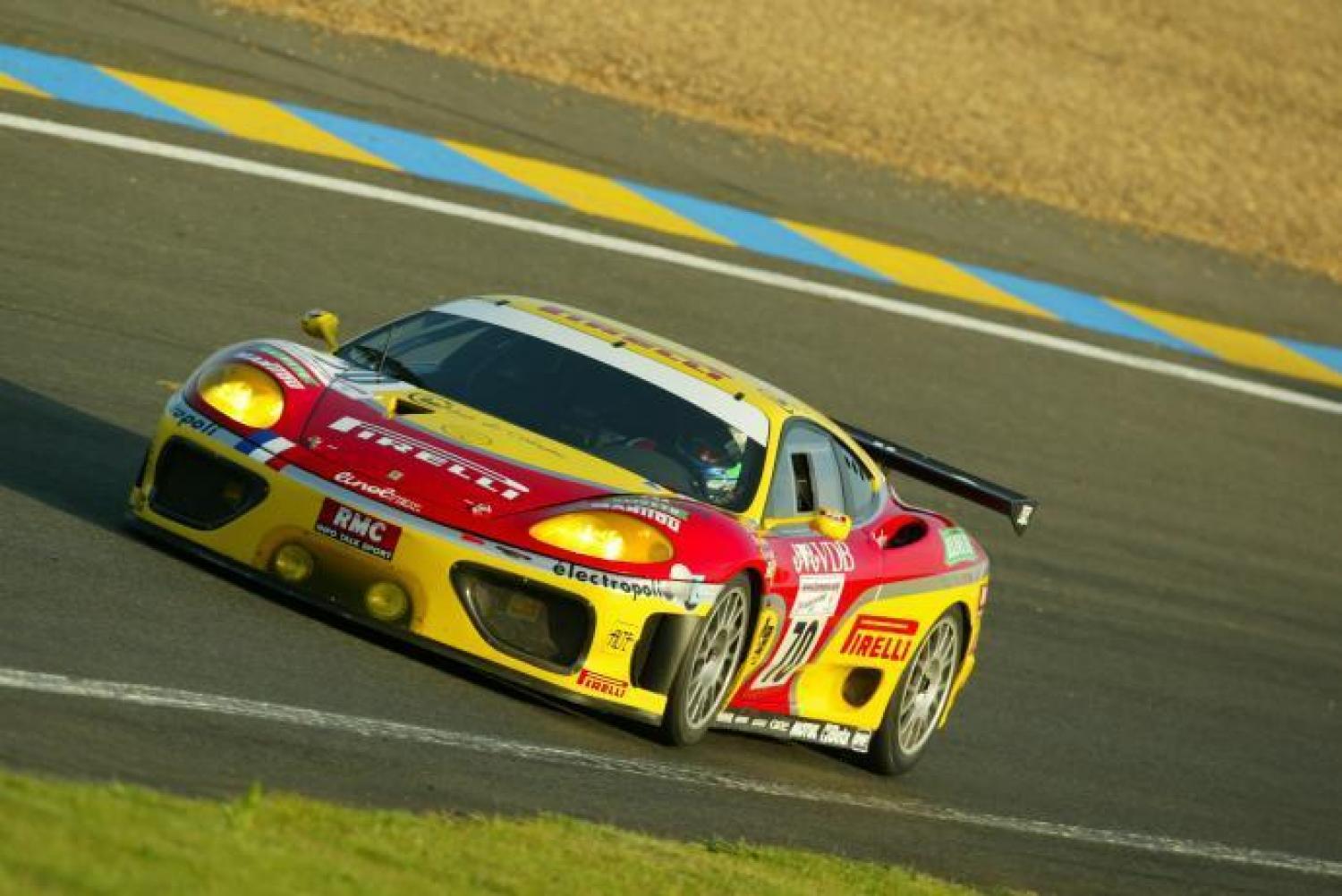
Ferrari also developed the 360 GT, introduced in 2002 as a dedicated customer racing model for privateer teams competing in FIA GT and ACO championships. In 2003, JMB continued to campaign the car successfully, with Andrea Bertolini and Fabrizio De Simone among its drivers, and the team secured several N-GT victories, although Freisinger Motorsport again took the championship. The final major competition evolution was the 360 GTC, unveiled at the Bologna Motor Show in December 2003 for the 2004 season. Developed with Michelotto from the 360 GT, it incorporated aerodynamic refinements and bodywork developments introduced on the road-going Challenge Stradale, along with a sequential six-speed gearbox, revised electronics and an updated engine producing about 445 hp. It was sold through Ferrari’s Corse Clienti department for FIA N-GT and ACO competition.
Specifications
- Engine: Ferrari Tipo F131 90-degree V8, 3,586cc, DOHC per bank, 40 valves, flat-plane crankshaft, dry-sump lubrication
- Power: 395 hp at 8,500 rpm
- Torque: 275 lb-ft at 4,750 rpm
- Transmission: Six-speed manual or six-speed F1 electrohydraulic automated manual, rear-wheel drive
- Chassis: Aluminum spaceframe developed with Alcoa
- Body: Aluminum, designed by Pininfarina
- Suspension: Independent double wishbones front and rear, electronically controlled dampers
- Brakes: Ventilated discs front and rear, ABS and ASR
- Weight: Approximately 2,844 lbs (dry); approximately 3,064 lbs (curb)
- Aerodynamics: Flat underbody with front venturi sections and twin rear diffusers, about 397 lbs of downforce at high speed
- Performance: 0-62 mph in about 4.5 seconds, top speed of about 183 mph
Production and Legacy
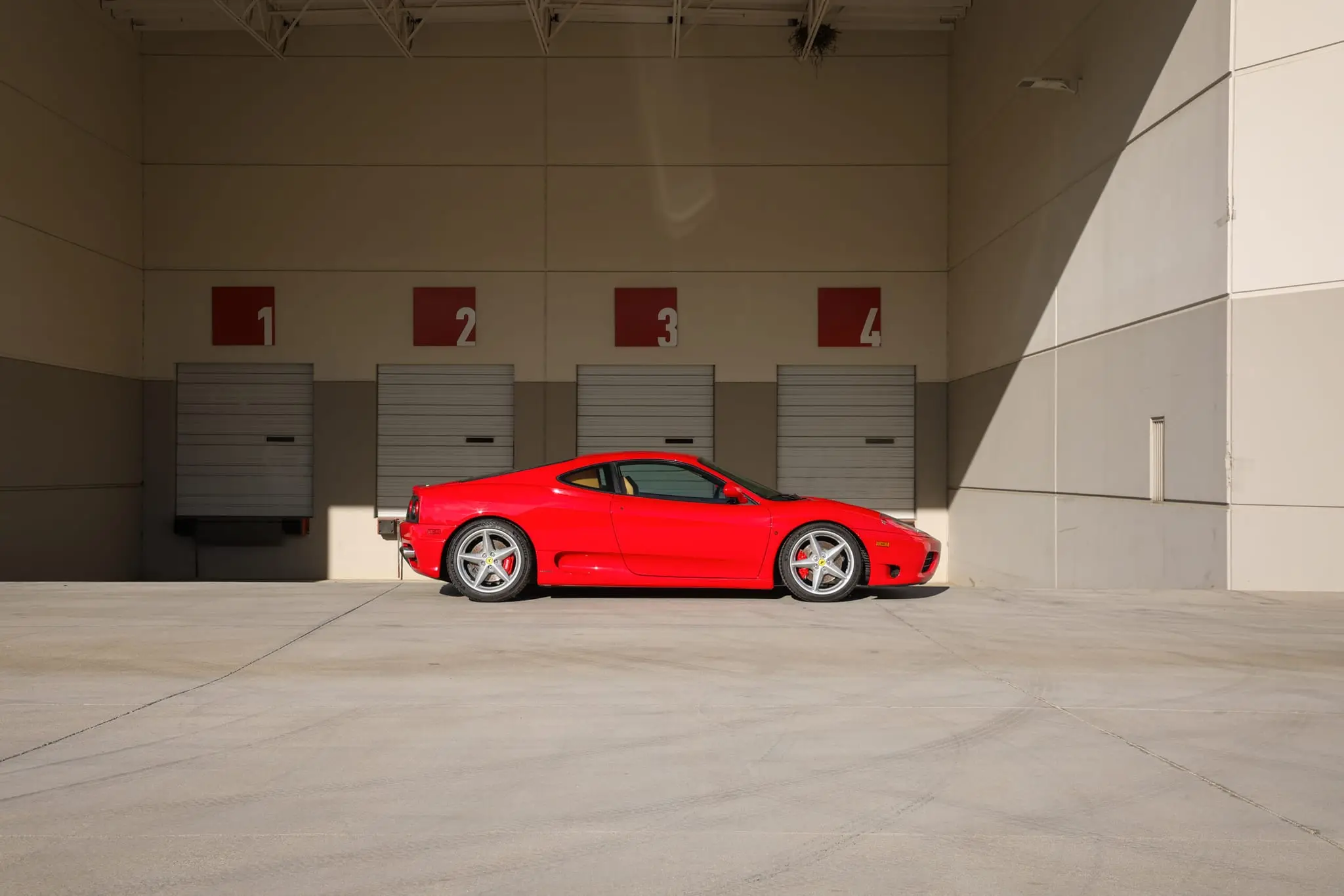
Ferrari built 8,800 360 Modena coupes between 1999 and 2004. The 360 Spider debuted at the 2000 Geneva Motor Show and became a significant part of the model’s success, with 7,565 examples built. In 2003, Ferrari introduced the lighter and more powerful 360 Challenge Stradale, of which about 1,288 were produced. Manual examples are particularly sought after today. In the United States, only 469 of the 1,810 Modenas sold there were equipped with the gated six-speed gearbox, although a definitive worldwide production figure has not been established. The 360 was replaced by the F430, which debuted at the 2004 Paris Motor Show.
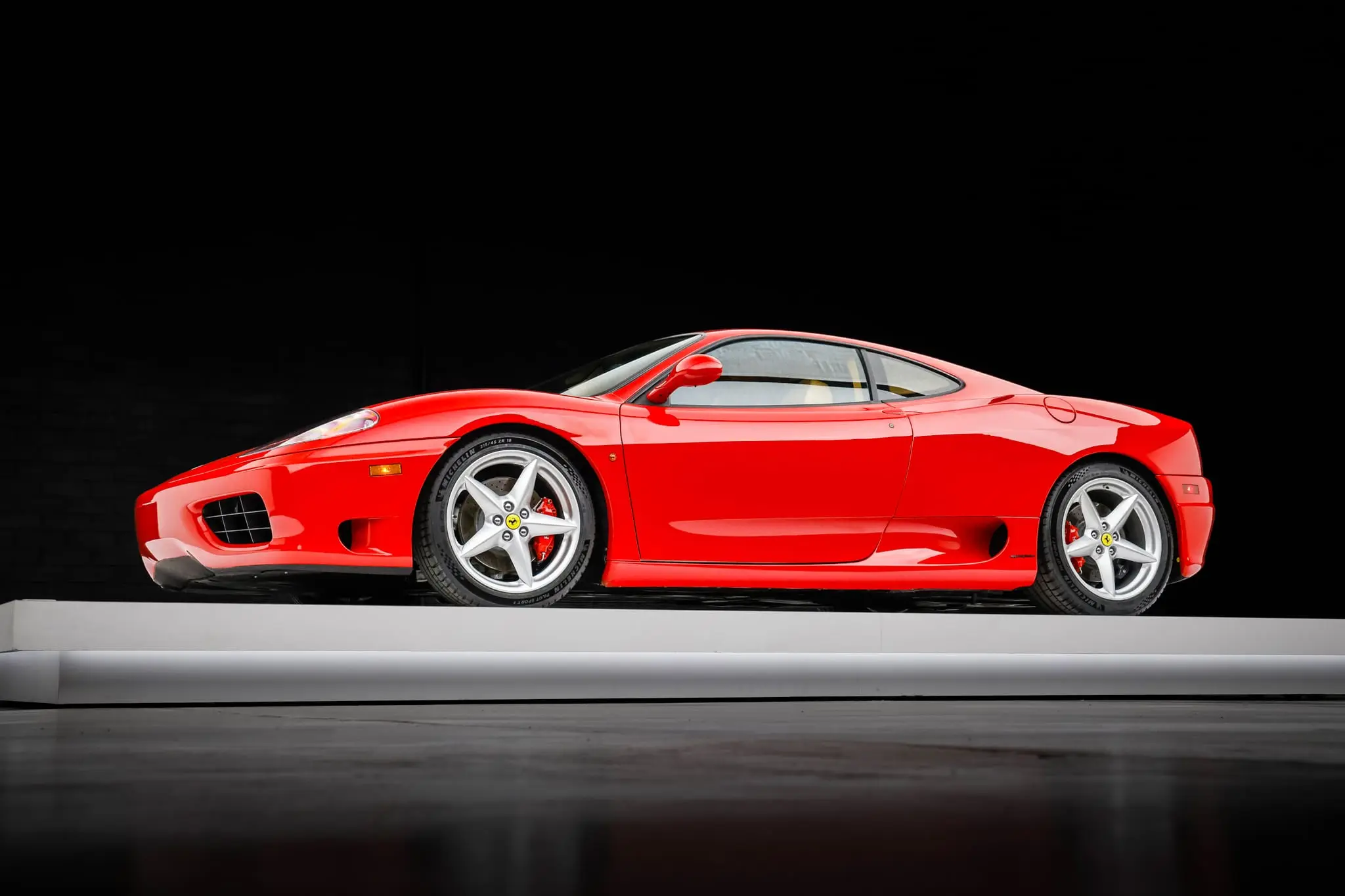
The 360 Modena changed the direction of Ferrari’s V8 road cars. Its aluminum construction, underbody aerodynamics and refined F1 gearbox established the technical approach that later Ferrari V8 models continued to develop. It also brought Ferrari a new level of commercial success, combining strong performance with improved comfort and usability. Today, the 360 is increasingly appreciated as one of the last Ferraris with a naturally aspirated V8 and an optional gated manual gearbox, and well-maintained manual examples have become particularly desirable.