

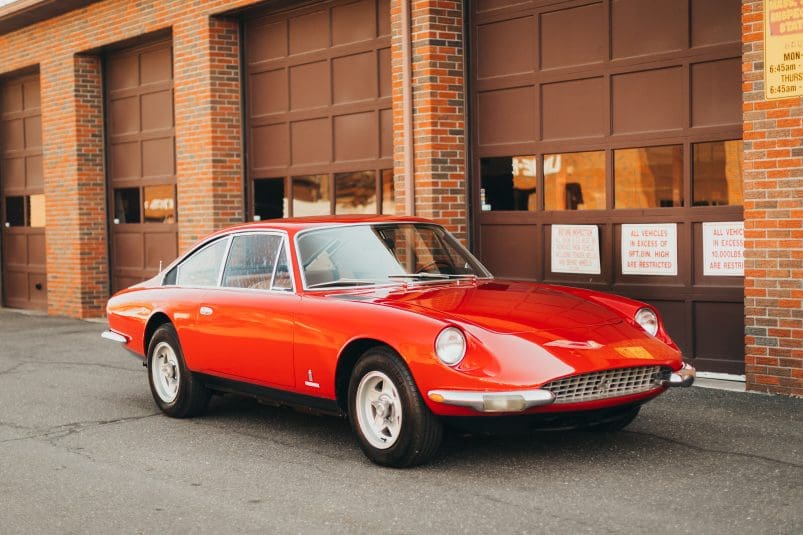
Paris, October 1967. Ferrari unveiled the 365 GT 2+2 at the Paris Motor Show, the third generation of its front-engined, four-seat V12 grand tourer. It replaced the 330 GT 2+2 and became the largest and most luxurious Ferrari production model yet. Its 4.4-liter Colombo V12 produced 316 hp at 6,600 rpm and 268 lb-ft of torque at 5,000 rpm, giving the big coupe a top speed of around 152 mph. More than any previous Ferrari, the 365 GT 2+2 was built for comfort and long-distance touring. It was the first Ferrari 2+2 with independent rear suspension, it introduced a hydropneumatic self-leveling rear suspension developed with Koni, and it was the first large-series production Ferrari with power steering as standard. Its size and presence earned it the nickname “Queen Mary,” while Road & Track called it the “Queen Mother of Ferraris” in 1969. By the time production ended in 1971, about 800 had been built, roughly half of Ferrari’s V12 road car production during that period.
Background and Origins
The 250 GTE, launched in 1960, was Ferrari’s first true series-production four-seater and became the company’s best-selling model up to that point. It was followed by the 330 GT 2+2 in 1964. Four-seat grand tourers gave Ferrari a steady source of income and appealed to customers who wanted Ferrari performance with room for family or friends. By the late 1960s, Ferrari was ready for a more refined and modern successor.
The new car was developed around Ferrari’s 4.4-liter V12, which had first appeared in the limited-production 365 California of 1966 and would also power the 365 GTC and 365 GTS from 1968. The American market was an important consideration, and the 365 GT 2+2 offered the comfort and equipment expected by buyers looking for a high-performance luxury grand tourer. It was one of the first Ferraris engineered to meet the new 1968 US safety and emissions regulations, and for a short time it was the only Ferrari model sold in the United States. Ferrari’s goal was a car that combined the performance expected of a V12 with the comfort, equipment and refinement of the best luxury grand tourers.
Design and Engineering
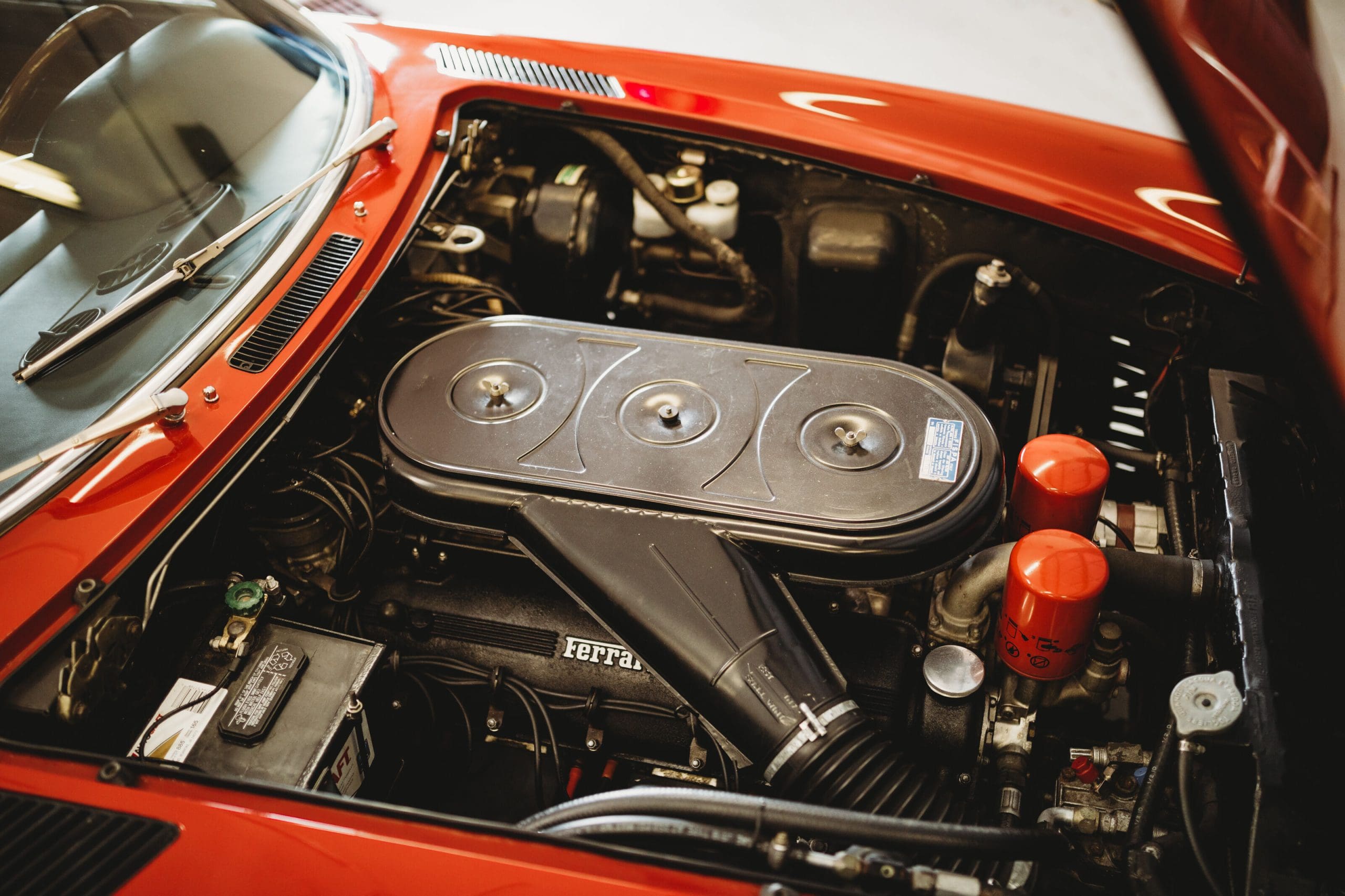
The 365 GT 2+2 was built on a new Tipo 591 tubular steel chassis. It shared its 2,650-millimeter wheelbase with the 330 GT 2+2, but longer overhangs front and rear extended its overall length to 4,974 millimeters, 134 millimeters more than its predecessor. At 1,786 millimeters, it was also 71 millimeters wider. The engine was a front-mounted, 4,390cc 60-degree Colombo V12 (Tipo 245) with a single overhead camshaft per bank, two valves per cylinder, an 8.8:1 compression ratio and three Weber 40 DFI carburetors. Ferrari rated it at 320 CV, or 316 hp, at 6,600 rpm, with 268 lb-ft of torque at 5,000 rpm. The five-speed all-synchromesh manual gearbox was mounted to the engine, with power sent through a torque tube to a frame-mounted rear differential.
The suspension was where the 365 GT 2+2 broke the most new ground. It replaced the 330 GT 2+2’s live rear axle and leaf springs with fully independent rear suspension using unequal-length wishbones and coil springs. At the rear, a hydropneumatic self-leveling system developed with Koni kept ride height constant regardless of how many passengers or how much luggage the car carried. It was the first production Ferrari with self-leveling suspension. Ferrari also fitted ZF power-assisted steering and power-assisted disc brakes at all four corners. Ferrari quoted a dry weight of 1,480 kilograms. Despite its size, the 365 GT 2+2 reached about 152 mph, and period road tests recorded 0 to 60 mph times of around seven seconds.
Styling
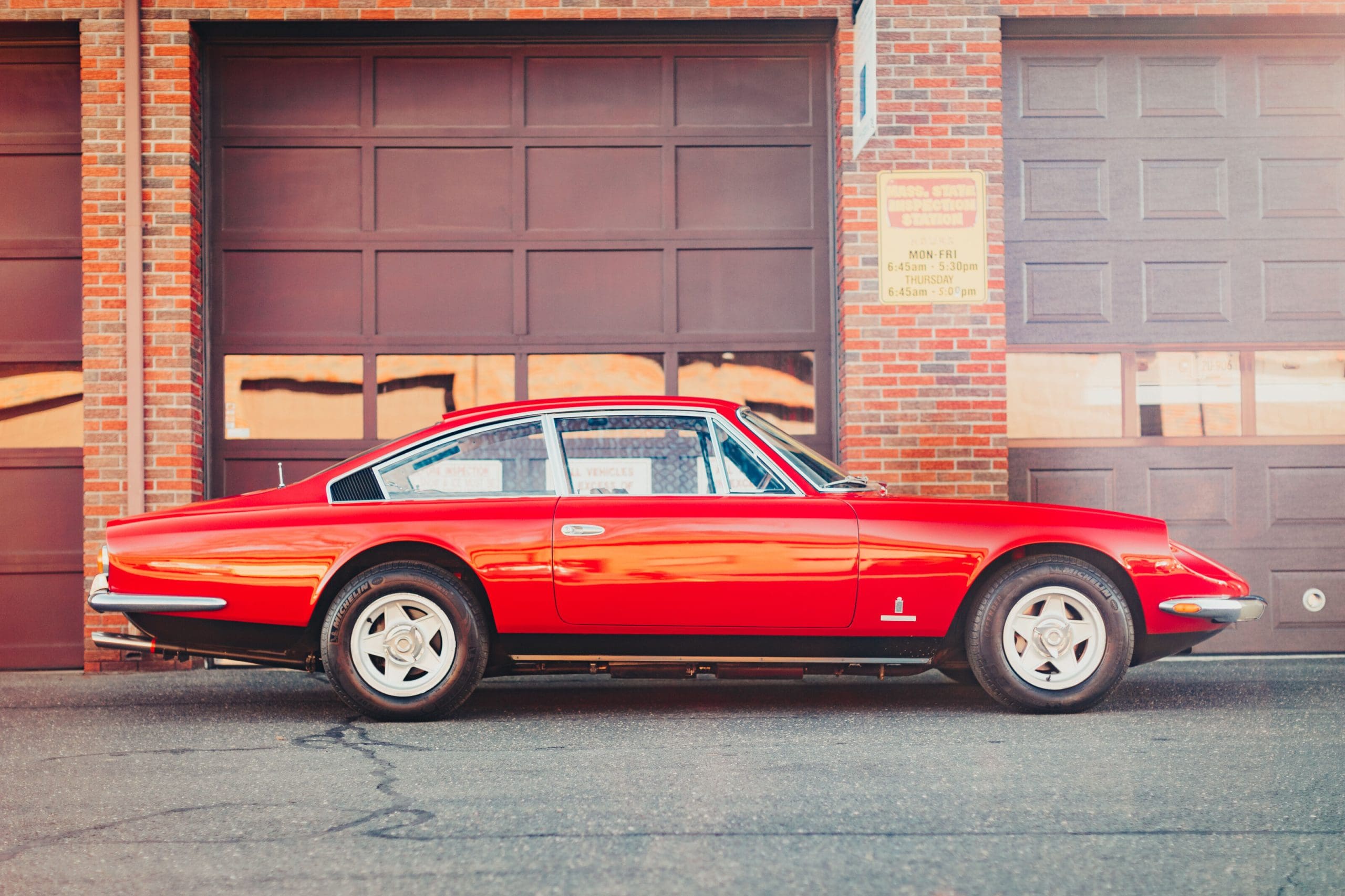
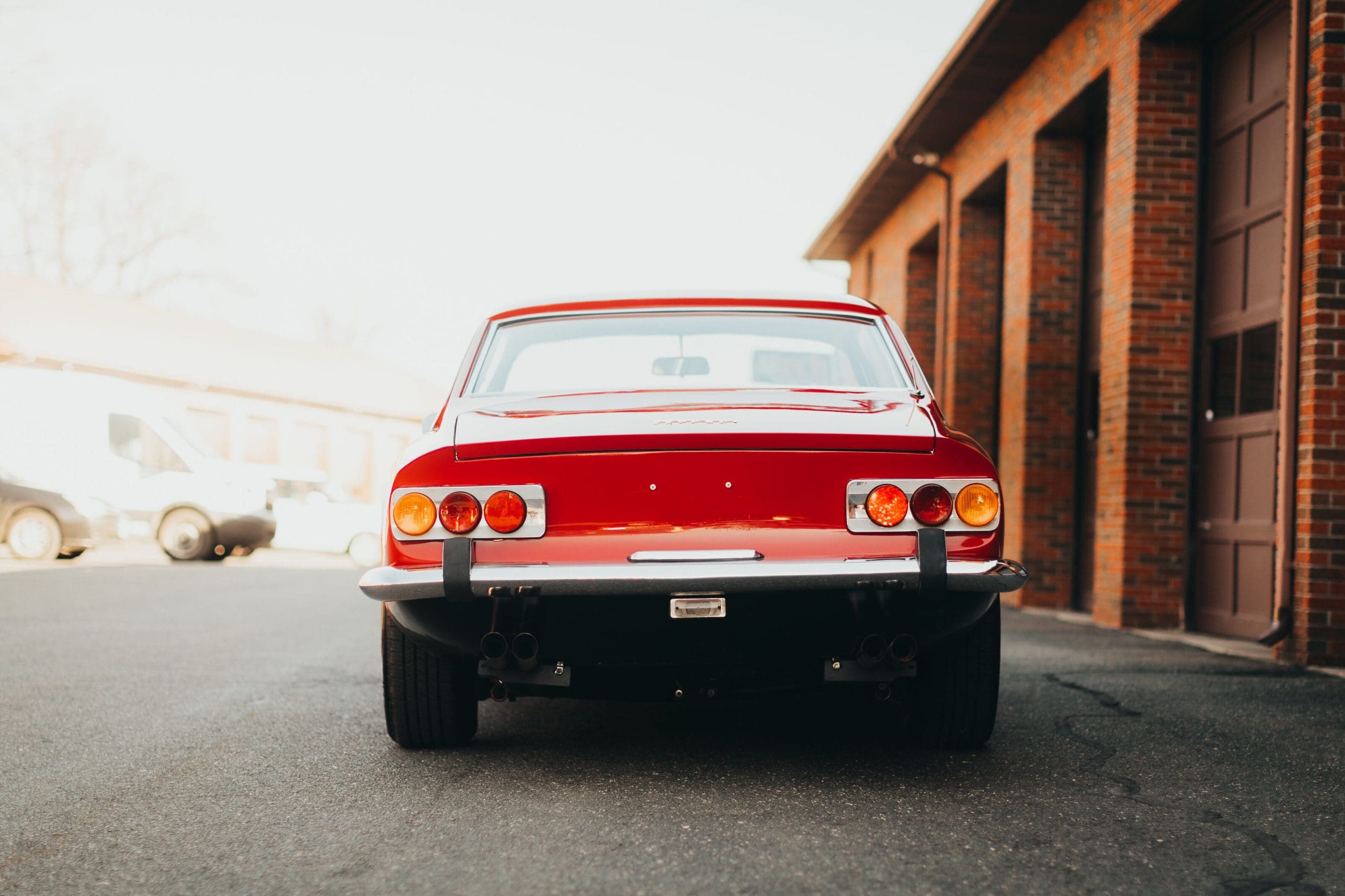
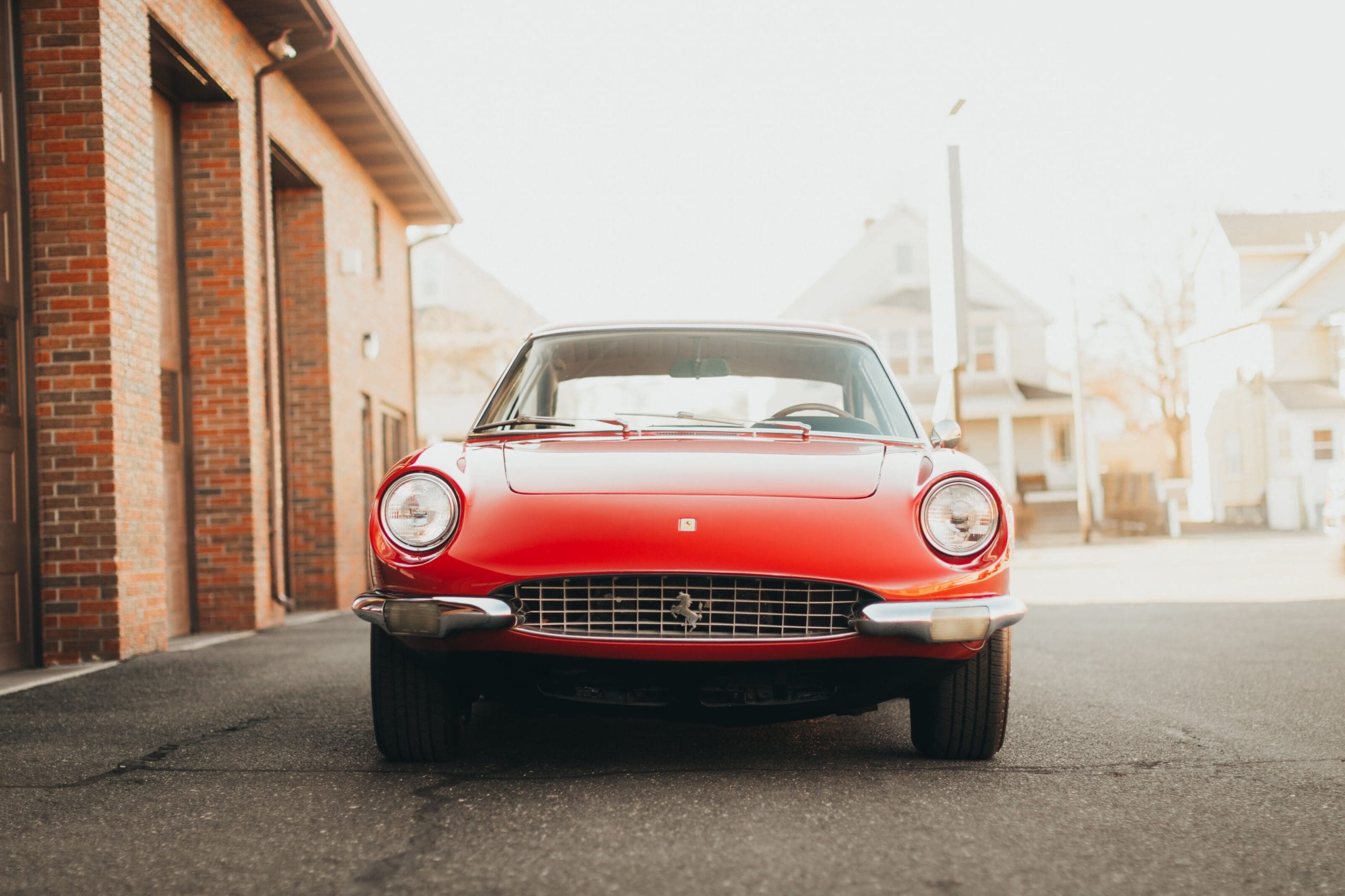
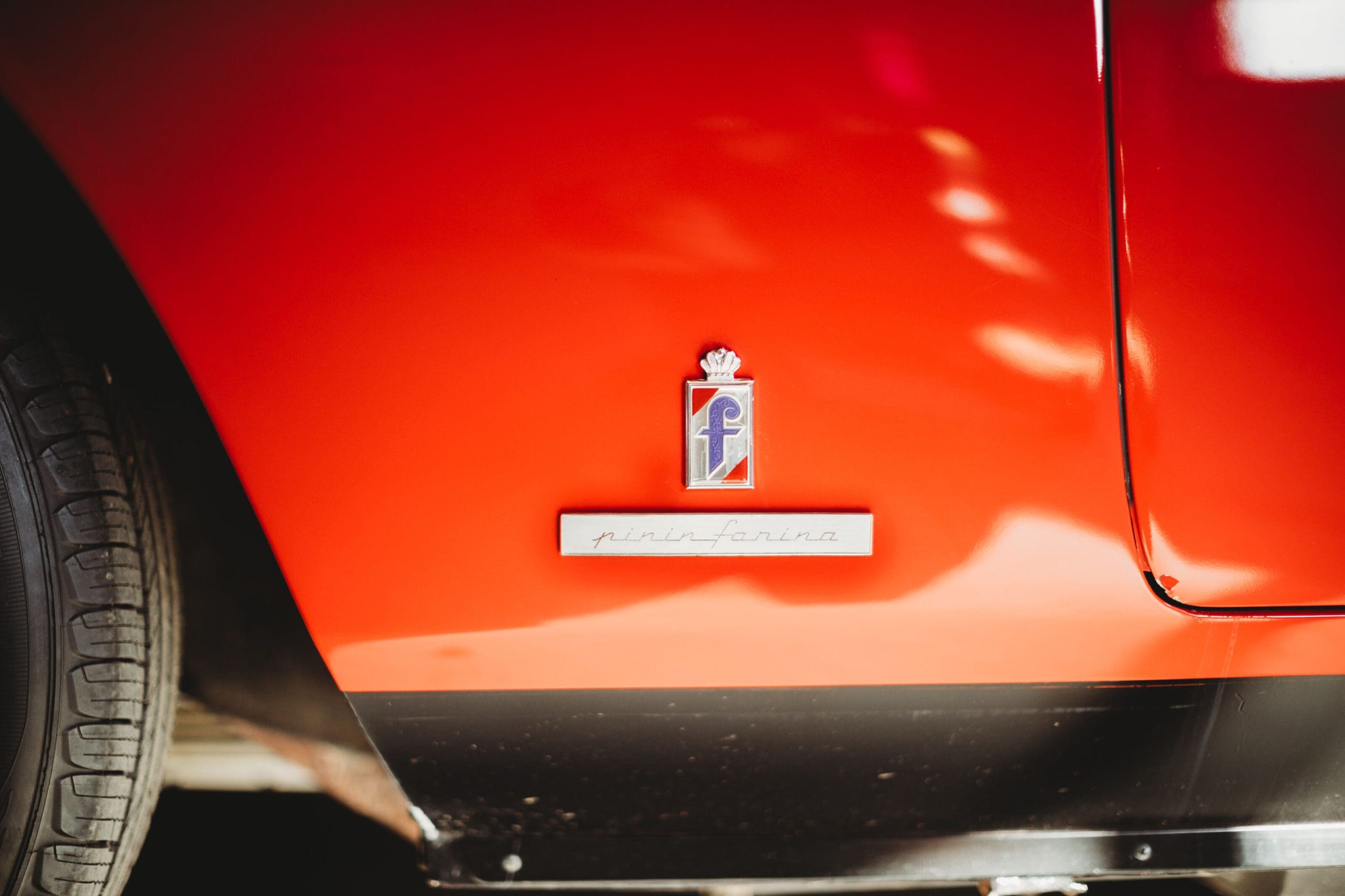
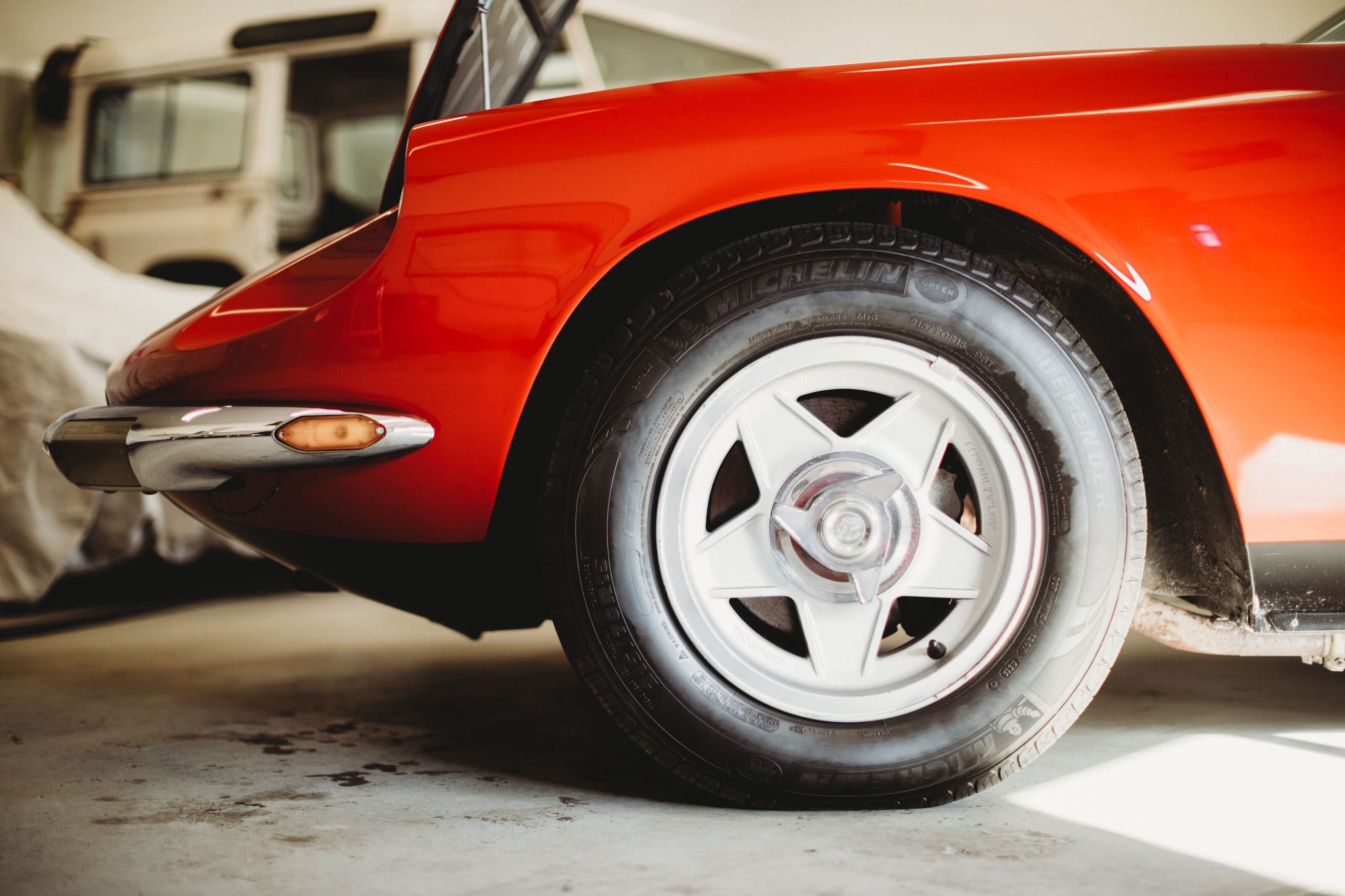
Pininfarina designed the 365 GT 2+2 and built its steel bodies in Turin before they were sent to Maranello for final assembly. Often described as the heir to the 500 Superfast, it had a long, low fastback shape that looked more like Ferrari’s Superfast models than earlier 2+2s. The front featured faired-in headlights and a wide oval grille, while the long cabin and Kamm-style tail gave the car a sleek, elegant look despite its size. Alloy wheels were standard, with Borrani wire wheels available as an option. The result was a car with the presence of a luxury limousine and the proportions of a high-speed grand tourer.
Interior
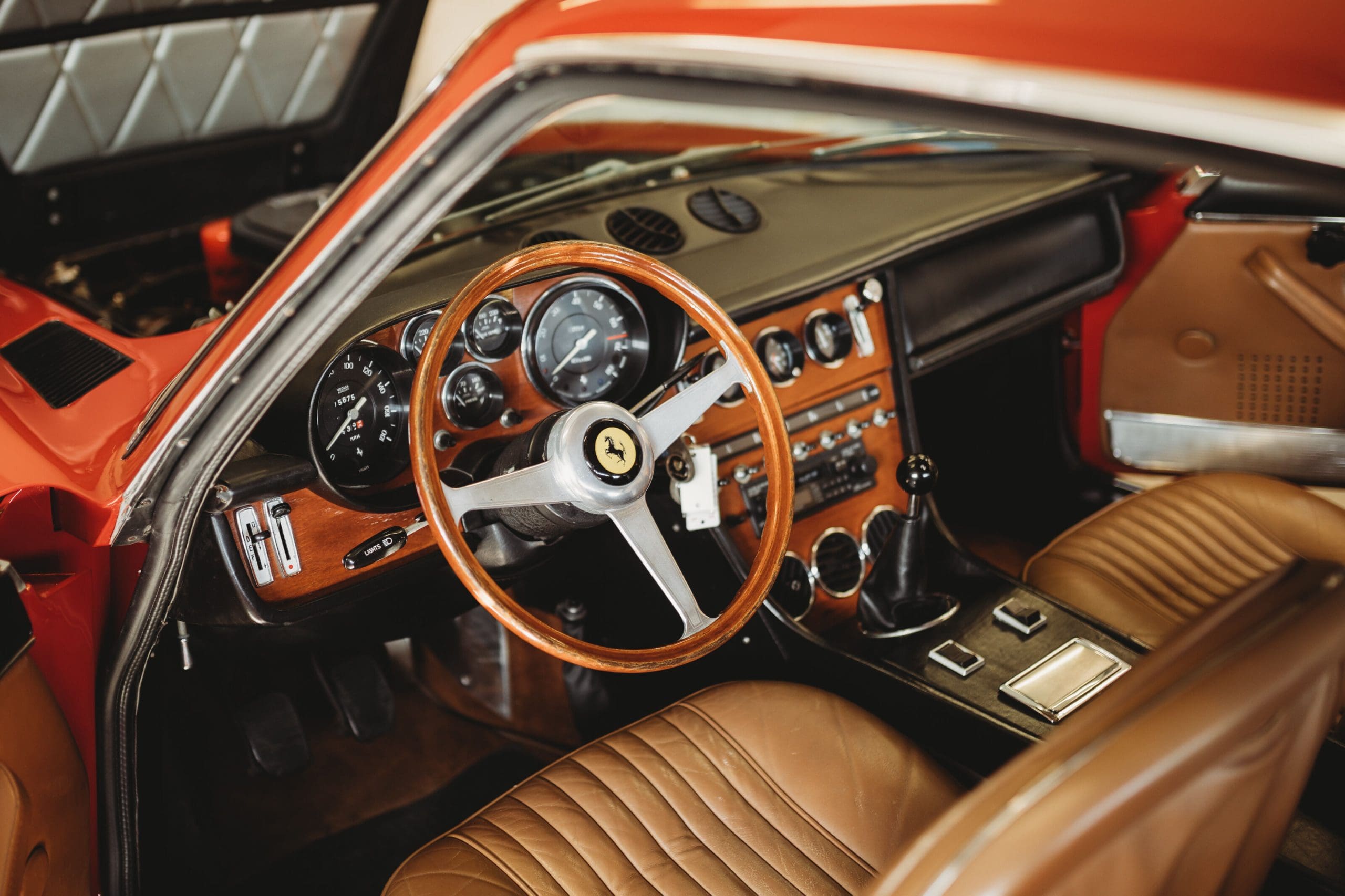
The cabin was the 365 GT 2+2’s main selling point. It offered two genuinely usable rear seats and a spacious luggage compartment, along with a level of equipment unusual for a Ferrari at the time. Power windows were standard, and air conditioning was standard on US-market cars. Leather upholstery, veneered wood trim, a tall center console and a full set of Veglia instruments completed the luxury cabin.
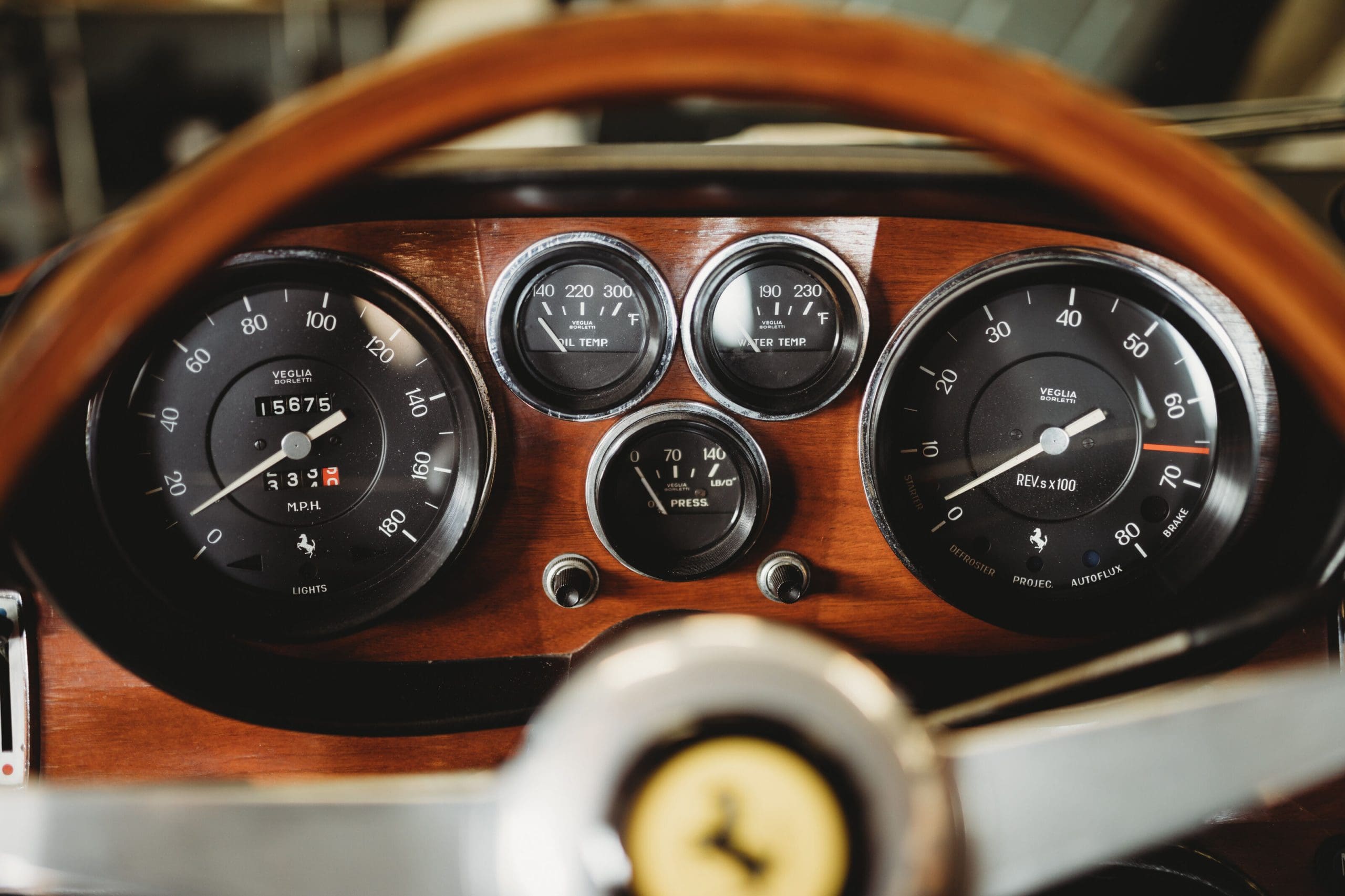
The wood-rimmed steering wheel was also notable, since the 365 GT 2+2 is widely cited as the last new Ferrari fitted with one as standard. Together with its power steering and self-leveling suspension, the interior made the 365 GT 2+2 one of the most comfortable and practical Ferraris of its era.
Specifications
- Engine: Ferrari Colombo 60-degree V12 (Tipo 245), 4,390cc, SOHC per bank, 24 valves, three Weber 40 DFI carburetors
- Power: 316 hp (320 CV) at 6,600 rpm
- Torque: 268 lb-ft at 5,000 rpm
- Transmission: Five-speed all-synchromesh manual, torque tube to frame-mounted rear differential, rear-wheel drive
- Chassis: Tipo 591 tubular steel
- Body: Steel, designed and built by Pininfarina
- Suspension: Independent front and rear, unequal-length wishbones, coil springs, Koni hydropneumatic self-leveling rear
- Steering: ZF power-assisted recirculating ball
- Brakes: Power-assisted discs front and rear
- Dimensions: 4,974 mm long, 1,786 mm wide, 2,650 mm wheelbase
- Weight: 1,480 kg / 3,263 lbs (dry)
- Performance: 0-60 mph in about 7 seconds, top speed of about 152 mph
Production and Legacy
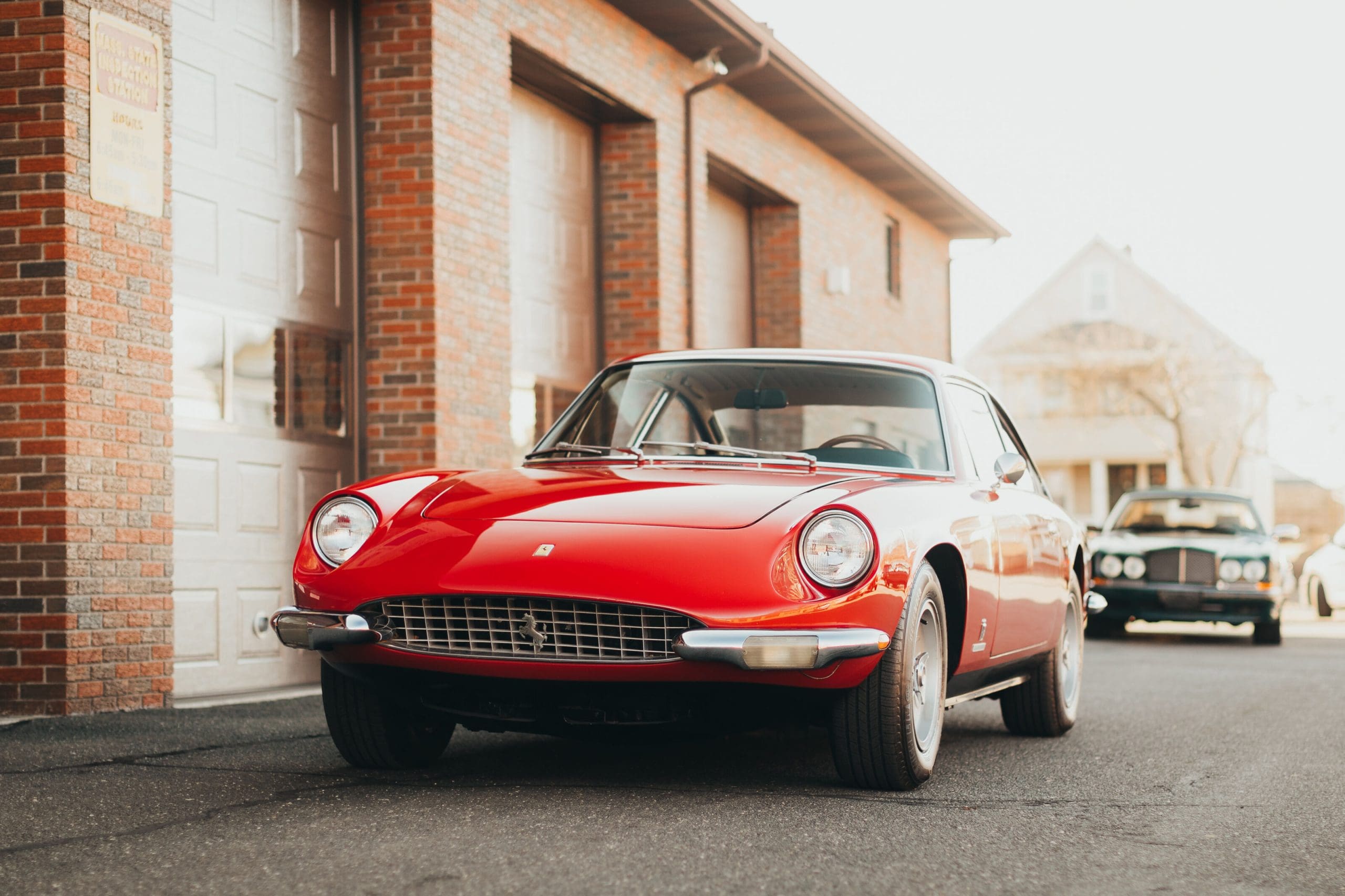
Ferrari built about 800 365 GT 2+2s between 1967 and 1971, including 52 with right-hand drive. The model was a major commercial success and accounted for roughly half of Ferrari’s V12 road car production during its run. After production ended, the 365 GTC/4 of 1971 filled the gap as Ferrari’s V12 2+2, though it was a more sporting car with much tighter rear seats. A true successor arrived at the Paris Motor Show in October 1972 in the form of the 365 GT4 2+2, which restored the focus on spacious four-seat accommodation and kept a hydropneumatic self-leveling rear suspension.
The 365 GT 2+2 helped set the formula for Ferrari’s later four-seat grand tourers. Its independent rear suspension, self-leveling system, power steering and generous equipment made it far more refined than its predecessors, and its success showed that a Ferrari could combine V12 performance with the comfort needed for long-distance travel. For years it was overshadowed by the two-seat Ferraris of the same period, especially the Daytona, but it is now recognized as one of the most important and elegant front-engined V12 grand tourers of its era.