

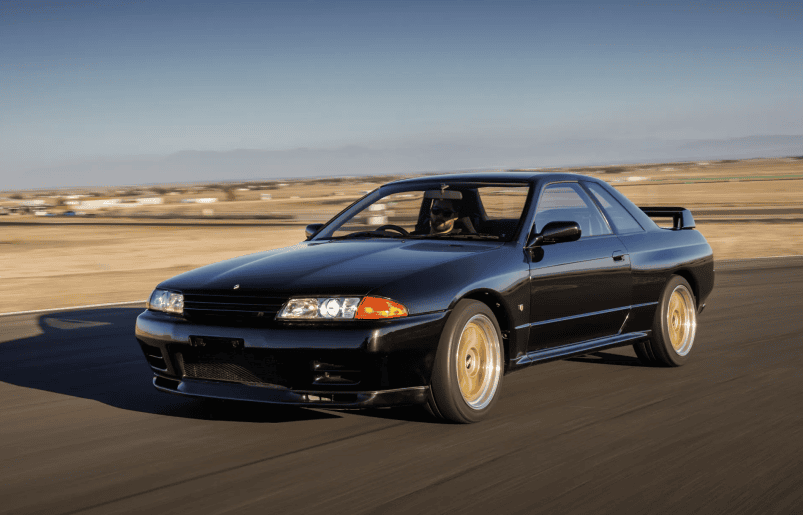
Japan, August 1989. Nissan revived the Skyline GT-R name after a 16-year absence, and the car that wore it changed how the world saw Japanese performance cars. The R32 Skyline GT-R was developed with one goal: to win Group A touring car racing. Its 2.6-liter twin-turbo RB26DETT inline-six was rated at 280 PS (276 hp), the ceiling set by the Japanese manufacturers’ voluntary power agreement. That power went to all four wheels through ATTESA E-TS, an electronically controlled all-wheel-drive system that could send up to half of the torque to the front axle. Super HICAS four-wheel steering and multilink suspension front and rear completed a technical package few cars of the era could match. Australia’s Wheels magazine compared it to Godzilla in July 1989, before it had turned a wheel in competition, and the nickname stuck once the GT-R began crushing the opposition at Bathurst, at Spa and in Japan, where it won all 29 races it entered in the All Japan Touring Car Championship. Nissan built about 44,000 R32 GT-Rs before production ended in 1994.
Background and Origins
The original Skyline GT-R appeared in 1969 and earned its reputation by winning race after race in Japanese touring car competition. The second-generation KPGC110 GT-R followed in 1973, but tightening emissions rules and the oil crisis cut its life short after just 197 cars were built. For the next 16 years, Skylines carried sporty badges, but none wore the GT-R name.
That changed with the eighth-generation R32 Skyline, which went on sale in May 1989. In the late 1980s, Nissan was racing the Skyline GTS-R in Group A, but it struggled against the Ford Sierra RS500 Cosworth. Nissan wanted a car that could dominate, and it designed the new GT-R around the Group A rulebook. Turbocharged engines had their displacement multiplied by 1.7 for classification, so the RB26DETT’s 2,568cc capacity worked out to about 4,366cc, placing the GT-R in the 4,001 to 4,500cc class. That class gave Nissan a favorable combination of minimum weight, tire width and power. To put that power down, Nissan developed an all-wheel-drive system around a rear-wheel-drive platform, giving the GT-R the traction it needed to use its performance on track. The road car went on sale three months after the standard R32 Skyline, with production starting in August 1989.
Design and Engineering
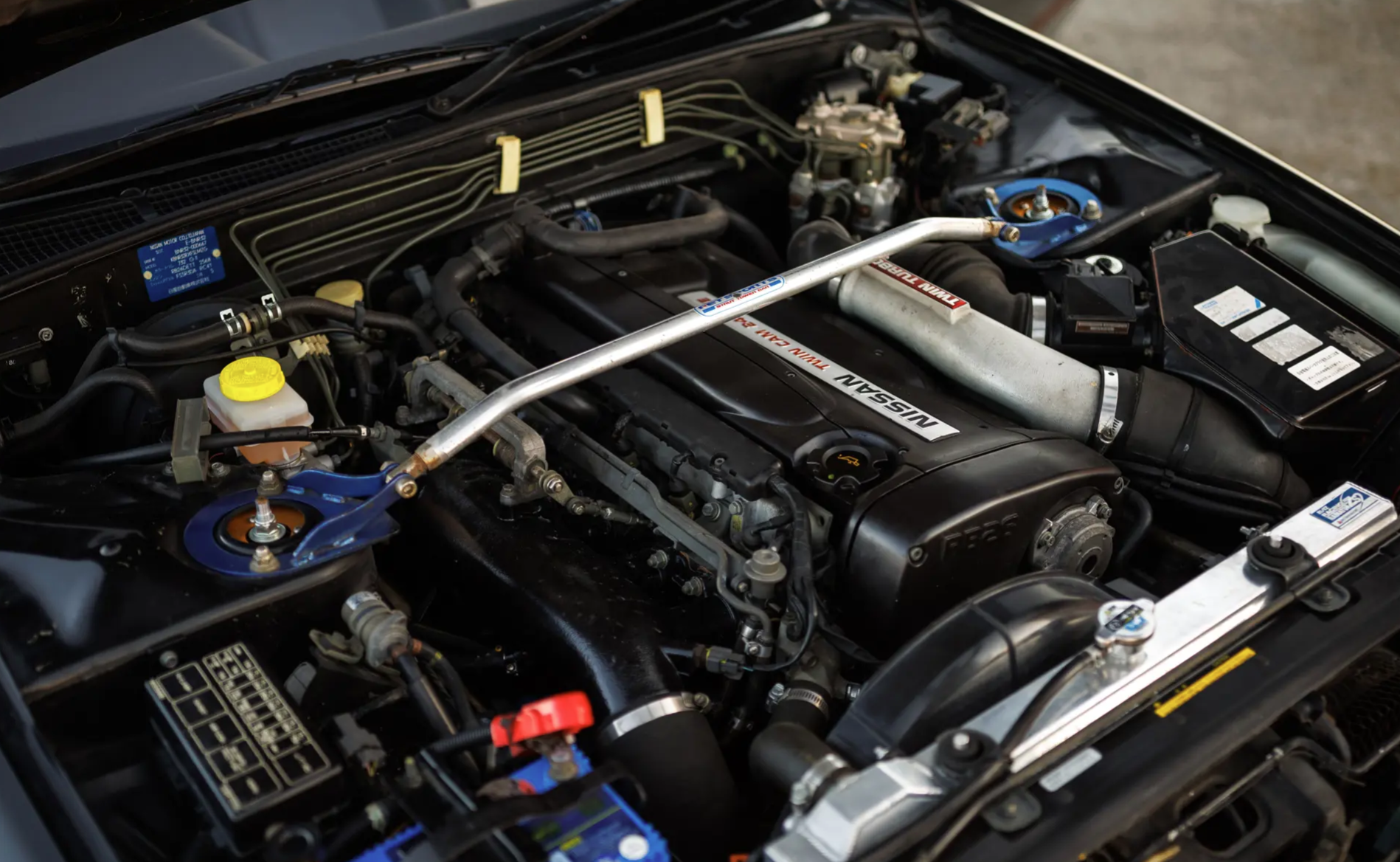
The heart of the GT-R was the RB26DETT, a 2,568cc inline-six with an iron block, aluminum DOHC 24-valve head, six individual throttle bodies and twin ceramic turbochargers. Nissan rated it at 280 PS (276 hp) at 6,800 rpm and 260 lb-ft of torque at 4,400 rpm. The engine was built with racing in mind, and its strong bottom end could handle far more boost than the road car used. That made it a favorite among tuners, and with modifications it was capable of far more than its official rating.
The drivetrain was just as advanced. ATTESA E-TS (Advanced Total Traction Engineering System for All-Terrain with Electronic Torque Split) normally drove the rear wheels, but it used wheel-speed sensors and a G-sensor to monitor grip and cornering forces. An electronically controlled hydraulic multi-plate clutch could send up to 50 percent of the torque to the front wheels, adjusting continuously as conditions changed. It worked with a five-speed manual gearbox and a limited-slip rear differential. Super HICAS electronic four-wheel steering helped the car change direction more quickly, and multilink suspension front and rear gave it excellent body control. The hood was aluminum to save weight, and the standard car used Sumitomo brakes with four-piston front calipers and 16-inch wheels. With a curb weight of 1,430 kilograms, the GT-R could sprint from 0 to 60 mph in about five seconds. Japanese-market cars were limited to 112 mph (180 km/h), and unrestricted cars were estimated to reach about 155 mph.
Styling
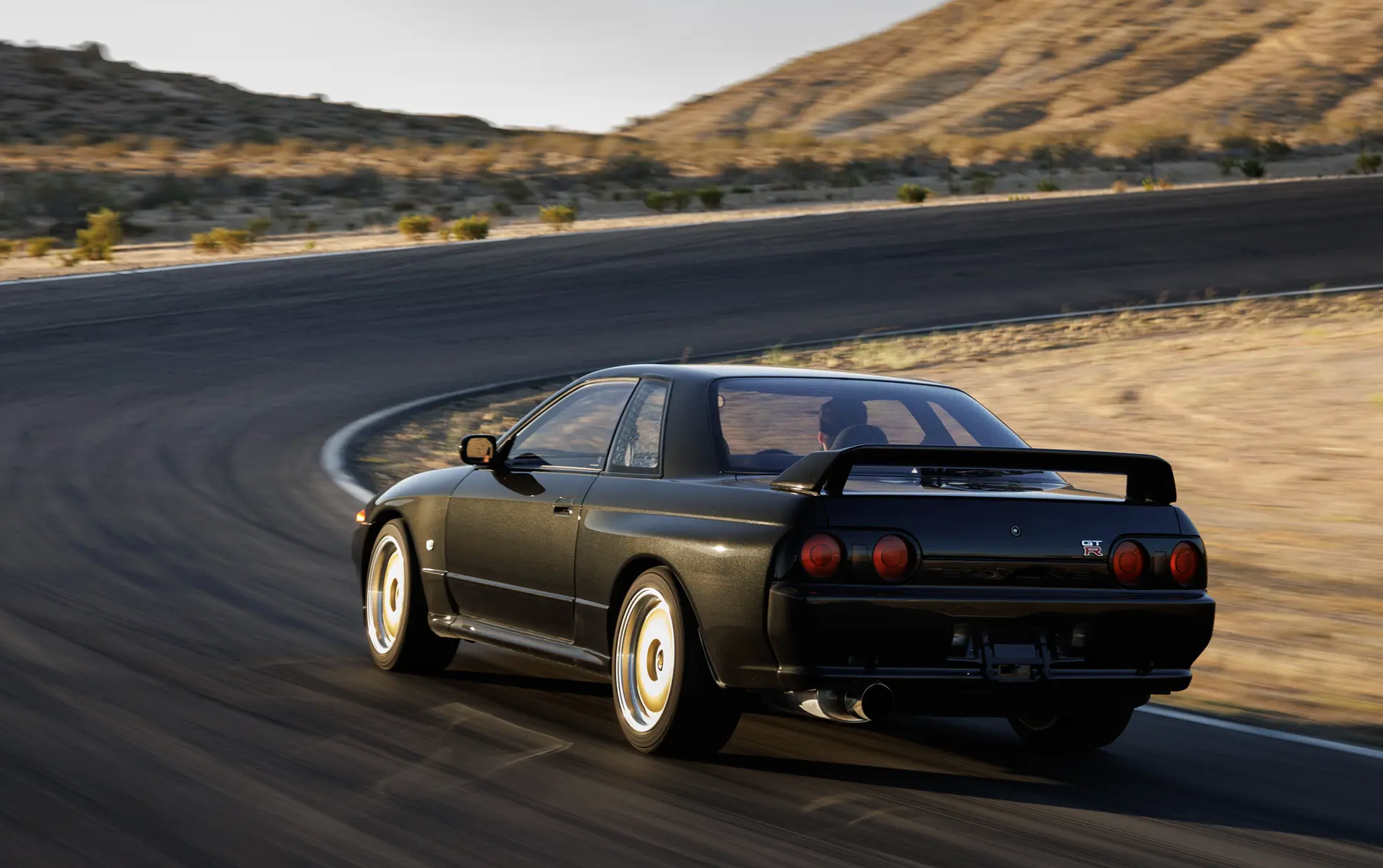
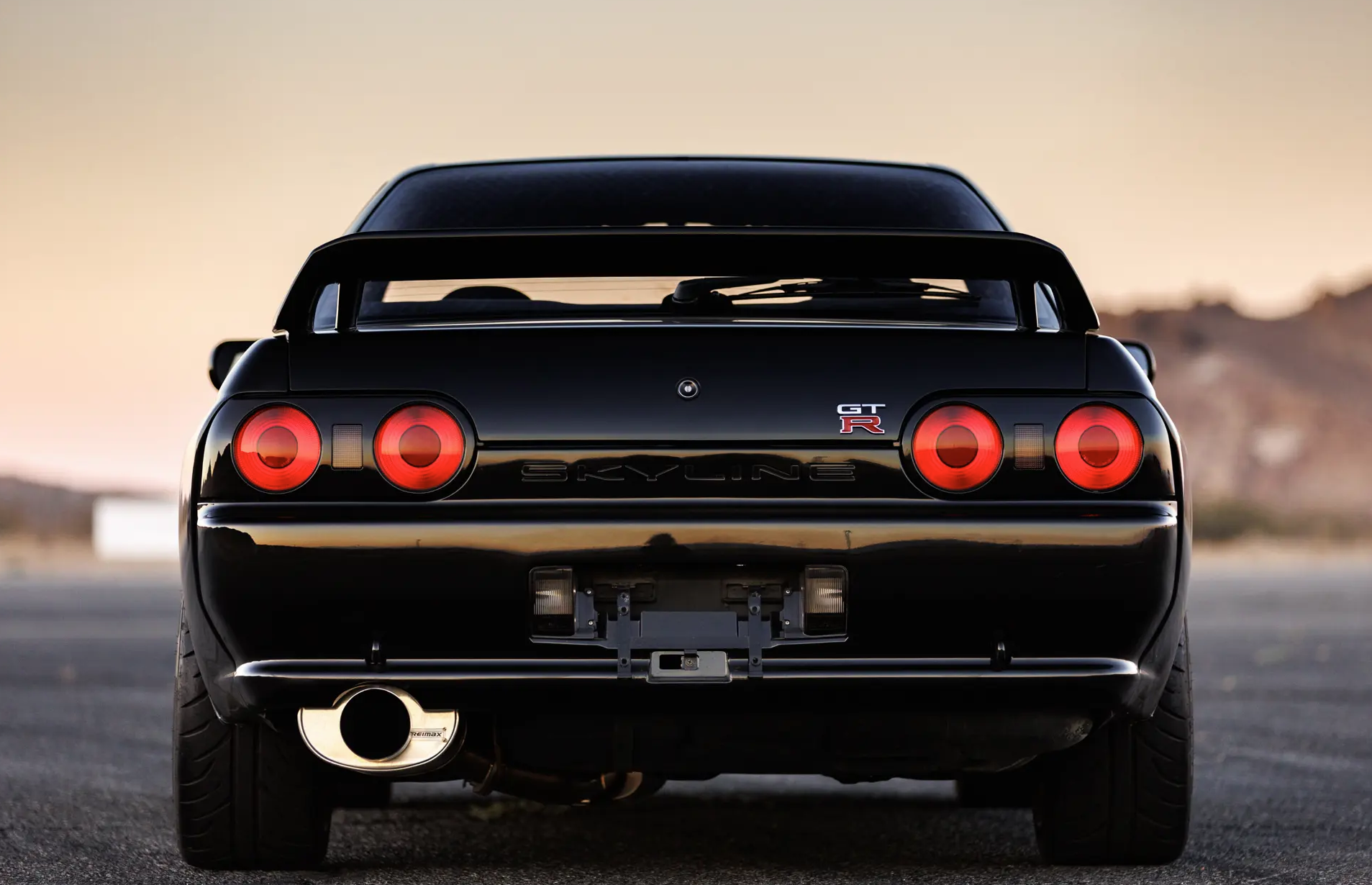
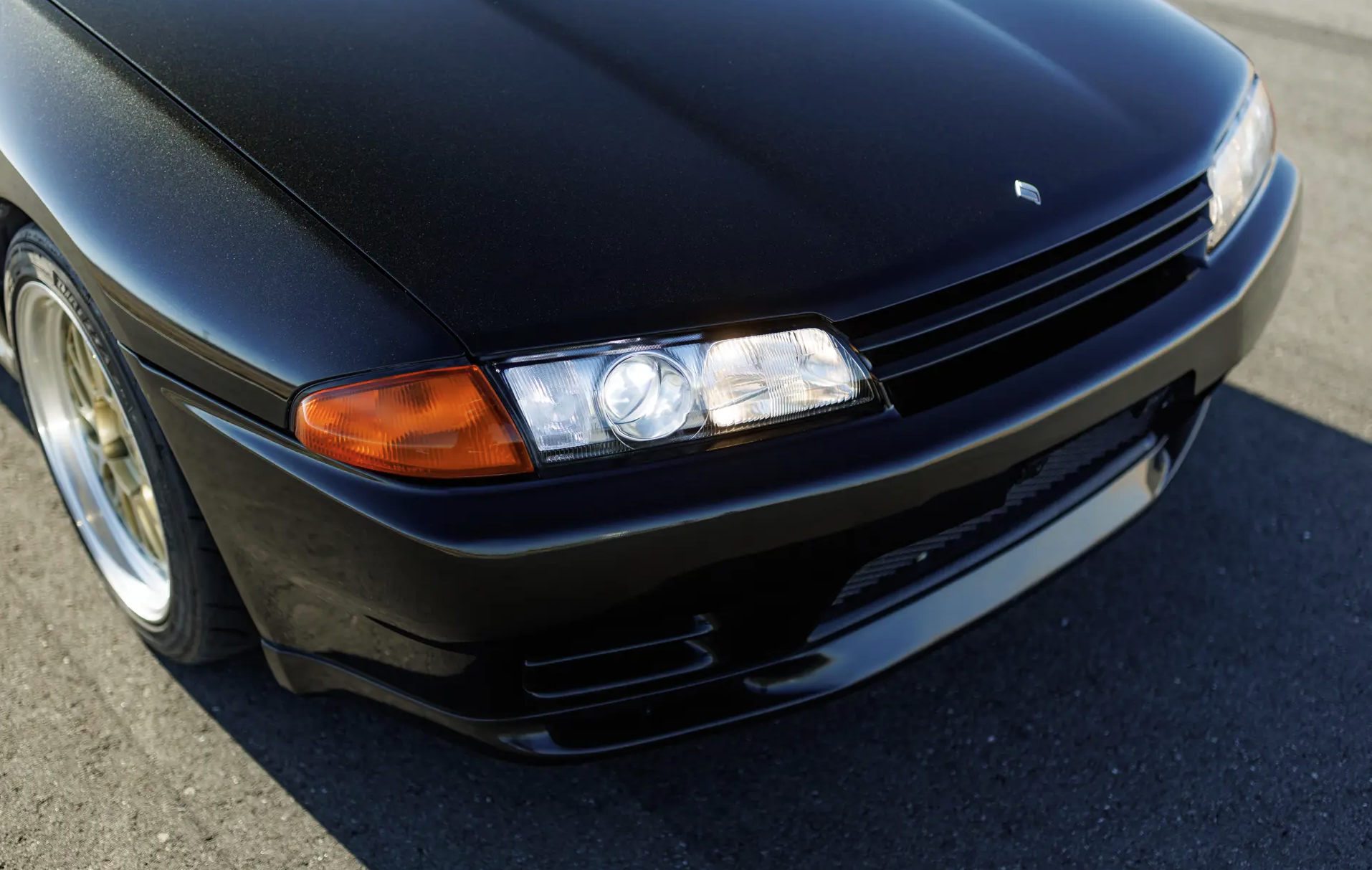
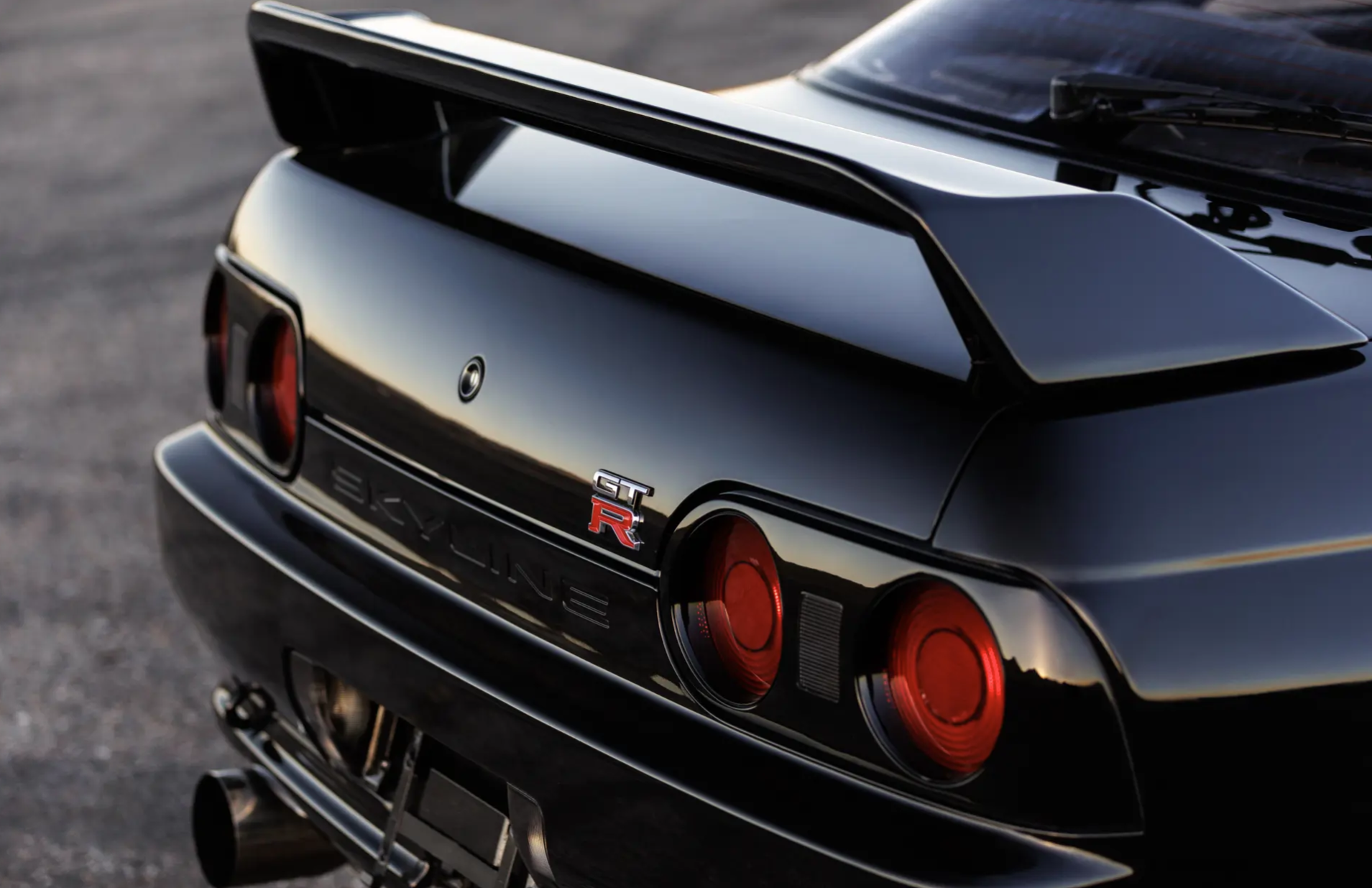
The R32 Skyline was more compact than the R31 it replaced, and the GT-R version looked tight, purposeful and muscular. It had a two-door coupe body with flared front and rear fenders, a deeper front bumper with large openings for the intercooler and brake cooling, and a rear wing mounted on the trunk lid. The design was understated by the standards of later Japanese performance cars, but its upright stance, wide track and four round taillights, a Skyline tradition, gave it a strong presence. Its 16-inch wheels were small by modern standards but filled the arches well, and the overall effect was of a car designed around function rather than show.
Interior
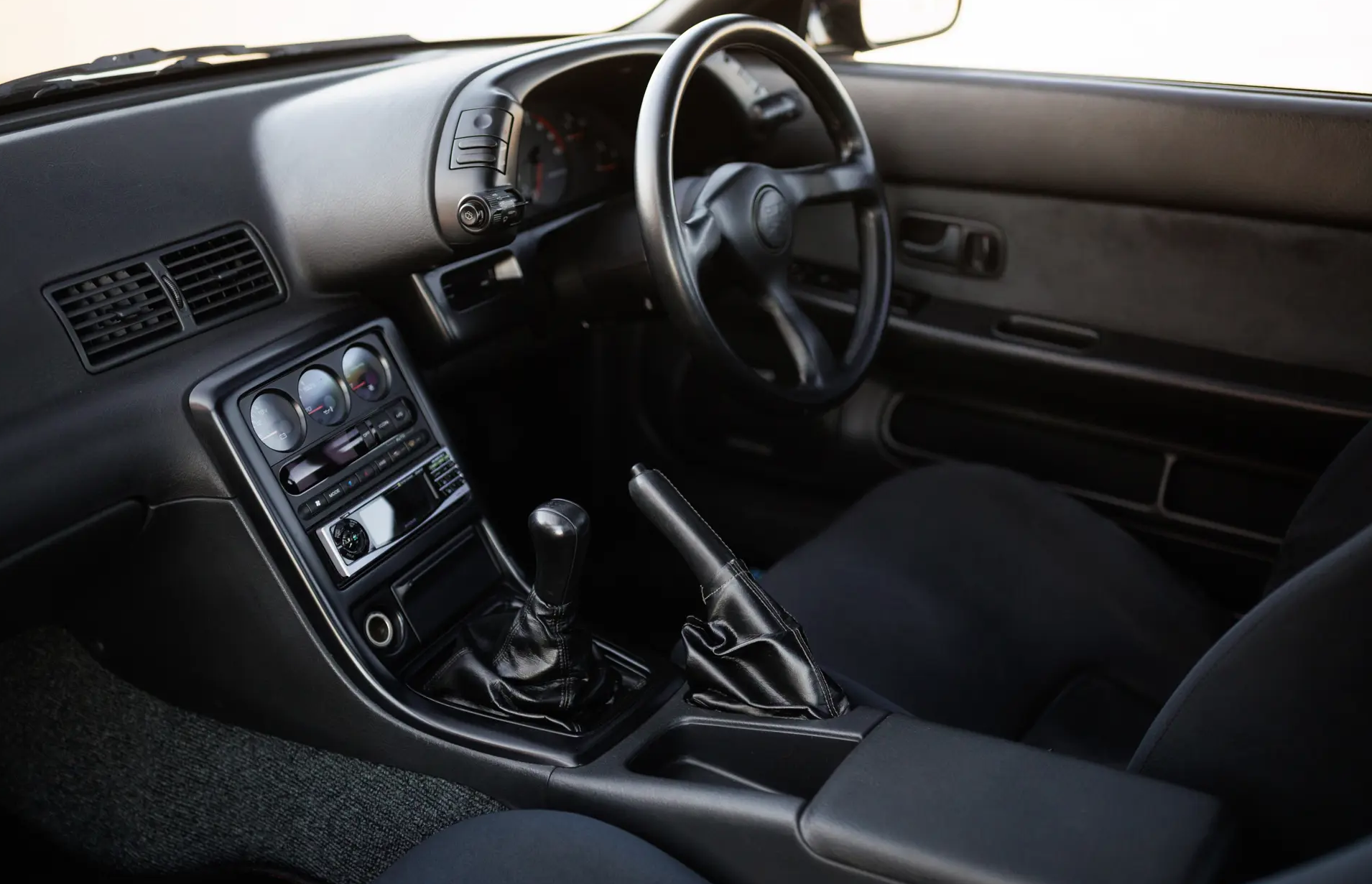
Inside, the GT-R was typical of Japanese cars of the period, with a simple, driver-focused layout and solid build quality. Supportive front sport seats and a small three-spoke steering wheel set the tone, while three gauges in the center console showed boost pressure, oil temperature and how much torque ATTESA E-TS was sending to the front wheels. The cabin was functional rather than luxurious, but it came with air conditioning, power windows and enough room for two adults in the back for short trips, so the GT-R worked as a daily driver as well as a performance car.
Racing History
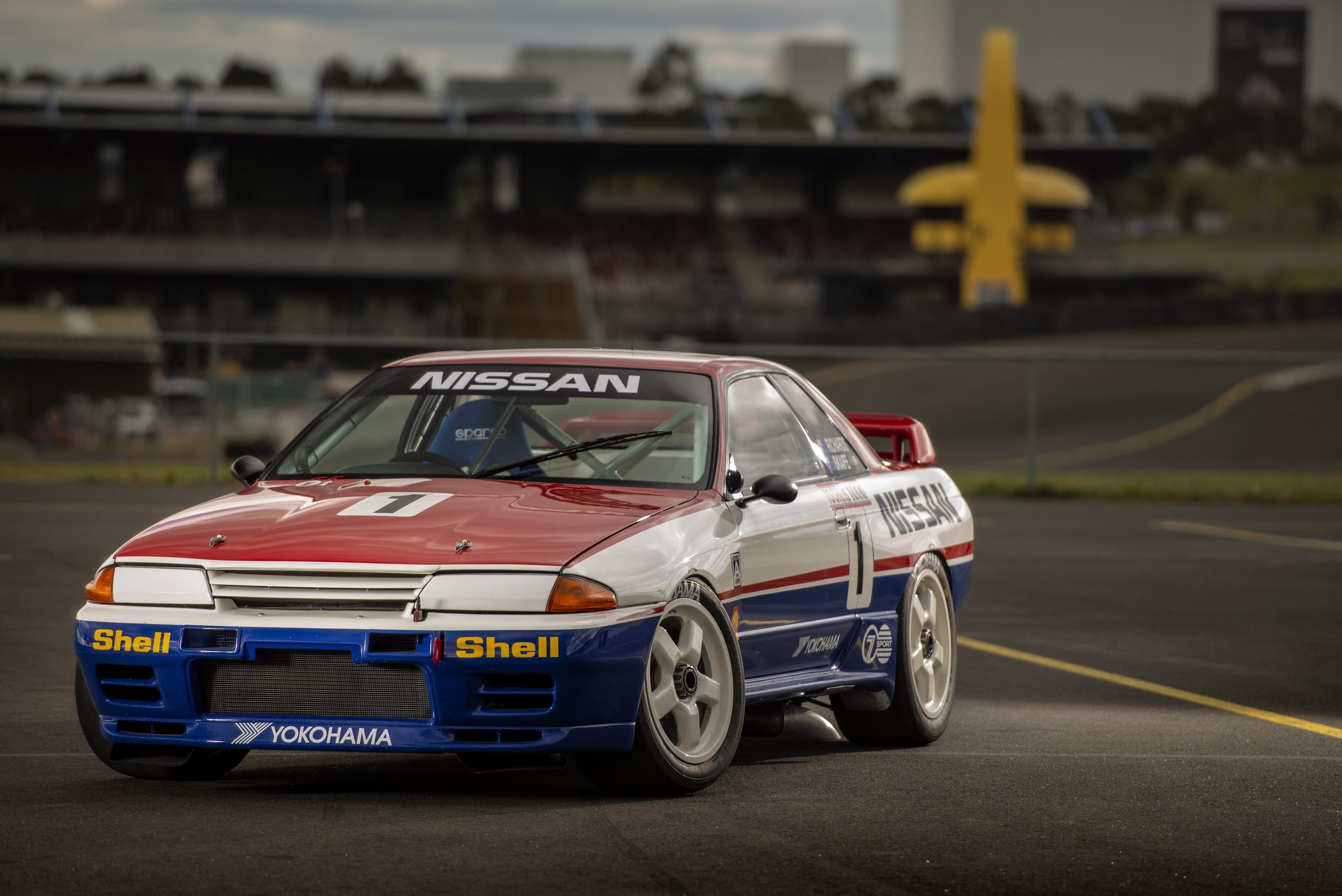
The R32 GT-R was built to race, and it delivered. It made its All Japan Touring Car Championship debut in 1990 and won every race it entered, a run that continued until the end of Group A racing in Japan in 1993. It became so dominant that it effectively monopolized the top class, winning all 29 championship races it entered from pole position.
Australia gave the GT-R its nickname and some of its best-known victories. Run by Fred Gibson’s Nissan team, the R32 helped Jim Richards secure the 1990 Australian Touring Car Championship after he switched from the older HR31 Skyline GTS-R for the final two rounds. Richards won the 1991 title, while Mark Skaife took the championship in 1992. The pair also won the Bathurst 1000 in 1991 and 1992. The 1992 race was stopped early in heavy rain after the leading GT-R collided with wrecked cars. Because the required race distance had already been completed, the results were taken from the previous completed lap, giving Richards and Skaife the win. The decision provoked a famously hostile reaction from the crowd. The GT-R’s dominance contributed to growing dissatisfaction with Group A in Australia, which was replaced by 5.0-liter V8-based regulations in 1993.
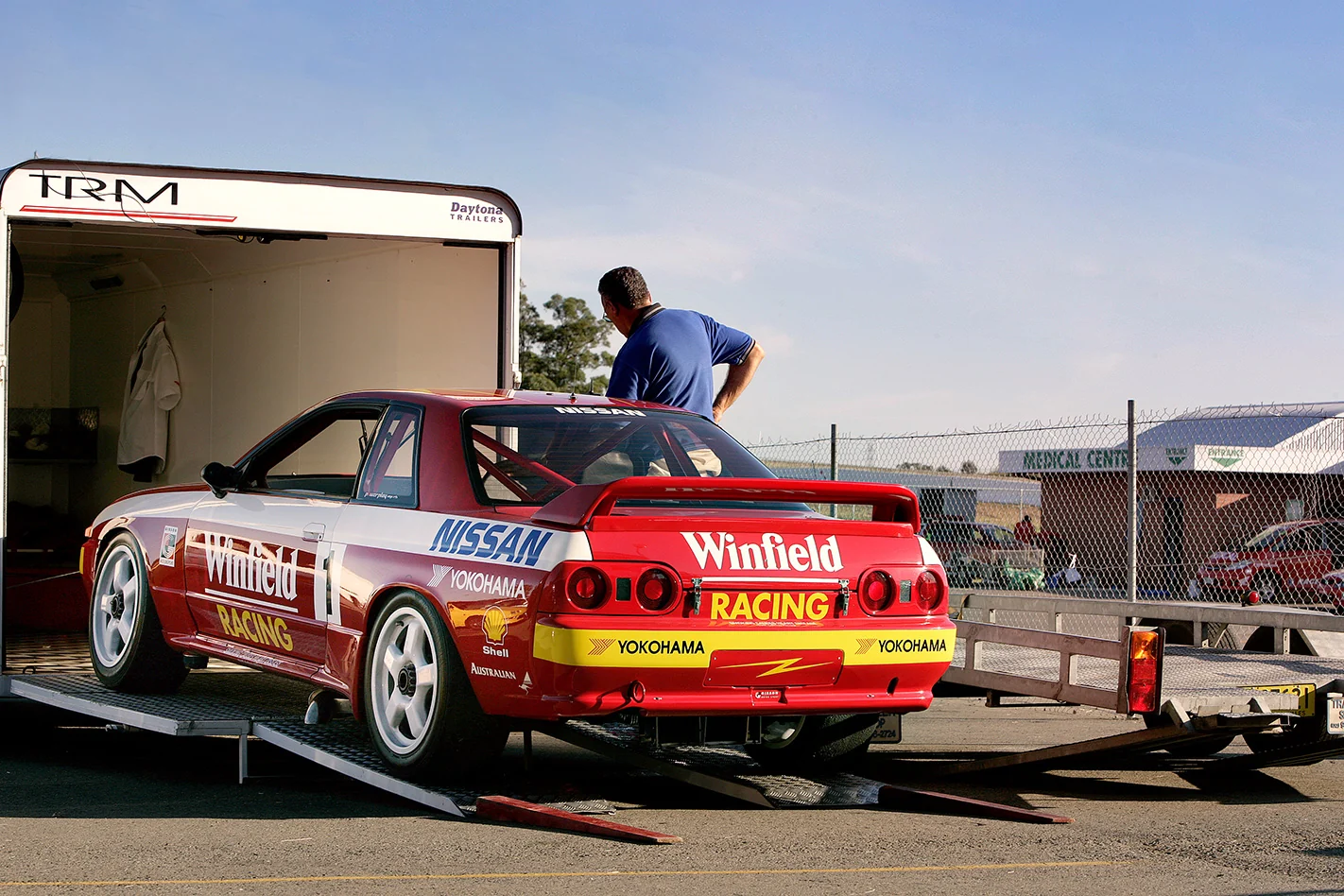
The GT-R also won in Europe. In 1991, a Zexel-sponsored Group A R32 driven by Naoki Hattori, Anders Olofsson and David Brabham won the Spa 24 Hours overall, finishing 21 laps ahead of the second-place Porsche. It was an important result, proving the GT-R could beat established European competition on its home ground. The GT-R also enjoyed considerable success in Group N production-based racing, where the N1 version was built specifically for the class.
Specifications
- Engine: RB26DETT 2,568cc inline-six, DOHC, 24 valves, twin ceramic turbochargers, intercooler
- Power: 276 hp (280 PS) at 6,800 rpm
- Torque: 260 lb-ft at 4,400 rpm
- Transmission: Five-speed manual, ATTESA E-TS all-wheel drive
- Steering: Super HICAS four-wheel steering
- Suspension: Multilink front and rear
- Brakes: Ventilated discs, four-piston front calipers
- Dimensions: 4,545 mm long, 1,755 mm wide, 1,340 mm high, 2,615 mm wheelbase
- Weight: 1,430 kg / 3,153 lbs (curb)
- Performance: 0-60 mph in about 5 seconds (estimated), top speed limited to 112 mph in Japan, about 155 mph unrestricted (estimated)
Production and Legacy
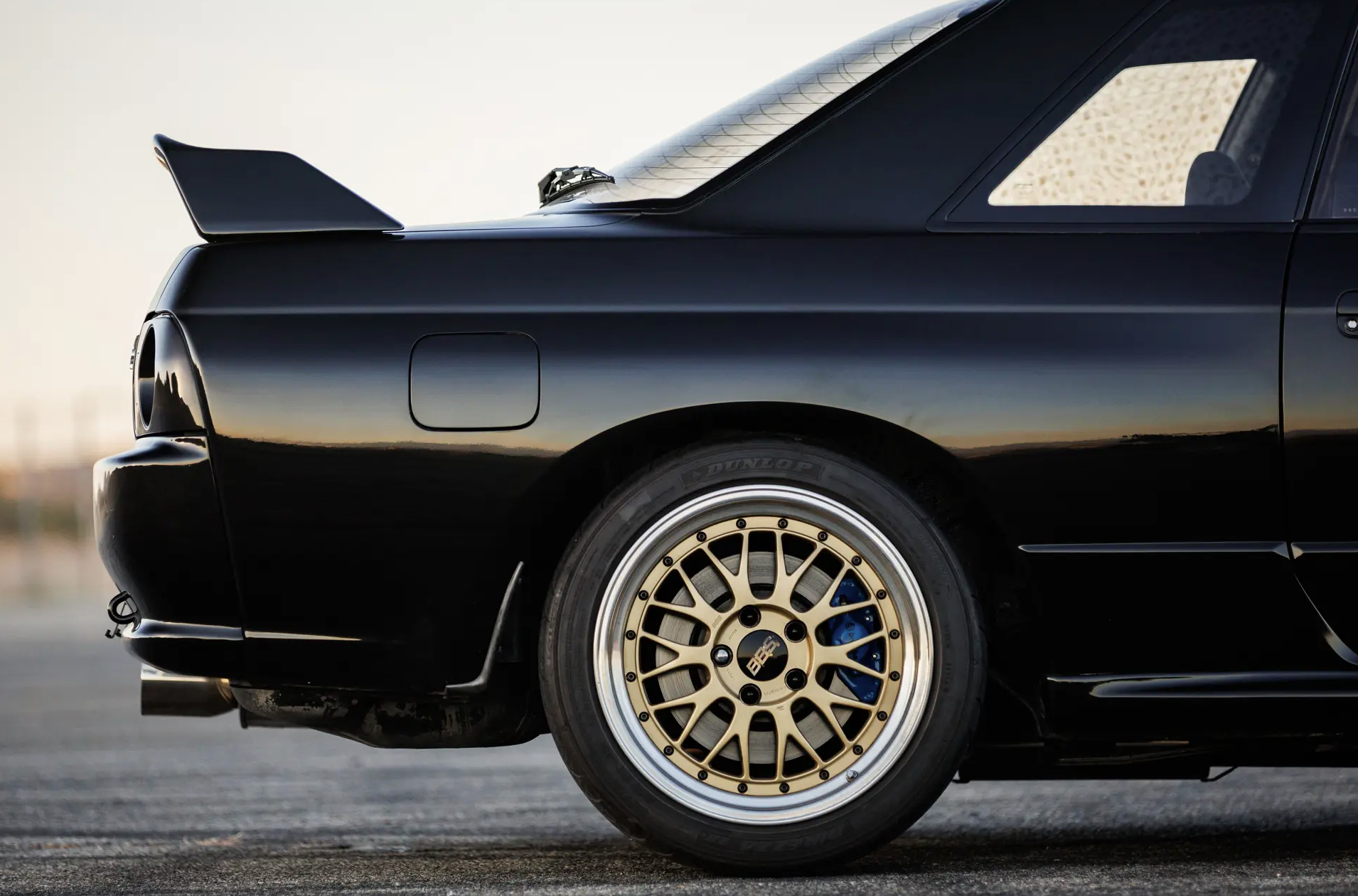
Nissan built several special versions of the R32 GT-R. The GT-R Nismo, announced in February 1990, was the Group A homologation special, and 560 were made. It had special turbochargers, extra aerodynamic parts and deleted equipment such as ABS and the rear wiper. The N1 version followed in July 1991 as a base for Group N racing. In February 1993, Nissan introduced the V-Spec to celebrate the car’s racing success, adding Brembo brakes, 17-inch BBS wheels, revised suspension and a retuned ATTESA E-TS system. The V-Spec II followed in February 1994 with wider 245/45R17 tires. Nissan built about 44,000 R32 GT-Rs before production ended in November 1994, and the R33 GT-R followed in January 1995.
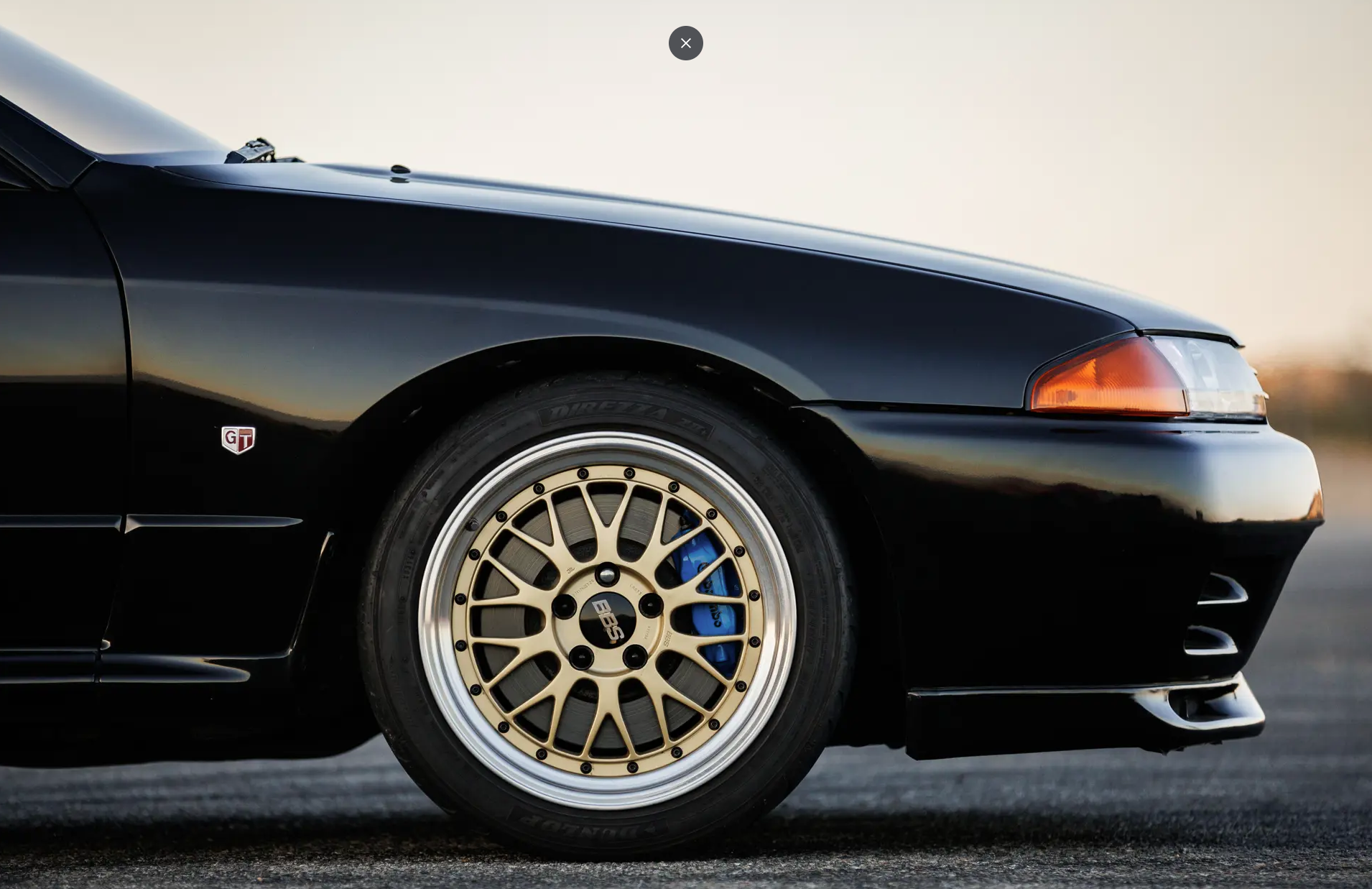
The R32 GT-R set the template for every GT-R that followed, combining a powerful, highly tunable engine with sophisticated all-wheel drive and a racing pedigree. Its dominance in Group A was so complete that it reshaped touring car racing in Japan and Australia, and its popularity among tuners turned the RB26DETT into one of the most famous engines ever built. In 2014, early R32s became eligible for import into the US under the 25-year rule, and the car found a new audience. It is now one of the most sought-after Japanese performance cars of all time.