
1989 Callaway Speedster Corvette
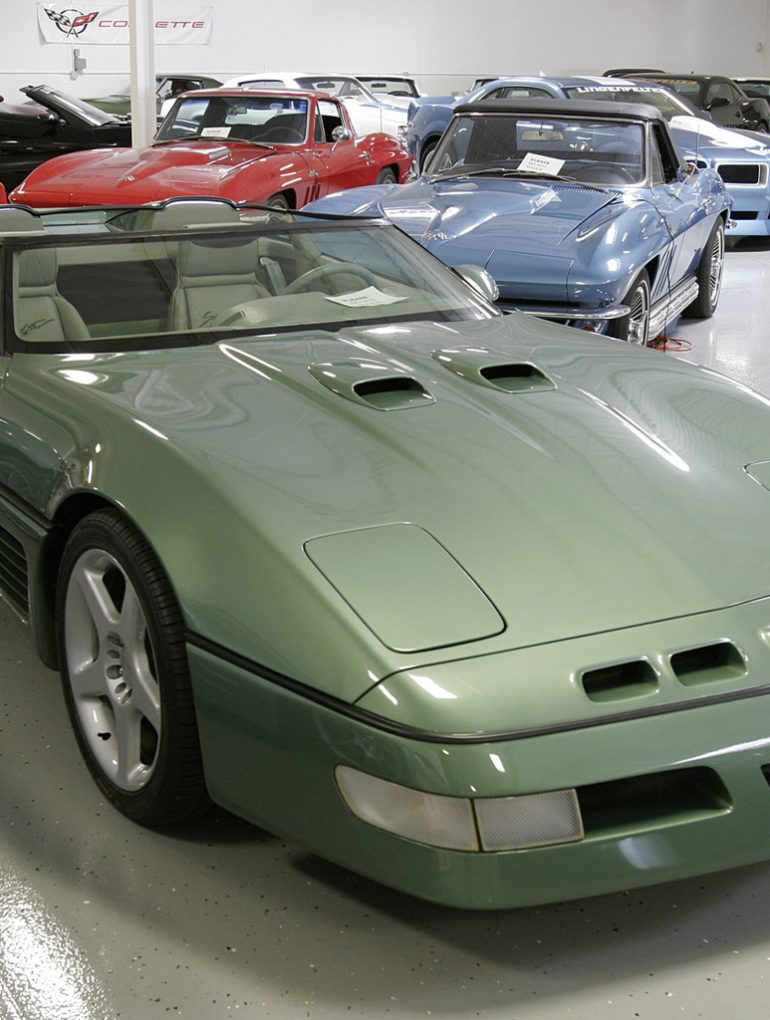
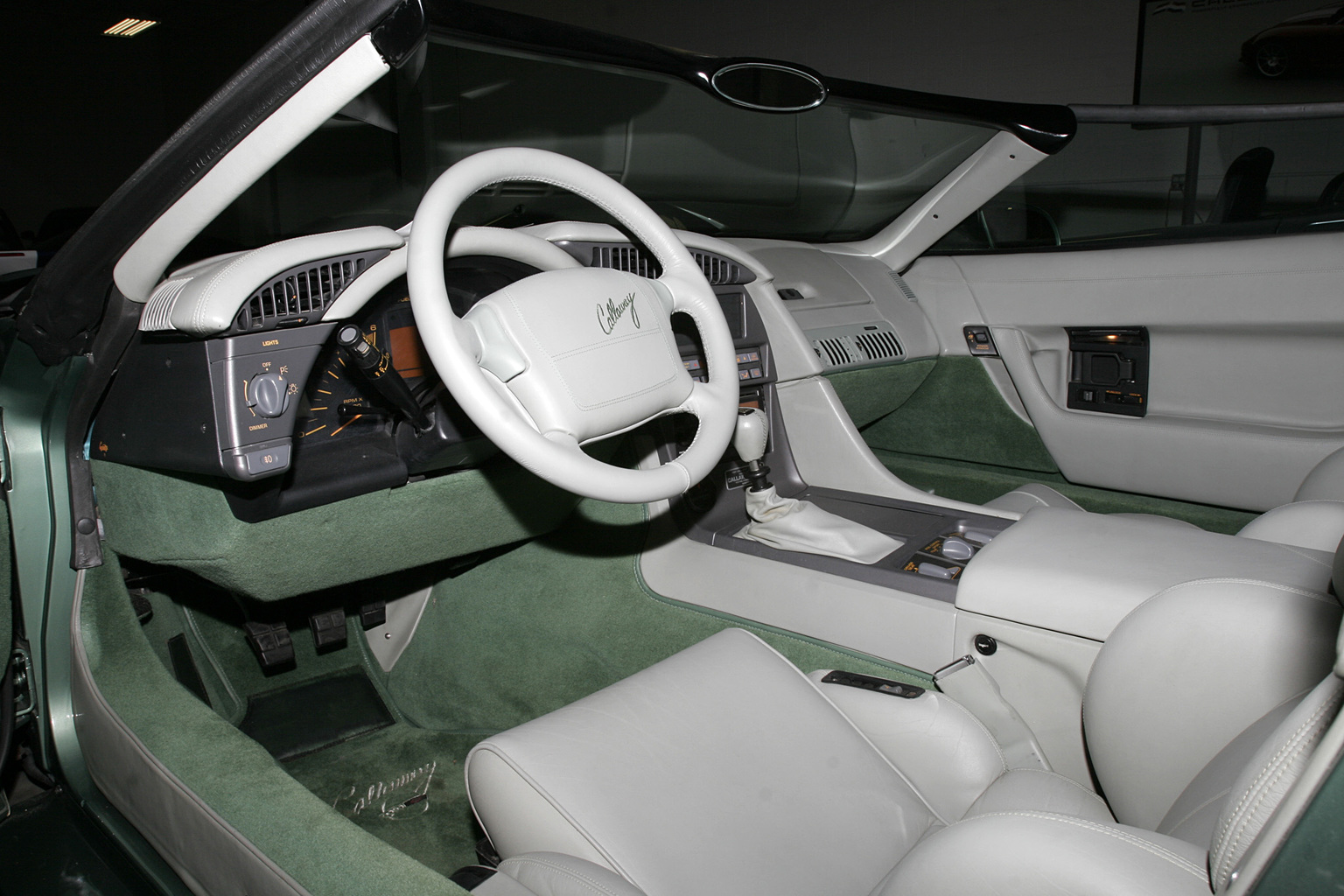
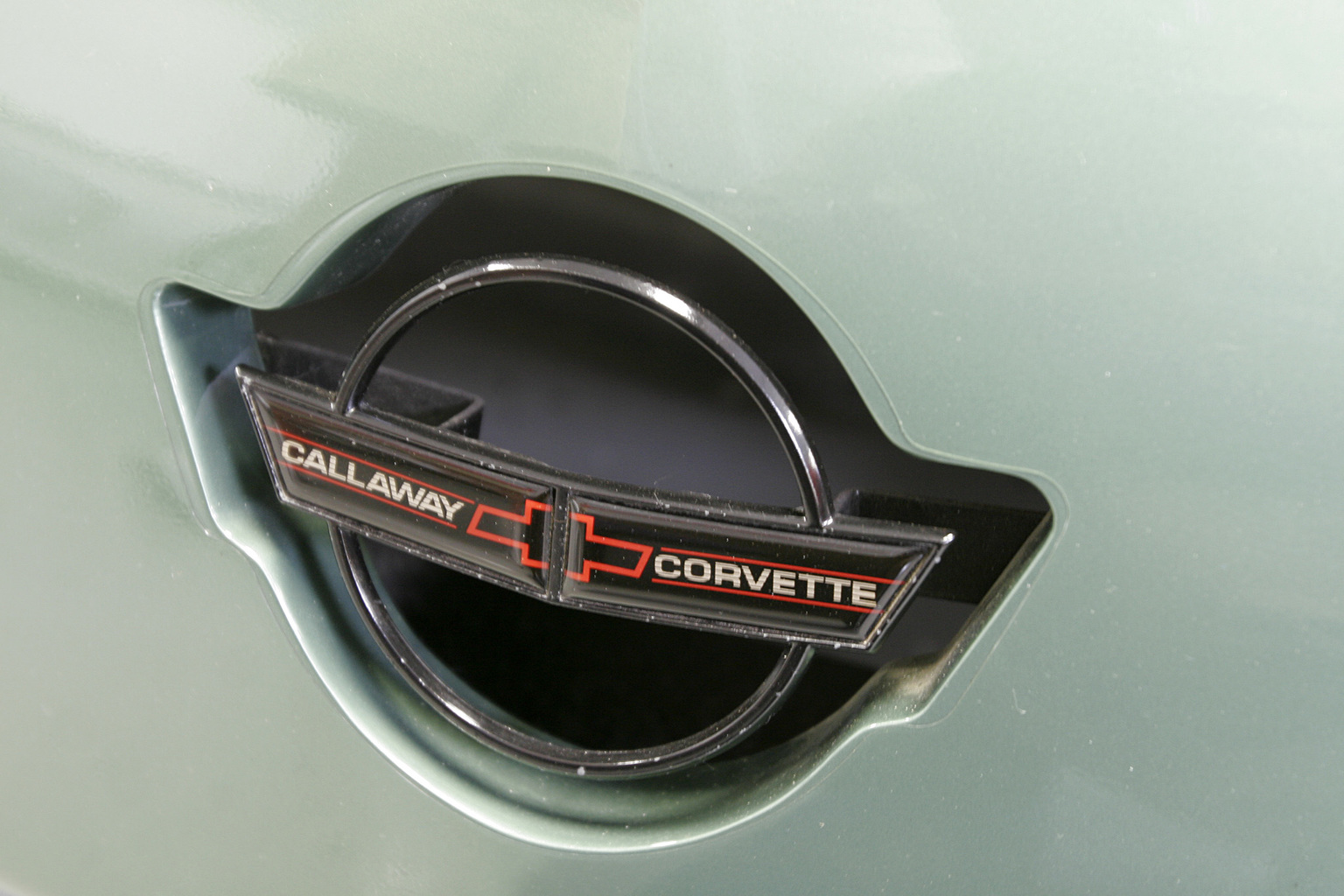
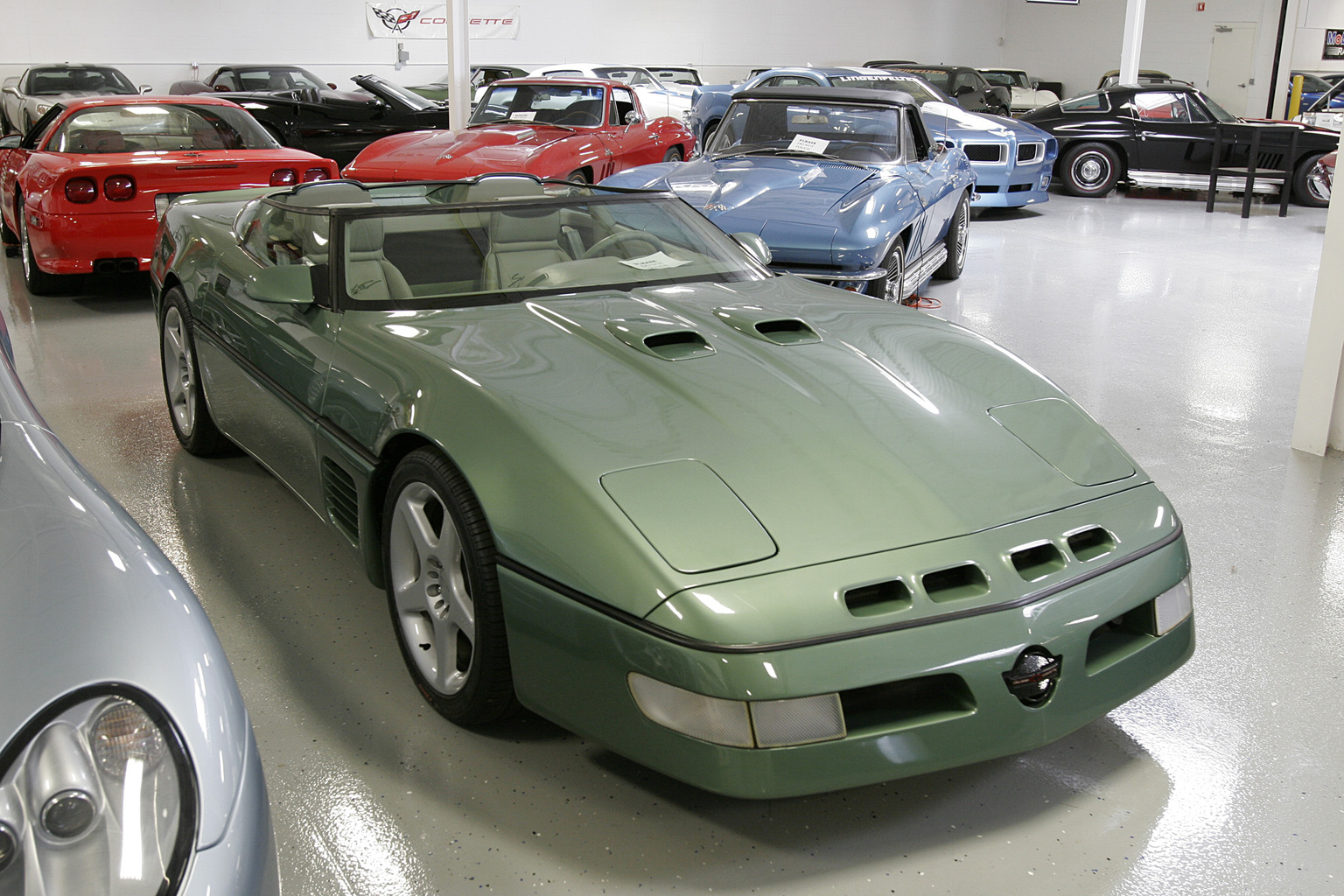
In 1989 Callaway introduced a Speedster which was culmination of their stytling, engineering and trimming talents. Their first example was a bright green ZR1, which had a severely chopped windscreen, no side mirrors, eighteen inch wheels and a vibrant blue leather interior stitched purposefully from Germany.
Nothing about Callaway’s Speedster was reserved, and this is especially true when investigating the specification. The car had 450 horsepower. This figure was a tremendous amount for 1989, and was one of the most powerful accepted by the American EPA for pollution standards. To create such a car, Callaway had to tackle several problems, and the first was fitting the new twin turbos, complex engine headers and airbox in an already cluttered engine bay.
Adding turbos to the existing GM engine meant Callaway had to develop several new systems. These included new engine mototronics, fuel injection system, and an exhaust system including custom headers and catalytic converters. One of the most complex tasks was redesigning the front crossmember to accommodate an airbox to feed the engine intake. The engines themselves were blueprinted, magnafluxed, fitted with Cosworth pistons and forged cranks alongside NASCAR units at Ed Lanier’s shop.
Beyond turbocharging, Speedsters received a competition suspension with coil overs, adjustable shocks, a Brembo brake package and massive 3 piece Oz racing wheels. At the time, the 17 inch wheels were the largest to fit on a Corvette, and Callaway even had prototype 18 inch wheels fitted to chassis #000. Bridgestone provded run-flat tires, which was an emerging technology, and one that freed the Speedster from they necessary spare wheel.
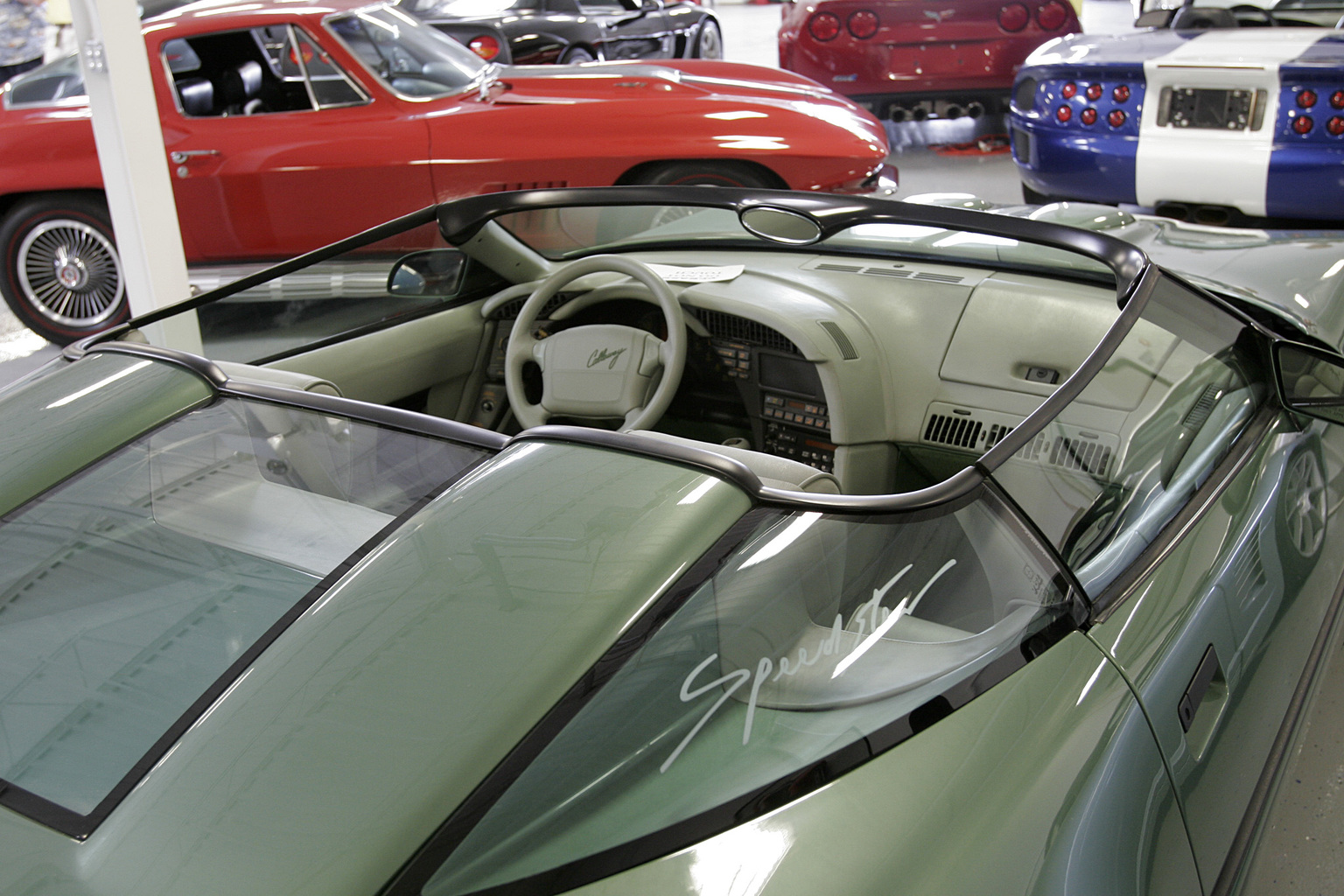
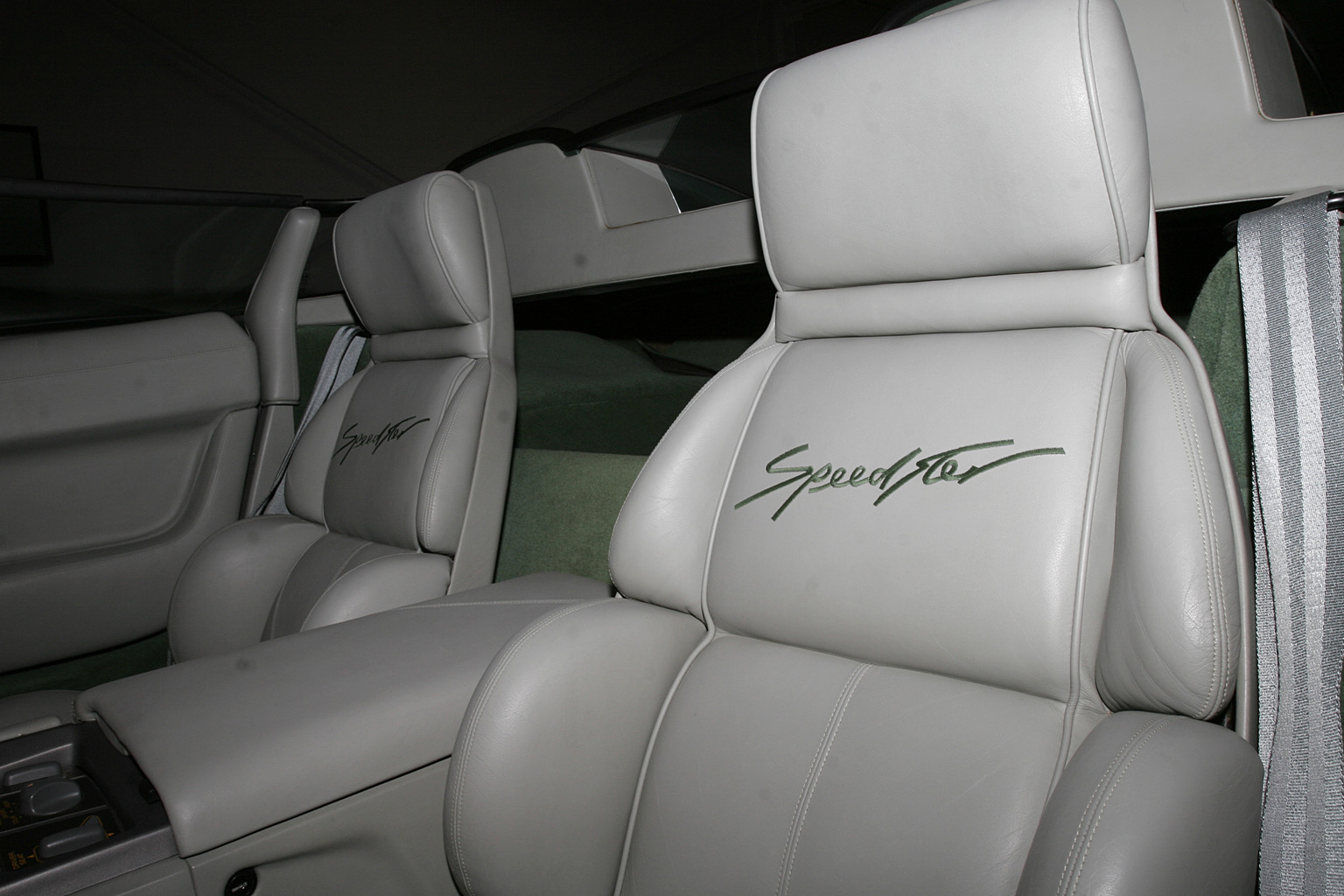
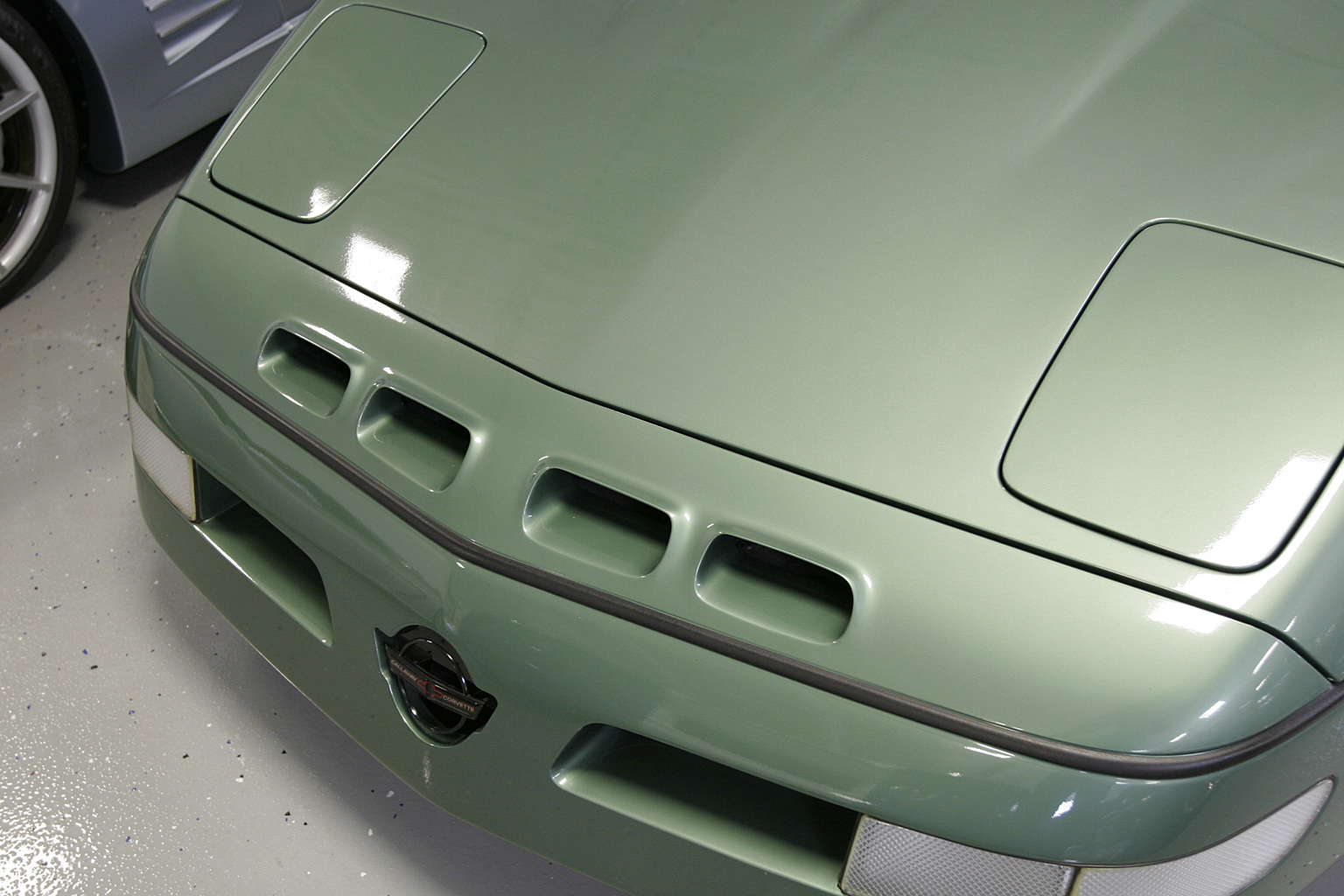
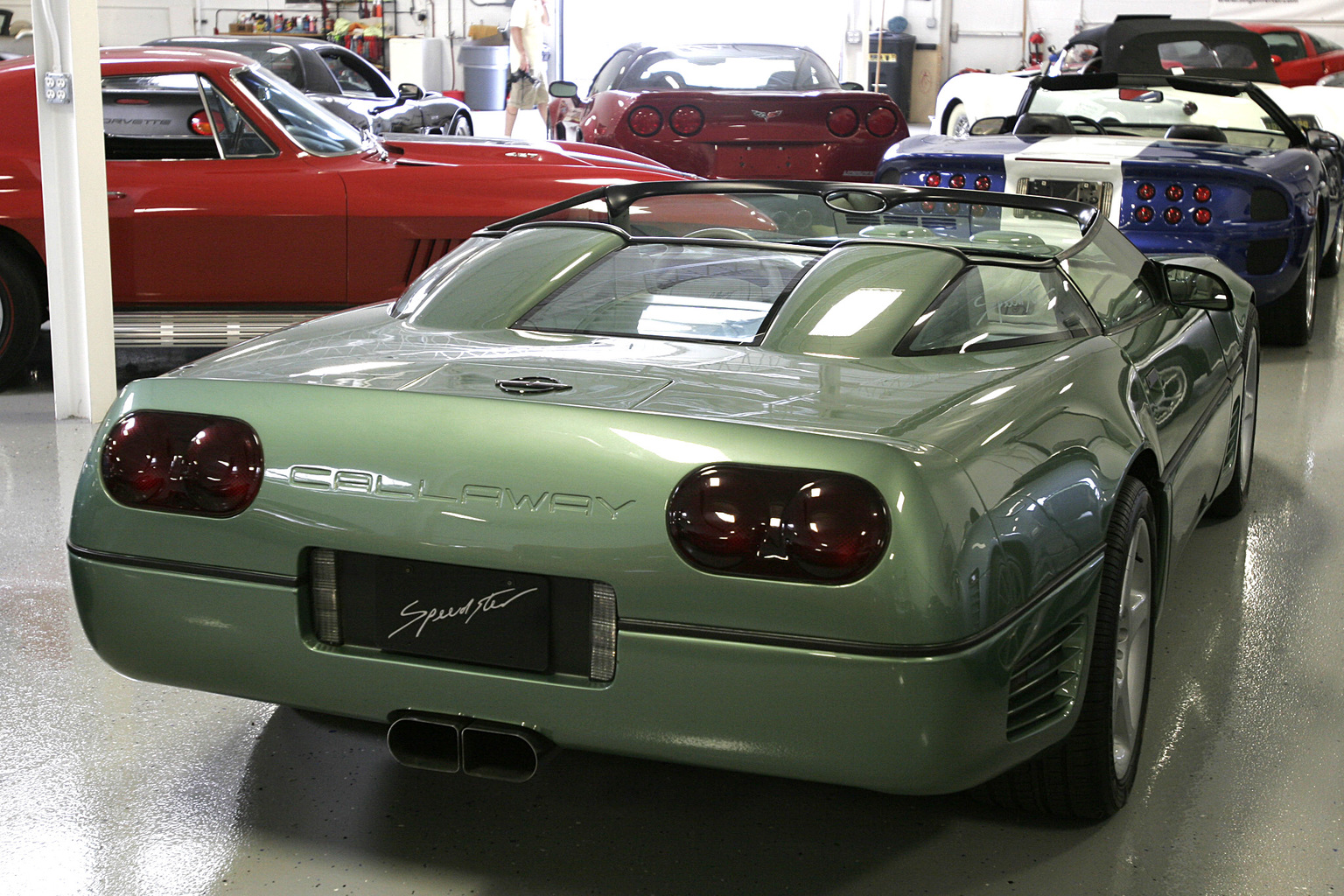
Outwards the car was styled by Paul Deutschman who made a very unique carbon fiber body having special air inlets and outlets for intercoolers. As a unique feature, twin power bulges met each headrest, and helped divide up the rear section of the Speedster. As a result of the integrated rear section, the Speedster remained permanently topless, a configuration which was suited for the California weather in which this car debuted.
Despite and an initial planned production of 50 examples, only 12 Speedsters were manufactured. The last two were built from the ZR1 and called Super Speedsters with 750 bhp.
1989 Callaway Speedster Corvette Gallery
See the full 1989 Callaway Speedster Corvette Gallery
In Detail
| type | Professionally Tuned Car |
| built at | Old Lyme, Connecticut, USA |
| production | 10 |
| price $ | $ 150,000 |
| predeccesor | 1990 Callaway Corvette Super Speedster |
| engine | Twin Turbo V8 |
| aspiration | Twin Garrett Rotomaster T04 Turbos |
| valvetrain | OHV 2 Valves per Cyl |
| fuel feed | Mulitpoint Fuel Injection |
| displacement | 5735 cc / 350.0 in³ |
| bore | 101.6 mm / 4.0 in |
| stroke | 88.4 mm / 3.48 in |
| compression | 7.5:1 |
| power | 335.6 kw / 450.0 bhp @ 4500 rpm |
| specific output | 78.47 bhp per litre |
| bhp/weight | 281.25 bhp per tonne |
| torque | 831.12 nm / 613 ft lbs @ 3000 rpm |
| body / frame | Composite Boby Panels over Steel Frame |
| driven wheels | RWD w/Limited Slip |
| front tires | 275/40ZR-17 |
| rear tires | 275/40ZR-17 |
| front brakes | Vented Discs w/ABS |
| rear brakes | Vented Discs w/ABS |
| front wheels | F 43.2 x 24.1 cm / 17.0 x 9.5 in |
| rear wheels | R 43.2 x 24.1 cm / 17 x 9.5 in |
| steering | Rack & Pinion w/Power Assist |
| f suspension | Unequal A-Arms w/Transverse Leaf Springs, Dampers, Anti-Roll Bar |
| r suspension | Upper & Lower Trailing Arms w/Transverse Leaf Srpings, Dampers, Anti-Roll Bar |
| curb weight | 1600 kg / 3527 lbs |
| wheelbase | 2443 mm / 96.2 in |
| front track | 1514 mm / 59.6 in |
| rear track | 1534 mm / 60.4 in |
| length | 4480 mm / 179.8 in |
| width | 1803 mm / 71 in |
| height | 1041 mm / 41 in |
| transmission | ZF 6-Speed Manual |
| gear ratios | 2.68:1, 1.30:1, 1.00:1, 0.75:1, 0.50:1 |
| top speed | ~305.8 kph / 190.0 mph |
| 0 – 60 mph | ~4.2 seconds |
| 0 – 1/4 mile | ~12.7 seconds |