
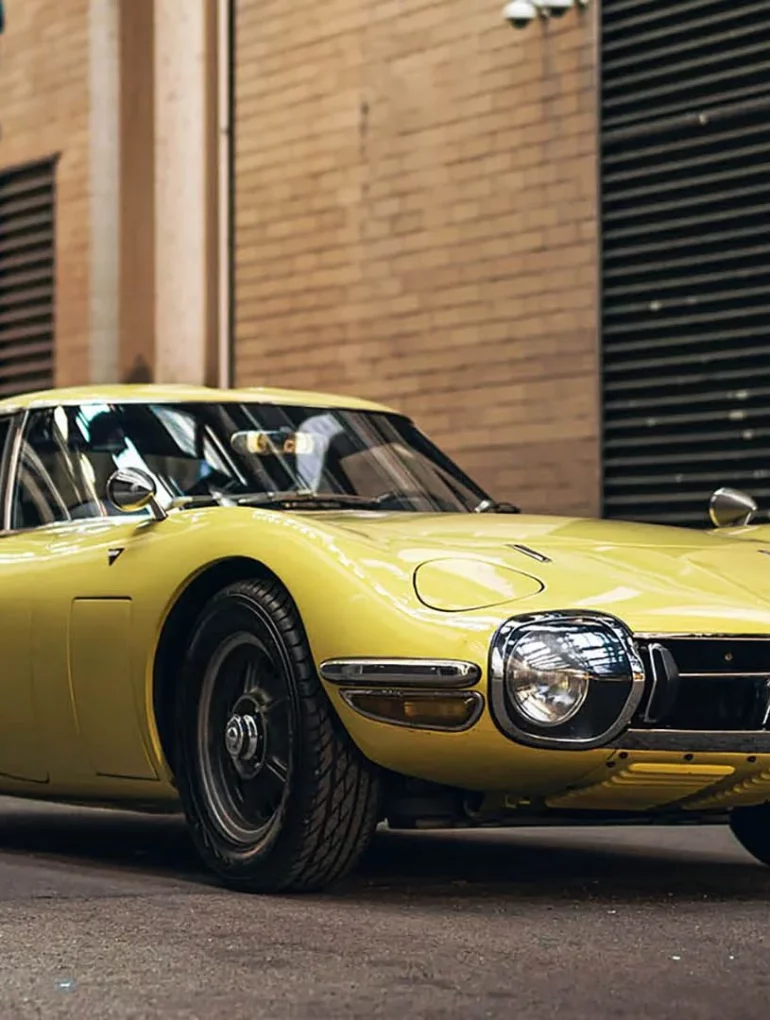

Tokyo Motor Show, October 1965. Toyota unveiled the 2000GT, a revolutionary production sports car that transformed global automotive perception and established Japan as a genuine supercar manufacturer. The designation “2000 GT” referenced both the 2.0-liter engine displacement and “Gran Turismo” positioning, celebrating an audacious collaborative vision between Toyota and Yamaha. The naturally aspirated 2.0-liter inline-six produced 150 horsepower at 6,600 rpm and 130 lb-ft of torque at 5,000 rpm, delivering authentic performance credentials matching European supercars while maintaining genuine practicality.
This was Japan’s statement that sophisticated engineering and beautiful design could create something genuinely transcendent without requiring displacement or forced induction excess. The 2000 GT could accelerate from 0 to 60 mph in approximately 10 seconds while achieving 135 mph top speed, establishing it as the world’s fastest production car of Japanese origin and proof that Japan could compete at motorsport’s highest automotive levels. Production ran from May 1967 through 1970, with approximately 351 hand-built examples crafted by Yamaha Motors at Iwata, establishing the 2000 GT as one of the rarest and most influential automobiles ever created.
Background and Origins
The 2000 GT’s genesis traced an extraordinary path reflecting both Japanese ambition and corporate vision. Yamaha had previously approached Nissan to build a joint sports car prototype, but Nissan management ultimately rejected the project, unwilling to invest the required development resources. Yamaha then pitched the partnership idea to Toyota, where management, led by visionary executive Eiji Toyoda, recognized an extraordinary opportunity: a halo car that would fundamentally transform global automotive perception of Japanese manufacturers.
Rather than adapting external concepts, Toyota commissioned its own designer, Satoru Nozaki, to create a completely original design within Toyota’s engineering philosophy. The resulting collaboration between Toyota and Yamaha Motor Company proved revolutionary, establishing precedent for Japanese manufacturers creating genuine high-performance machinery competing with established European rivals.
Yamaha’s involvement proved essential. The motorcycle manufacturer possessed sophisticated mechanical engineering expertise and manufacturing precision that enabled development of the 2.0-liter DOHC engine modified from Toyota’s Crown sedan base. Yamaha engineers transformed conventional architecture through dual overhead camshafts, three two-barrel Mikuni-Solex carburetors, and sophisticated engine management, creating genuinely competitive naturally aspirated performance from modest displacement.
The business decision proved extraordinarily expensive. At approximately $6,800 in the United States—premium pricing exceeding the Jaguar E-Type, Porsche 911, and Chevrolet Corvette—the 2000 GT was deliberately positioned as an exclusive halo vehicle rather than a profit-generating model. Toyota ultimately lost money on each car built, accepting those losses as essential investment establishing Japanese performance credentials globally.
Design and Engineering
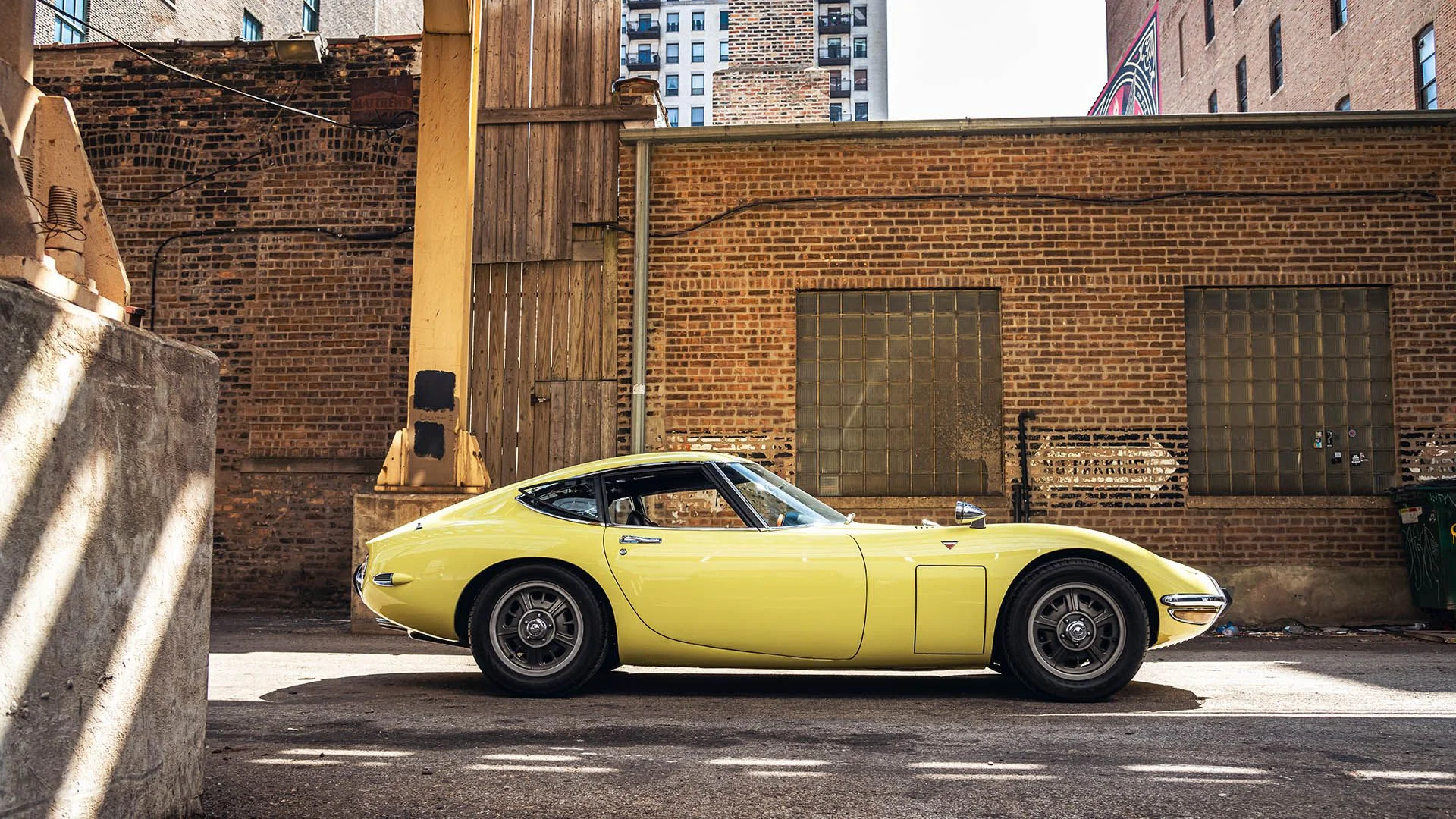
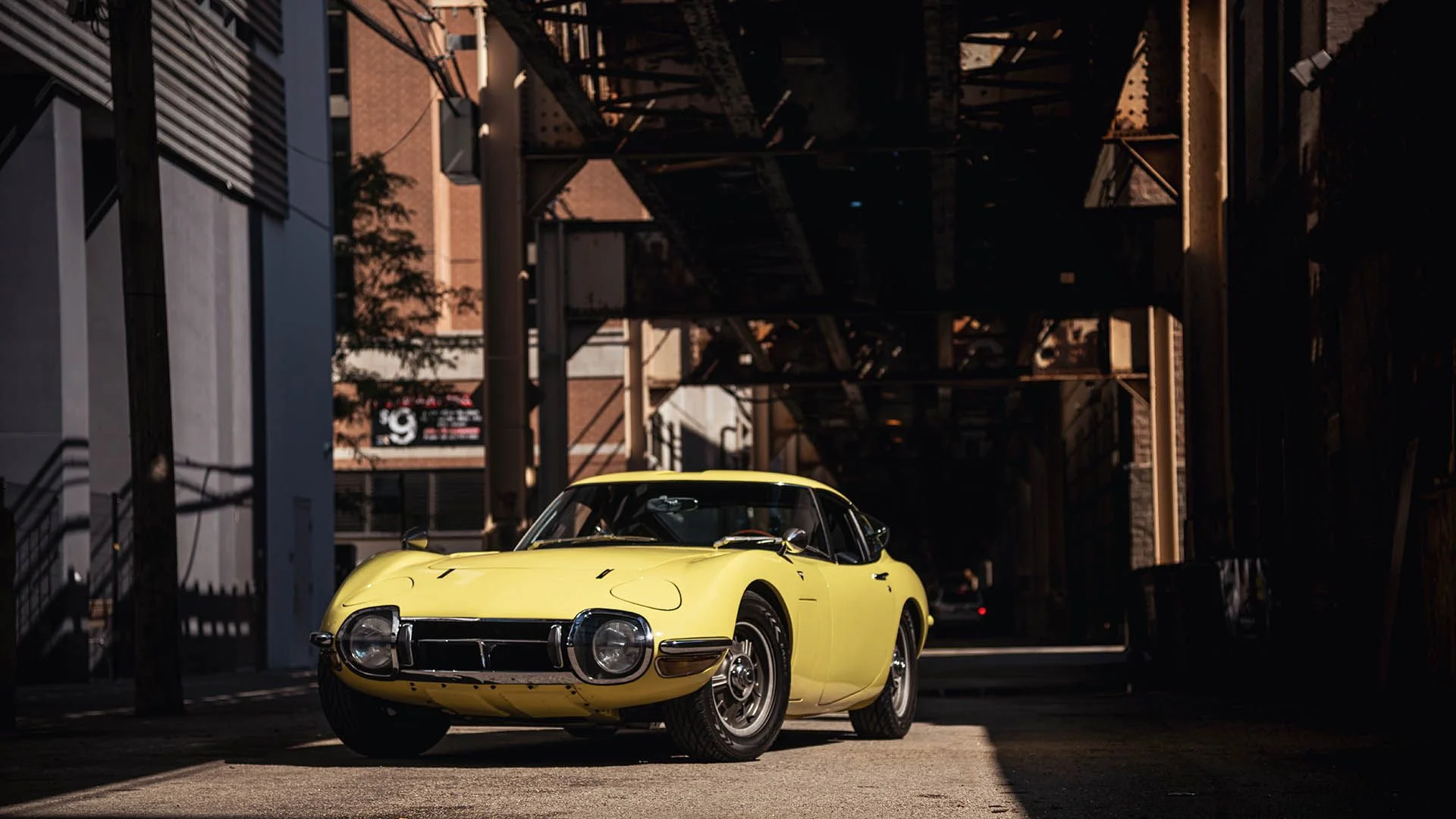
Satoru Nozaki’s exterior design created proportions emphasizing elegance and functional aerodynamic efficiency without theatrical aggression. The extremely low profile, barely 45.7 inches high on the production coupe, created a distinctive visual identity suggesting speed through refined proportion. The pop-up headlights integrated into the flush front end, while large driving lamps provided practical visibility. The ultra-low roofline and fastback proportions emphasized contemporary European sports car tradition while asserting distinctly Japanese design identity.
The chassis utilized an X-shaped tubular backbone frame providing structural rigidity while minimizing weight. The 91.7-inch wheelbase established perfectly balanced proportions, with independent double-wishbone suspension front and rear utilizing coil springs and sophisticated damping. The geometry was meticulous engineering reflecting Yamaha’s racing heritage and Japanese manufacturing precision. Four-wheel disc brakes provided powerful stopping power adequate for the 2000 GT’s performance envelope, while magnesium alloy wheels minimized unsprung weight and rotational inertia.
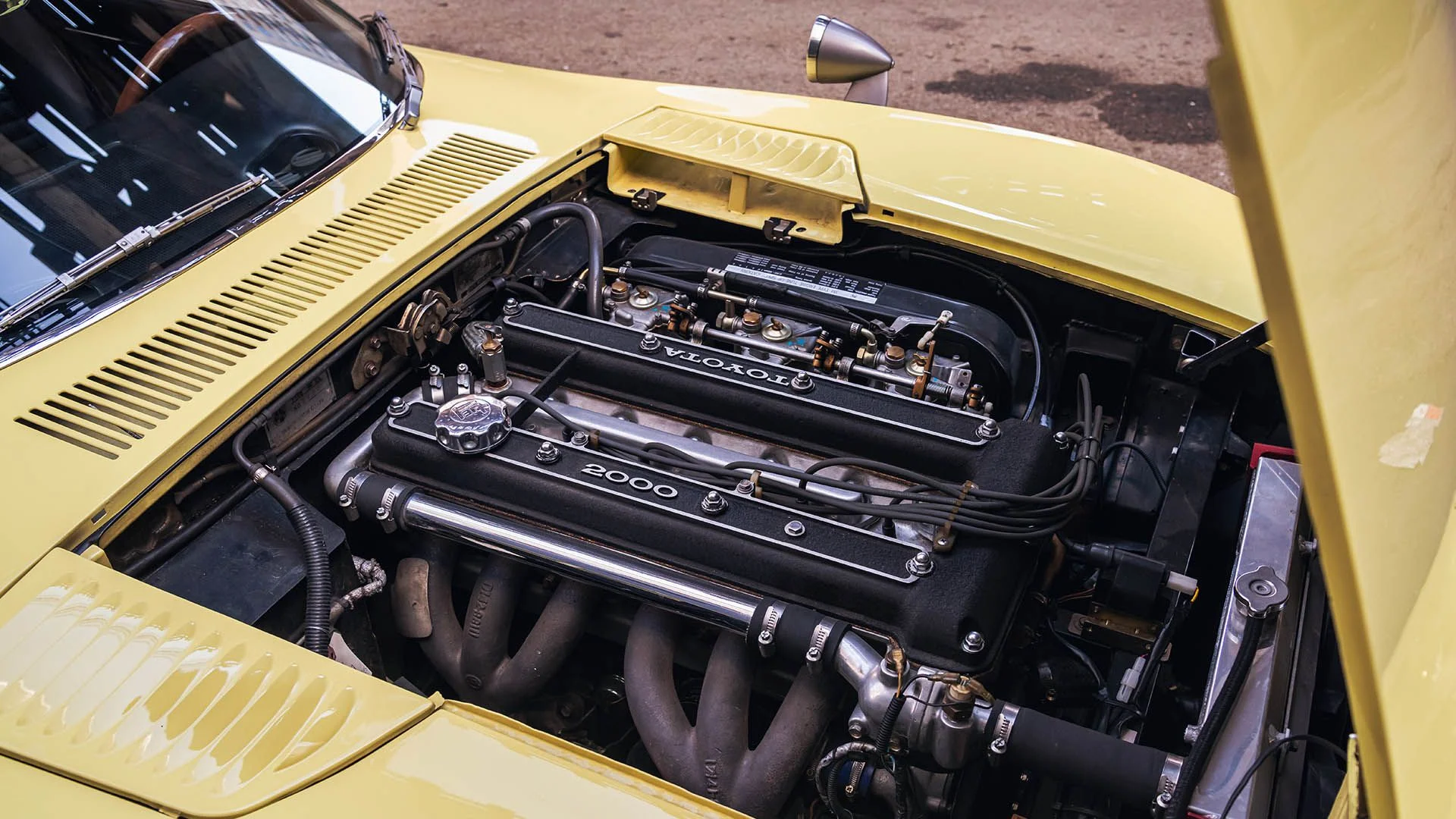
The engine represented comprehensively revised architecture. Based on Toyota’s Crown sedan inline-six, Yamaha engineers created the 3M variant with a custom double overhead camshaft cylinder head controlling two valves per cylinder. With three Mikuni-Solex two-barrel carburetors providing sophisticated mixture preparation, the standard 3M engine delivered 150 horsepower at 6,600 rpm and 130 lb-ft of torque at 5,000 rpm.
The five-speed manual transmission featured close-ratio spacing optimized for spirited driving while providing practical highway capability. The limited-slip differential managed torque distribution effectively, enabling confident acceleration without excessive wheelspin. This emphasis on mechanical refinement and direct engagement reflected Japanese engineering philosophy emphasizing driver connection over technological complexity.
Styling
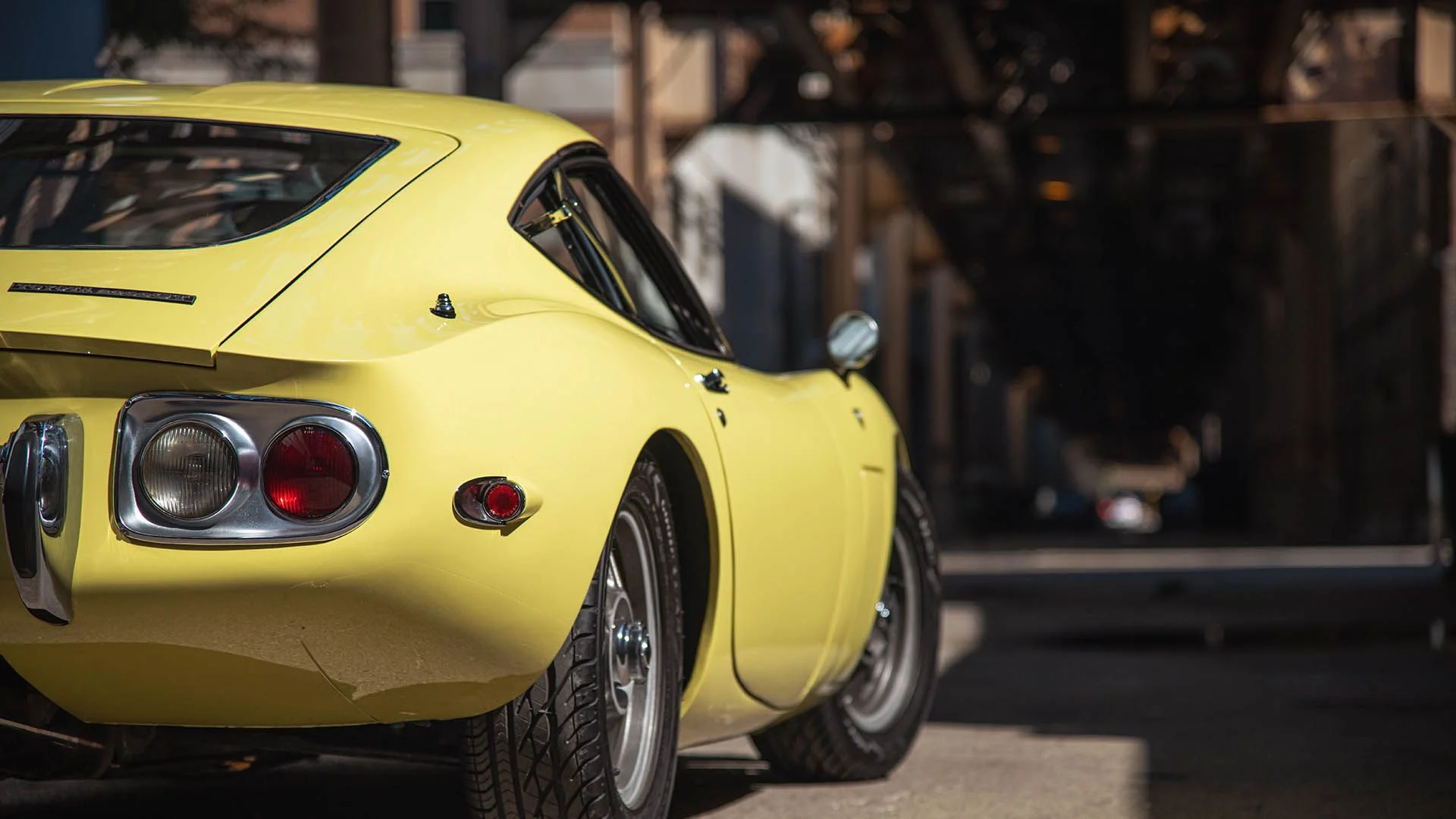
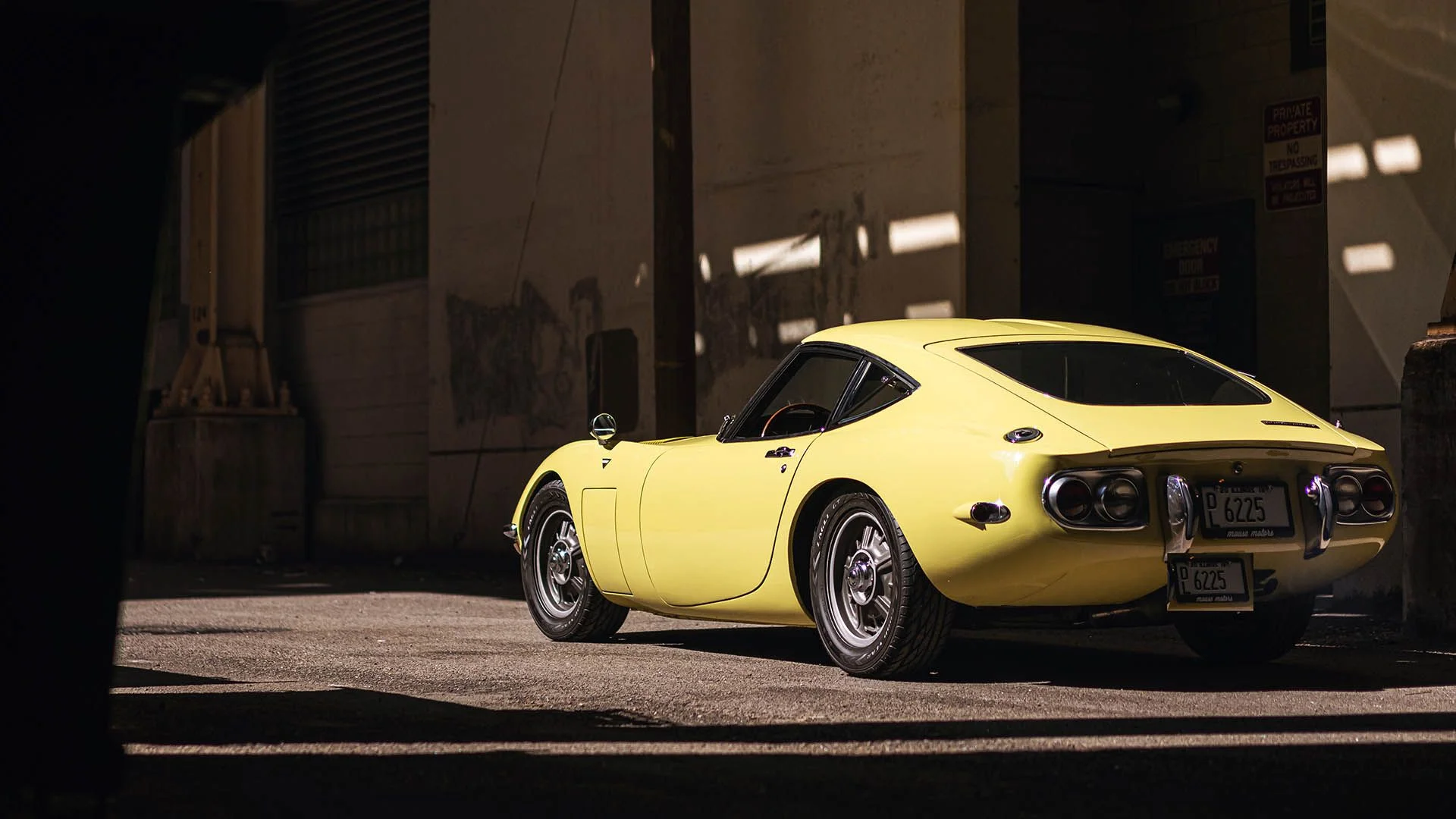
Satoru Nozaki’s design created timeless proportions that remain visually contemporary despite their 1965 introduction. The distinctive fastback profile, influenced by period Jaguar and Lotus tradition, emphasized functional form over decorative styling. The pop-up headlights integrated aerodynamically without visual heaviness, while minimal bumpers suggested racing authenticity. The side profile showcased independent suspension geometry through sculpted surfaces and pronounced wheel arches, while the clean rear deck complemented the long hood accommodating the front-mounted engine without excessive visual bulk.
Most 2000 GT examples were finished in traditional colors: Pegasus White, Solar Red, or Bellatrix Yellow celebrating understated elegance. Optional colors and special finishes were available for customers seeking individual expression.
Interior
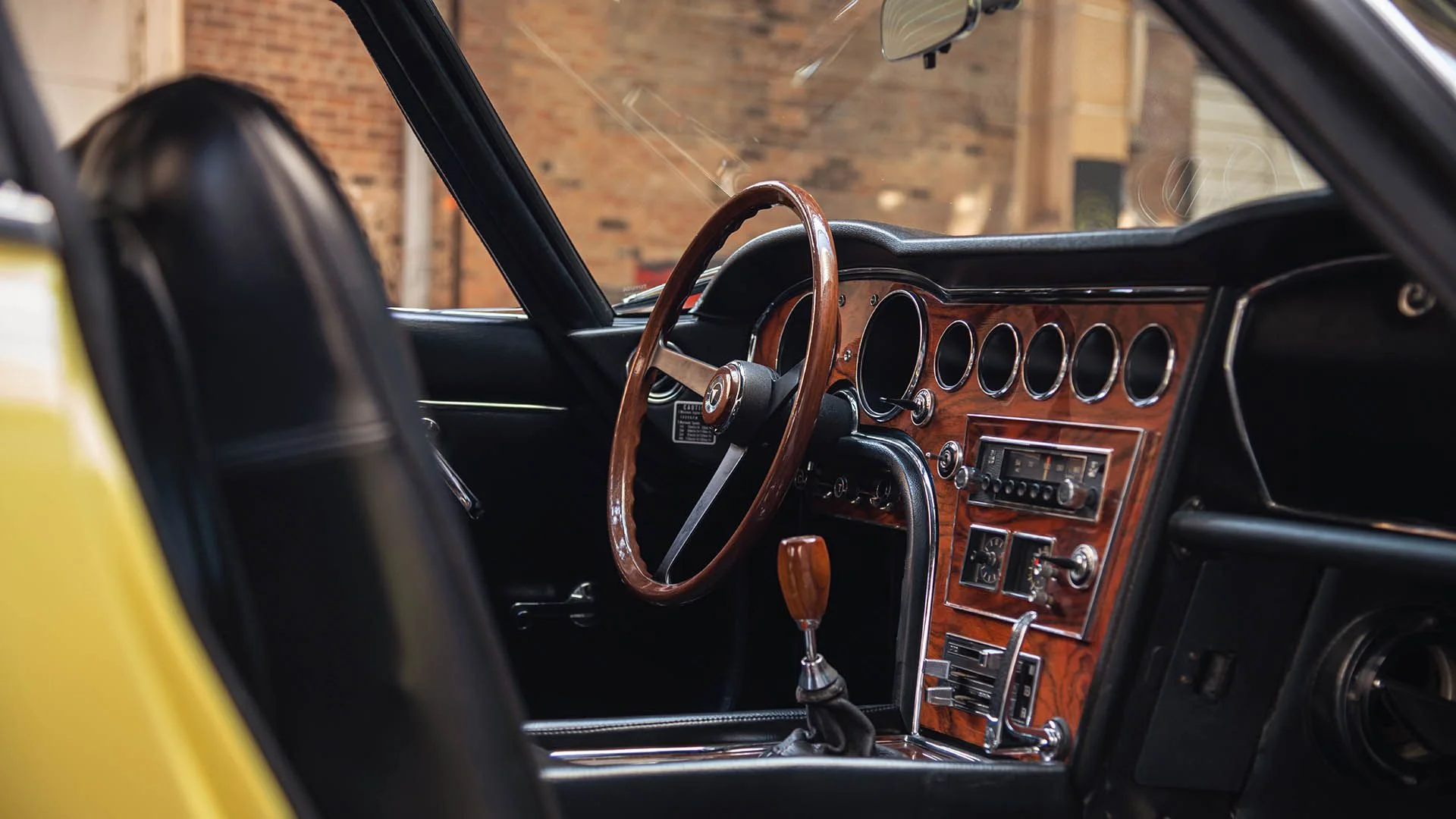
The cabin emphasized functional luxury combining practical performance engineering with surprising appointments. High-quality materials throughout reflected Toyota’s commitment to craftsmanship: rosewood dashboard, quality seating, and sophisticated instrumentation displayed engine parameters. The compact dimensions meant limited interior space, which famously led to custom open-top versions being constructed specifically so Sean Connery could fit inside during filming of “You Only Live Twice.”
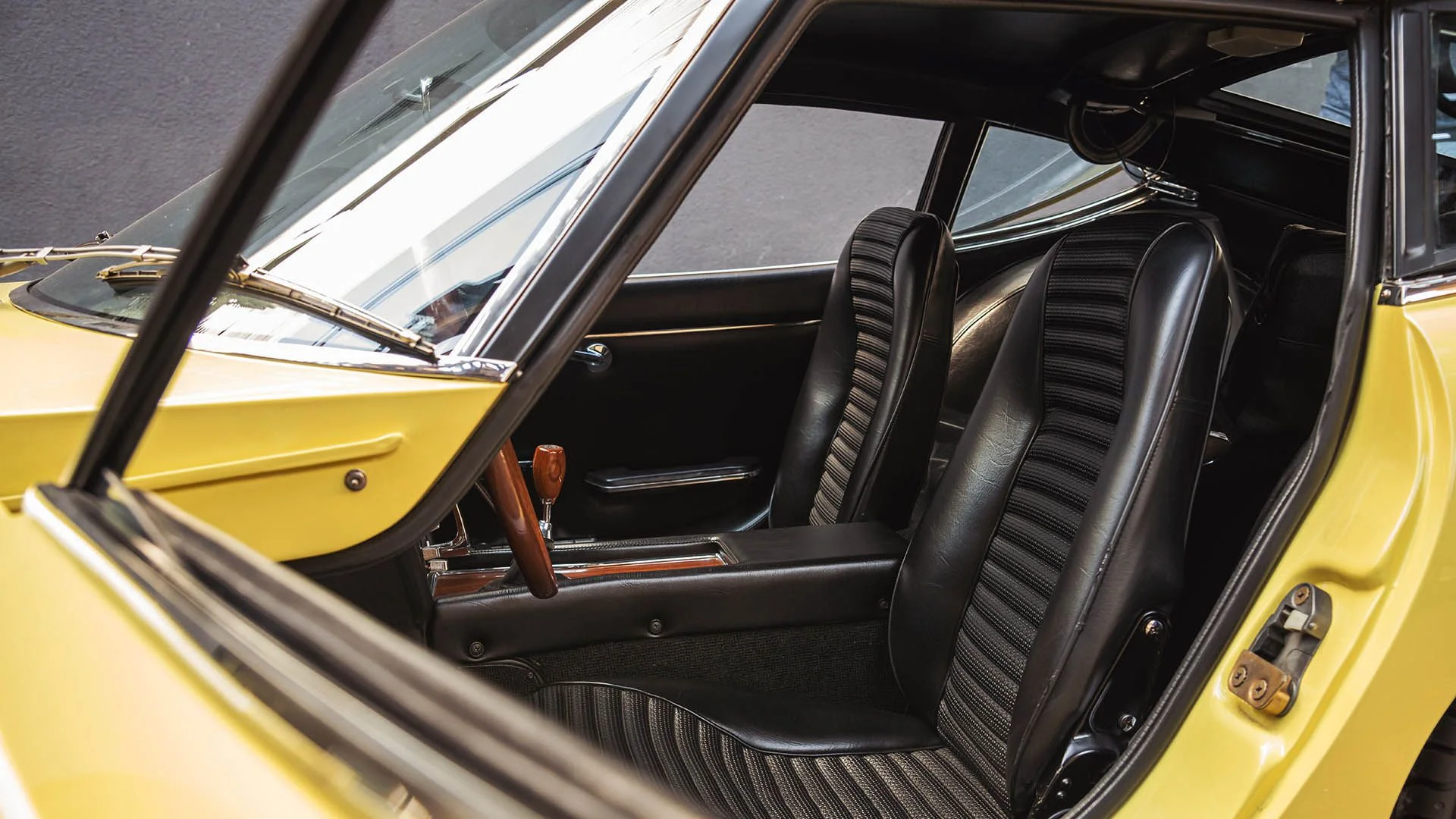
Standard equipment included basic but functional amenities: heating, quality seating, and straightforward controls reflecting the car’s sports-car philosophy. Optional air-conditioning and even an automatic transmission became available on late-production examples, acknowledging practical customer requirements while maintaining performance focus.
Specifications
- Engine: Toyota/Yamaha 2.0L naturally aspirated inline-six, 1,988cc, DOHC, two valves per cylinder
- Power: 150 PS / 148 hp at 6,600 rpm
- Torque: 130 lb-ft / 177 N·m at 5,000 rpm
- Transmission: Five-speed manual, rear-wheel drive
- Chassis: Tubular X-frame with hand-shaped aluminum body panels, 2,330mm wheelbase
- Suspension: Independent double wishbones (front and rear), coil springs
- Brakes: Four-wheel disc brakes with dual circuits
- Wheels: 15-inch magnesium alloy, contemporary tires
- Weight: 1,120 kg / 2,469 lbs depending on configuration
- Performance: 135 mph / 217 km/h top speed, 0-60 mph in approximately 10 seconds
Racing History
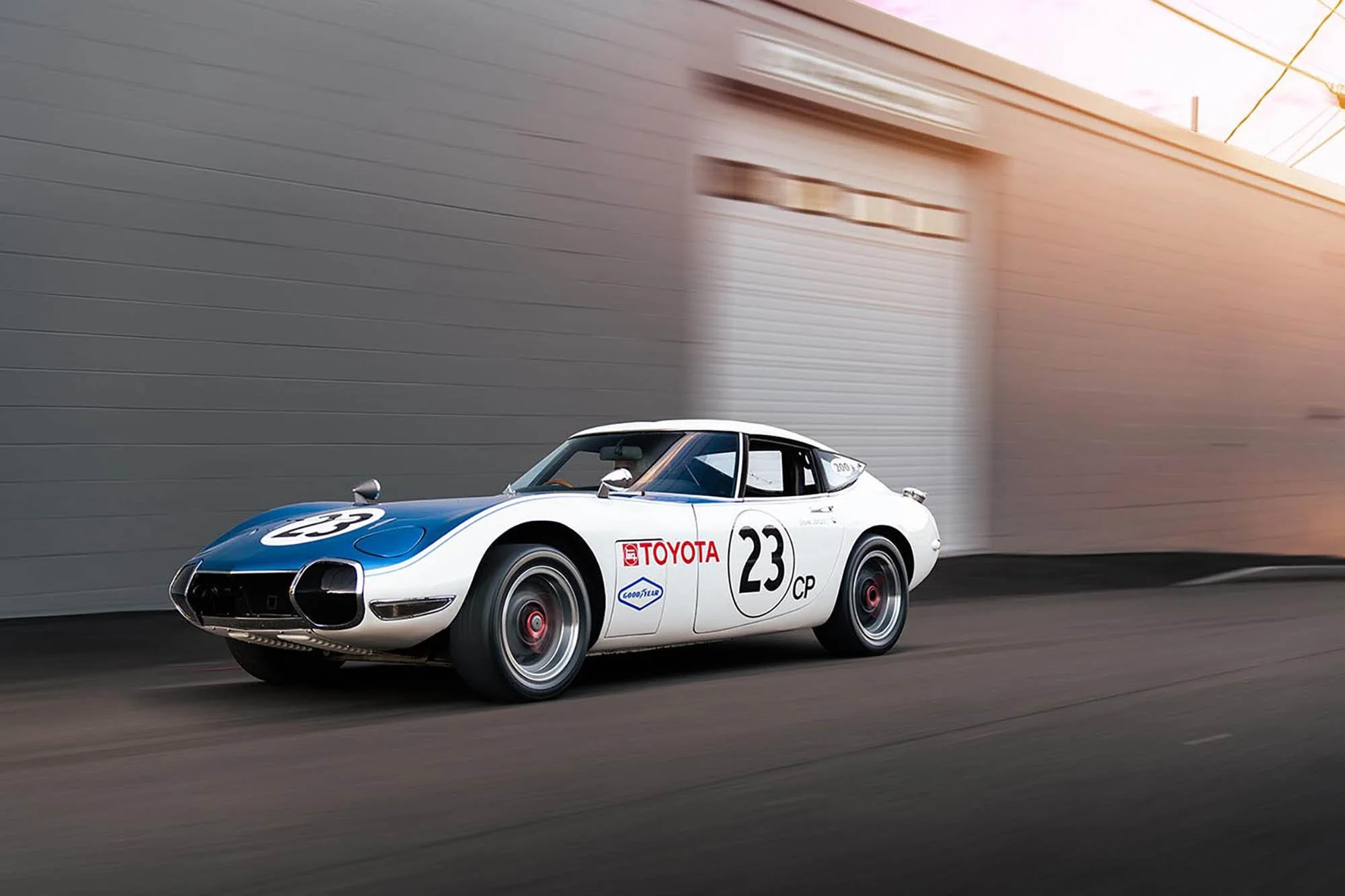
The Toyota 2000 GT achieved legendary racing credentials despite primarily being a road car. Before commercial introduction, the car established three world records and 13 international records during a 72-hour speed and endurance test at the Yatabe High Speed Test Track in 1966, proving mechanical reliability and genuine performance capability. The car subsequently won the 1967 Fuji 24-Hour race at Fuji Speedway, establishing Japanese competitiveness in demanding endurance competition.
Carroll Shelby prepared three examples for SCCA C-Production racing during the 1968 season, with Dave Jordan driving one to two first-place, four second-place, and three third-place finishes, establishing competitive capability against American and European rivals. These racing achievements proved the 2000 GT possessed genuine engineering sophistication extending beyond road-car application.
Production and Legacy
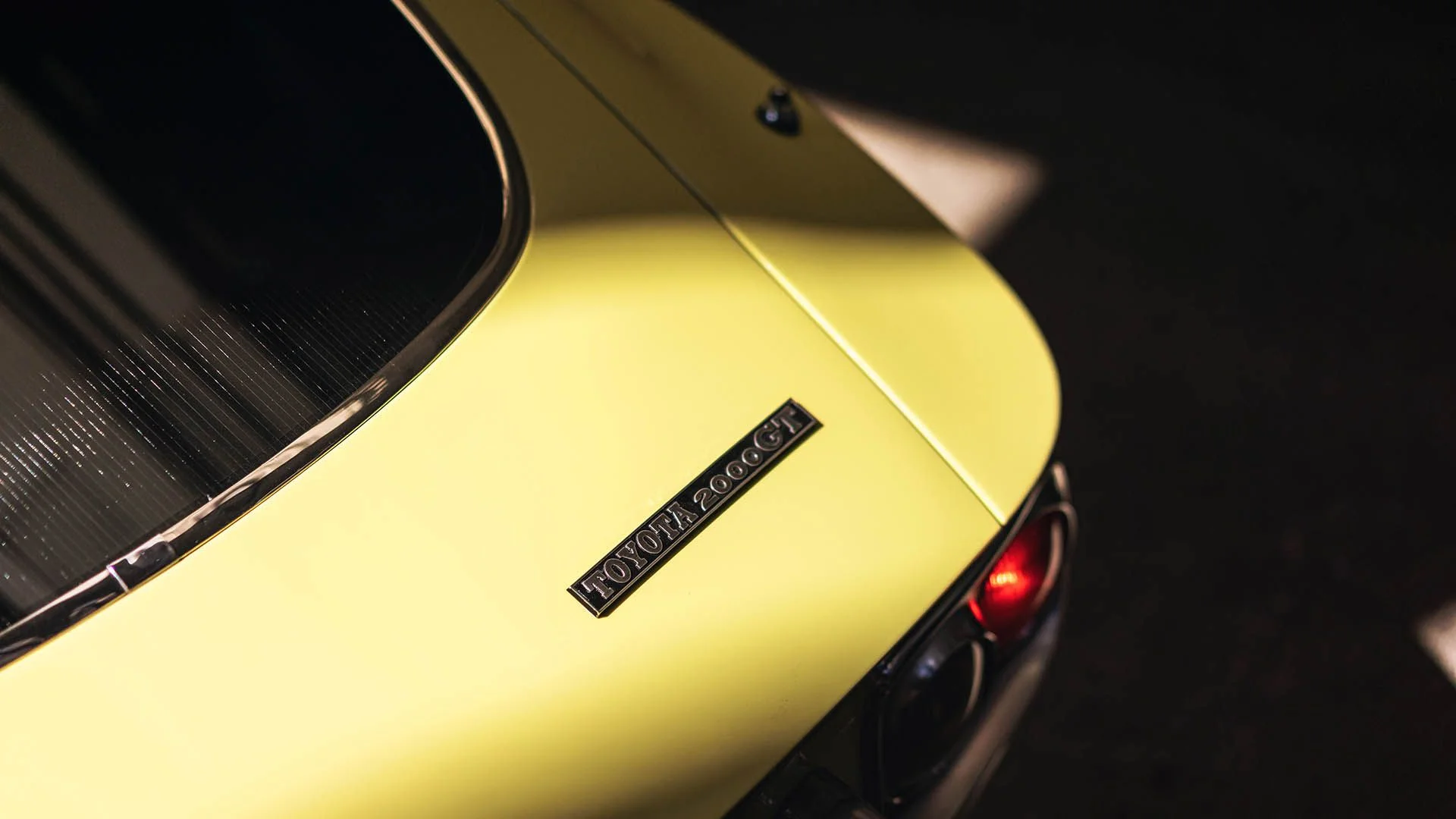
Yamaha Motors hand-assembled approximately 351 Toyota 2000 GT examples at Iwata, Shizuoka between May 1967 and 1970. Each car required meticulous assembly reflecting manufacturing precision and quality control reflecting both companies’ engineering standards. Only approximately 62 examples were designated as left-hand drive exports for North America, with the majority remaining in Japan and exported to Europe, establishing extraordinary rarity globally.
The 2000 GT proved that Japanese engineering could create genuine supercars competing with established European rivals. It established that elegant design and mechanical sophistication could create something uniquely valuable, fundamentally transforming global perception of Japanese automotive capability.
Today, 2000 GT examples command extraordinary collector prices exceeding $1 million, reflecting their legendary status and historical significance. The combination of Nozaki’s elegant design, Yamaha’s mechanical expertise, and genuine performance credentials ensures immortal appeal.
The Toyota 2000 GT represented Japan’s most ambitious automotive expression, proving that engineering excellence and beautiful design could create something genuinely transcendent. It remains the first Japanese supercar, a masterpiece establishing Japan’s performance car legacy.