

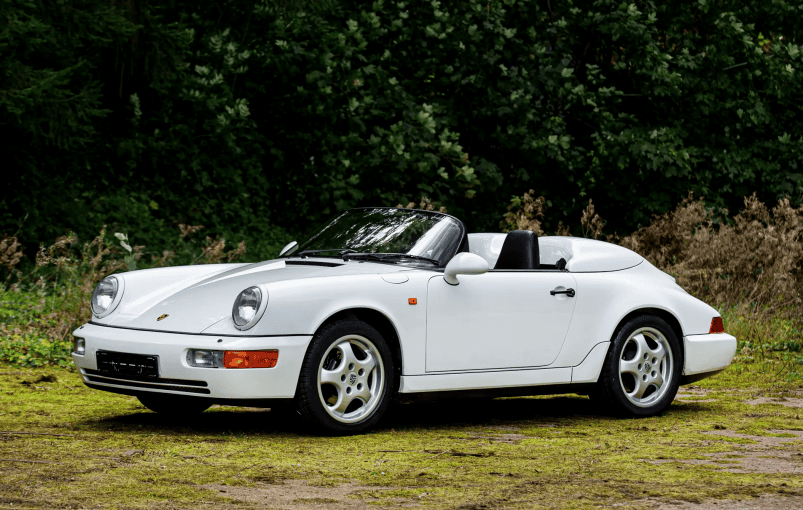
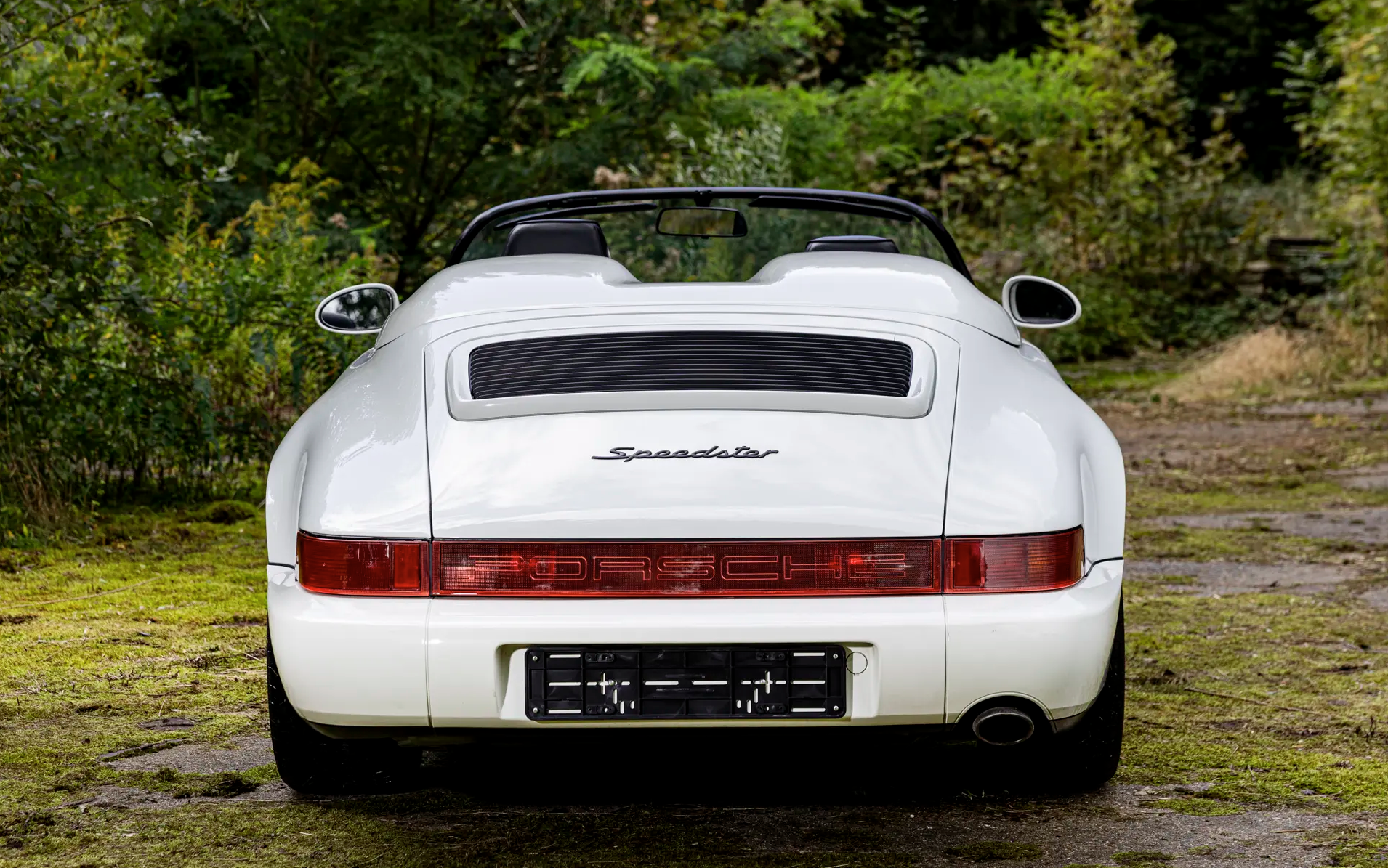
Paris, October 1992. Porsche unveiled the 964-based 911 Speedster at the Paris Motor Show, alongside the 968 Club Sport, ahead of its market launch in February 1993. It revived a name that went back to the 356 Speedster of the 1950s and had most recently appeared on the 1988-1989 Carrera 3.2 Speedster. The new car was based on the Carrera 2 Cabriolet, but with a lower, more steeply raked windscreen, a simple manual soft top and a body-colored “double bubble” cover in place of the rear seats. Inside, it borrowed its lightweight bucket seats and door panels from the Carrera RS. Power came from the 964’s 3.6-liter air-cooled flat-six, producing 247 hp. Porsche planned to build 3,000, but production fell well short of that target, and with fewer than 1,000 made, it is one of the rarest air-cooled 911s.
Background and Origins
The Speedster name has a special place in Porsche history. Its roots go back to the 1952 356 America Roadster, but the first model to carry the Speedster name was the 356 Speedster of 1954. US importer Max Hoffman had convinced Porsche that there was a market in America for a simple, affordable open sports car, and the result was a lightweight roadster with a low windscreen and a basic roof. Porsche revived the idea in 1988 with the Carrera 3.2 Speedster, which kept the regular Carrera’s mechanicals but added a shortened windscreen, a manual roof and a distinctive rear cover. It proved popular, with 2,103 built.
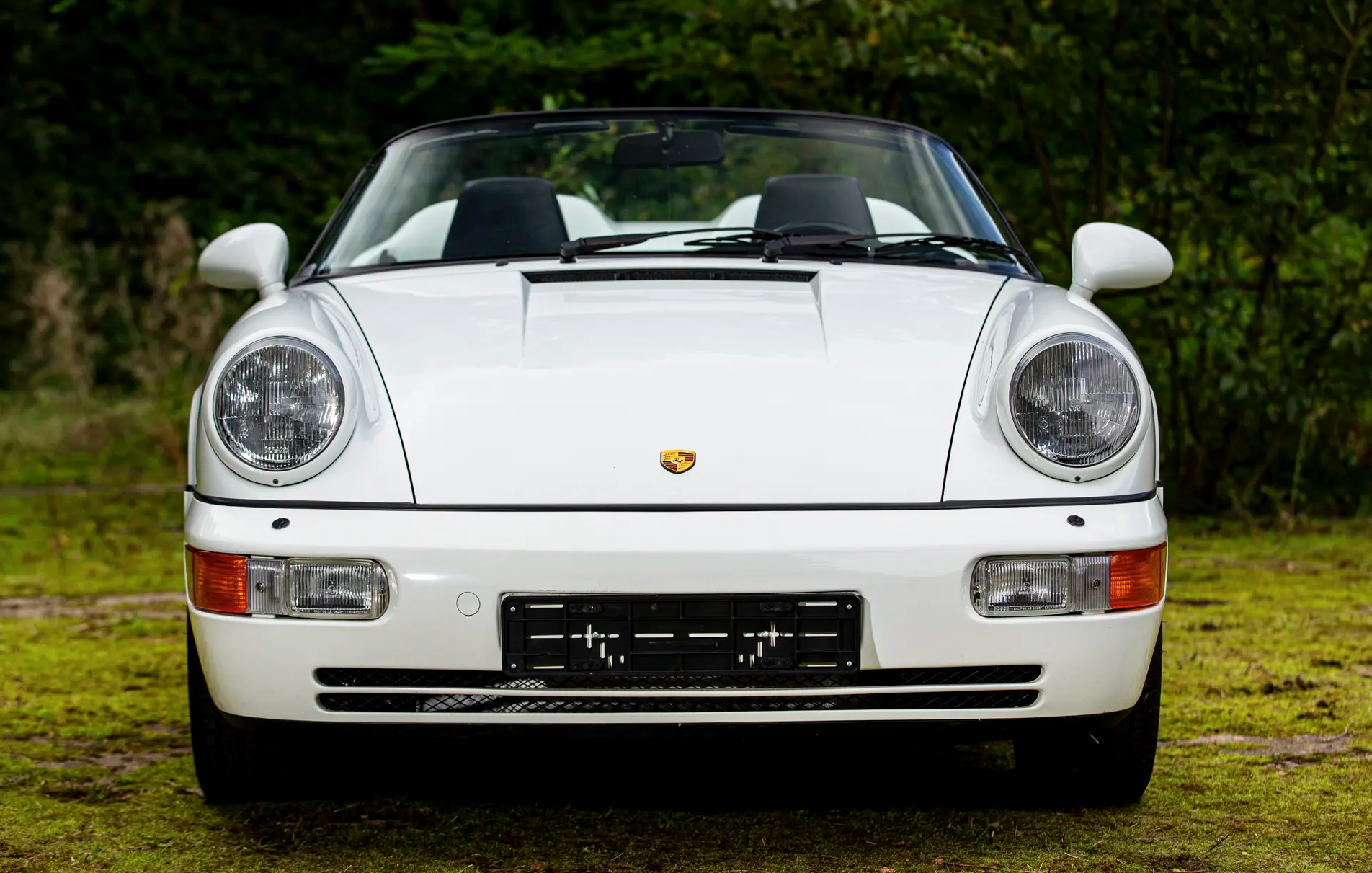
When the 964 generation arrived, Porsche again looked to the Speedster to add a distinctive open-top model to the range. The company was under financial pressure in the early 1990s, and the new Speedster was intended to attract buyers with a more focused, distinctive version of the Carrera 2 Cabriolet, priced around 15 percent below it. It combined the classic Speedster look with an interior inspired by the lightweight Carrera RS, while keeping the standard Carrera 2’s mechanical specification. In Germany, it went on sale in February 1993 at DM 131,500.
Design and Engineering
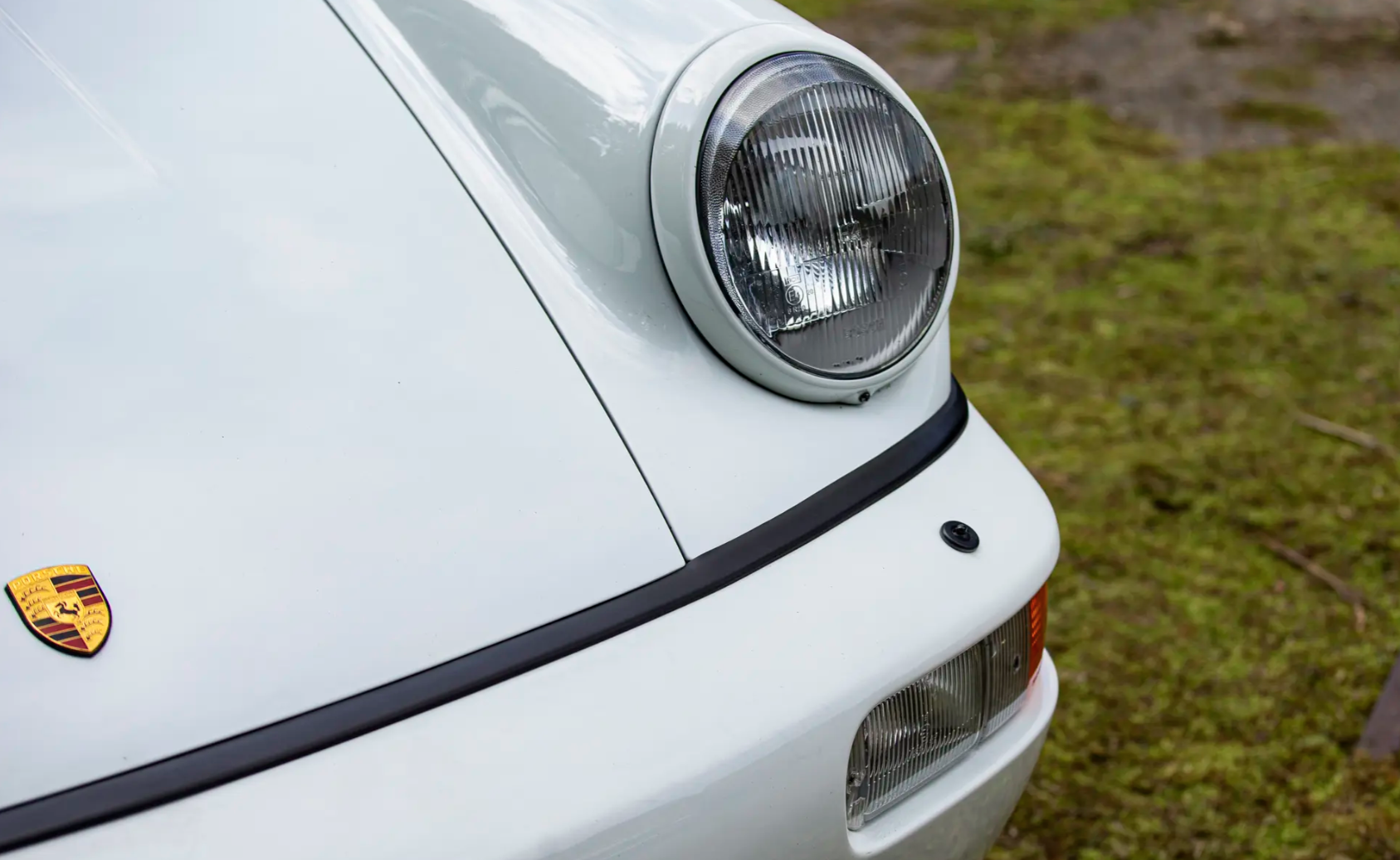
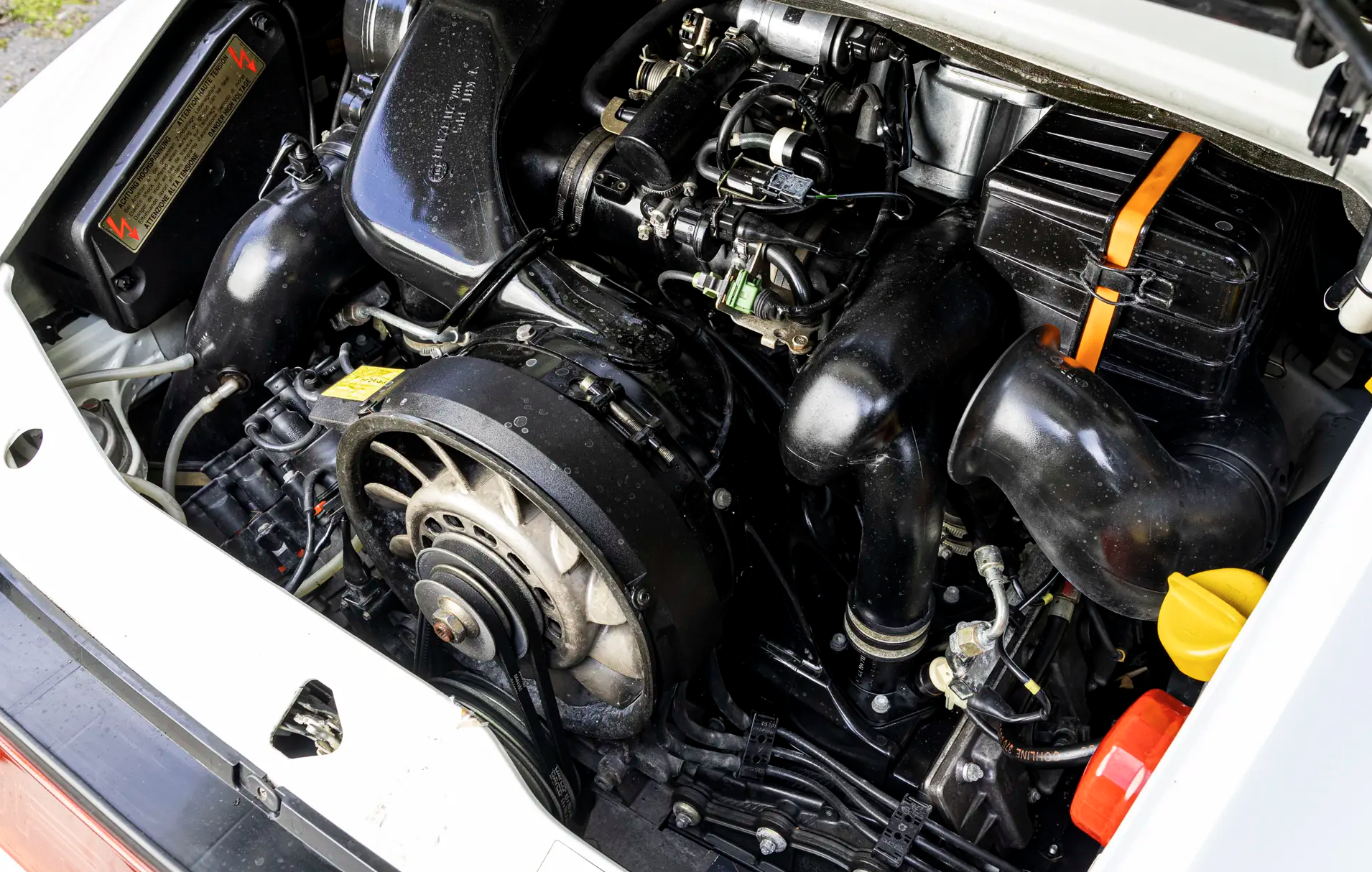
The 964 Speedster was based on the narrow-bodied Carrera 2, with rear-wheel drive. It was powered by the M64/01 3.6-liter air-cooled flat-six, with a 100 mm bore, 76.4 mm stroke, 11.3:1 compression and dry-sump lubrication. It produced 250 PS (247 hp) at 6,100 rpm and 229 lb-ft of torque at 4,800 rpm. Buyers could choose a five-speed G50/03 manual gearbox or, unusually for a Speedster, a four-speed Tiptronic automatic.
The chassis used MacPherson struts at the front and semi-trailing arms at the rear, with coil-over dampers, anti-roll bars at both ends, power steering and ABS. Ventilated disc brakes, 298 mm front and 299 mm rear, with aluminum four-piston calipers, were fitted all around. Porsche officially listed its weight as 1,350 kilograms, the same as the Carrera 2 Cabriolet, although Supercar Nostalgia estimates the actual car was about 75 kilograms lighter. With the manual gearbox, the Speedster could reach 62 mph in 5.8 seconds and had a top speed of 162 mph. The Tiptronic, about 30 kilograms heavier, took 6.6 seconds to reach 62 mph.
Styling
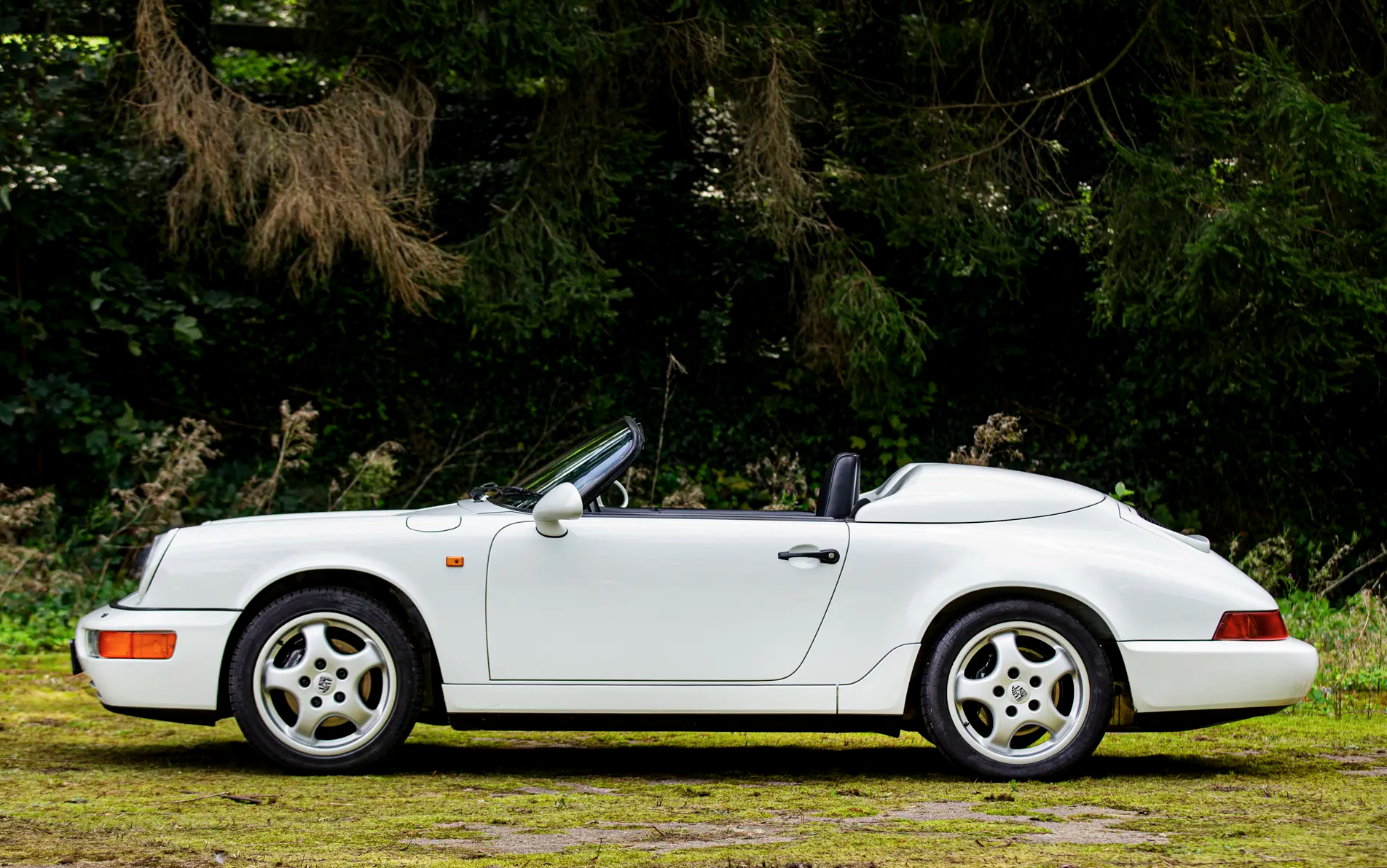
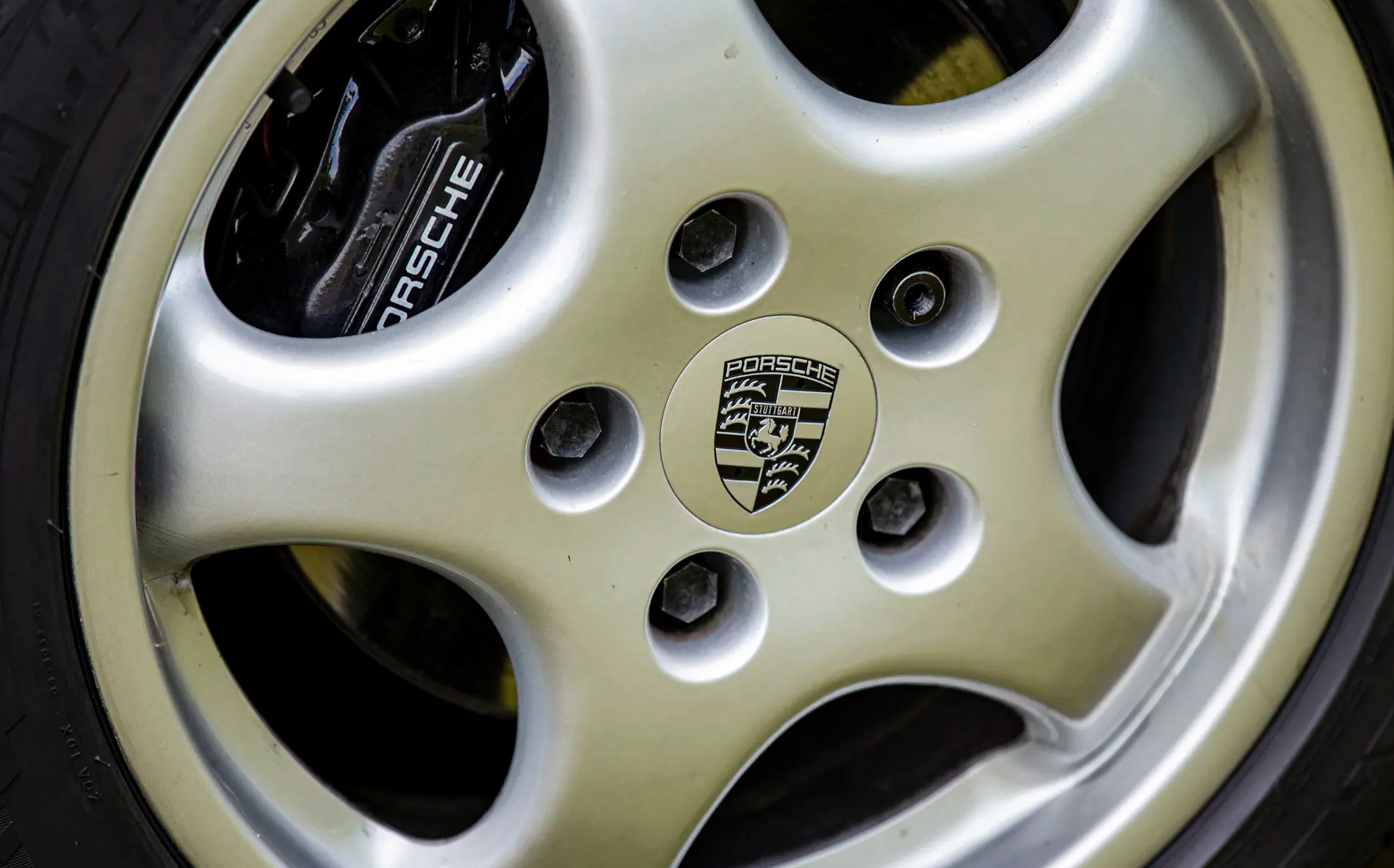
The Speedster’s design centered on its windscreen and roof. The windscreen was lower and more steeply raked than the Cabriolet’s, and the side windows were single-piece. When not in use, the simple single-layer soft top was stowed under a body-colored polyurethane cover with two humps behind the seats, a design that gave the car its distinctive profile and replaced the rear seats. RS-style teardrop mirrors and 17-inch Cup Design wheels, 7 inches wide at the front and 8 inches at the rear, completed the look. All production cars used the narrow Carrera 2 body, except for 15 cars built by Porsche Exclusive with Turbo-look wide fenders, bumpers, side skirts and wheels. Five standard colors were offered: Grand Prix White, Polar Silver, Black, Guards Red and Speed Yellow.
Interior
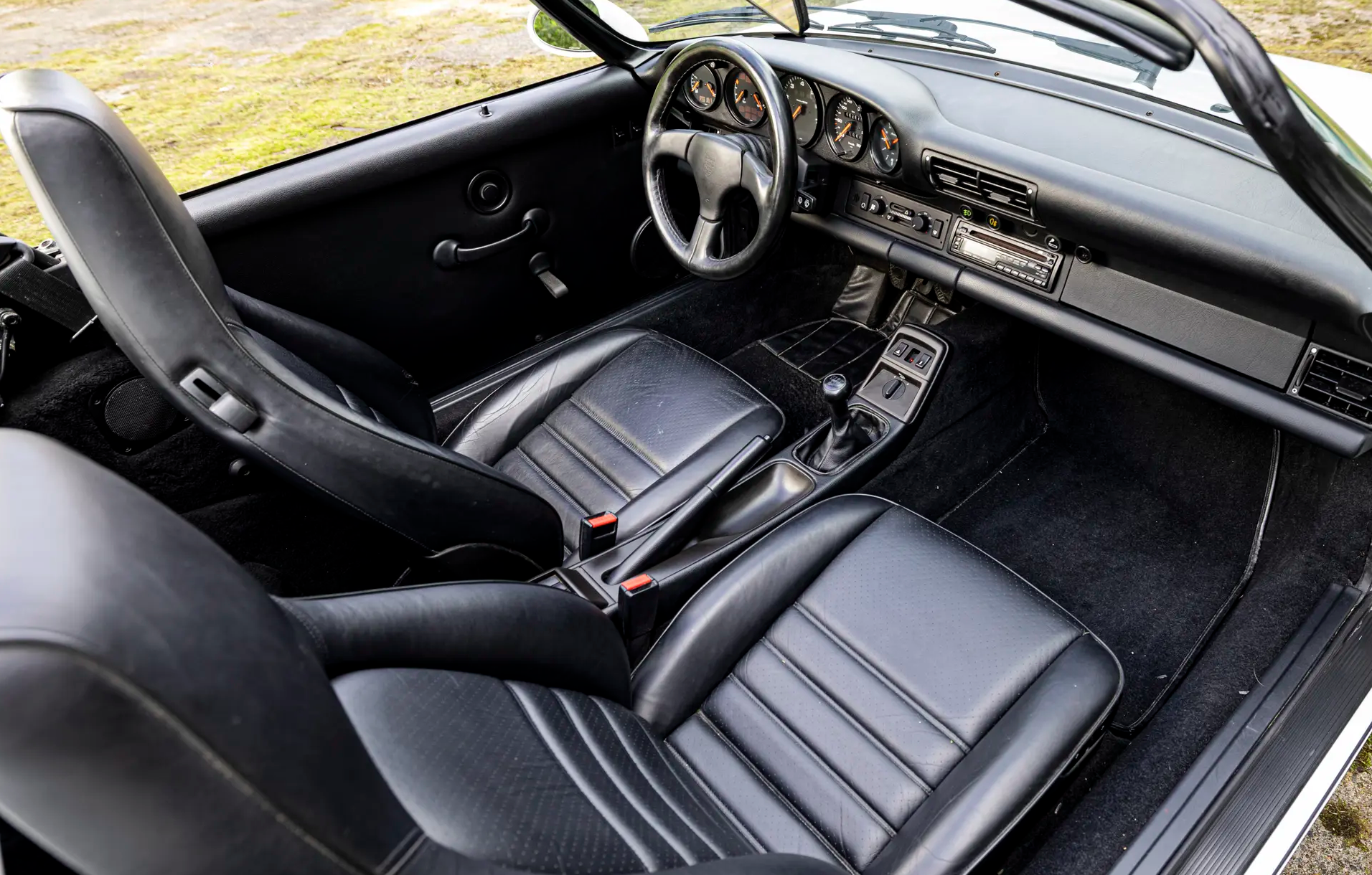
The interior borrowed heavily from the lightweight Carrera RS. It had fiberglass-backed Recaro bucket seats from the RS, with their backs painted in the car’s exterior color and manual fore-aft adjustment only. RS-style lightweight door panels with fabric pull cords and a three-spoke steering wheel completed the look, and early cars didn’t even have an airbag.
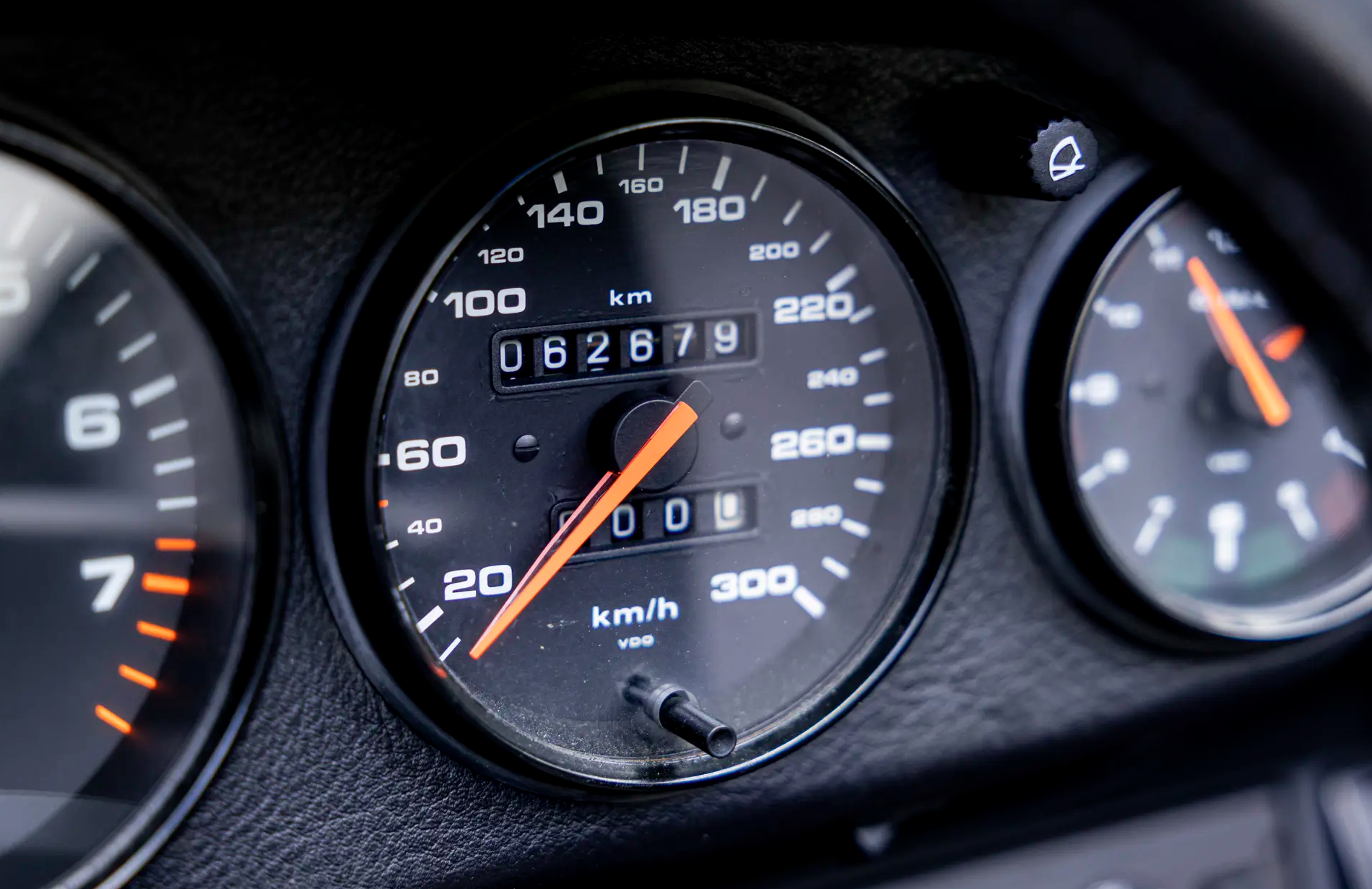
North American cars received a four-spoke airbag steering wheel. With the rear seats replaced by the double-bubble cover, the Speedster was strictly a two-seater, and its simple roof meant it was best enjoyed with the top down. The result was a more focused, less luxurious cabin than the regular Cabriolet’s, which suited the car’s character.
Specifications
- Engine: M64/01 3.6-liter air-cooled flat-six, 3,600cc, 11.3:1 compression, dry-sump lubrication
- Power: 247 hp (250 PS) at 6,100 rpm
- Torque: 229 lb-ft at 4,800 rpm
- Transmission: Five-speed G50/03 manual or four-speed Tiptronic, rear-wheel drive
- Suspension: MacPherson struts front, semi-trailing arms rear, coil-over dampers, anti-roll bars front and rear
- Brakes: Ventilated discs (298 mm front, 299 mm rear) with four-piston aluminum calipers, ABS
- Wheels and tires: 17-inch Cup Design; 205/50 ZR17 front, 255/40 ZR17 rear
- Weight: 1,350 kg / 2,976 lbs (official)
- Performance: 0-62 mph in 5.8 seconds (manual), top speed of 162 mph
Production and Legacy
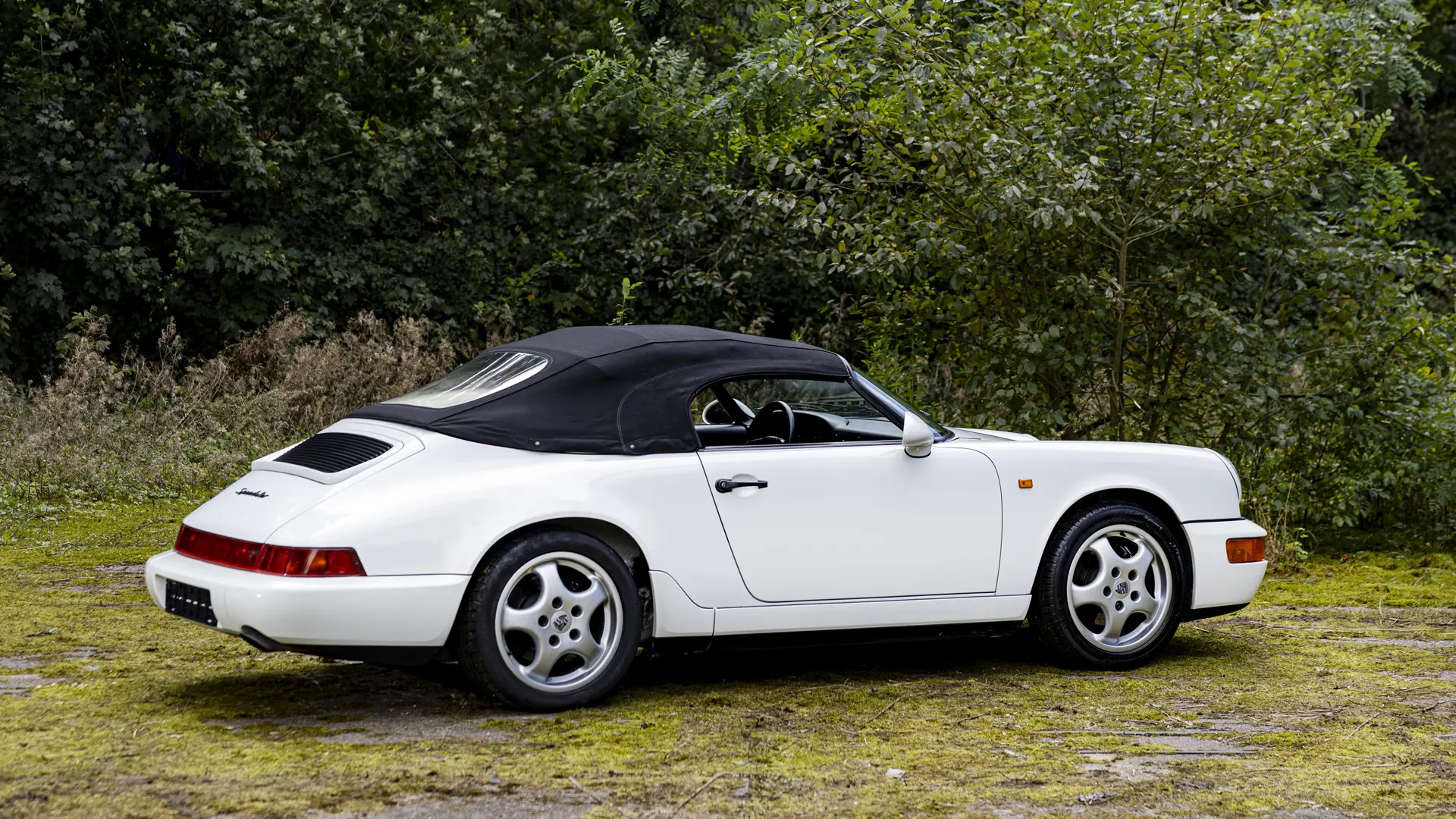
The 964 Speedster was built in limited numbers. The final car was ordered in November 1993 and completed in September 1994. Porsche had hoped to build 3,000, but its historical records identify 930 standard narrow-body examples and another 15 Turbo-look cars, while some specialist sources quote a combined total of 936. Supercar Nostalgia also reports that 427 cars went to North America and 14 were right-hand drive. Either way, it was far rarer than the Carrera 3.2 Speedster.
The 993 generation that followed had no series-production Speedster, although Porsche built two individual examples, one for Ferdinand Alexander Porsche in 1995 and one for Jerry Seinfeld. The name returned to the production 911 range in 2010 with the 997-generation Speedster, limited to 356 units. Today, the 964 Speedster is regarded as one of the most desirable air-cooled 911s, thanks to its rarity, its RS-inspired interior and its combination of classic Speedster style with the modern 964 chassis.