
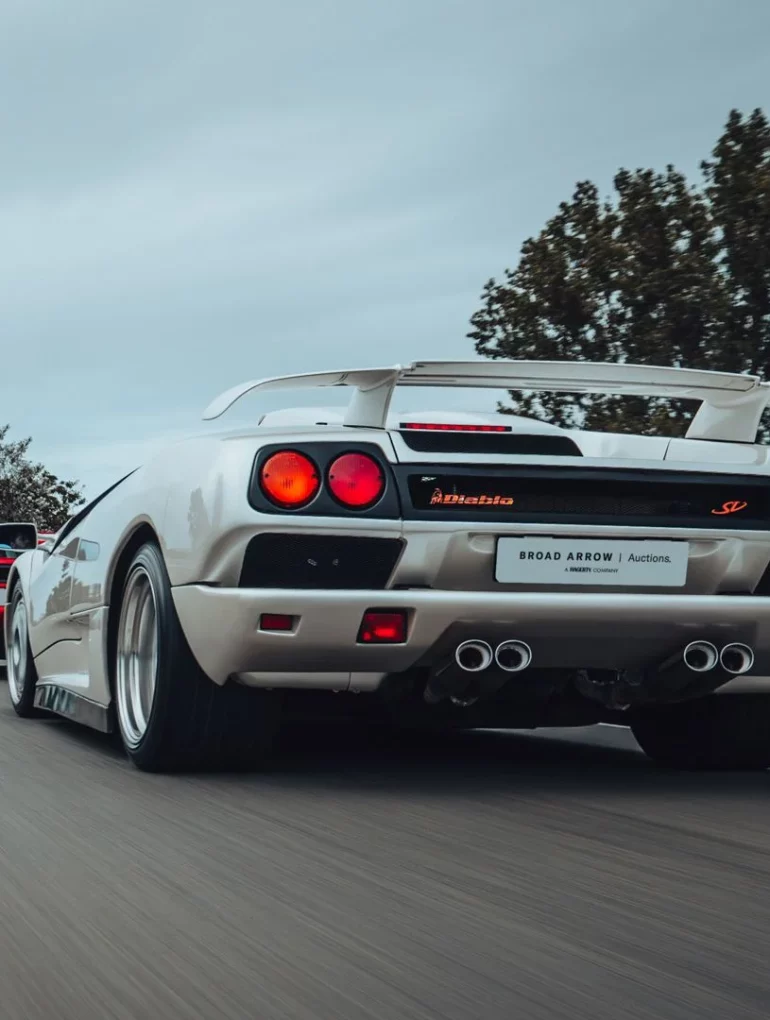

Geneva, March 1995. Lamborghini unveiled the Diablo SV, a rear-wheel drive variant of the already extreme Diablo supercar. The “SV” designation stood for Svetlus Veloce, emphasizing the car’s focus on raw performance over the refinement offered by the four-wheel drive VT models. The SV retained the 5.7-liter V12 but received revised engine management and intake systems, producing 510 horsepower in 1999 specification. Wider bodywork with flared wheel arches, a more aggressive front spoiler, and an adjustable rear wing completed the transformation. This was Lamborghini’s statement that rear-wheel drive could still deliver supercar thrills, that driver involvement mattered more than electronic aids. By 1999, the SV had evolved significantly from the 1995 original, with refined aerodynamics and improved reliability. Production ran from 1995 to 2001, with approximately 2,600 SV examples built.
Background and Origins
The Diablo debuted in 1990, establishing itself as the world’s most extreme supercar with its 492 horsepower naturally aspirated V12 and outrageous styling. By 1993, Lamborghini introduced the Diablo VT with permanent four-wheel drive, making the car more tractable and significantly faster in acceleration. However, some enthusiasts preferred the purity of rear-wheel drive, demanding a more focused version.
Development of the SV began in 1994 under Lamborghini’s design and engineering teams. The brief was straightforward: create the ultimate Diablo for drivers prioritizing engagement over aids, raw performance over refinement. Four-wheel drive was eliminated entirely, returning to the original Diablo’s rear-drive architecture. The suspension was revised for improved response, though the fundamental geometry remained unchanged.
The SV debuted at Geneva in March 1995, immediately establishing itself as the most extreme Diablo variant. Early examples produced 510 horsepower, matching the VT despite lacking its complex transmission system. By 1999, various updates had refined the package, improving reliability and driver feedback.
Design and Engineering
The SV was based on the standard Diablo’s steel monocoque with a 2,660mm wheelbase. The structure was unchanged from the VT, though Lamborghini reinforced specific areas to handle the increased stresses of rear-wheel drive without power distribution help.
Suspension used unequal-length double wishbones at all four corners with coil springs and telescopic dampers. The rear geometry was revised with increased negative camber for improved cornering grip during hard driving. Anti-roll bars front and rear controlled body roll. The ride was firm, reflecting the car’s track-focused mission, though not punishing for occasional street use.
Braking was by cross-drilled and vented discs measuring 330mm front and 370mm rear with four-piston calipers. The system provided powerful, fade-resistant stopping power adequate for the SV’s performance. ABS became standard in later production, providing progressive braking control.
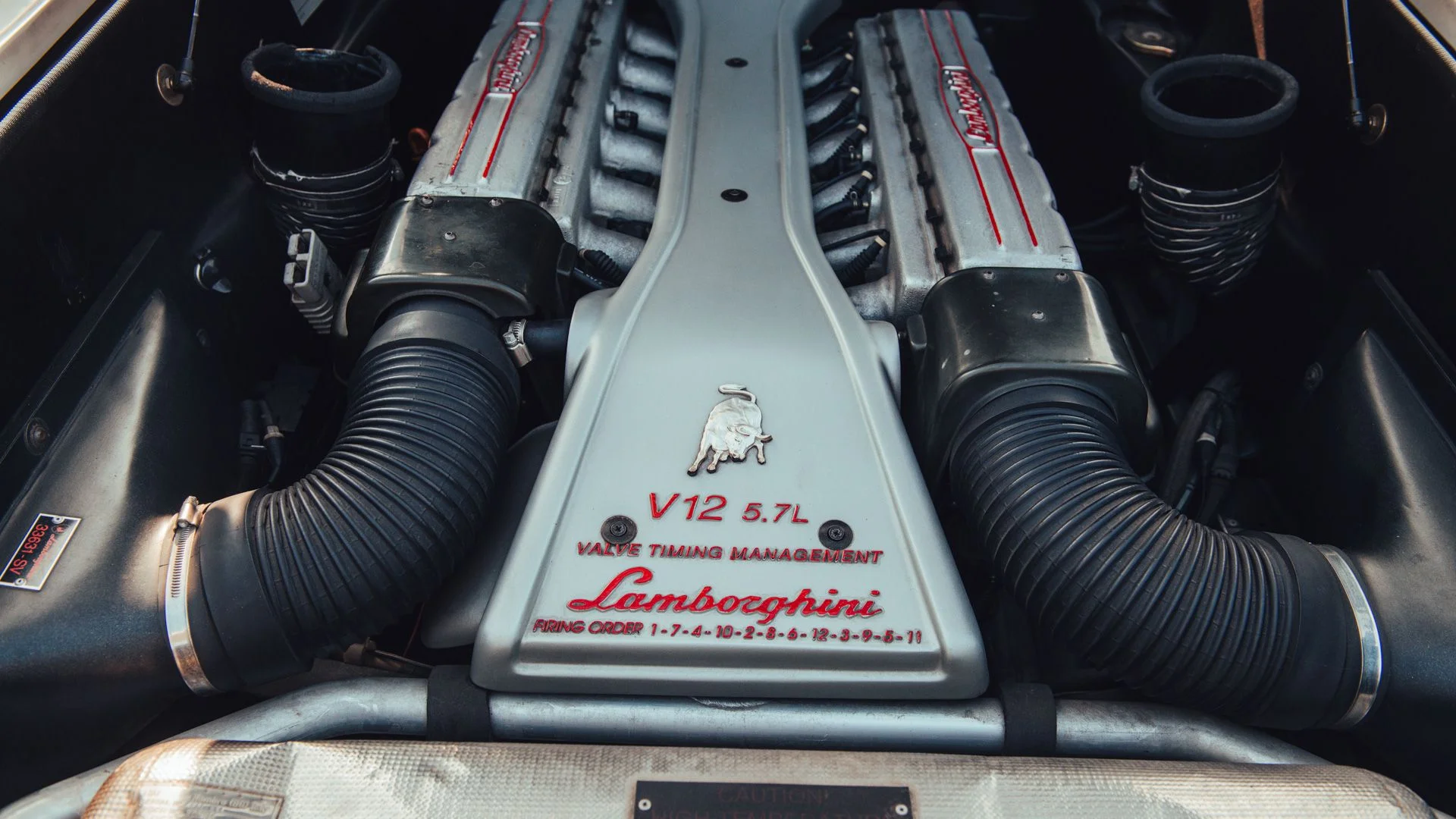
The engine was Lamborghini’s legendary V12, a naturally aspirated masterpiece descended from the original 1963 design. Displacing 5,707cc with a 94mm bore and 86mm stroke, this all-aluminum engine featured dual overhead camshafts per bank and four valves per cylinder. In 1999 specification, output was 510 horsepower at 7,100 rpm and 428 lb-ft at 5,400 rpm.
The induction system used six Weber carburetors initially, replaced by fuel injection in 1998 to improve emissions compliance and drivability. The naturally aspirated character remained unchanged, delivering linear power delivery without turbo lag. The engine’s mechanical symphony was intoxicating, a distinctive Italian soundtrack that intensified with engine speed.
Transmission was a five-speed manual with a traditional open-gate shifter and 3.73:1 final drive. The gear ratios were well-spaced, with fifth gear serving as genuine overdrive for relaxed cruising. A limited-slip differential provided mechanical traction control.
Styling
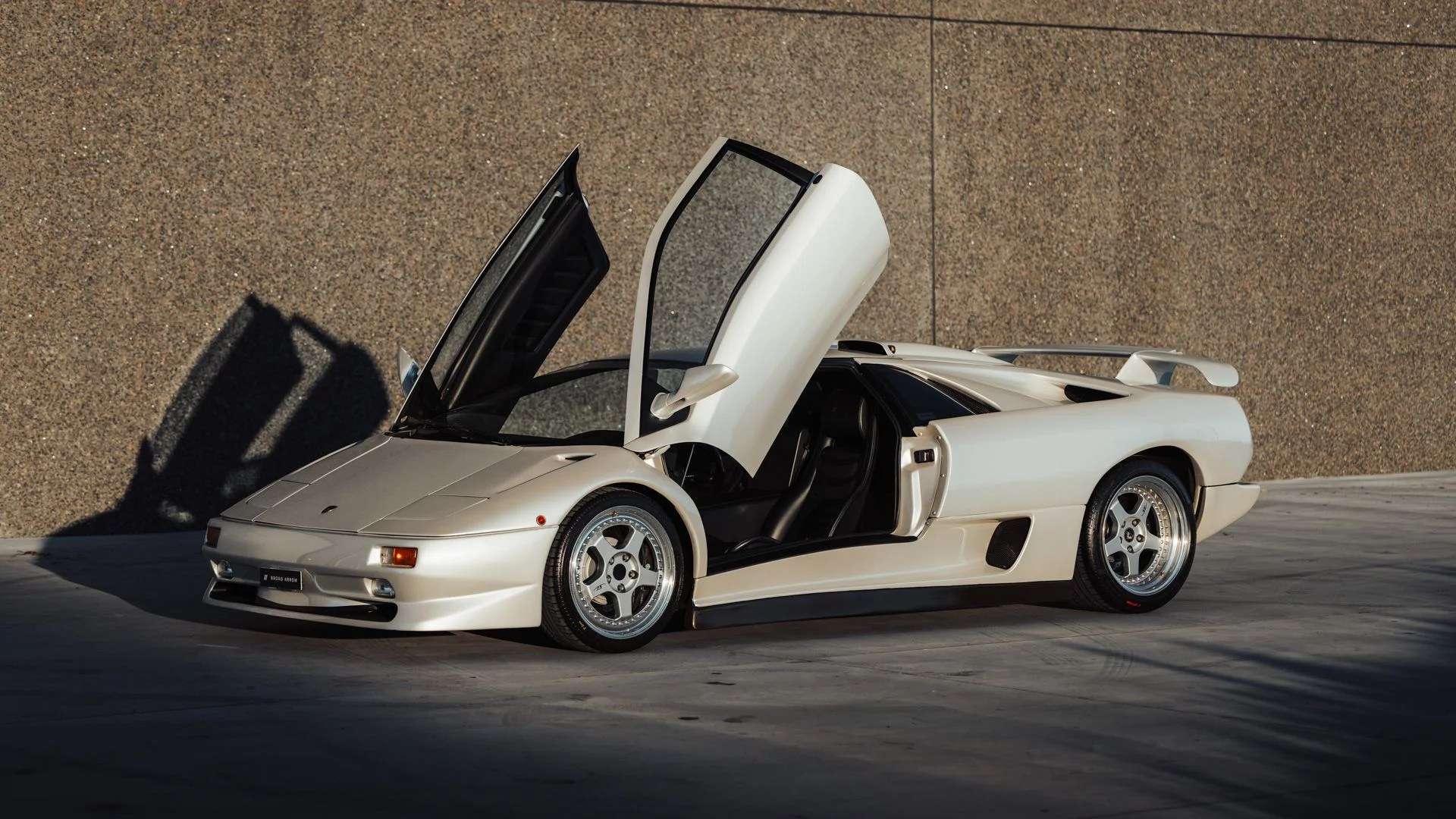
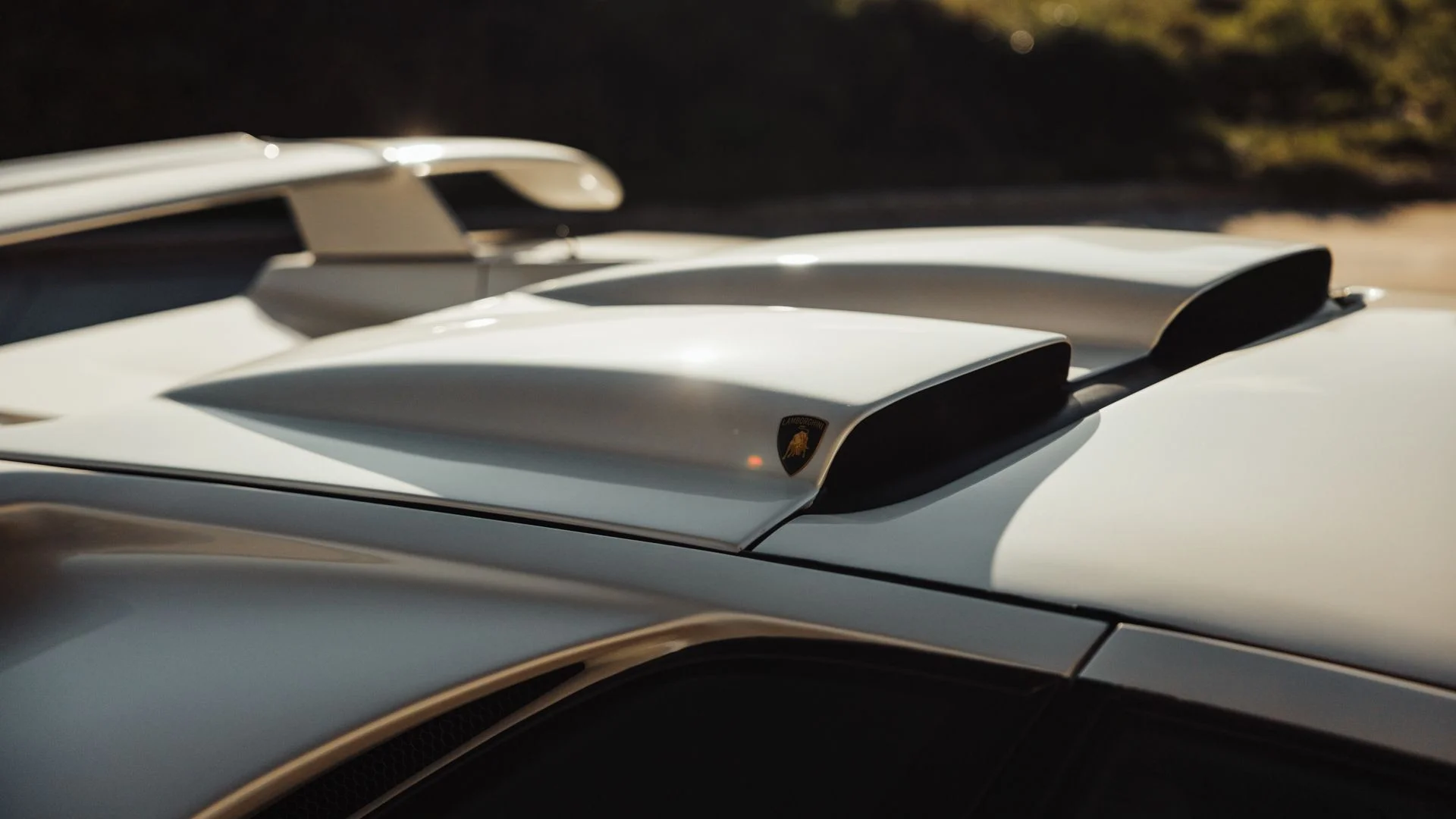
The SV featured more aggressive bodywork than the VT. Massively flared wheel arches covered significantly wider tracks, creating a planted, muscular stance. The front bumper incorporated a deeper air dam with larger cooling ducts. The bonnet featured a functional scoop feeding cool air to the engine bay.
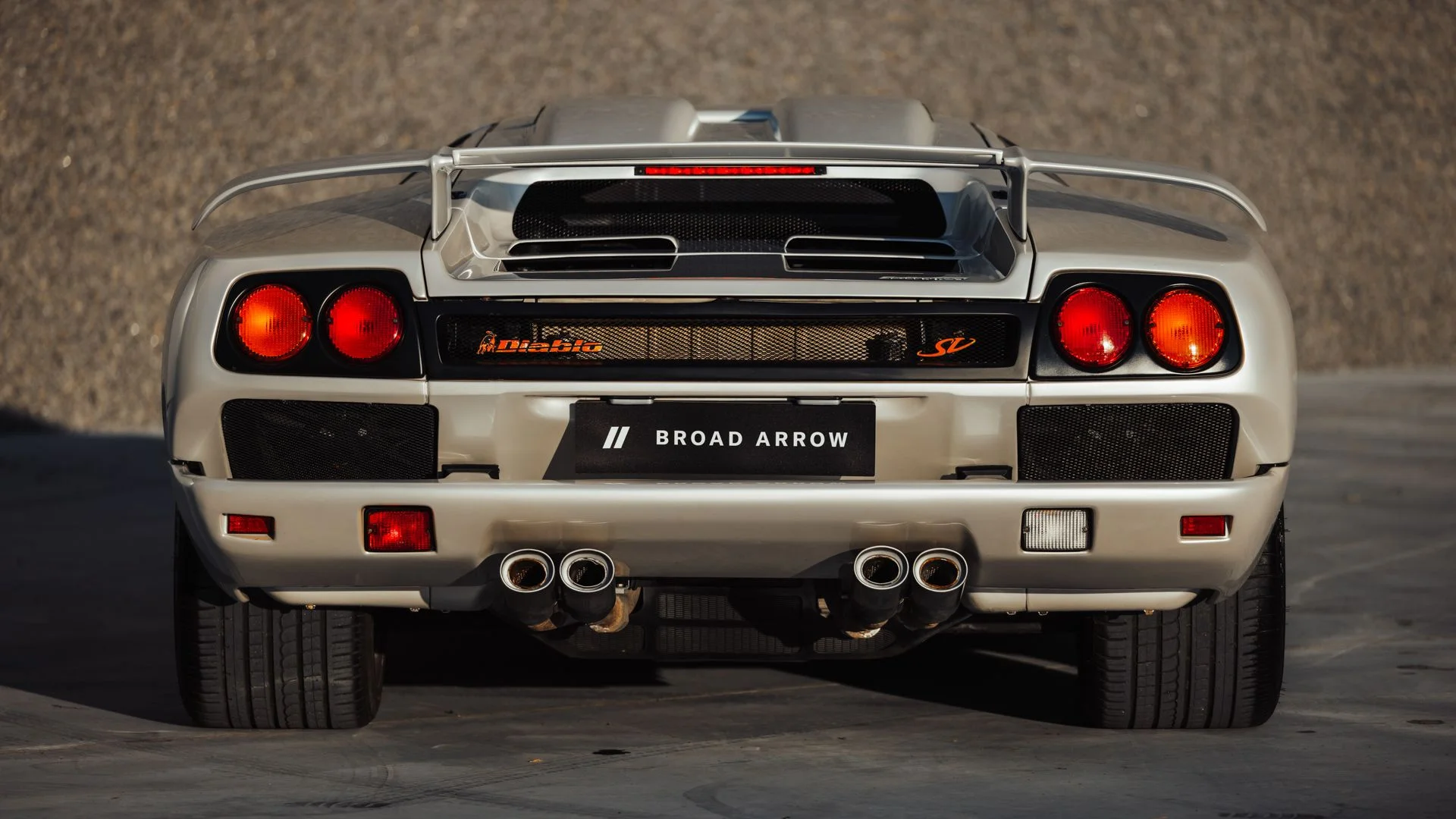
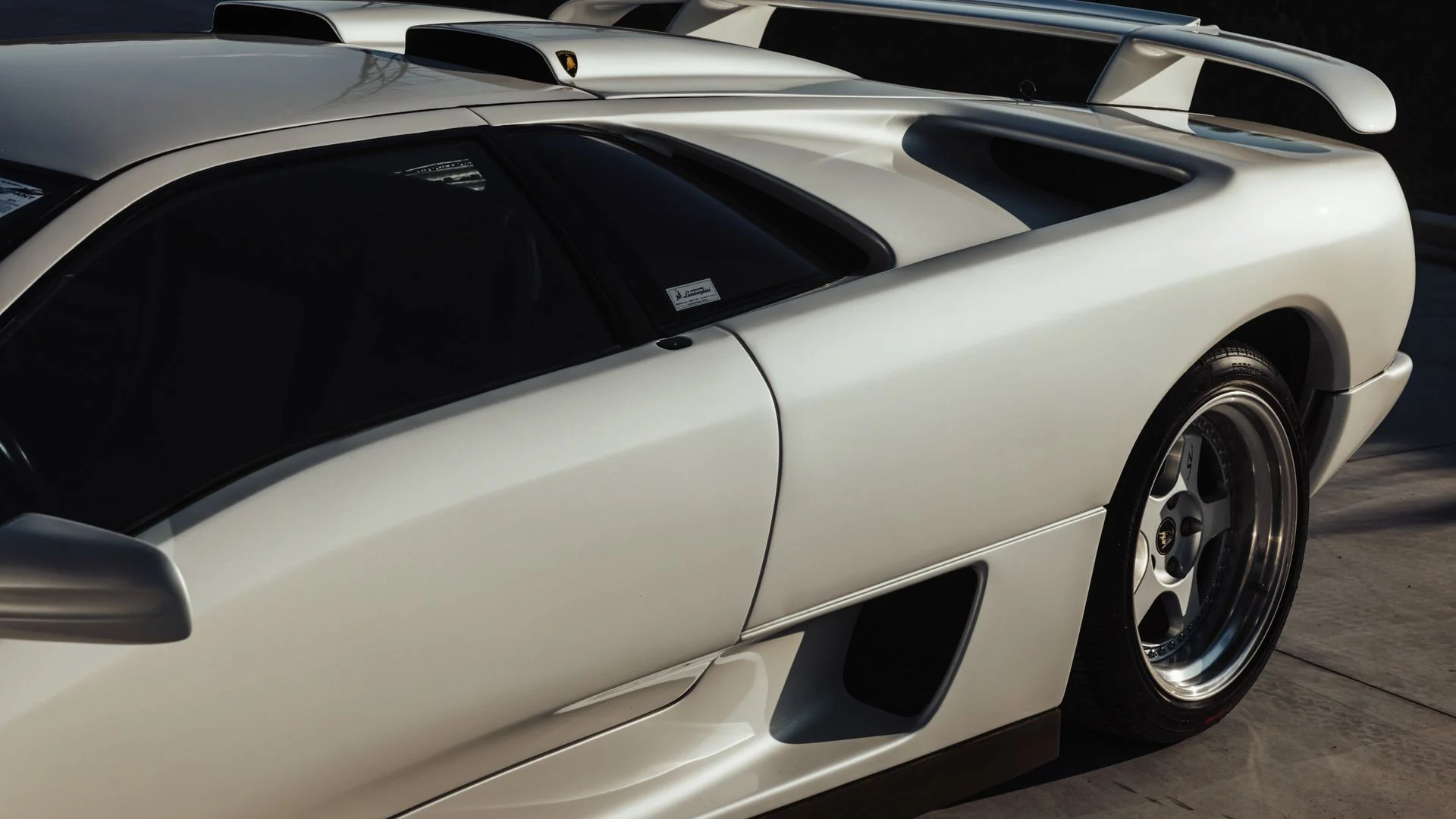
At the rear, an adjustable rear wing sat high above the engine cover on substantial aluminum supports, providing genuine downforce while creating the SV’s most distinctive visual element. The wing’s dramatic profile dominated the rear view, announcing the car’s serious performance intent.
Body-colored side skirts ran beneath the doors, while the rear bumper incorporated an aggressive diffuser with quad exhaust outlets on either side. The overall appearance was purposeful and uncompromising, shedding any pretense of sophistication in favor of raw performance expression.
Standard wheels were 18-inch Lamborghini units measuring 9 inches wide front and 10 inches wide rear, wearing 245/40 ZR18 and 345/35 ZR18 Pirelli P Zero tires respectively. The massive rear tires emphasized the car’s rear-drive character.
Interior
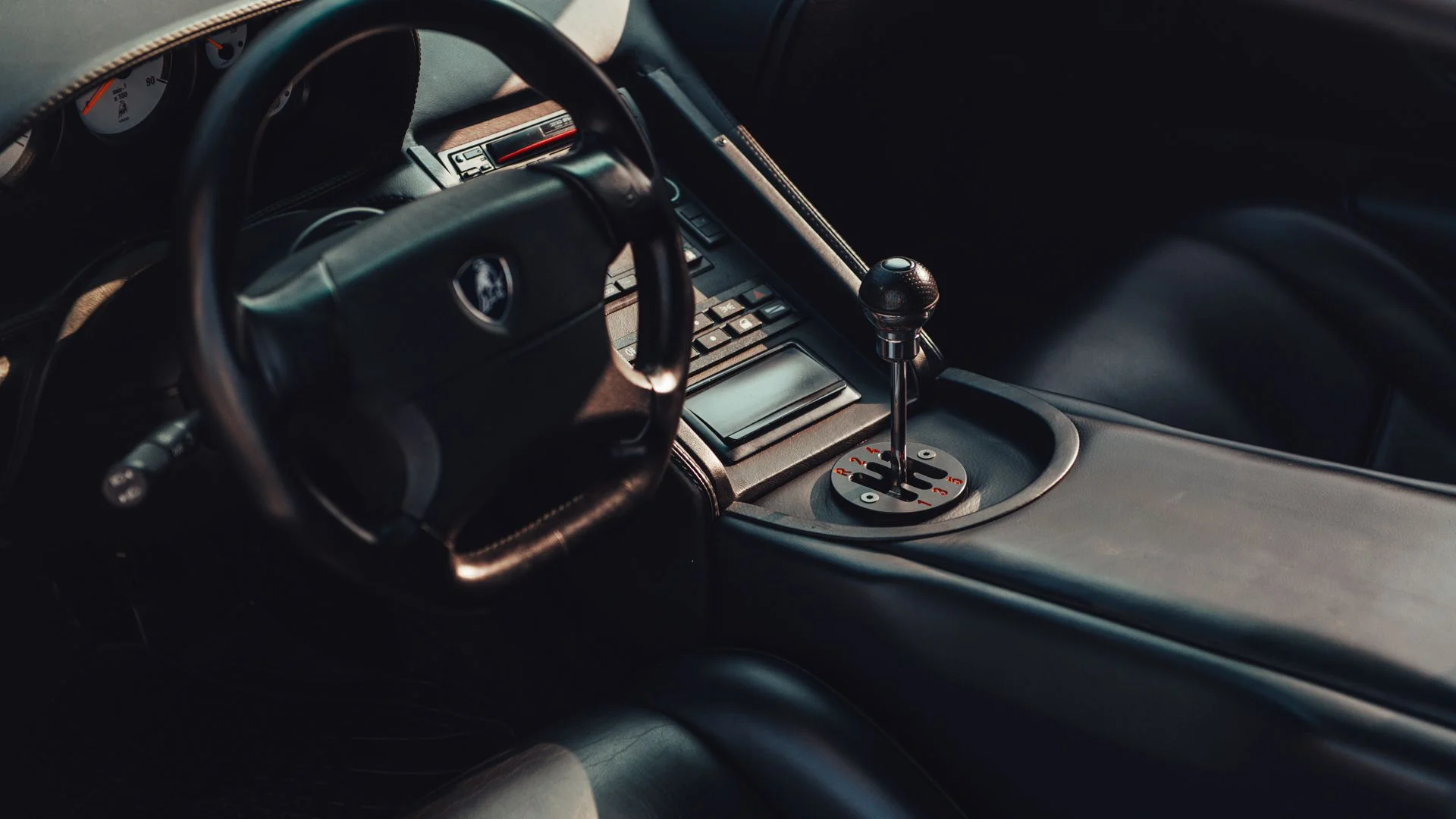
The cabin was trimmed in leather with Alcantara accents. Two individual bucket seats with aggressive bolstering provided excellent support during spirited driving. The driving position was low and forward, with excellent visibility forward and the steering wheel angled toward the driver.
The dashboard featured comprehensive instrumentation with Veglia gauges including a large tachometer redlined at 7,500 rpm, speedometer reading to 200 mph, oil pressure, water temperature, and fuel level. A boost gauge wasn’t necessary for the naturally aspirated engine, replaced by an oil temperature display.
A leather-wrapped steering wheel faced the driver with the Lamborghini bull badge at its center. The traditional open-gate gear lever provided satisfying mechanical engagement. Standard equipment included air conditioning, power windows, and central locking. The overall atmosphere was raw and unfiltered, reflecting the car’s performance mission.
Specifications
- Engine: V12, 5,707cc (94mm x 86mm), DOHC per bank, four valves per cylinder, fuel injection
- Power: 510 bhp at 7,100 rpm
- Torque: 428 lb-ft at 5,400 rpm
- Transmission: Five-speed manual, 3.73:1 limited-slip differential
- Chassis: Steel monocoque, 2,660mm wheelbase
- Suspension: Double wishbones (front and rear)
- Brakes: Cross-drilled vented discs 330mm (front), 370mm (rear)
- Wheels: 9×18 front, 10×18 rear, Pirelli P Zero 245/40 ZR18 (front), 345/35 ZR18 (rear)
- Weight: 1,600 kg
- Performance: 203 mph top speed, 0-60 mph in 3.5 seconds
Competition History
The SV was designed as a road car and saw no official motorsport use. However, its performance and balanced handling made it popular for track days and amateur racing. The combination of naturally aspirated power, rear-wheel drive, and lightweight construction proved competitive against dedicated sports cars.
Production and Legacy
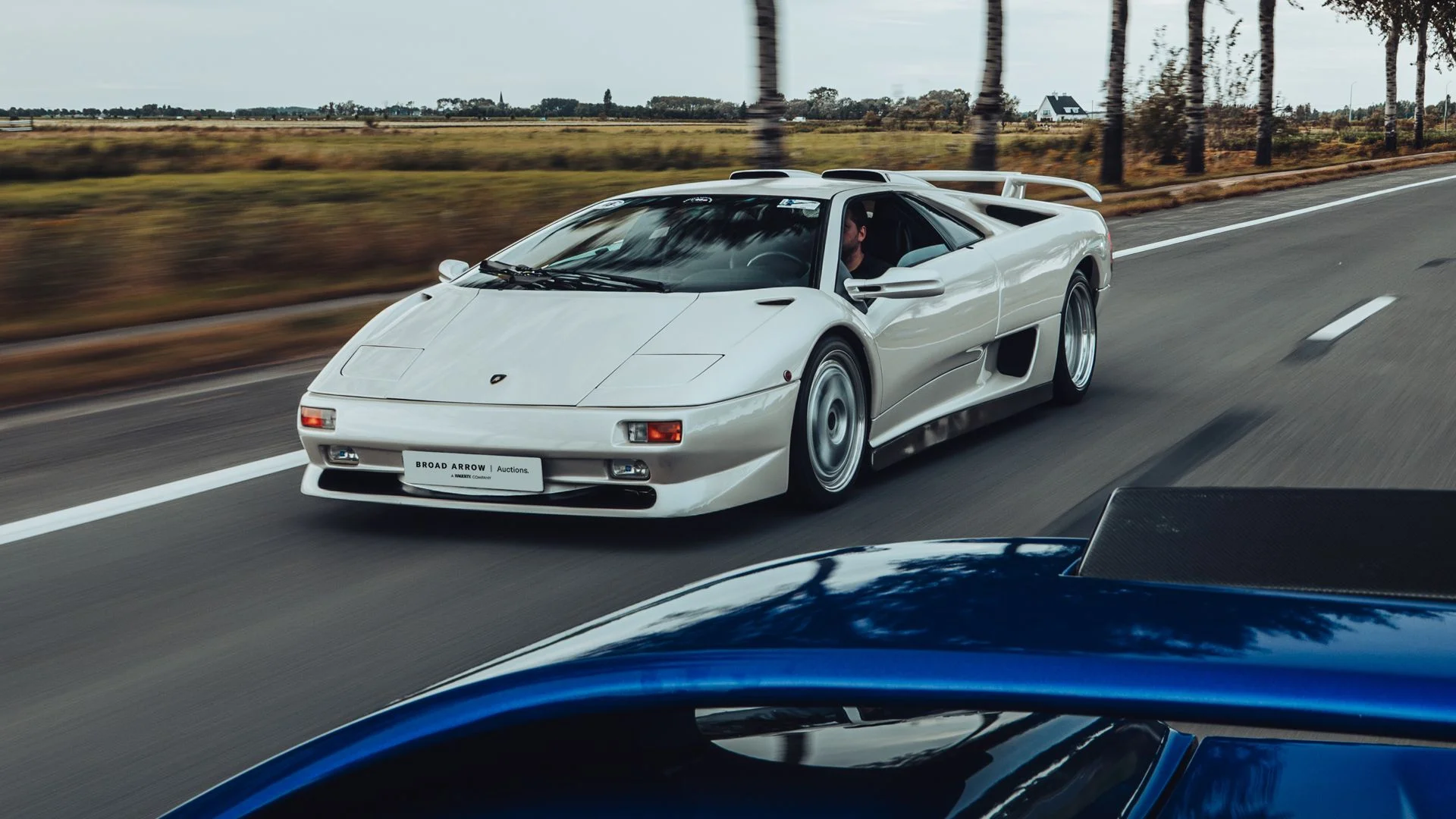
Lamborghini built approximately 2,600 Diablo SV examples between 1995 and 2001 at Sant’Agata Bolognese. Production was relatively consistent until the Murciélago replaced the entire Diablo range. Each car received meticulous hand assembly, with craftsmen fitting body panels individually and trimming interiors to customer specifications.
The SV proved that rear-wheel drive could deliver supercar thrills, that driver engagement mattered as much as technological refinement. The combination of 510 horsepower, naturally aspirated V12, and rear-drive architecture created an unfiltered driving experience.
Today, clean Diablo SV examples command strong prices as collectors recognize them as the ultimate Diablo variant. The combination of extreme styling, fearsome performance, and pure driving character has created devoted following. The SV represents the final expression of Lamborghini’s naturally aspirated V12 supercar philosophy.
The Diablo SV proved that supercars could be uncompromising, that refinement wasn’t necessary for performance. It celebrated raw power, mechanical precision, and the pure act of driving. The SV remains one of Lamborghini’s greatest achievements, a naturally aspirated masterpiece that defined an era when supercar authenticity superseded convenience.