
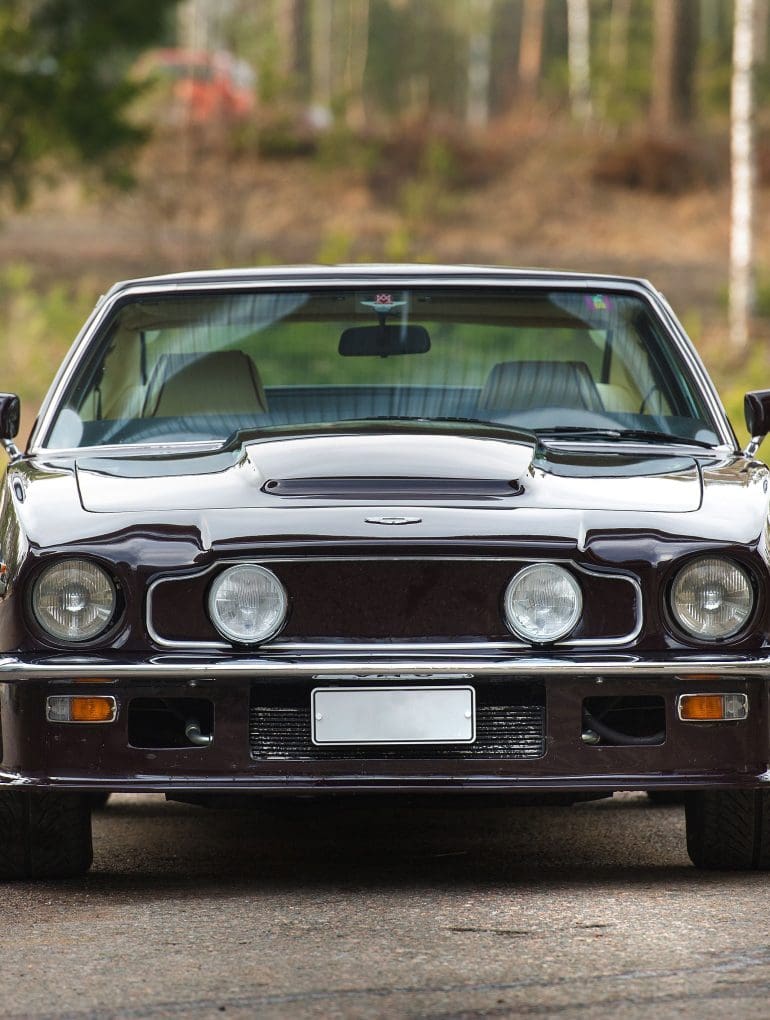

Geneva, March 1986. Aston Martin unveiled the V8 Vantage V580, an updated version of the legendary high-performance grand tourer. The name referenced 580 horsepower in metric terms, though actual output was 403 horsepower in SAE measurements. Extensive engine modifications including larger Weber carburetors, revised camshafts, and higher compression ratio transformed the already potent V8 into a fire-breathing powerplant. Combined with revised aerodynamics including a front air dam and rear spoiler, the V580 became Britain’s fastest production car with a claimed 170 mph top speed. This was Aston Martin’s ultimate expression of the hand-built V8 platform, a low-volume exotic combining brute force with traditional craftsmanship. Production ran from 1986 to 1989, with approximately 140 examples built.
Background and Origins
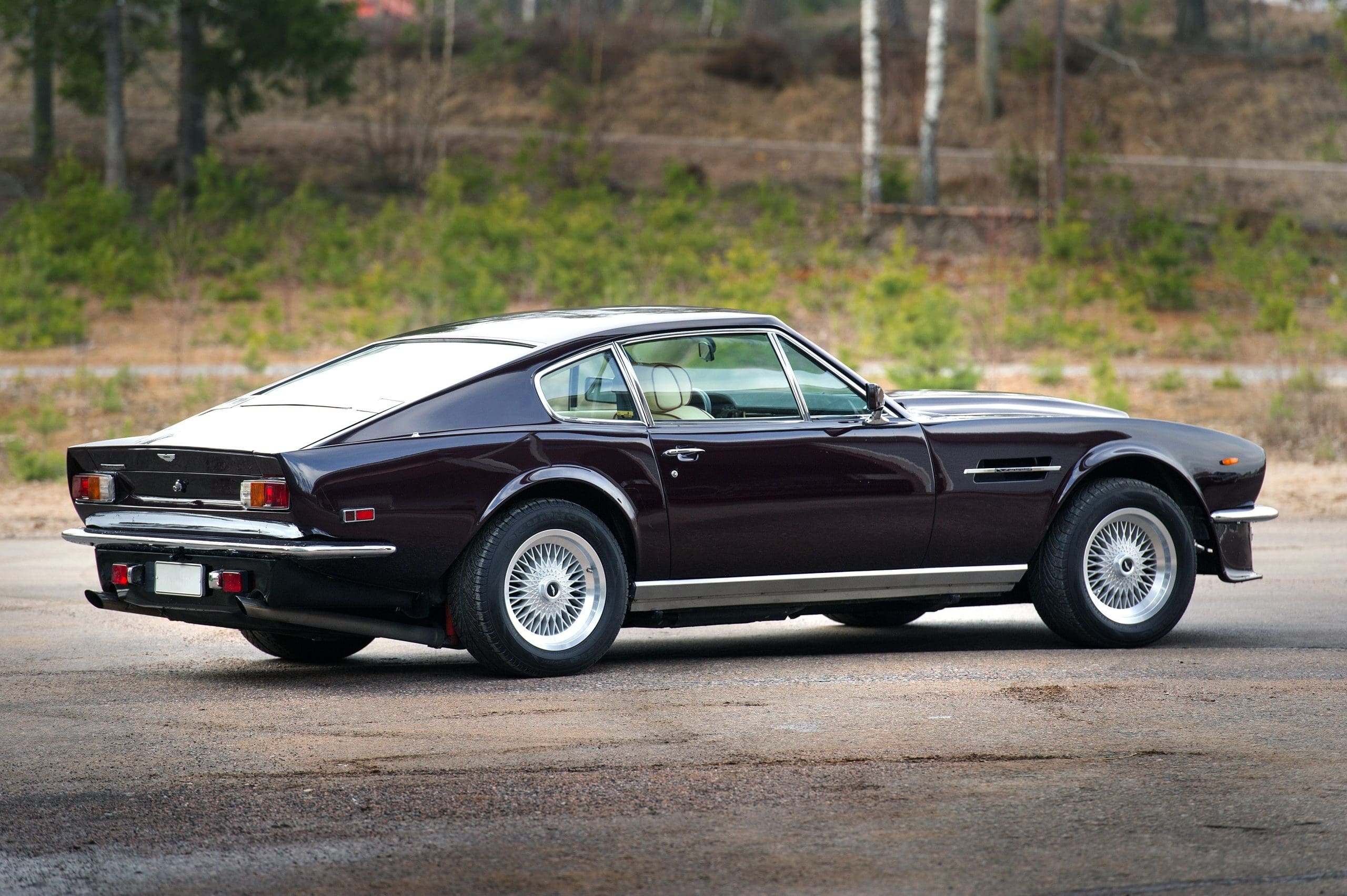
The Aston Martin V8 Vantage debuted in 1977 as a high-performance variant of the standard V8 saloon. Featuring a more powerful version of Tadek Marek’s alloy V8 engine and aggressive styling modifications, the original Vantage established Aston Martin’s credentials as a genuine supercar manufacturer.
By 1985, Aston Martin chairman Victor Gauntlett wanted something more extreme. Ferrari’s Testarossa and Lamborghini’s Countach dominated supercar headlines, and Aston Martin needed a response. Chief engineer Mike Loasby led development of an extensively updated Vantage that would reclaim Britain’s performance crown.
Development focused on extracting maximum power from the V8 while improving high-speed aerodynamics. Engine modifications included larger Weber carburetors, revised camshaft profiles, higher compression pistons, and improved breathing. Aerodynamic improvements came from a deeper front air dam, revised bonnet with functional air intake, and a discreet boot-mounted spoiler.
The V580 debuted at Geneva in March 1986, with production beginning immediately at Newport Pagnell. Each car was hand-built over several weeks, reflecting Aston Martin’s traditional coachbuilding methods.
Design and Engineering
The V580 was based on the standard V8’s steel platform chassis with a 2,610mm wheelbase. The structure was a traditional design featuring two main longitudinal chassis rails connected by crossmembers, with the body mounted on top.
Front suspension used unequal-length double wishbones with coil springs, telescopic dampers, and an anti-roll bar. The rear employed a De Dion axle with trailing arms, Watt’s linkage for lateral location, coil springs, and dampers. This sophisticated rear suspension delivered excellent traction while maintaining precise wheel control.
Braking was by ventilated discs all around, measuring 298mm front and 292mm rear with Girling calipers. Power assistance was standard. The steering was power-assisted recirculating ball, requiring moderate effort but providing adequate feedback.
The engine was Aston Martin’s legendary alloy V8, designed by Tadek Marek. Displacing 5,340cc with a 100mm bore and 85mm stroke, this all-aluminum engine featured dual overhead camshafts per bank, four valves per cylinder, and dry-sump lubrication. Four Weber 48 IDF twin-choke carburetors fed the induction system.
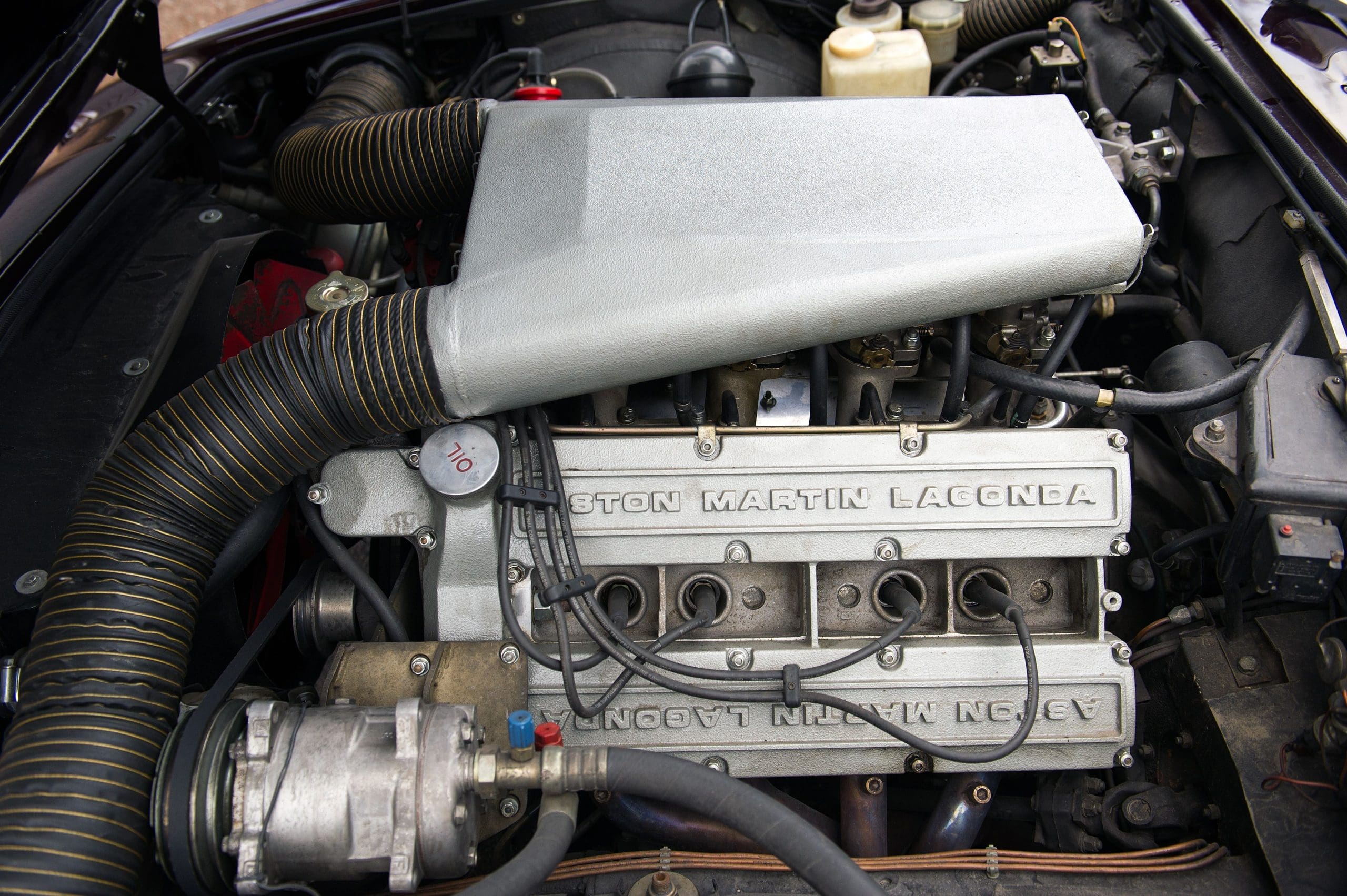
For the V580 specification, compression ratio increased to 10.2:1 from the previous 9.5:1. New camshaft profiles improved valve timing, while larger Weber carburetors increased airflow. The exhaust system was redesigned for better flow. These modifications increased output to 403 horsepower at 6,000 rpm and 407 lb-ft at 5,000 rpm, representing a significant increase over the earlier Vantage’s 375 horsepower.
Transmission was a ZF five-speed manual with a traditional H-pattern shifter. The gear ratios were well-spaced, with a 3.54:1 final drive through a limited-slip differential.
Styling
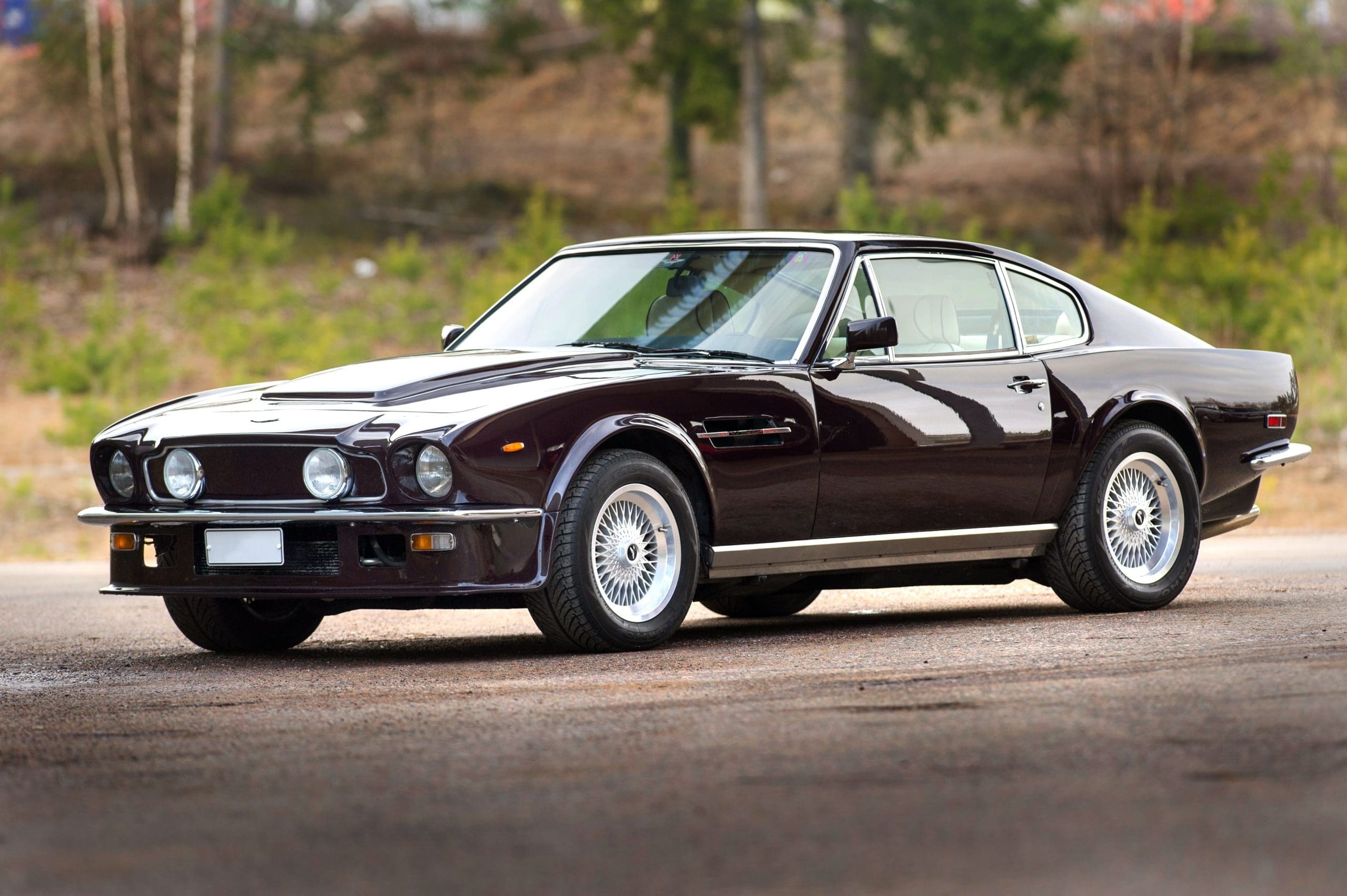
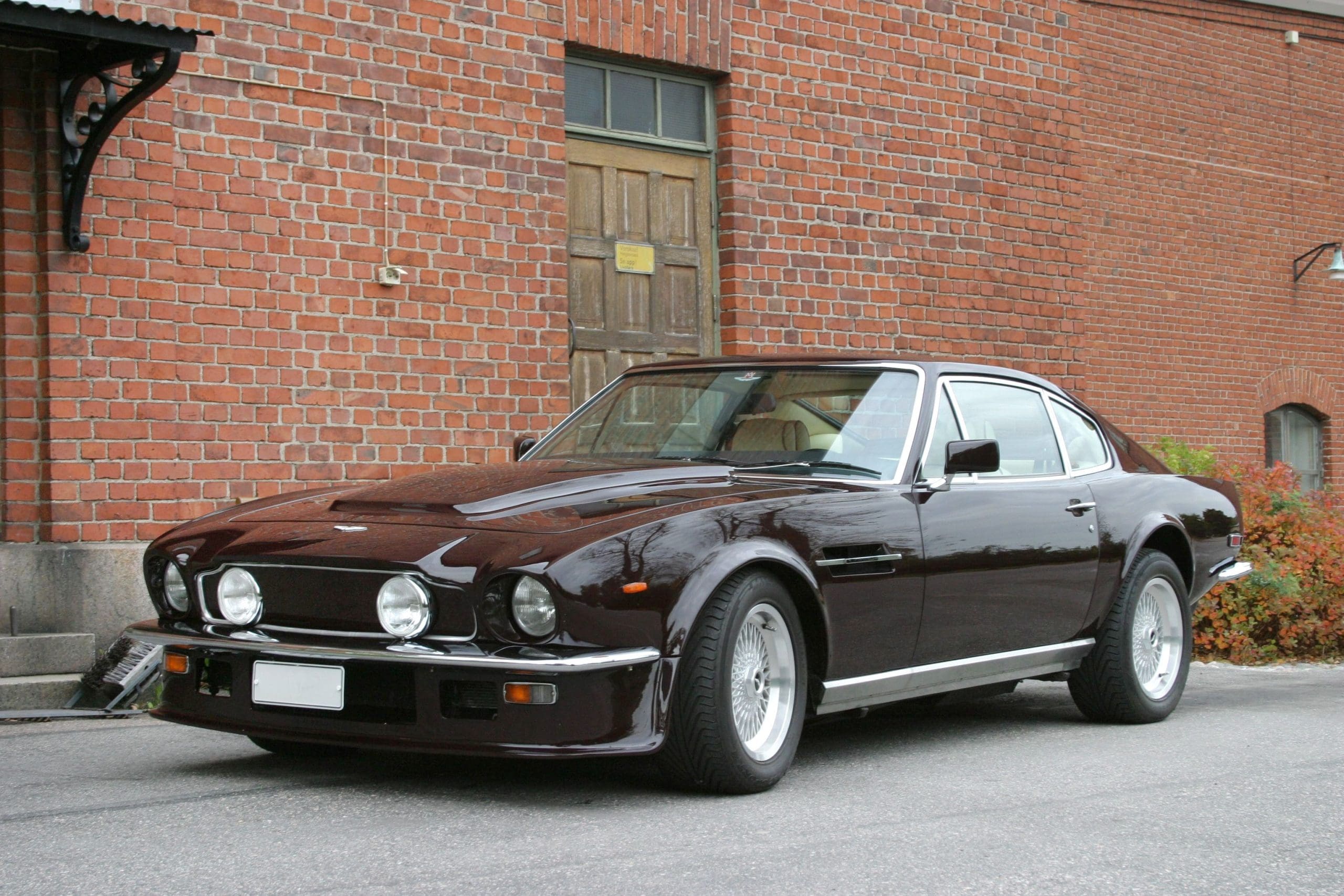
The V580 retained the dramatic wedge-shaped styling that defined the Vantage since 1977. The aggressive stance came from a deep front air dam with integrated driving lights, blanked-off grille, and pronounced bonnet bulge accommodating the carburetors. The bonnet featured a functional NACA duct feeding cool air to the engine bay.
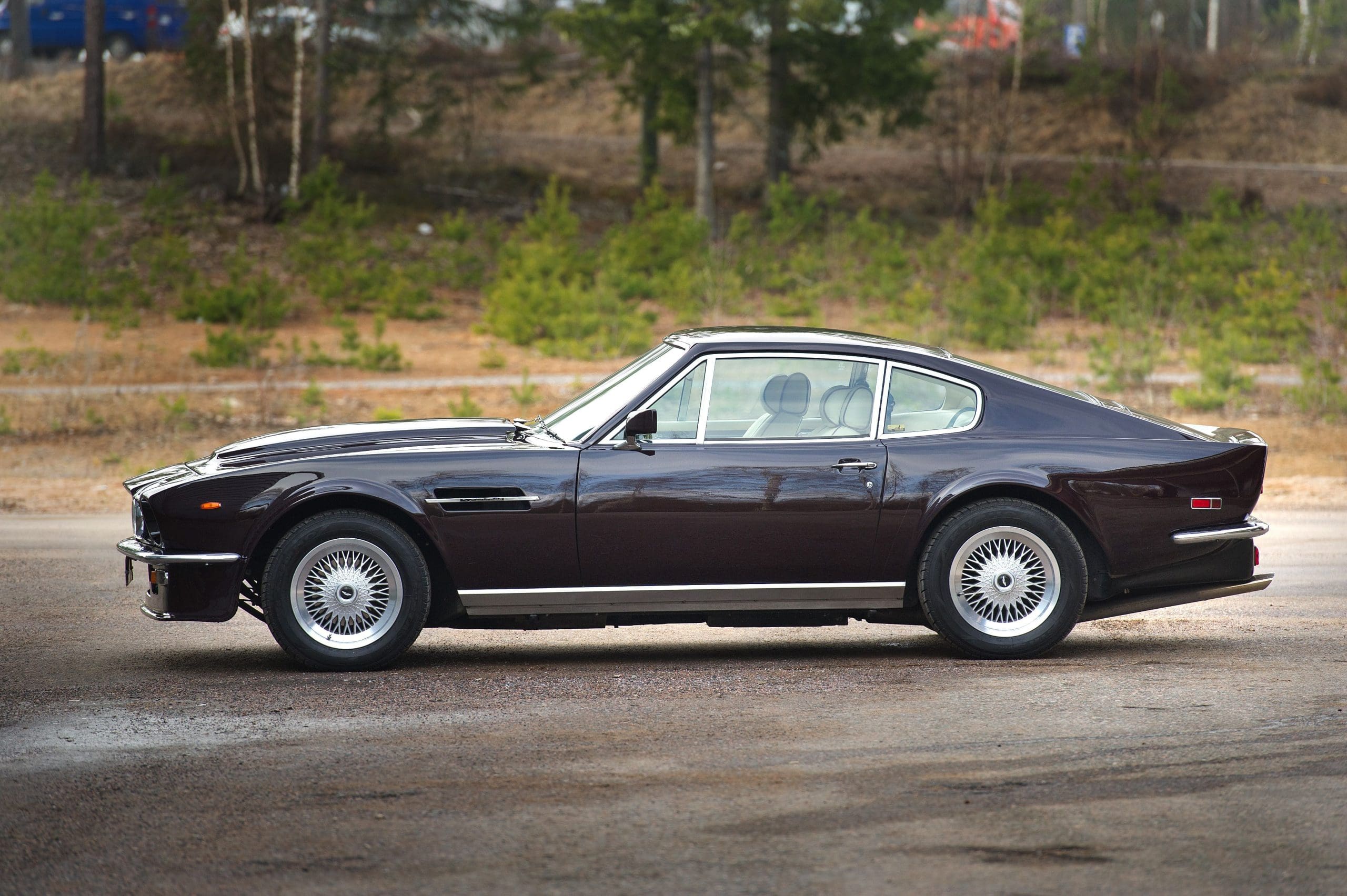
Side profile was dominated by the long bonnet, short rear deck, and muscular haunches over the rear wheels. Chrome-finished Aston Martin wheels measuring 16 inches in diameter with 255/60 VR16 Goodyear Eagle tires completed the purposeful appearance. At the rear, a discreet boot-mounted spoiler improved high-speed stability.
Body panels were hand-formed aluminum over the steel chassis structure, reflecting Aston Martin’s traditional coachbuilding methods. Most V580s were finished in conservative colors: dark blue, black, silver, and various metallics.
Interior
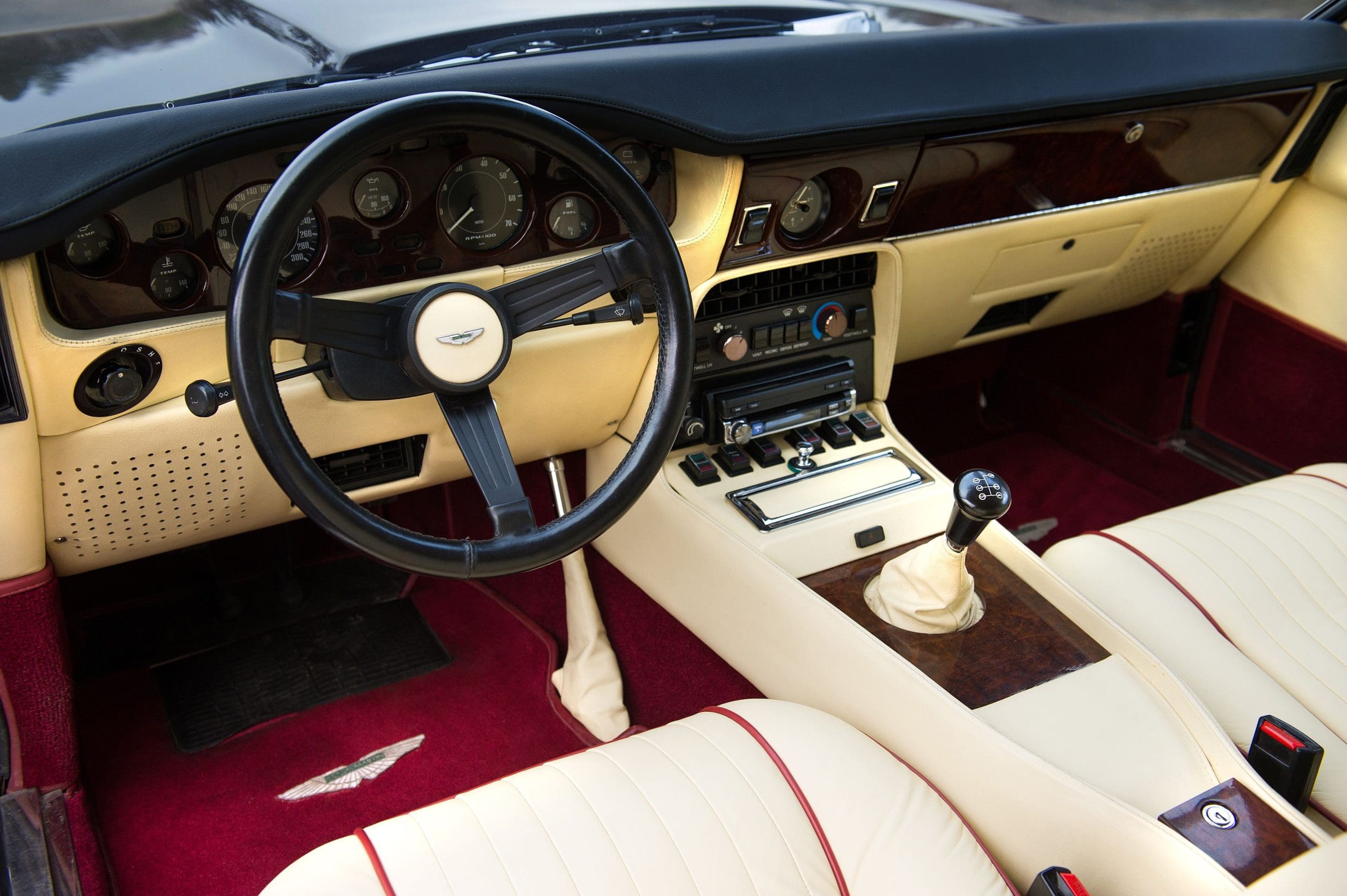
The cabin was trimmed in Connolly leather throughout with matching carpeting and headlining. Front seats were deeply contoured for support. The rear seats accommodated two adults, though legroom was limited. This was a genuine four-seater, unlike many contemporary supercars.
The dashboard featured comprehensive instrumentation with large Smiths gauges including a tachometer redlined at 6,500 rpm, speedometer reading to 200 mph, oil pressure, water temperature, and fuel level. Toggle switches controlled various functions.
A wood-rimmed steering wheel faced the driver with the Aston Martin badge at its center. The gear lever sprouted from the transmission tunnel with a leather gaiter and chrome surround. Walnut veneer adorned the dashboard and door cappings. Standard equipment included air conditioning, electric windows, and a premium audio system.
Specifications
- Engine: Aston Martin V8, 5,340cc (100mm x 85mm), DOHC per bank, four valves per cylinder, dry-sump
- Power: 403 bhp at 6,000 rpm
- Torque: 407 lb-ft at 5,000 rpm
- Carburation: Four Weber 48 IDF twin-choke carburetors
- Transmission: ZF five-speed manual, 3.54:1 limited-slip differential
- Chassis: Steel platform chassis, 2,610mm wheelbase
- Suspension: Double wishbones (front), De Dion axle with Watt’s linkage (rear)
- Brakes: Vented discs 298mm (front), vented discs 292mm (rear)
- Wheels: 16-inch alloy, Goodyear Eagle 255/60 VR16
- Weight: 1,730 kg
- Performance: 170 mph top speed, 0-60 mph in 5.2 seconds
Competition History
The V580 Vantage was designed as a road car and saw minimal official competition use. However, its performance and robust construction made it suitable for long-distance touring events and rallies. Several owners entered their Vantages in European touring rallies, where the combination of high-speed capability and genuine luggage capacity proved advantageous.
Production and Legacy
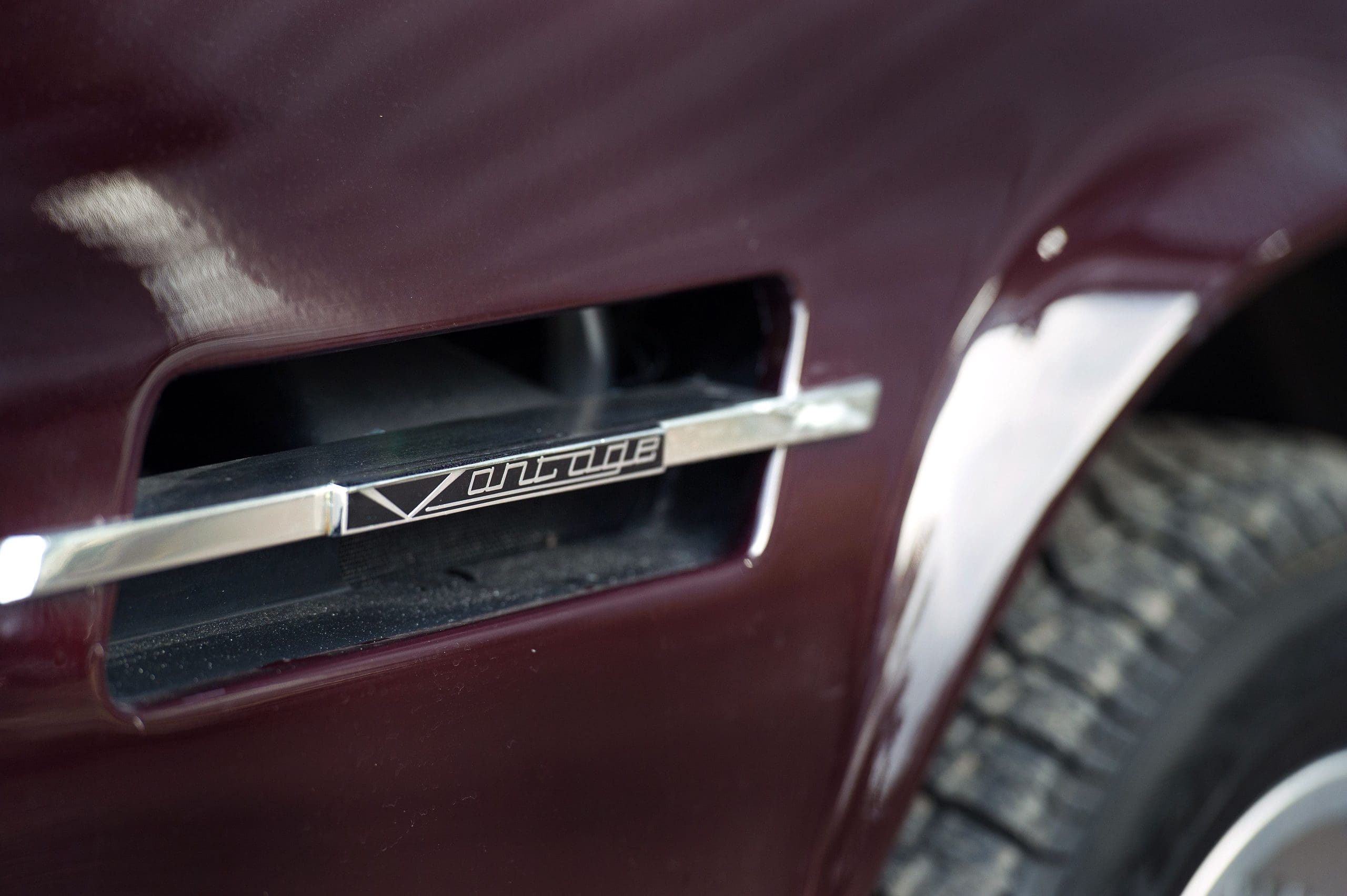
Aston Martin built approximately 140 V580 Vantage examples between 1986 and 1989 at Newport Pagnell. Each car was hand-assembled over several weeks, with craftsmen fitting body panels individually and trimming interiors to customer specifications. Production numbers were deliberately limited, maintaining exclusivity and reflecting the small factory’s capacity.
The V580 represented the ultimate evolution of Aston Martin’s traditional hand-built V8 platform before the Virage introduced modern construction methods. It proved that British engineering could compete against Italian exotics, that brute force and traditional craftsmanship weren’t incompatible with supercar performance.
The claimed 170 mph top speed made it Britain’s fastest production car, outpacing contemporary Ferraris and Lamborghinis in straight-line performance. The combination of 403 horsepower, four Weber carburetors, and traditional construction created something unique in the supercar landscape.
Today, V580 Vantages are increasingly valuable as collectors recognize them as the pinnacle of Newport Pagnell’s traditional coachbuilding era. Clean examples command strong prices, reflecting their status as hand-built exotics from an era when small-scale manufacturing still survived. The V580 closed a chapter in Aston Martin’s history, the final expression of methods dating back decades before modern production techniques arrived.
The V8 Vantage V580 represented Aston Martin at its most uncompromising, when the small Newport Pagnell factory still built cars the old way. It proved that British supercars could compete against continental rivals, that tradition and performance weren’t mutually exclusive. The V580 remains one of Aston Martin’s greatest achievements, a hand-built masterpiece combining brutal performance with elegant craftsmanship.