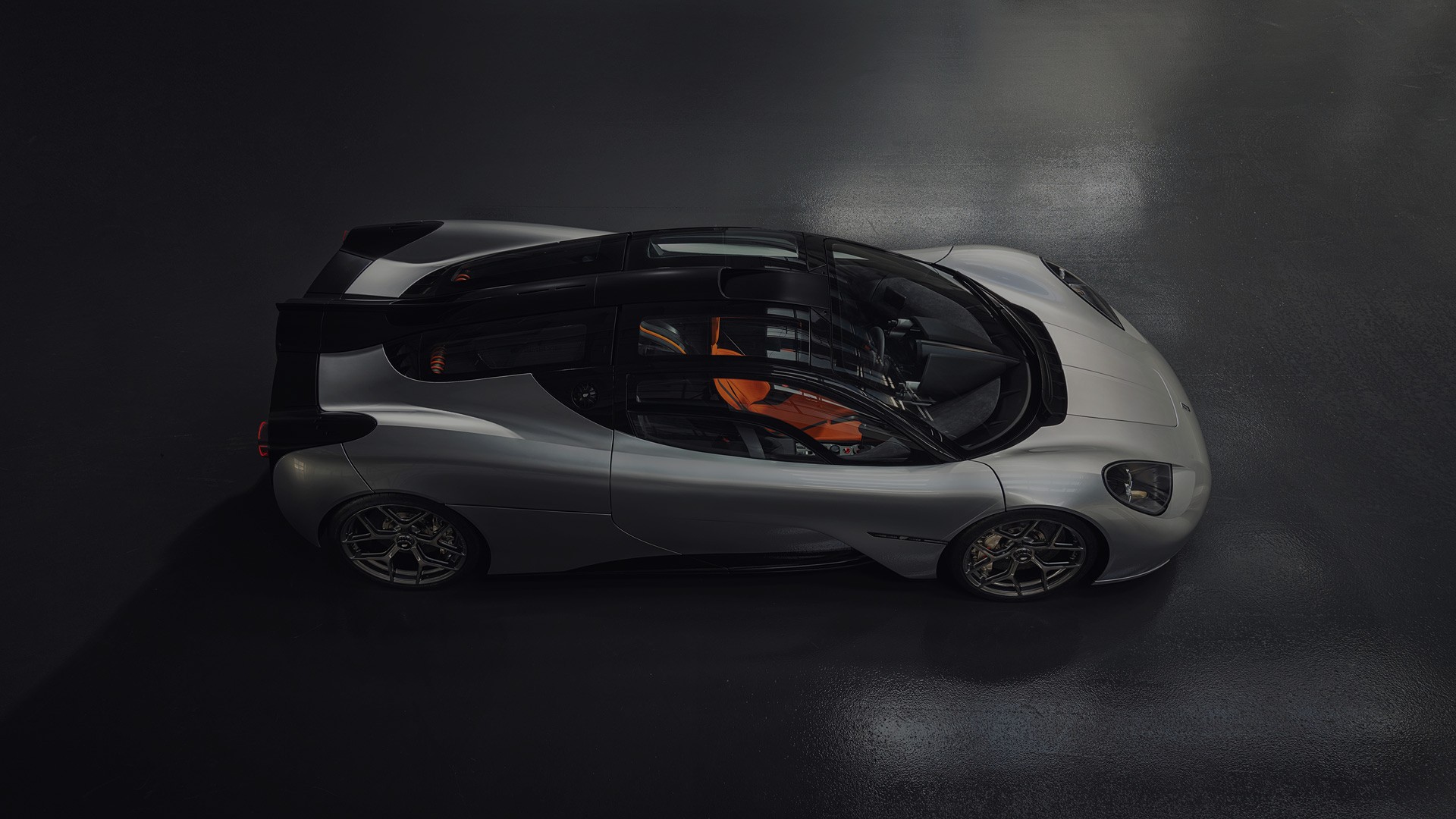



Frankfurt, September 1989. Audi unveiled the Quattro RR, a limited-production homologation special celebrating the original Quattro’s dominance in rallying. The “RR” designation stood for “Rallye Racing,” signaling the car’s competition intent. Based on the final evolution of the Ur-Quattro platform, the RR featured a turbocharged 2.2-liter inline five producing 220 horsepower, revised suspension geometry, upgraded brakes, and distinctive aerodynamic bodywork. Wider wheel arches, a deep front spoiler, and adjustable rear wing distinguished the RR from standard Quattros. Audi needed 200 examples for Group A homologation. They built exactly 220 between 1989 and 1990, making the Quattro RR the rarest and most extreme variant of the legendary original Quattro.
Background and Origins

The original Audi Quattro debuted in 1980, revolutionizing rallying with its permanent four-wheel drive system. Throughout the 1980s, the Quattro dominated the World Rally Championship, winning multiple manufacturers’ and drivers’ titles. By the late 1980s, the Ur-Quattro had evolved significantly, but competition regulations demanded continued homologation updates.
Development of the RR began in 1988 under Audi Sport GmbH. The brief was straightforward: create the ultimate road-going Quattro that satisfied Group A homologation requirements while showcasing the platform’s final evolution. This would be the last homologation special based on the original Quattro.
Engineers focused on extracting maximum performance while improving aerodynamics and chassis dynamics. The turbocharged inline five received modifications increasing output to 220 horsepower. Suspension geometry was revised with wider tracks and lowered ride height. Aerodynamic enhancements included a deeper front spoiler, wider wheel arches, and an adjustable rear wing. The Quattro RR debuted at Frankfurt in September 1989, with production beginning immediately at Audi’s Ingolstadt facility.
Design and Engineering

The RR was based on the standard Quattro’s steel monocoque with a 2,524mm wheelbase, reinforced to handle increased power and improved suspension geometry. Front suspension used MacPherson struts with lower A-arms, revised with stiffer springs, uprated Bilstein gas-pressure dampers, and modified geometry. The rear employed a similar arrangement with increased negative camber for improved cornering grip. Ride height dropped 20mm compared to standard Quattros.
Braking was by cross-drilled and vented discs measuring 280mm front and 245mm rear with four-piston calipers. ABS remained absent as rally regulations prohibited it. Power steering was standard with a quick ratio.
The engine was Audi’s turbocharged inline five, code-named WR. Displacing 2,226cc with an 81mm bore and 86.4mm stroke, this all-aluminum engine featured a SOHC head with two valves per cylinder. A KKK K26 turbocharger provided forced induction, with compressed air cooled by an air-to-air intercooler.

Bosch Motronic engine management controlled fuel injection and ignition timing. With a 9.3:1 compression ratio, output was 220 horsepower at 5,900 rpm and 228 lb-ft at 3,000 rpm. The broad torque curve delivered strong acceleration from low revs.
Transmission was a five-speed manual driving all four wheels through Audi’s quattro permanent all-wheel drive system. A manually locking center differential distributed power with a default 50:50 front-to-rear split. Manual differential locks front and rear aided traction. Final drive was 4.11:1.
Styling

The RR’s appearance was dramatically different from standard Quattros. Massively flared wheel arches covered significantly wider tracks, creating an aggressive stance. The front bumper incorporated a deep chin spoiler with additional cooling ducts. The bonnet featured a prominent bulge to clear the intake manifold.
Side profile was dominated by those enormous fender flares, bonded and riveted to the body structure. Quattro RR badges appeared on the front fenders. At the rear, an adjustable rear wing sat atop the trunk lid on substantial aluminum supports, providing genuine downforce. Body panels were steel, hand-fitted to accommodate the wider tracks.
Standard wheels were 8×15-inch BBS cross-spoke alloy units wearing 215/50 VR15 Pirelli P700-Z tires, the widest rubber ever fitted to a production Quattro. Most RRs were finished in Alpine White, though a handful received other colors. The white examples with red Quattro graphics became the most iconic specification.
Interior

The cabin featured Recaro sport seats trimmed in cloth with prominent bolstering. Quattro RR plaques appeared on the door sills. The dashboard retained the standard Quattro’s layout but featured unique RR instrumentation. A boost gauge sat prominently in the center stack. The standard gauges included a tachometer redlined at 6,500 rpm, speedometer, and auxiliary dials for oil pressure, water temperature, and fuel.
A leather-wrapped three-spoke steering wheel faced the driver. The gear lever was short-throw with a weighted knob, while the center console housed manual differential lock controls. Standard equipment included power windows, central locking, and a cassette stereo.
Specifications
- Engine: WR turbocharged inline five, 2,226cc (81mm x 86.4mm), SOHC, two valves per cylinder, KKK K26 turbocharger
- Power: 220 bhp at 5,900 rpm
- Torque: 228 lb-ft at 3,000 rpm
- Transmission: Five-speed manual, quattro AWD with manually locking center, front, and rear differentials
- Chassis: Steel monocoque, 2,524mm wheelbase
- Suspension: MacPherson struts (front and rear), Bilstein dampers
- Brakes: Cross-drilled vented discs 280mm (front), vented discs 245mm (rear)
- Wheels: BBS 8×15 cross-spoke alloy, Pirelli P700-Z 215/50 VR15
- Weight: 1,290 kg
- Performance: 143 mph top speed, 0-60 mph in 6.1 seconds
Competition History

The final evolution of the original road-going Ur-Quattro arrived near the end of the platform’s lifecycle, featuring the highly refined, 20-valve “RR” inline-five engine. However, by the late 1980s, Audi’s factory motorsport focus had already shifted away from the legendary coupe. Following the abrupt end of Group B in 1986, the company pivoted to the new Group A regulations, which demanded a minimum production run of 5,000 units to achieve homologation. Because the hand-assembled Ur-Quattro could not meet these high volume requirements, Audi selected the mass-production Audi 200 Quattro sedan as its new rally weapon. Powered by a rugged, turbocharged five-cylinder engine, the larger 200 Quattro served as Audi’s primary stage rally platform for the late 1980s, securing a historic victory at the 1987 Safari Rally.
Production and Legacy

Audi hand-assembled around 600 examples of the 20-valve Ur-Quattro with the “RR” engine code at Ingolstadt between late 1989 and early 1991. Far from a stripped-out homologation special, the RR was a highly refined luxury grand tourer, representing the ultimate mechanical evolution of the original road-going Quattro. While factory racing programs had moved on to newer platforms by 1989, the 220-horsepower RR demonstrated just how far Audi’s landmark five-cylinder turbo design could be developed for the street.
Today, these 20-valve variants are extraordinarily rare and highly prized by enthusiasts. The combination of scarce production numbers and iconic heritage has made them among the most collectible modern classic Audis in existence, with clean examples commanding significant market premiums. The RR closed a brilliant decade in Audi’s history, serving as the definitive final expression of the original coupe concept before production ended in 1991.