
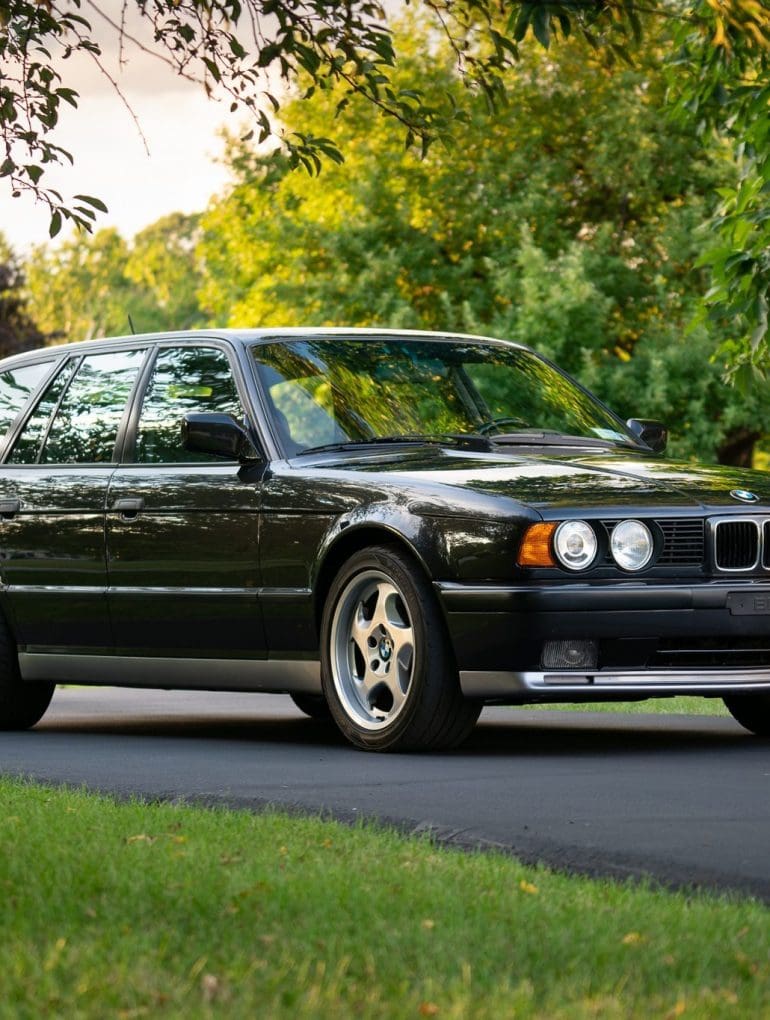

Frankfurt, September 1991. BMW unveiled the updated E34 M5, featuring a enlarged 3.8-liter inline six producing 340 horsepower, up from the original 3.5-liter’s 315 horsepower. The displacement increase came from a larger bore, while the stroke remained unchanged. Bosch Motronic engine management, revised camshafts, and improved breathing delivered the additional power seamlessly. Combined with a six-speed manual transmission, the 3.8 M5 achieved 155 mph top speed with the standard limiter, or 168 mph with the optional M Drivers Package. This was the ultimate expression of the E34 M5, the final evolution before the E39 generation arrived in 1998. Production ran from 1992 to 1998, with the 3.8-liter powering the final generation of the original M5 platform.
Background and Origins
The E34 M5 debuted in 1988 as BMW’s most ambitious super-sedan project. The M Division took the standard 5 Series sedan platform and transformed it into a genuine performance machine rivaling contemporary Ferraris in acceleration and outright speed. The original 3.5-liter S38B35 engine produced 315 horsepower, delivered through a five-speed manual transmission to all four wheels via a limited-slip differential.
By 1991, BMW recognized that competitors were becoming faster. Mercedes-Benz’s 5.0-liter 500E produced 400 horsepower, while rumors circulated about turbocharged alternatives. BMW’s solution was elegant: enlarge the displacement slightly, revise the internals, and extract additional horsepower naturally aspirated.
Development of the 3.8-liter variant began in 1990 under the M Division. The bore increased from 89mm to 93.4mm, while the stroke remained 78mm. This oversquare configuration allowed higher rpm operation while improving breathing efficiency. Compression ratio increased slightly to 10.5:1. The result was 340 horsepower at 6,900 rpm and 295 lb-ft at 4,750 rpm.
The updated M5 debuted at Frankfurt in September 1991, with production beginning in early 1992. The 3.8-liter became the standard engine for all E34 M5s from that point forward.
Design and Engineering
The E34 M5 3.8 was based on the standard E34 5 Series sedan’s steel monocoque with a 2,761mm wheelbase. The M Division extensively reinforced the structure to handle the increased power and improved performance. Independent suspension at all four corners provided the foundation for the M5’s sporting dynamics.
Front suspension used MacPherson struts with lower A-arms, revised springs, and uprated Bilstein gas-pressure dampers. The rear employed a semi-trailing arm arrangement with similarly uprated springs and dampers. Anti-roll bars front and rear controlled body roll effectively. The suspension geometry was optimized for sporting driving while maintaining acceptable ride quality for daily use.
Braking was by ventilated discs measuring 324mm front and 310mm rear with four-piston calipers. The system provided powerful, fade-resistant stopping power adequate for the M5’s performance. ABS was standard, providing progressive braking regardless of road conditions.
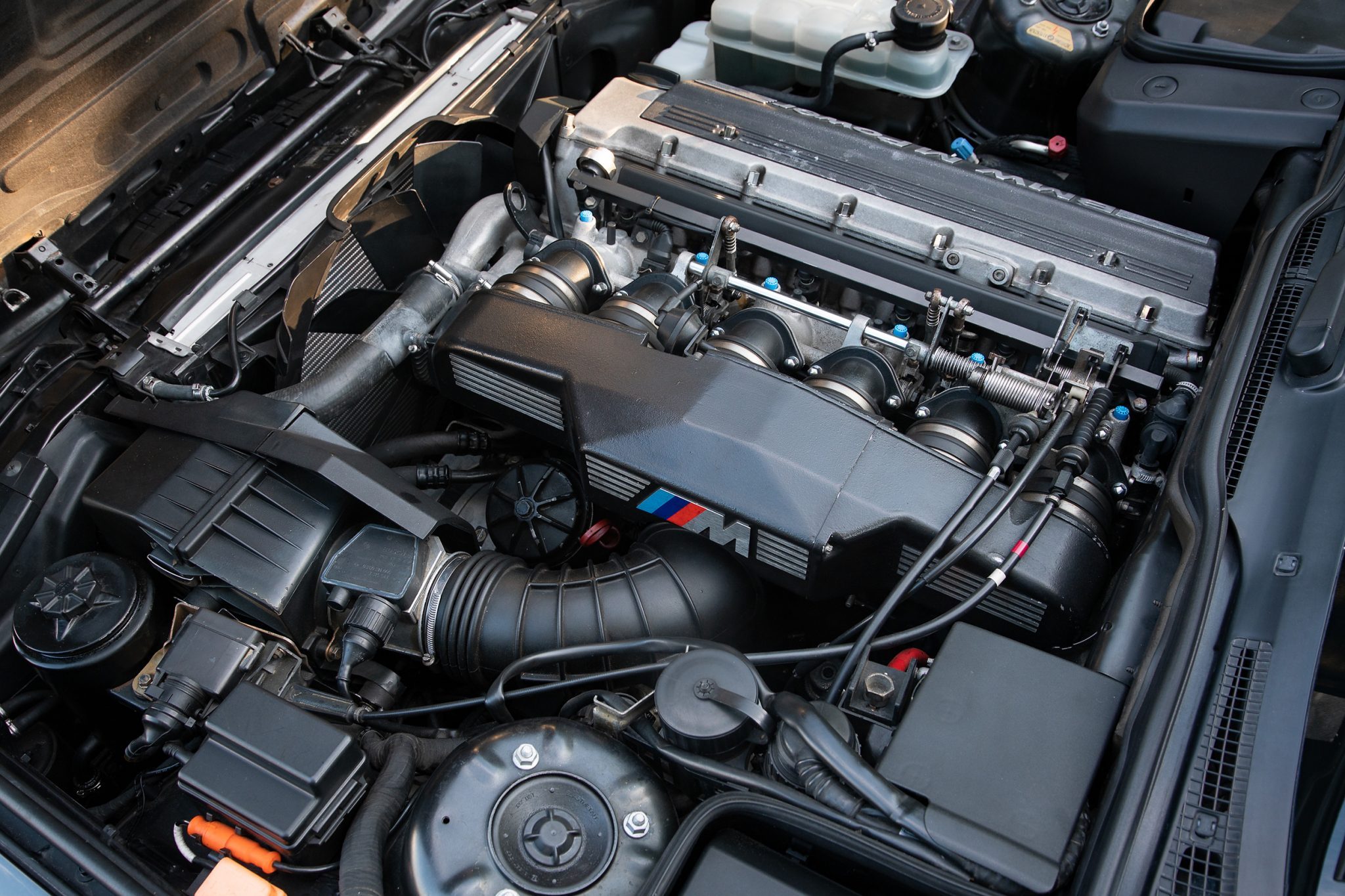
The engine was BMW’s S38B38 inline six, the enlarged version of the original M5 engine. Displacing 3,795cc with the aforementioned oversquare bore and stroke, it featured a cast-iron block for strength and an all-aluminum DOHC head with four valves per cylinder. Dual overhead camshafts per bank with variable intake valve timing on the intake camshaft optimized power delivery across the rpm range.
Bosch Motronic 2.7 engine management controlled fuel injection and ignition timing with remarkable precision. With a 10.5:1 compression ratio and eight intake ports feeding the combustion chambers, output was 340 horsepower at 6,900 rpm and 295 lb-ft at 4,750 rpm. The power delivery was linear and progressive, encouraging drivers to explore the upper reaches of the 7,000 rpm redline.
Transmission was a six-speed Getrag manual, the most direct connection between driver and machinery. The close gear ratios suited both spirited road driving and track work. A limited-slip differential transferred power to the rear wheels with a 3.15:1 final drive. The shift action was mechanical and precise, with short throws and positive engagement.
Styling
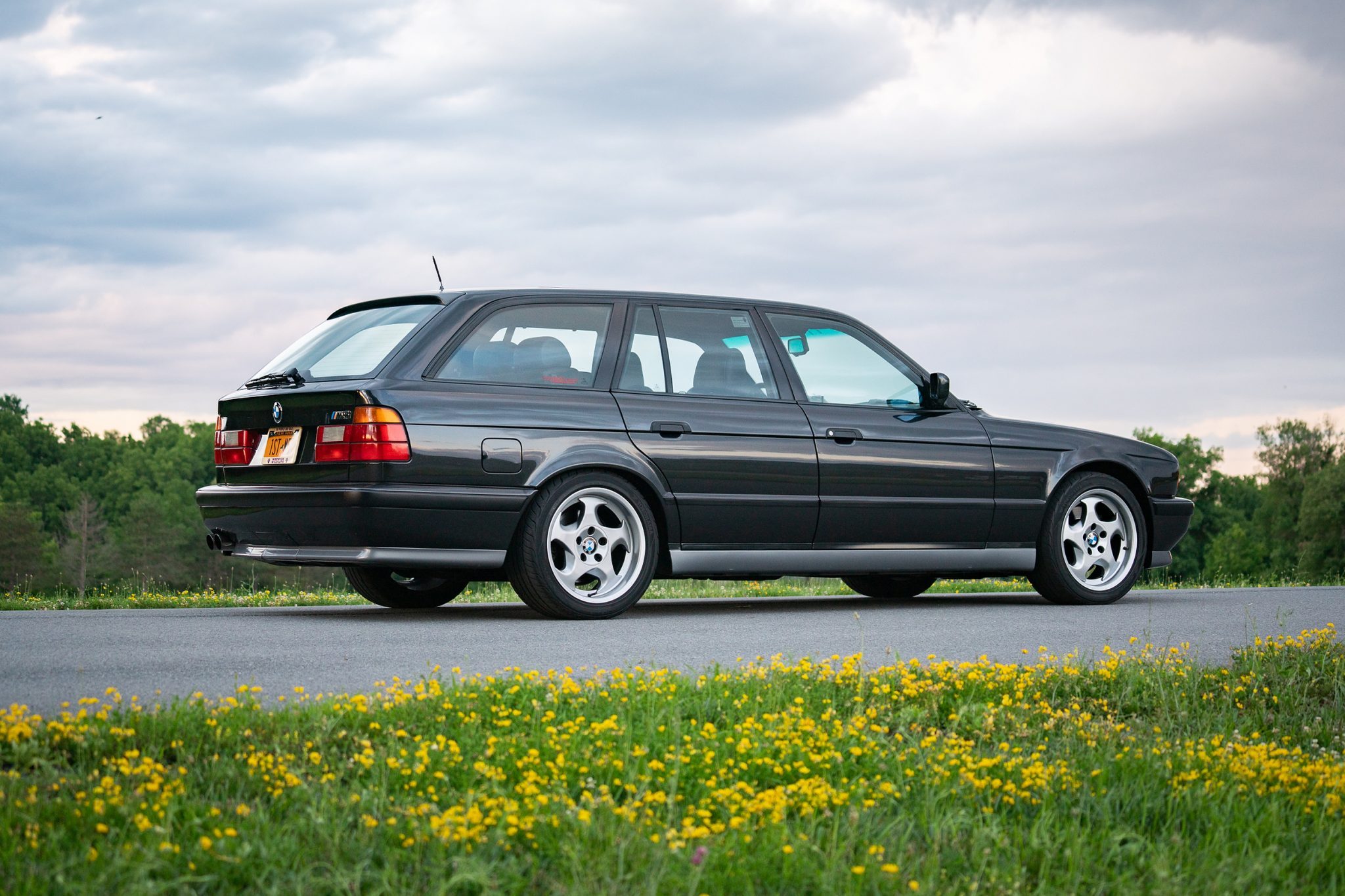
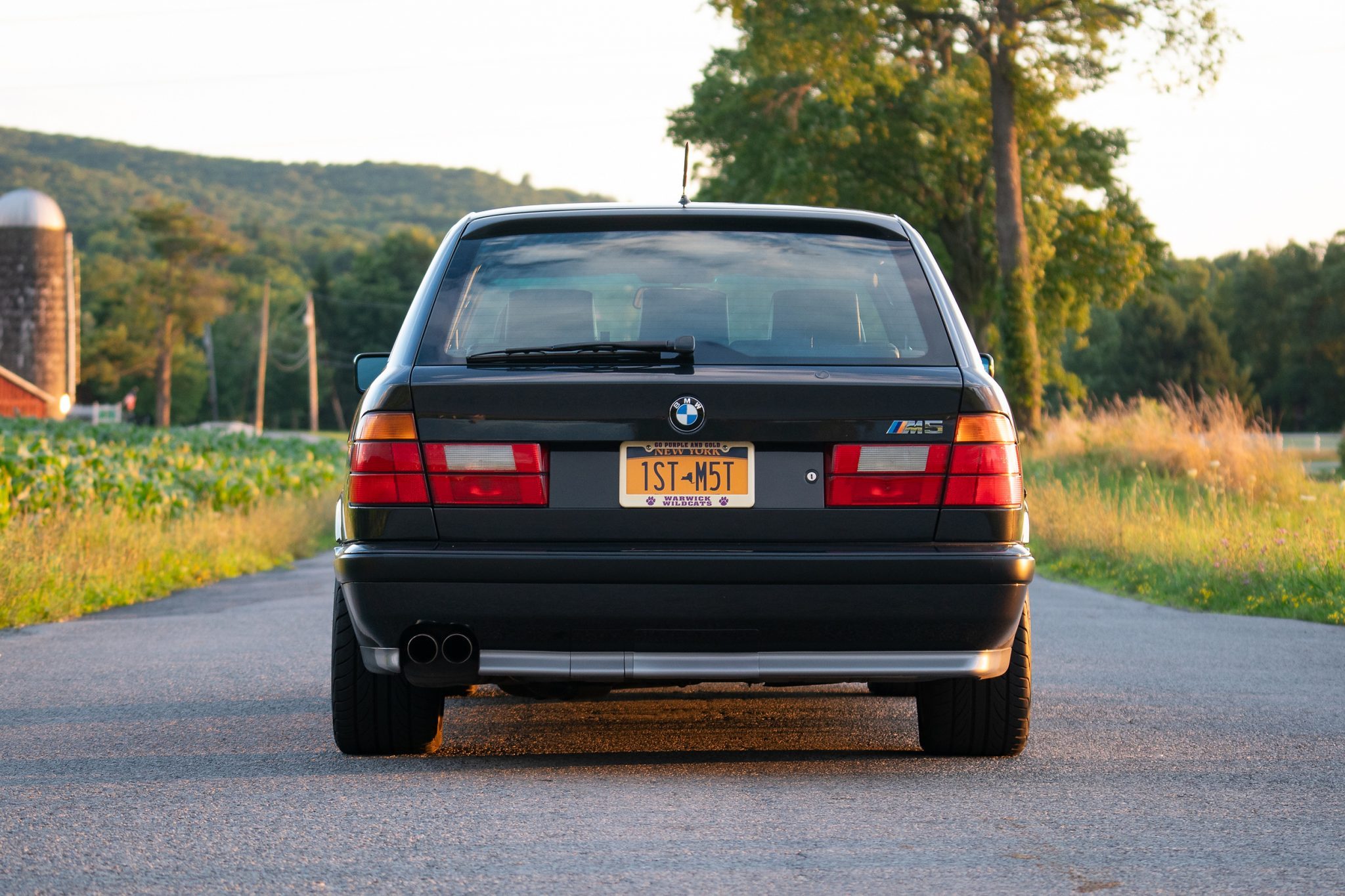
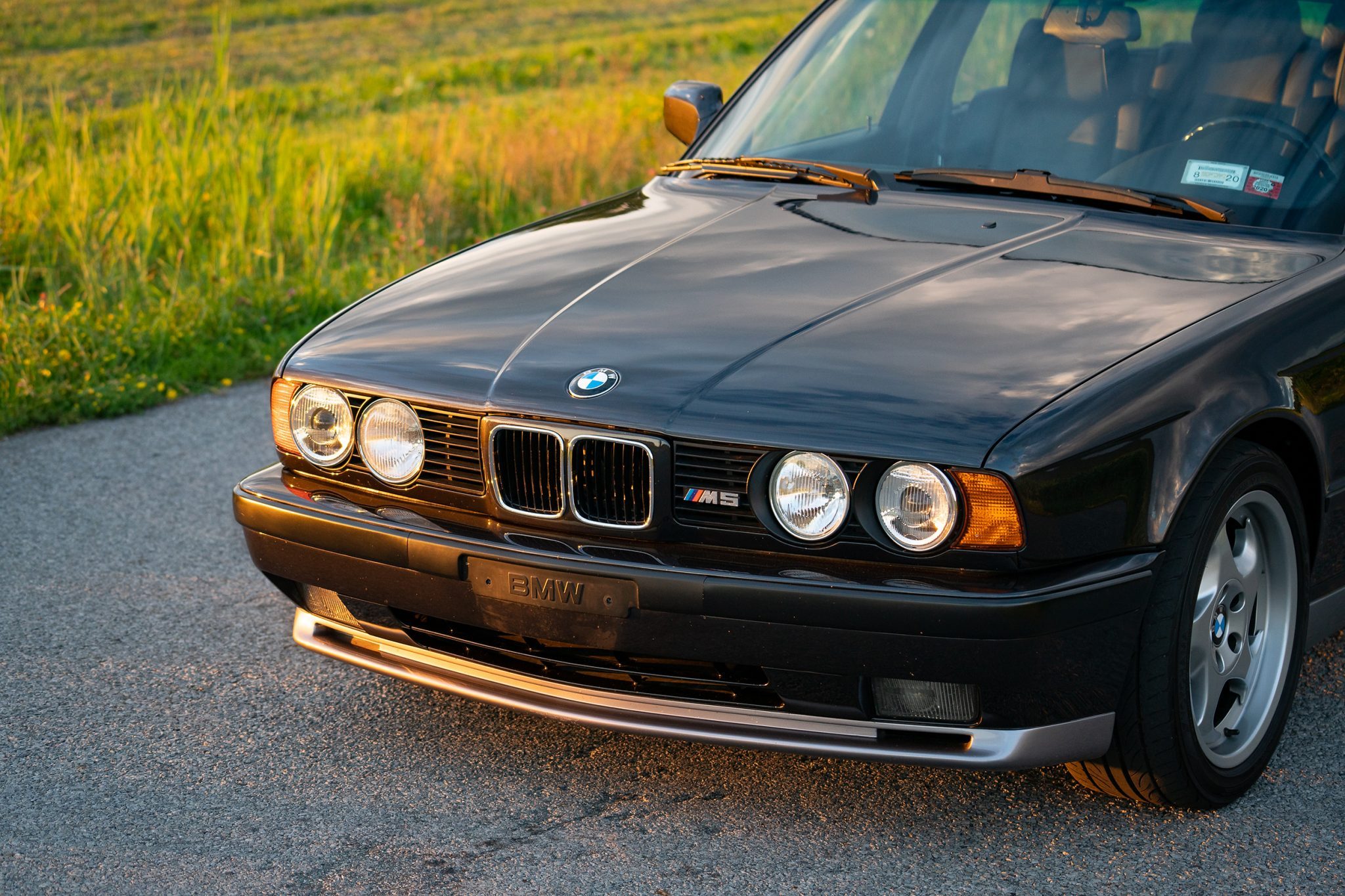
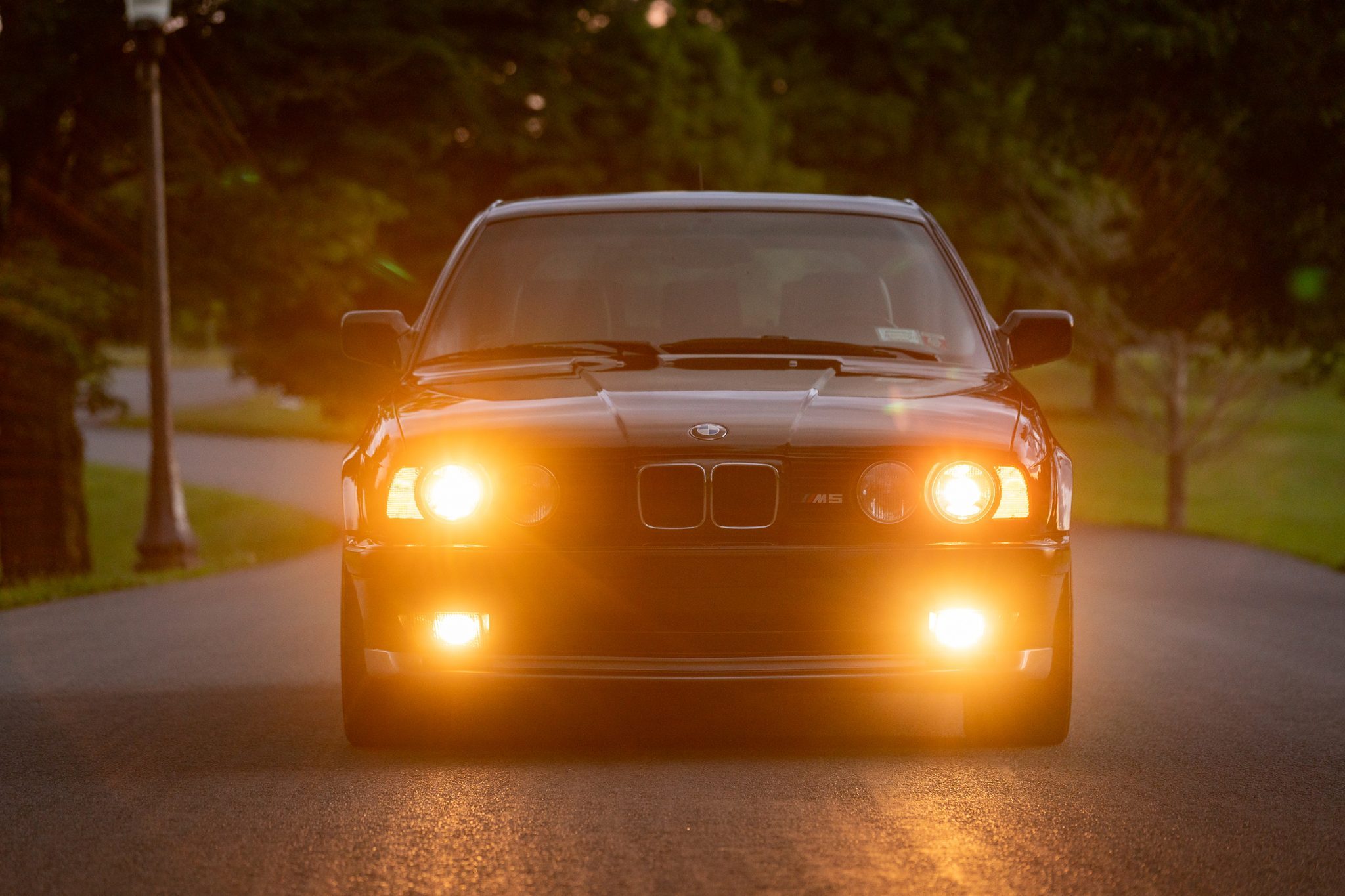
Externally, the E34 M5 3.8 was visually identical to earlier M5 models. The subtle aggressive styling came from a deep front spoiler with integrated fog lights, a kidney grille with horizontal slats, and distinctive M-forged light-alloy wheels. The side profile featured M5 badging on the C-pillar, while the rear sported a boot-mounted spoiler and quad exhaust outlets.
The overall appearance was purposeful yet elegant, maintaining the 5 Series’ executive proportions while signaling serious performance intent. Standard wheels were 8×17-inch BBS forged alloy units wearing 235/45 ZR17 Michelin Pilot Sport tires, providing excellent grip without compromising ride quality.
Most E34 M5s were finished in dark colors: black, dark blue, dark green, and various metallics. A handful received brighter shades including red and silver, though these were less common. The understated appearance suited the car’s mission as a performance sedan rather than an ostentatious exotic.
Interior
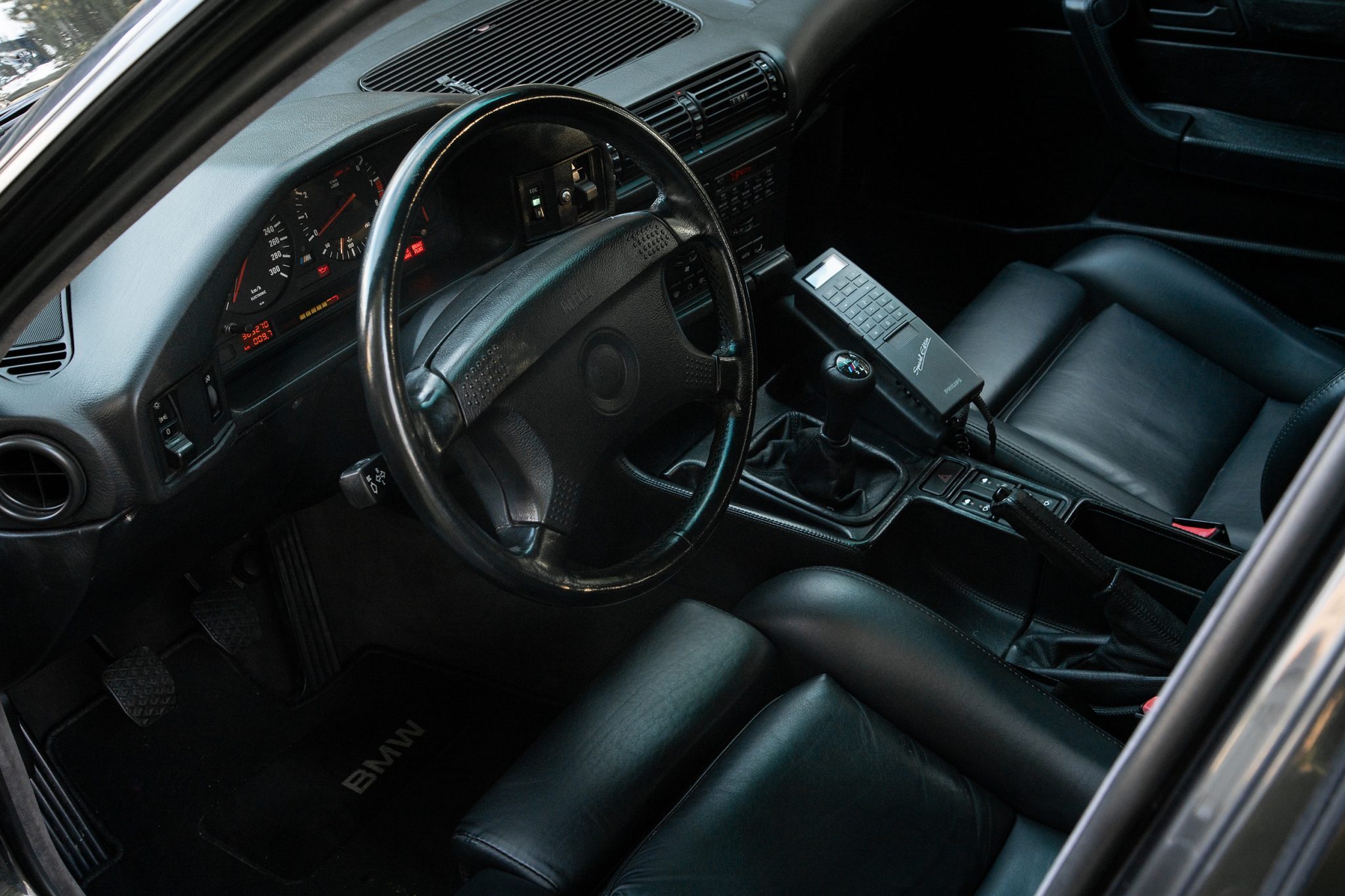
The cabin was trimmed in Nappa leather throughout with matching carpeting and headlining. Front sport seats provided excellent lateral support during hard driving while remaining comfortable for long-distance touring. Rear seats accommodated three adults, though the center passenger faced intrusion from the transmission tunnel. Power windows, central locking, and electric mirrors were standard.
The dashboard featured comprehensive instrumentation with large Veglia gauges including a tachometer redlined at 7,000 rpm, speedometer reading to 180 mph, oil pressure, water temperature, and fuel level. The instrument graphics were white on black, clearly legible from the commanding driving position.
A leather-wrapped three-spoke steering wheel faced the driver with the M logo embossed on the hub. The gear lever was a traditional manual gate with a short throw and weighted aluminum knob. Switchgear throughout was substantial and well-damped, reflecting BMW’s quality standards.
Standard equipment included automatic climate control, premium audio system, power sunroof, and navigation system. The overall ambiance combined sporting intent with genuine luxury, distinguishing the M5 from raw Italian exotics that sacrificed comfort entirely.
Specifications
- Engine: S38B38 inline six, 3,795cc (93.4mm x 78mm), DOHC per bank, four valves per cylinder
- Power: 340 bhp at 6,900 rpm
- Torque: 295 lb-ft at 4,750 rpm
- Transmission: Getrag six-speed manual, 3.15:1 limited-slip differential
- Chassis: Steel monocoque, 2,761mm wheelbase
- Suspension: MacPherson struts (front), semi-trailing arms (rear), Bilstein dampers
- Brakes: Vented discs 324mm (front), vented discs 310mm (rear), ABS
- Wheels: BBS 8×17 forged alloy, Michelin Pilot Sport 235/45 ZR17
- Weight: 1,680 kg
- Performance: 168 mph top speed (with M Drivers Package), 0-60 mph in 5.0 seconds
Competition History
The E34 M5 3.8 was designed as a road car and saw no official motorsport use. However, its performance and balanced chassis made it popular for track days and driving events. Private owners regularly campaigned M5s in club racing and track-day events, where the combination of power, handling, and reliability proved competitive against dedicated sports cars.
Production and Legacy
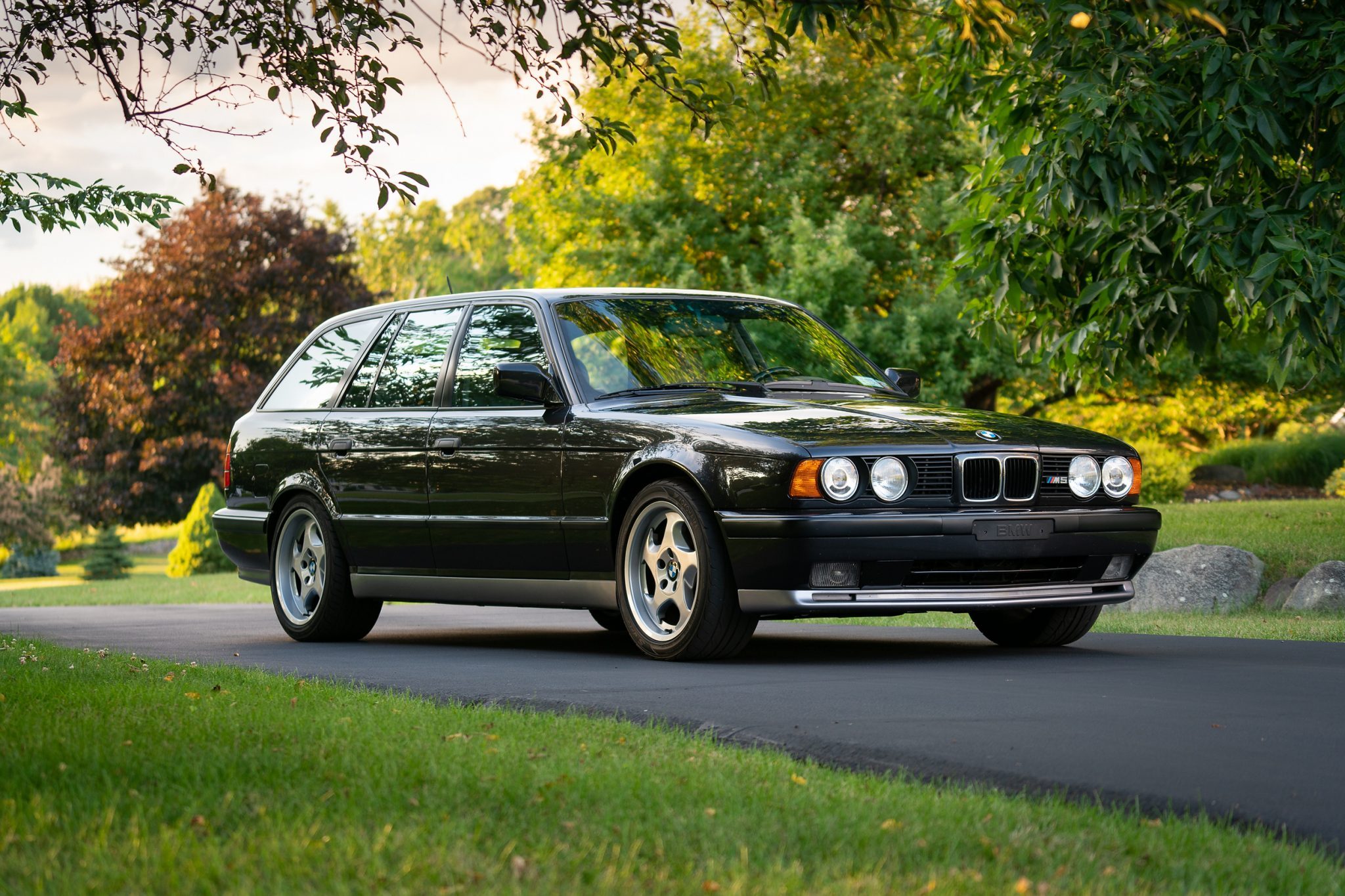
BMW built approximately 2,200 E34 M5 3.8 models between 1992 and 1998 at Munich. Each car was hand-assembled with meticulous attention to detail, reflecting BMW M Division’s commitment to quality. The 3.8-liter powered roughly 60 percent of all E34 M5 production, making it the final and most desirable variant.
The E34 M5 3.8 represented the peak of naturally aspirated super-sedan development. It proved that a traditional inline six could deliver supercar performance in a practical four-door package, that daily usability and extreme performance weren’t mutually exclusive.
Today, clean E34 M5 3.8 examples are increasingly sought after as enthusiasts recognize them as the ultimate naturally aspirated M5. The 340 horsepower, six-speed manual, and exceptional engineering created a driving experience that remains relevant decades later.
The E34 M5 3.8 closed the chapter on the original M5 platform, demonstrating BMW’s mastery of performance sedan engineering before the E39 introduced a new generation. It remains one of BMW’s greatest achievements, a naturally aspirated masterpiece that proved four-door sports cars could equal two-seat exotics in thrilling performance.