
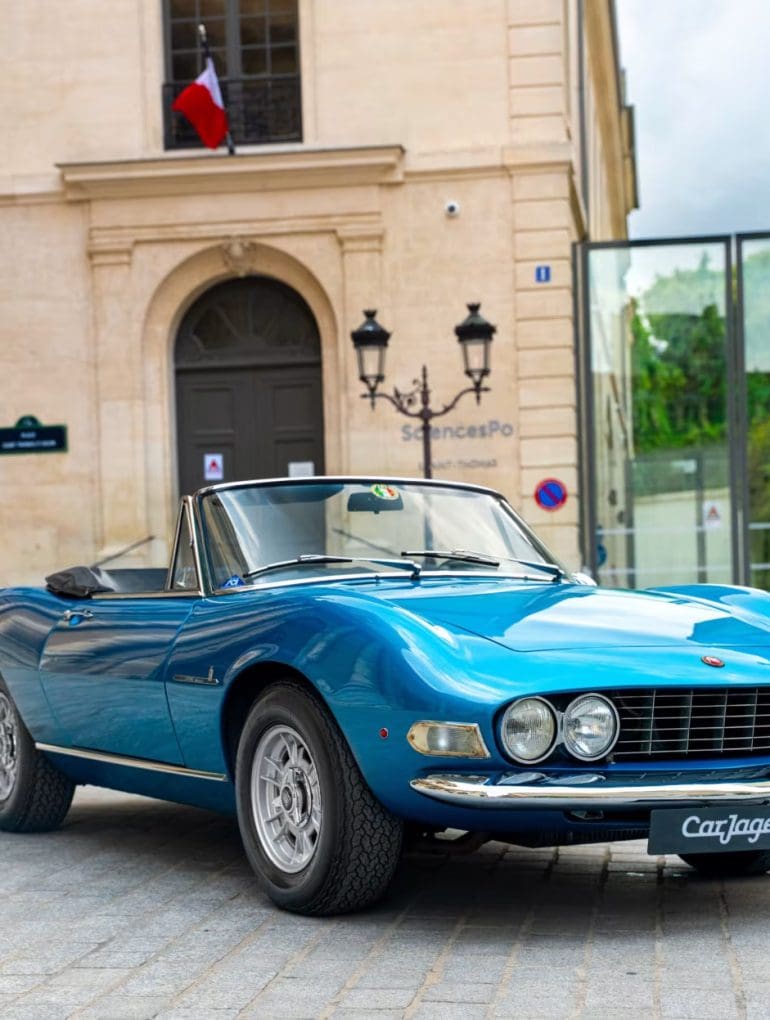

Turin, April 1966. Fiat unveiled the Dino 2000, a mid-engined sports car powered by a 2.0-liter V6 engine developed jointly with Ferrari. The engine was a derivative of Ferrari’s racing powerplant, featuring dual overhead camshafts, four valves per cylinder, and a distinctive 65-degree vee angle. Producing 160 horsepower, the compact V6 made the Dino significantly more affordable than a contemporary Ferrari while delivering genuine sports car performance. The spider body style debuted in 1966 with a removable targa roof, later complemented by a berlinetta coupe in 1968. This was Fiat’s ambitious entry into the mid-engined sports car market, proving that practical Italian engineering could combine with Ferrari’s racing heritage to create something special. Production ran from 1966 to 1973, with approximately 6,100 examples built across both body styles.
Background and Origins
Fiat chairman Gianni Agnelli wanted to establish the company’s credentials in high-performance sports cars. Rather than develop an engine independently, Fiat struck a partnership with Ferrari to create a joint V6 project. This arrangement allowed Ferrari to benefit from Fiat’s manufacturing scale, while Fiat gained access to Ferrari’s engineering expertise and racing heritage.
Development of the Dino V6 began in 1963 under the direction of Ing. Aurelio Lampredi, Ferrari’s chief engineer. The engine was designed to be compact and lightweight, suitable for mid-engine mounting in a small-displacement sports car. The 65-degree vee angle created a narrow engine package while maintaining good breathing efficiency.
Fiat’s chief designer Giorgetto Giugiaro penned the bodywork, creating a diminutive mid-engined coupe with charming proportions. The spider body style, developed by Pininfarina, debuted at the 1966 Geneva Motor Show with a removable targa roof providing open-air motoring. The Dino 2000 represented Fiat’s most ambitious sports car project, combining affordable pricing with genuine performance.
Production began at Fiat’s Turin factory in 1966, with early cars featuring the 160 horsepower V6. Approximately 1,800 spiders were built before the engine was enlarged to 2.4 liters in 1969, increasing output to 180 horsepower. The berlinetta coupe, introduced in 1968, added another body style to the range.
Design and Engineering
The Dino spider was based on a tubular steel spaceframe with a 2,400mm wheelbase. The structure provided excellent rigidity while keeping weight to approximately 1,100 kilograms. The mid-engine layout positioned the V6 transversely behind the cabin, with the gearbox mounted ahead of it for weight centralization.
Suspension used unequal-length double wishbones at all four corners with coil springs and telescopic dampers. The geometry was optimized for balanced, predictable handling characteristics suitable for road driving rather than extreme track performance. Anti-roll bars front and rear controlled body roll effectively.
Braking was by Girling disc brakes measuring 280mm front and 260mm rear with dual-circuit hydraulics and power assistance. The system provided adequate stopping power for the Dino’s modest performance, though later cars received upgraded calipers.
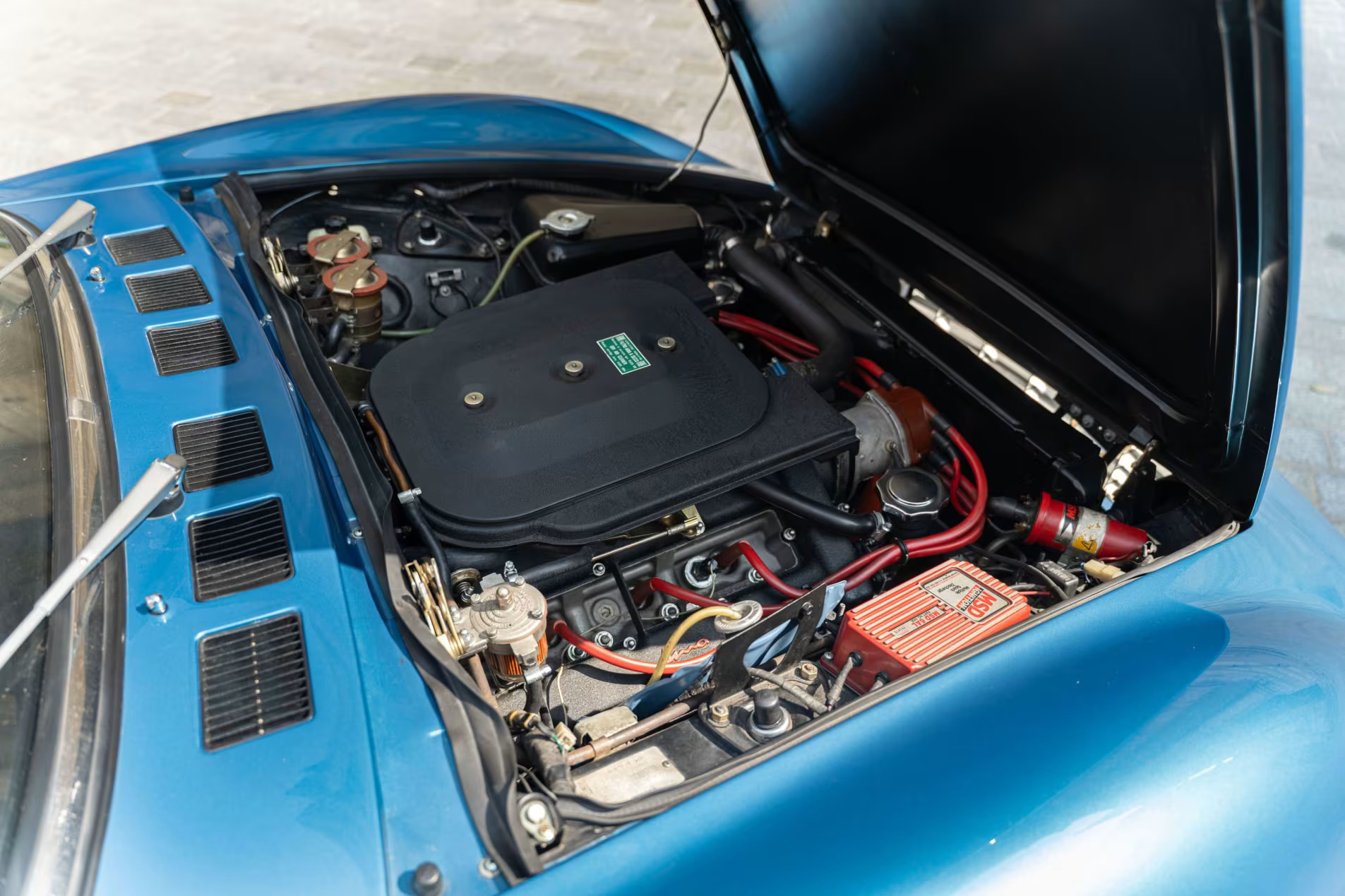
The engine was the Dino V6, a collaboration between Fiat and Ferrari. Displacing 1,987cc with an 80mm bore and 66mm stroke, this all-aluminum engine featured dual overhead camshafts per bank, four valves per cylinder, and dry-sump lubrication. The 65-degree vee angle created a narrow, compact package ideal for mid-engine mounting.
Two Weber 42 DCNF twin-choke carburetors fed the induction system through a shared intake manifold. With an 8.8:1 compression ratio, output was 160 horsepower at 7,000 rpm and 138 lb-ft at 4,500 rpm. The rev-happy engine encouraged drivers to work the gearbox, though modest torque delivery meant planning was necessary for spirited driving.
Transmission was a five-speed manual, initially sourced from Fiat’s road car programs before being upgraded to a stronger unit. The gear ratios were well-spaced, with a 4.1:1 final drive through a limited-slip differential.
Styling
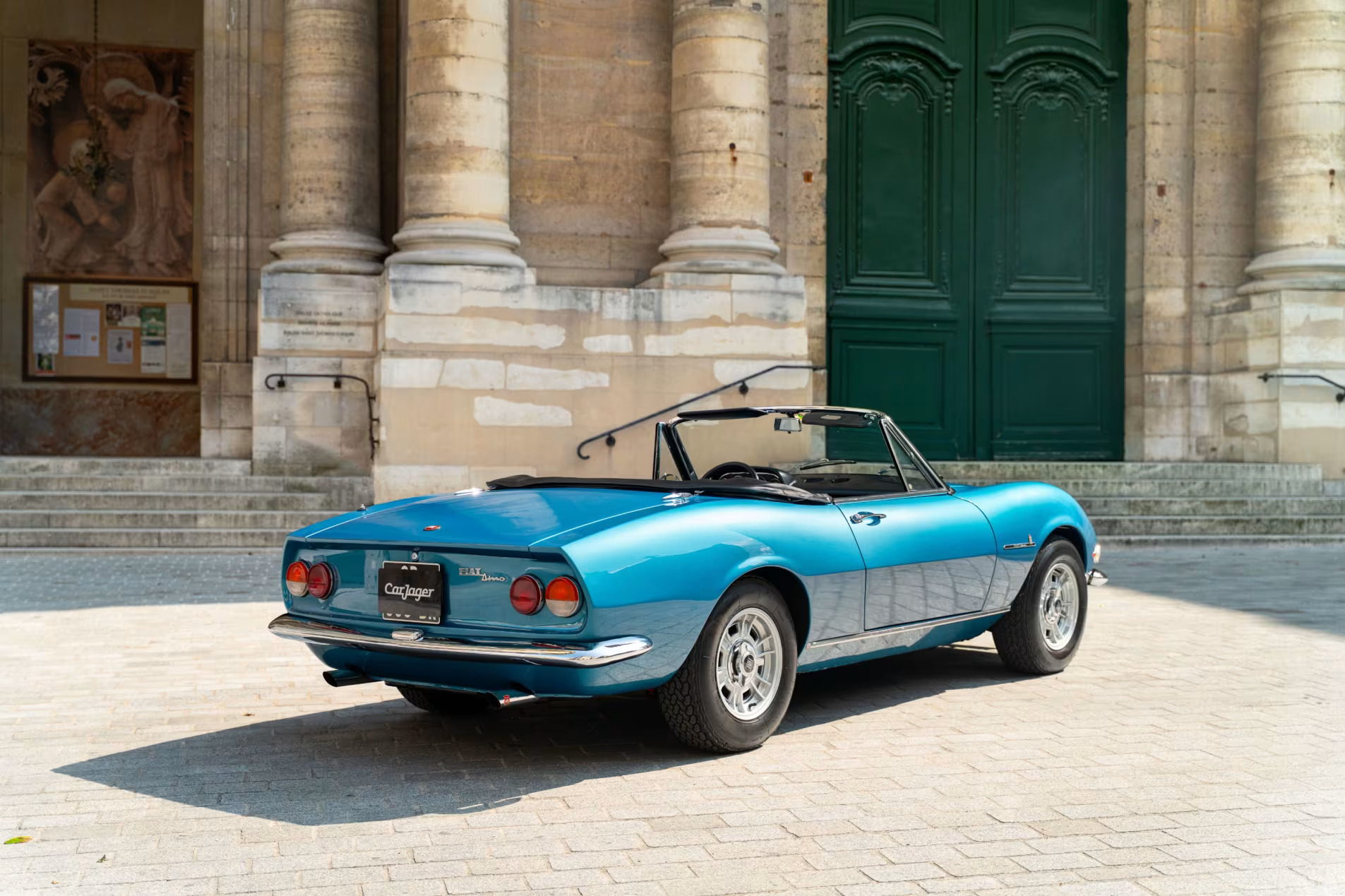
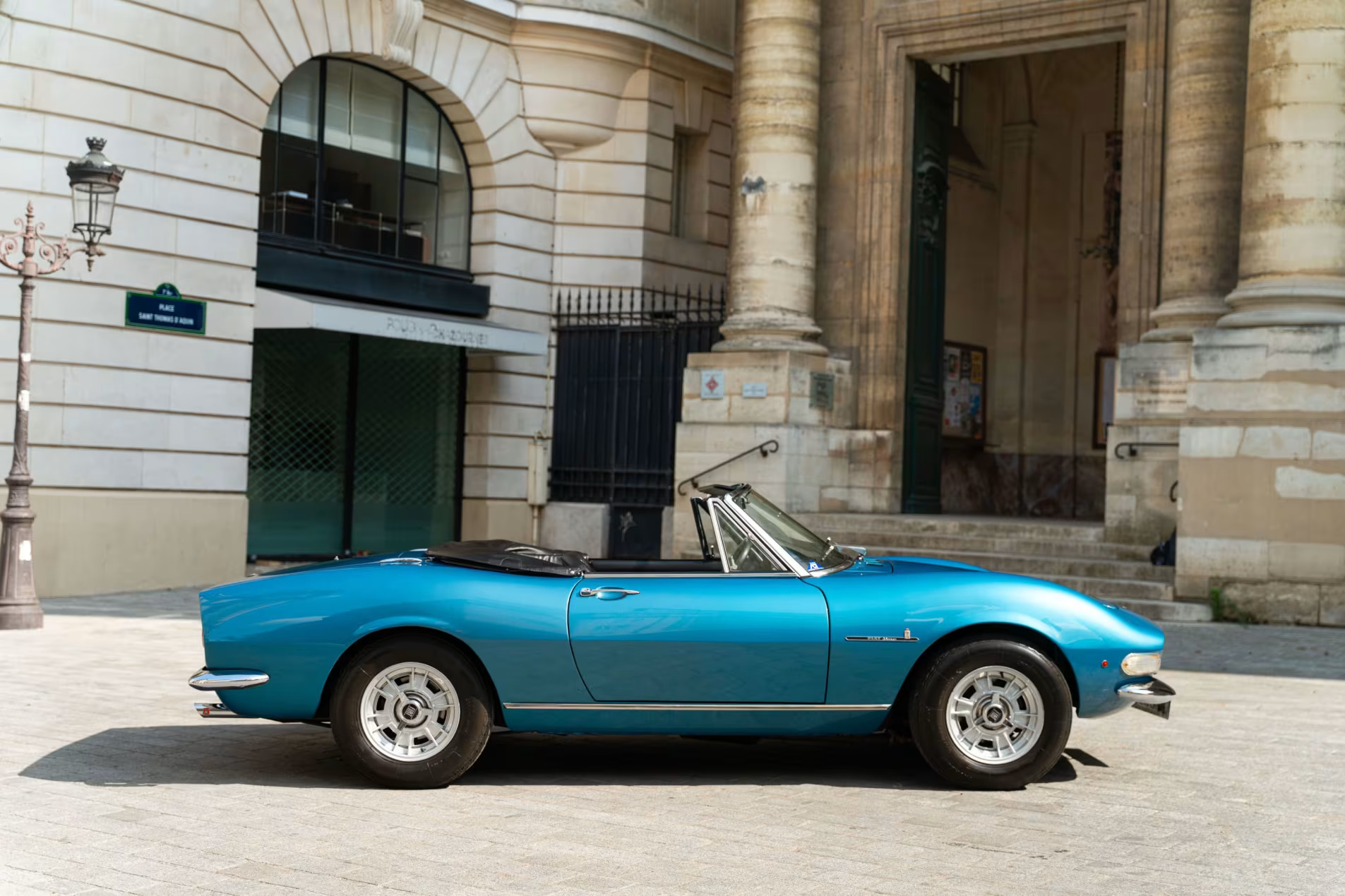
Giugiaro’s design was a masterpiece of compact proportions. The spider featured a low nose, graceful roofline, and short rear deck creating elegant proportions. Pop-up headlights kept the nose clean when retracted. The targa roof was removable, with a T-bar structure and fixed rear window providing rollover protection while allowing open-air motoring.
The side profile was dominated by the wide stance and pronounced rear fender flares accommodating the mid-mounted engine. Small quarter windows behind the doors provided ventilation and light. The roofline featured clean, graceful curves that flowed to the tail.
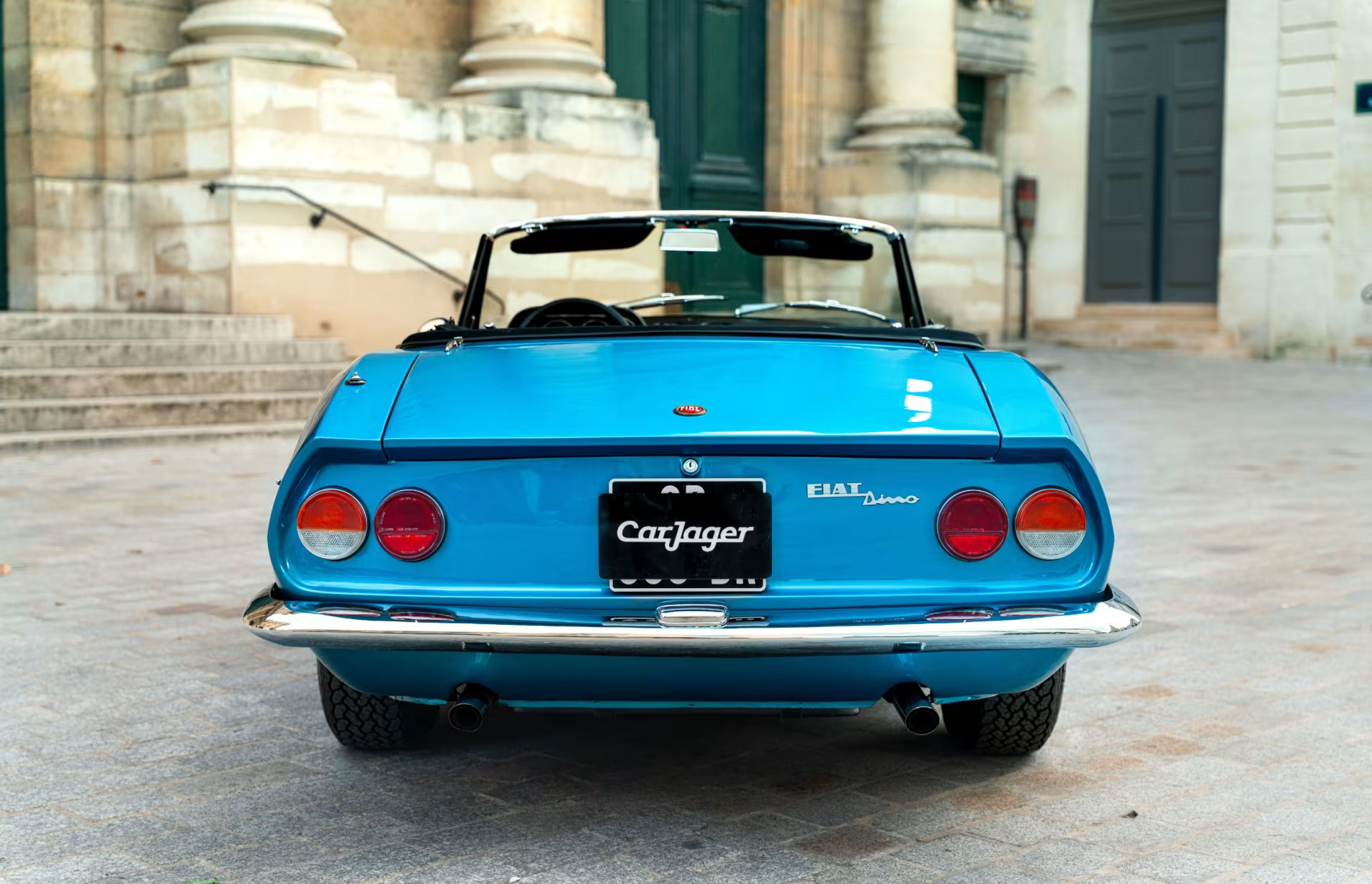
At the rear, a near-vertical rear window sat above a flat engine cover with louvers for heat extraction. The tail was abrupt but clean, with round taillights integrated into body-colored bumpers. Chrome trim was minimal, reflecting the car’s sporting mission.
Body panels were steel, hand-fitted over the tubular spaceframe. Build quality was excellent despite Fiat’s mass-production background. Standard wheels were 14-inch Borrani wire units or cast alloy alternatives, wearing 165 SR14 or 185/70 SR14 tires depending on specification.
Color choices included traditional Italian shades: Rosso Corsa red, Grigio Argento silver, Blu Scuro blue, and various metallics. Most spiders were finished in red, creating instant visual association with Ferrari’s racing heritage.
Interior
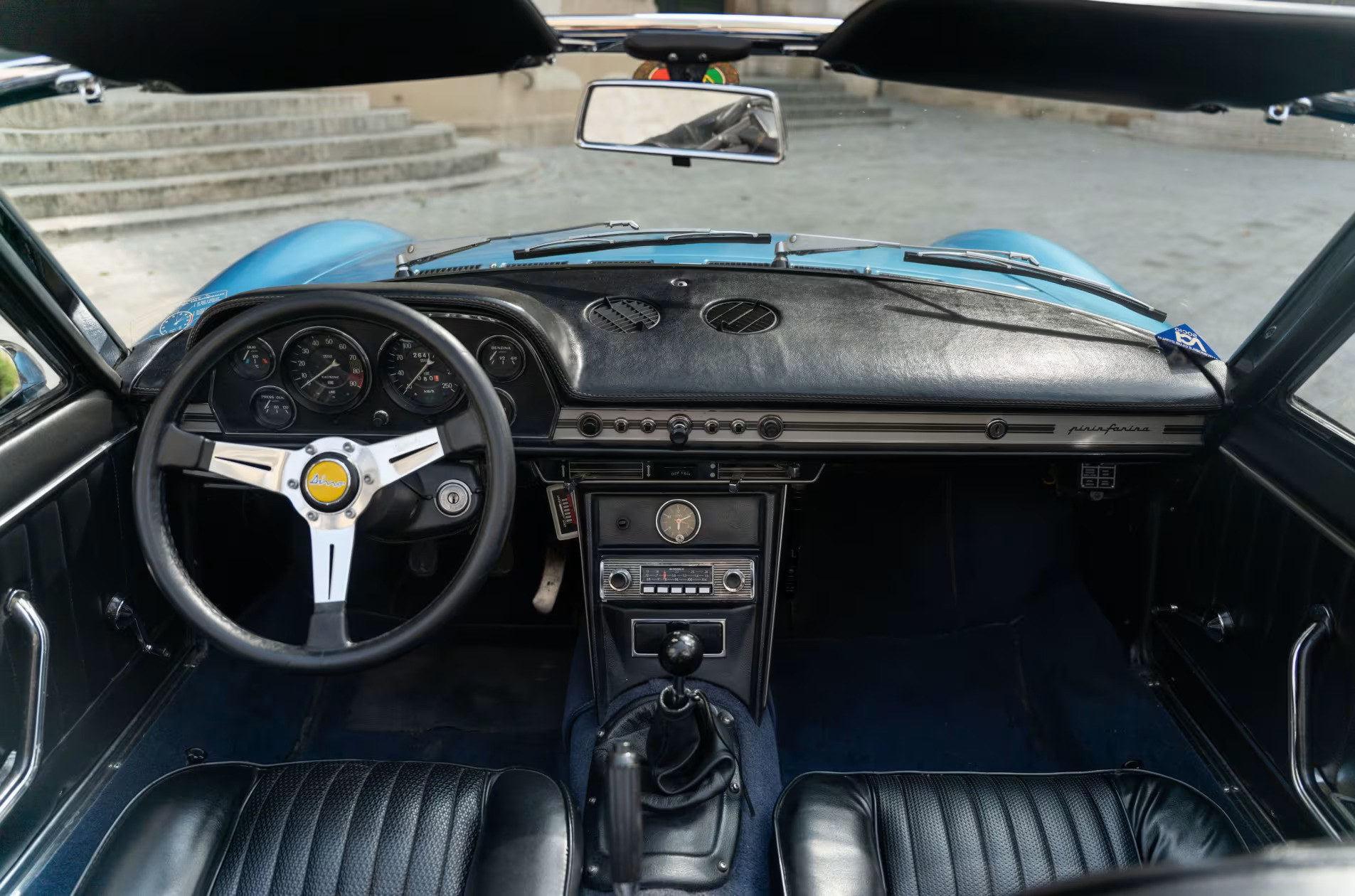
The cabin was trimmed in vinyl with cloth accents, reflecting the car’s affordable positioning. Two individual bucket seats provided adequate support for spirited driving. The driving position was low and forward, with excellent visibility forward but limited rearward sight.
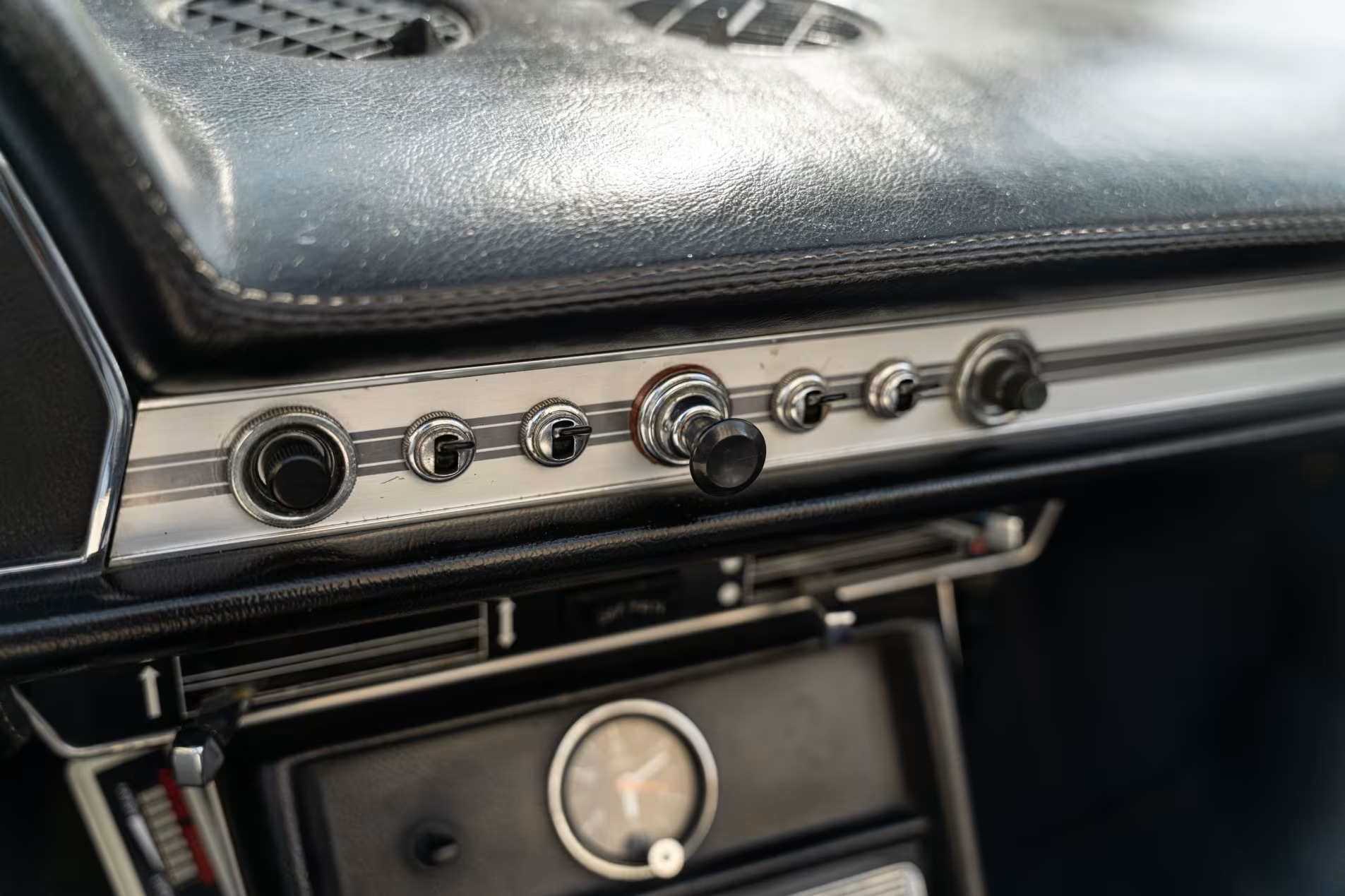
The dashboard featured simple but comprehensive instrumentation with Veglia gauges including a tachometer, speedometer, oil pressure, water temperature, and fuel level. A wood-rimmed steering wheel faced the driver with the Fiat badge at its center.
The gear lever sprouted from the transmission tunnel with a light, mechanical action. Standard equipment included power windows, electric mirrors, and a basic heater. Air conditioning was not available, reflecting the car’s modest positioning. The overall atmosphere was purposeful and unpretentious, prioritizing driving engagement over luxury.
Specifications
- Engine: Dino V6, 1,987cc (80mm x 66mm), DOHC per bank, four valves per cylinder
- Power: 160 bhp at 7,000 rpm
- Torque: 138 lb-ft at 4,500 rpm
- Carburation: Two Weber 42 DCNF twin-choke carburetors
- Transmission: Five-speed manual, 4.1:1 limited-slip differential
- Chassis: Tubular steel spaceframe, 2,400mm wheelbase
- Suspension: Double wishbones (front and rear)
- Brakes: Girling discs 280mm (front), 260mm (rear)
- Wheels: Borrani 14-inch wire or alloy, 165 SR14 or 185/70 SR14
- Weight: 1,100 kg
- Performance: 125 mph top speed, 0-60 mph in 8.3 seconds
Competition History
The Dino 2000 was designed as a road car and saw minimal official competition use. However, several owners entered their cars in club racing and hillclimb events, where the combination of mid-engine handling and Ferrari V6 character proved competitive in their class.
Production and Legacy
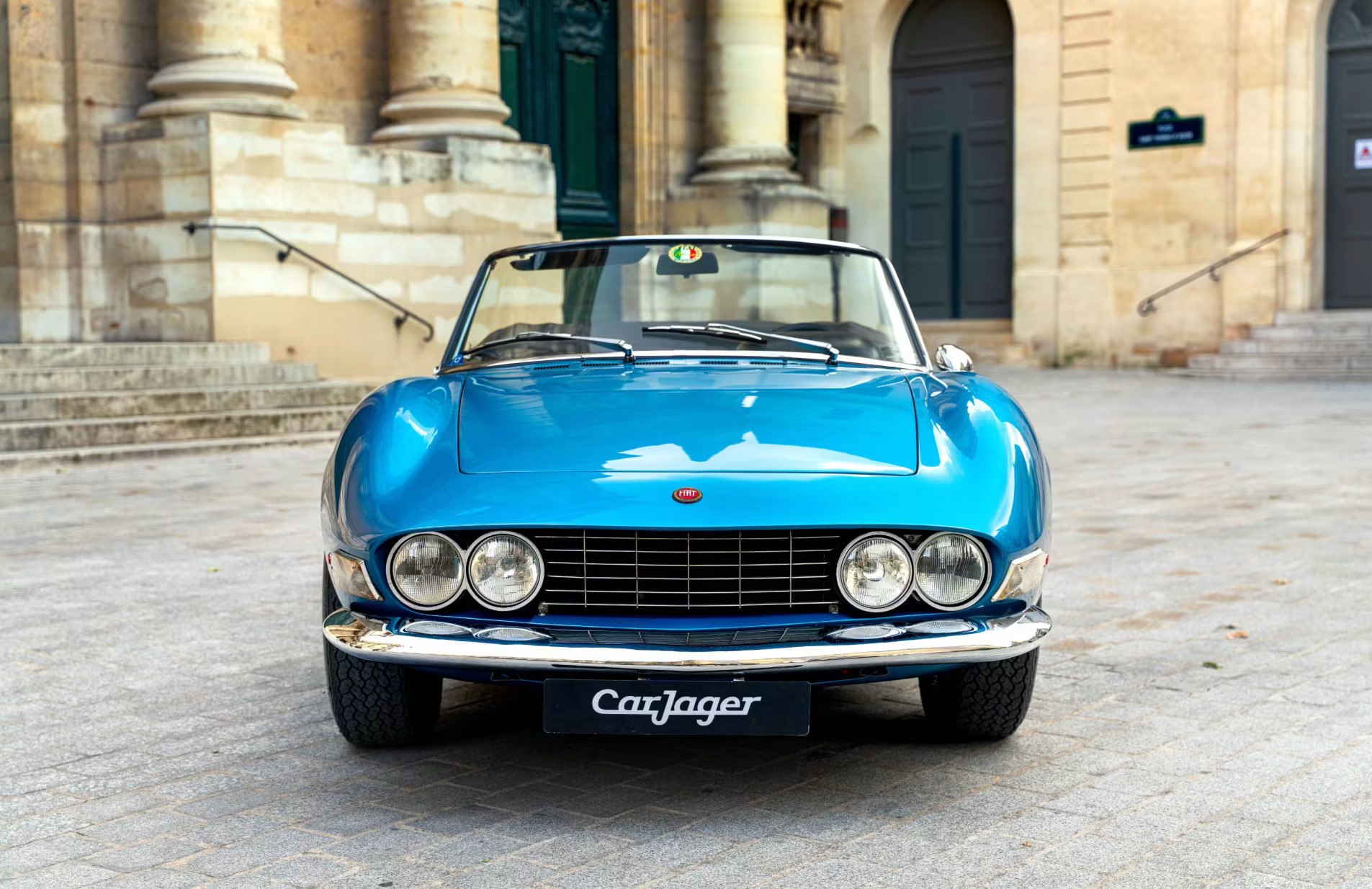
Fiat built approximately 1,800 Dino 2000 spiders between 1966 and 1969, followed by approximately 1,100 2.4-liter variants until 1973. An additional 2,400 berlinetta coupes were produced, bringing total production to approximately 5,300 cars. Production took place at Fiat’s Turin factory, with final assembly at Pininfarina for the spider variant.
The Dino established Fiat’s credentials as a serious sports car manufacturer. It proved that affordable Italian engineering could deliver genuine performance when combined with Ferrari’s racing heritage and Giugiaro’s design genius.
Today, Dino spiders are increasingly sought after as affordable entry points into mid-engine sports car ownership. The combination of Ferrari engineering, Fiat practicality, and affordable pricing created something unique in automotive history.
The Fiat Dino represented a different era, when manufacturers could afford to build low-volume sports cars for enthusiasts willing to accept modest power and raw driving experiences. The 2000 spider remains one of the most charming sports cars ever produced, proof that performance and sophistication don’t require excessive horsepower.