
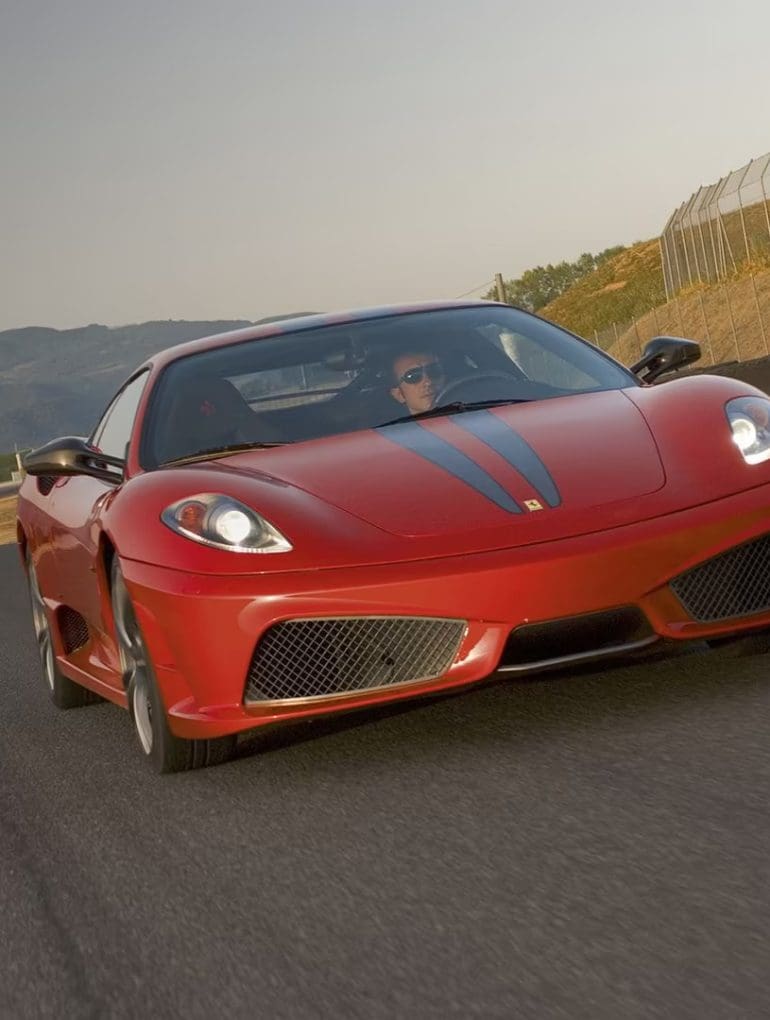

Frankfurt Motor Show, September 2007. Michael Schumacher unveiled the Ferrari F430 Scuderia, a track-focused evolution of the already formidable F430 that represented Maranello’s ultimate expression of naturally aspirated V8 performance. The name “Scuderia” honored Ferrari’s legendary racing division, signaling the car’s racing-derived engineering and uncompromising performance mission. The 4.3-liter naturally aspirated V8 produced 510 horsepower at 8,500 rpm and 470 N·m of torque, representing a 20 horsepower increase over the standard F430 achieved through revised engine management and optimized breathing. More significantly, the Scuderia weighed exactly 100 kilograms less than the standard F430, creating an exceptional 2.45 kg/hp power-to-weight ratio. This was Ferrari celebrating mechanical purity: lightweight construction, high-revving naturally aspirated power, and sophisticated F1-derived technology delivered in a barely civilized track machine. The car could accelerate from 0 to 60 mph in less than 3.6 seconds while achieving 199 mph, establishing the Scuderia as one of the finest mid-engine V8 supercars ever created. Production ran from 2007 through 2009, with estimates suggesting between 1,500 and 2,500 examples built, establishing the Scuderia as a genuinely exclusive performance car among serious collectors and track enthusiasts.
Background and Origins
The F430 Scuderia emerged directly from Ferrari’s racing program experience, succeeding the earlier 360 Challenge Stradale as the brand’s most performance-oriented road car. When competitors like Porsche introduced the GT2 and Lamborghini developed the Gallardo Superleggera, Ferrari recognized the need for an even more extreme F430 variant targeting customers who prioritized circuit performance and driving engagement over luxury appointments.
Development involved Michael Schumacher’s direct input, the seven-time Formula 1 World Champion lending his expertise in chassis tuning and suspension optimization. His involvement wasn’t merely promotional; Schumacher tested multiple suspension configurations and provided detailed feedback regarding handling balance, turn-in response, and mid-corner stability characteristics. The resulting setup reflected Schumacher’s preferences for minimal body roll and responsive steering feedback, characteristics that translated beautifully to road-going performance despite the car’s extreme nature.
The engine received modest but meaningful enhancements over the standard F430 unit. Revised intake and exhaust systems improved breathing efficiency, while engine management software was completely reprogrammed for the Scuderia’s specific requirements. The increased 510 horsepower represented not a displacement increase but rather optimization of the existing 4.3-liter architecture through more aggressive tuning and precision fuel injection timing. The result was 20 additional horsepower without sacrificing reliability or daily usability for those brave enough to subject the car to regular driving.
Design and Engineering
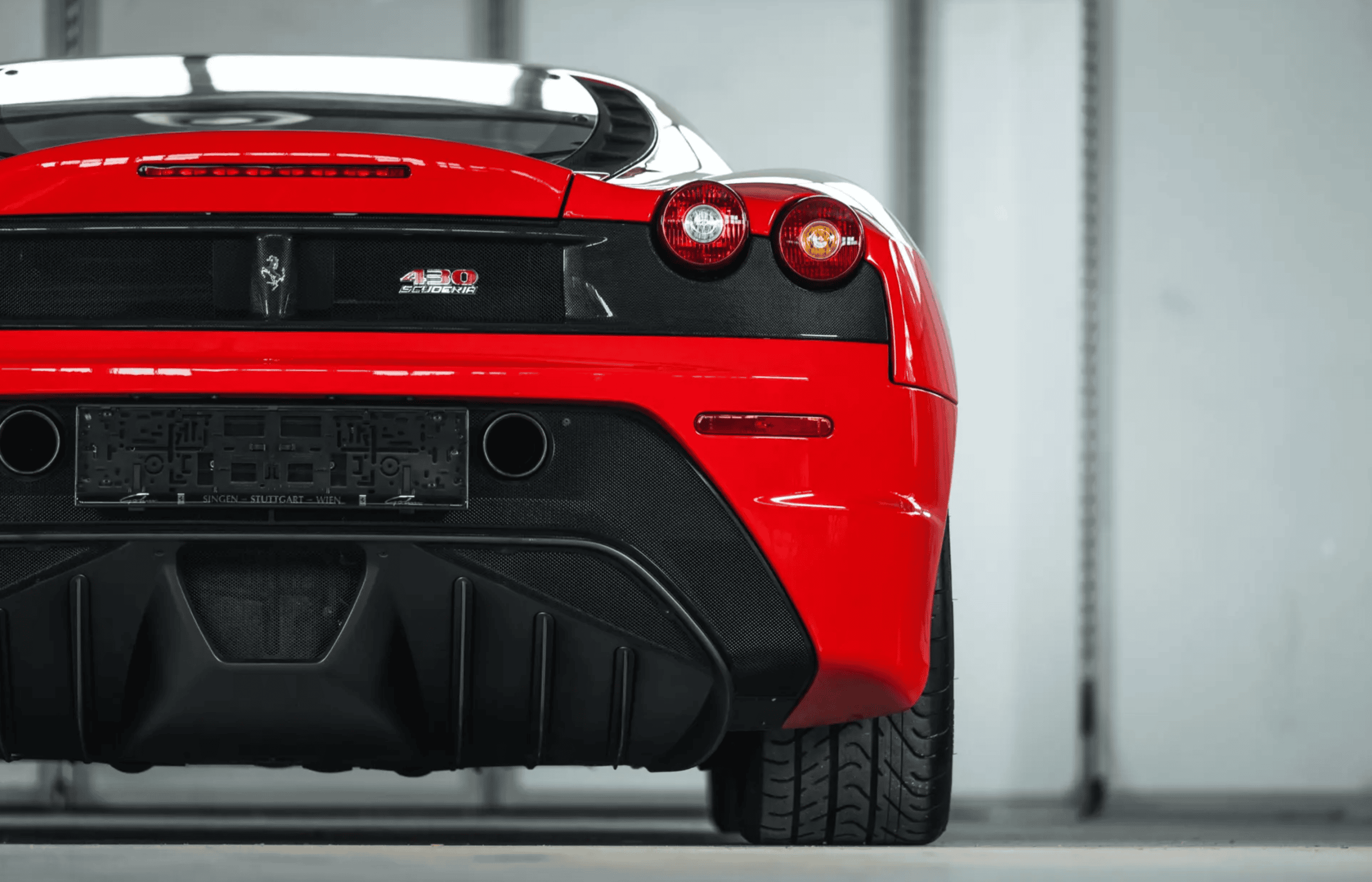
The Scuderia utilized the same aluminum chassis foundation as the F430 but with substantial weight reduction throughout. The suspension was comprehensively revised with stiffer spring rates and revised damping calibration optimized specifically for circuit driving. The car was lowered 15mm, improving aerodynamic efficiency while maintaining adequate suspension travel. Adjustable anti-roll bars provided multiple compliance settings, allowing customers to fine-tune handling balance for different track conditions and driving styles.
Braking was significantly enhanced compared to the standard F430, with carbon-ceramic discs measuring 370mm front and 330mm rear featuring larger calipers and revised brake line routing for improved modulation. The composite brake material could withstand extreme temperatures exceeding 1,000 degrees Celsius, essential for aggressive track driving without thermal fade degradation. ABS and traction control were standard, with the latter combining Ferrari’s F1-Trac system with the E-CD electronic differential, providing precise torque distribution optimization.
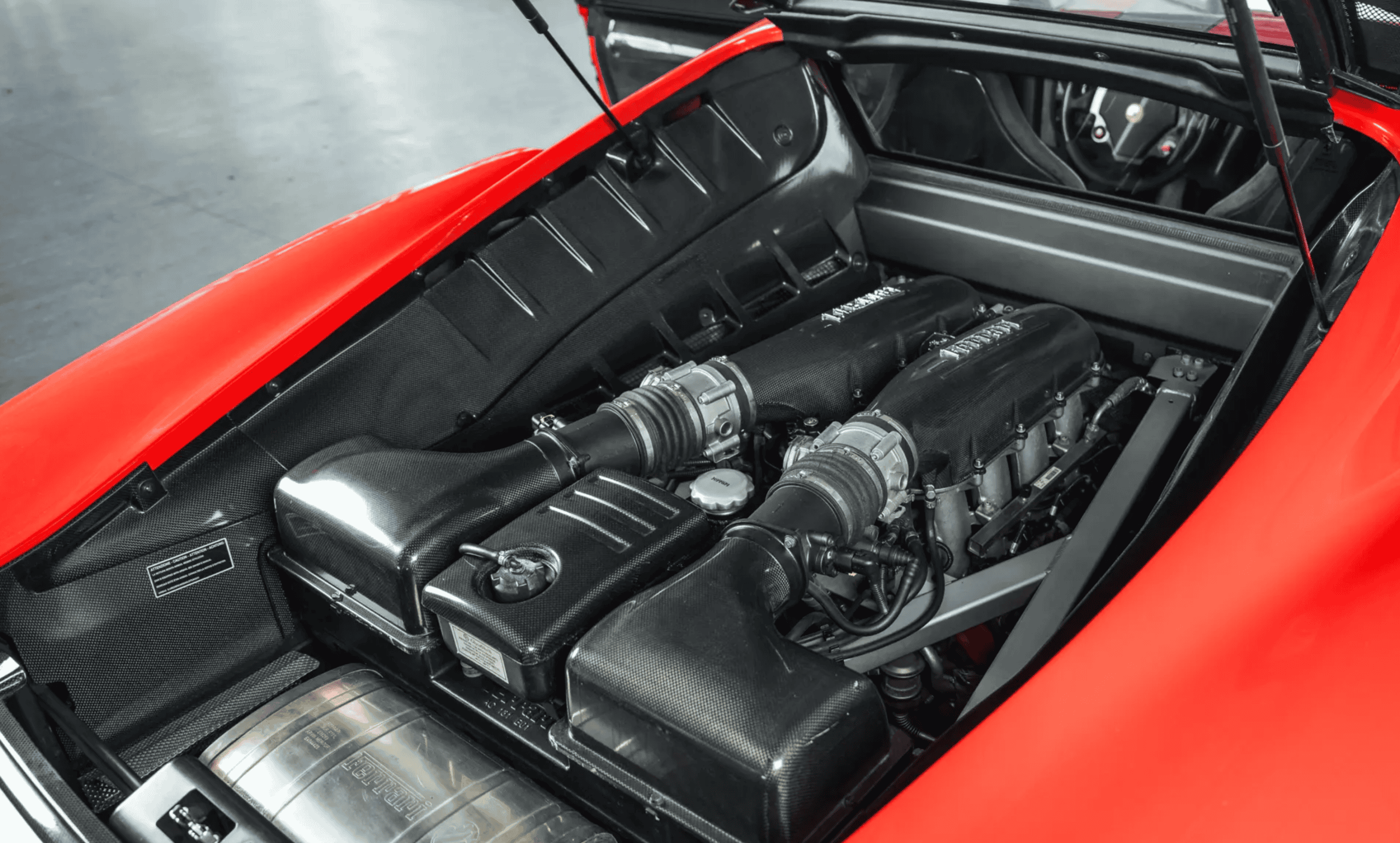
The naturally aspirated 4.3-liter V8 retained its fundamental configuration—90-degree angle, dual overhead camshafts per bank, four valves per cylinder—while receiving aggressive performance optimization. The dry-sump lubrication system allowed the engine to sit lower in the chassis, improving weight distribution and center-of-gravity positioning. Compression ratio remained at 11.0:1, a moderate specification reflecting reliability priorities alongside performance ambitions. With 510 PS available at 8,500 rpm, the engine emphasized high-revving character and linear power delivery rather than turbo-lag-prone forced induction.
The F1 Superfast2 transmission represented a genuine performance enhancement over the standard F430’s F1 unit. Gear changes occurred in 60 milliseconds, considerably faster than the standard F430’s 150-millisecond shift times, providing perceptible improvement during aggressive driving sequences. The clutch remained engaging and notoriously difficult to modulate smoothly, a characteristic that rewarded precision inputs while punishing careless throttle management, particularly in traffic.
Styling
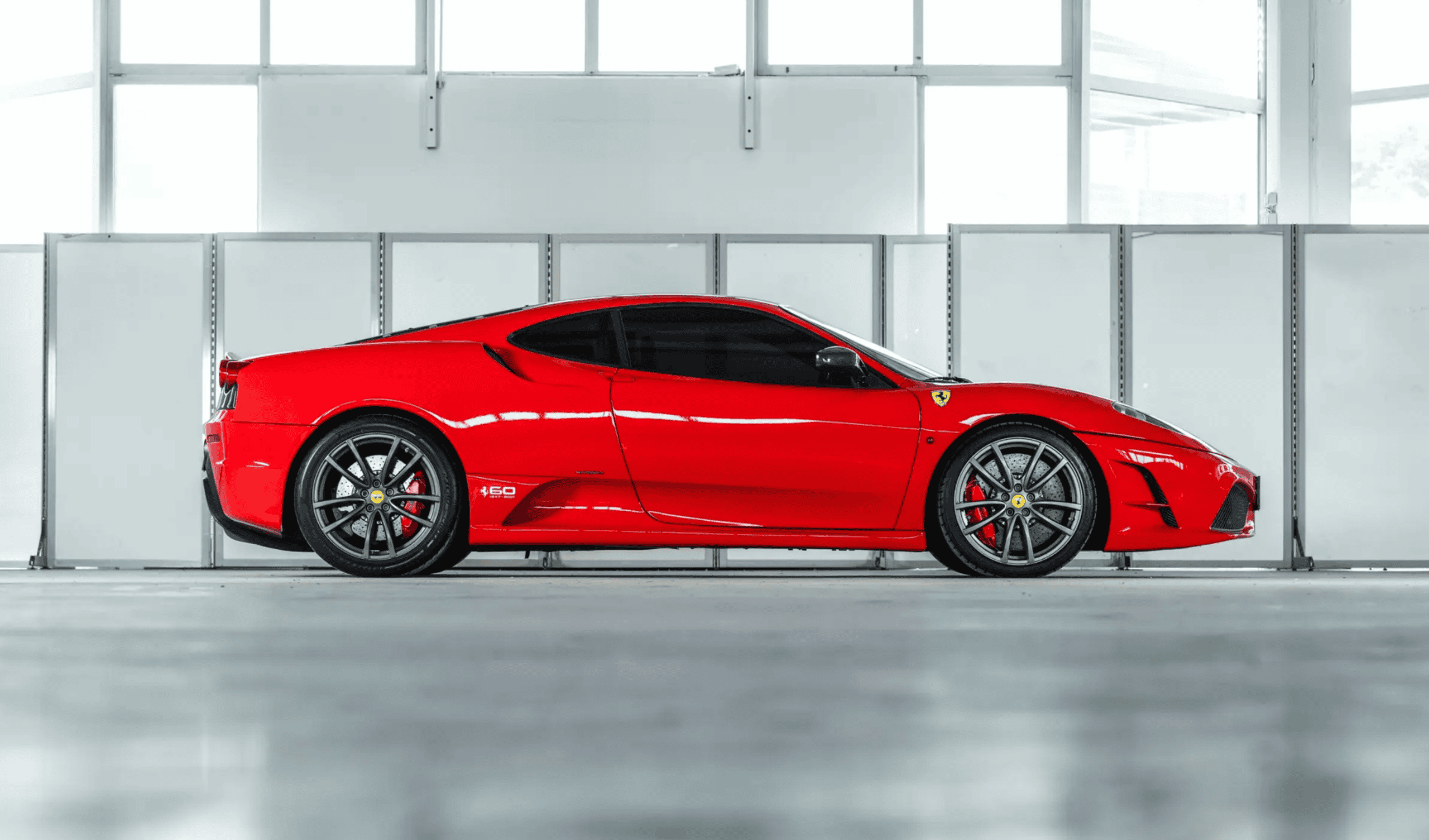
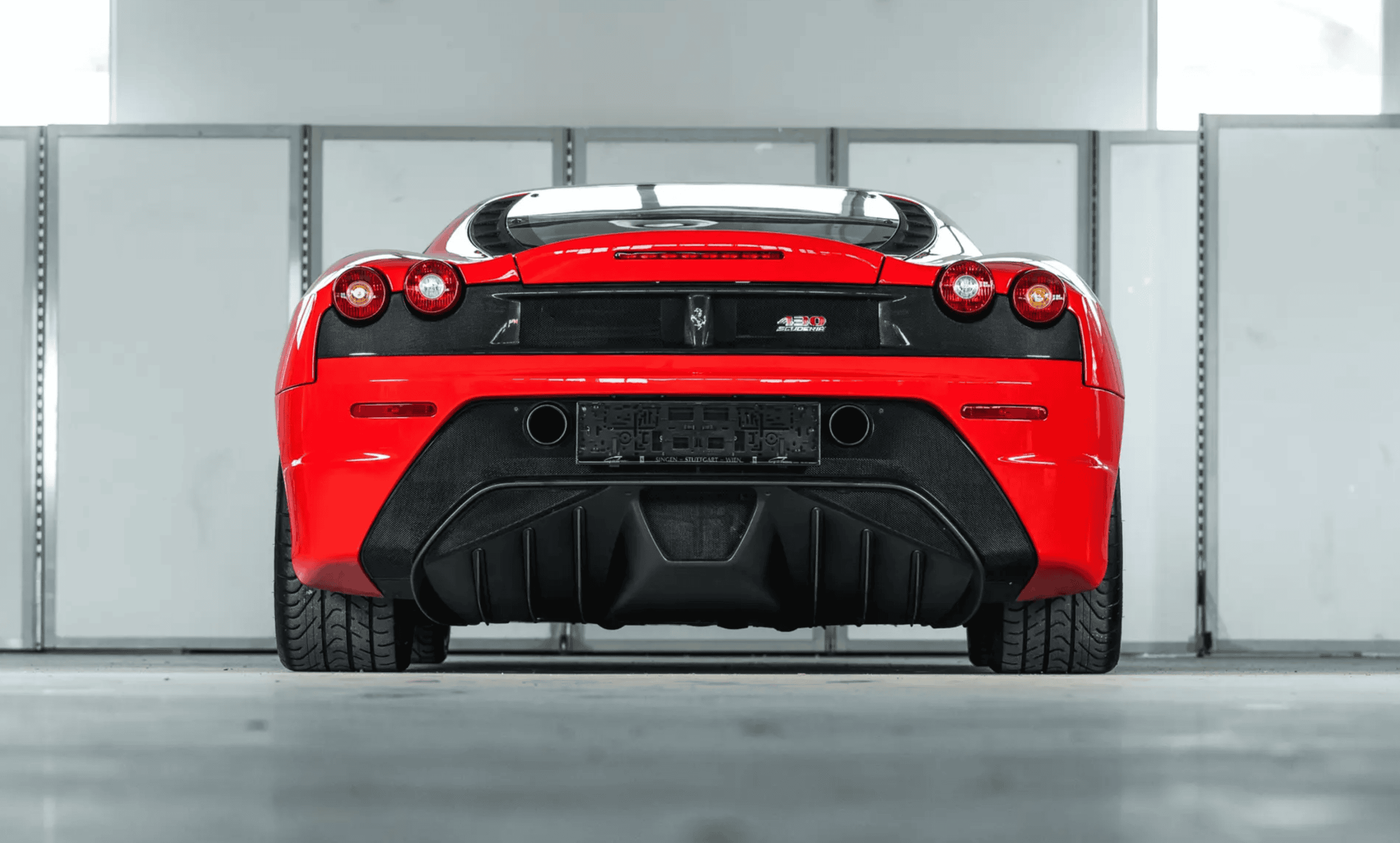
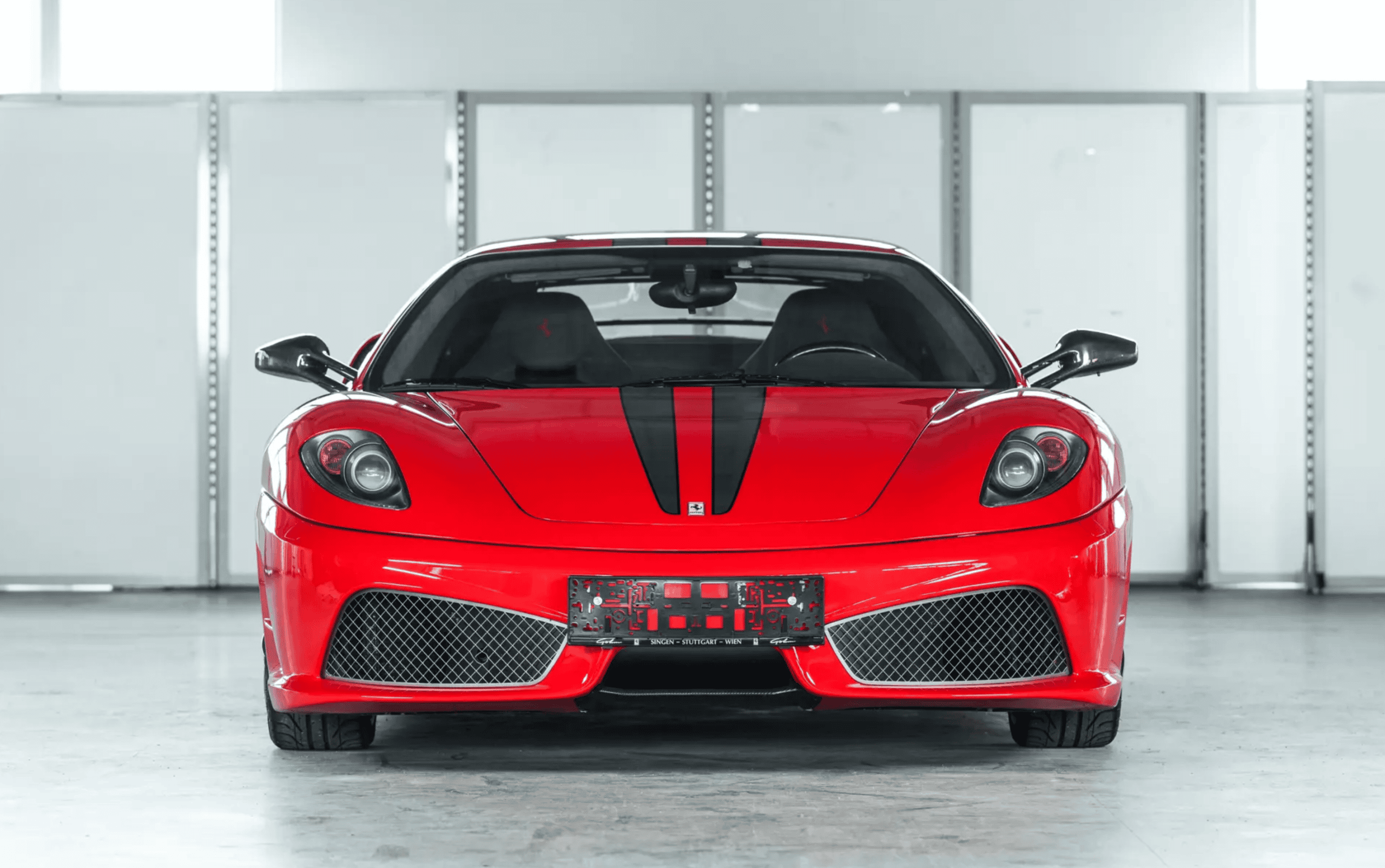
Pininfarina’s bodywork featured aggressive modifications emphasizing the Scuderia’s racing mission. Twin racing stripes ran the full length of the body, a traditional Ferrari racing scheme celebrating competition heritage. The front bumper design was extensively revised with larger air intakes feeding cooling systems, while new side skirts and revised aerodynamic appendages created the distinctive Scuderia appearance. A carbon-fiber grille provided weight savings while emphasizing the track-focused specification. At the rear, the diffuser was enlarged and repositioned, generating significantly more downforce at speed without creating excessive drag penalties.
Standard 19-inch wheels were specifically designed for the Scuderia, featuring aggressive five-spoke patterns optimized for track performance. Michelin Pilot Sport tires provided exceptional grip for aggressive driving, though many owners subsequently specified slick racing tires for dedicated track days, maximizing performance at the expense of road legality.
Interior
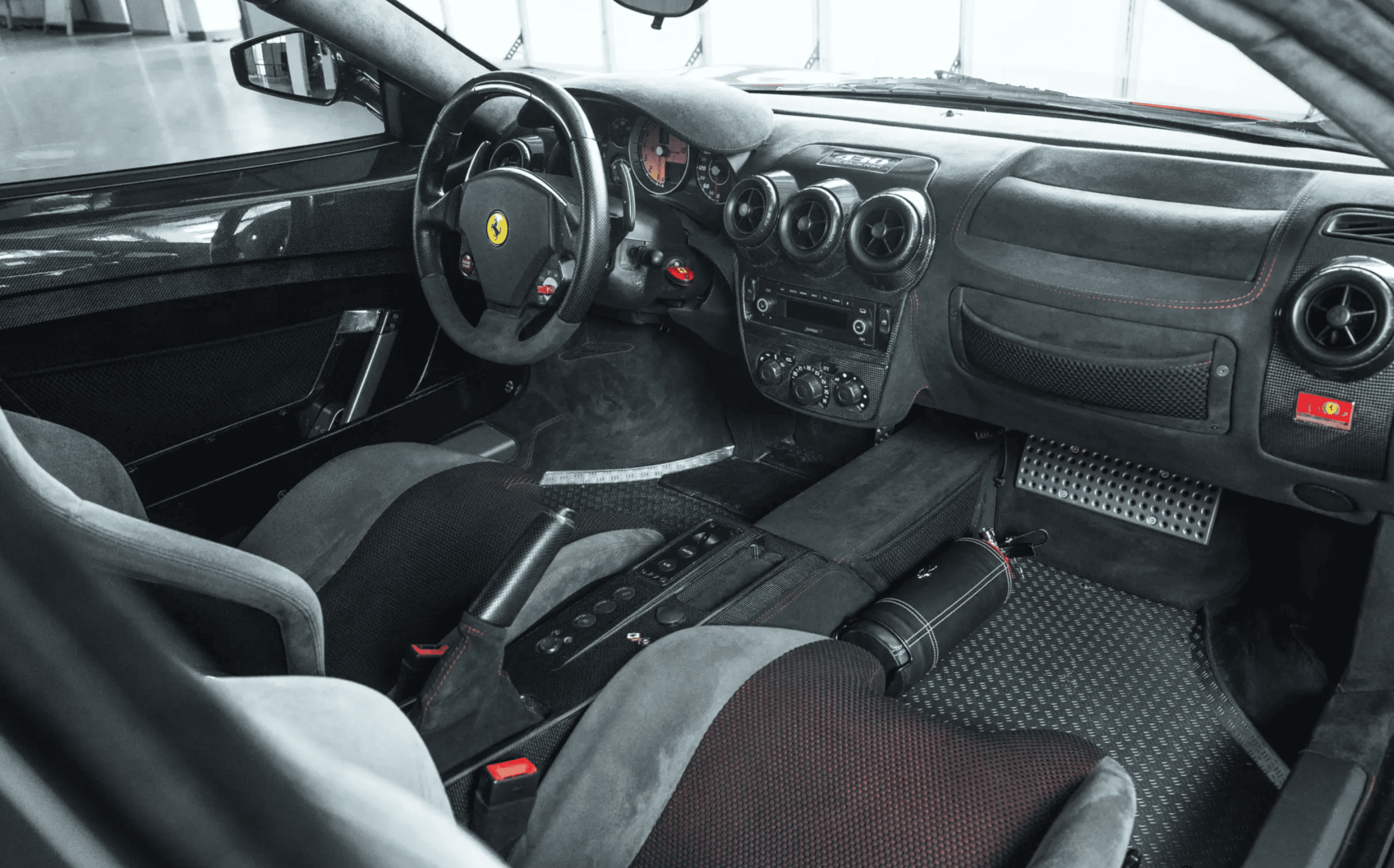
The interior exemplified Ferrari’s racing philosophy: stripped of unnecessary luxury appointments, focused entirely on driver engagement. Carbon-fiber bucket seats covered in Alcantara provided excellent lateral support during aggressive cornering while minimizing weight. Remarkably, the standard specification included no floormats, no radio, and no air-conditioning—radical minimalism that shocked some customers accustomed to Ferrari’s typical luxury standards. Air-conditioning and audio systems were available as options, acknowledging practical customer needs while emphasizing the car’s track-first design philosophy.
Specifications
- Engine: V8 naturally aspirated, 4,308cc, DOHC per bank, four valves per cylinder
- Power: 510 PS / 503 bhp / 375 kW at 8,500 rpm
- Torque: 470 N·m / 347 lb-ft at 5,250 rpm
- Transmission: Six-speed F1 Superfast2 automated manual, rear-wheel drive
- Chassis: Aluminum frame, mid-mounted engine layout
- Suspension: Double wishbones (front and rear), coil springs, adjustable dampers, stiffer than F430
- Brakes: Carbon-ceramic discs 370mm (front), 330mm (rear), with large calipers
- Wheels: 19-inch forged alloy, Michelin Pilot Sport tires
- Weight: 1,250 kg dry / 1,350 kg curb weight
- Performance: 199 mph / 320 km/h top speed, 0-60 mph in 3.6 seconds
Racing History
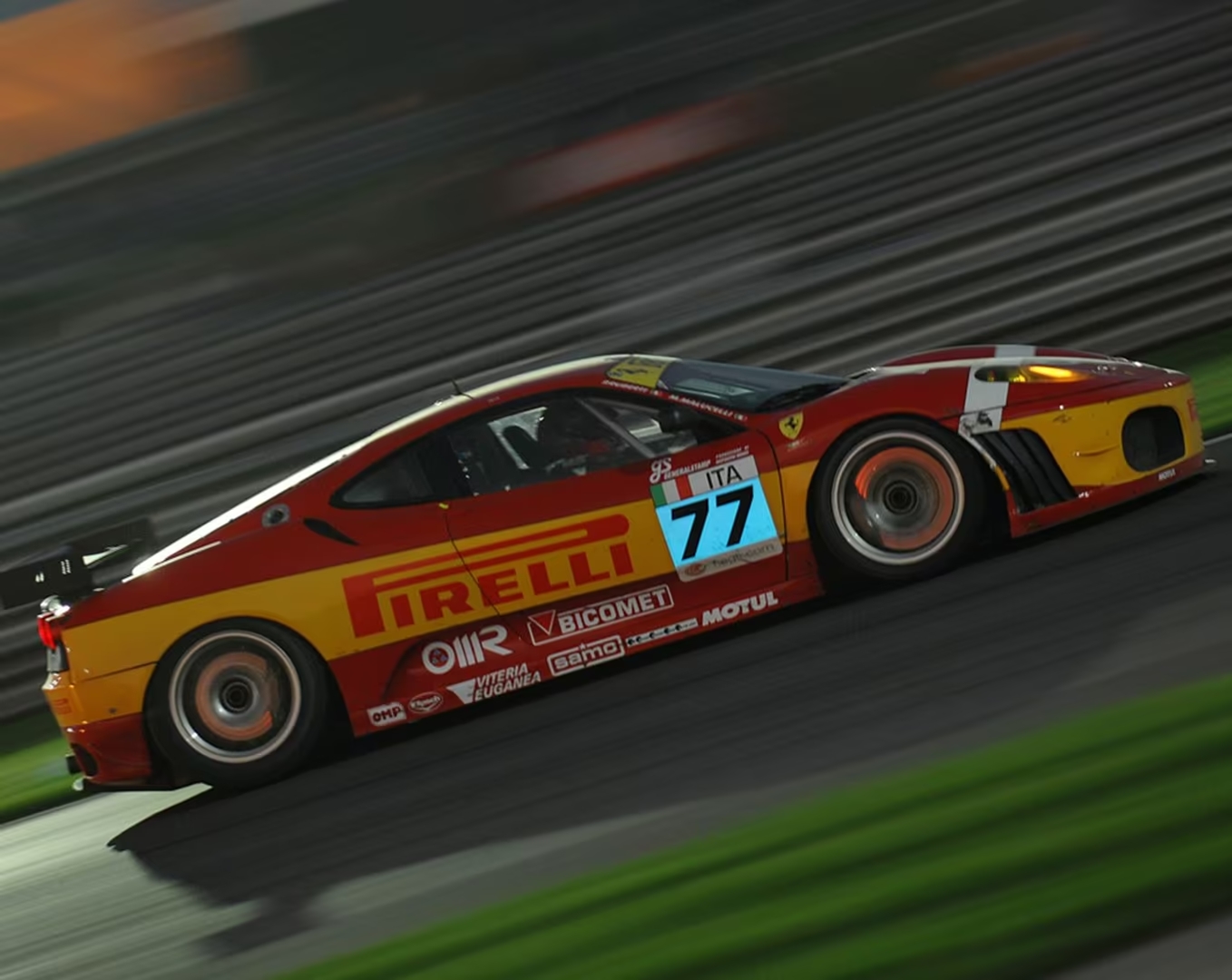
The F430 Scuderia’s racing heritage was formalized through the Ferrari F430 GTC, a race-only variant developed specifically for FIA GT competition. Built to GT2 specifications, the F430 GTC competed extensively in international racing series with factory support and customer teams. The combination of lightweight construction, high-revving naturally aspirated V8, and Schumacher-engineered suspension provided genuine competitiveness against established rivals. Private teams achieved consistent podium finishes in European racing series, demonstrating the platform’s inherent capability and track-focused engineering throughout its racing campaign.
Production and Legacy
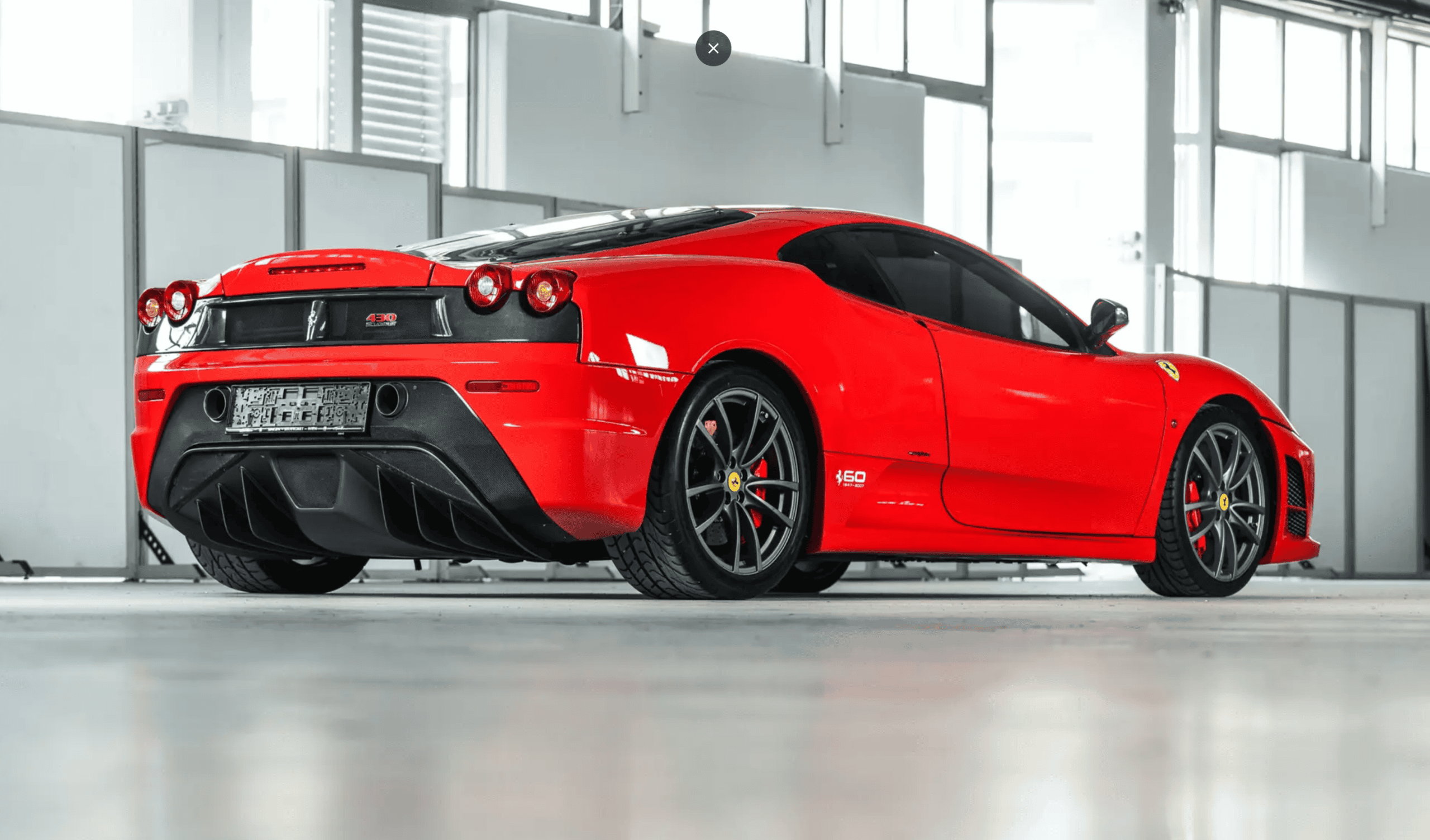
Ferrari produced the F430 Scuderia from 2007 through 2009, with production estimates ranging from 1,500 to 2,500 examples, less precisely documented than standard F430 figures. Each car was hand-assembled at Maranello with meticulous attention to performance rather than luxury. The extended production run reflected strong customer demand for a genuinely uncompromising track-focused Ferrari, appealing to customers who appreciated the racing heritage over comfort appointments.
The Scuderia proved that naturally aspirated V8 performance remained compelling despite emerging turbocharged competition. The combination of lightweight construction, sophisticated F1-derived technology, and mechanical simplicity created authentic connection between driver and machine.
Today, F430 Scuderia examples command strong prices among collectors, with the car’s track capability and exclusive specification driving sustained demand. The naturally aspirated V8, carbon-fiber components, and genuine racing pedigree have established lasting appeal.
The Ferrari F430 Scuderia represented Maranello at its most focused, celebrating mechanical purity and racing heritage. It remains one of the greatest naturally aspirated supercars, a masterpiece proving that performance without compromise could create something genuinely extraordinary.