
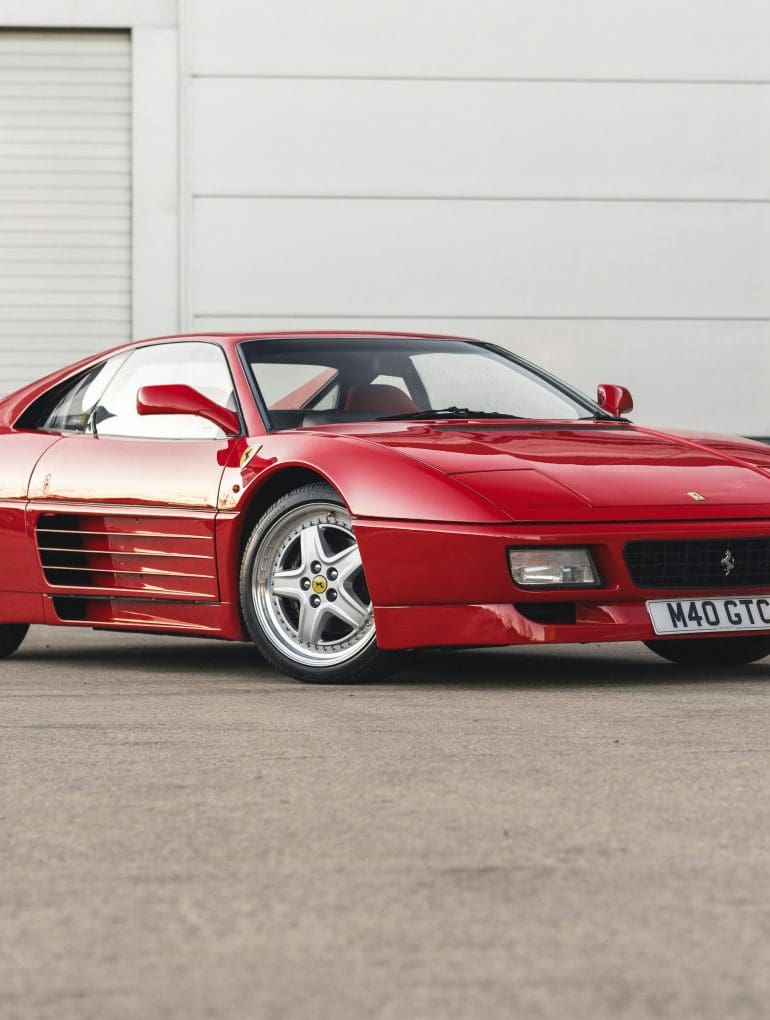

Turin Motor Show, December 1993. Ferrari announced the 348 GT Competizione, a revolutionary homologation special celebrating the extraordinary racing success of Oscar Larrauri’s factory-supported competition car in the Italian Supercar GT Championship. This was Ferrari’s declaration that lightweight engineering and mechanical sophistication could create genuinely competitive performance machinery suitable for both road and circuit, establishing precedent for subsequent lightweight homologation specials including the 360 Challenge Stradale, 430 Scuderia, and 488 Pista.
The naturally aspirated 3.4-liter V8 produced 320 horsepower at 7,200 rpm, delivering authentic performance credentials through intelligent weight reduction rather than displacement excess. The 348 GT Competizione could achieve 174 mph while accelerating from 0 to 60 mph in approximately 4.8 seconds, establishing credentials rivaling turbocharged competitors through refined engineering and systematic weight elimination. Production ran during spring and summer 1994, with exactly 50 road-going examples built—a deliberate limitation reflecting the car’s exclusive positioning—establishing the 348 GT Competizione as perhaps the rarest and most collectible Ferrari V8 homologation special ever created.
Background and Origins
The 348 GT Competizione emerged from a unique circumstance: celebrating the extraordinary success of competition-prepared 348 variants rather than launching a competition program. Throughout 1993, Oscar Larrauri piloted a Michelotto-prepared 348 in the Italian Supercar GT Championship, achieving remarkable results through sophisticated engineering and intelligent development. Larrauri captured the GT2 class championship with eight victories across thirteen race starts, including four outright wins against significantly more powerful Class 1 machinery. This unprecedented success—a relatively modest naturally aspirated engine triumphing against superior displacement and forced induction—demonstrated that the 348 platform possessed extraordinary development potential.
Recognizing the marketing opportunity while celebrating Larrauri’s championship achievement, Ferrari management decided to produce a limited run of road-going competition specials directly descended from the race car. Rather than develop something entirely new, Maranello would transform the proven 348 GTB platform through systematic weight reduction, racing-derived components, and track-focused engineering. The decision to limit production to only 50 examples reflected Ferrari’s emphasis on exclusivity and homologation compliance for future GT racing programs.
Michelotto—Ferrari’s long-standing, outsourced racing department—provided critical development expertise alongside in-house Ferrari engineers. Michelotto’s reputation derived from previous collaborations on the 308 GTB Group 4, 333 SP sports prototype, and F40 LM, establishing the department’s credentials for transforming road cars into genuine racing machinery. For the competition programs, Michelotto subsequently prepared dedicated race-spec variants featuring enhanced performance and aerodynamic modifications.
Design and Engineering
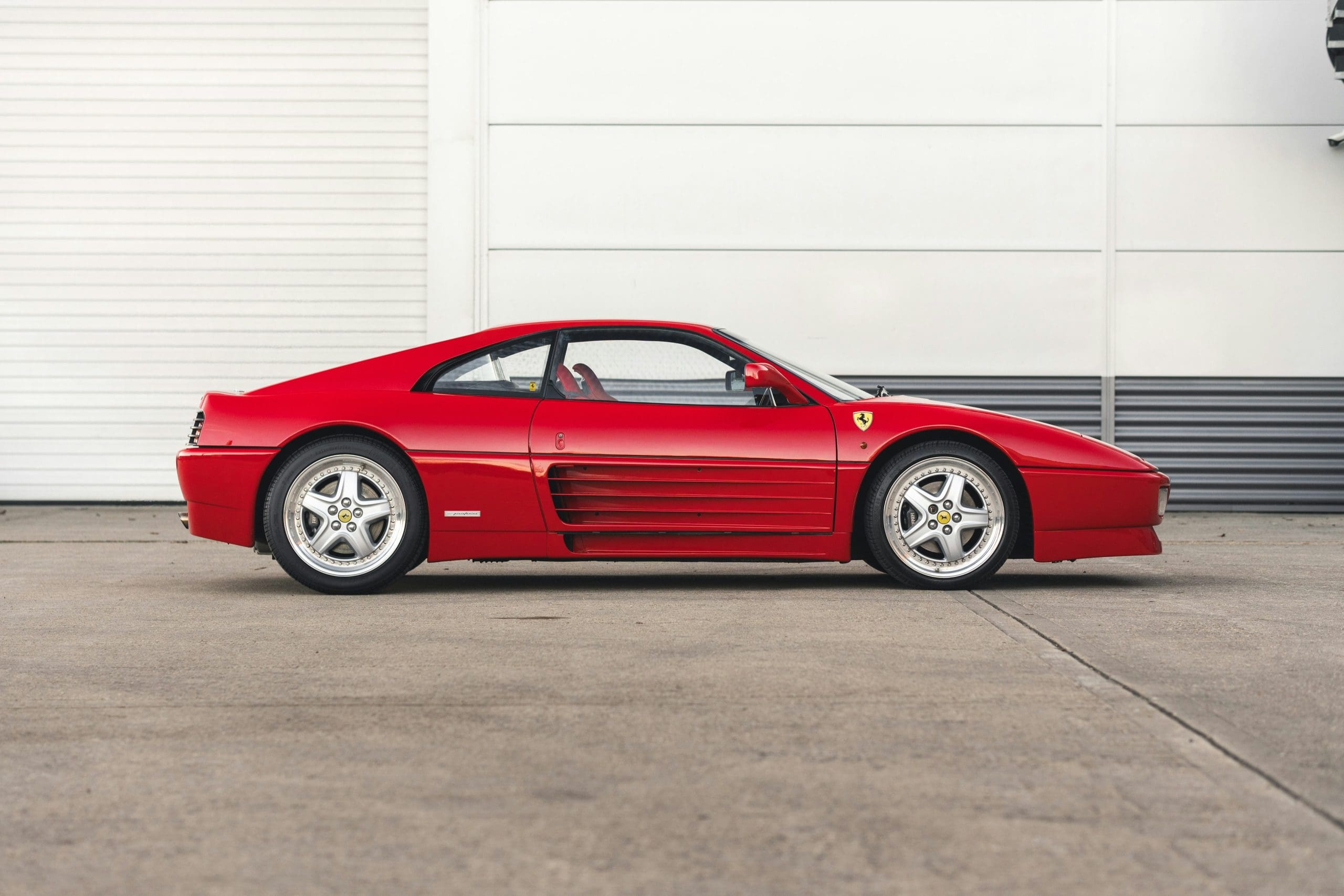
The 348 GT Competizione retained the pressed-steel monocoque chassis foundation that defined the standard 348, but received comprehensive weight-reduction modifications. Kevlar and carbon-fiber composite extensively replaced conventional materials: doors, side sills, front and rear bumpers, undertray, engine cover, and front lid all utilized lightweight composites. Most remarkably, unnecessary comfort features were systematically eliminated—air conditioning, sound deadening, and carpeting in passenger wells were deleted. Notably, the road-going Competizione retained functional glass door windows, distinguishing it from race-only variants which employed Lexan or Plexiglas sliding windows. This deliberate compromise between weight reduction and practical road-car usability was carefully calibrated. The standard 348 GTB dry weight of approximately 1,370 kilograms was reduced to 1,180 kilograms—a remarkable 190-kilogram reduction through methodical engineering.
The interior reflected racing-specific priorities while maintaining basic road-car functionality. F40-style single-piece carbon-Kevlar racing seats with red fabric upholstery provided excellent support for aggressive driving while minimizing weight. Rather than conventional seatbelts, four-point Sabelt harnesses were installed. Kevlar sill panel covers, simplified door trim, and thin footwell carpeting replaced standard appointments. Drilled aluminum pedals and a steering wheel inscribed with each car’s individual serial number emphasized mechanical authenticity.
Suspension featured independent double-wishbones front and rear with revised geometry optimized for circuit performance. Anti-roll bars were strengthened, and suspension bushings were rigidified for responsiveness without excessive harshness. The 18-inch split-rim Speedline wheels represented a significant upgrade from standard 348 specification: one inch larger diameter and widened track (8-inches front, 10-inches rear) accommodating Pirelli P Zero competition tires.
Braking was by 15-inch ventilated discs derived from the F40 Evoluzione specification, substantially larger than standard 348 items. Twin calipers provided excellent stopping power, though anti-lock braking remained absent—reflecting racing purist philosophy rejecting electronic driver aids.
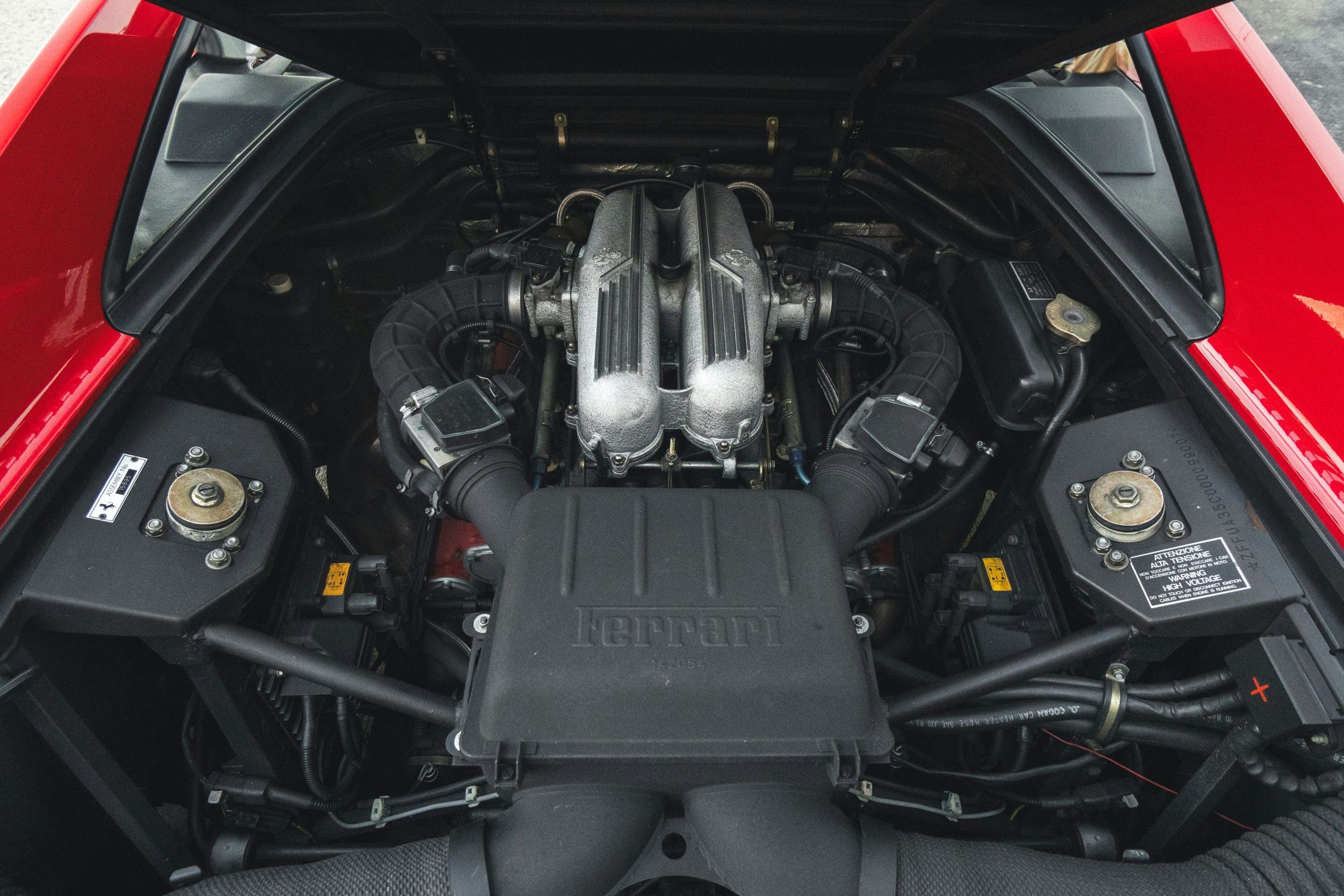
The F119H naturally aspirated V8 displaced 3,405cc with dual overhead camshafts controlling four valves per cylinder. With a 10.8:1 compression ratio, output was 320 horsepower at 7,200 rpm. The five-speed manual transmission featured a short 25/27 gear ratio optimized for circuit performance, while the reinforced racing clutch provided robust engagement suitable for aggressive driving. F40 halfshafts provided upgraded drivetrain components, ensuring reliability during spirited operation.
Styling
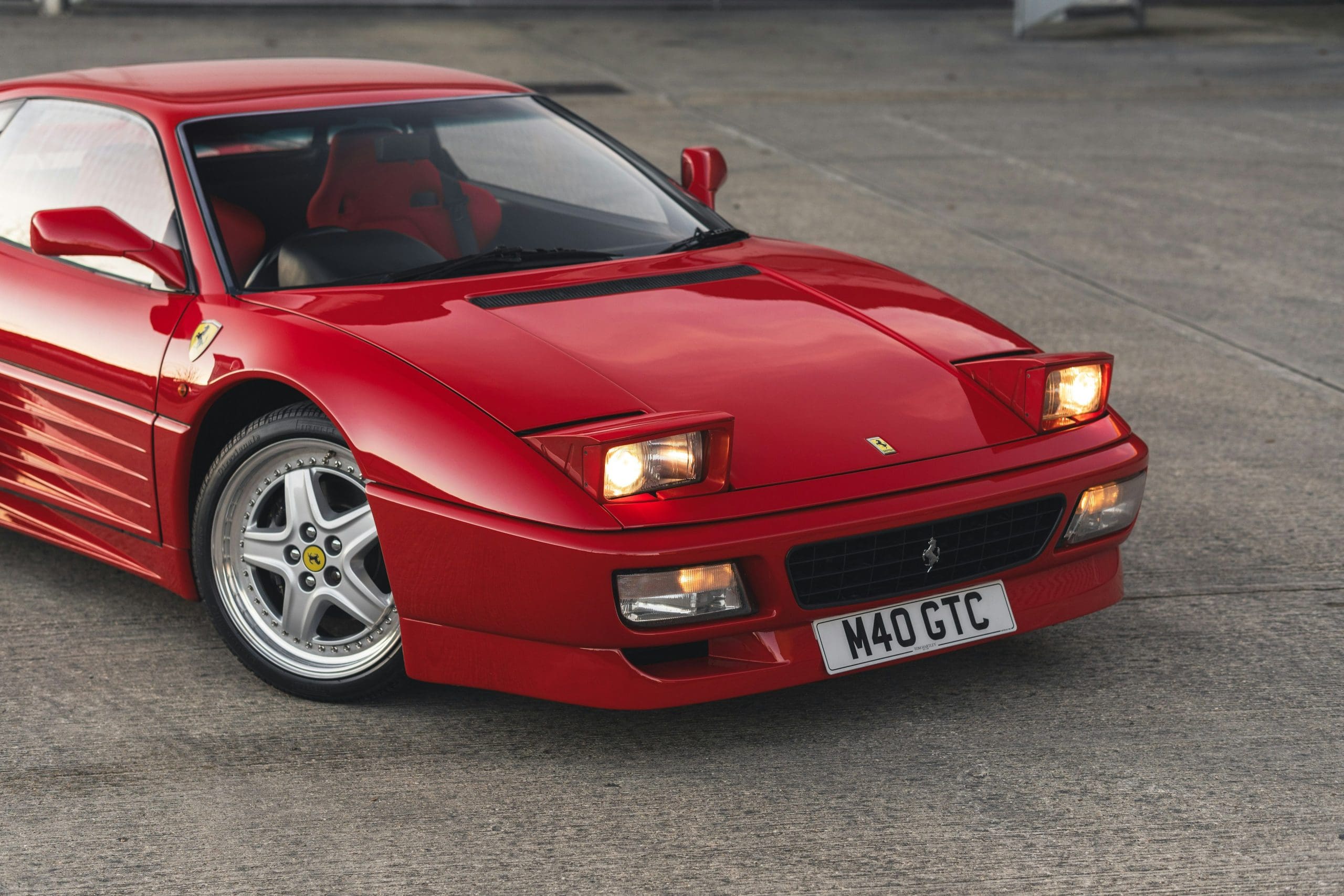
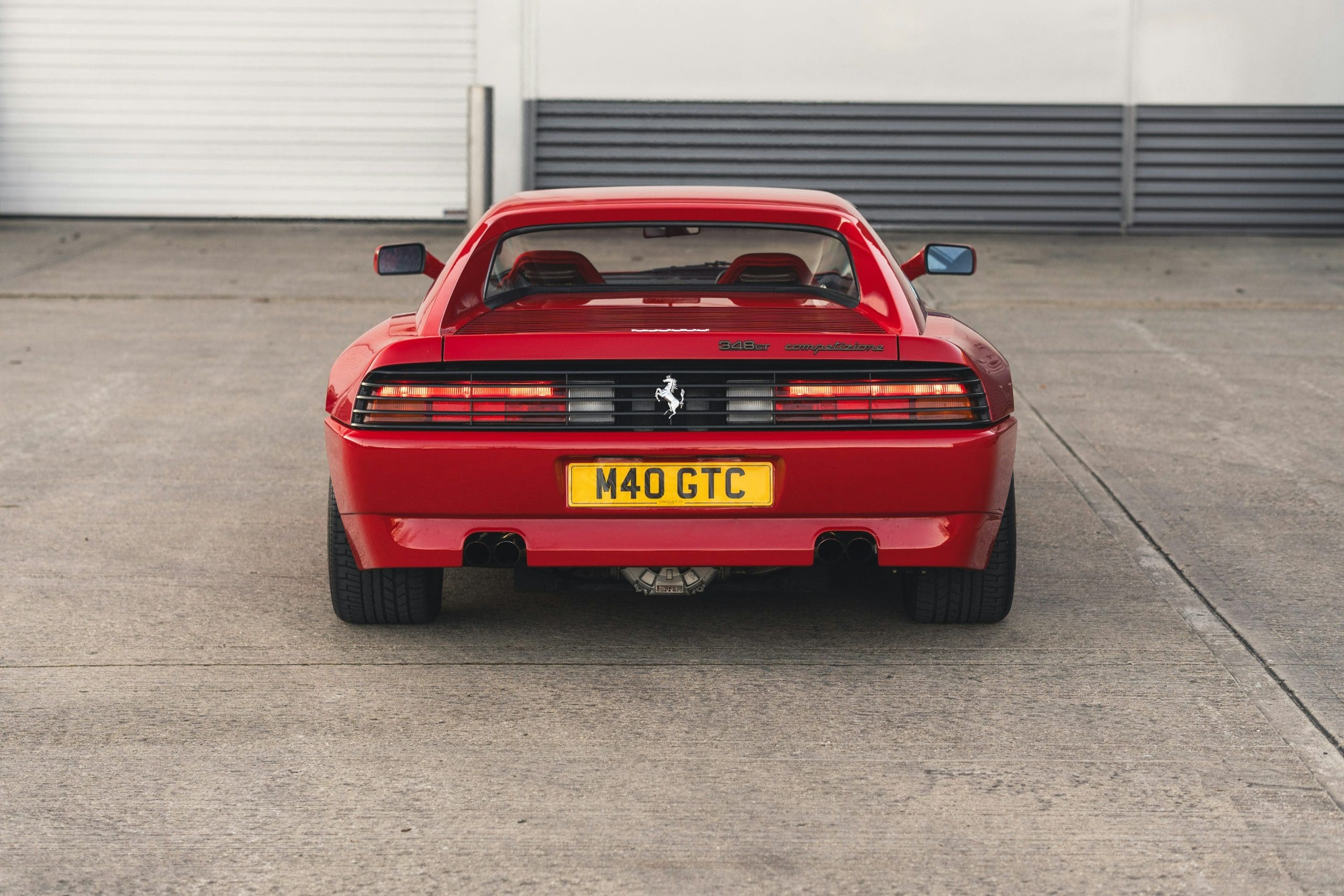
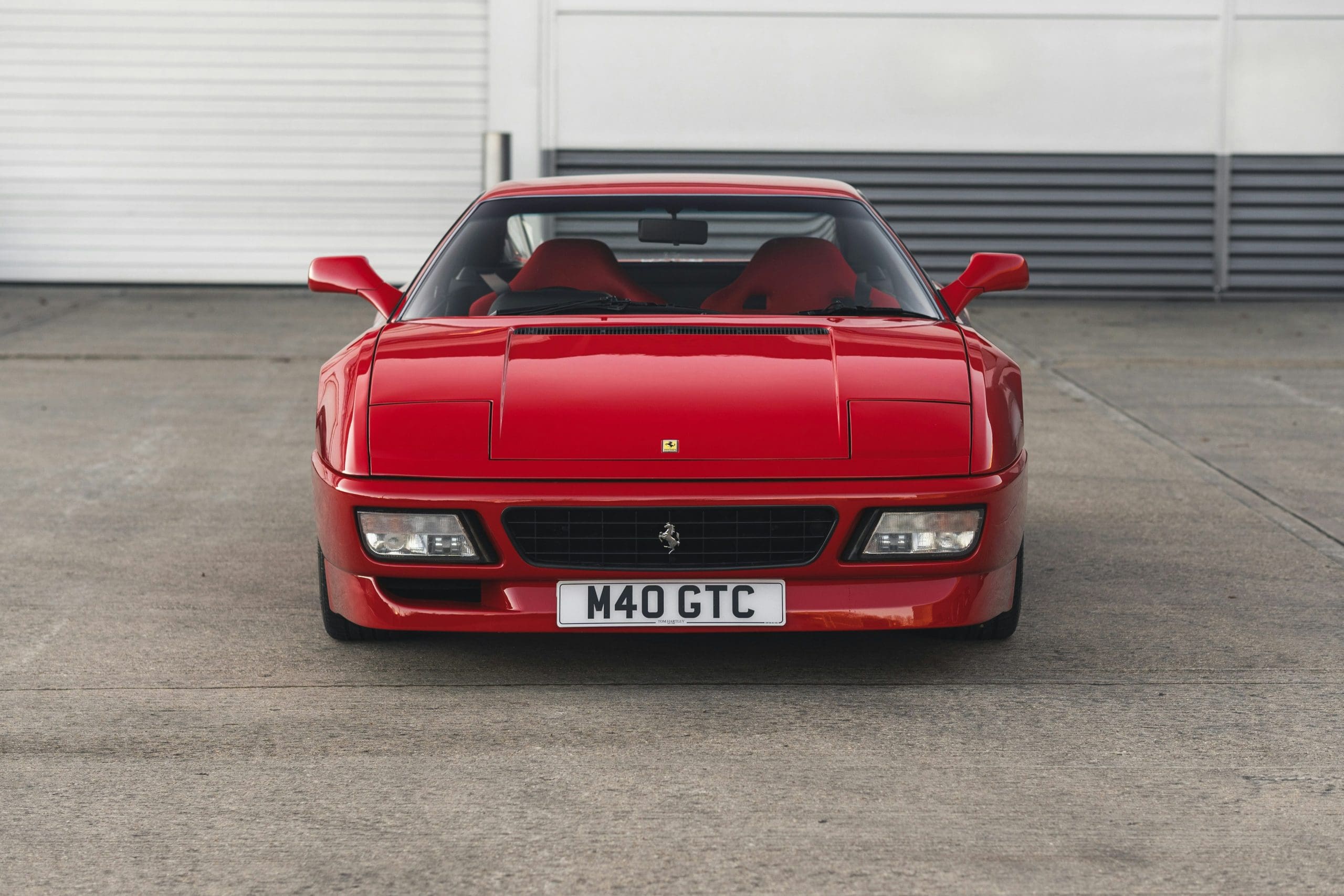
The exterior remained visually restrained compared to contemporary competition machinery. The distinctive 348 proportions—Leonardo Fioravanti’s refined 1989 design—required minimal modification. Subtle changes included recessed Scuderia wing-shields on the rear quarters, “Competizione” badging on the engine cover, and naturally larger 18-inch wheels filling the wheel arches more aggressively. Most examples were finished in traditional Ferrari colors: Rosso Corsa red, deep metallic blacks, or elegant silvers allowing mechanical purpose to dominate over aggressive styling drama.
Interior
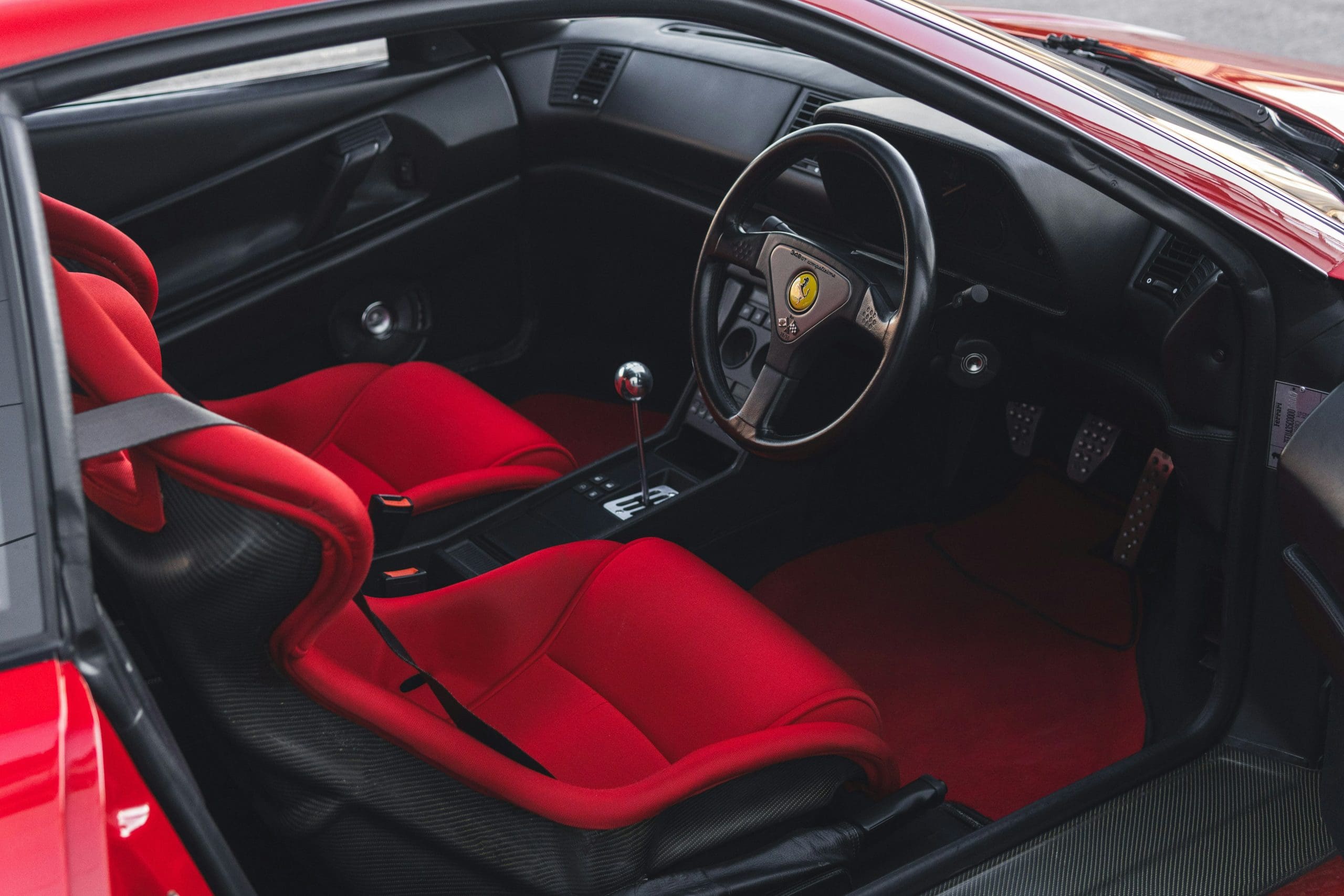
The cabin emphasized uncompromising driver engagement through systematic elimination of unnecessary weight and comfort features. Carbon-Kevlar racing seats upholstered in red mesh provided exceptional lateral support while maintaining minimal mass. The stripped cockpit featured essential instrumentation, direct steering wheel feedback, and mechanical engagement throughout. The overall atmosphere celebrated that genuine performance required accepting practical trade-offs: this was fundamentally a track-focused machine wearing legal credentials, not a luxury supercar with performance pretensions.
Specifications
- Engine: Ferrari F119H naturally aspirated V8, 3,405cc, DOHC, four valves per cylinder
- Power: 320 PS / 315 hp at 7,200 rpm
- Torque: 324 N·m / 239 lb-ft at 5,000 rpm
- Transmission: Five-speed manual with 25/27 short ratio, rear-wheel drive
- Chassis: Steel monocoque with carbon-Kevlar body panels, 2,450mm wheelbase
- Suspension: Independent double wishbones (front and rear), coil springs, race-tuned dampers
- Brakes: 15-inch ventilated discs, F40 Evoluzione-derived calipers, no ABS
- Wheels: 18-inch split-rim Speedline alloy, Pirelli P Zero tires
- Weight: 1,180 kg dry / 2,600 lbs (complete with safety equipment)
- Performance: 174 mph / 280 km/h top speed, 0-60 mph in approximately 4.8 seconds
Racing History
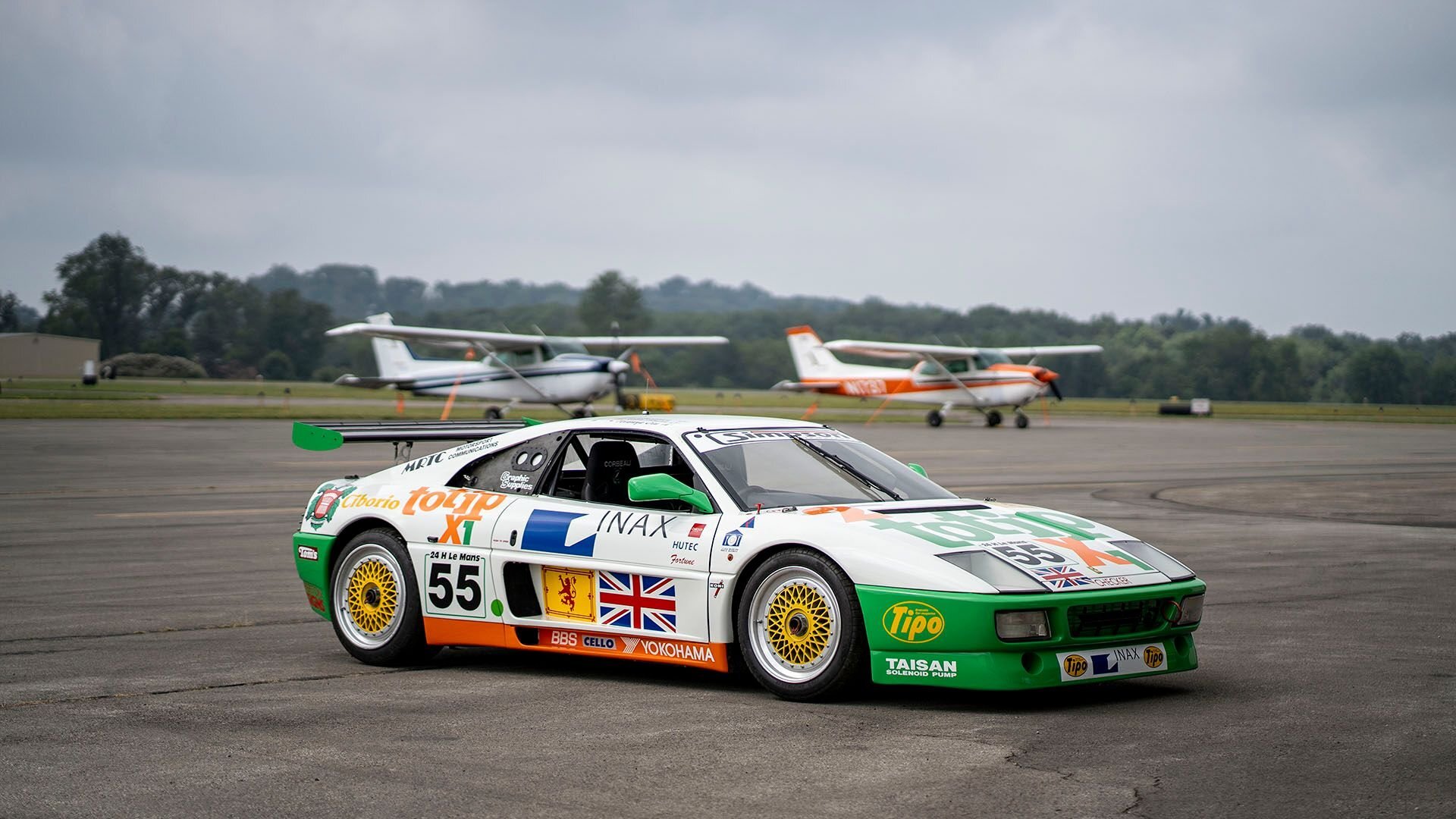
While the 348 GT Competizione was primarily a limited-production road car, its racing pedigree proved extraordinary. Oscar Larrauri’s championship-winning 1993 Michelotto-prepared competition car directly inspired the production special. Using essentially the same engineering fundamentals, Larrauri secured eight GT2-class victories across thirteen races contested, defeating more powerful machinery through sophisticated development and driver skill.
Beyond the road-going variants, Michelotto prepared dedicated race-spec cars featuring enhanced engine mapping and comprehensive aerodynamic modifications. The 348 GT Competizione LM—a specialized variant for Le Mans—achieved legendary status when chassis #97553 finished fourth in the GT2 class at the 1994 24 Hours of Le Mans, becoming the first Ferrari to finish the race since 1982. Another Competizione-based car competed in the 1994 Daytona 24 Hours, piloted by the Shelton brothers’ team, proving the platform’s reliability across demanding endurance racing.
Production and Legacy
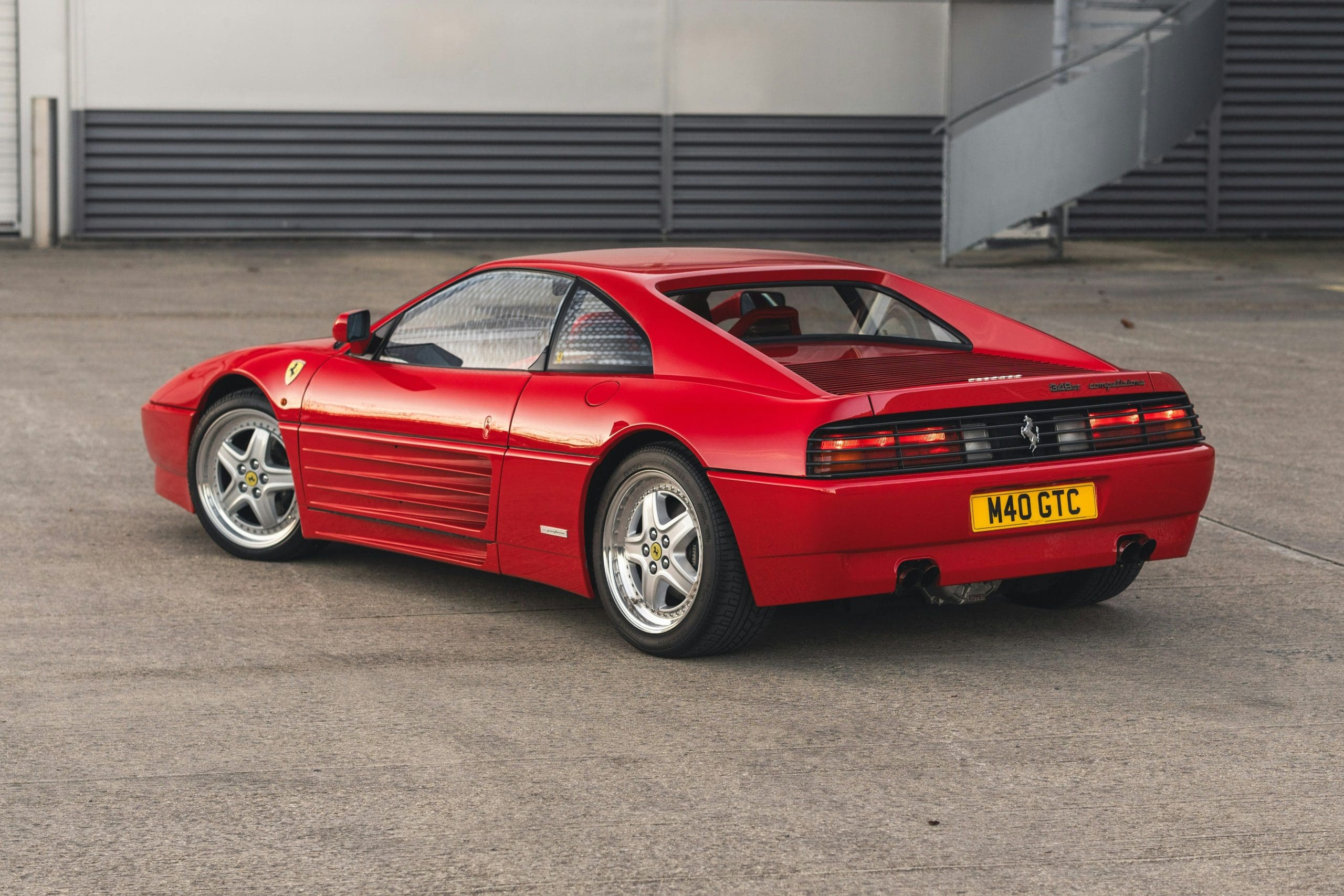
Ferrari hand-assembled exactly 50 road-going 348 GT Competizione examples between spring and summer 1994. Only 8 examples featured right-hand-drive configuration, with the majority distributed to European customers. The car was not legal for sale in North America, limiting US availability to approximately four examples imported for private track use. Each car received meticulous assembly reflecting Ferrari’s manufacturing standards while incorporating customer personalization reflecting the brand’s bespoke philosophy.
The 348 GT Competizione proved that systematic lightweight engineering could create genuine competition capability within road-car parameters. The combination of aluminum/composite construction, racing-derived components, and track-focused engineering established templates influencing Ferrari’s subsequent homologation specials.
Today, 348 GT Competizione examples command substantial collector prices reflecting their extraordinary rarity and historical significance. The combination of exclusive production, authentic racing heritage, and mechanical sophistication ensures immortal appeal among serious Ferrari enthusiasts and collectors.
The Ferrari 348 GT Competizione represented Maranello at its most pragmatic and accomplished, proving that engineering excellence and systematic weight reduction could create something genuinely transcendent. It remains one of Ferrari’s greatest achievements and the rarest modern V8 homologation special, a masterpiece establishing the template for future lightweight competition specials.