
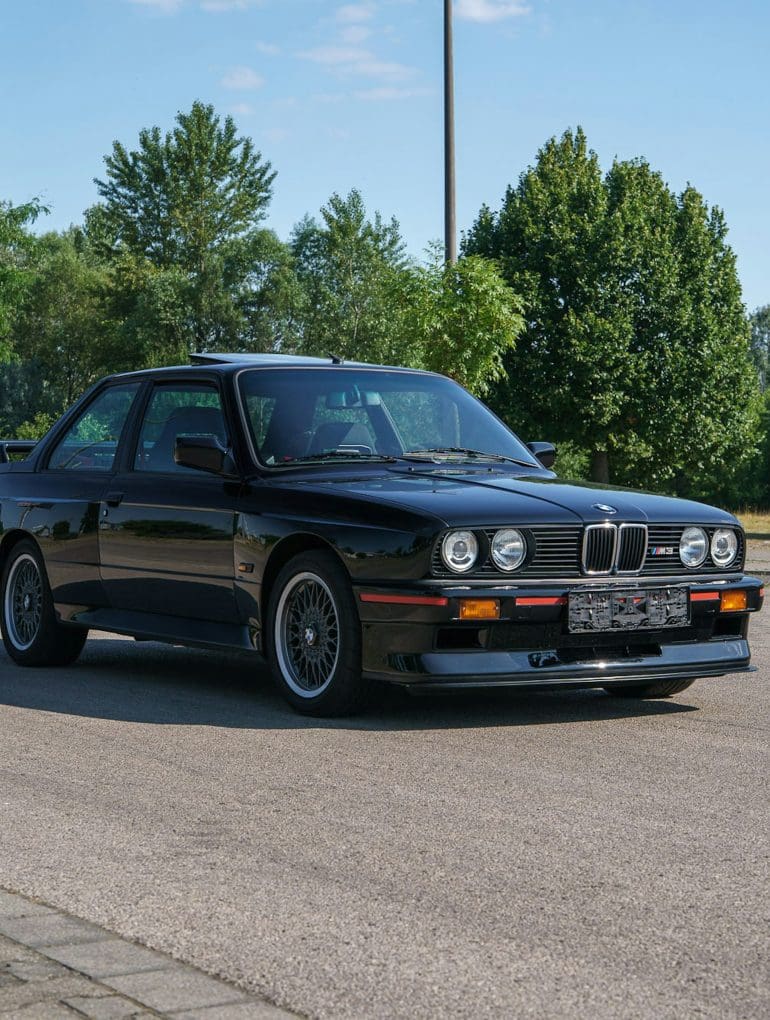

BMW introduced the final E30 M3 evolution for the 1990 model year, with production beginning in December 1989 and ending in March 1990, a revolutionary road-going homologation special celebrating that lightweight engineering and enlarged naturally aspirated performance could establish genuine competition capability within practical road-legal parameters. This was Munich’s declaration that mechanical sophistication and systematic weight reduction could create something genuinely distinctive: the Sport Evolution represented the evolutionary apex of the E30 M3 lineage, combining racing-derived technology with accessible performance credentials designed to homologate further mechanical and aerodynamic developments for touring-car competition.
The 2.5-liter naturally aspirated S14B25 inline-four produced 238 PS (235 horsepower) at 7,000 rpm and 177 lb-ft of torque at 4,750 rpm, delivering 154 mph capability from a chassis weighing approximately 1,200 kilograms. The Sport Evolution could accelerate from 0-60 mph in approximately 6.1 seconds, establishing credentials rivaling contemporary high-performance machines while maintaining the refined character expected from BMW. Production ran from December 1989 through March 1990, with exactly 600 examples built, establishing the Sport Evolution as one of the rarest and most coveted factory E30 M3 variants ever created.
Background and Origins
The Sport Evolution was created to homologate further mechanical and aerodynamic developments for touring-car competition, representing the final factory evolution of the E30 M3 program. Rather than develop an entirely new platform, BMW M determined that systematic displacement increase from 2.3 to 2.5 liters combined with comprehensive weight optimization would establish the homologation credentials necessary for continued competition development.
The project employed racing-first engineering principles extracted directly from successful touring car competition. The enlarged 2.5-liter S14B25 engine represented racing technology translated into road-legal specification while maintaining the high-revving character that defined BMW M tradition. Engineers systematized weight reduction across every component, establishing performance credentials competitive with purpose-built racing machinery while maintaining the practical usability expected from road-going ownership.
Design and Engineering
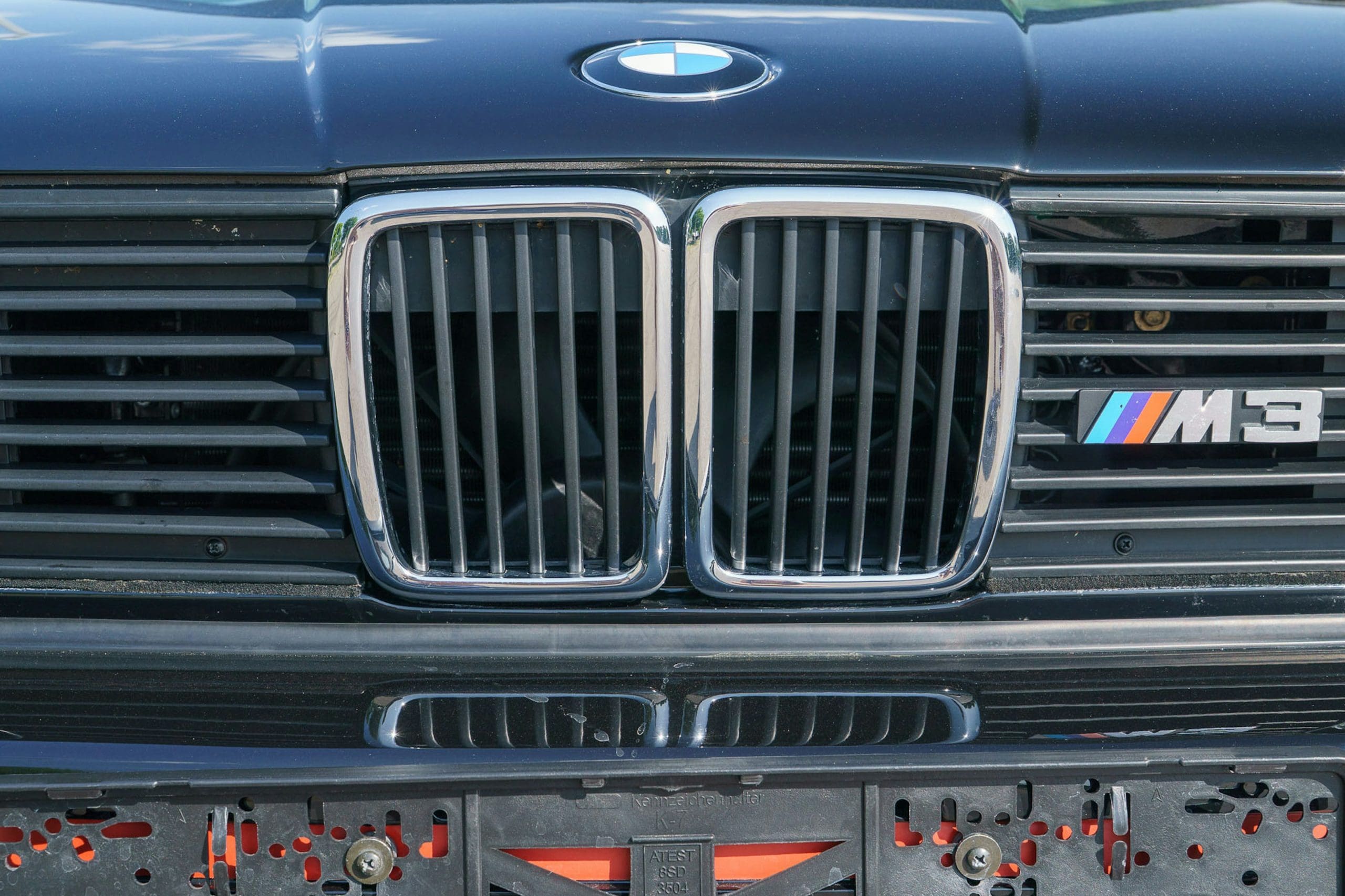
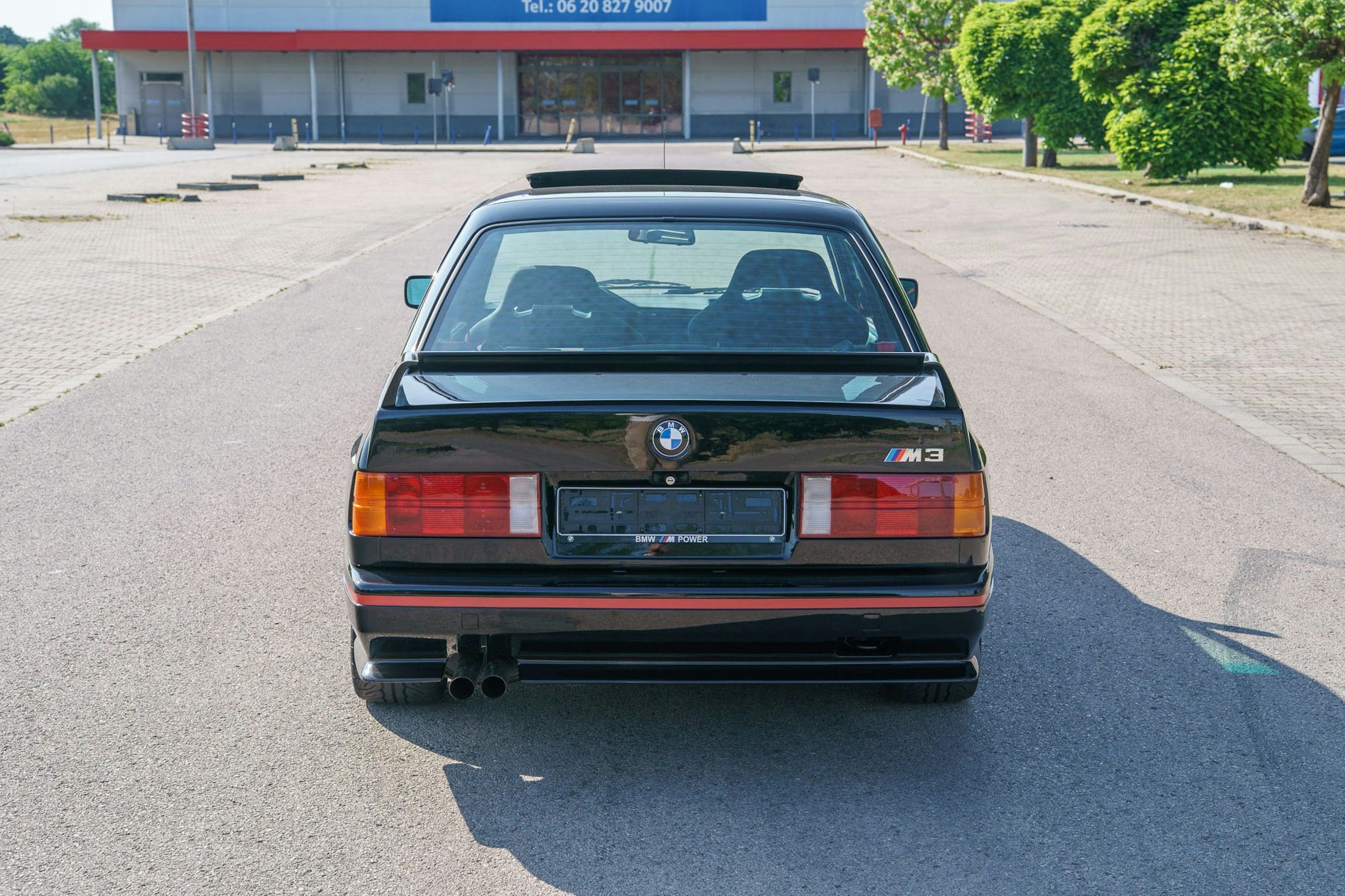
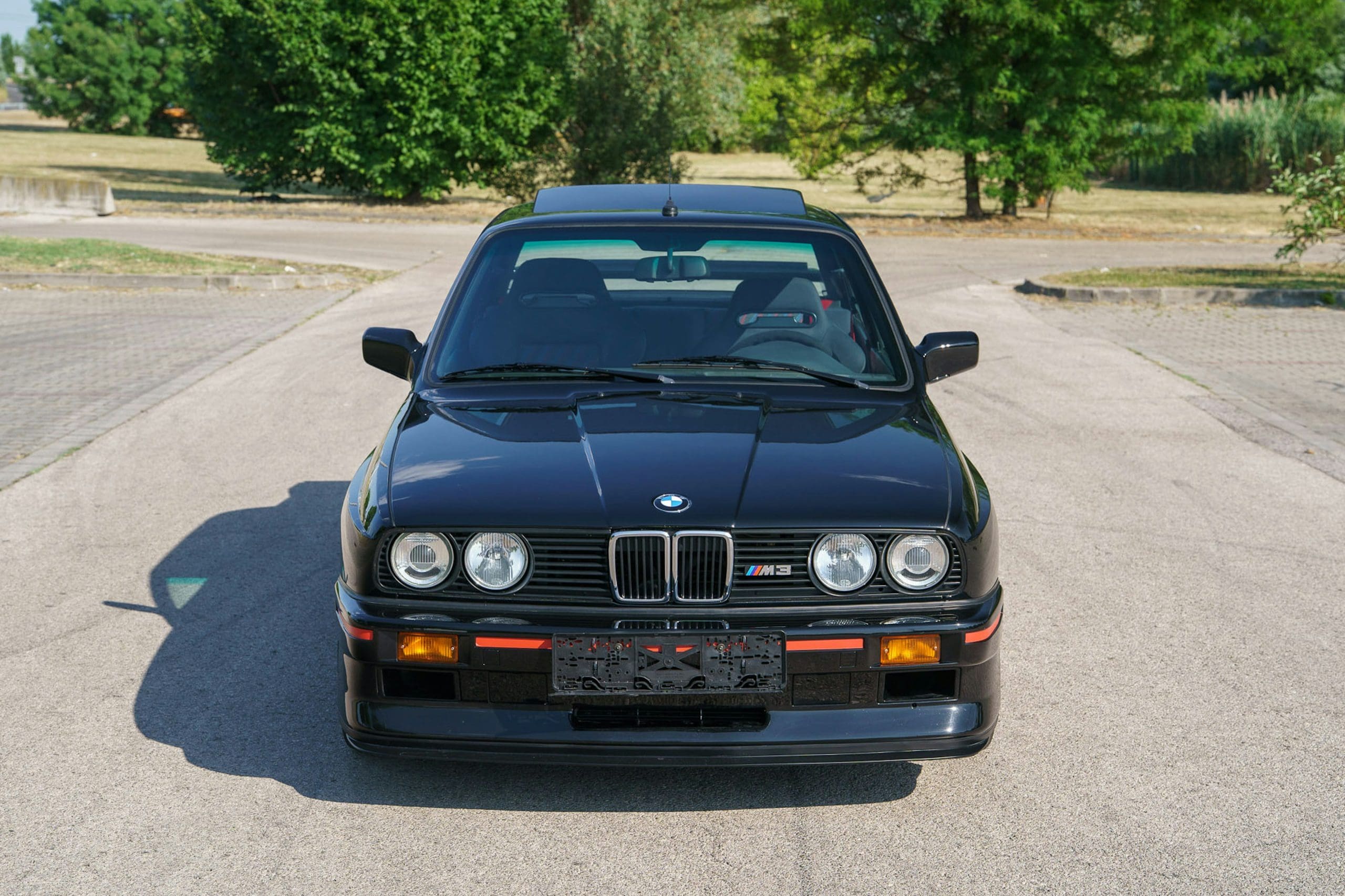
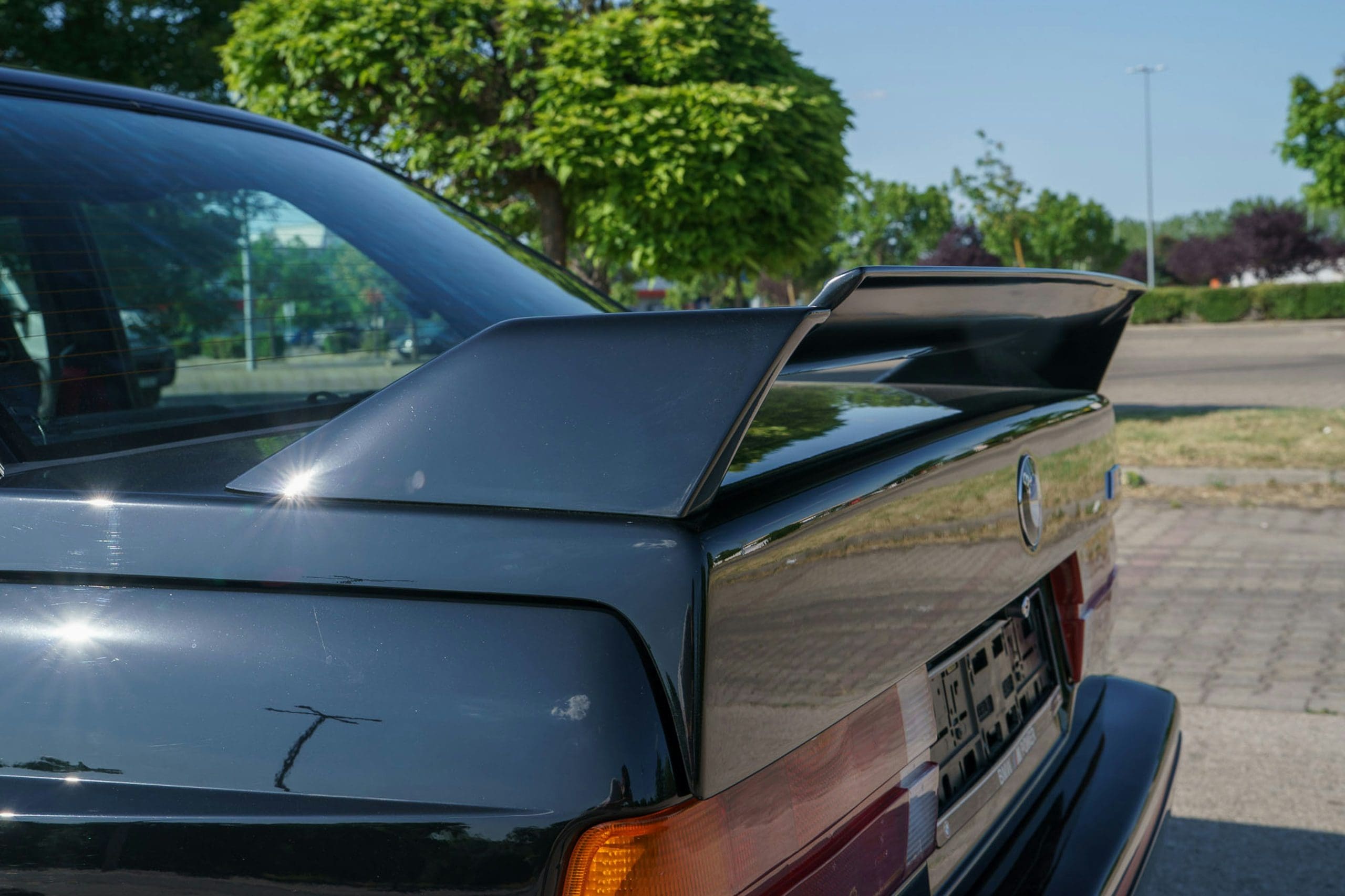
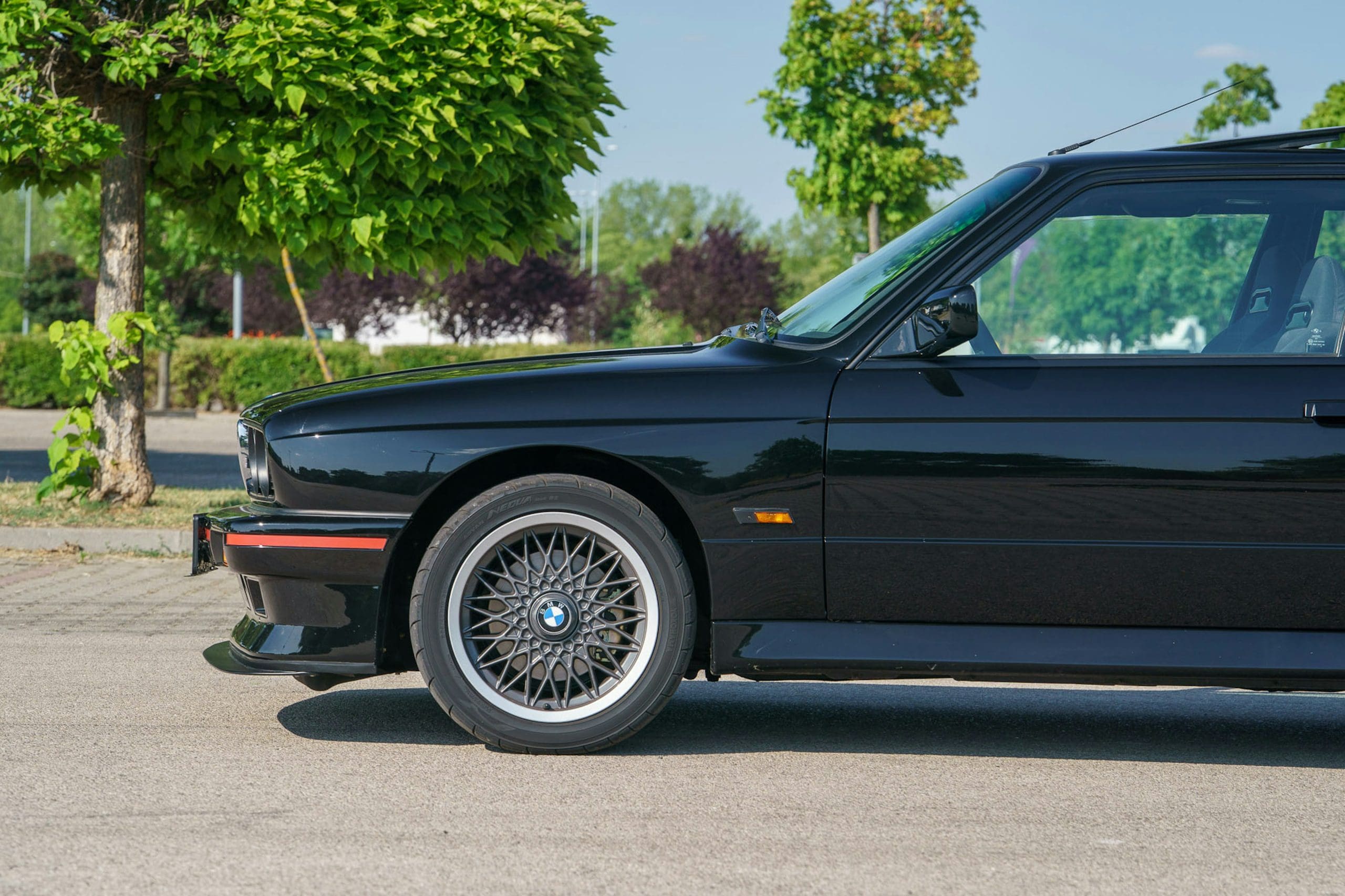
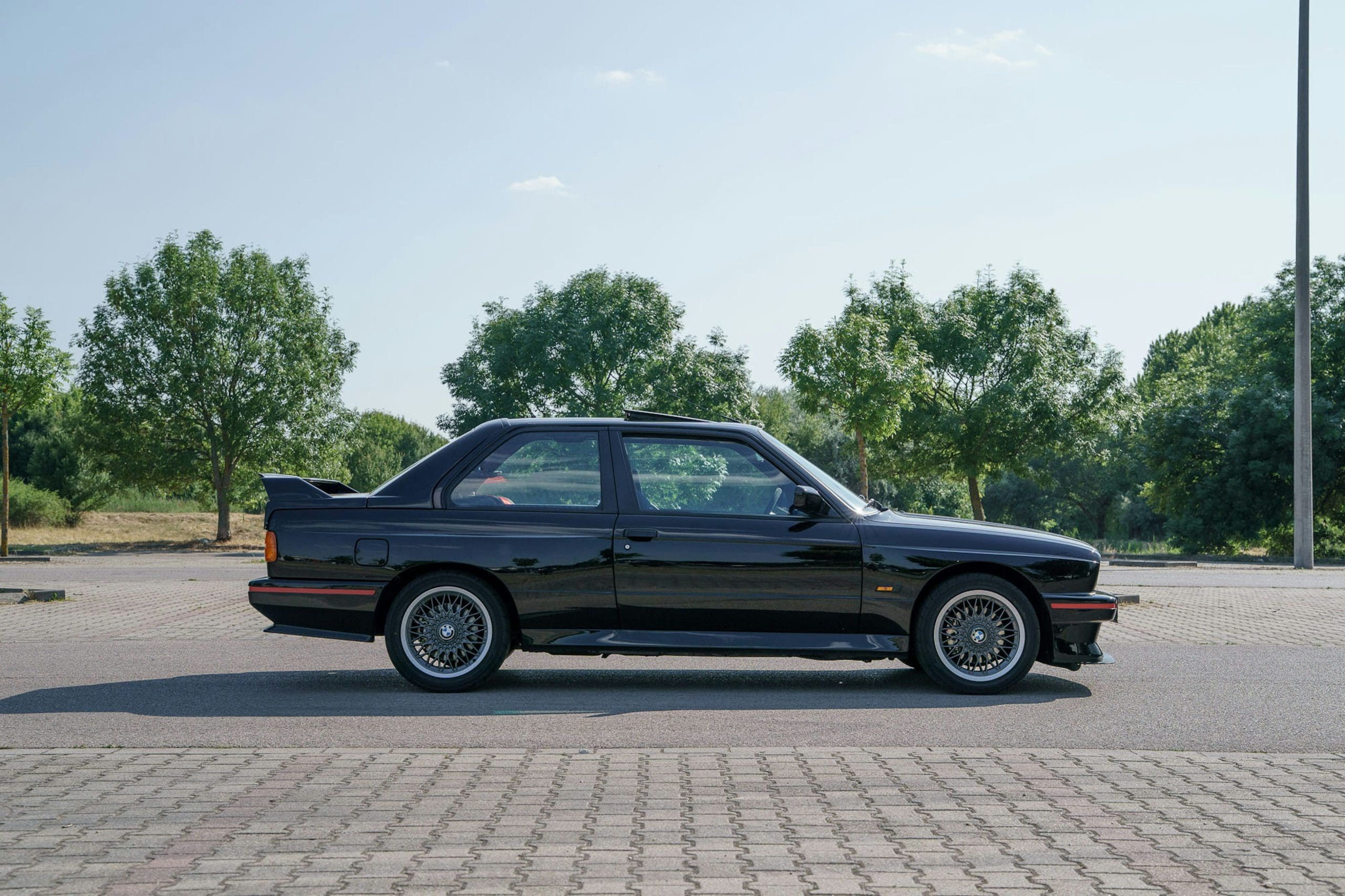
The Sport Evolution retained the elegant proportions established by earlier E30 M3 variants, but comprehensive aerodynamic optimization and increased track width created immediately recognizable distinctiveness. The redesigned front bumper incorporated larger cooling openings channeling air toward the radiator and engine bay. The adjustable multi-position front splitter and adjustable rear wing provided genuine aerodynamic benefit establishing the car’s competition intent. Thinner side and rear glass contributed to systematic weight reduction, with a lighter boot lid and bumpers completing the weight-saving strategy.
The chassis employed MacPherson struts front and semi-trailing arms rear with coil springs and sport-tuned dampers, the geometry optimized for responsive handling. Anti-roll bars provided cornering control calibrated for high-performance driving. Braking was handled by larger 280-mm ventilated front discs and 282-mm solid rear discs with single-piston calipers and Bosch ABS, providing adequate stopping power for the engine’s acceleration. A mechanical limited-slip differential with 25-percent locking helped maintain traction at the rear axle during acceleration and cornering.
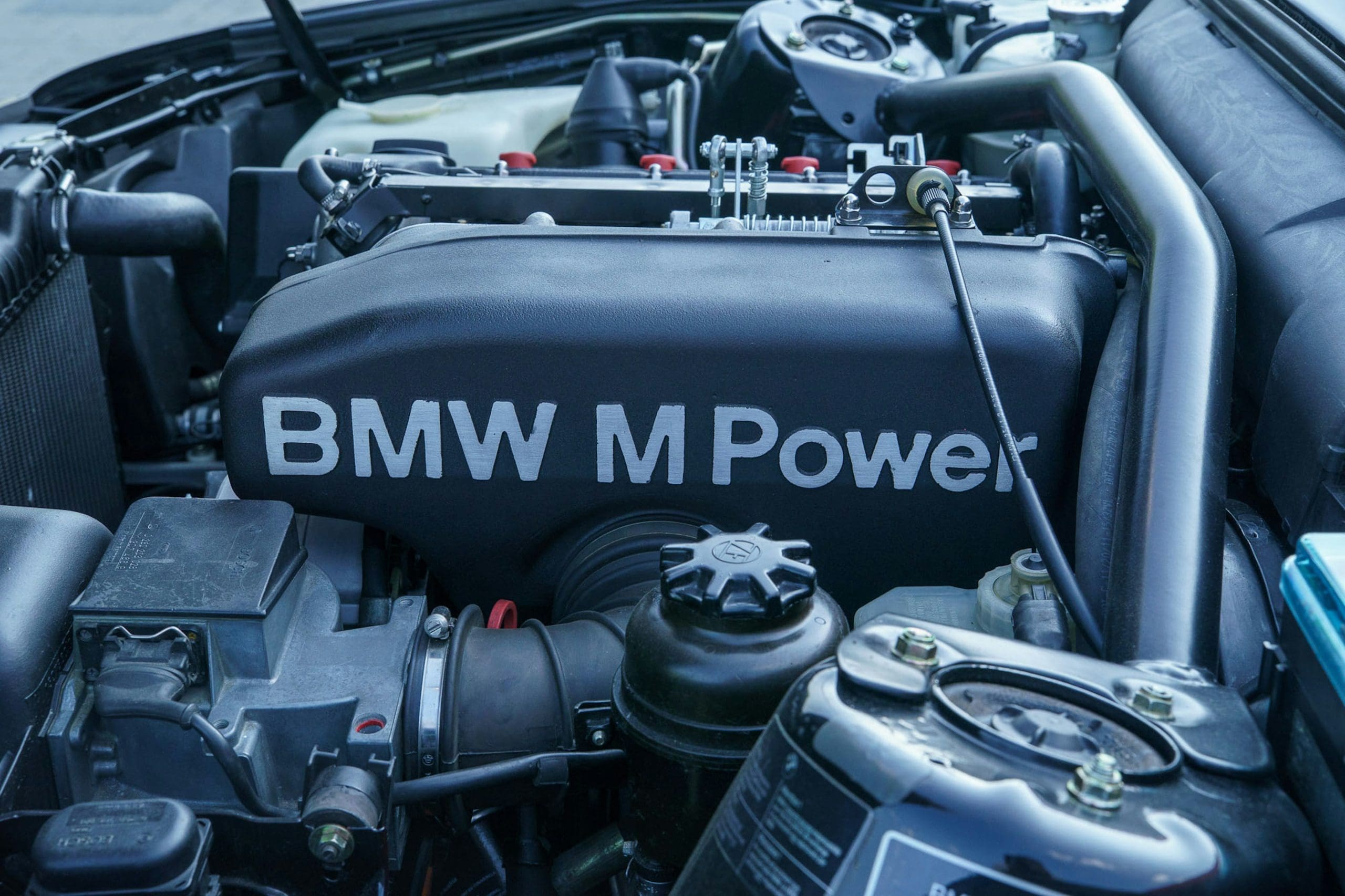
The naturally aspirated S14B25 2.5-liter inline-four represented significant engineering refinement from BMW Motorsport. With 2,467 cubic centimeters displacement, dual overhead camshafts controlling 16 valves, and oil jets for piston cooling, the engine produced 238 PS (235 horsepower) at 7,000 rpm and 177 lb-ft of torque at 4,750 rpm. This represented exceptional naturally aspirated performance celebrating high-revving character and mechanical authenticity without forced induction complexity. The Sport Evolution’s engine featured larger valves, a more aggressive camshaft profile, and a longer-stroke crankshaft delivering superior power characteristics across the rev range.
The power delivery was distinctly high-revving in character, requiring disciplined driving technique through the five-speed Getrag manual transmission to exploit full performance potential. The close-ratio gearbox optimized for circuit driving demanded proper gearwork to maintain momentum through corners. This emphasis on mechanical directness and driver connection reflected BMW philosophy celebrating engagement over technological intervention.
Weight management achieved through systematic component reduction established the Sport Evolution at approximately 1,200 kilograms curb weight, with weight reduction of roughly 77 pounds compared with the previous E30 M3 variant. Thinner glass, a lighter boot lid, lighter bumpers, a plastic fuel tank, and stripped sound insulation contributed measurably to weight targets. This efficiency enabled 0-60 mph acceleration in approximately 6.1 seconds and top speed of 154 mph, establishing exceptional performance for naturally aspirated configuration.
Styling
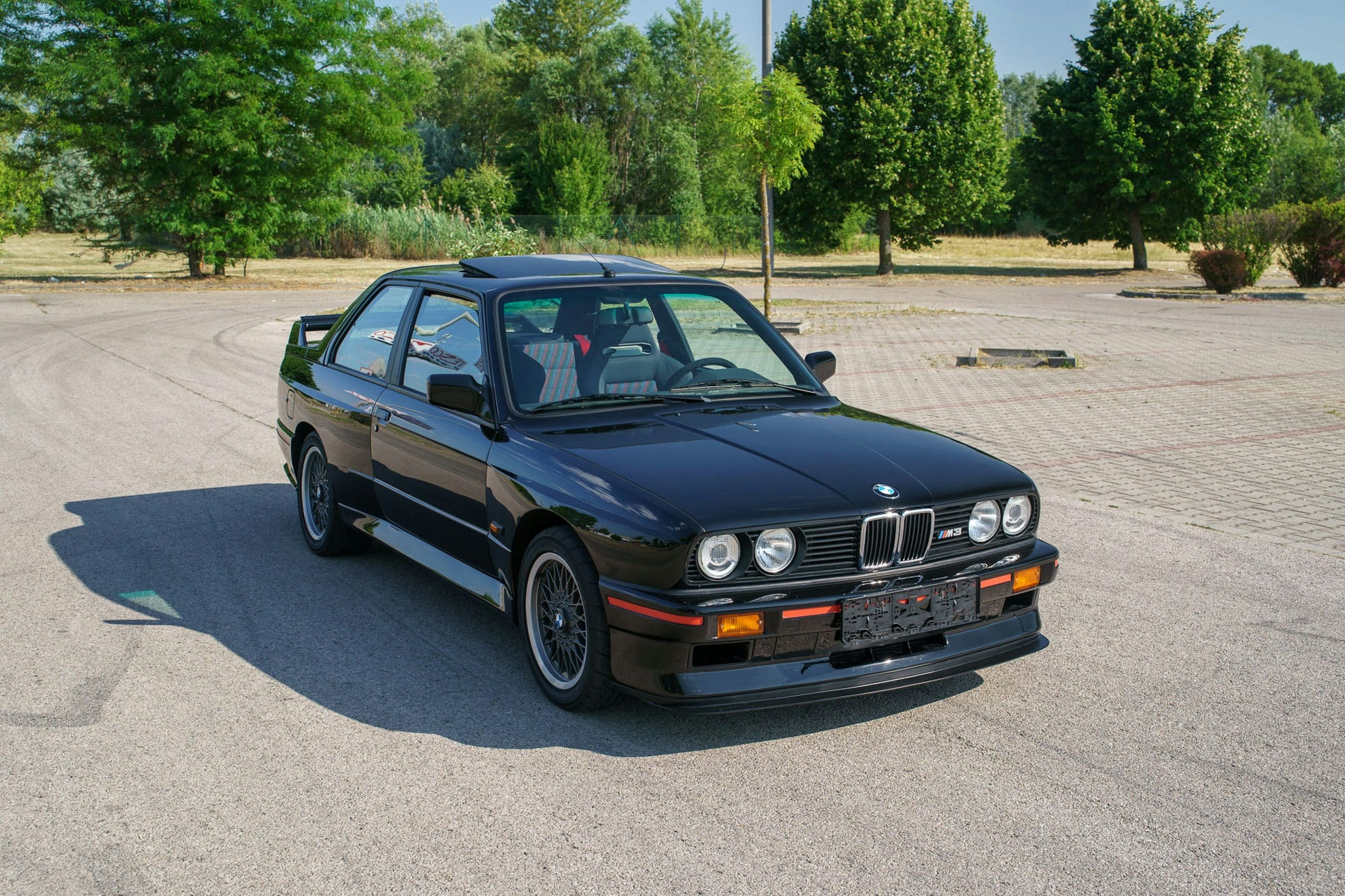
The Sport Evolution design created visual distinctiveness immediately recognizable as the ultimate E30 M3 variant. The redesigned front bumper with larger brake cooling openings, adjustable front splitter, and aggressive rear wing established purposeful aerodynamic design. The thinner glass and lighter body components suggested performance through engineered substance rather than theatrical embellishment. The Sport Evolution was offered exclusively in Jet Black or Brilliant Red, with each color emphasizing the car’s competition-focused character.
Interior
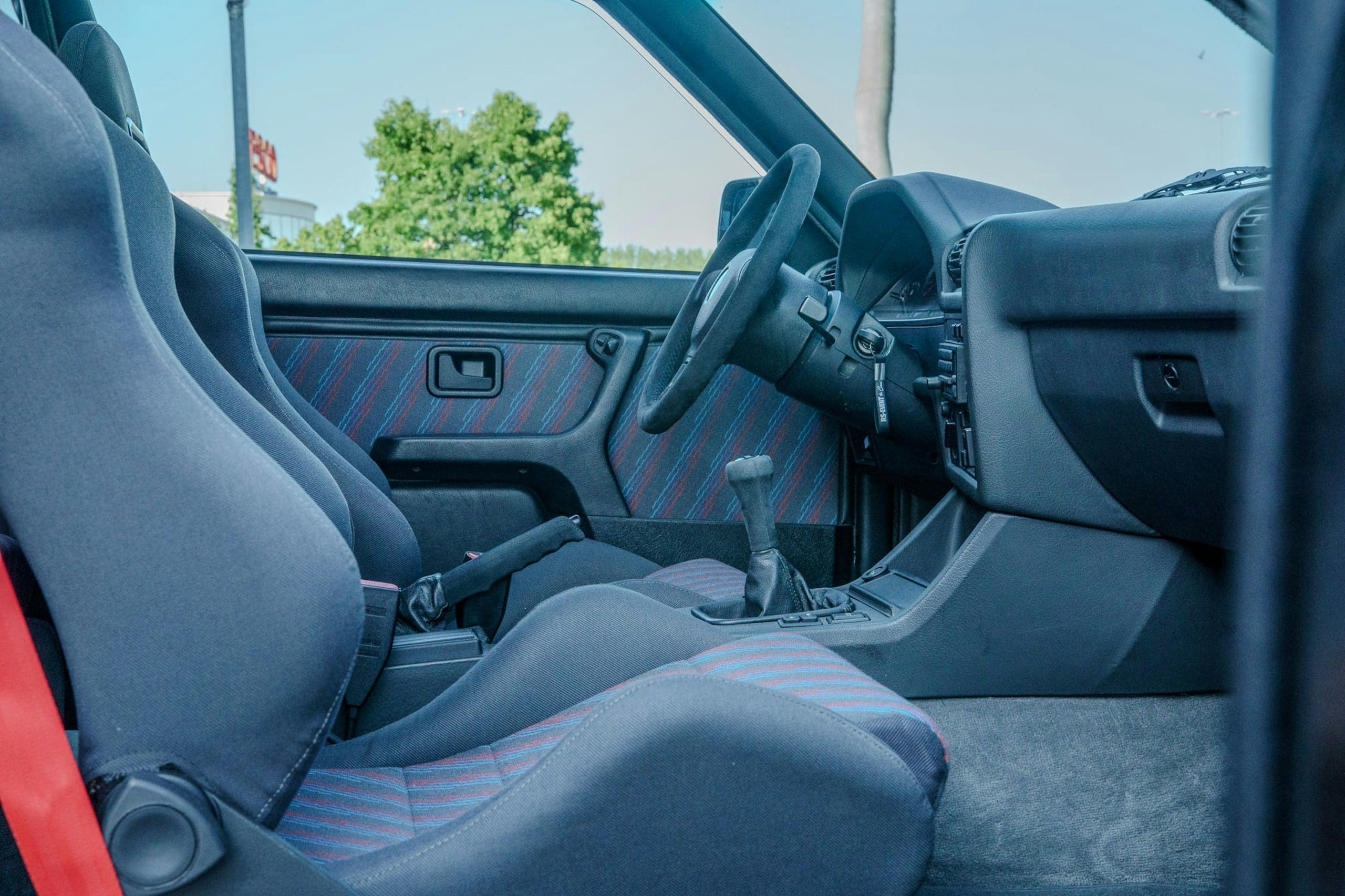
The cabin emphasized driver engagement through systematic elimination of unnecessary equipment. One-piece racing seats with integrated head restraints and side bolstering provided exceptional lateral support during aggressive driving while maintaining minimal mass. Manual crank windows were standard to reduce weight, though power windows and other comfort features remained available as factory options.
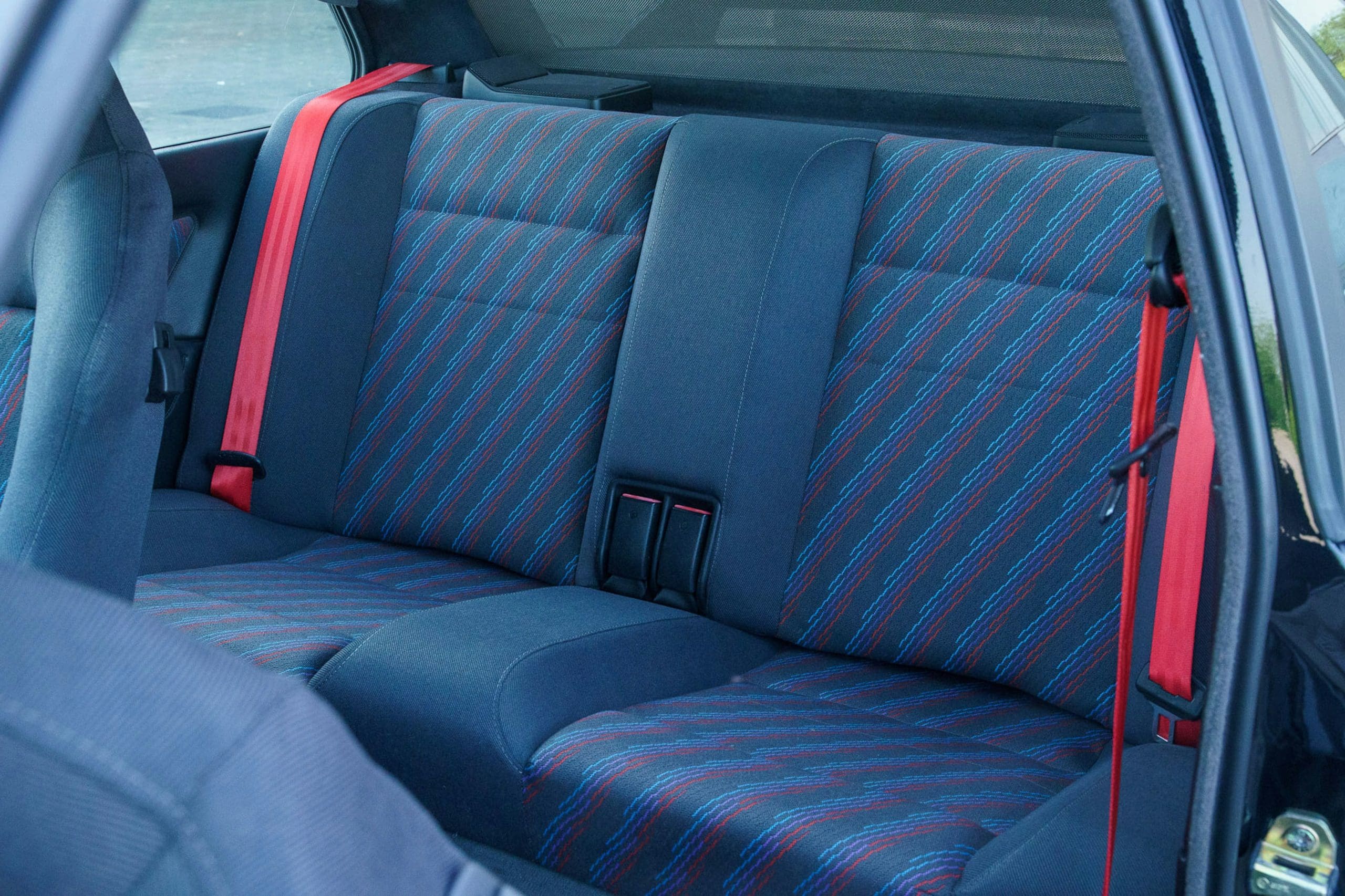
Air conditioning and the sunroof were deleted from standard specification but could be ordered. The oil-temperature gauge replaced the standard economy/fuel-consumption gauge, reflecting the Sport Evolution’s focus on engine monitoring essential for high-performance driving. Straightforward instrumentation displayed essential parameters necessary for exploiting the engine’s full potential.
Specifications
- Engine: BMW S14B25 naturally aspirated inline-four, 2,467cc, DOHC, 16 valves
- Power: 238 PS / 235 hp at 7,000 rpm
- Torque: 177 lb-ft / 240 N·m at 4,750 rpm
- Transmission: Five-speed manual Getrag gearbox, rear-wheel drive
- Chassis: Steel monocoque based on E30, 2,565mm wheelbase
- Suspension: MacPherson struts (front), semi-trailing arms (rear), coil springs
- Brakes: 280-mm ventilated front discs, 282-mm solid rear discs, single-piston calipers, ABS
- Wheels: 16-inch BBS cross-spoke forged alloy, performance tires
- Weight: Approximately 1,200 kg / 2,645 lbs curb weight
- Performance: 154 mph / 248 km/h top speed, 0-60 mph in approximately 6.1 seconds
Production and Legacy
BMW produced exactly 600 examples of the Sport Evolution between December 1989 and March 1990 to meet FIA Group A homologation requirements. Each car was built to exacting standards reflecting BMW Motorsport’s engineering specifications. Production methodology ensured consistency throughout the limited run, with cars distributed through standard BMW dealerships to retail customers worldwide.
The Sport Evolution proved that naturally aspirated engineering combined with comprehensive weight reduction could establish genuine competition capability within road-legal parameters. The combination of high-revving character, mechanical authenticity, and exclusive production established lasting appeal among BMW enthusiasts and collectors.
Today, Sport Evolution examples command strong collector appreciation reflecting their legendary status and extreme rarity. With only 600 examples built, the Sport Evolution remains one of the rarest factory E30 M3 variants and among the most coveted versions of Munich’s iconic performance sedan.
The BMW M3 E30 Sport Evolution represented the apex of the E30 generation, proving that mechanical excellence and focused engineering could create something enduring. It remains one of the greatest homologation specials ever created, establishing an enduring legacy within BMW M’s legendary performance heritage.