
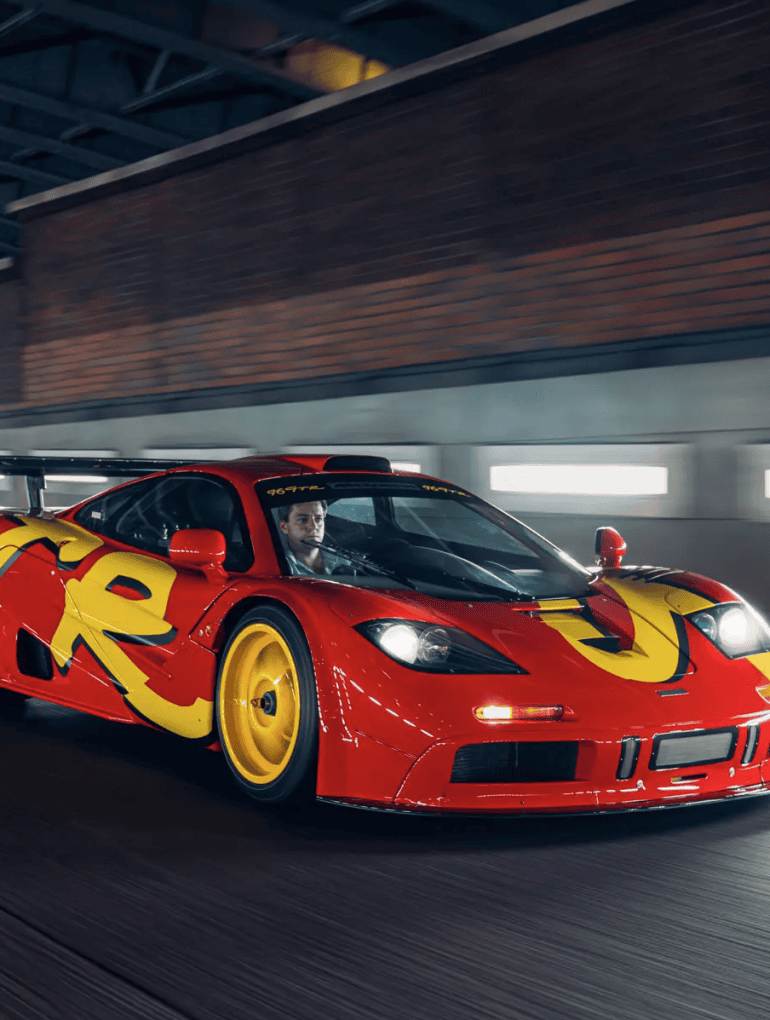

January 1995. McLaren unveiled the F1 GTR, a racing variant developed after customer and team pressure convinced Gordon Murray to transform his ultimate road car into competition machinery. The 6.1-liter naturally aspirated BMW V12 produced 600 bhp at 7,500 rpm through mandatory FIA air restrictors. The car weighed approximately 1,050 kilograms in 1995 trim, establishing a power-to-weight ratio of approximately 1.75 kg/hp. At the 1995 Le Mans 24 Hours, a Kokusai Kaihatsu Racing F1 GTR driven by JJ Lehto, Yannick Dalmas and Masanori Sekiya achieved overall victory on McLaren’s first attempt. Production ran from 1995 through 1997, with exactly 28 examples built across three distinct specifications.
Background and Origins
The F1 GTR emerged from persistent customer and racing team pressure to transform Gordon Murray’s ultimate road car into competition machinery. Murray notoriously designed the F1 strictly as the definitive road supercar, with no racing intent whatsoever. Racing driver Ray Bellm and F1 owner Thomas Bscher were among those persistently requesting that McLaren develop racing variants. Murray eventually relented, agreeing to develop GTR variants for the 1995 BPR Global GT Series.
The development process remained grounded in Murray’s philosophy of engineering excellence through systematic refinement. Rather than creating entirely new components, McLaren extracted maximum performance from the existing F1 platform through suspension tuning, aerodynamic optimization and strategic modifications. The car maintained the mid-engine layout, BMW V12 power and fundamental architecture defining the road car, ensuring that racing success would validate road-car engineering principles rather than representing an entirely different philosophy.
Design and Engineering
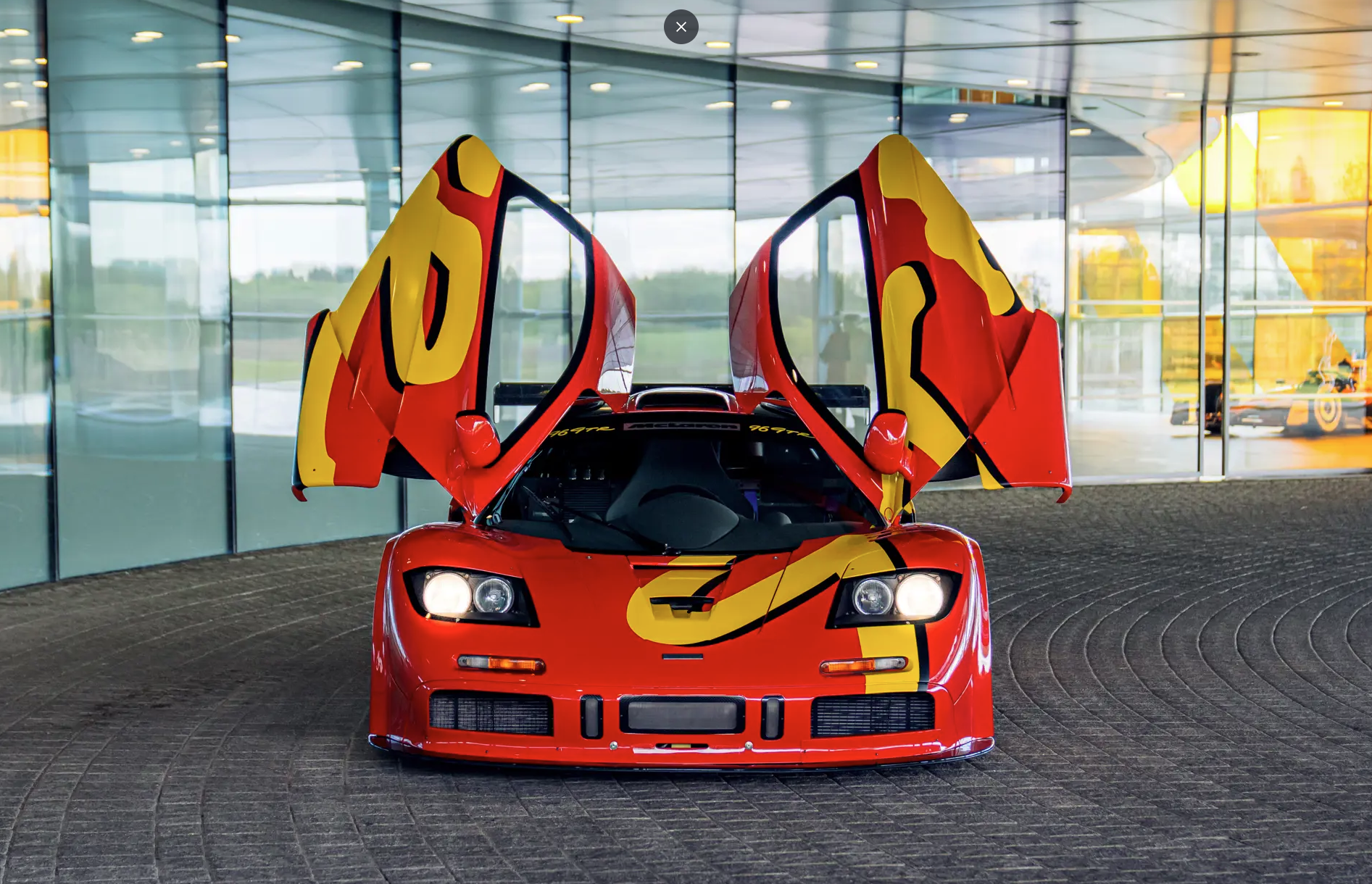
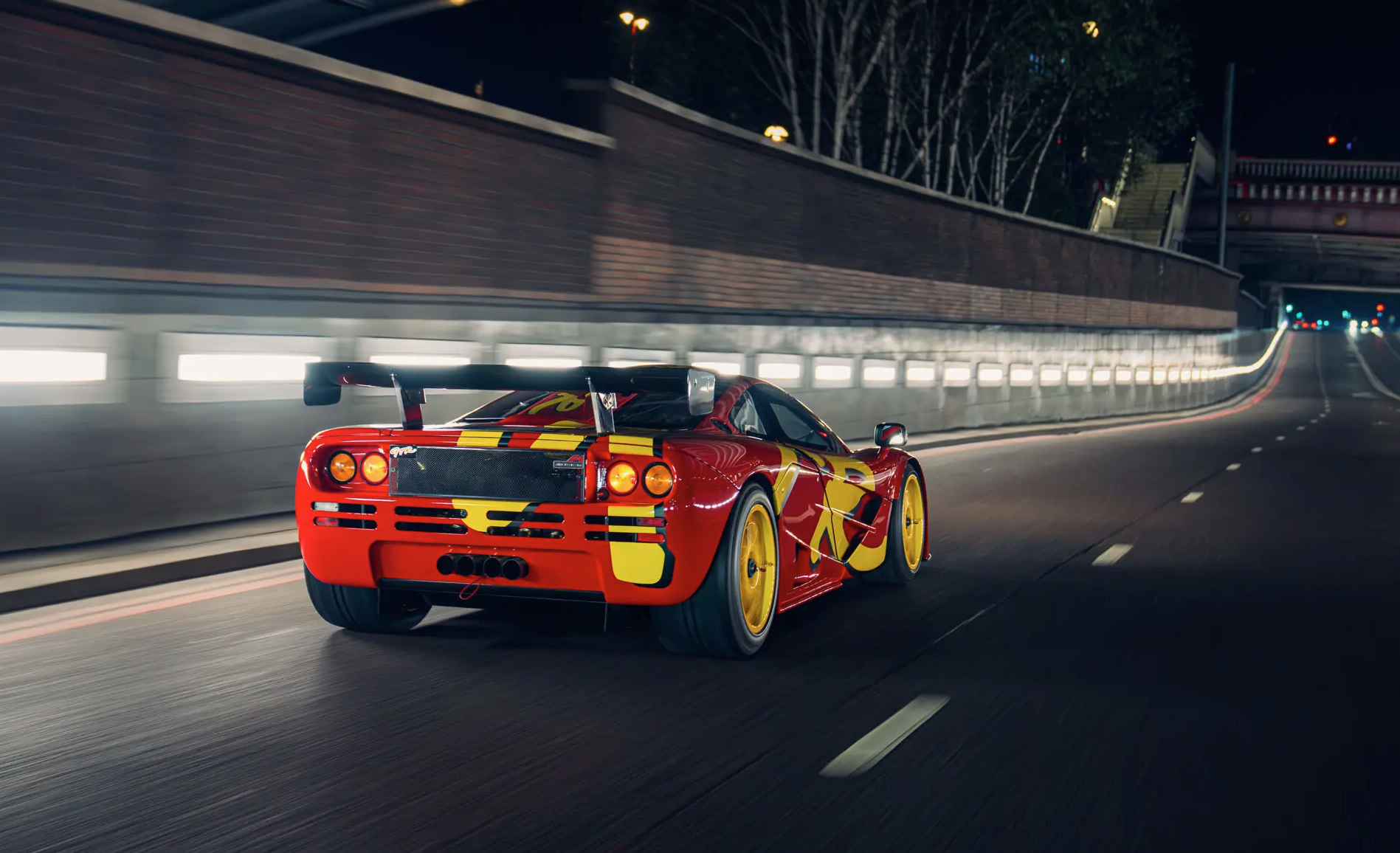
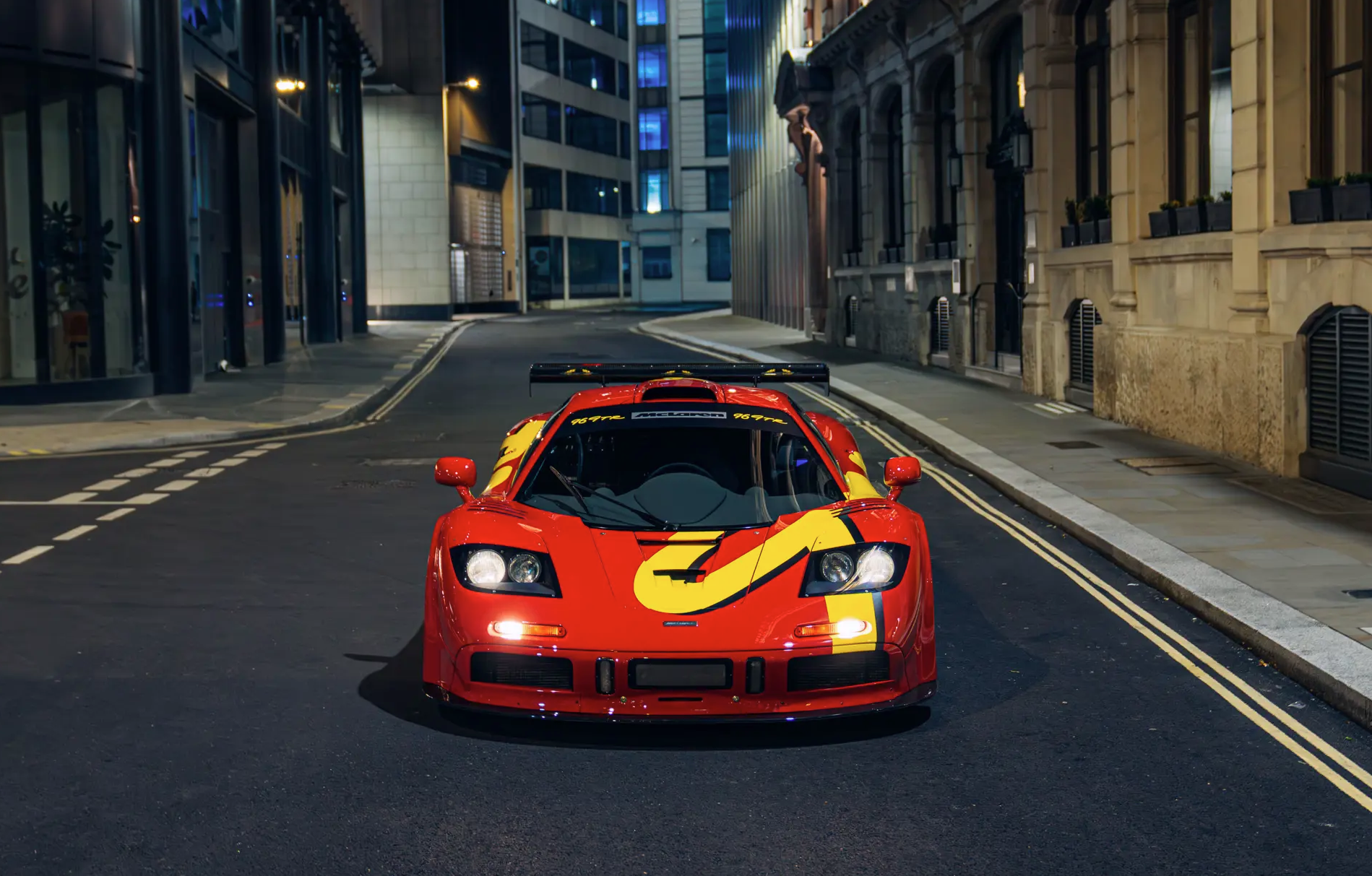
The F1 GTR retained the elegant mid-engine proportions established by the road car but incorporated aerodynamic modifications establishing its racing character. Carbon-fiber bodywork was extensively revised, with enlarged front splitter and comprehensive aerodynamic treatment generating exceptional downforce. The aerodynamic package combined low drag with substantially increased downforce establishing that genuine high-speed performance required engineering sophistication rather than brute-force mechanical solutions. The overall design reflected Murray’s belief that racing success demanded systematic development rather than revolutionary transformation.
The chassis employed independent double-wishbone suspension front and rear with coil springs and adjustable dampers calibrated specifically for endurance racing performance. Anti-roll bars provided cornering control appropriate for circuit racing. Braking was by Brembo carbon-carbon racing brake discs with competition-specification calipers. The unassisted steering retained the direct feedback characteristic of the F1, reflecting Murray’s preference for mechanical directness while minimizing weight.
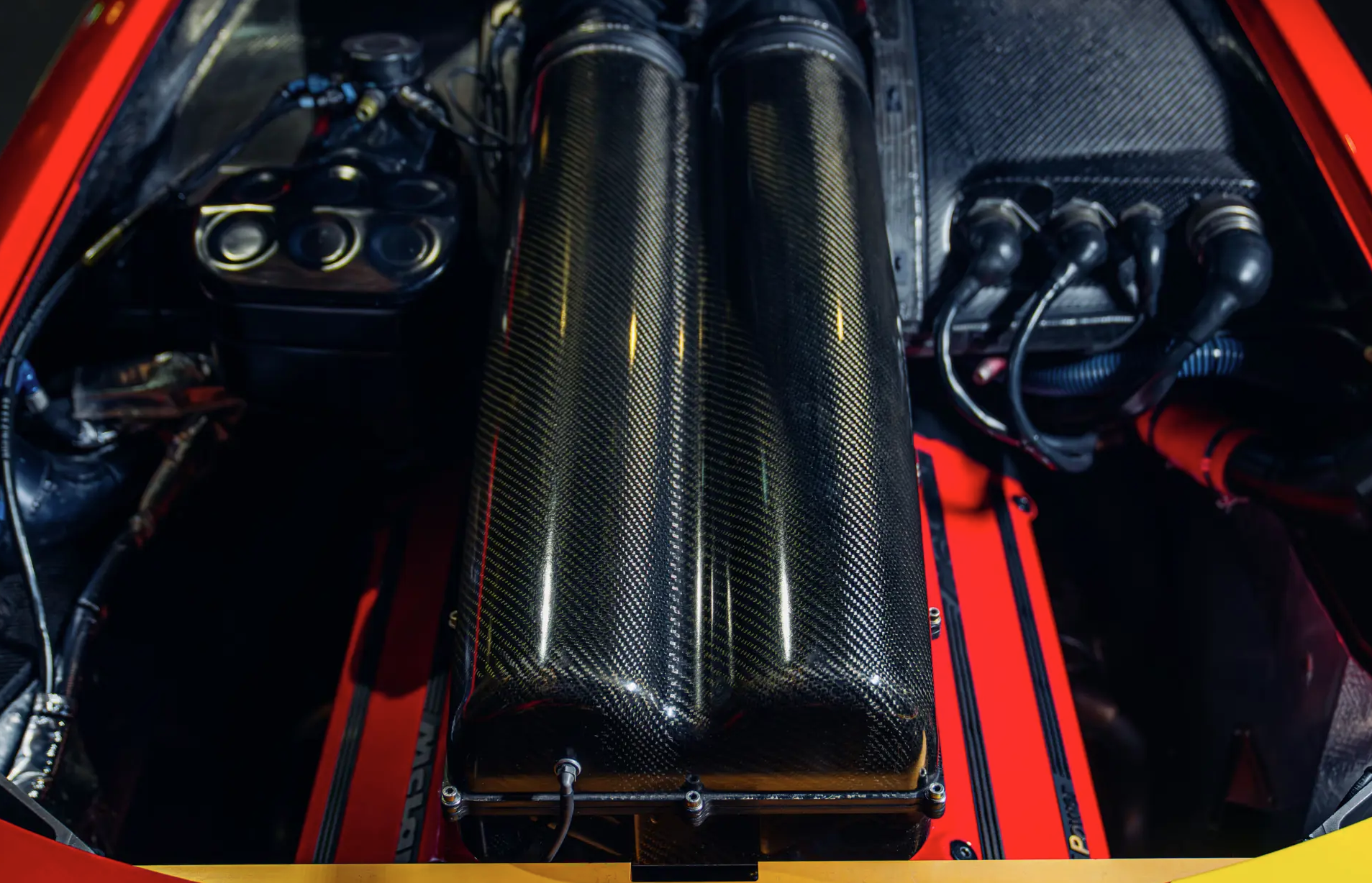
The 6,064-cubic-centimeter naturally aspirated BMW S70/2 V12 represented one of motorsport’s most sophisticated naturally aspirated engines, with four valves per cylinder—48 total valves—controlled by dual overhead camshafts. The engine featured an 11.0:1 compression ratio and sophisticated fuel injection. FIA regulations mandated air restrictors mounted in the roof intake for competitive parity, reducing output to 600 bhp at 7,500 rpm versus 627 bhp in road specification. The GTR competition engine featured fixed racing camshaft profiles maximizing durability and high-rpm consistency.
The power delivery was distinctly high-revving and responsive, requiring precise driving technique to exploit the engine’s full potential. The transmission and drivetrain arrangements varied significantly across the three production generations. The limited-slip differential managed torque distribution effectively. This emphasis on mechanical sophistication reflected Murray’s philosophy celebrating driver connection and engineering authenticity within competitive environments.
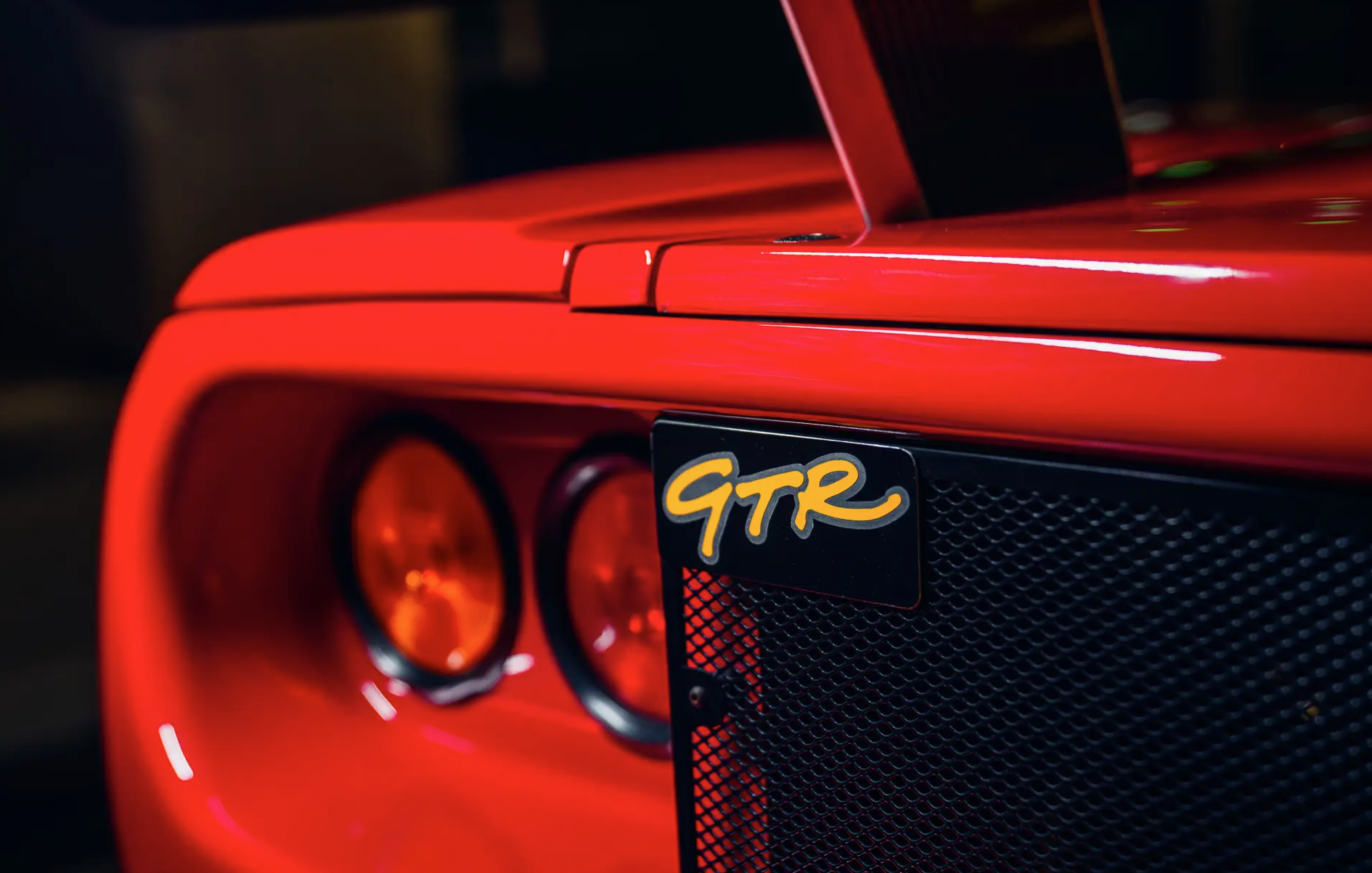
Weight management evolved dramatically across production years. The 1995 GTR weighed approximately 1,050 kilograms in racing trim. For 1996, McLaren achieved approximately 38 kilograms weight reduction through suspension and drivetrain modifications including lightened magnesium gearbox housing, establishing approximately 1,012 kilograms. The 1997 Longtail represented the ultimate evolution, reducing weight to approximately 915 kilograms despite substantially longer and wider bodywork through extensive carbon-fiber optimization.
Styling
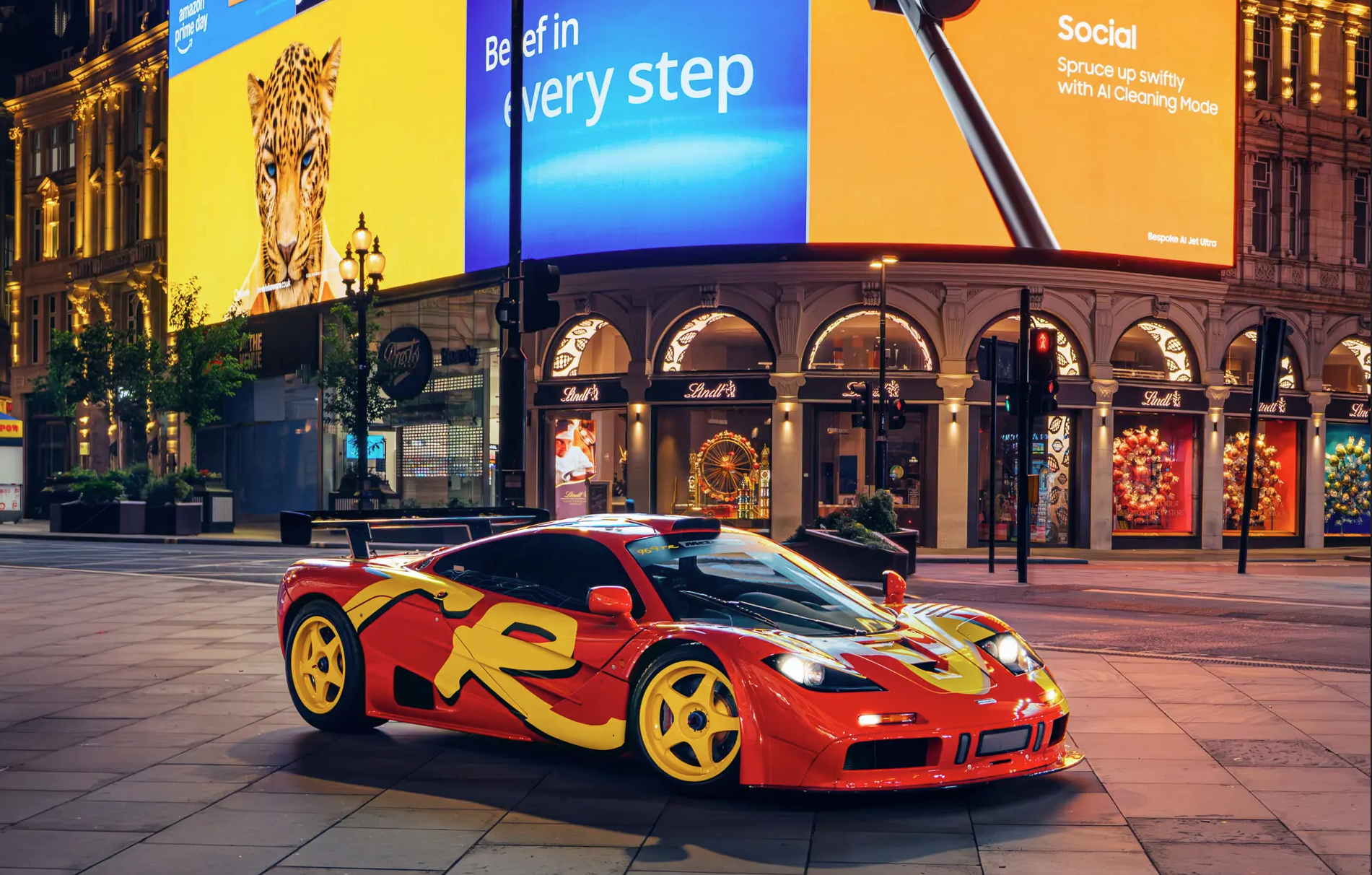
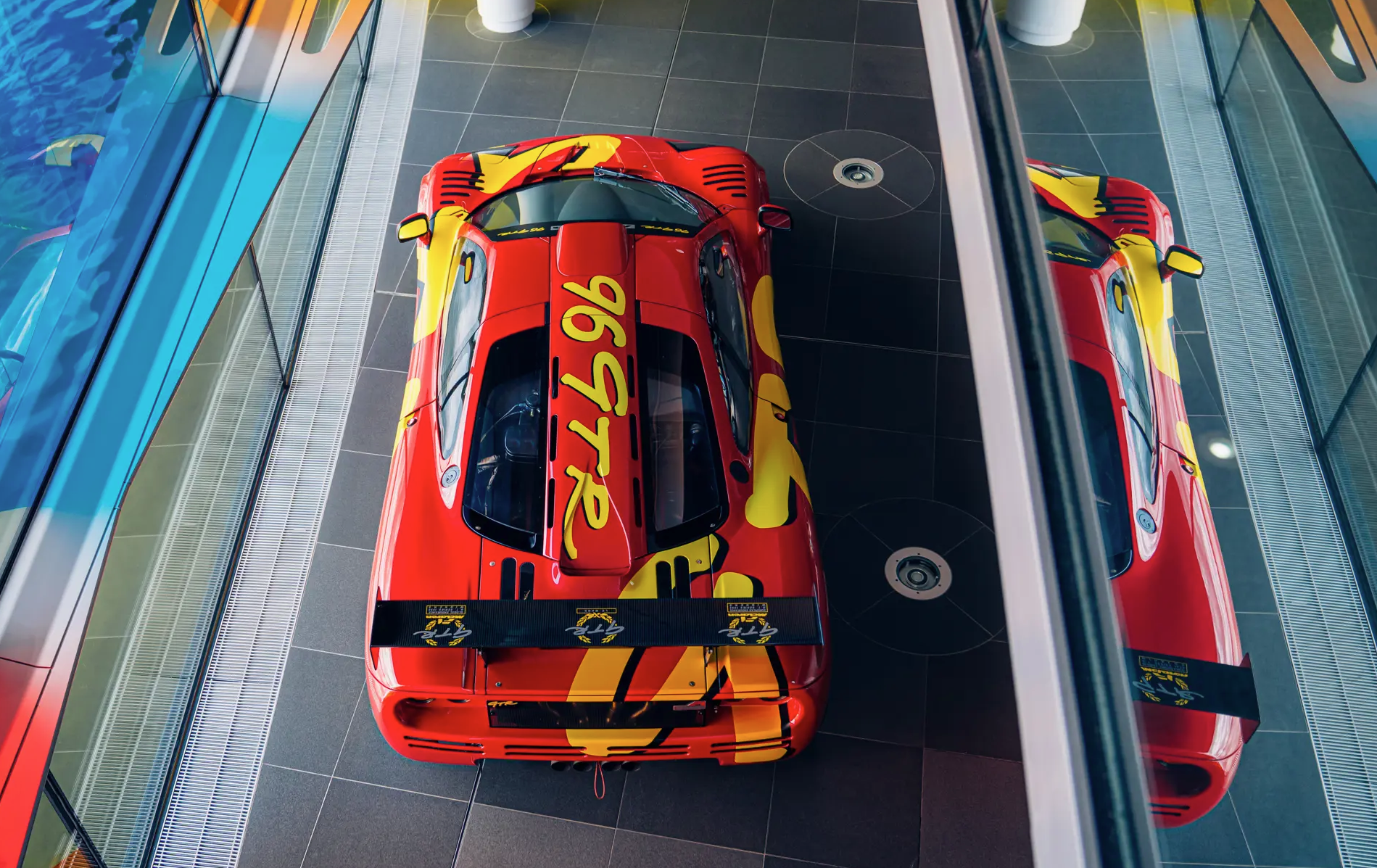
McLaren’s racing design created visual distinctiveness immediately recognizing the F1 GTR’s racing evolution. Extended carbon-fiber bodywork, aggressive aerodynamic treatment and comprehensive functional modifications established purposeful racing aesthetics celebrating performance over visual drama. The Longtail variant’s dramatic rear extension and raised intake snorkel established one of motorsport’s most visually distinctive competition machines. F1 GTRs appeared in a wide variety of team and sponsor liveries, with the Gulf Racing orange-and-blue cars becoming among the most recognizable examples. Kokusai Kaihatsu, Giroix, West and other teams fielded their own distinctive liveries throughout 1995 and subsequent seasons.
Interior
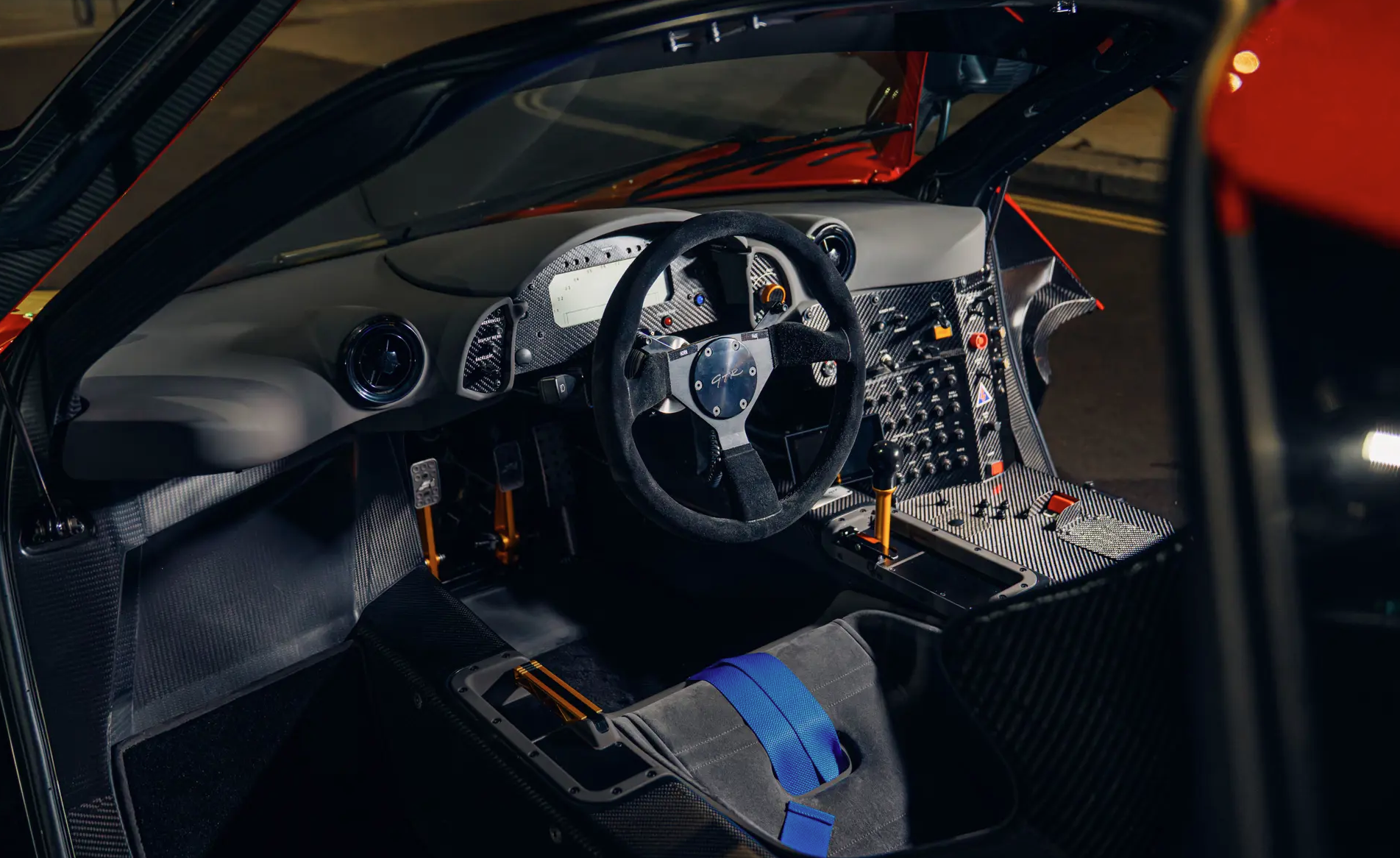
The racing cabin emphasized driver engagement combined with safety equipment necessary for endurance competition. Racing seats with multi-point safety harnesses provided exceptional lateral support during aggressive driving. Adjustable steering wheel and pedal box accommodated different drivers throughout extended endurance stints. Straightforward instrumentation displayed essential performance parameters including lap-time tracking and engine monitoring systems.
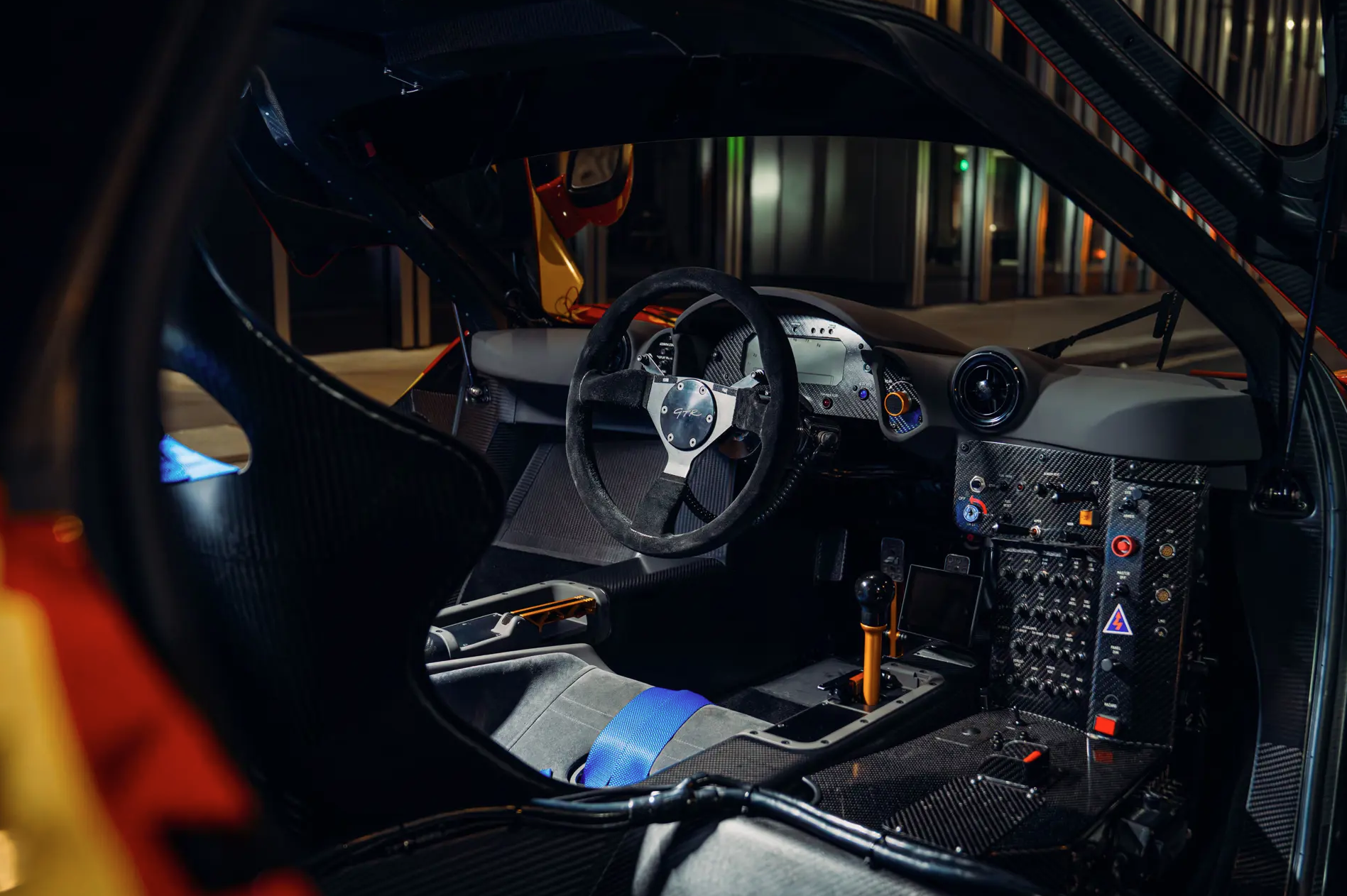
Roll-over protection cage, fire suppression systems and comprehensive safety equipment reflected contemporary racing regulations. The 1997 Longtail introduced ABS braking system, representing a significant technological advancement for endurance racing stability during extended Le Mans competition.
Specifications
- Engine: BMW S70/2 naturally aspirated V12, 6,064cc, DOHC, four valves per cylinder, 48 valves total
- Power: 600 horsepower at 7,500 rpm (FIA air-restrictor spec)
- Torque: 480 lb-ft / 650 N·m at 5,600 rpm
- Transmission: Six-speed dog-clutch racing gearbox
- Chassis: Carbon-fiber monocoque
- Suspension: Independent double wishbones (front and rear), coil springs, adjustable dampers
- Brakes: Carbon-carbon racing discs with competition-specification calipers
- Steering: Unassisted rack-and-pinion
- Weight: Approximately 1,012 kg / 2,230 lbs
- Mulsanne Straight speed (recorded): 330 km/h / 205 mph
- Performance: 0-60 mph in approximately 3.0 seconds (theoretical)
Production and Legacy
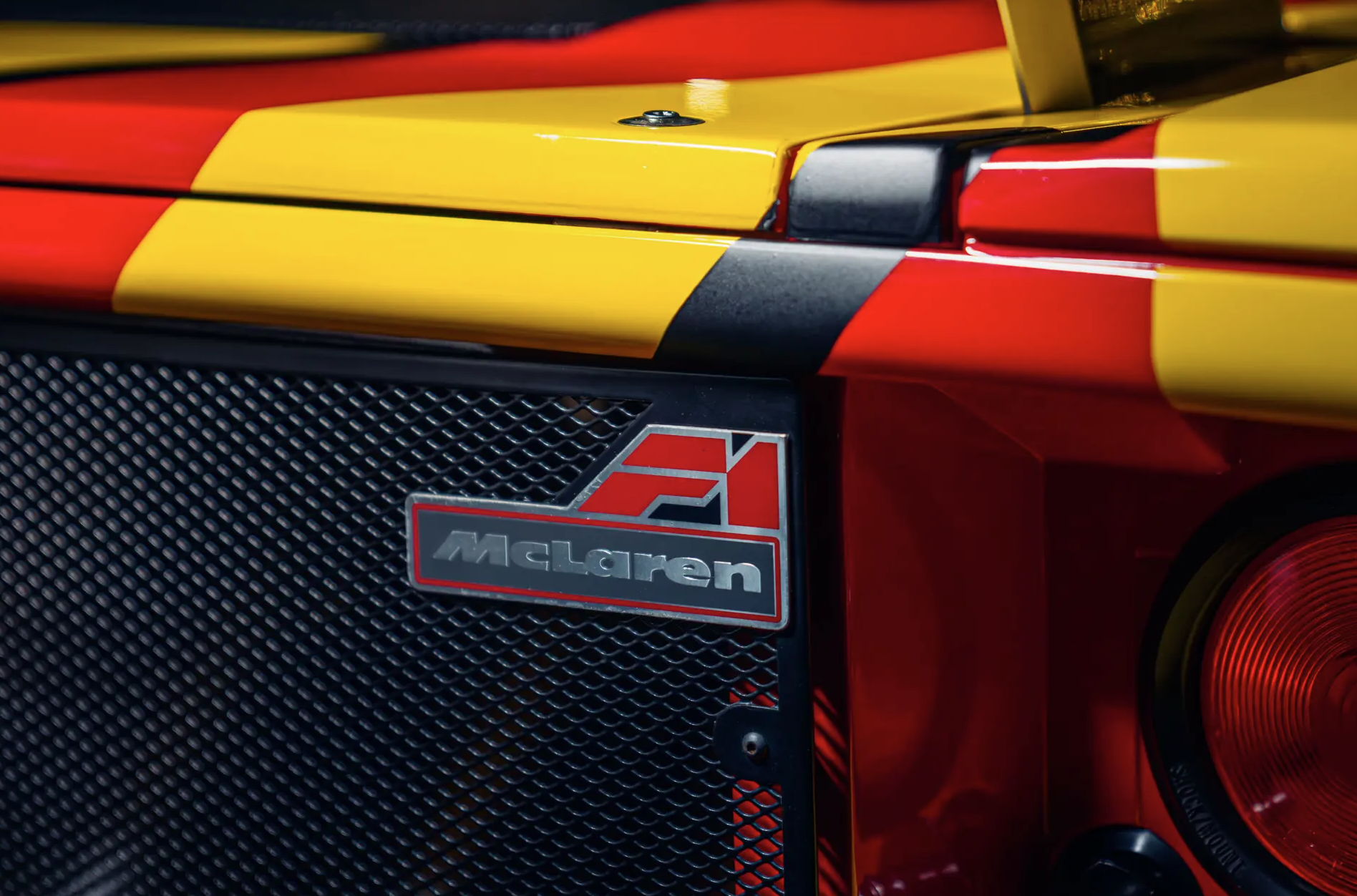
McLaren produced exactly 28 F1 GTR examples across three production years: nine in 1995 specification, nine in 1996 specification, and ten in 1997 Longtail specification. Each car received meticulous assembly reflecting McLaren’s racing standards and individual optimization for specific competitions and customer requirements.
The F1 GTR achieved legendary status through extraordinary racing success. At the 1995 Le Mans 24 Hours, the Kokusai Kaihatsu Racing F1 GTR driven by JJ Lehto, Yannick Dalmas and Masanori Sekiya achieved overall victory. This was McLaren’s first Le Mans start and win—a feat only matched by Ferrari in 1949 among manufacturers winning the race on their first overall attempt. Five of the seven F1 GTRs that started finished, with four placing in the top five positions. The car became one of the dominant GT racing cars of the mid-1990s, contributing to championship successes in the BPR era and proving particularly successful in Japan’s All-Japan Grand Touring Car Championship.
The F1 GTR proved that refined road-car engineering combined with systematic racing development could establish genuine competition capability rivaling purpose-built racing machinery. The combination of naturally aspirated V12 character, mechanical authenticity and relentless aerodynamic sophistication established lasting appeal among racing historians and competitors.
Today, F1 GTR examples command extraordinary collector appreciation reflecting their legendary racing pedigree and historic significance. The combination of BMW V12 performance, McLaren engineering excellence and enduring Le Mans victory legacy ensure immortal appeal among serious collectors and racing historians.
The McLaren F1 GTR represented Woking at its most accomplished, proving that Gordon Murray’s philosophy of engineering excellence could establish genuine racing credentials without abandoning road-car authenticity or mechanical simplicity. It remains one of the greatest endurance racing machines ever created, establishing an enduring legacy within motorsport history.