

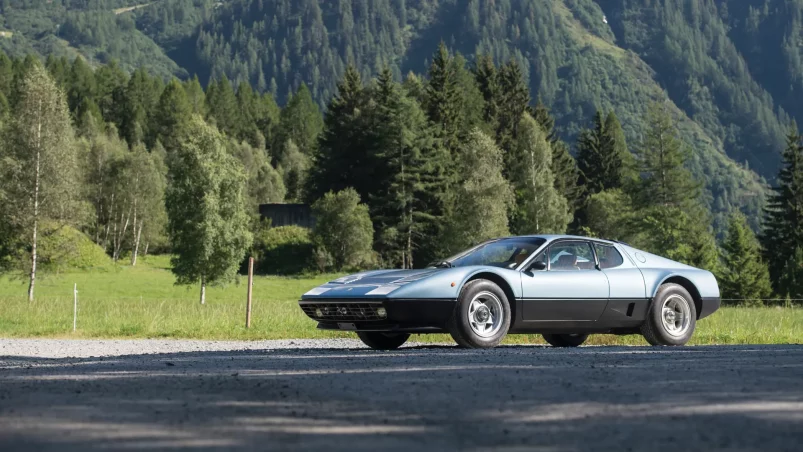
Paris, October 1976. Ferrari unveiled the 512 BB at the Paris Motor Show, a revised version of its mid-engined flagship, the Berlinetta Boxer. The name described the new engine: a 5.0-liter 12-cylinder, enlarged from the 4,390-cubic-centimeter unit of the earlier 365 GT4 BB to 4,942 cubic centimeters. Its commonly quoted European rating was 355 hp, slightly less than its predecessor’s published output, but the larger engine produced more torque and was more tractable. Combined with dry-sump lubrication, a wider rear track and revised aerodynamics, these changes made the 512 BB a more refined evolution of the Boxer. Pininfarina’s design received subtle updates, and the 512 BB served as Ferrari’s flagship road car until the fuel-injected 512 BBi replaced it in 1981. Ferrari built 929 examples.
Background and Origins
The Berlinetta Boxer marked a major change for Ferrari. Its first version, the 365 GT4 BB, appeared as a prototype at the 1971 Turin Motor Show and entered production in 1973. Ferrari had already raced mid-engined 12-cylinder cars, but the 365 GT4 BB was its first mid-engined 12-cylinder road car. It succeeded the front-engined 365 GTB/4 Daytona as the company’s flagship, although the two models overlapped briefly. It was part of a broader move toward high-performance mid-engined road cars, a trend in which Lamborghini’s Miura was a key rival.
The 365 GT4 BB was fast, but it had weaknesses. Its engine used a conventional wet-sump lubrication system, and its power was concentrated at high rpm. For the second-generation Boxer, Ferrari enlarged the flat-12, improved its torque and refined both the chassis and the aerodynamics. The 512 BB debuted at the 1976 Paris Motor Show alongside the four-seat Ferrari 400. Its name followed a new Ferrari naming convention that combined displacement and cylinder count, in this case 5 liters and 12 cylinders.
Design and Engineering
The 512 BB used the Tipo F102 B engine, a 4,942-cubic-centimeter flat-12. It is often described as a 180-degree V12 because opposing cylinders shared crankpins, unlike a true boxer engine. Ferrari increased both the bore and stroke, to 82 and 78 millimeters, and raised the compression ratio from 8.8:1 to 9.2:1. The engine had two belt-driven overhead camshafts per bank, two valves per cylinder and four triple-choke Weber 40 IF3C downdraft carburetors. It produced 355 hp, slightly less peak power than the 365 GT4 BB, but torque rose to about 333 lb-ft at 4,600 rpm, making the larger engine more flexible in everyday driving.
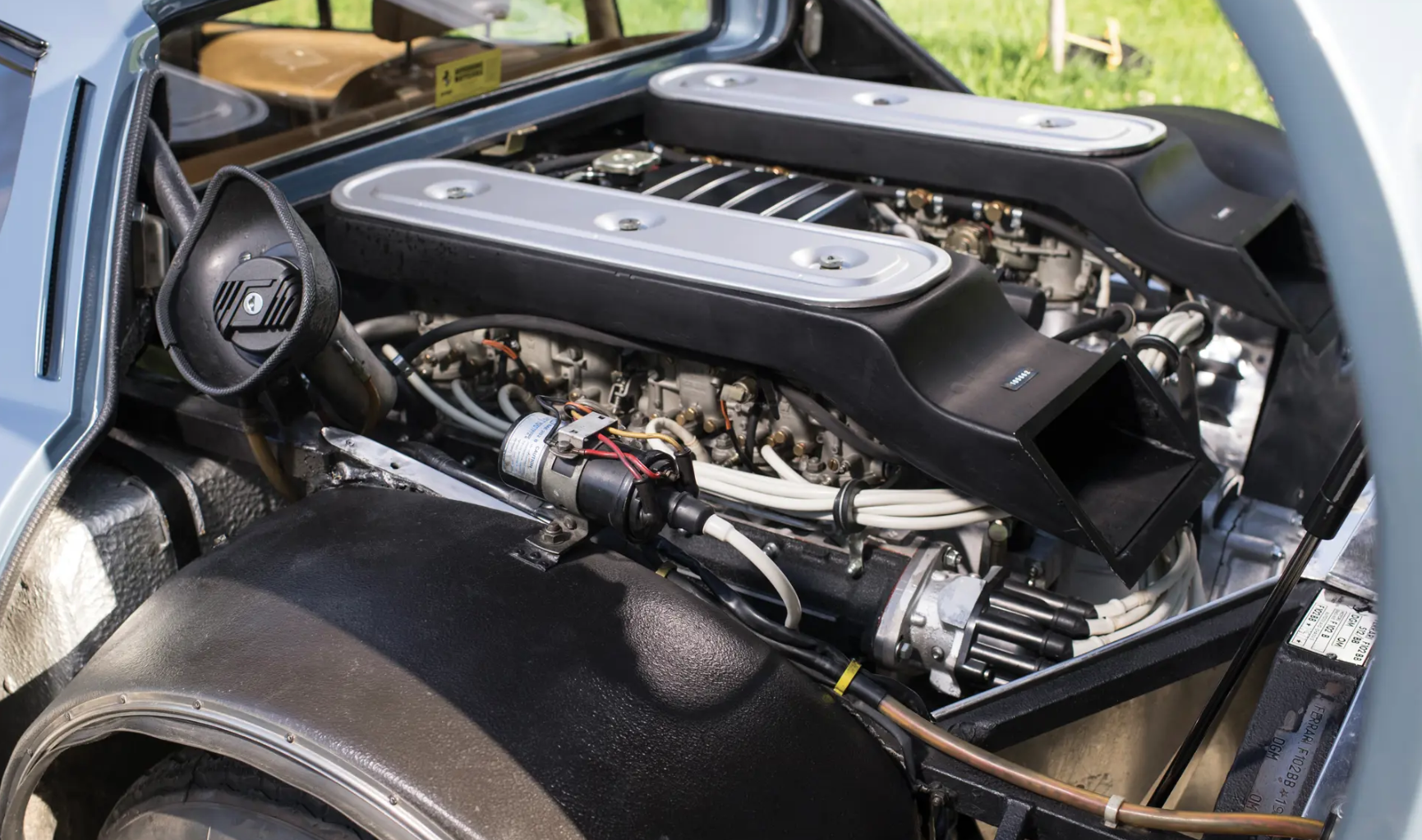
One of the most important changes was the switch from wet-sump to dry-sump lubrication. The dry-sump system maintained a more reliable oil supply under hard cornering and sustained high-speed driving, and it also offered packaging advantages for the engine installation. A twin-plate clutch was fitted to handle the higher torque, and power went to the rear wheels through a five-speed manual gearbox mounted below the engine. The chassis used a tubular steel structure with a monocoque central cell, independent double-wishbone suspension at all four corners with coil springs, dampers and anti-roll bars, and ventilated disc brakes. Ferrari also widened the rear track and fitted wider rear wheels to improve stability. Published performance figures vary considerably. Acceleration from 0 to 60 mph is commonly given as about 5.5 seconds, and Ferrari’s claimed top speed was well above what independent testers recorded. Autocar, for example, achieved about 163 mph in its 1978 road test.
Styling
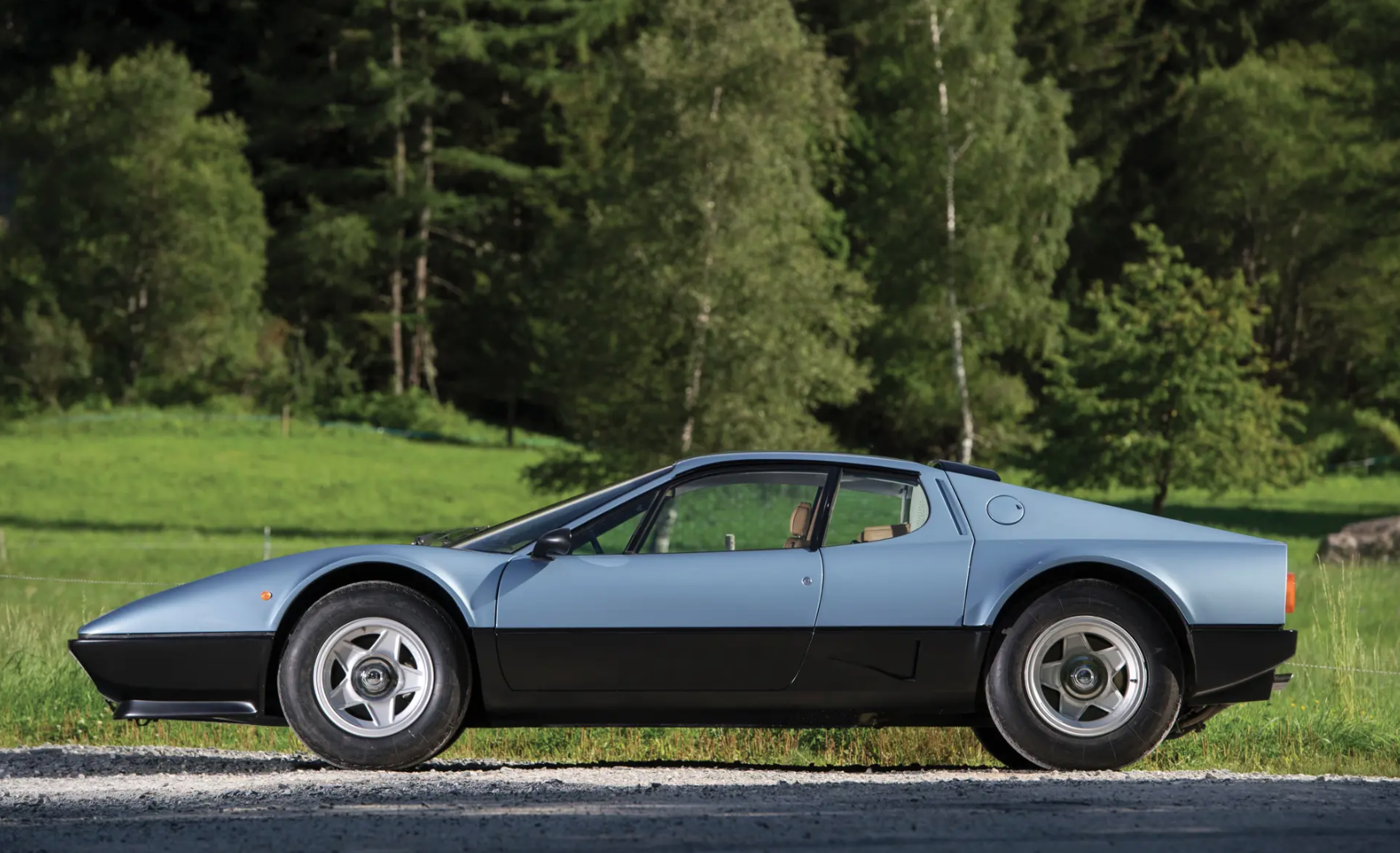
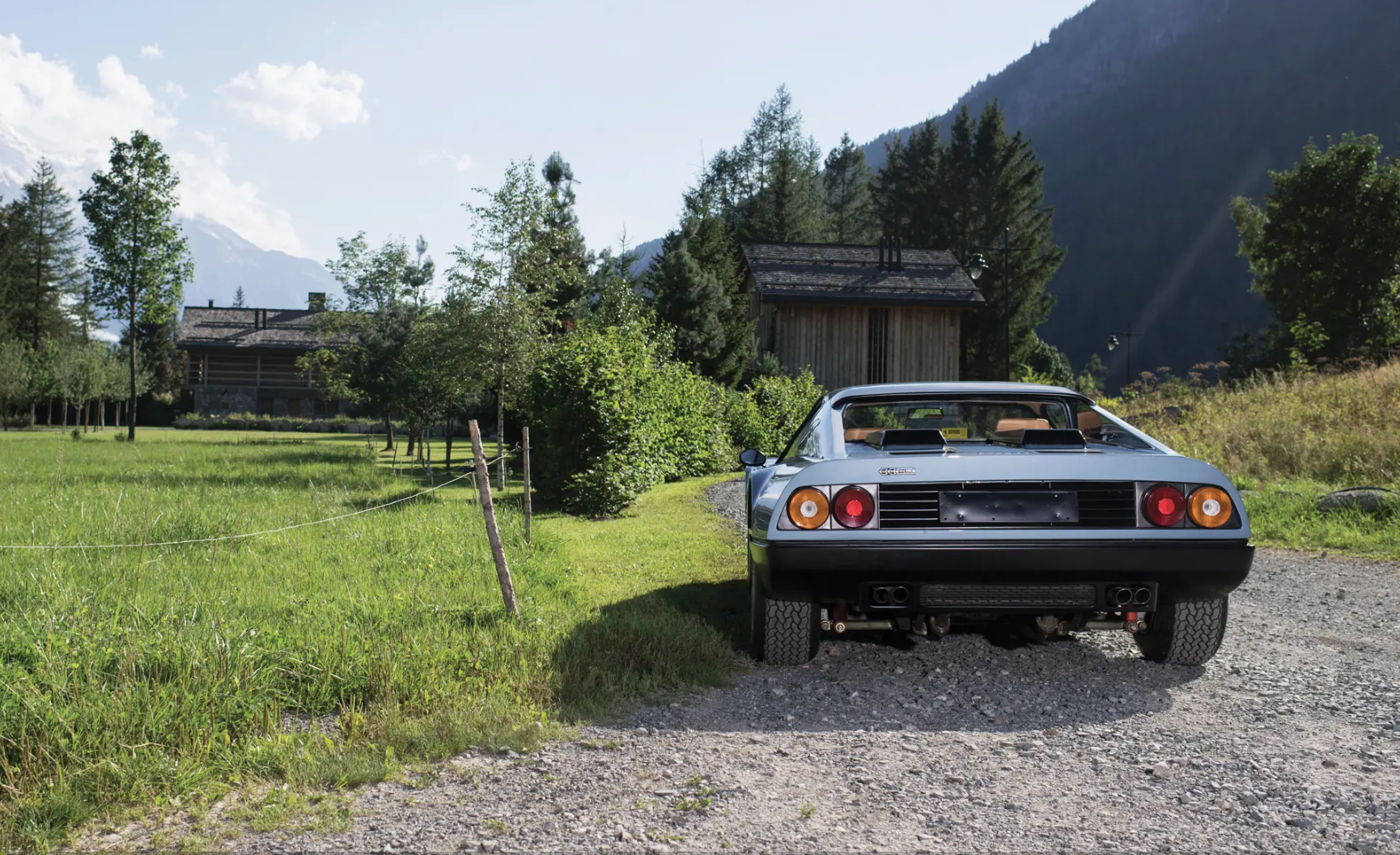
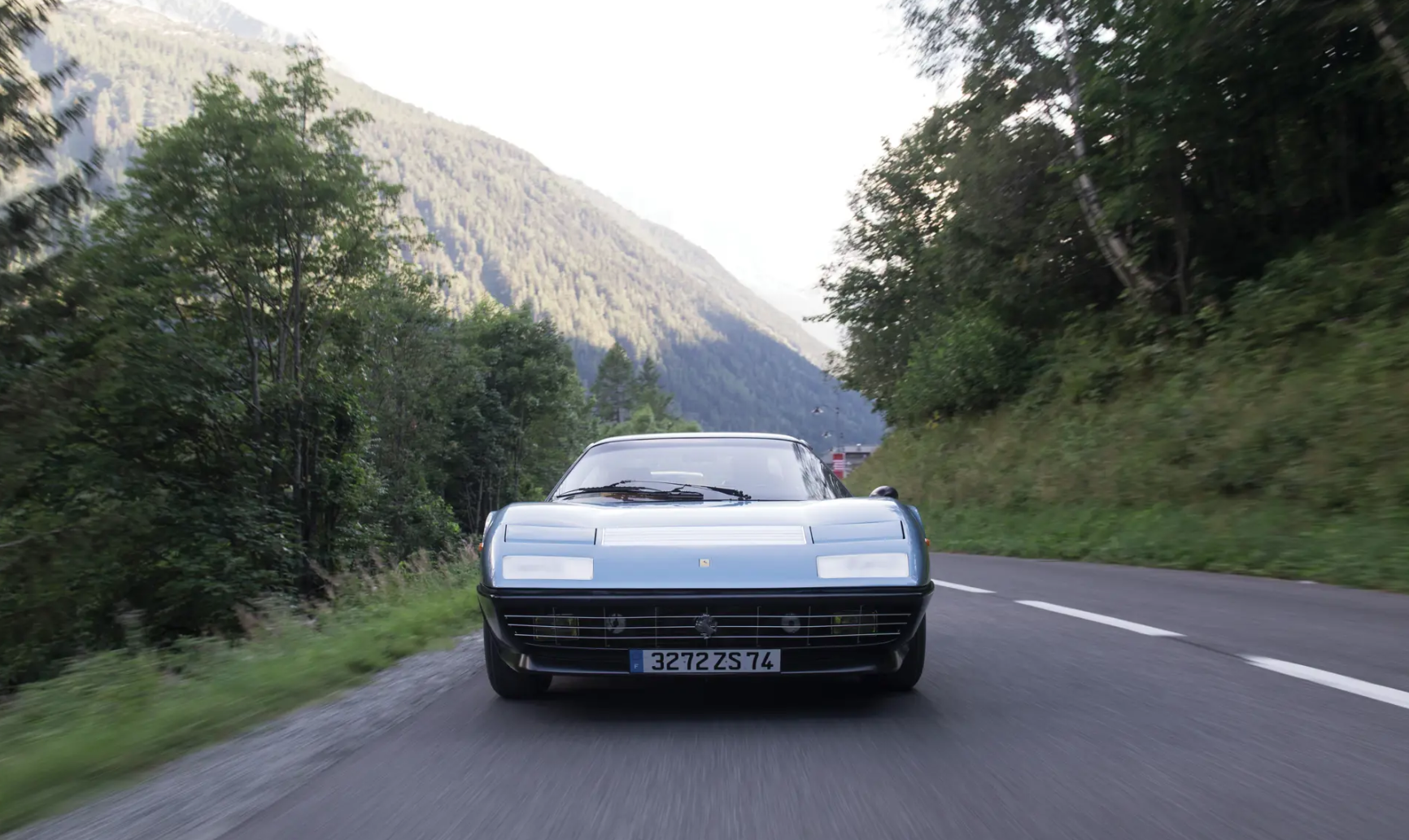
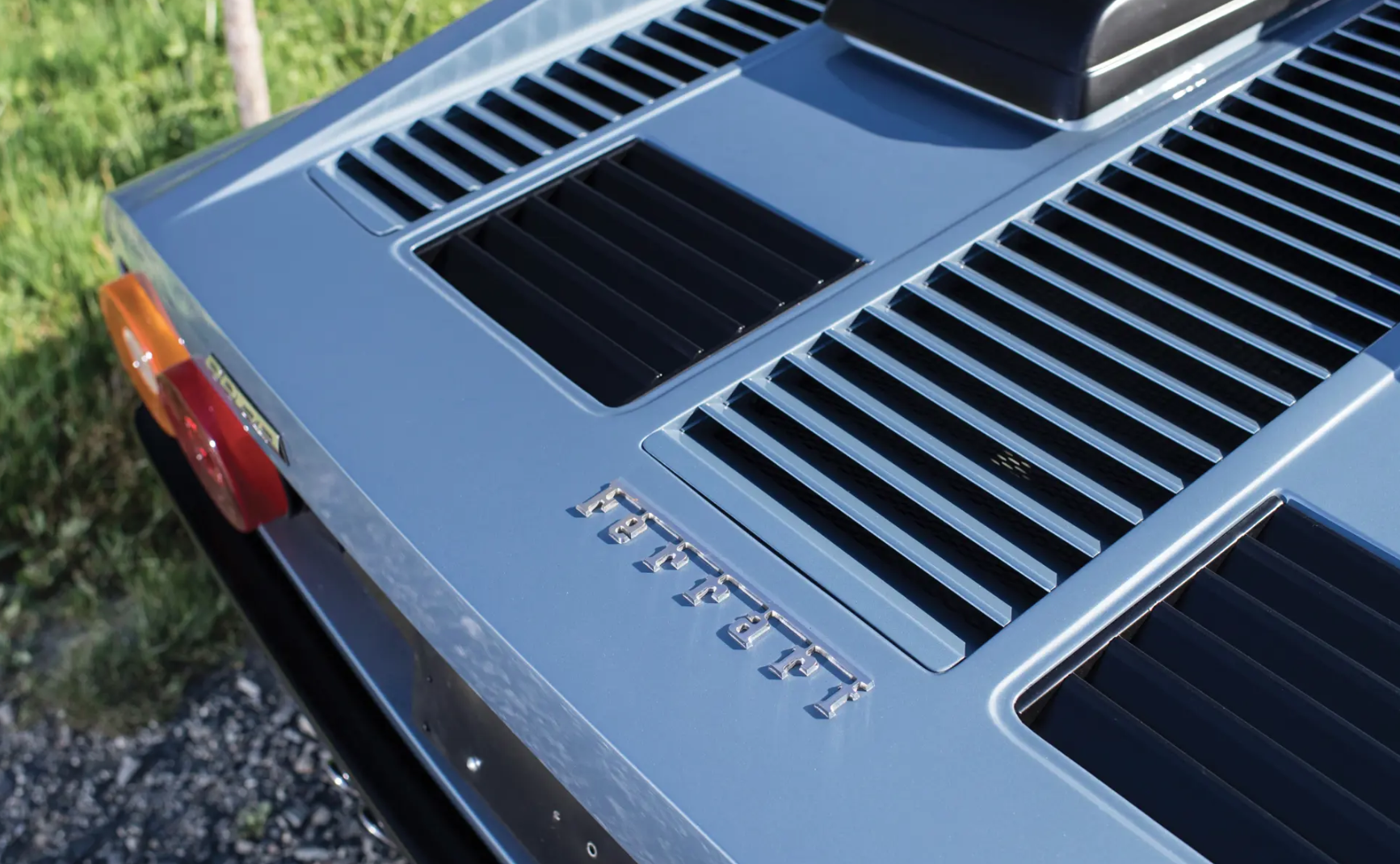
The 512 BB kept Leonardo Fioravanti’s elegant Pininfarina design, with bodies built by Scaglietti, but it received several practical updates. A new chin spoiler reduced lift at high speed, while NACA ducts in the lower body sides provided extra cooling airflow for the rear mechanical components. Sources differ on whether their main purpose was cooling the exhaust, the rear brakes or both. At the back, the 365’s six round taillights were replaced by four, and the black mesh rear panel gave way to horizontal louvers. The rear bodywork was also widened slightly to cover the broader track and tires. The changes made the 512 BB look more purposeful while keeping the low, clean shape that made the Berlinetta Boxer one of the most beautiful supercars of its era.
Interior
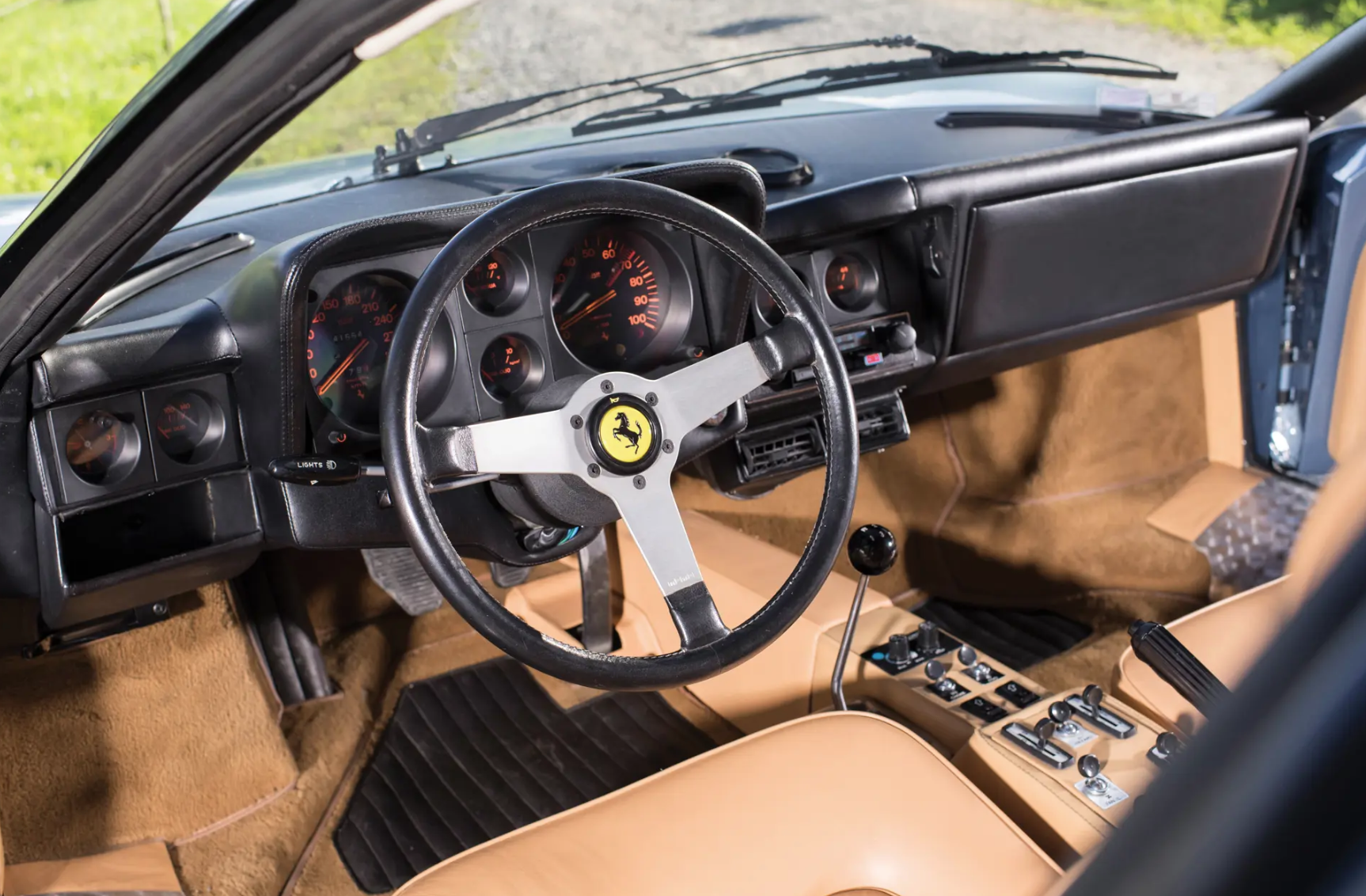
The cabin followed the layout of the 365 GT4 BB, with two seats, a central instrument cluster and Ferrari’s traditional gated gear lever. The interior was trimmed in leather, and equipment such as air conditioning and power windows was fitted to many cars, although specifications varied by market. Space was limited, and the mid-mounted engine made the cabin noisy at speed. Luggage space was restricted to a small compartment at the front, since the engine and transmission filled the rear of the car.
Racing History
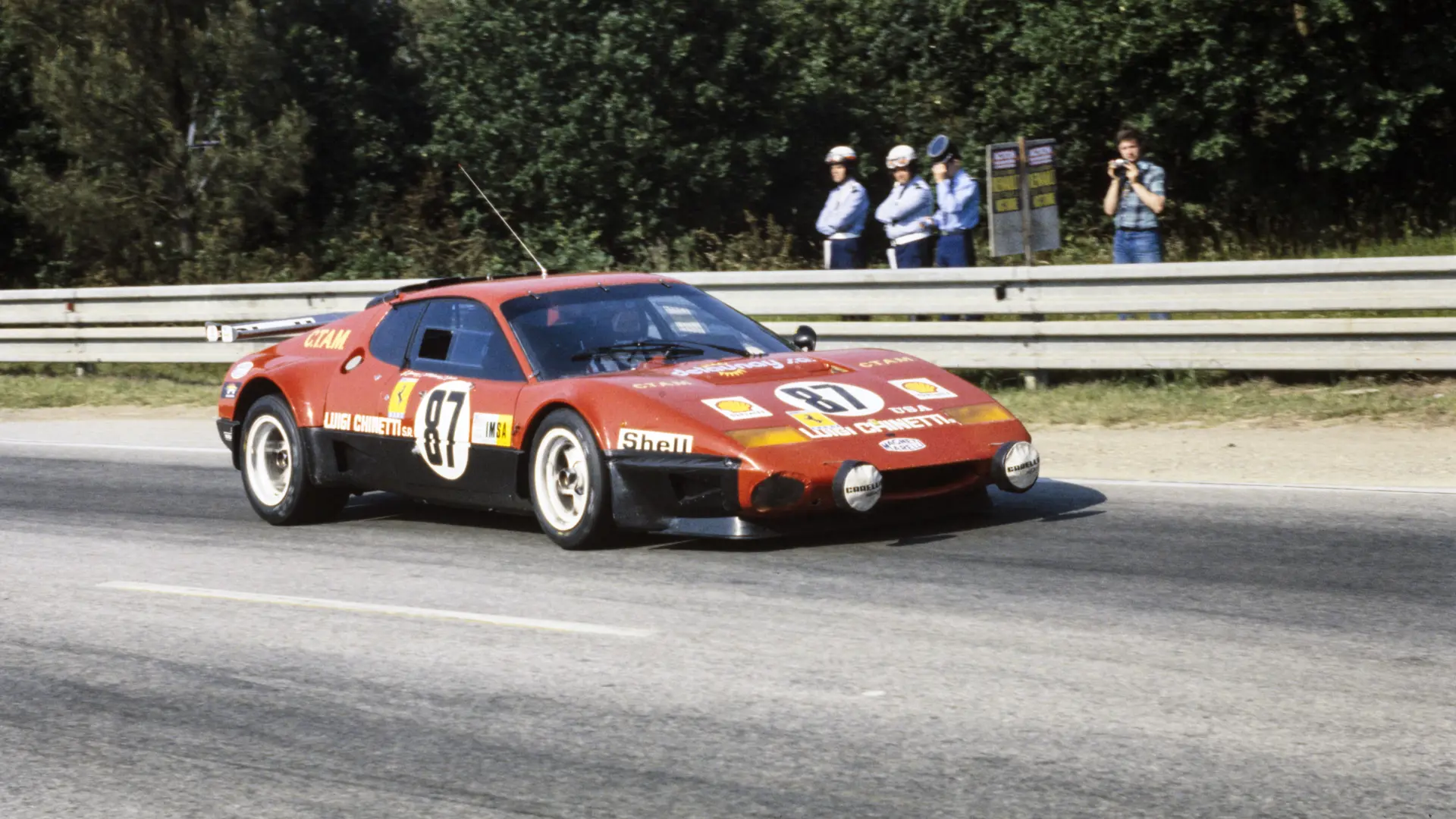
Ferrari did not design the Berlinetta Boxer for racing, but several private teams saw its potential. In the mid-1970s, Luigi Chinetti’s North American Racing Team (NART) developed a competition version of the 365 GT4 BB. It made its debut at Daytona in 1975 and finished sixth at Sebring the same year, helping demonstrate the potential of Ferrari’s mid-engined flat-12 platform. By 1978, Ferrari had begun its own development of a competition version of the 512 BB, known as the 512 BB Competizione. For that year’s 24 Hours of Le Mans, three cars were prepared in Modena with factory support, two for French importer Charles Pozzi and one for NART. Ecurie Francorchamps in Belgium entered a fourth car, built from an existing road car using a mix of factory and team-prepared parts. None of the four finished.
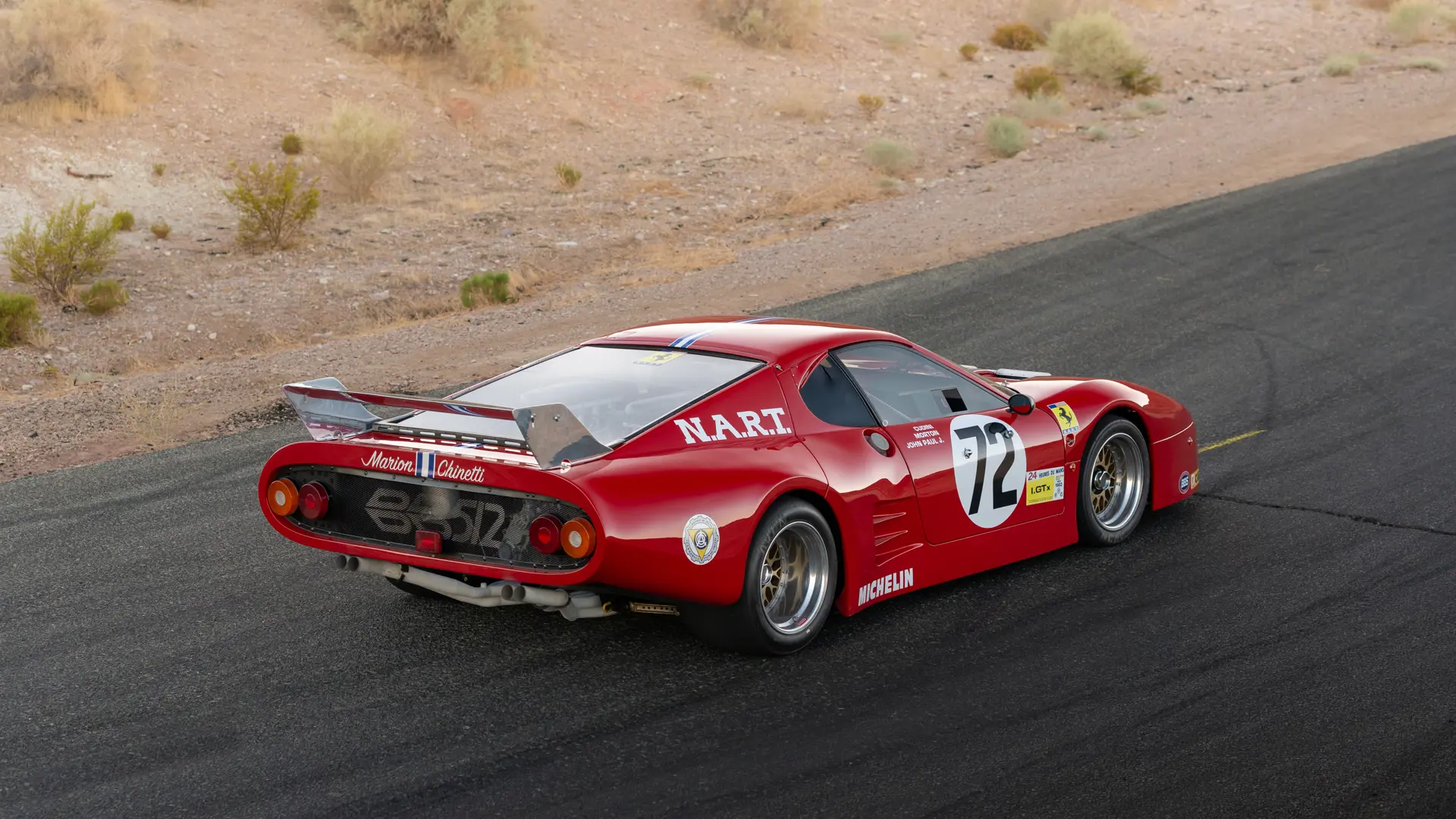
Ferrari then developed a far more extensive racing model, the 512 BB LM. It received a longer, wider body designed by Pininfarina for the high speeds of the Mulsanne Straight, along with improvements to the engine, brakes and suspension. Ferrari built nine of these cars in 1979 and 16 more from 1980 to 1982, for a total of 25, and continued developing the design throughout production. Scuderia Ferrari never raced the 512 BB LM itself. Instead, private teams with varying levels of factory support entered it in events including the 24 Hours of Daytona and the 24 Hours of Le Mans.
The car’s best results came in the early 1980s. At Le Mans in 1980, a Pozzi-entered car driven by Pierre Dieudonné, Jean Xhenceval and Hervé Regout finished 10th overall. In 1981, Pozzi’s No. 47 car, driven by Jean-Claude Andruet and Claude Ballot-Léna, finished fifth overall and won the IMSA GTX class, the 512 BB LM’s best Le Mans result. A year later, a 512 BB LM finished sixth overall. Changes to international sports car racing regulations after 1982 effectively ended its competitive period at Le Mans. Some examples continued racing elsewhere through the mid-1980s, but the model’s most successful years were over.
Specifications
- Engine: Ferrari Tipo F102 B flat-12 (commonly described as a 180-degree V12), 4,942cc, DOHC per bank, 24 valves, four Weber 40 IF3C triple-choke carburetors, dry-sump lubrication
- Bore and stroke: 82 mm x 78 mm
- Compression ratio: 9.2:1
- Power: 355 hp (commonly quoted European rating)
- Torque: Approximately 333 lb-ft at 4,600 rpm
- Transmission: Five-speed manual, rear-wheel drive, twin-plate clutch
- Chassis: Tubular steel structure with a monocoque central cell
- Body: Pininfarina design, built by Scaglietti
- Suspension: Independent double wishbones front and rear, with coil springs, dampers and anti-roll bars
- Brakes: Ventilated discs front and rear
- Performance: 0-60 mph in approximately 5.5 seconds; top speed varies by source, with Autocar recording about 163 mph in 1978
Production and Legacy
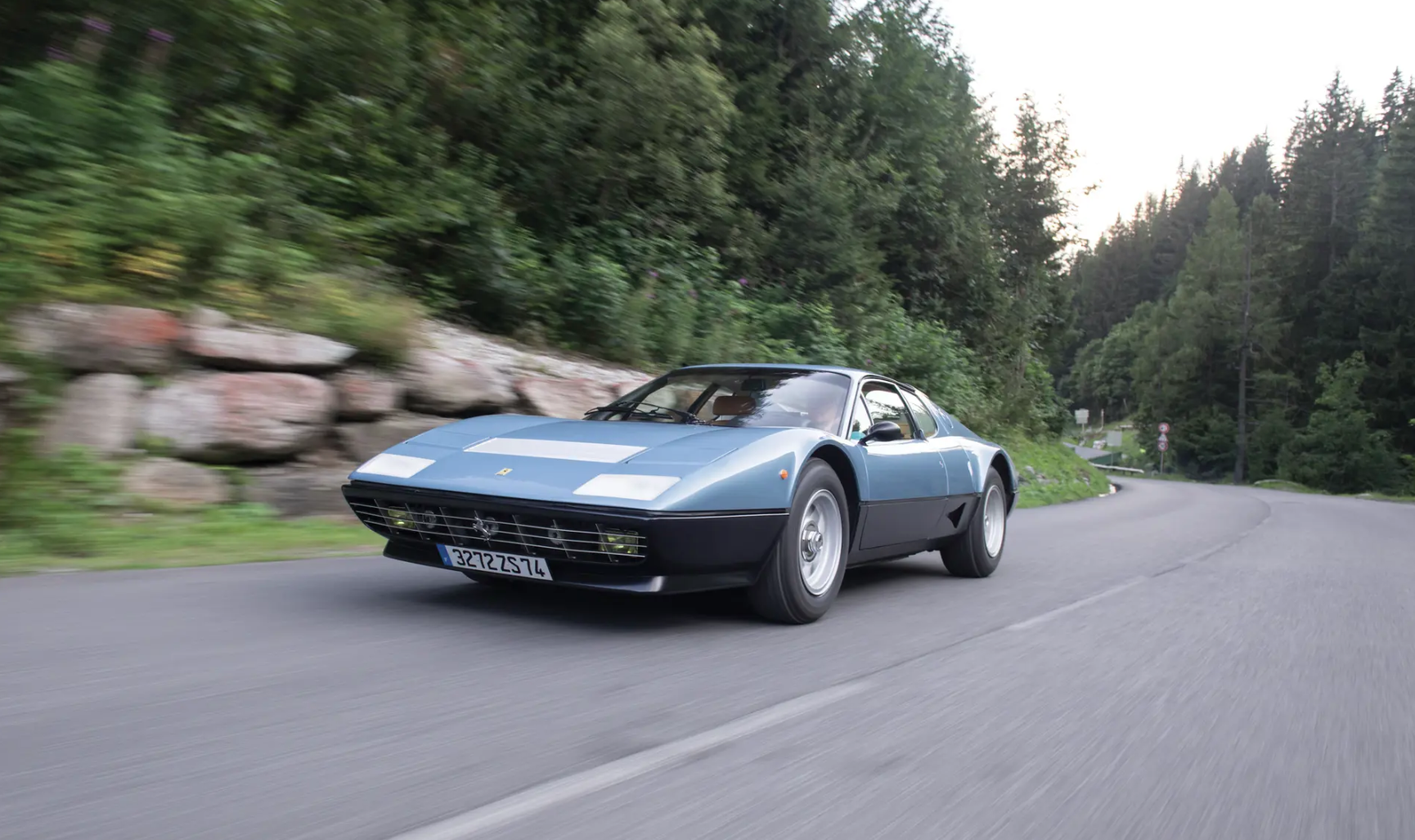
Ferrari built 929 512 BBs between 1976 and 1981, including 101 with right-hand drive. The 512 BB was never officially sold in the United States, although some cars were later privately imported and modified for the American market. In 1981, Ferrari replaced it with the 512 BBi, which used Bosch K-Jetronic fuel injection instead of carburetors. That model remained in production until 1984, with 1,007 examples built. Together with the 387 examples of the 365 GT4 BB, those totals bring Berlinetta Boxer production to 2,323 cars.
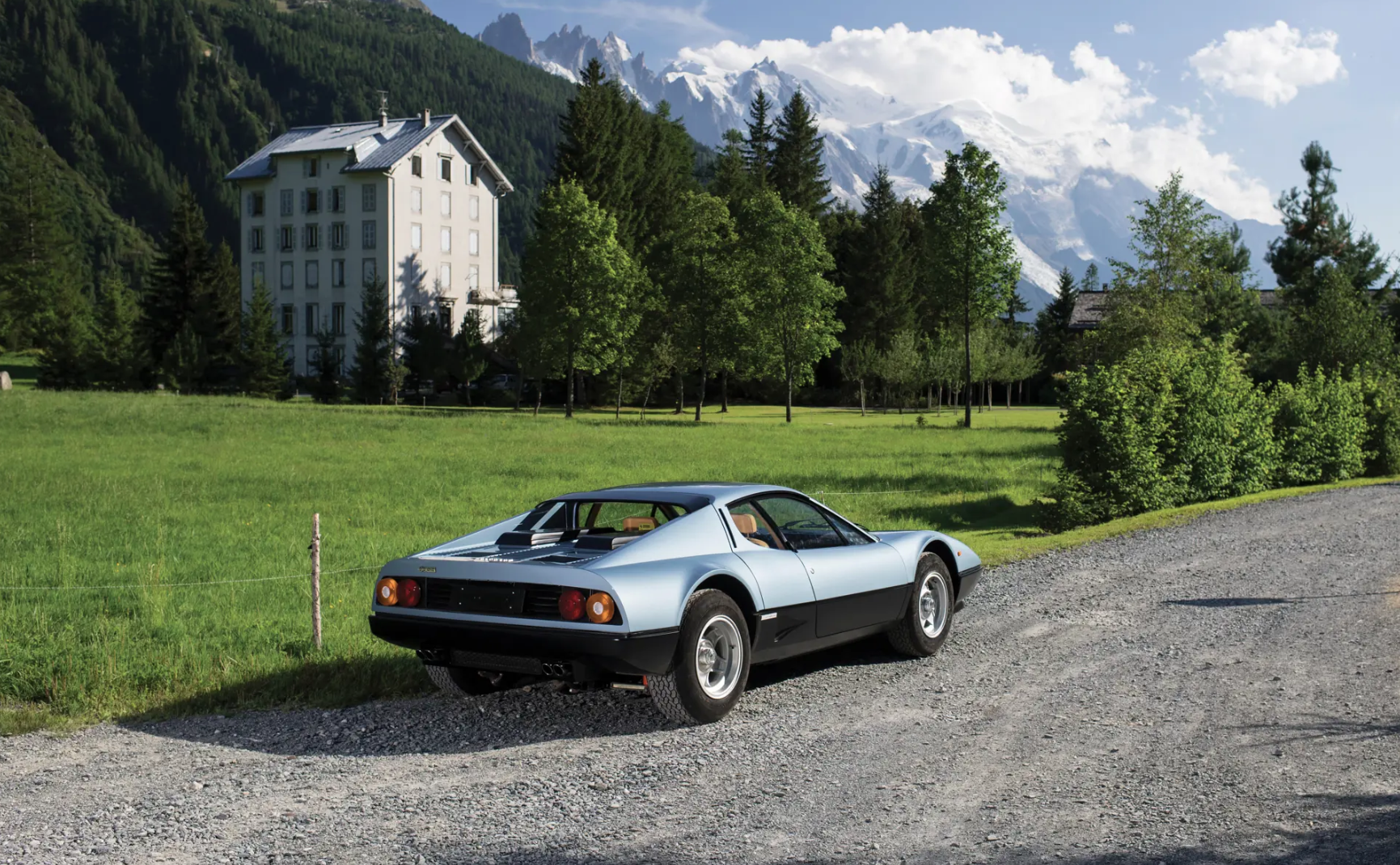
The 512 BB represented the Berlinetta Boxer in its most refined carbureted form. It improved on the original 365 GT4 BB with more torque, a dry-sump engine and better stability, while keeping one of Pininfarina’s finest designs. The Boxer line was succeeded by the Testarossa, unveiled in 1984, which became one of the defining cars of the decade. Today, the 512 BB is highly sought after by collectors for its carbureted flat-12, its classic proportions and its connection to Ferrari’s return to Le Mans through the 512 BB Competizione and 512 BB LM.