

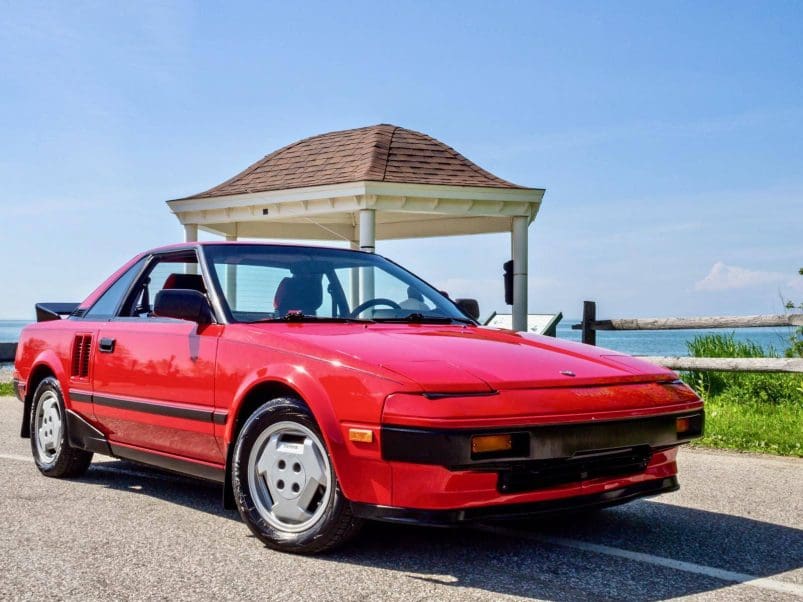
Japan, June 1984. Toyota launched the MR2, and with it Japan’s first mass-produced mid-engined car. The name stood for “Midship Runabout 2-seater,” and it described the car perfectly: a compact, wedge-shaped two-seater with its engine mounted transversely behind the driver, driving the rear wheels. It was powered by the 1.6-liter 4A-GE twin-cam four-cylinder, a high-revving 16-valve engine rated at 112 hp in US form and 130 PS (gross) in Japan. Toyota developed it with input from Lotus engineer Roger Becker on suspension and handling, and the result was a light, nimble car that offered exotic mid-engine balance at an affordable price. The MR2 was named Japan Car of the Year for 1984-85 and arrived in the US in early 1985, where it quickly became one of the best-loved sports cars of the decade. It was built until 1989, when the larger second-generation model replaced it.
Background and Origins
The MR2 began as a study into an economical, fun-to-drive commuter rather than an all-out sports car. A team led by test engineer Akio Yoshida explored several engine layouts before settling on a transverse mid-engine, rear-wheel-drive configuration, which was proved out in a prototype called the SA-X. That project was then reworked into the SV-3 concept, shown at the Tokyo Motor Show in October 1983. The SV-3 was so close to the production car that only the front and rear spoilers were redesigned, to improve stability in crosswinds.
The positive response to the SV-3 led Toyota to approve production. Before launch, Toyota consulted Lotus, whose engineer Roger Becker helped with the suspension and handling and helped set up development cars. It is a common misconception that Lotus designed the MR2. The car was a Toyota design, with Becker’s input focused on its chassis. Former Formula 1 driver Dan Gurney also contributed to the chassis tuning.
Design and Engineering
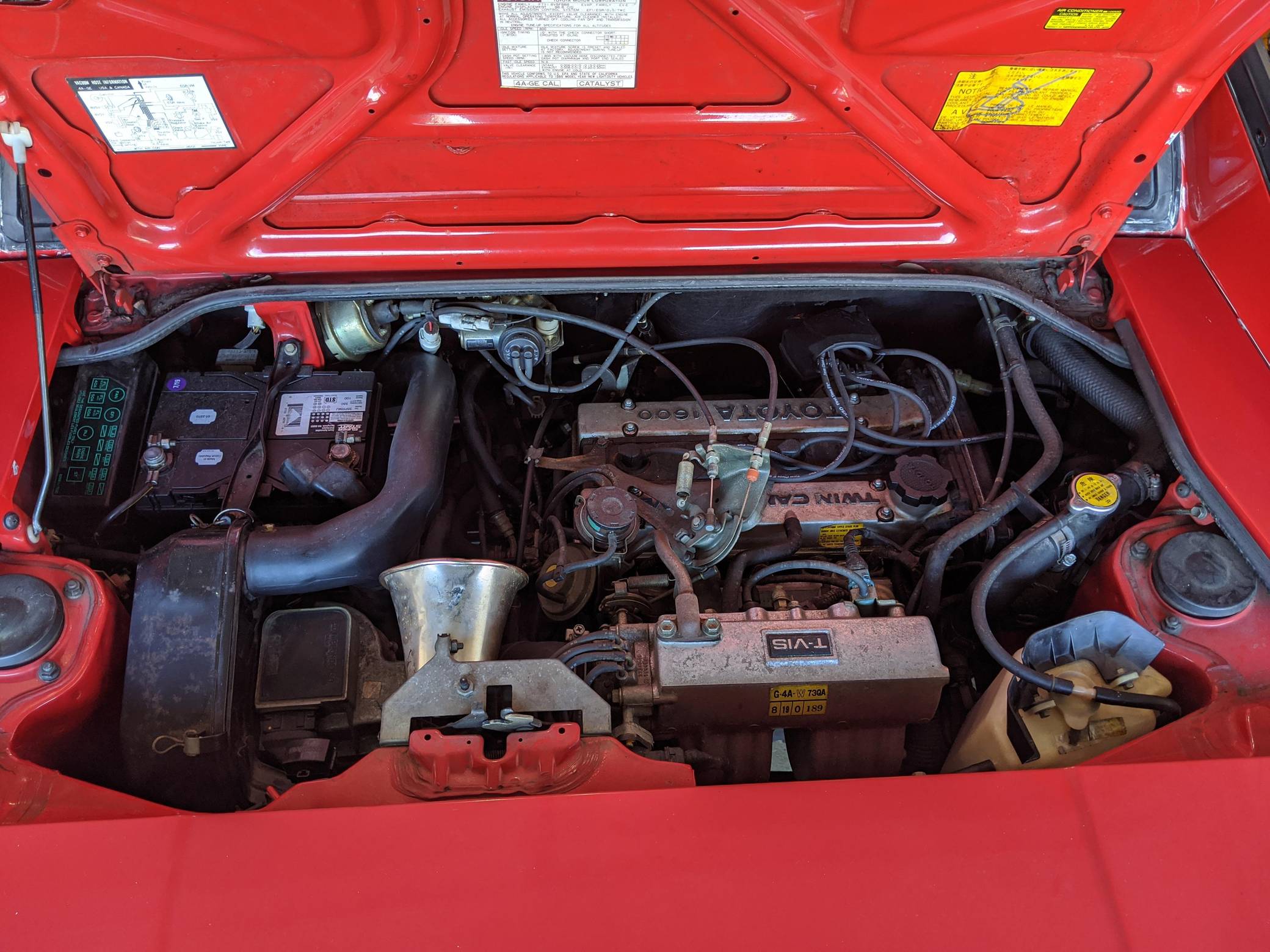
The MR2 used a steel monocoque body with its engine and five-speed manual or four-speed automatic transaxle mounted transversely behind the cabin. Many of its mechanical components came from front-wheel-drive Toyotas, which helped keep costs down. The main engine was the 4A-GE, a 1,587cc inline-four with dual overhead camshafts, four valves per cylinder, electronic fuel injection and Toyota’s T-VIS variable intake system. It produced its peak power at 6,600 rpm in Japanese form, revved to 7,500 rpm and was one of the best small engines of its time. Output varied by market, from 112 hp in the US to 122 hp in the UK and 130 PS (gross) in Japan. Japanese buyers could also choose the AW10 version with a 1.5-liter 3A engine.
The MR2 used independent suspension, with MacPherson struts at the front and a dual-link strut arrangement at the rear, coil springs and anti-roll bars, though the exact hardware varied by market and model year. Becker’s input helped give it sharp, responsive handling, and the mid-engine layout provided excellent balance and traction. Four-wheel disc brakes were standard. Japanese-market cars weighed as little as about 950 kilograms, while US-market cars were heavier at around 2,400 pounds. Even so, the US MR2 could reach 60 mph in about eight seconds, quick for an affordable sports car in the mid-1980s.
In August 1986, Toyota updated the MR2 in Japan, with the changes reaching the US for the 1987 model year. The 4A-GE received a stronger block and larger connecting rods, raising US output to 115 hp, and a T-bar roof became available. Toyota also introduced a supercharged version in Japan, powered by the 4A-GZE engine and rated at 145 PS (net). It reached the US for 1988 with 145 hp.
Styling
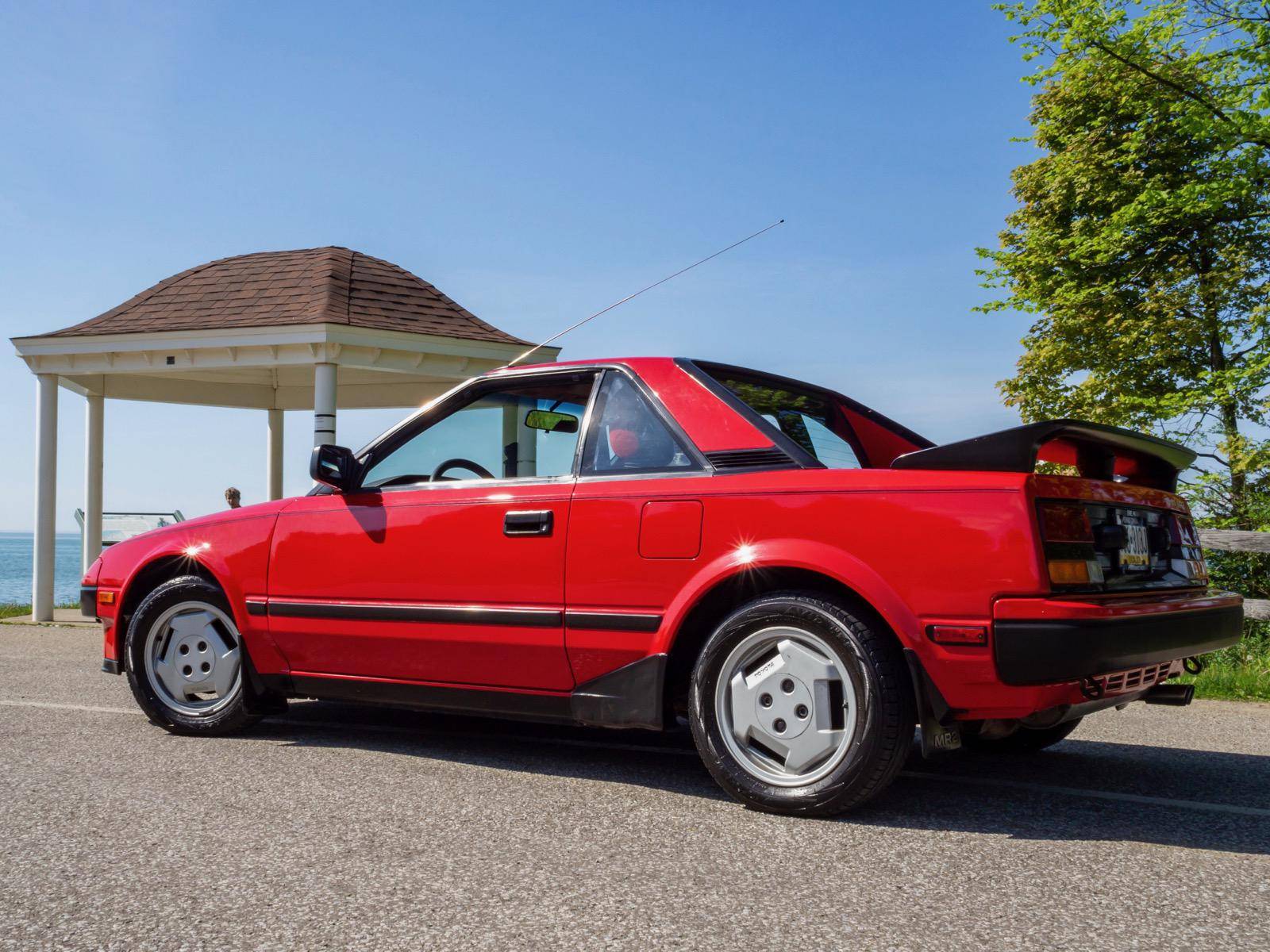
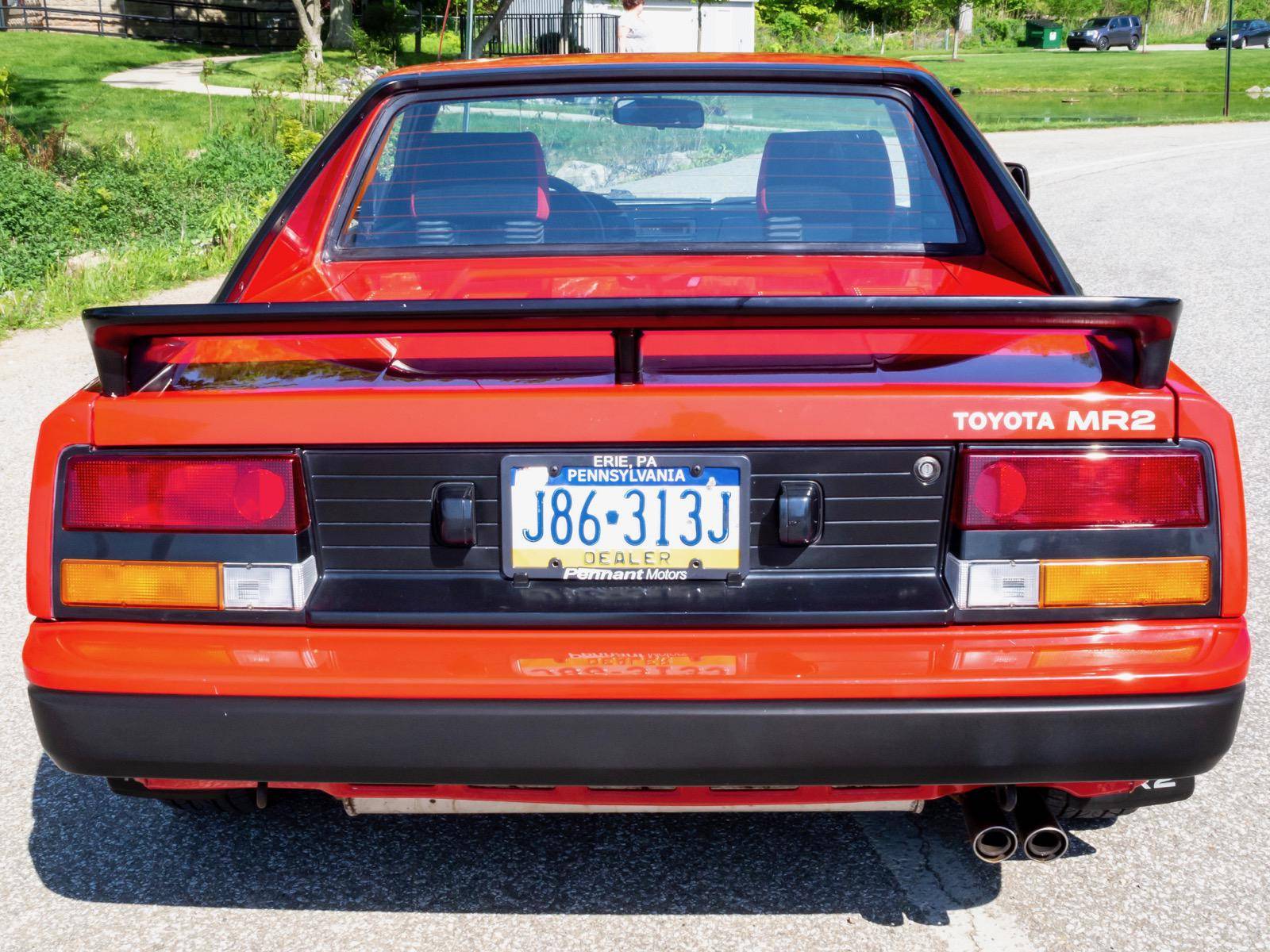
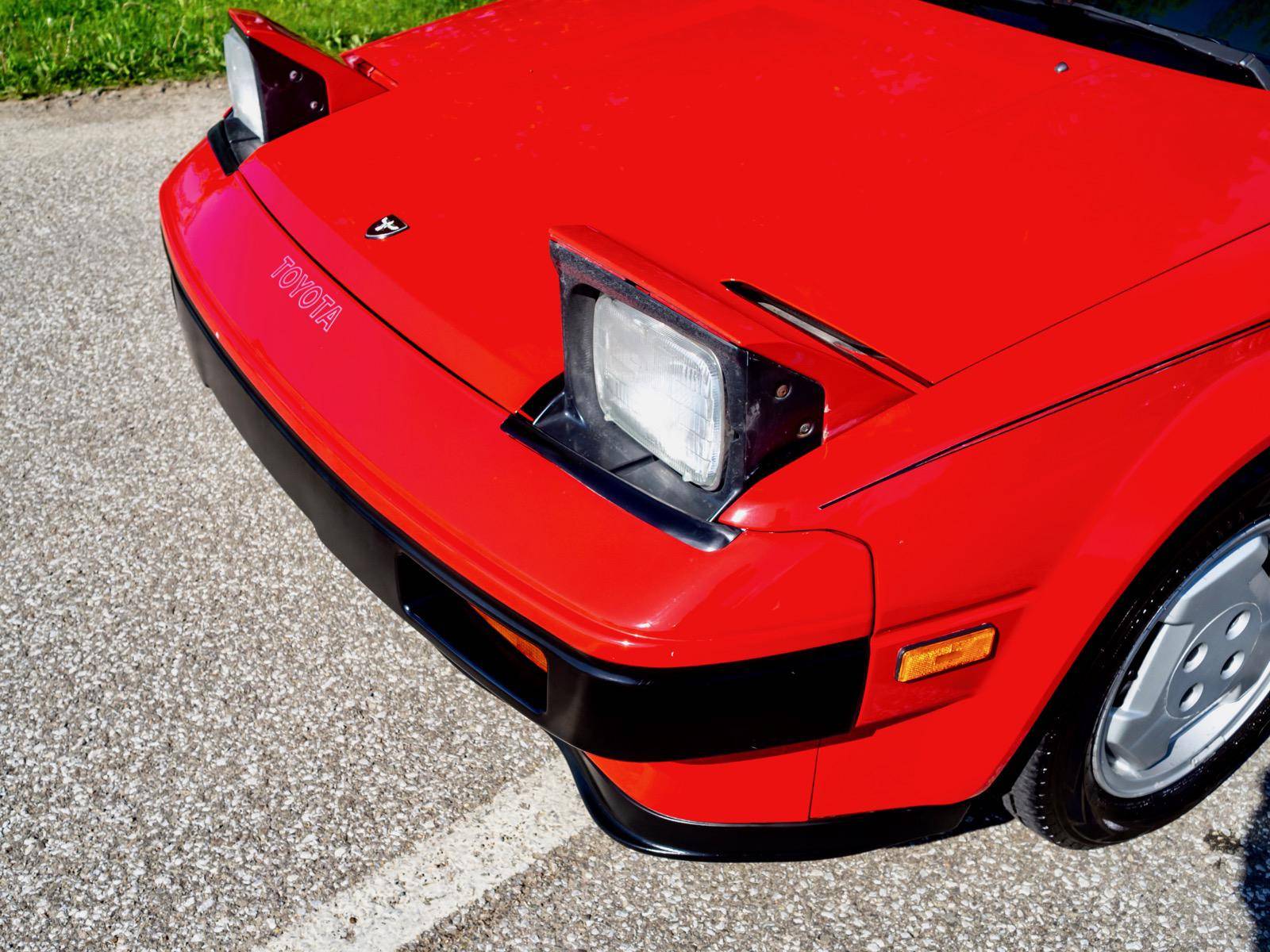
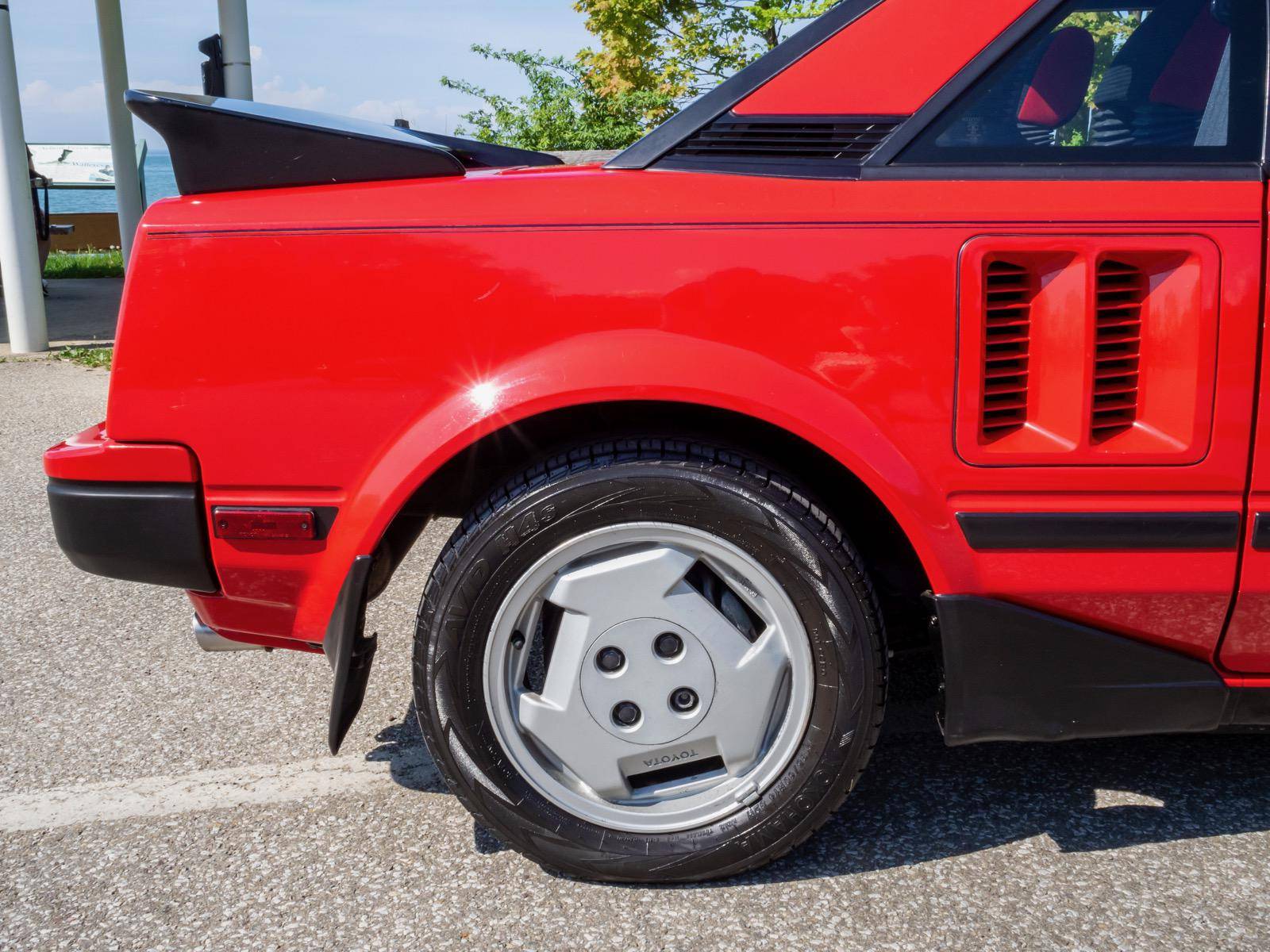
The MR2’s sharp wedge shape was typical of 1980s design, with a low, pointed nose, pop-up headlights, a short rear deck and a near-flat roofline. Its proportions clearly showed the mid-engine layout, with a short hood, a cabin pushed forward and side intakes behind the doors feeding the engine bay. Black bumpers and side moldings broke up the body, and small spoilers front and rear completed the look. It was compact, modern and unmistakably sporty, and it looked like a small exotic, which was a big part of its appeal.
Interior
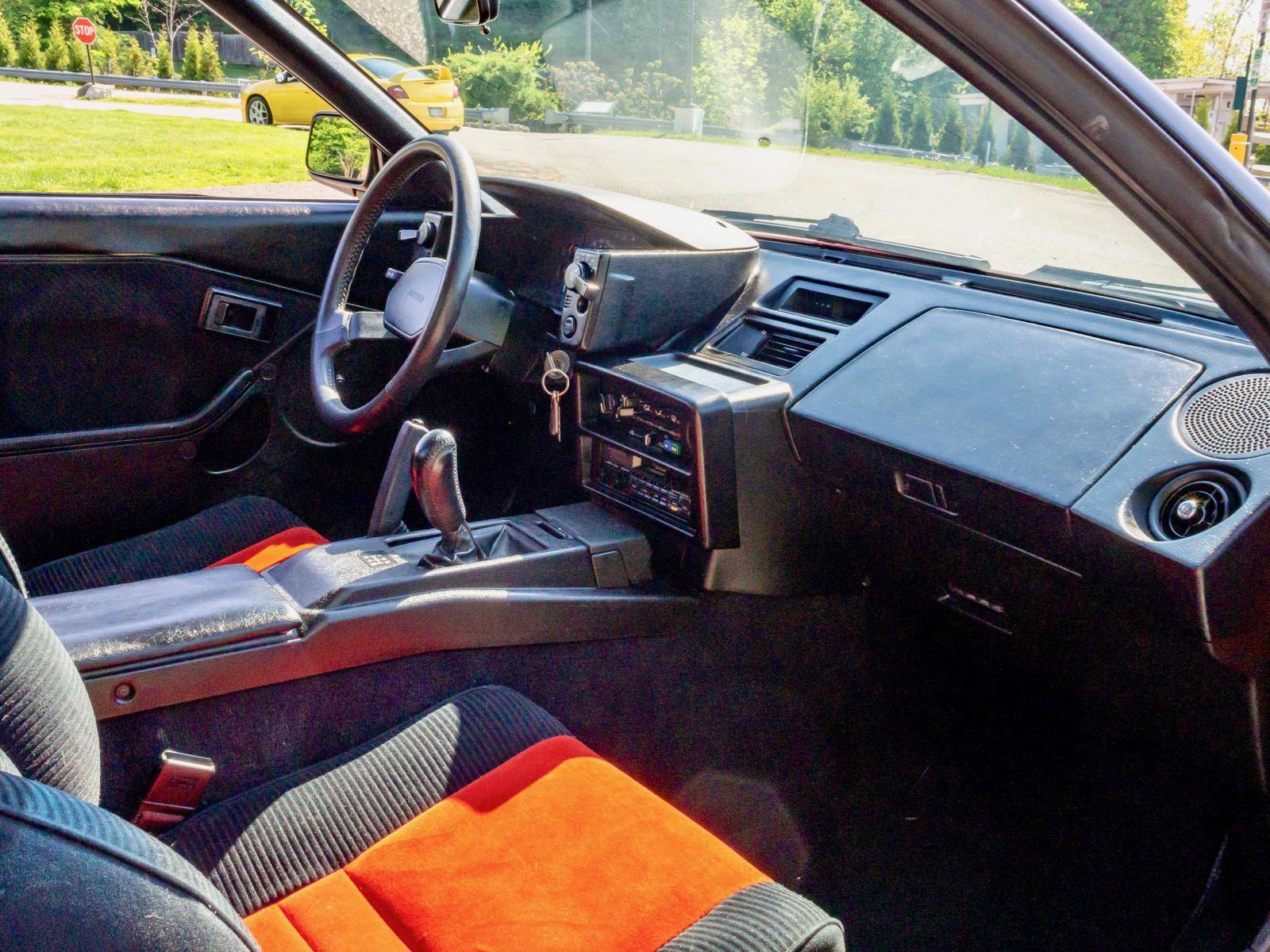
Inside, the MR2 was a typical 1980s Toyota, well built and easy to live with. It had two supportive sports seats, a small three-spoke steering wheel and a driver-focused dashboard with clear instruments. Space was limited, but there was enough room for two adults, and practicality was part of the original brief, so the MR2 offered luggage compartments at both the front and rear. Depending on market and trim, it could be equipped with air conditioning, power windows and a good stereo, and the car’s reliability made it a genuine daily driver, something few mid-engined cars could claim.
Racing History
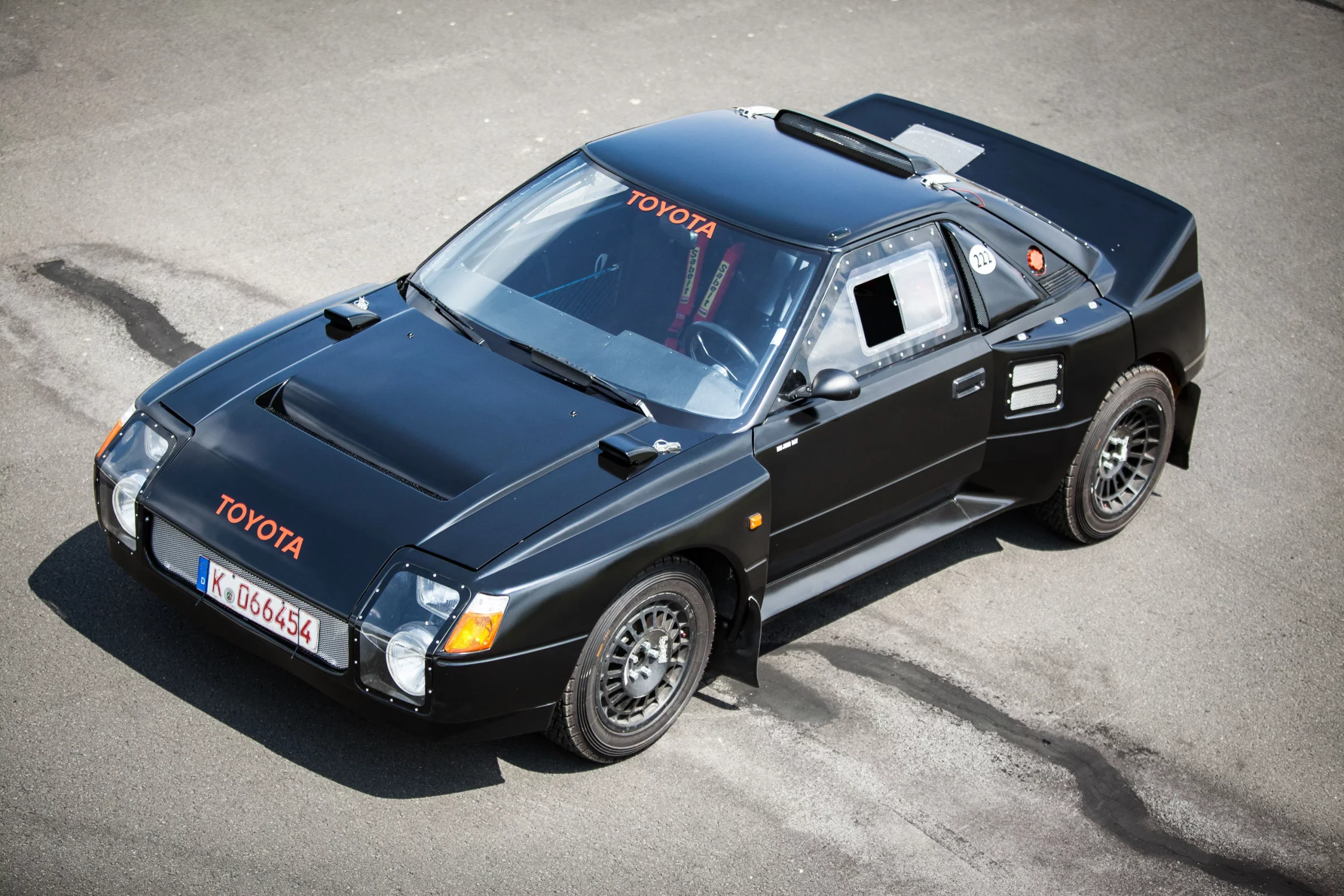
The production MR2 didn’t have a major factory racing program, but it was the starting point for one of Toyota’s most intriguing competition projects. In the mid-1980s, Toyota Team Europe (TTE) in Cologne began developing a car codenamed 222D for the planned Group S rally category. Group S was launched in June 1985 to take over from Group B by January 1988, and it required only 10 cars for homologation. The first prototype was completed in February 1985. Although it looked like an MR2 and was based on its platform, it was a very different machine, with a widebody design, heavily revised suspension and a turbocharged four-cylinder engine. The prototypes evolved during development: early cars used the engine from Toyota’s Group B Celica, while later versions used the 503E, a more powerful turbocharged four originally developed for endurance racing. Different cars tested different layouts, including all-wheel drive, and the most extreme versions were reported to produce around 750 hp.
The project ended in May 1986. After Henri Toivonen and co-driver Sergio Cresto died in a crash at the Tour de Corse, the FIA voted Group B out of the World Rally Championship from 1987 and scrapped Group S at the same time. The 222D never competed. Two prototypes are known to survive: a white car once displayed at Toyota’s Mega Web showroom in Tokyo, and a black car, kept by Toyota in Europe, that has appeared at events such as the Goodwood Festival of Speed.
Specifications
- Engine: 4A-GE 1,587cc inline-four, DOHC, 16 valves, T-VIS, electronic fuel injection
- Power: 112 hp (US), 122 hp (UK), 130 PS gross at 6,600 rpm (Japan)
- Transmission: Five-speed manual or four-speed automatic, rear-wheel drive
- Chassis: Steel monocoque, transverse mid-engine
- Suspension: Independent; MacPherson struts front, dual-link struts rear, coil springs, anti-roll bars
- Brakes: Discs front and rear
- Weight: About 2,400 lbs / 1,090 kg (US market)
- Performance: 0-60 mph in about 8 seconds
Production and Legacy
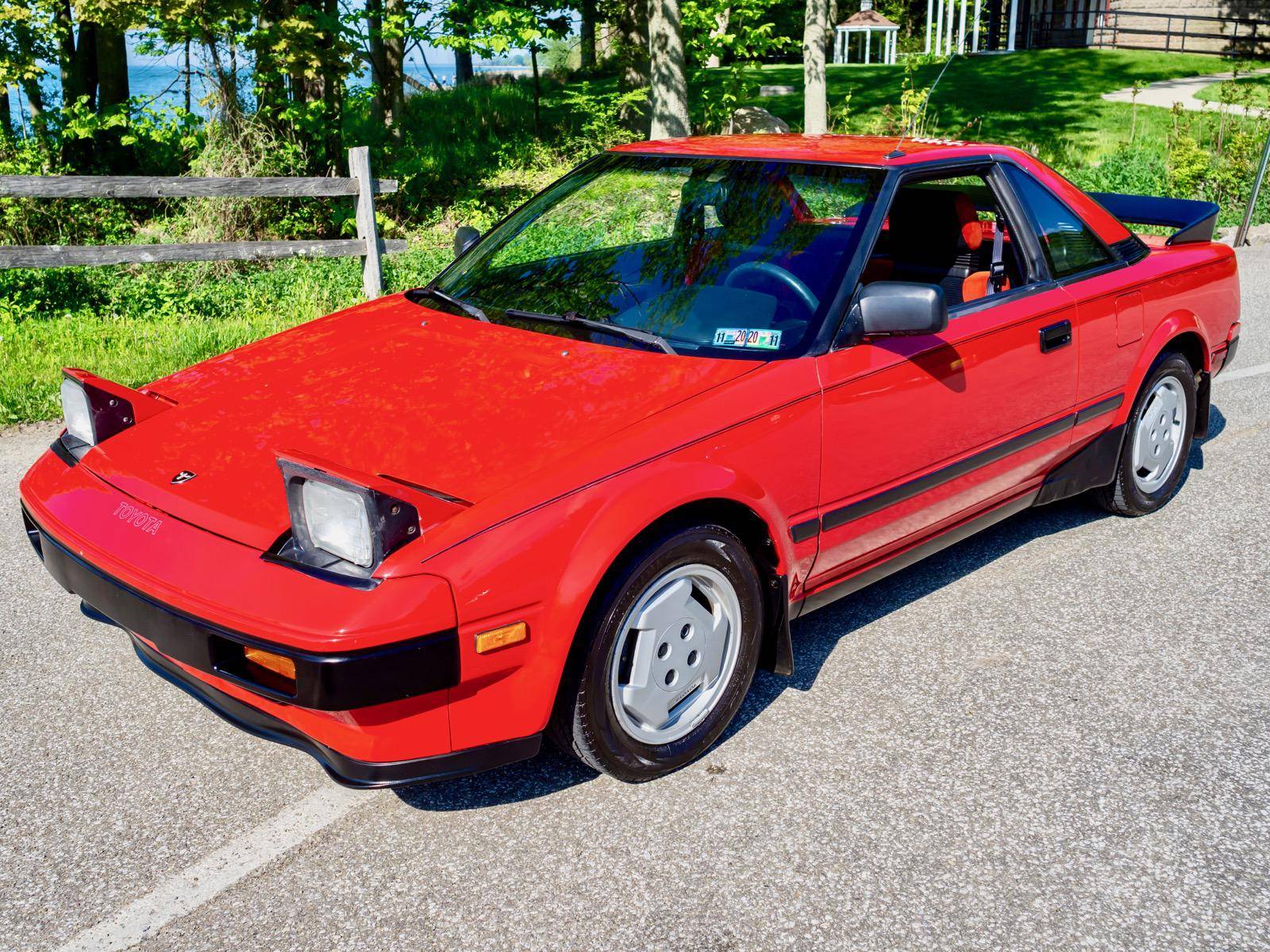
The first-generation MR2 was built from 1984 to 1989 by Central Motor Co., Ltd. in Sagamihara, Japan. In October 1989, it was replaced by the larger and more powerful second-generation MR2 (SW20). The MR2 name continued until 2007, through three generations.
The original MR2 proved that a mid-engined sports car could be affordable, practical and reliable. It brought exotic-car balance and handling to a much wider audience, and its success influenced a wave of small, fun-to-drive Japanese sports cars. Today, well-kept first-generation MR2s are increasingly appreciated as classics, and the AW11’s light weight and responsive handling remain its biggest appeal.