

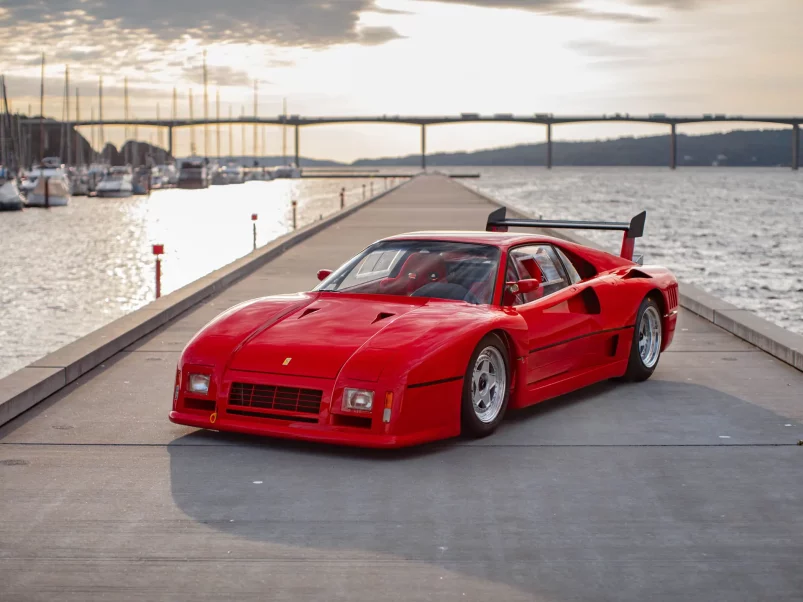
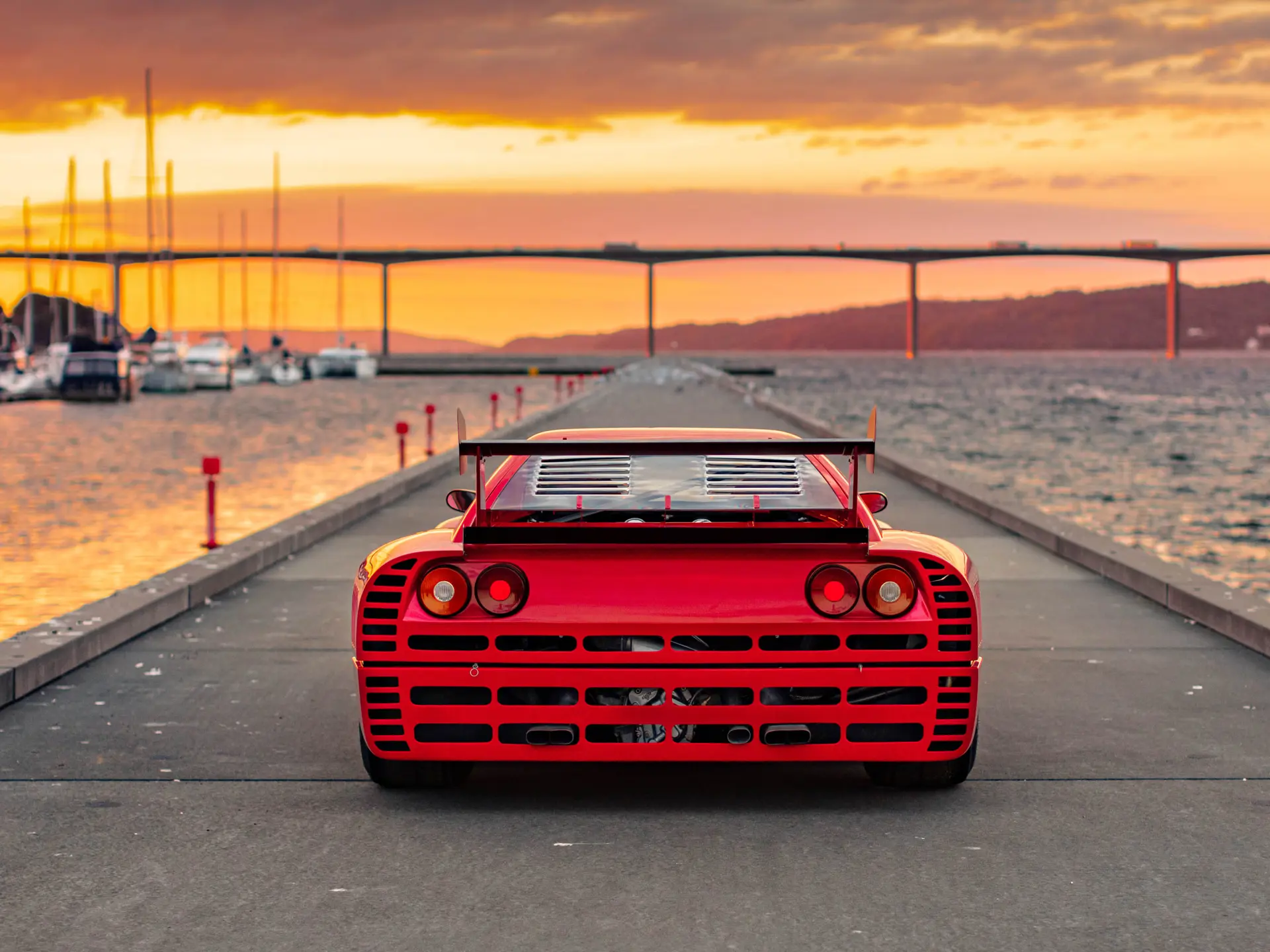
Maranello, 1986. Ferrari had been working for two years on a car to take on the wildest era of motorsport. The 288 GTO Evoluzione was developed as an Evolution version of the 288 GTO for Group B competition, with a radically redesigned body, a heavily reworked twin-turbo V8 and a published weight of just 940 kilograms. In its most powerful form, its engine produced around 650 hp, and published estimates put its top speed close to 230 mph, making it the fastest GT car Ferrari built in the 1980s. But the Evoluzione never made its intended competition debut. Ferrari completed five production cars and one prototype, and the lessons it learned from them went directly into the car that followed: the F40. Today, the Evoluzione is one of the rarest and most important Ferraris of its era, the missing link between the 288 GTO and the F40.
Background and Origins
The story began with the 288 GTO, introduced at the Geneva Motor Show in March 1984. Ferrari developed it to meet the FIA’s Group B homologation rules, which required at least 200 road-going examples, initially with circuit racing in mind. The GTO was based loosely on the 308 GTB, but it had a longitudinally mounted 2,855cc twin-turbo V8 producing 400 hp. Ferrari built 272 GTOs, but the expected Group B circuit racing series never took off, and the GTO never raced.
Group B rules also allowed manufacturers to homologate an Evolution version by building 20 more cars, and Ferrari decided to develop one. Work began in 1984, backed by Ferrari’s general manager, Giovanni Battista Razelli, with Nicola Materazzi leading the entire project, bodywork included. The Evoluzione was meant to compete in Group B tarmac events in the hands of capable privateers. By the time it was ready, though, Ferrari’s Group B ambitions had already run into serious obstacles. In May 1986, Henri Toivonen and Sergio Cresto were killed in their Lancia Delta S4 at the Tour de Corse, and the FIA canceled Group B rallying from 1987. The Evoluzione never made its competition debut.
Design and Engineering
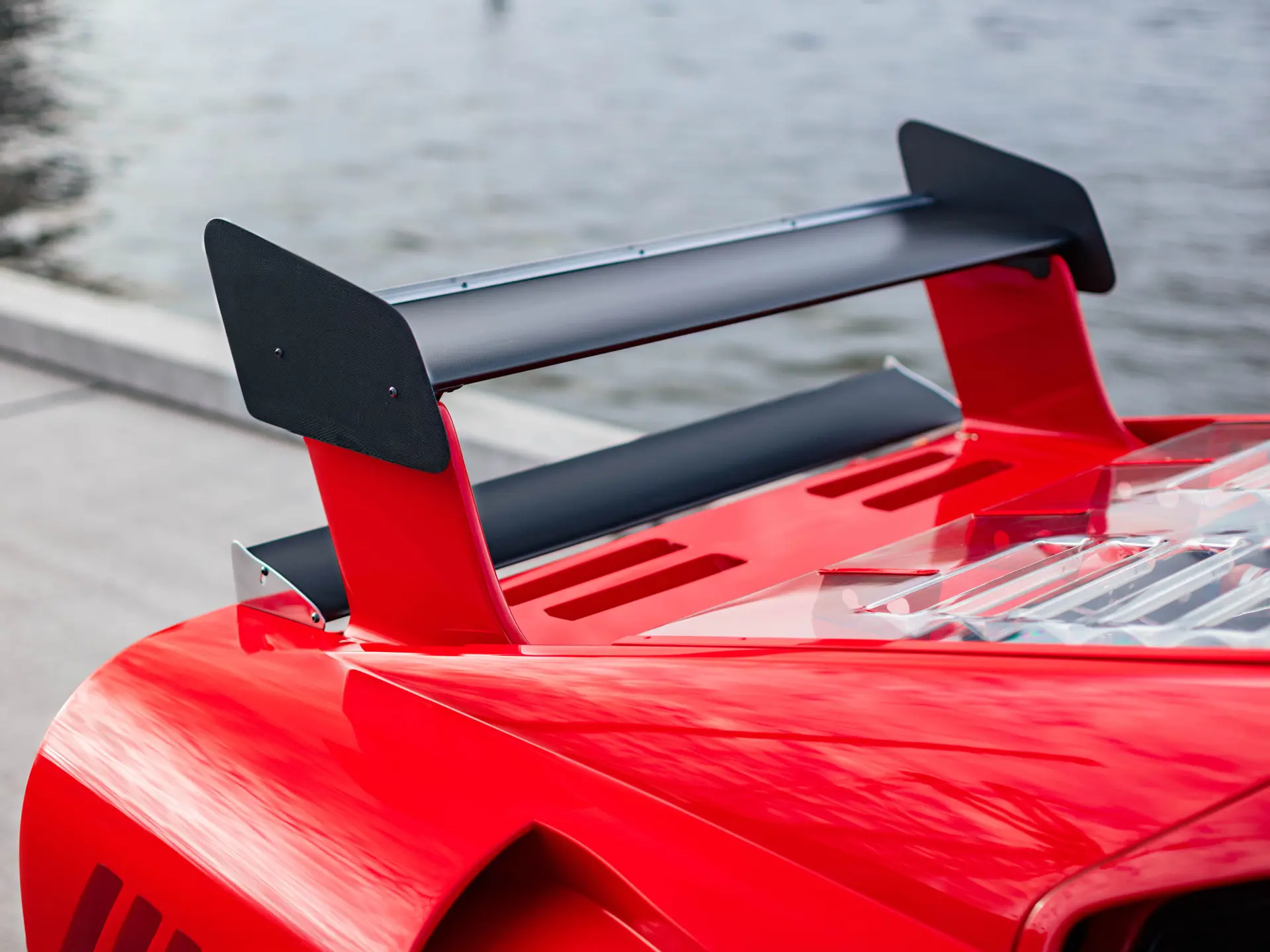
Ferrari developed and built the Evoluzione with Michelotto, its competition engineering partner in Padua. The car used a tubular steel spaceframe with lightweight bodywork made primarily from fiberglass and Kevlar. Carbon fiber was used for components such as the rear wing, while aluminum helped reduce weight in other areas. The result was a published weight of 940 kilograms, about 220 kilograms less than the standard 288 GTO’s 1,160 kilograms.
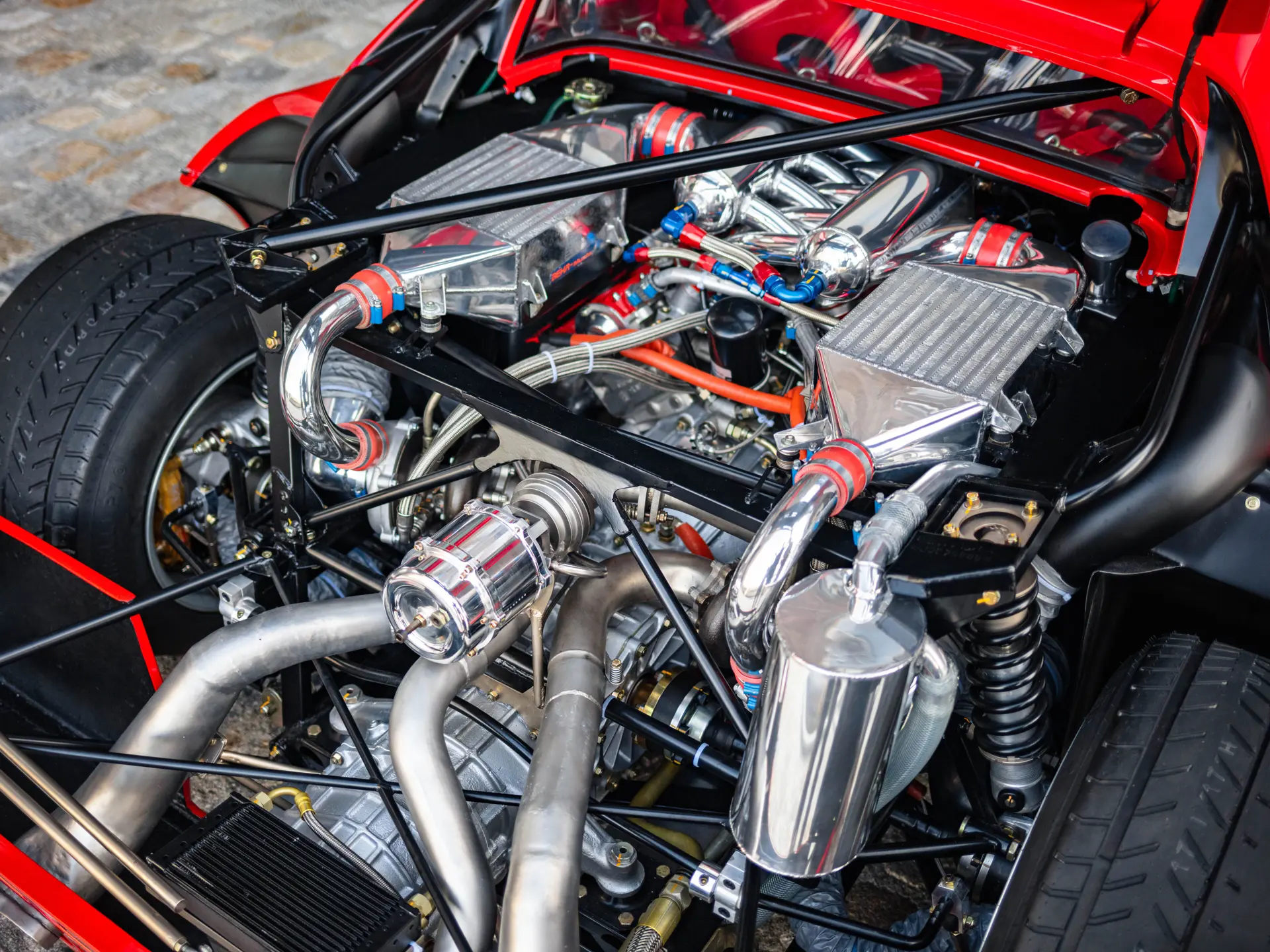
The engine was a development of the GTO’s 2,855cc twin-turbo V8, and it evolved through several specifications. The standard GTO’s Tipo F114 B produced 400 hp. An intermediate F114 CR version reportedly produced around 530 hp, while the most powerful F114 CK, with larger turbochargers and increased boost, produced around 650 hp at 7,800 rpm, about 60 percent more than the standard car. Not every Evoluzione received the CK engine, but in that form, the car had a power-to-weight ratio few rivals of its era could match. Power went to the rear wheels through a five-speed manual gearbox. Published estimates put its top speed at around 370 km/h (230 mph), although some sources quote a more conservative 225 mph.
Styling
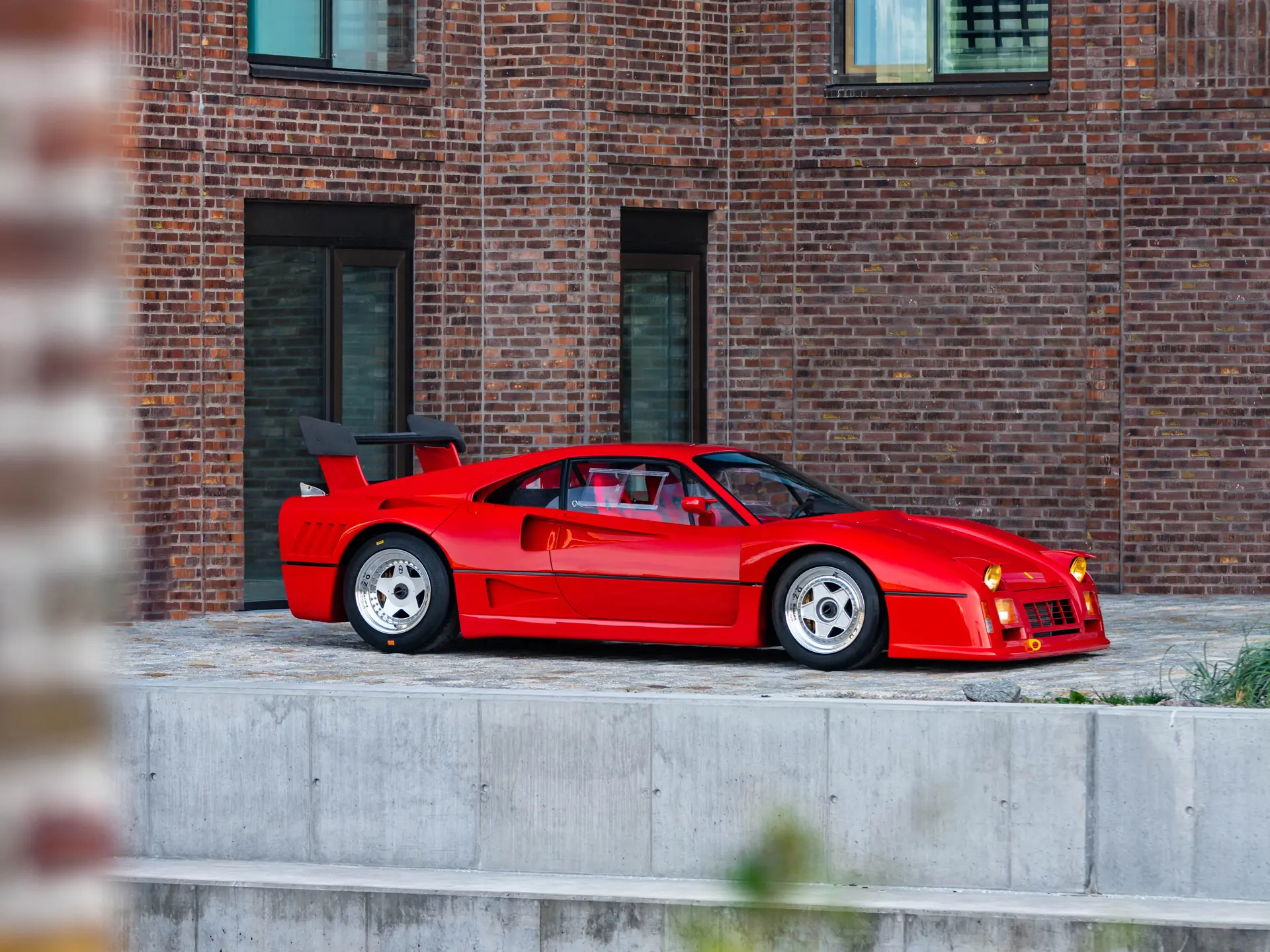
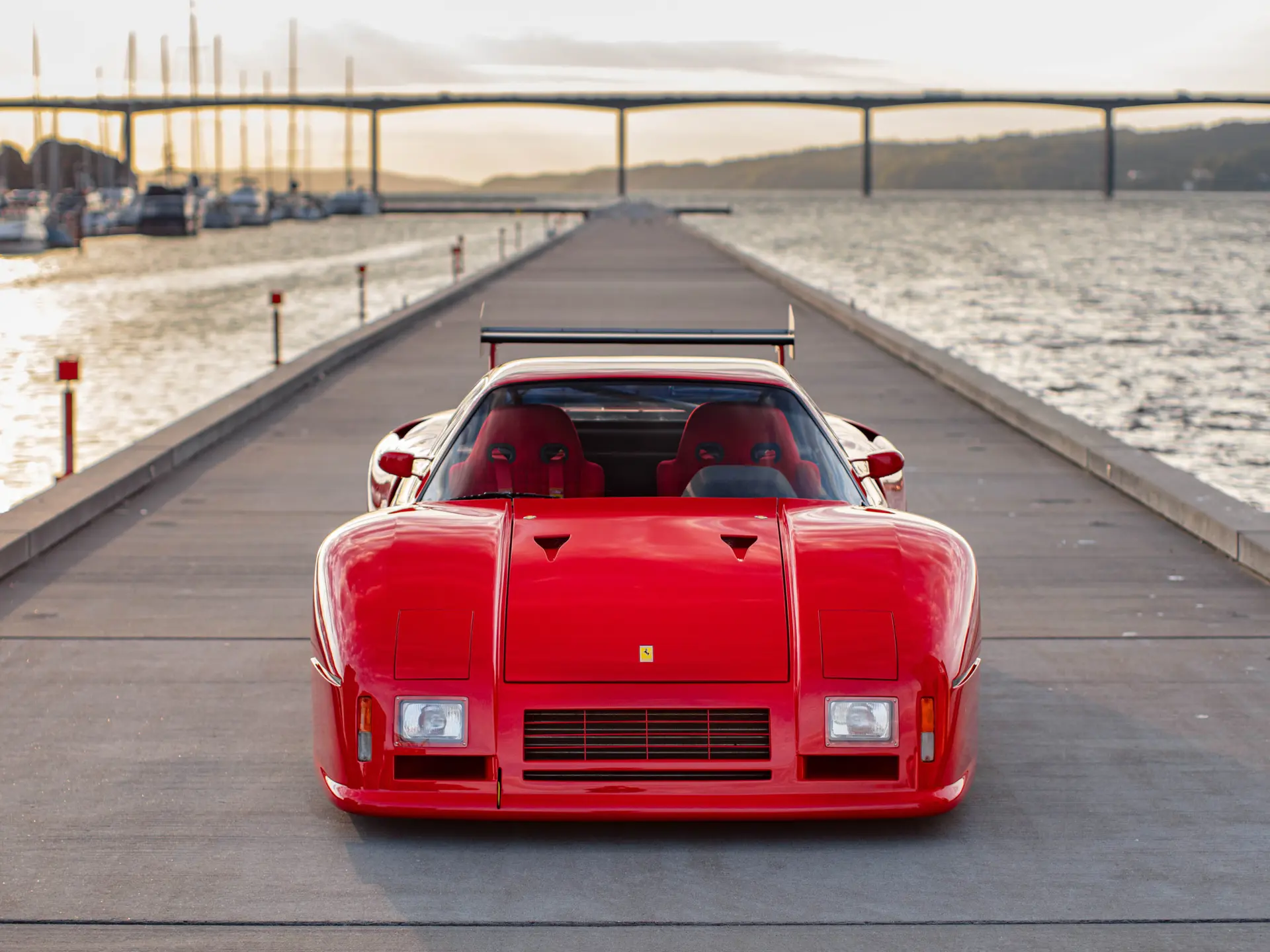
The Evoluzione looked very different from the 288 GTO. Its bodywork was extensively redesigned, keeping little from the road car beyond the basic cabin profile and doors. It had a low, wide nose, deep channels along its sides, large cooling intakes and a huge carbon-fiber rear wing, and even its mirrors hid small air intakes. Many of these features later appeared in a refined form on the F40, and the Evoluzione is now seen as the clearest visual link between the two cars. Put the Evoluzione beside an F40, and the connection is immediately obvious, from the side channels and intakes to the prominent wing.
Interior
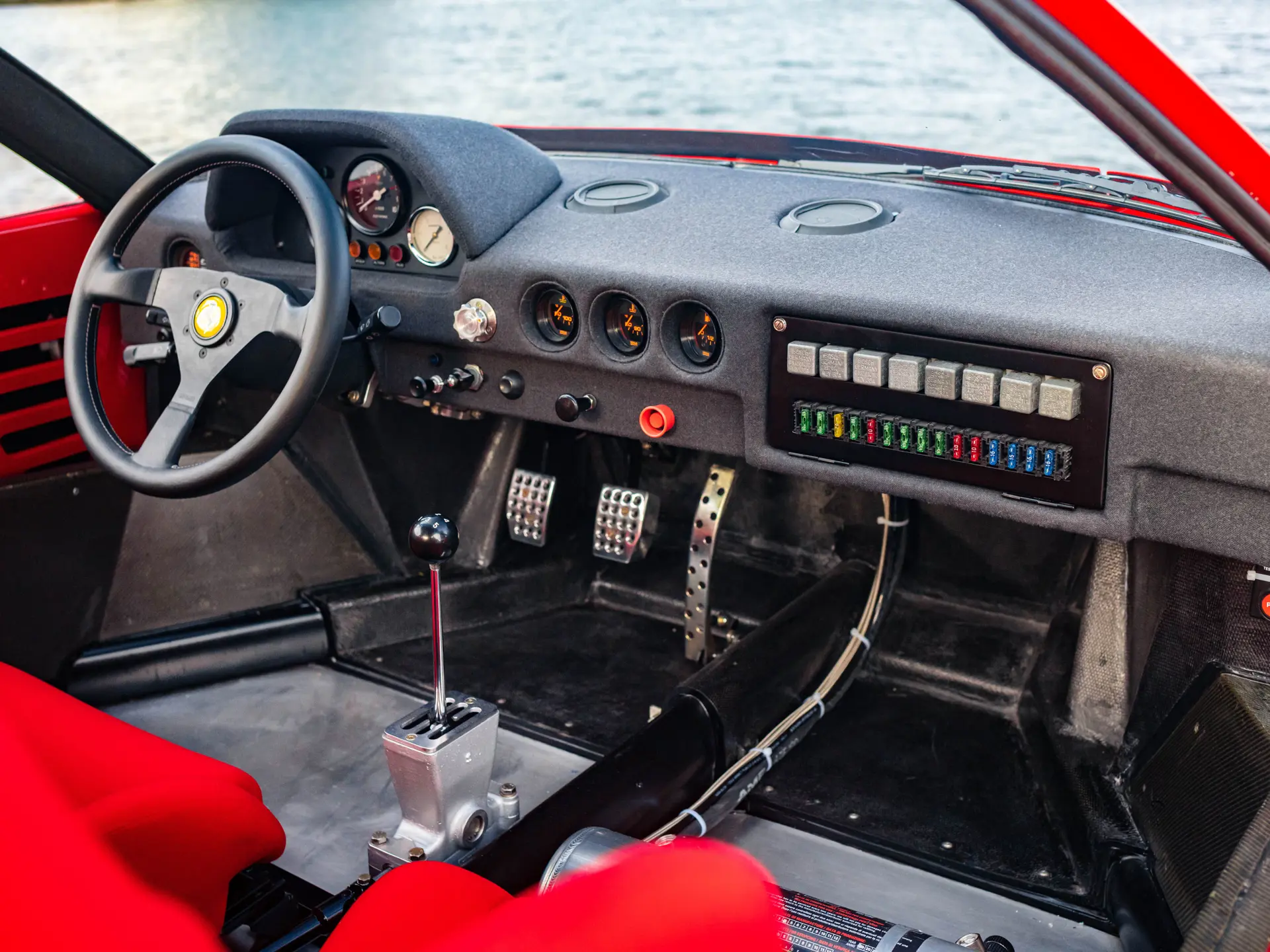
The Evoluzione’s interior was stripped of unnecessary equipment and materials. The standard GTO’s basic dashboard was retained but gained additional instrumentation and an exposed fuseboard. Lightweight racing bucket seats with Sabelt harnesses replaced the road car’s seats, while carpeting, sound insulation and other comfort features were removed. Tall composite sills made getting in and out difficult, and the result was a spartan cockpit built around the car’s competition ambitions.
Specifications
- Engine: Tipo F114 CK 2,855cc twin-turbo V8 (most powerful specification)
- Power: About 650 hp at 7,800 rpm (F114 CK)
- Transmission: Five-speed manual, rear-wheel drive
- Chassis: Tubular steel spaceframe
- Body: Fiberglass and Kevlar, with carbon-fiber and aluminum components
- Weight: 940 kg / 2,072 lbs (published)
- Performance: Top speed of about 225-230 mph (published estimates)
Production and Legacy
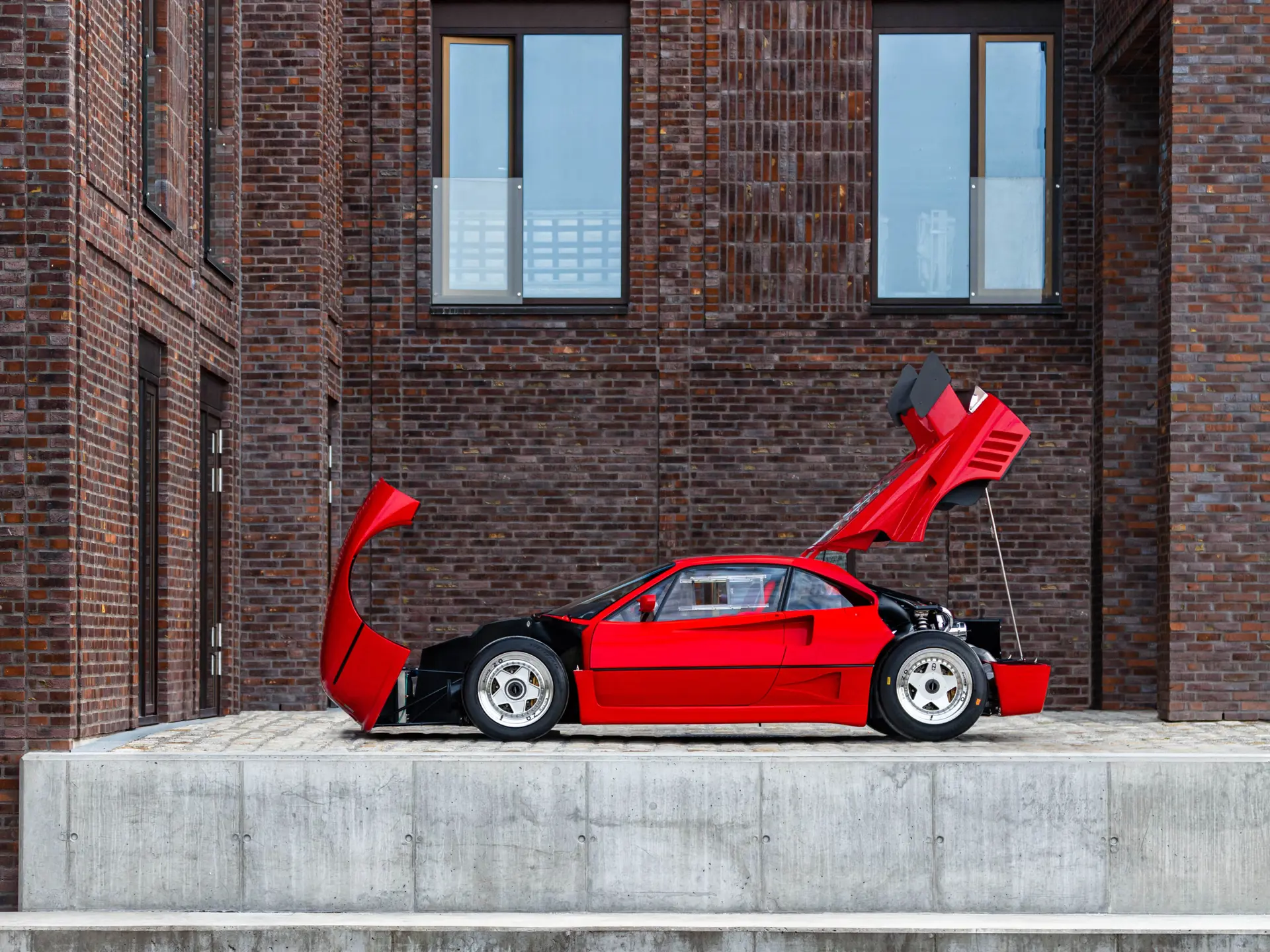
Ferrari had intended to build 20 Evoluzioni to meet Group B’s Evolution homologation requirements, but the project was abandoned before reaching that target. Only five production cars and one prototype were completed. Despite the change of plans, Ferrari showed the car to the motoring press during a test at Imola, where Razelli spoke about the importance of lightweight materials for future Ferrari road cars. All six examples are accounted for, including one retained by Ferrari and displayed in its collection.
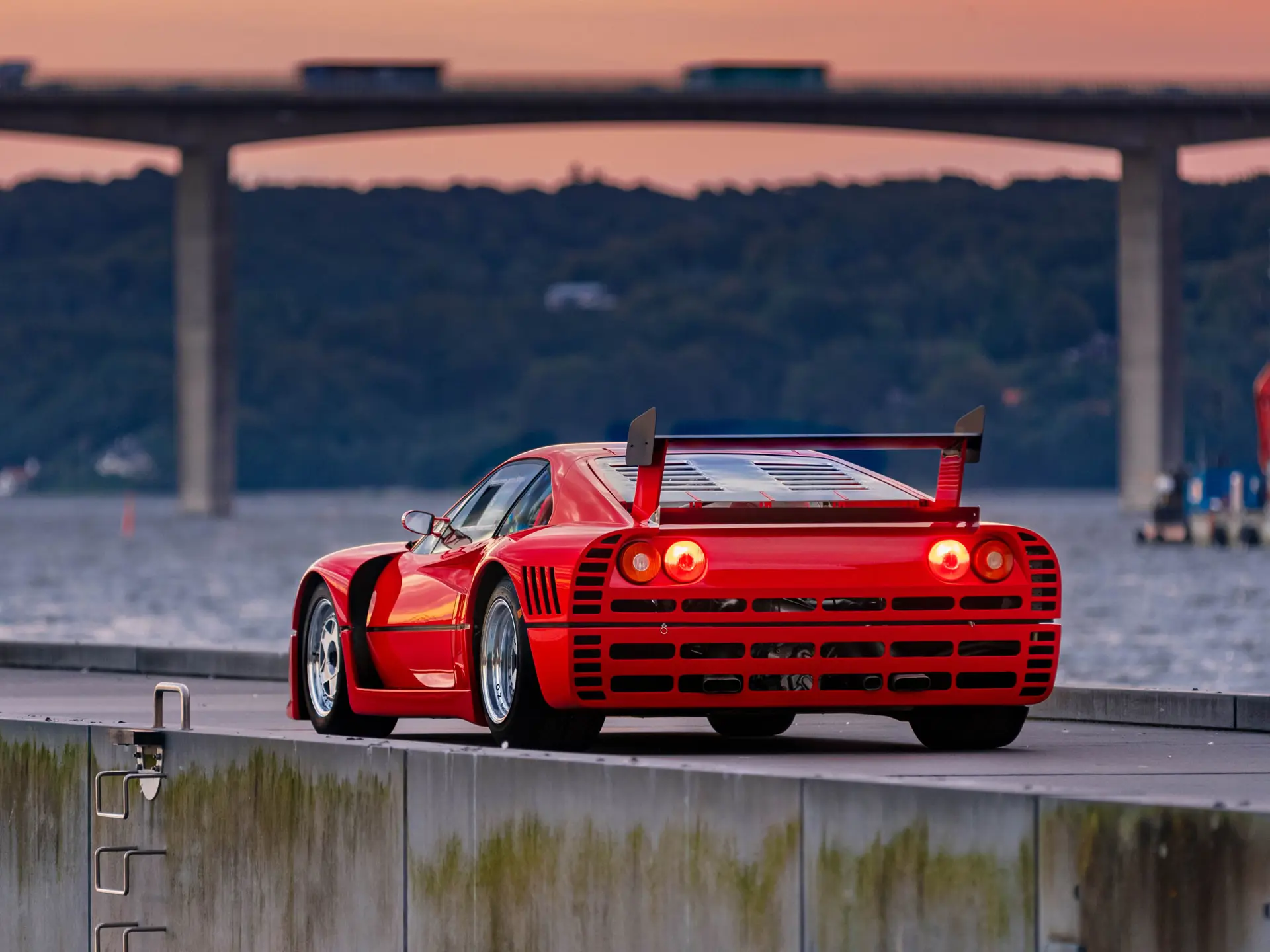
The Evoluzione’s greatest legacy was the F40. The experience gained during its development helped Ferrari create the road-going supercar unveiled in 1987, also with Materazzi as project leader. The F40 kept the basic concept of a longitudinally mounted twin-turbo V8 but used a further-developed 2,936cc engine. It also drew on the Evoluzione’s extensive use of lightweight composite materials and its aerodynamic thinking. The two cars shared a clear engineering lineage, even though the F40 was developed as a separate production model, and that makes the Evoluzione one of the most important Ferraris of the 1980s, even though it never got the chance to race.