
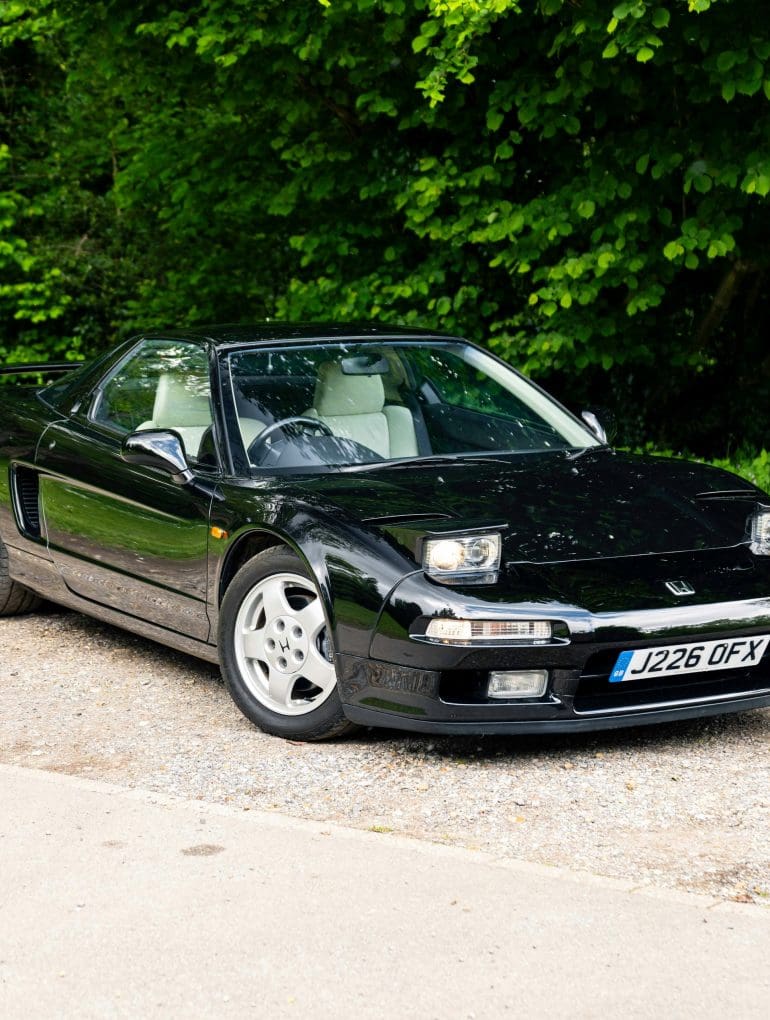

Tokyo, September 1989. Honda unveiled the NSX, a mid-engined supercar developed over six years with input from Formula 1 champion Ayrton Senna. The name stood for “New Sportscar eXperimental,” signaling Honda’s ambition to create something revolutionary. The centerpiece was a 3.0-liter V6 producing 270 horsepower, featuring variable valve timing, titanium connecting rods, and all-aluminum construction.
Combined with a mid-mounted layout, all-aluminum monocoque chassis, and double-wishbone suspension, the NSX delivered Ferrari performance with Japanese reliability and everyday usability. This was Honda’s challenge to Ferrari, proving that a Japanese manufacturer could build a supercar rivaling Italian exotics in handling and speed while exceeding them in practicality. Production began in July 1990, continuing until 2005, with the original generation establishing a legend that persists today.
Background and Origins
Honda’s development of a supercar began in 1984 under chief engineer Shigeru Uehara. Rather than pursue forced induction or exotic engineering, Honda chose a naturally aspirated approach emphasizing lightweight construction and balanced performance. The company assembled a world-class team, including legendary Ferrari test driver Ayrton Senna, who provided critical feedback during development.
The NSX represented Honda’s most ambitious engineering project to date. The mid-engine layout positioned the V6 behind the driver, creating weight centralization and ideal weight distribution. The aluminum monocoque chassis weighed just 1,200 kilograms, making the NSX lighter than many contemporary sports cars despite its larger dimensions.
Development focused on creating a car that combined Ferrari’s performance with Toyota’s reliability. The philosophy was revolutionary: supercar performance shouldn’t require exotic maintenance or specialized knowledge. Honda wanted the NSX to be driven regularly, serviced at Honda dealers, and enjoyed without fear of mechanical failure.
The prototype debuted at Tokyo in October 1989, with production beginning in July 1990 at Honda’s Suzuka factory. Deliveries started in Japan before expanding to North America and Europe. The NSX succeeded immediately, establishing Honda’s credentials as a genuine supercar manufacturer.
Design and Engineering
The NSX was built around a monocoque chassis constructed entirely from aluminum alloy. The bonded and riveted aluminum structure provided exceptional rigidity while weighing just 1,200 kilograms. The 2,530mm wheelbase positioned the engine entirely behind the cabin, creating near-perfect weight distribution.
Suspension used unequal-length double wishbones at all four corners with coil springs and telescopic dampers. The geometry was optimized for balanced, progressive handling characteristics. Anti-roll bars front and rear controlled body roll effectively. The ride quality was notably compliant, allowing everyday usability without harsh impacts.
Braking was by ventilated discs measuring 282mm front and 282mm rear with four-piston calipers. The system provided excellent stopping power without the fade issues that plagued some contemporary supercars. ABS was not available initially, allowing drivers to feel the direct connection between pedal pressure and deceleration.
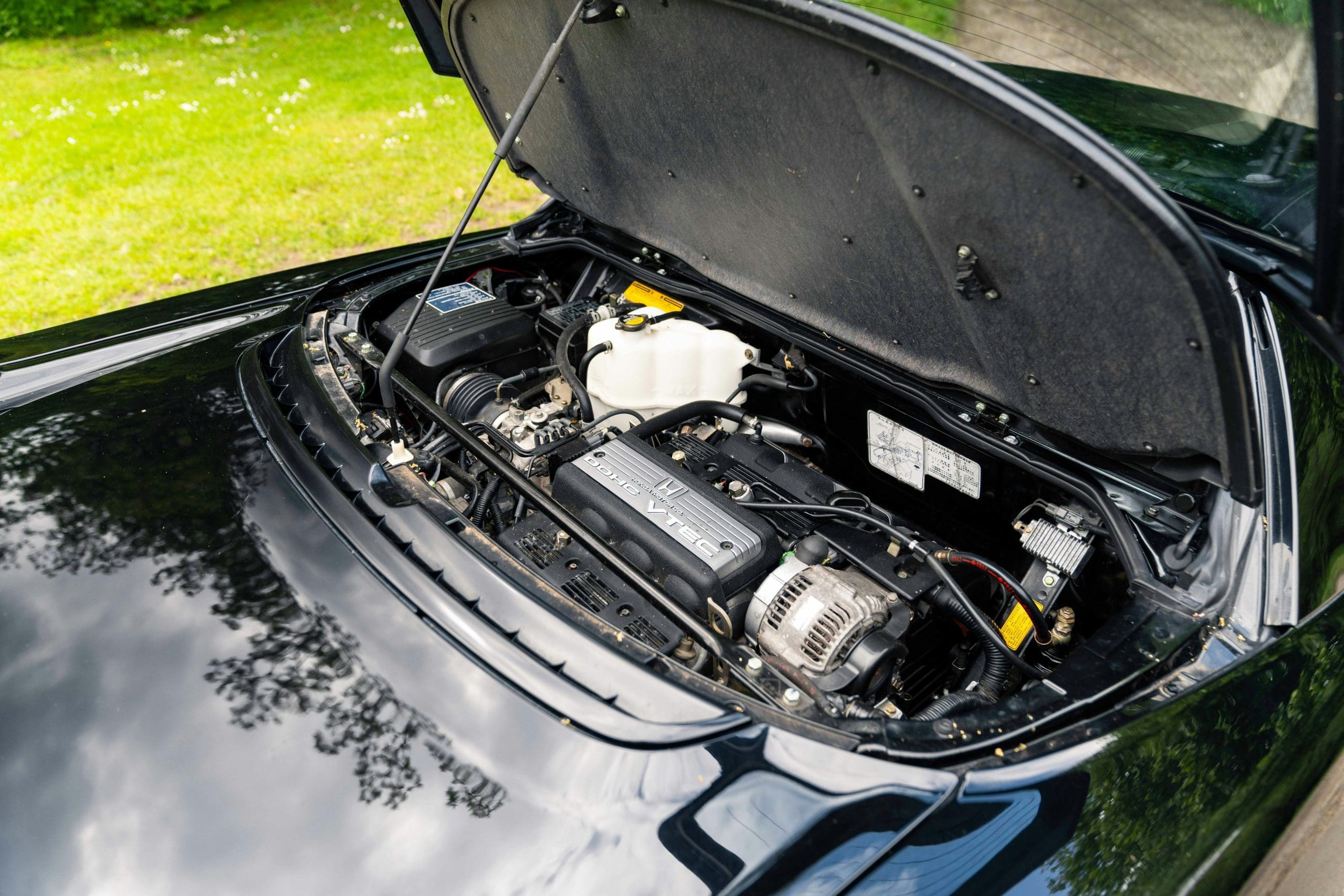
The engine was Honda’s C30A V6, a naturally aspirated masterpiece of precision engineering. Displacing 2,977cc with a 90mm bore and 78mm stroke, it featured all-aluminum construction with titanium connecting rods for strength without weight. Dual overhead camshafts per bank controlled four valves per cylinder through variable intake valve timing (VTEC), switching cam profiles at 5,800 rpm.
With an 10.2:1 compression ratio and individual throttle bodies feeding each cylinder, output was 270 horsepower at 7,300 rpm and 210 lb-ft at 5,400 rpm. The power delivery was linear and progressive, encouraging exploration of the 8,000 rpm redline. The engine’s efficiency meant the NSX could achieve surprising fuel economy despite supercar performance.
Transmission was a five-speed manual with close ratios and a 4.1:1 final drive. The shift action was mechanical and precise, with satisfying mechanical feedback accompanying each gear change. A limited-slip differential transferred power to the rear wheels.
Styling
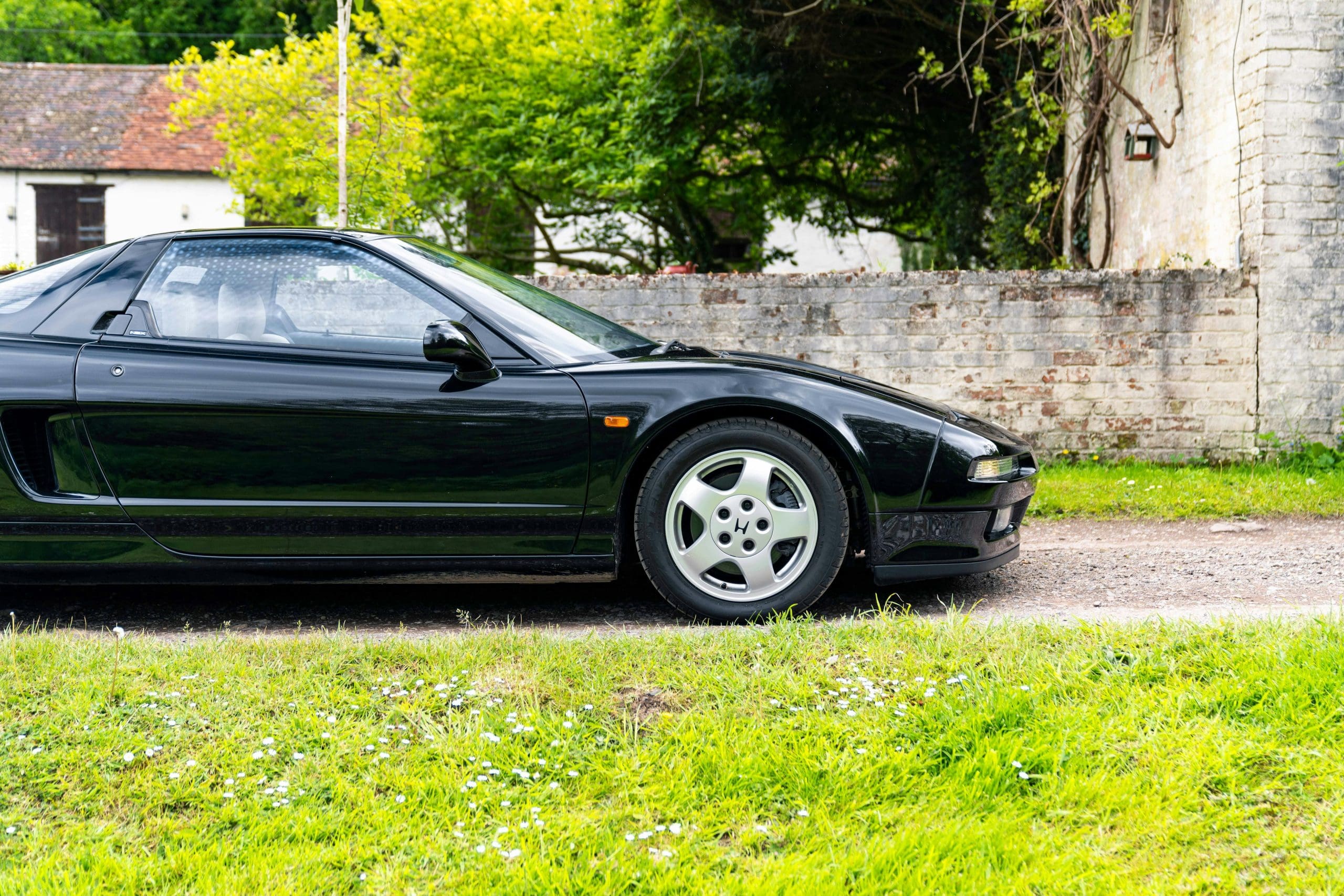
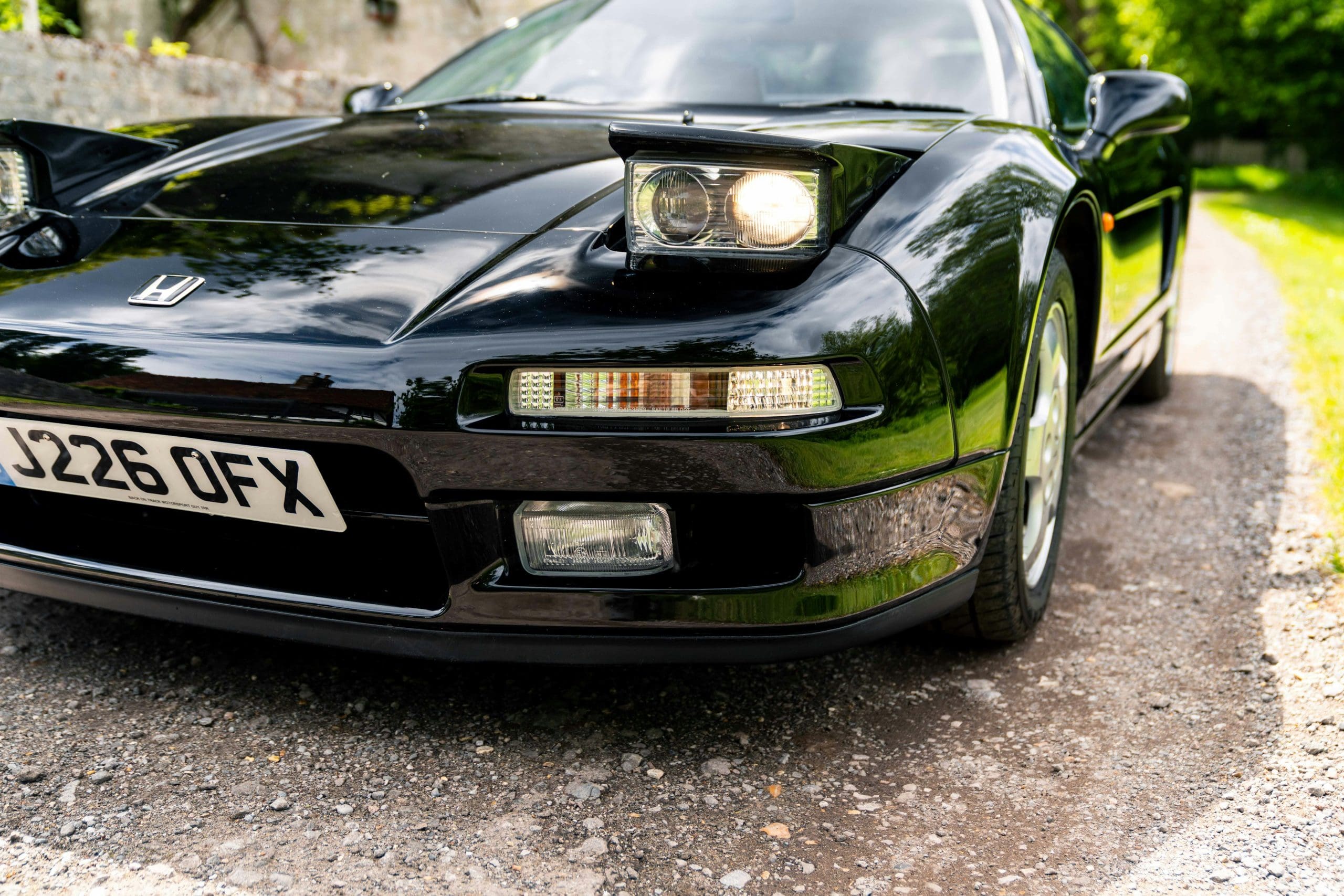
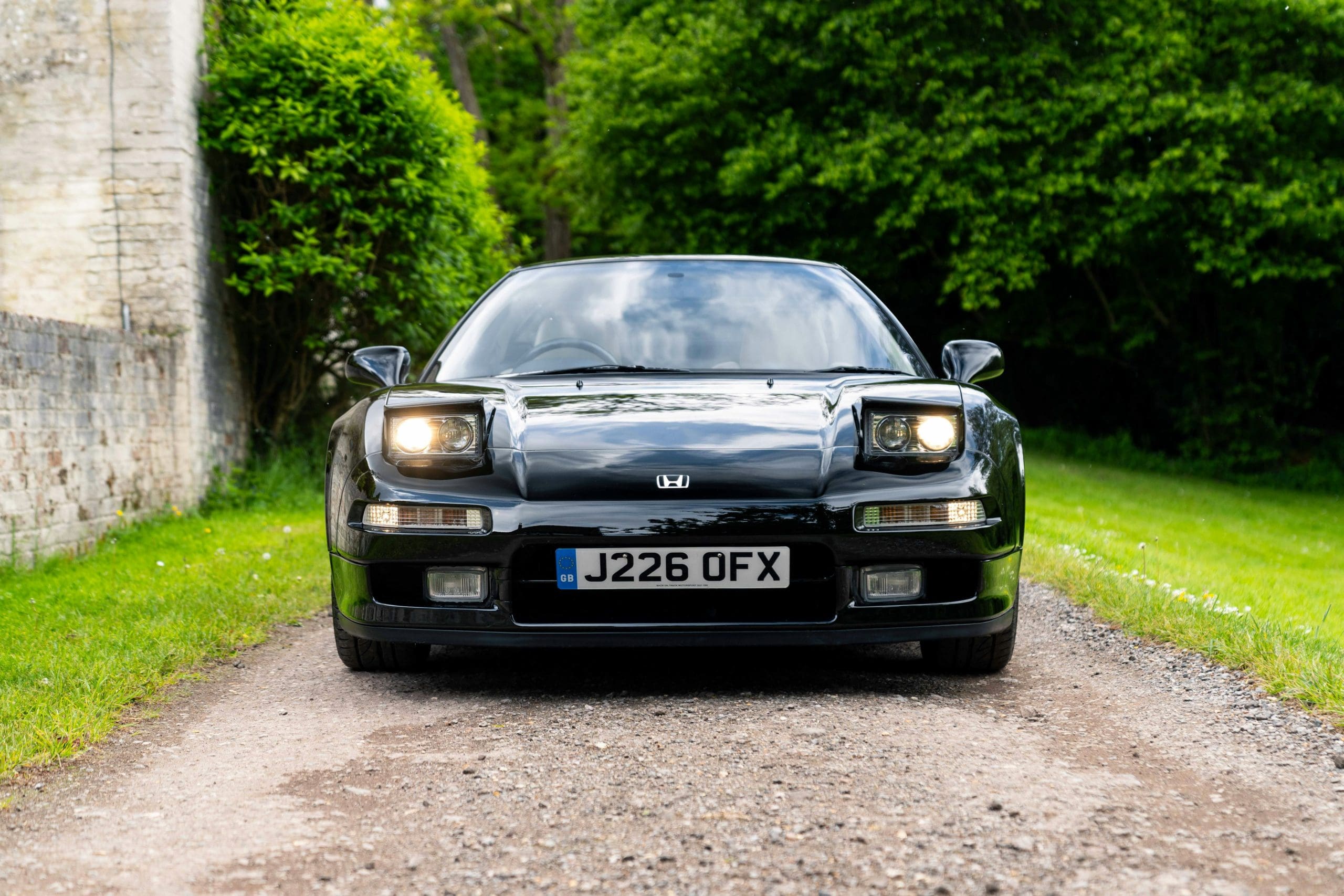
Pininfarina designed the bodywork, creating a shape that aged remarkably well. The low nose, pronounced wheel arches, and cab-forward proportions suggested performance while maintaining elegant proportions. Pop-up headlights kept the nose clean. The side profile featured dramatic curves emphasizing the mid-engine stance.
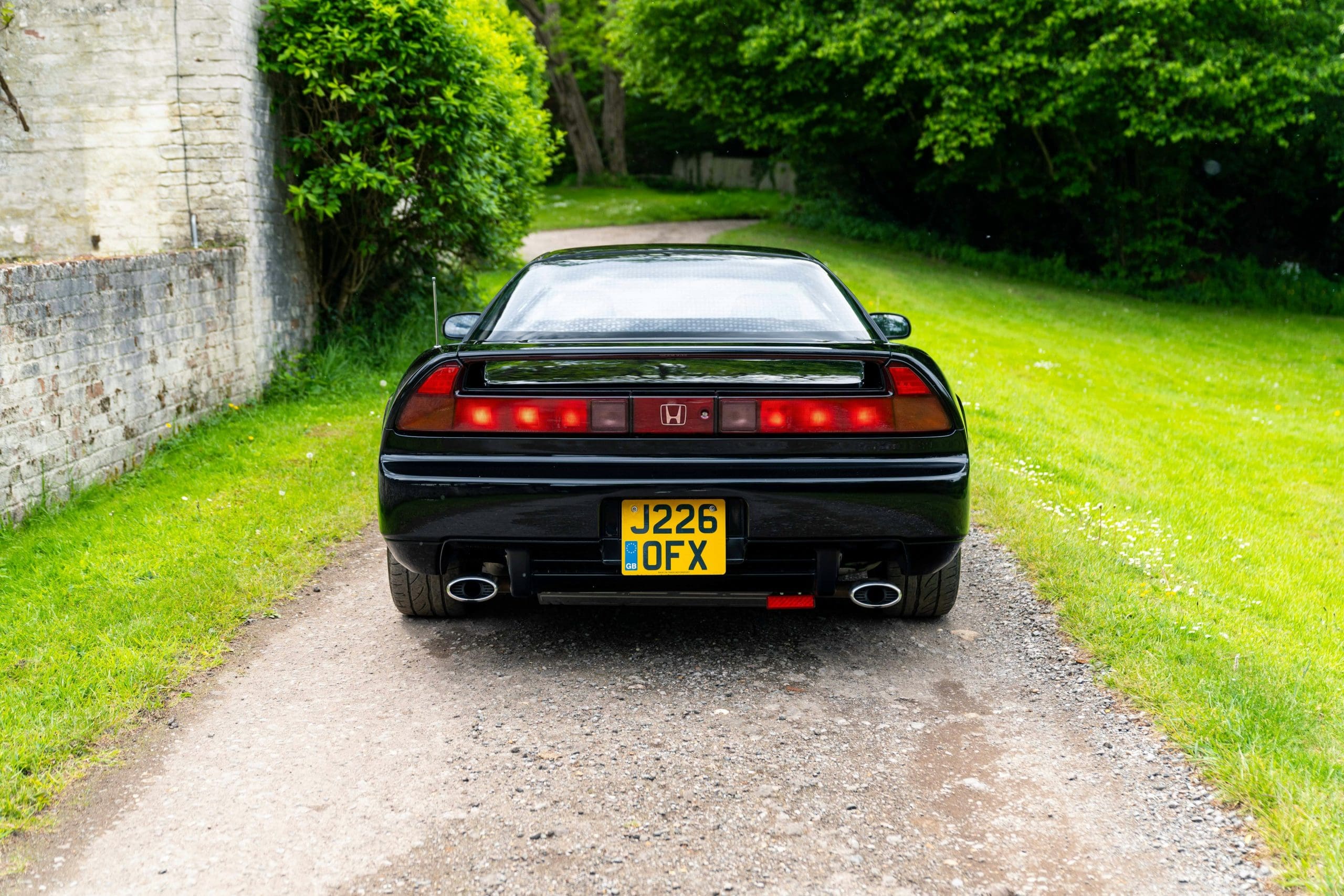
The rear featured a distinctive engine cover with louvers for heat extraction. Small round taillights sat above a simple body-colored bumper. The overall appearance was understated compared to contemporary Italian exotics, reflecting Honda’s design philosophy prioritizing function over drama.
Body panels were aluminum, hand-fitted over the monocoque structure. Panel gaps were tight, reflecting Honda’s manufacturing standards. Standard wheels were 16-inch alloy units wearing Bridgestone tires sized 215/50 VR16 front and 225/50 VR16 rear.
Color choices included traditional shades: red, black, silver, and various metallics. White became available later. Most early NSXs were finished in red, creating instant visual association with Ferrari.
Interior
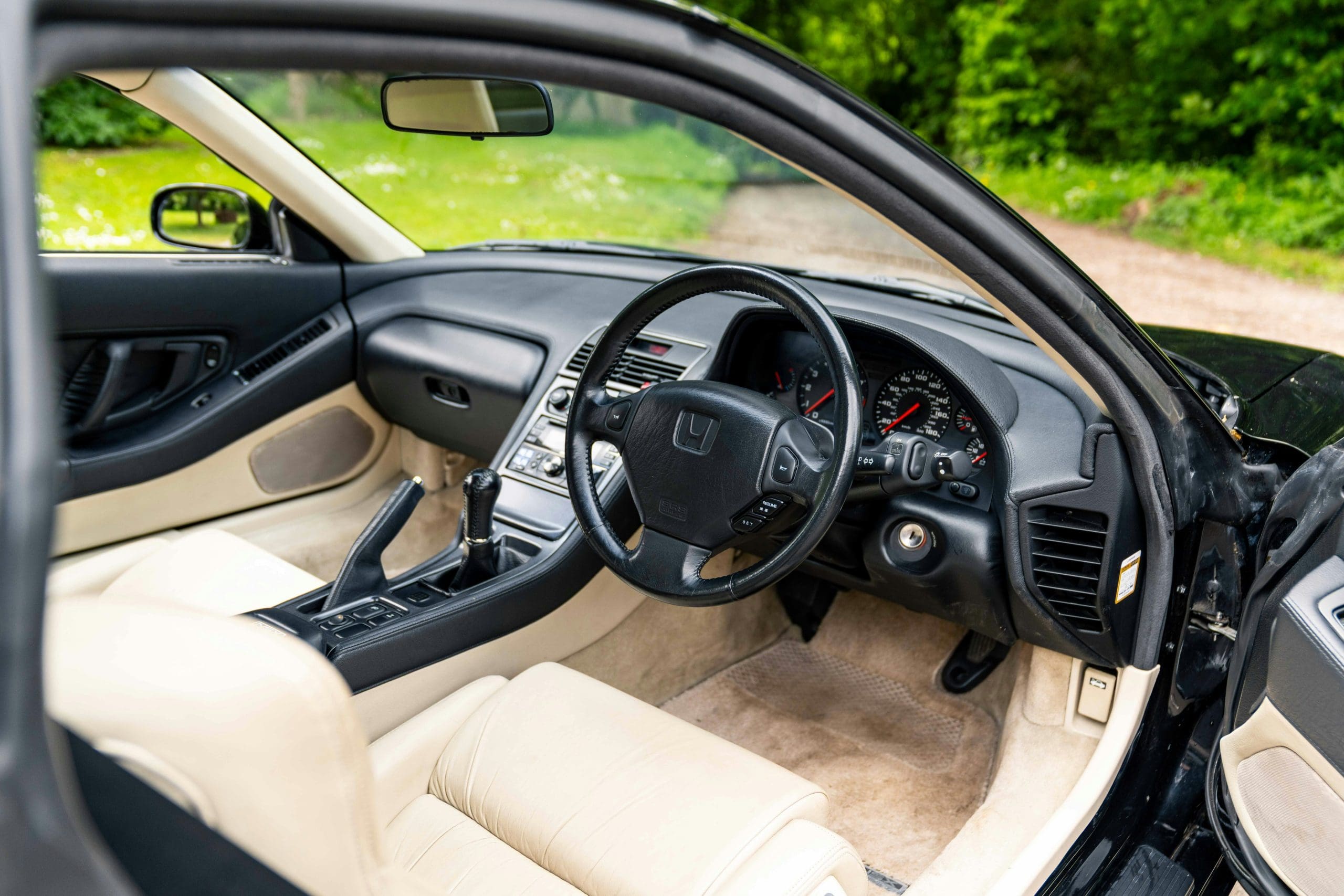
The cabin was trimmed in leather with cloth accents. Two individual bucket seats provided excellent support during spirited driving. The driving position was low and forward, with excellent visibility and ergonomically correct pedal layout. The rear seats were vestigial, suitable only for small children or occasional cargo.
The dashboard featured comprehensive instrumentation with Veglia gauges including a tachometer, speedometer, oil pressure, water temperature, and fuel level. The instruments were clearly legible with white faces and black numerals. An onboard computer displayed fuel consumption and range.
A leather-wrapped steering wheel faced the driver with Honda’s badge at its center. The gear lever sprouted from the transmission tunnel with light, precise mechanical action. Climate control was standard, along with power windows, central locking, and a premium audio system. Air conditioning was remarkably effective despite the mid-engine layout.
Specifications
- Engine: C30A V6, 2,977cc (90mm x 78mm), DOHC per bank, four valves per cylinder, VTEC
- Power: 270 bhp at 7,300 rpm
- Torque: 210 lb-ft at 5,400 rpm
- Transmission: Five-speed manual, 4.1:1 final drive, limited-slip differential
- Chassis: Aluminum monocoque, 2,530mm wheelbase
- Suspension: Double wishbones (front and rear)
- Brakes: Vented discs 282mm (front and rear)
- Wheels: 16-inch alloy, Bridgestone 215/50 VR16 (front), 225/50 VR16 (rear)
- Weight: 1,200 kg
- Performance: 161 mph top speed, 0-60 mph in 5.0 seconds
Competition History
The NSX was designed as a road car and saw limited official motorsport use. However, the advanced chassis and responsive handling made it popular for track days and amateur racing. Several privateer entries competed in Japanese GT racing, where the combination of power, handling, and reliability proved competitive.
Production and Legacy
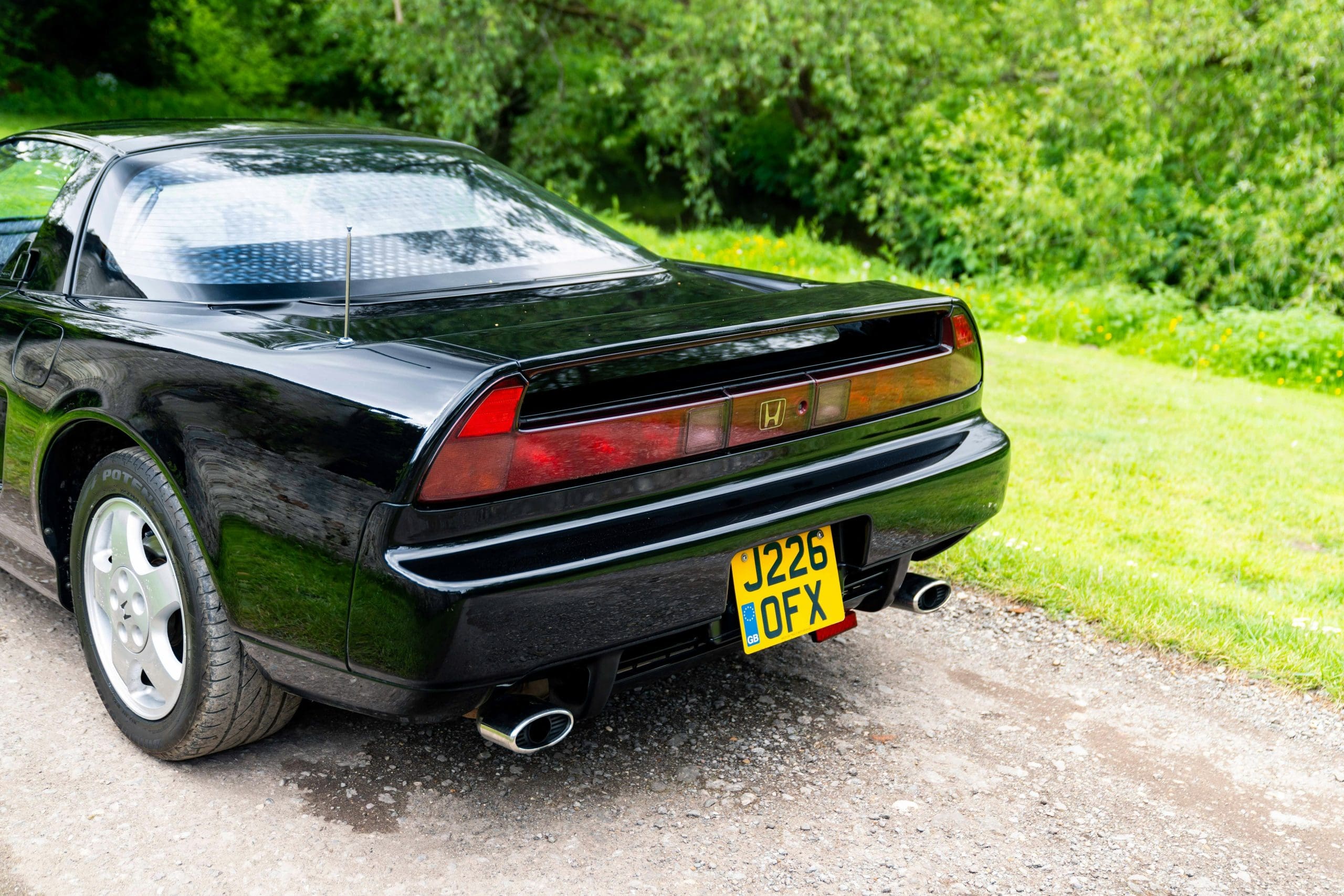
Honda built approximately 18,000 original-generation NSX models between 1990 and 2005 at Suzuka. Production included various updates and improvements, with horsepower eventually increasing to 290 hp and weight dropping slightly. The long production run reflected the NSX’s enduring appeal.
The NSX proved that Japanese manufacturers could build world-class supercars. It established Honda’s engineering credibility and influence on every subsequent performance car. The aluminum monocoque, naturally aspirated V6, and double-wishbone suspension became benchmarks.
Today, original NSX models are increasingly valuable as collectors recognize them as important automotive landmarks. The combination of innovative engineering, Ayrton Senna’s involvement, and genuine performance capability has created strong demand. Clean examples command significant premiums.
The NSX represented a watershed moment when Japanese reliability and quality merged with supercar performance. It challenged the established order and proved that tradition couldn’t guarantee superiority. The NSX remains one of Honda’s greatest achievements, a naturally aspirated masterpiece that proved lightweight engineering could compete with displacement and forced induction.