

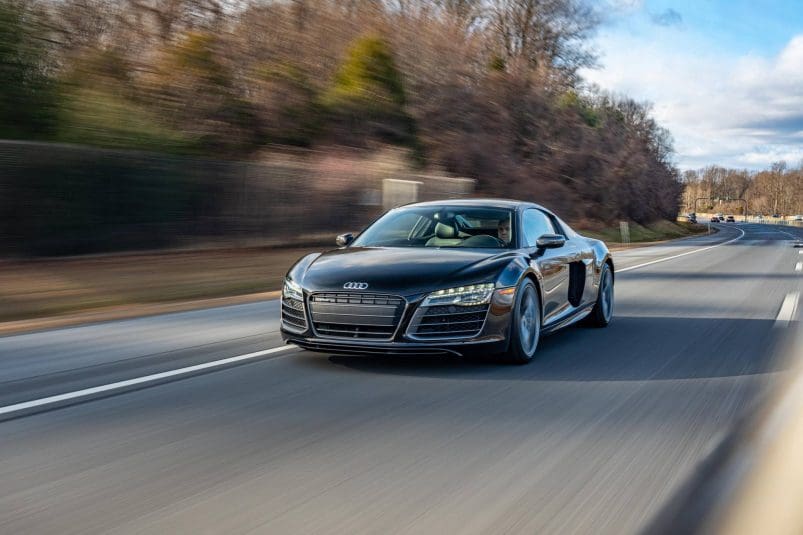
Geneva, March 2015. Audi unveiled the second-generation R8 at the Geneva Motor Show, nine years after the original R8 had established the company as a serious supercar maker. The new car was offered only with a naturally aspirated 5.2-liter V10, in two versions: the R8 V10, producing 533 hp and 398 lb-ft of torque, and the R8 V10 plus, producing 602 hp and 413 lb-ft. Audi quoted 0-62 mph in 3.5 seconds for the V10 and 3.2 seconds for the V10 plus, with top speeds of 201 mph and 205 mph. The car used a new aluminum and carbon-fiber structure, a seven-speed dual-clutch gearbox and quattro all-wheel drive. Alongside it on the Geneva stand was the R8 LMS, a GT3 race car developed in parallel with the road car. It went on to win the Nürburgring 24 Hours just two months later.
Background and Origins
The first-generation R8 arrived in 2006 and changed Audi’s image. It was the company’s first true mid-engined supercar and, with its V10 option from 2008, a credible rival to Porsche, Ferrari and Lamborghini. It also became one of the most successful GT3 race cars of its era. By the mid-2010s, Audi needed a successor that matched the performance of a new generation of rivals while keeping the R8’s reputation for being usable every day.
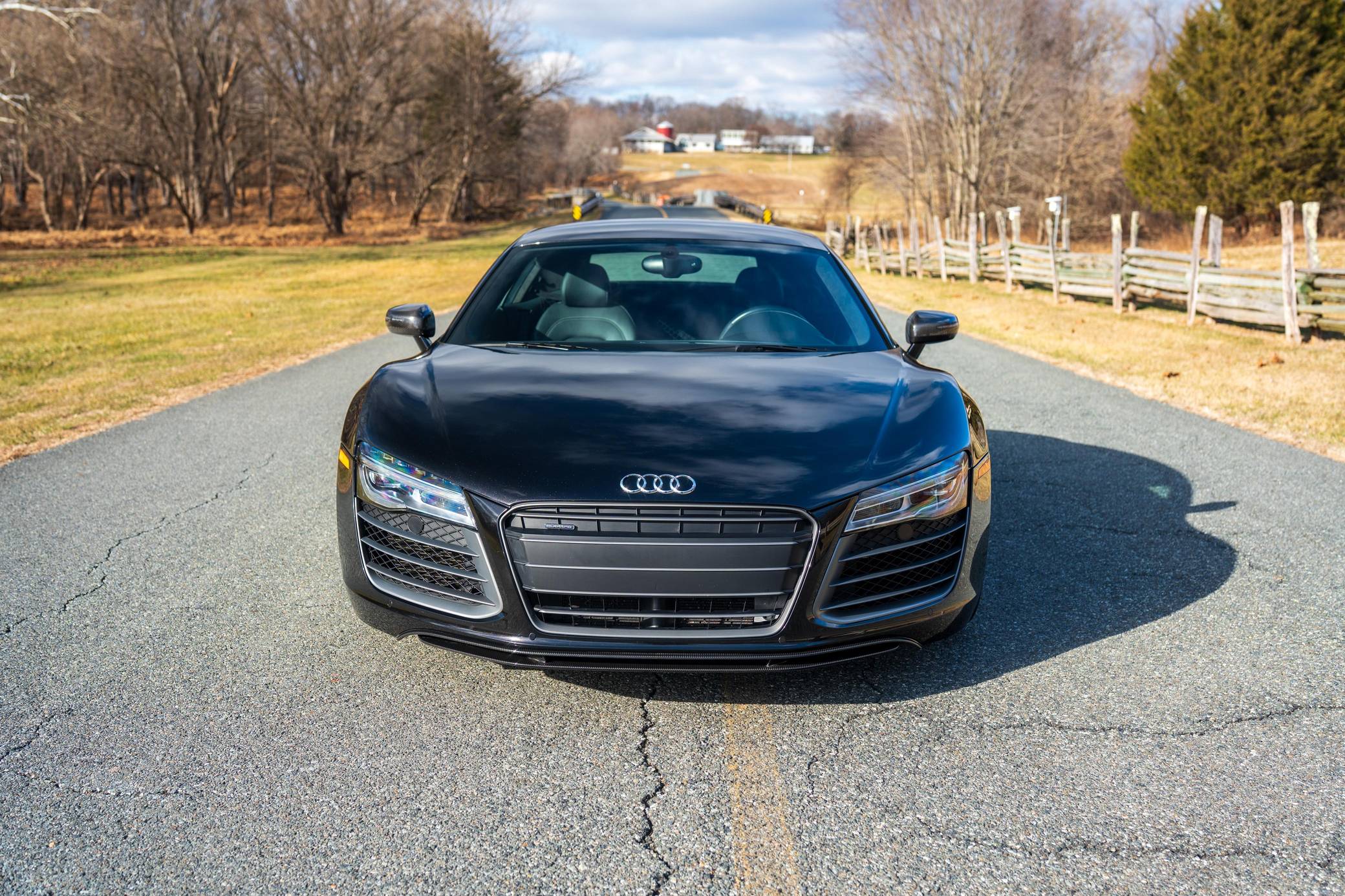
The second-generation R8 was developed alongside the Lamborghini Huracán, which shared its V10 engine and much of its basic architecture. Audi built the R8 at its dedicated facility in Neckarsulm, where much of the construction was done by hand. Audi also dropped the V8 engine offered in the first generation, making the V10 standard. The new car was designed together with the R8 LMS race car from the outset, and Audi said about half of the race car’s parts were shared with the production R8 V10.
Design and Engineering
The R8’s structure was a new multi-material Audi Space Frame that combined aluminum with carbon-fiber-reinforced plastic. Carbon fiber was used in areas such as the B-pillars, central tunnel and rear bulkhead. Audi said the new structure was 40 percent stiffer than the previous car’s, and the overall car was about 110 pounds lighter than its predecessor. The engine was mounted behind the cabin, and the front-to-rear weight distribution favored the rear axle, giving the car the balance expected of a mid-engined supercar.
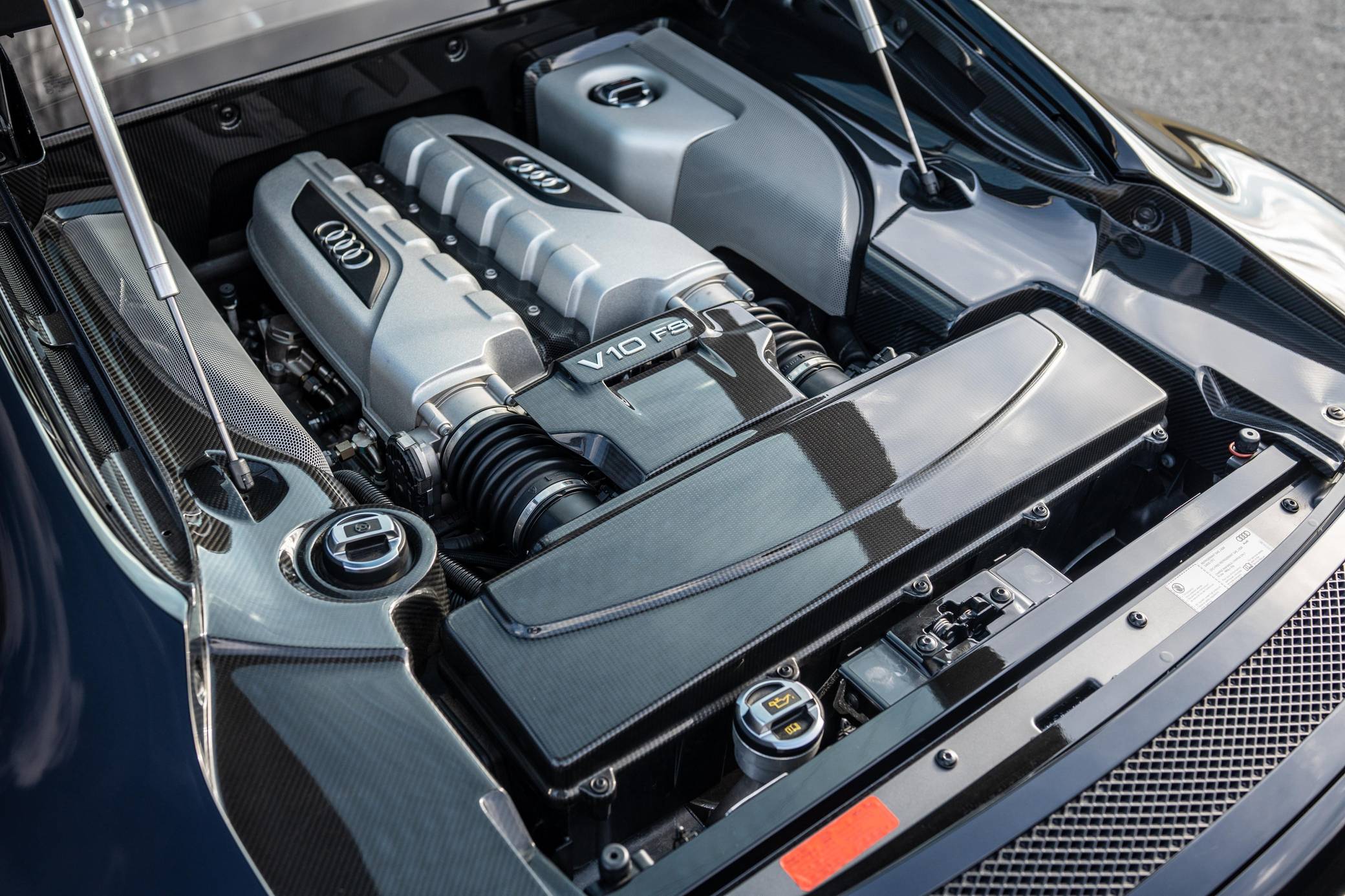
The 5,204-cubic-centimeter V10 used both direct and port fuel injection and could shut down one cylinder bank under light loads to save fuel. In the R8 V10, it produced 533 hp and 398 lb-ft of torque at 6,500 rpm. The V10 plus produced 602 hp and 413 lb-ft at the same engine speed. Power went through a seven-speed S tronic dual-clutch transmission to a quattro all-wheel-drive system with an electro-hydraulically controlled multi-plate clutch at the front axle. That system could vary the torque split between the axles and send most of the power to the rear in normal driving, while a mechanical limited-slip differential was fitted at the rear. The suspension used double wishbones at all four corners, and the V10 plus came with carbon-ceramic brakes and a fixed rear wing. Audi quoted top speeds of 201 mph for the R8 V10 and 205 mph for the V10 plus.
Styling
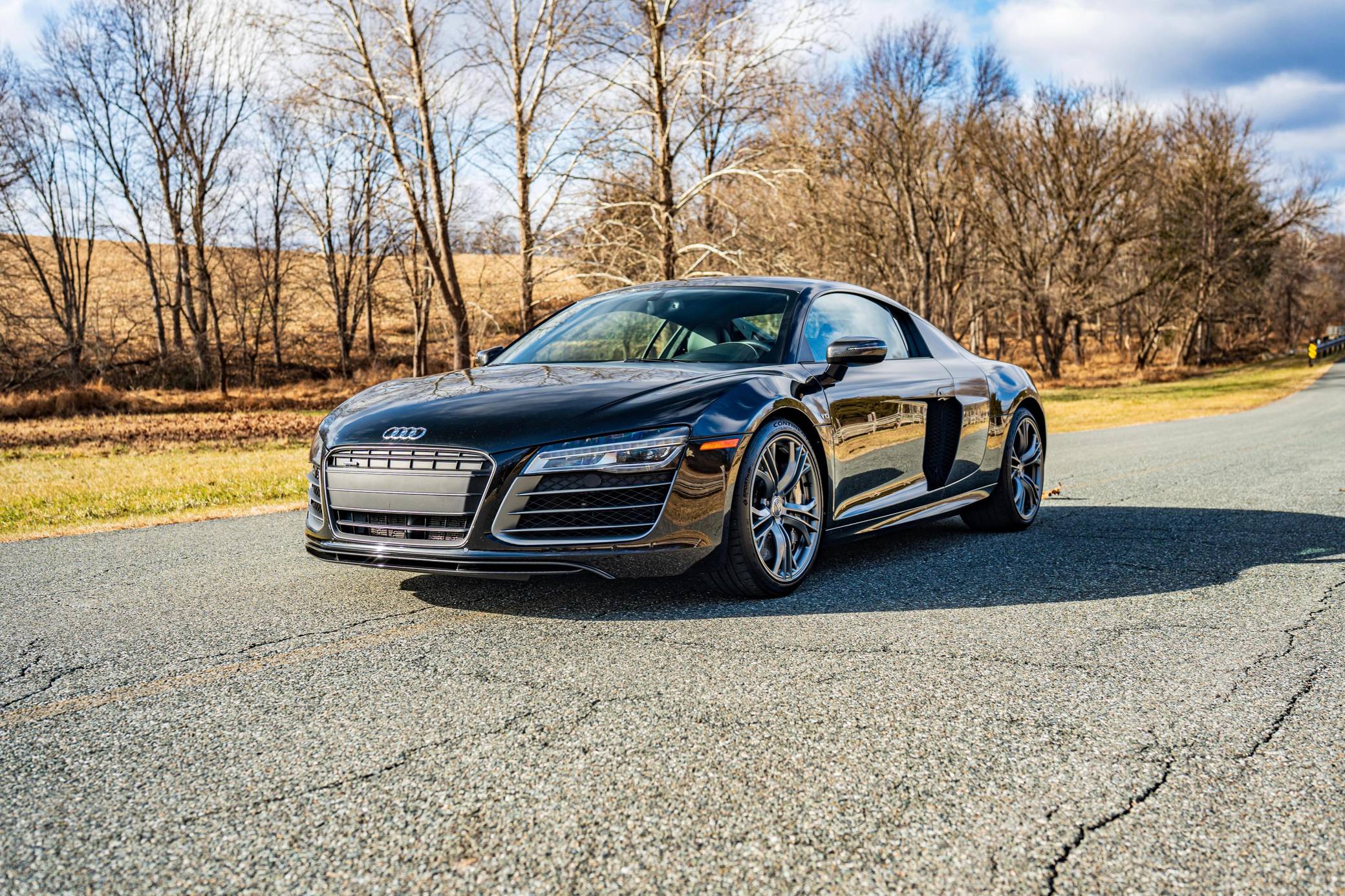
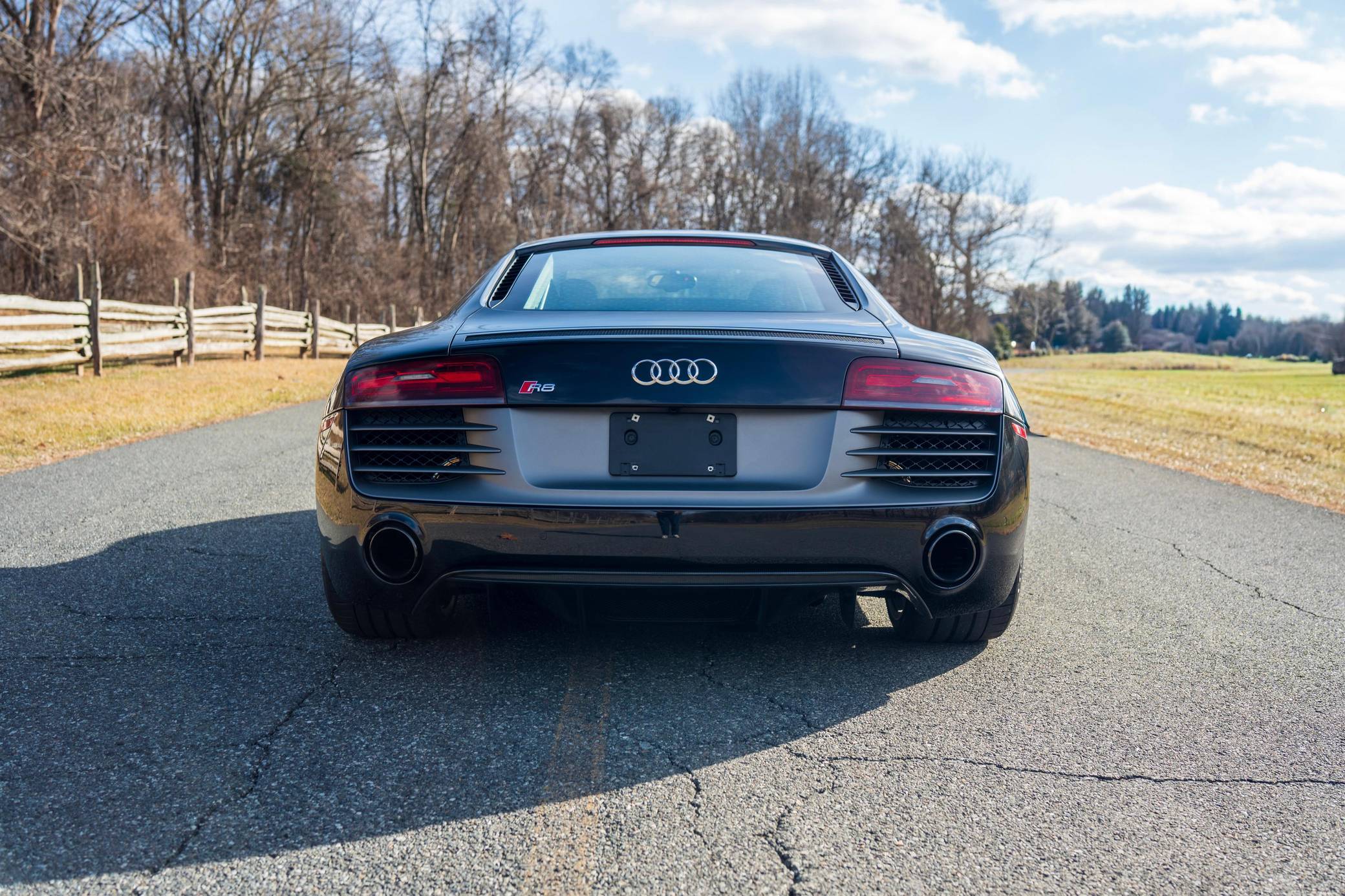
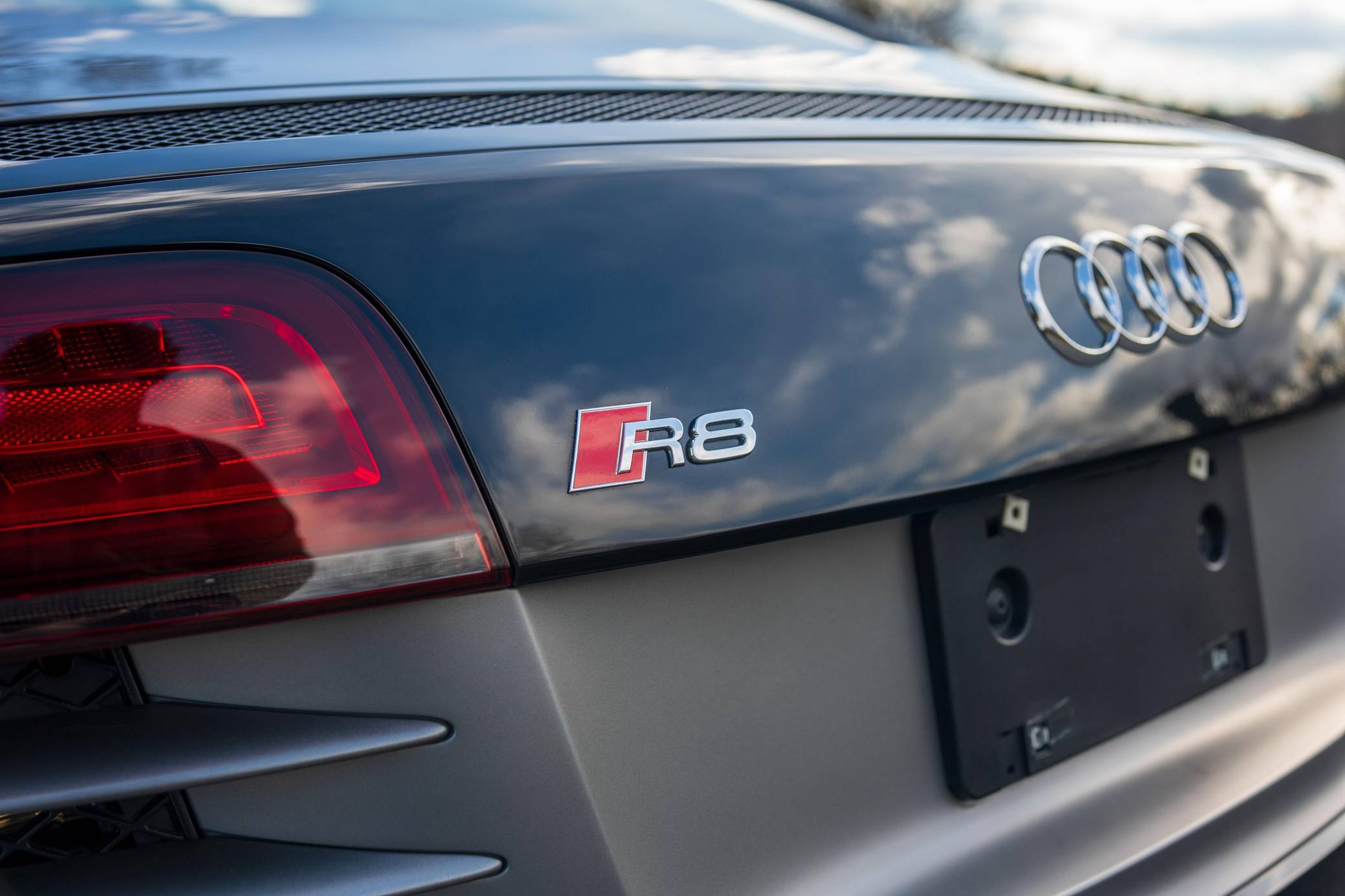
The second-generation R8 kept the low, wide proportions of the original but adopted Audi’s sharper design language of the period. The front had a wider, flatter version of Audi’s single-frame grille, along with narrow LED headlights, and laser high beams were available. On the sides, the original R8’s signature sideblade, the contrasting panel behind the doors, was now split into two sections, upper and lower. At the rear, a large diffuser integrated quad exhaust outlets. The R8 V10 had an electrically extending rear spoiler, while the V10 plus had a fixed carbon-fiber wing and additional carbon exterior parts, giving it a more aggressive appearance.
Interior
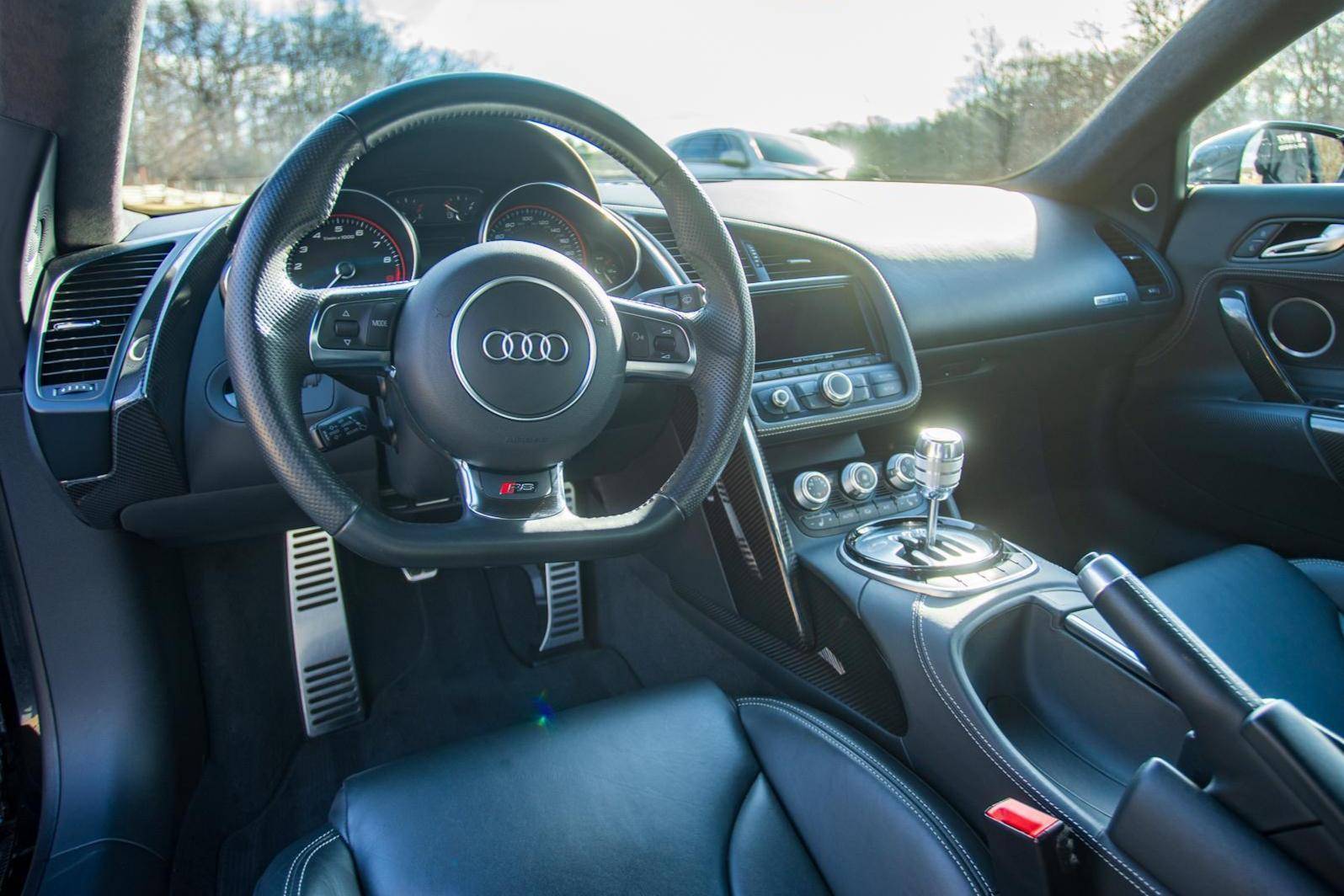
The cabin was designed around the driver. In place of a central infotainment screen, the R8 used Audi’s 12.3-inch virtual cockpit, a fully digital instrument display that showed navigation, media and performance information directly in front of the driver. The steering wheel had satellite buttons for starting the engine, selecting driving modes and, on the V10 plus, adjusting the performance settings. Leather and Alcantara upholstery, sports seats and optional Bang & Olufsen audio gave the R8 the quality expected of an Audi flagship. As with the first-generation car, the R8 was designed to be comfortable and easy to drive in everyday traffic as well as fast on a track.
Racing History
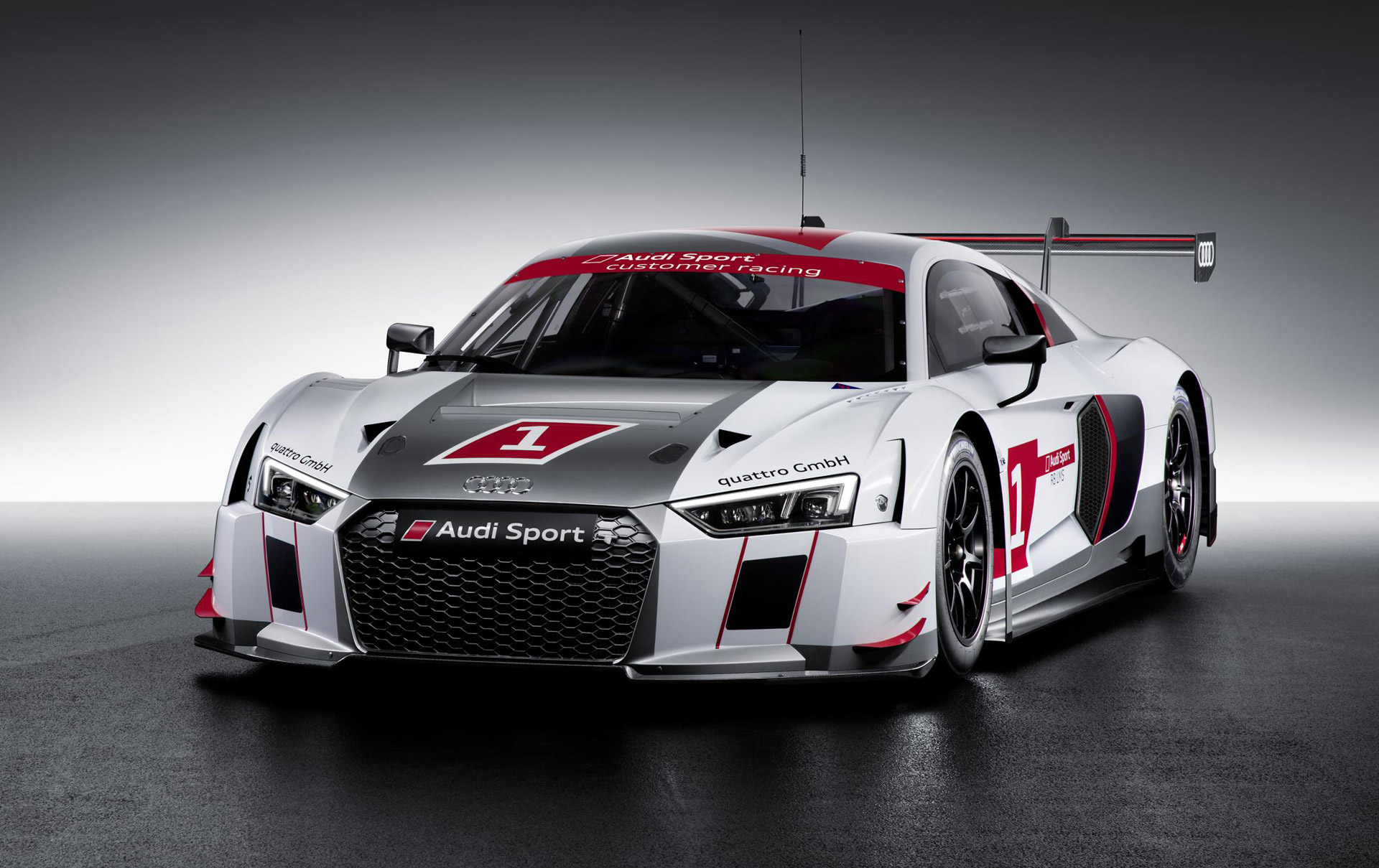
The R8 LMS race car was developed alongside the road car and debuted with it at Geneva in March 2015. Built to GT3 regulations, it was one of the first cars to meet the new GT3 rules introduced for 2016. Audi said that about half of the race car’s parts were shared with the production R8 V10, continuing the close connection between road and race cars that had made the first-generation R8 LMS so successful.
The new car won almost immediately. In April 2015, just seven weeks after its Geneva debut, Audi Sport Team WRT took a one-two finish in a VLN endurance race at the Nürburgring, with Christopher Mies and Nico Müller winning. A month later, the R8 LMS won the Nürburgring 24 Hours on its first attempt. The No. 28 Audi Sport Team WRT car, driven by Mies, Müller, Edward Sandström and Laurens Vanthoor, finished 40 seconds ahead of the second-place BMW. It was Audi’s third Nürburgring 24 Hours victory in four years. The R8 LMS was then sold to customer teams around the world and became one of the most widely raced GT3 cars of its generation.
Specifications
- Engine: Audi 5.2 FSI naturally aspirated V10, 5,204cc, DOHC per bank, 40 valves, direct and port injection, cylinder deactivation
- Power: 533 hp (R8 V10); 602 hp (R8 V10 plus)
- Torque: 398 lb-ft at 6,500 rpm (R8 V10); 413 lb-ft at 6,500 rpm (R8 V10 plus)
- Transmission: Seven-speed S tronic dual-clutch, quattro all-wheel drive with variable torque distribution, mechanical rear limited-slip differential
- Chassis: Multi-material Audi Space Frame, aluminum and carbon-fiber-reinforced plastic
- Suspension: Double wishbones front and rear
- Brakes: Steel discs (R8 V10); carbon-ceramic discs (R8 V10 plus)
- Weight: Approximately 3,428 lbs dry (R8 V10); approximately 3,206 lbs dry (R8 V10 plus)
- Performance: 0-62 mph in 3.5 seconds (R8 V10) or 3.2 seconds (R8 V10 plus); top speed of 201 mph (R8 V10) or 205 mph (R8 V10 plus)
Production and Legacy
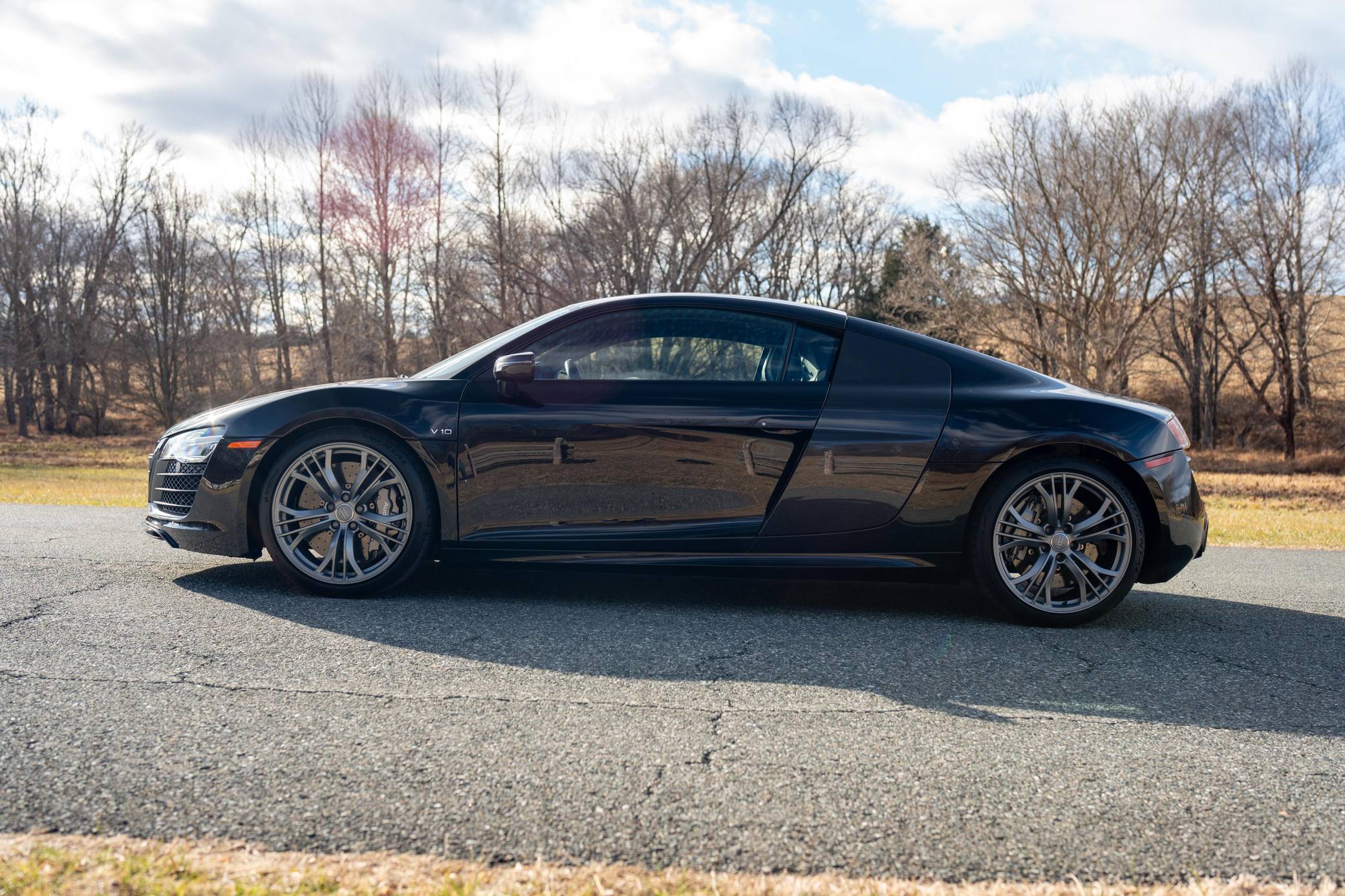
The second-generation R8 went on sale in Europe in summer 2015, priced from 165,000 euros for the R8 V10 and 187,400 euros for the V10 plus. In the United States, it arrived for the 2017 model year. Audi later added the R8 Spyder, rear-wheel-drive versions and a facelifted model, while the R8 e-tron, an electric version, was offered in very small numbers. The R8 LMS family expanded as well, including a GT4 version for lower categories of racing.
The second-generation R8 refined the formula established by the original car: a mid-engined supercar with a naturally aspirated V10, everyday usability and a direct link to Audi’s GT racing program. It became one of the last high-performance cars to combine a naturally aspirated V10 with a road car built alongside a successful GT3 racer. When R8 production ended, it closed the chapter on Audi’s naturally aspirated mid-engined supercar, and the 2015 R8 is increasingly recognized as one of the defining Audis of its era.