

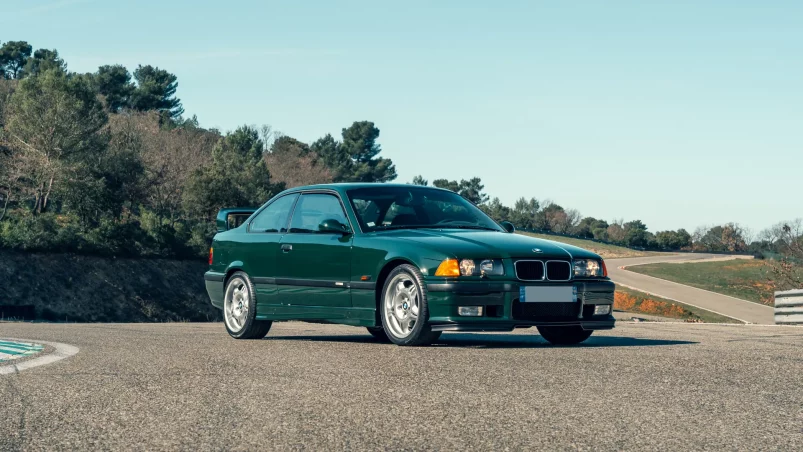
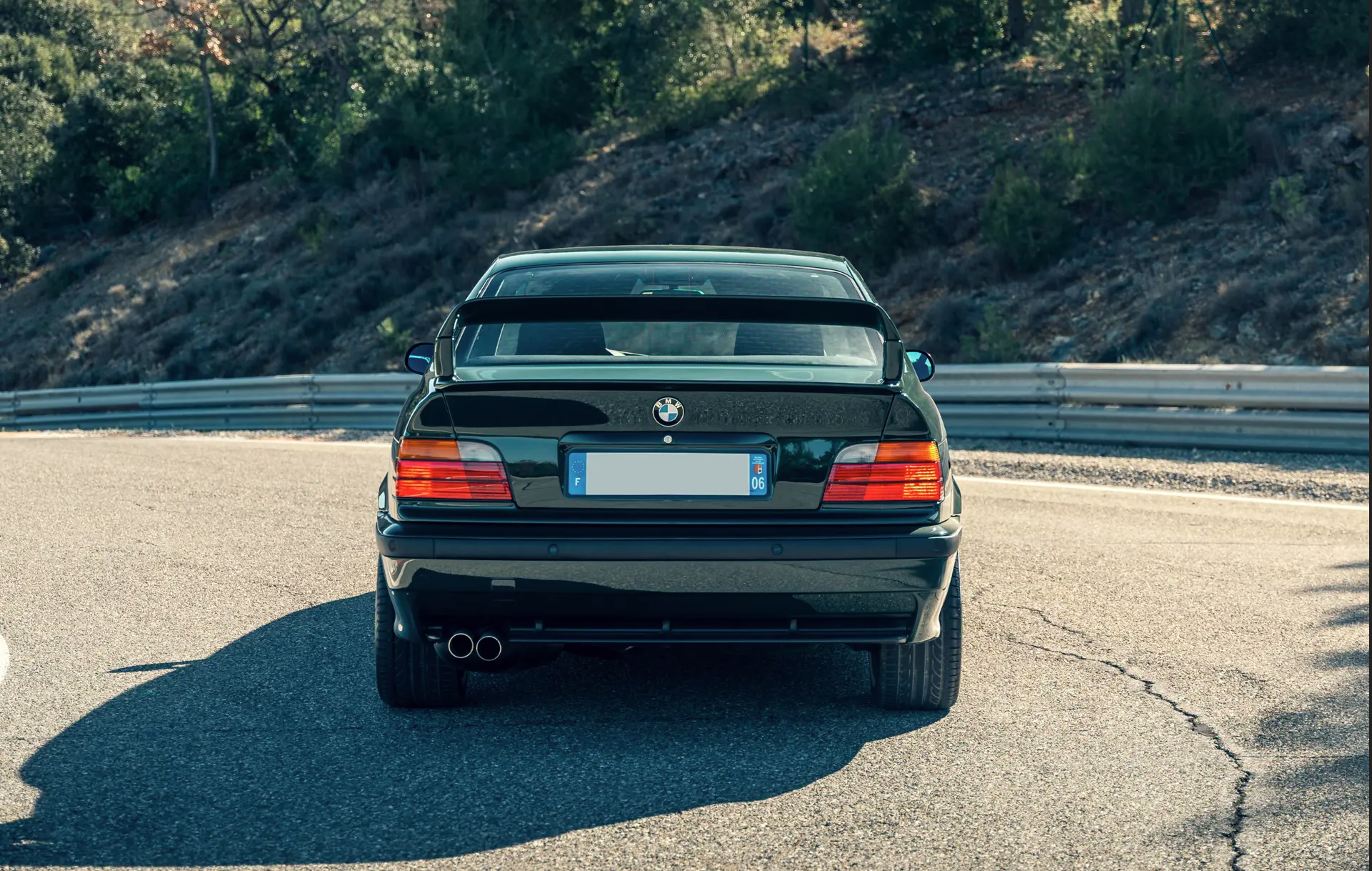
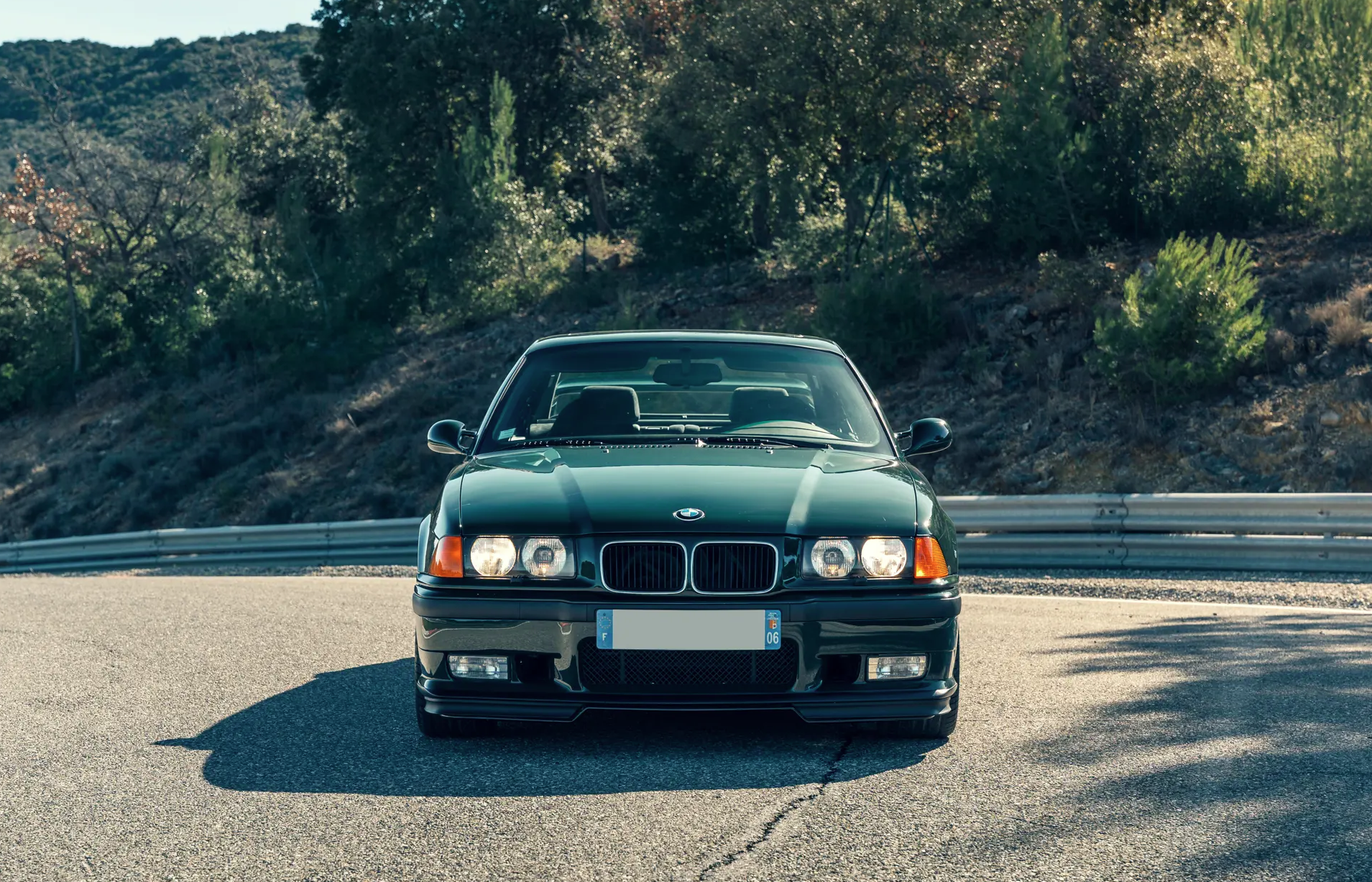
Germany, 1995. BMW introduced the M3 GT, a limited-production homologation special of the second-generation, E36 M3. It was developed to support BMW’s GT racing activities by homologating engine, aerodynamic and other competition-relevant parts, and the result was the most focused version of the E36 M3 sold in Europe. Its inline six-cylinder engine was rated at 291 hp with 238 lb-ft of torque at 3,900 rpm. BMW built 350 production M3 GTs between February and June 1995, in addition to a small number of pre-production cars, for a total of 356. All were finished in British Racing Green, and the production model was sold exclusively in Germany. Today it is widely regarded as one of the rarest and most desirable M3s ever built.
Background and Origins
The E36 M3 arrived in 1992 with a high-revving 3.0-liter inline-six, but BMW initially positioned it as a road-going sports coupe rather than a dedicated racing homologation model. That began to change as GT racing gained momentum in the early 1990s. In 1993, an E36 M3 GTR won the German ADAC GT Championship with Johnny Cecotto, who took six of the eight rounds, giving BMW a competitive foundation for its next step. For 1995, BMW decided to take the M3 to the IMSA GTS-2 class in North America, contracting Tom Milner’s Prototype Technology Group (PTG) of Virginia to run the program.
To use competition parts on its race cars, BMW had to homologate them on a road car. BMW M describes the M3 GT as a homologation model for FIA GT Division II and IMSA GT competition. That terminology should be read in context, since the international GT racing scene in 1995 was dominated by the BPR Global GT Series, which did not become the FIA GT Championship until 1997. Because the GT was built only in left-hand drive and sold only in Germany, customers elsewhere could not order it. In the United States, BMW of North America later offered its own track-focused model, the M3 Lightweight, of which 126 were built between August and October 1995.
Design and Engineering
The M3 GT used the 2,990-cubic-centimeter S50B30 inline-six from the standard E36 M3, but BMW Motorsport made several changes. The engine received 264-degree camshafts and the short intake runners of the 3.2-liter S50B32 engine from the facelifted model offered from late 1995. Some sources, including RM Sotheby’s, also cite a higher compression ratio, although BMW’s own retrospective focuses on the camshafts and intake. According to the BMW M Registry, the GT also had a BMW Motorsport dual-pickup oil pan, duocentric oil pumps and revised VANOS software. The result was 291 hp at 7,000 rpm and 238 lb-ft at 3,900 rpm, slightly more than the standard 3.0-liter M3. Power went to the rear wheels through a five-speed manual gearbox.
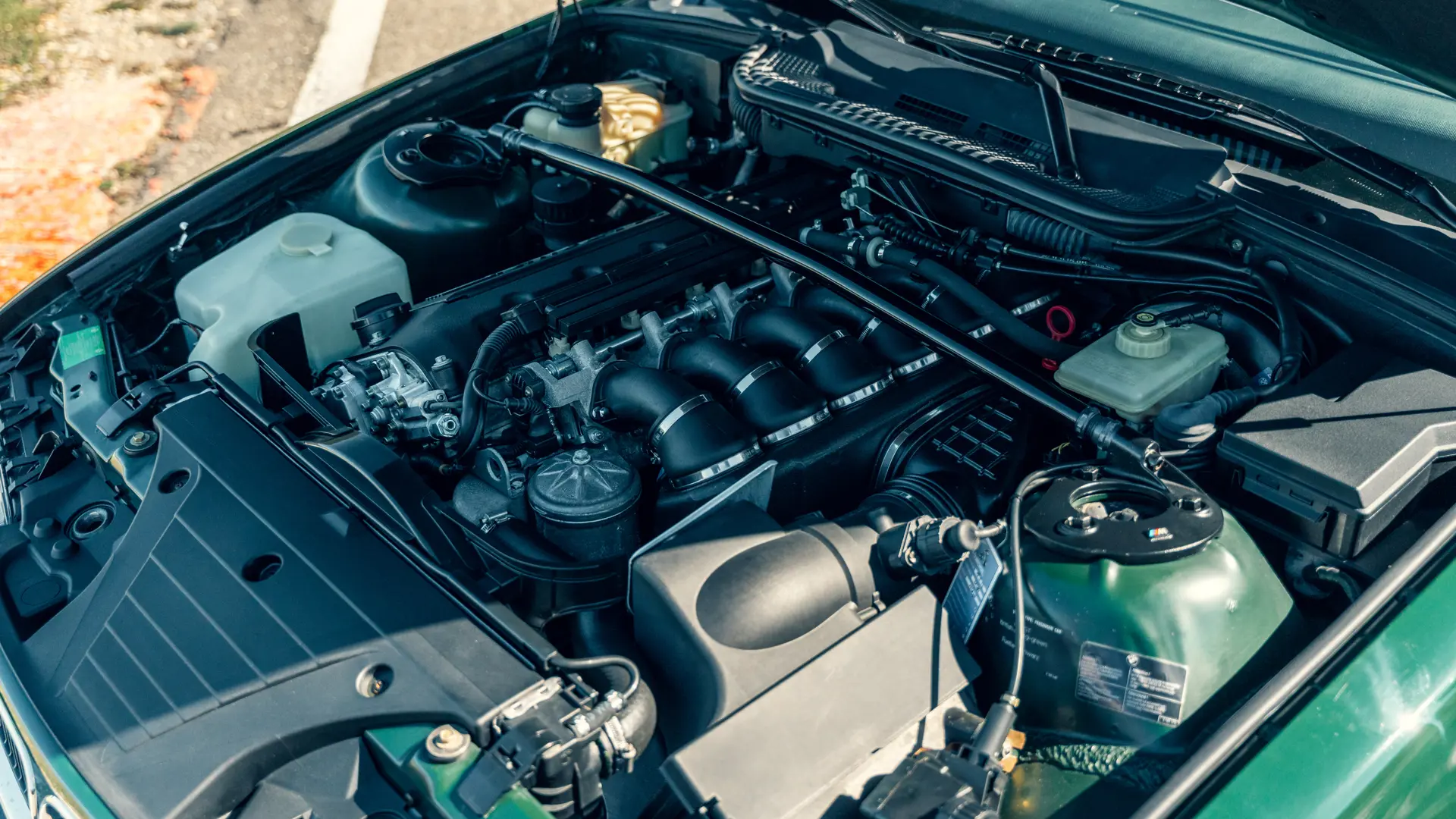
BMW Group Classic says the chassis and brakes were carried over almost unchanged from the standard M3, apart from an additional strut brace in the engine compartment. The most important structural change was the use of aluminum doors to save weight, and RM Sotheby’s estimates that the GT was about 30 kilograms lighter than the standard M3. According to factory data, the M3 GT accelerated from 0 to 62 mph in 5.9 seconds, 0.1 seconds quicker than the standard M3, and its top speed was electronically limited to 155 mph.
Styling
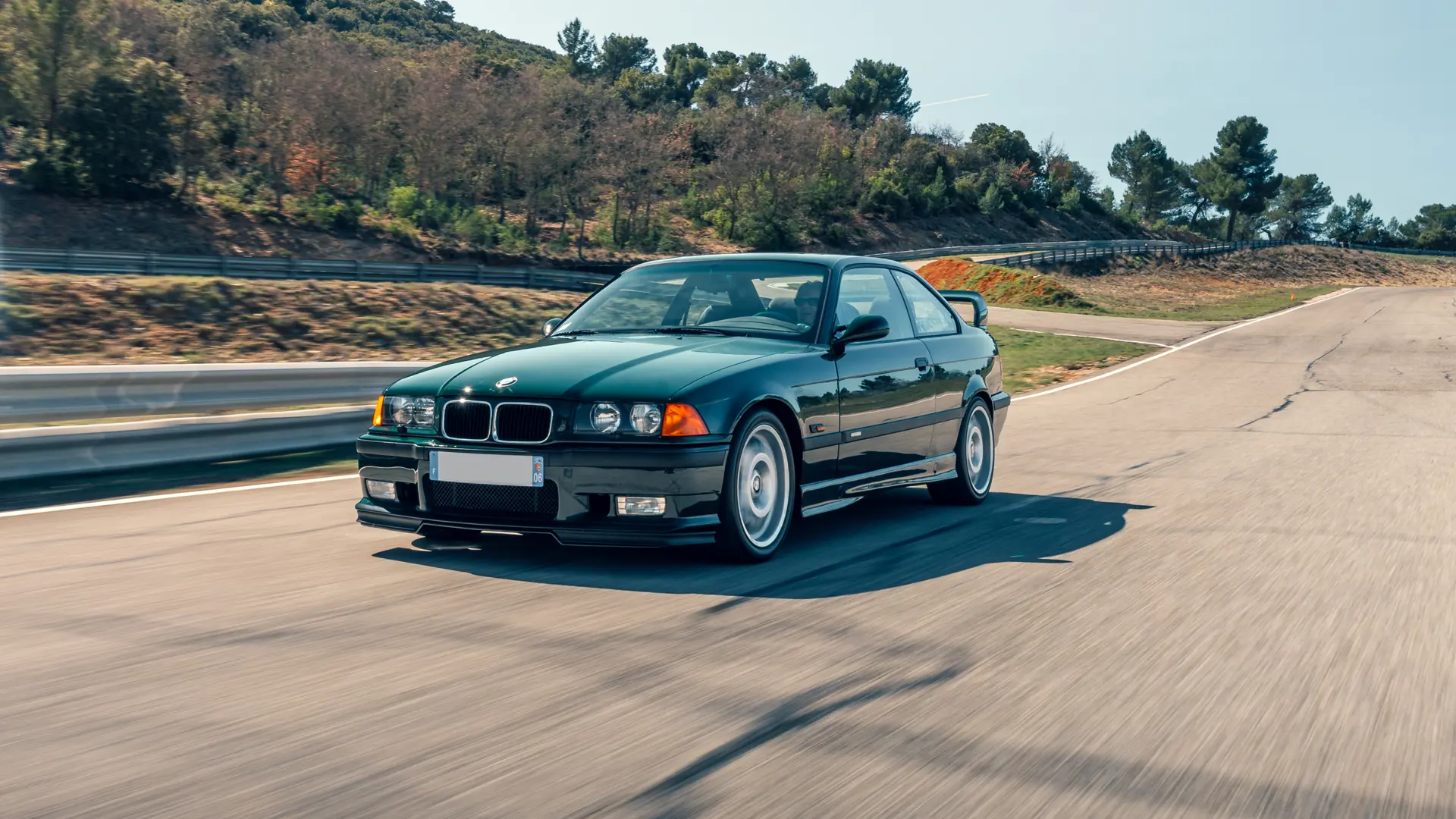
The M3 GT’s appearance was defined by its aerodynamic package, which was designed to homologate spoilers for racing. It featured an adjustable front splitter and a distinctive two-piece rear spoiler, giving race teams homologated parts they could tune for downforce. The GT rode on 17-inch forged alloy wheels with 235/40 ZR17 tires. The car carried no prominent GT badging, but special BMW Motorsport International emblems were fitted to the exterior door moldings. Every car was painted in the GT’s characteristic British Racing Green (paint code 312), and the combination of that dark green, the splitter and the rear spoiler made the GT instantly recognizable to enthusiasts.
Interior
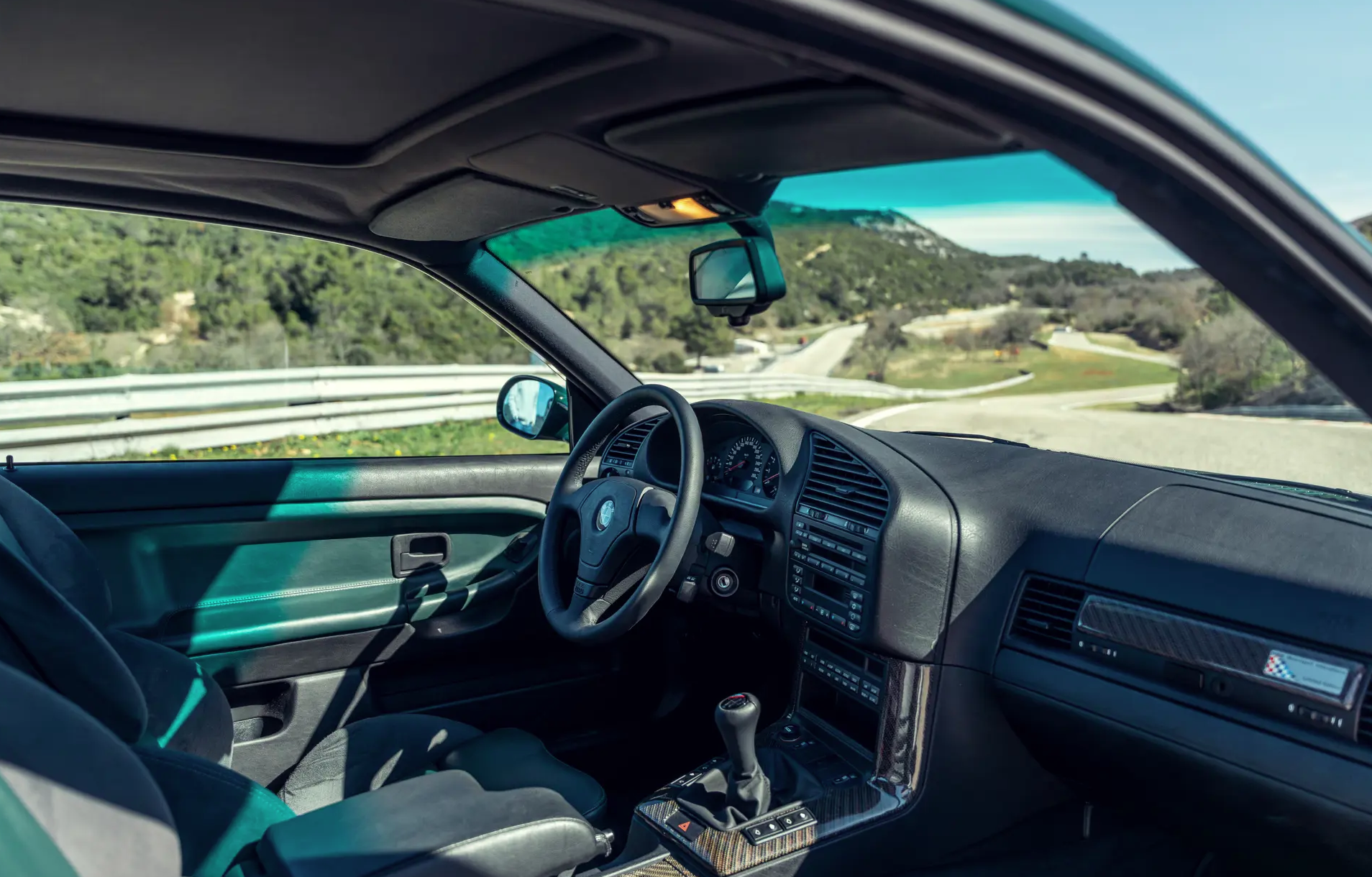
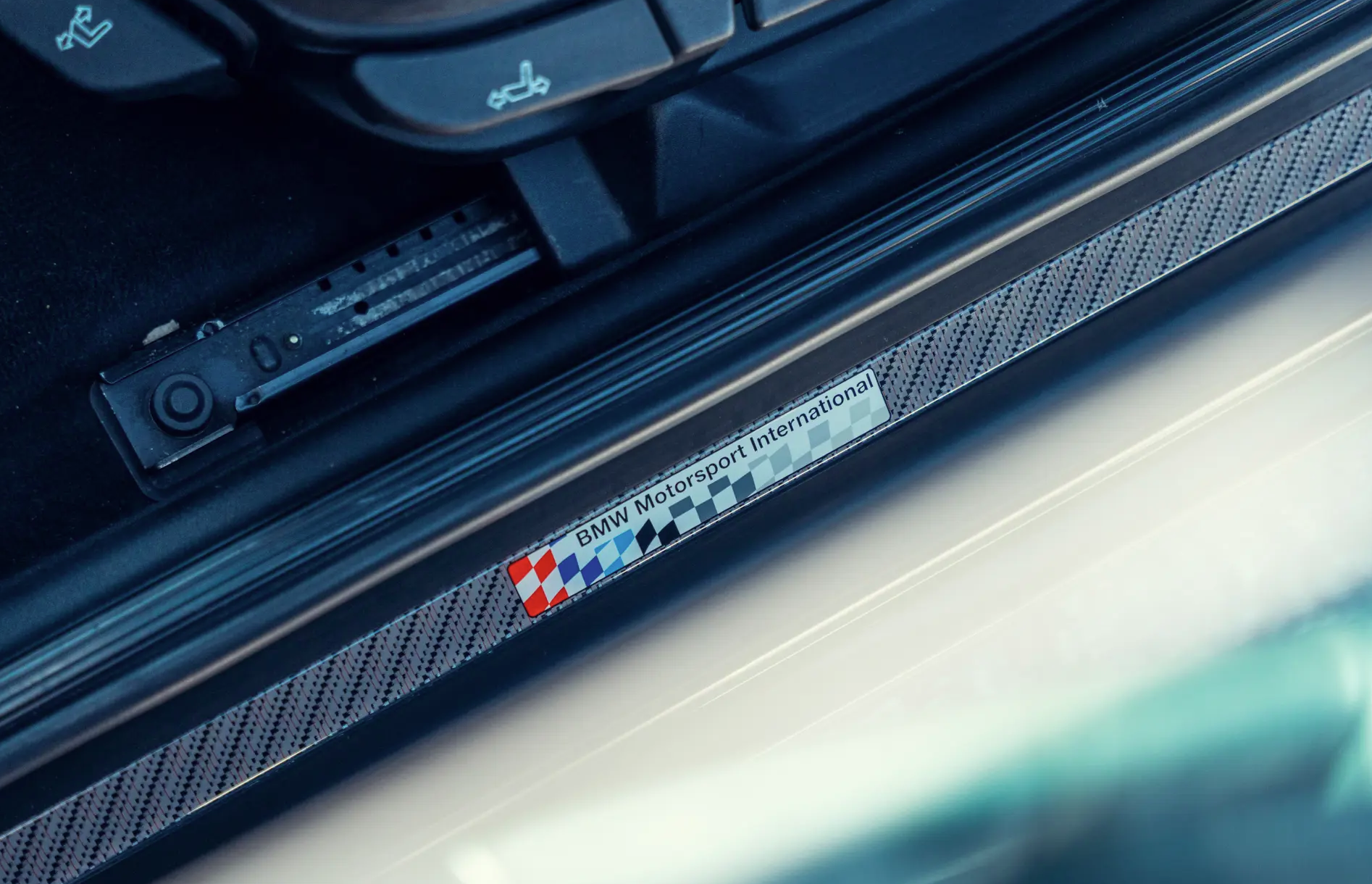
The cabin was also unique to the GT. The seats were upholstered in Mexico Green Nappa leather with Anthracite Amaretta inserts, complemented by carbon-fiber trim and BMW Motorsport International emblems on the kick plates. The sporty interior gave the GT a more focused feel than the standard M3, while the car kept its everyday usability, with four seats and a practical trunk.
Racing History
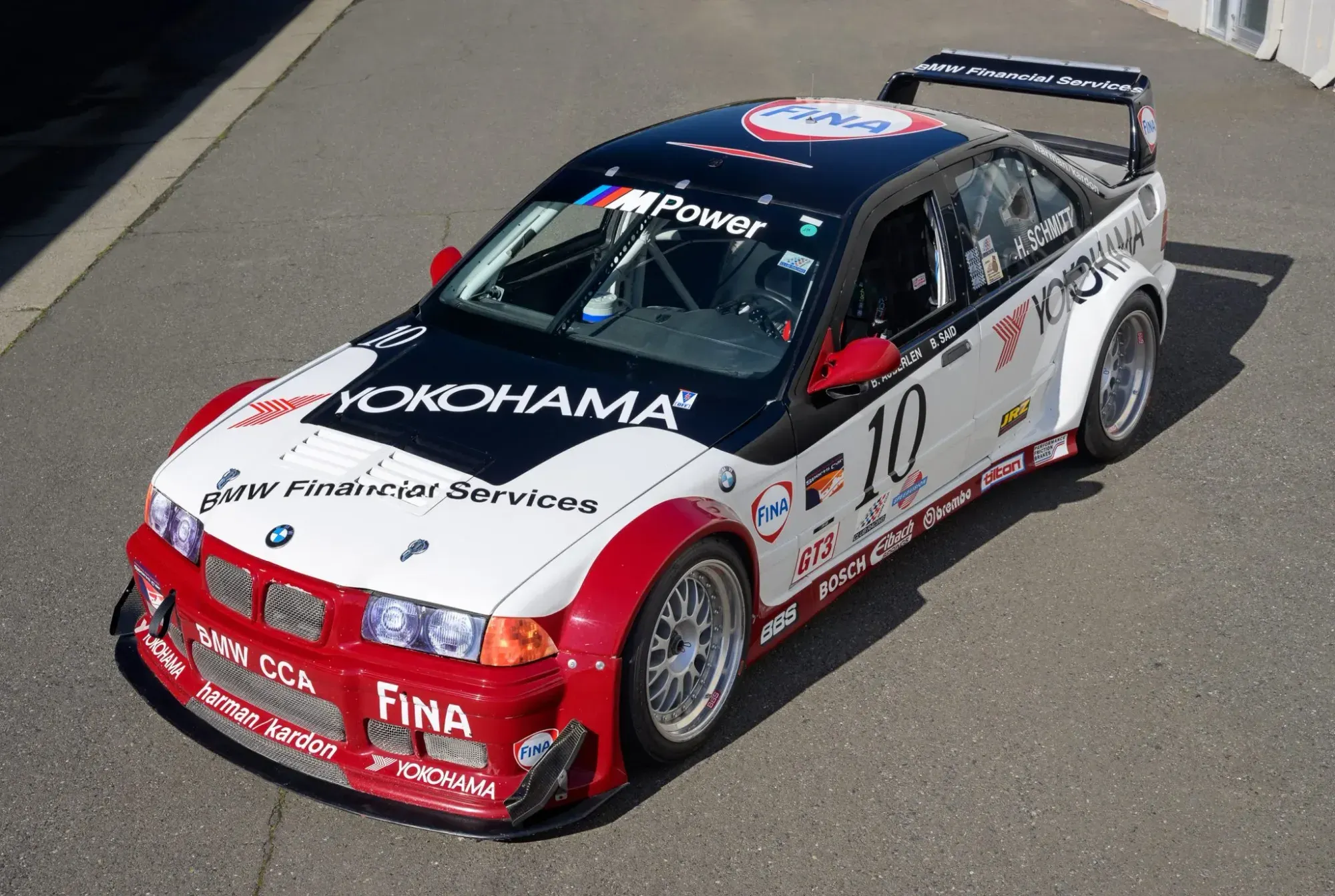
The M3 GT existed to support BMW’s racing activities, and it provided the homologation basis for the competition program. The cars PTG raced in North America, however, were M3 GTRs, purpose-built competition cars rather than road-going M3 GTs. In 1995, PTG’s partial campaign served as a development season. The narrow-bodied M3 GTRs achieved a few good results, including GTS-2 podium finishes, but they were generally outclassed by Porsche’s 911 Carrera RSR and the Mazda RX-7.
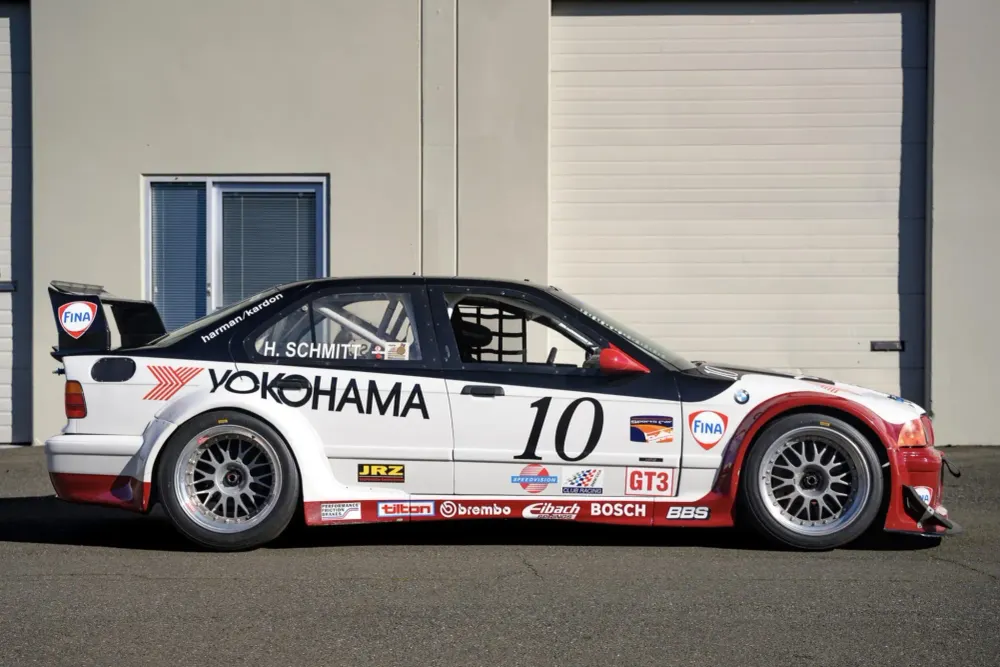
The program improved significantly from 1996 onward. After that developmental first season, BMW Team PTG introduced a lighter, more competitive M3 and won the 1996 IMSA GTS-2 manufacturers’ championship. In 1997, the team moved into GTS-3, where Bill Auberlen secured the drivers’ title, and BMW won its class at the 24 Hours of Daytona and the 12 Hours of Sebring. The winning continued in 1998. The PTG M3s again took class honors at Daytona and Sebring while securing the manufacturers’, drivers’ and teams’ championships in both the SportsCar GT3 and USRRC GT3 series. The M3 GT was a road-going homologation model rather than one of these race cars, but it formed part of the foundation for BMW’s increasingly successful E36 racing program in North America.
Specifications
- Engine: BMW S50B30 inline-six, 2,990cc, DOHC, 24 valves, 264-degree camshafts, S50B32 short intake runners, dual-pickup oil pan
- Power: 291 hp at 7,000 rpm
- Torque: 238 lb-ft at 3,900 rpm
- Transmission: Five-speed manual, rear-wheel drive
- Chassis: Standard M3 chassis and brakes with additional front strut brace
- Body: Steel unibody coupe with aluminum doors
- Wheels and tires: 17-inch forged alloy wheels, 235/40 ZR17 tires
- Aerodynamics: Adjustable front splitter, two-piece rear spoiler
- Performance: 0-62 mph in 5.9 seconds, top speed electronically limited to 155 mph
- Production: 356 total, including pre-production cars
Production and Legacy
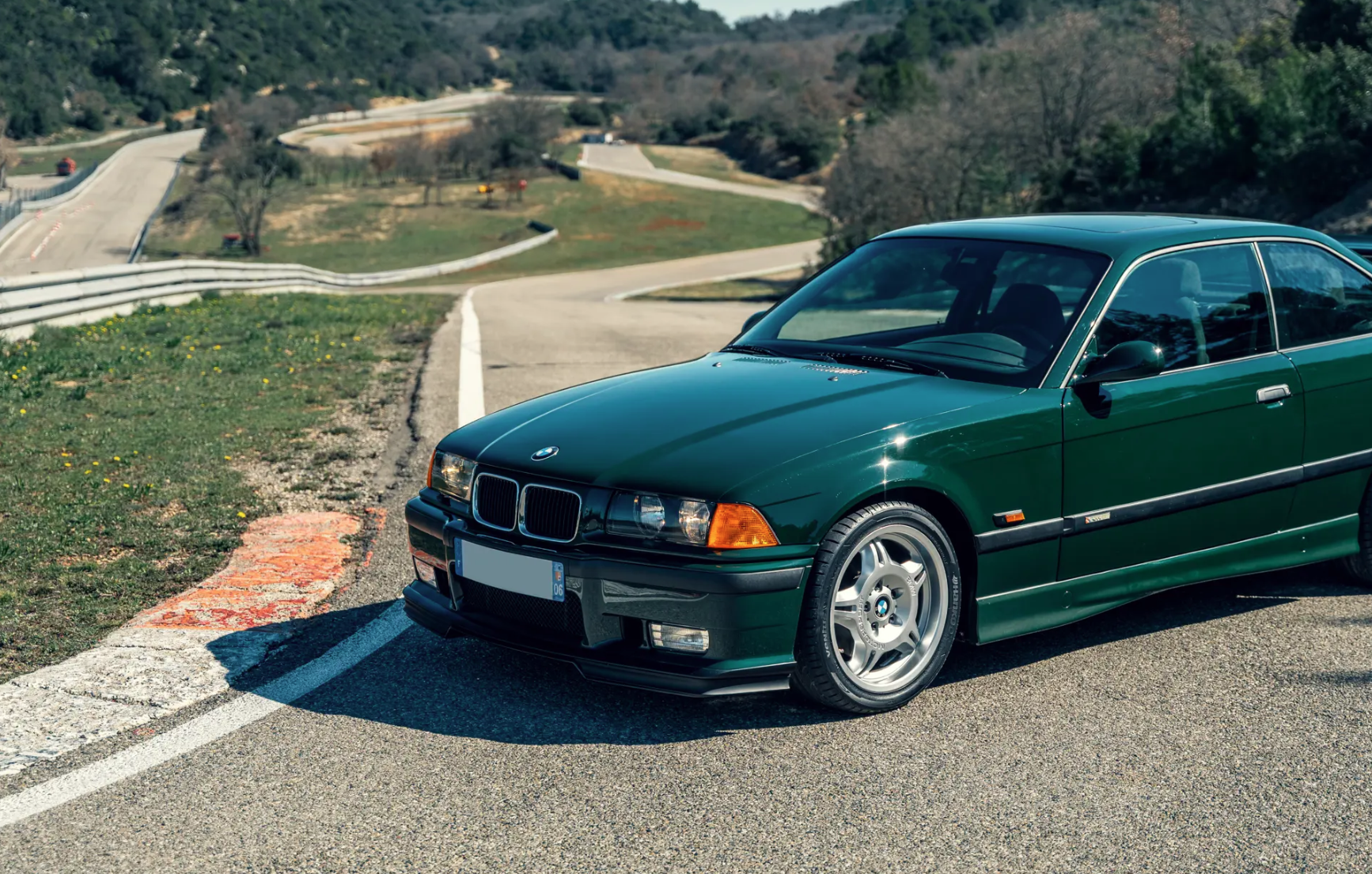
BMW built 350 production M3 GTs between February and June 1995. Together with the pre-production cars, the total reached 356. BMW M says five of these were pre-production models, while the BMW M Registry and the M3 GT Register describe six pre-production cars built in December 1994. Some of these pre-production cars were later delivered to customers. The GT was the only version of its kind in the E36 range, and when the facelifted M3 arrived later in 1995 with the 3.2-liter engine, BMW did not build another European homologation special for that generation.
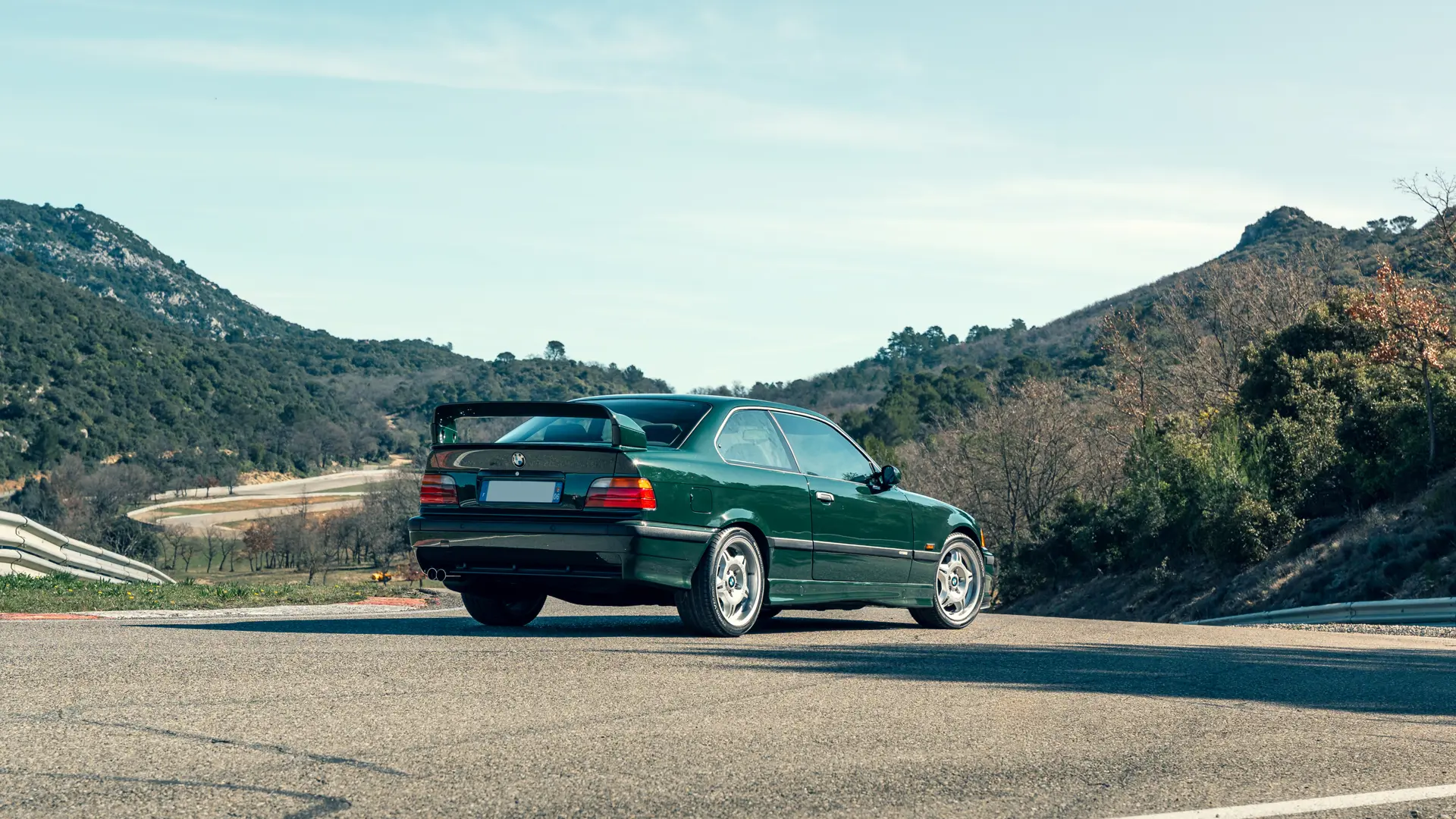
The M3 GT was the E36 generation’s principal European-market homologation special. Its limited production, distinctive specification and connection to BMW’s GT racing program have made it one of the most collectible M3s of the 1990s. Some examples were later used in private competition, while others were modified by tuners, which has made original, unmodified cars especially valuable. Recent auction results reflect that status, though condition and provenance make a substantial difference. One example offered from The Best of M Collection sold for €275,000 at RM Sotheby’s Munich sale, while another sold for €161,000 at RM Sotheby’s Monaco auction in 2026.