
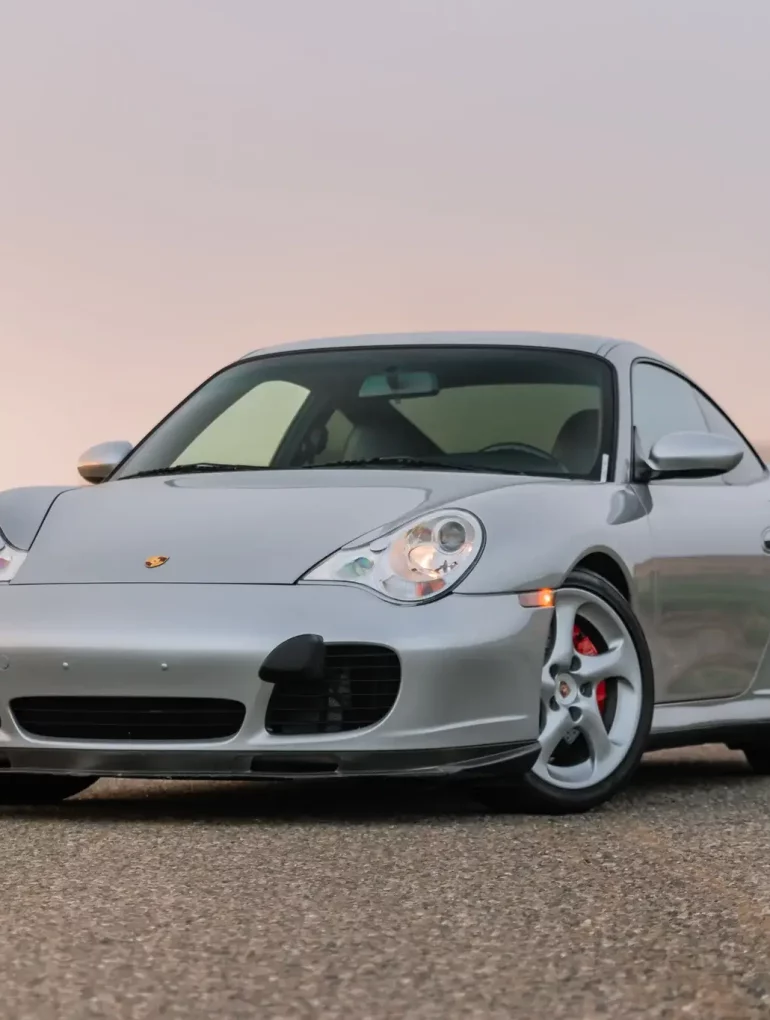

Frankfurt Motor Show, September 1999. Porsche unveiled the 911 Turbo, the turbocharged flagship celebrating that forced induction and all-wheel drive could establish genuine supercar-competitive performance while maintaining the refined character expected from Stuttgart’s most exclusive machine. Unveiled in 2000 for the 2001 model year, this was Porsche declaring that mechanical sophistication and racing-derived technology could transform the water-cooled 996 platform into something genuinely transcendent. The 3.6-liter twin-turbocharged Mezger flat-six produced 414 horsepower at 6,000 rpm and 413 lb-ft of torque at 2,700 rpm, delivering 189 mph capability from an all-wheel-drive chassis weighing approximately 1,540 kilograms.
This was Stuttgart celebrating that turbocharged performance could achieve high-revving character and responsiveness rivaling naturally aspirated alternatives through meticulous engineering and intercooling sophistication. The Turbo could accelerate from 0-60 mph in 4.0 seconds, establishing credentials matching contemporary supercars while maintaining the handling balance and practicality expected from Porsche. Production ran from 2001 through 2005, with 16,965 examples built globally, establishing the 996 Turbo as one of the most significant performance Porsches ever created and the foundation for modern 911 turbocharged tradition.
Background and Origins
The 996 Turbo emerged from Porsche’s recognition that the water-cooled 996 platform required a genuine turbocharged flagship celebrating forced induction’s performance potential. Rather than restrict turbocharged variants to experimental GT2 racing applications, management determined that production turbochargers, intercooling technology, and all-wheel-drive sophistication would establish a credible performance machine accessible to customers.
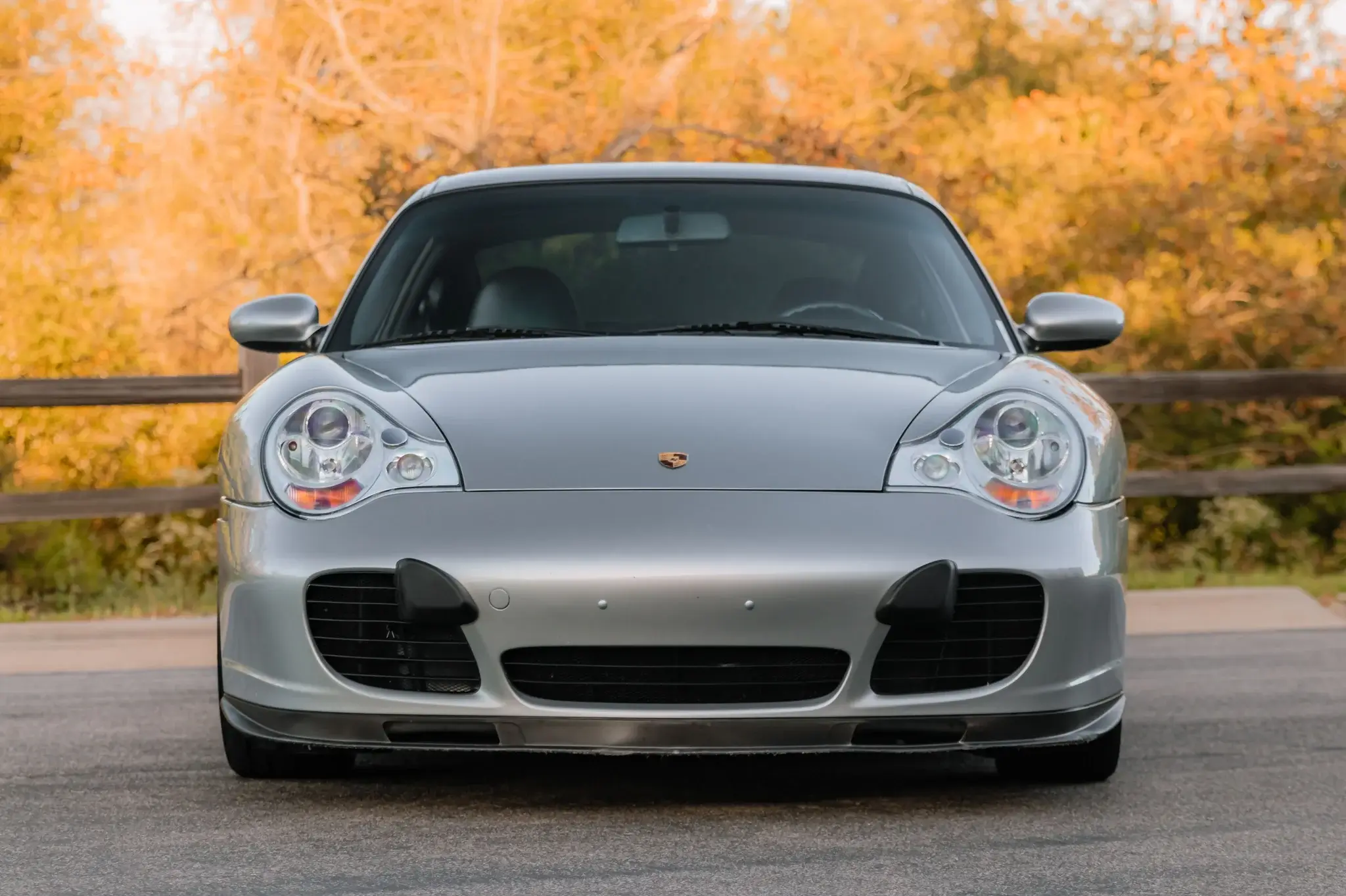
Development leveraged directly from the 911 GT1 race car, with the Turbo’s Mezger engine deriving from proven competition architecture. Unlike the standard M96 engine powering the base Carrera, the Turbo’s Mezger featured a true split-crankcase dry-sump design inherited from the GT1 racing program, establishing reliability credentials and mechanical character distinct from the standard water-cooled platform. Engineers extracted technologies, engineering solutions, and performance philosophy from racing applications, translating them into road-legal specification while maintaining the uncompromising character that defined Turbo tradition. The result would prove to be the most accessible turbocharged flagship Porsche had ever created.
Design and Engineering
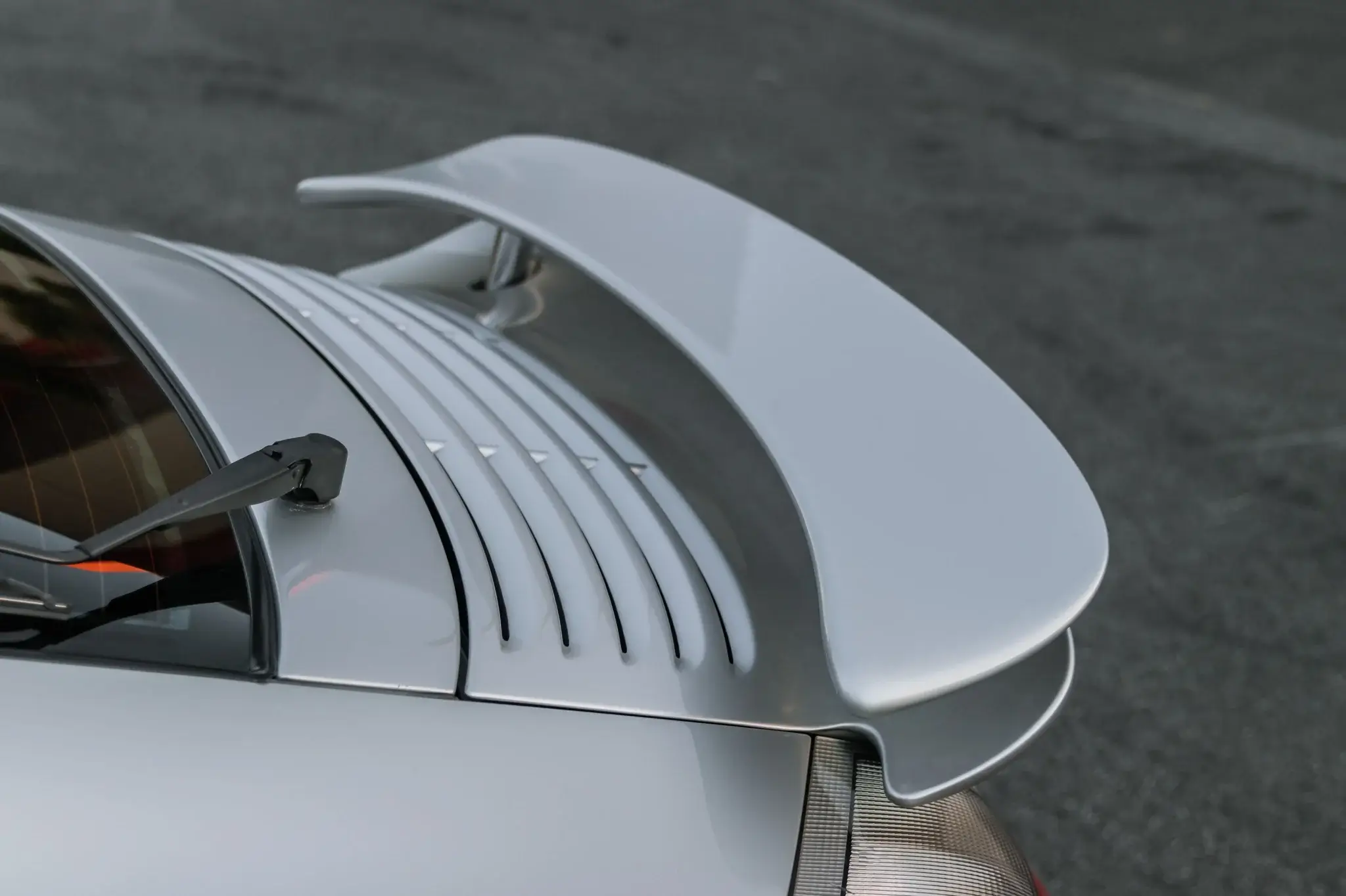
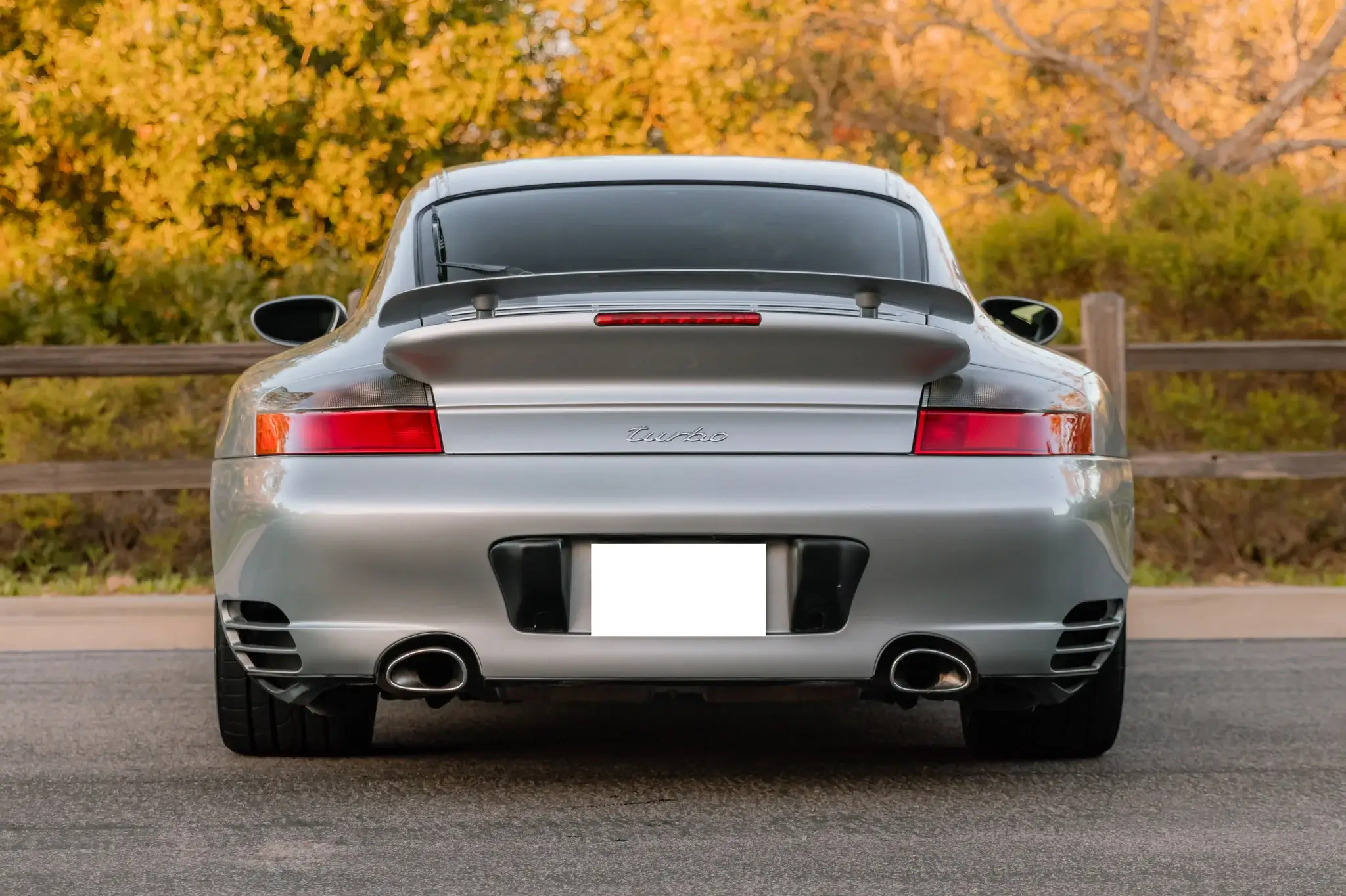
The 996 Turbo retained the controversial water-cooled proportions established by the standard 996, but comprehensive aerodynamic optimization and widened track created immediate visual distinctiveness. The distinctive wide-body stance featured speed-activated deployable rear wing that automatically raised at 75 mph to increase downforce and retracted at 37 mph during lower-speed driving. Widened fenders accommodated the broader track necessary for all-wheel-drive engineering, with distinctive side air intakes channeling cooling air toward the intercoolers and engine bay. The overall appearance suggested that genuine performance required purposeful engineering rather than theatrical styling drama.
The chassis employed MacPherson struts up front and a multi-link independent rear setup with sport-tuned passive dampers and coil springs, optimized specifically for all-wheel-drive torque delivery. The geometry was completely calibrated for turbocharged power distribution and all-wheel-drive traction management. Anti-roll bars provided cornering control without excessive harshness. Braking was handled by 4-piston monobloc Brembo calipers front and rear over 330mm ventilated discs, with 6-piston calipers available on cars optioned with the Porsche Ceramic Composite Brake (PCCB) package.
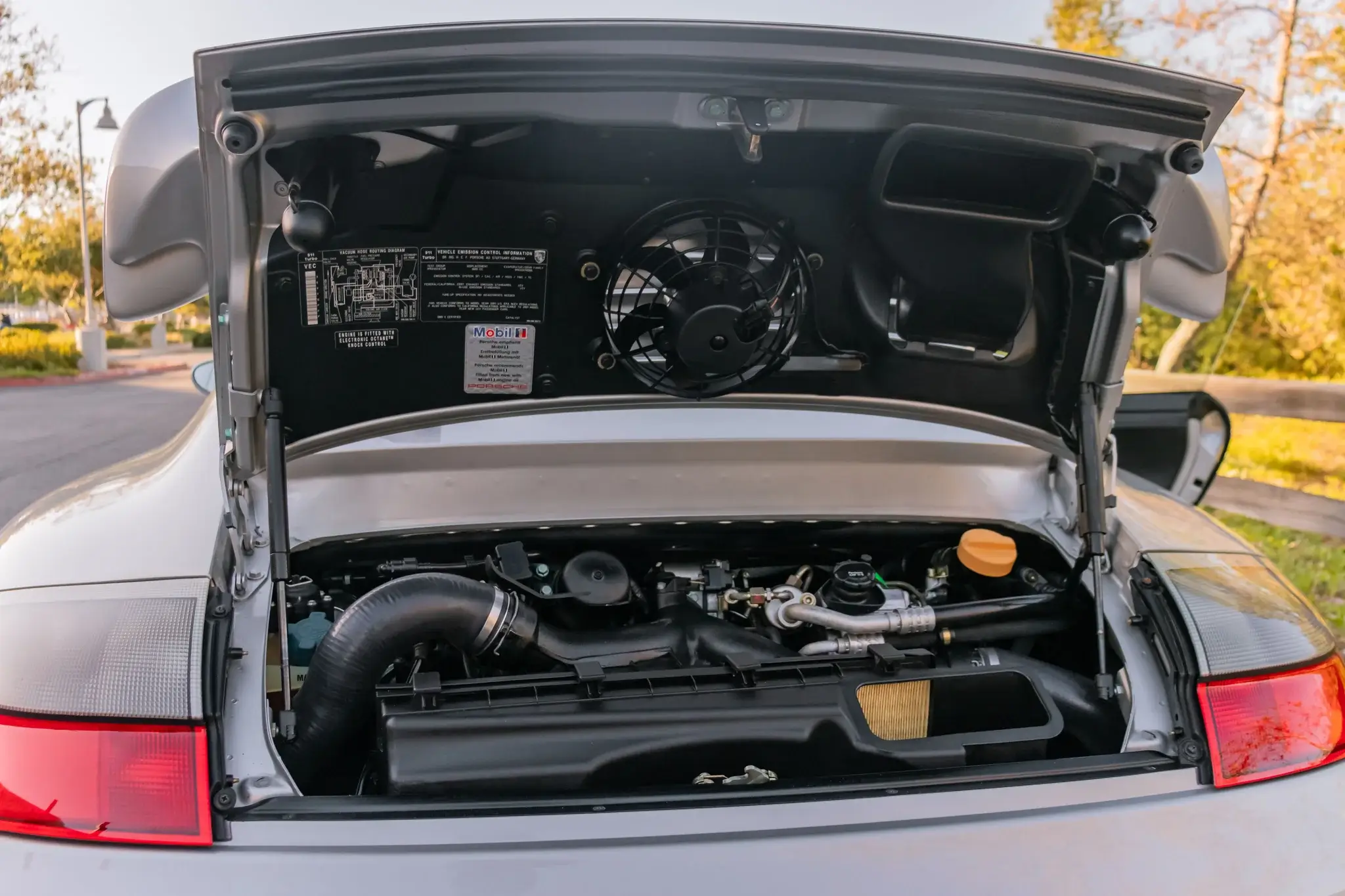
The Mezger 3.6-liter twin-turbocharged flat-six represented extraordinary engineering achievement distinct from standard M96 architecture. The split-crankcase dry-sump design inherited directly from the GT1 racing program established reliability and performance credentials without compromise. Dual overhead camshafts controlled four valves per cylinder across six cylinders—24 total valves. With 9.4:1 compression ratio and sophisticated Bosch Motronic ME 7.8 engine management, twin KKK turbochargers produced 414 horsepower at 6,000 rpm and 413 lb-ft of torque at 2,700 rpm. The intercooler system managed heat effectively, establishing smooth power delivery across practical driving scenarios without compromise.
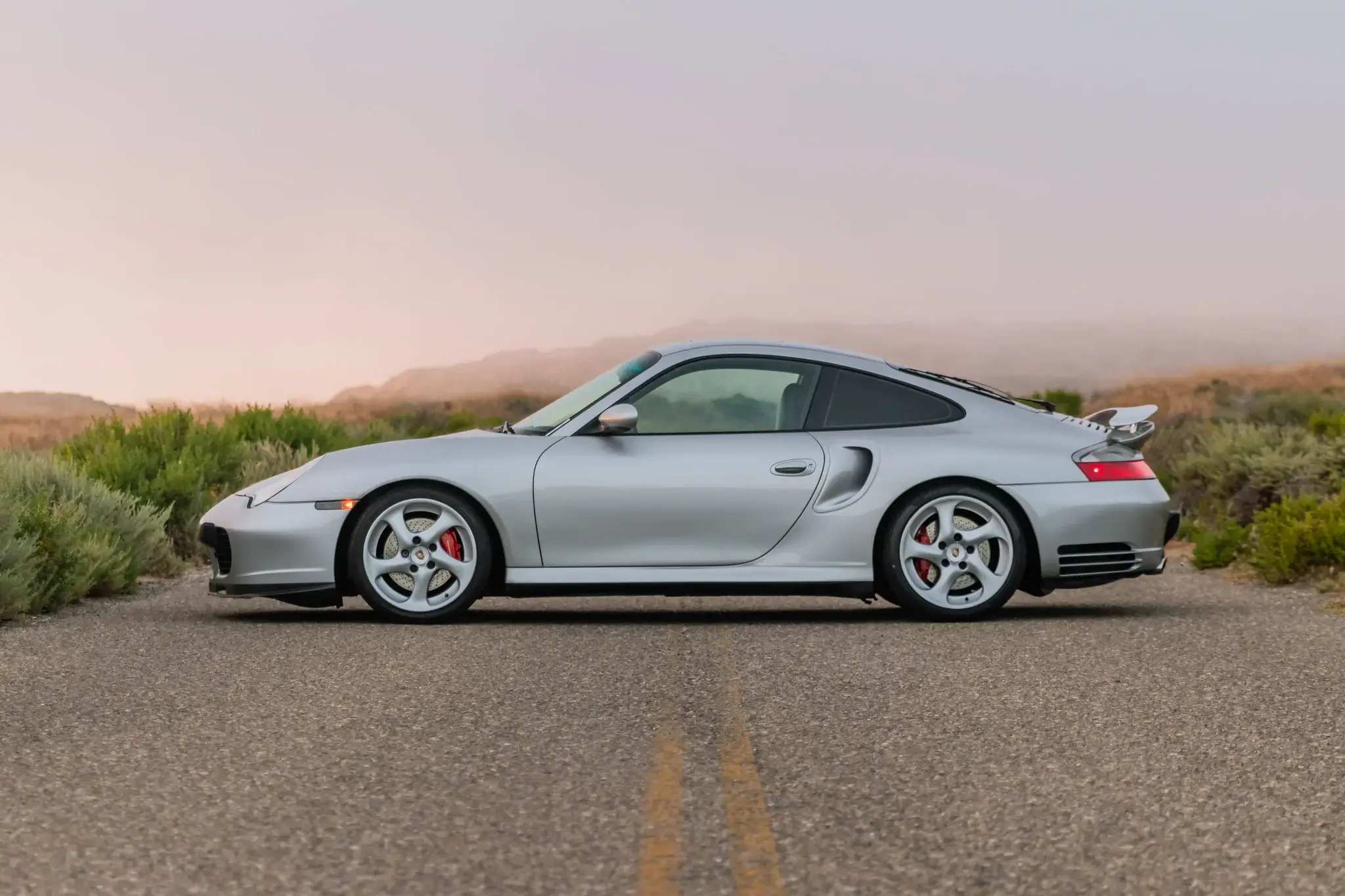
The power delivery was turbocharged in character, with distinct boost threshold transitioning to linear acceleration through the six-speed manual transmission or available five-speed automatic. The viscous-coupling all-wheel-drive system with variable torque split managed power distribution intelligently, providing traction superiority while maintaining the handling balance expected from Porsche. This emphasis on mechanical directness reflected Porsche philosophy celebrating driver connection and engineering authenticity.
Weight management achieved through aluminum and composite construction established the 996 Turbo at approximately 1,540 kilograms (3,395 lbs), establishing a power-to-weight ratio of approximately 3.7 kilograms per horsepower. This exceptional efficiency enabled 0-60 mph acceleration in 4.0 seconds and top speed of 189 mph—remarkable achievement establishing the Turbo as the most accessible high-performance Porsche available.
Styling
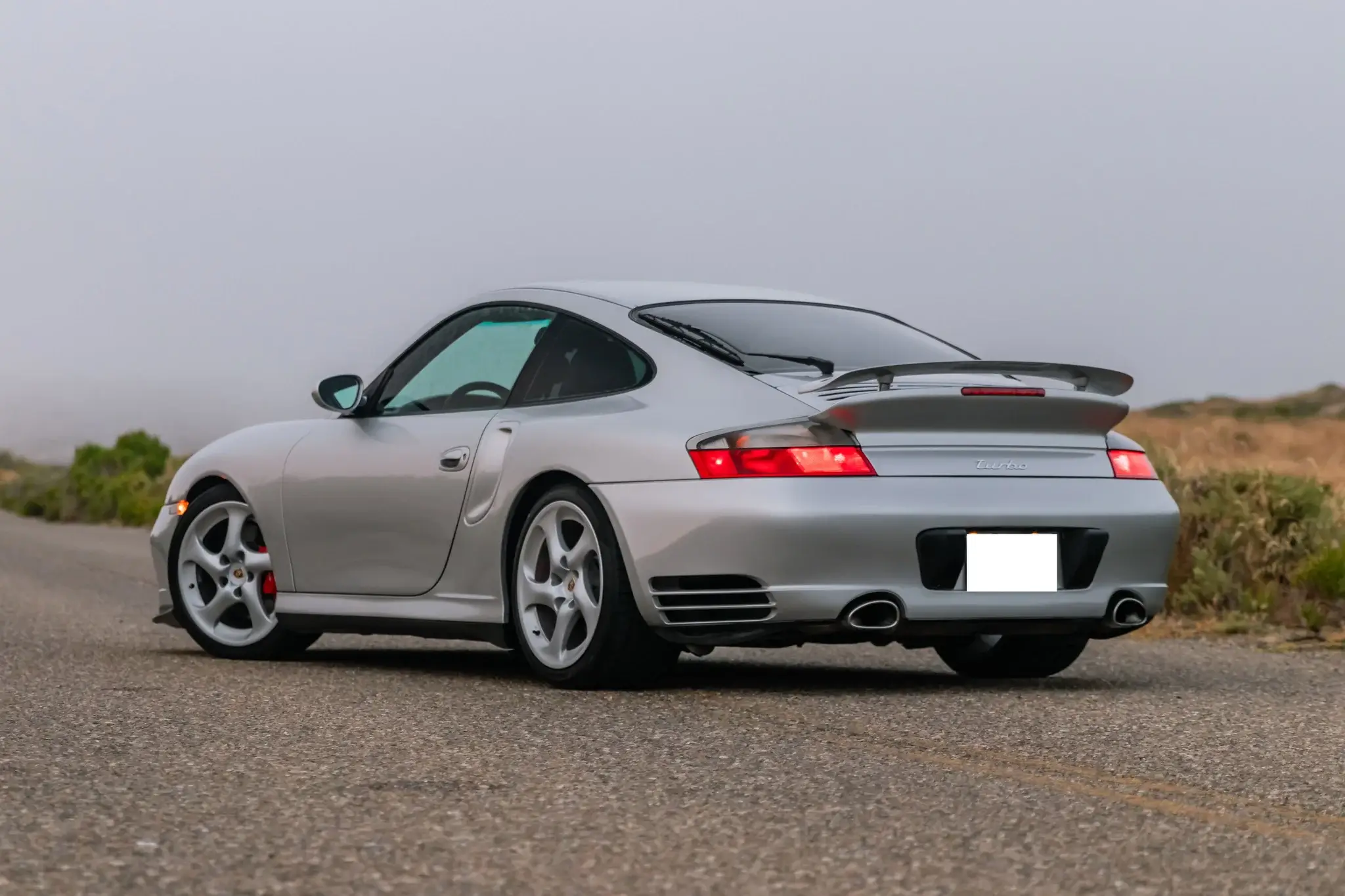
The 996 Turbo design, while retaining the controversial water-cooled proportions, created visual distinctiveness immediately recognizable as flagship variant. The speed-activated rear wing, widened fenders, and side air intakes established purposeful aerodynamic design. The distinctive wide-body stance suggested that performance required engineered substance rather than theatrical embellishment.
Most examples were finished in traditional Porsche colors: Basalt Black, Arctic Silver, or Midnight Blue Pearl celebrating Stuttgart’s performance heritage through understated elegance.
Interior
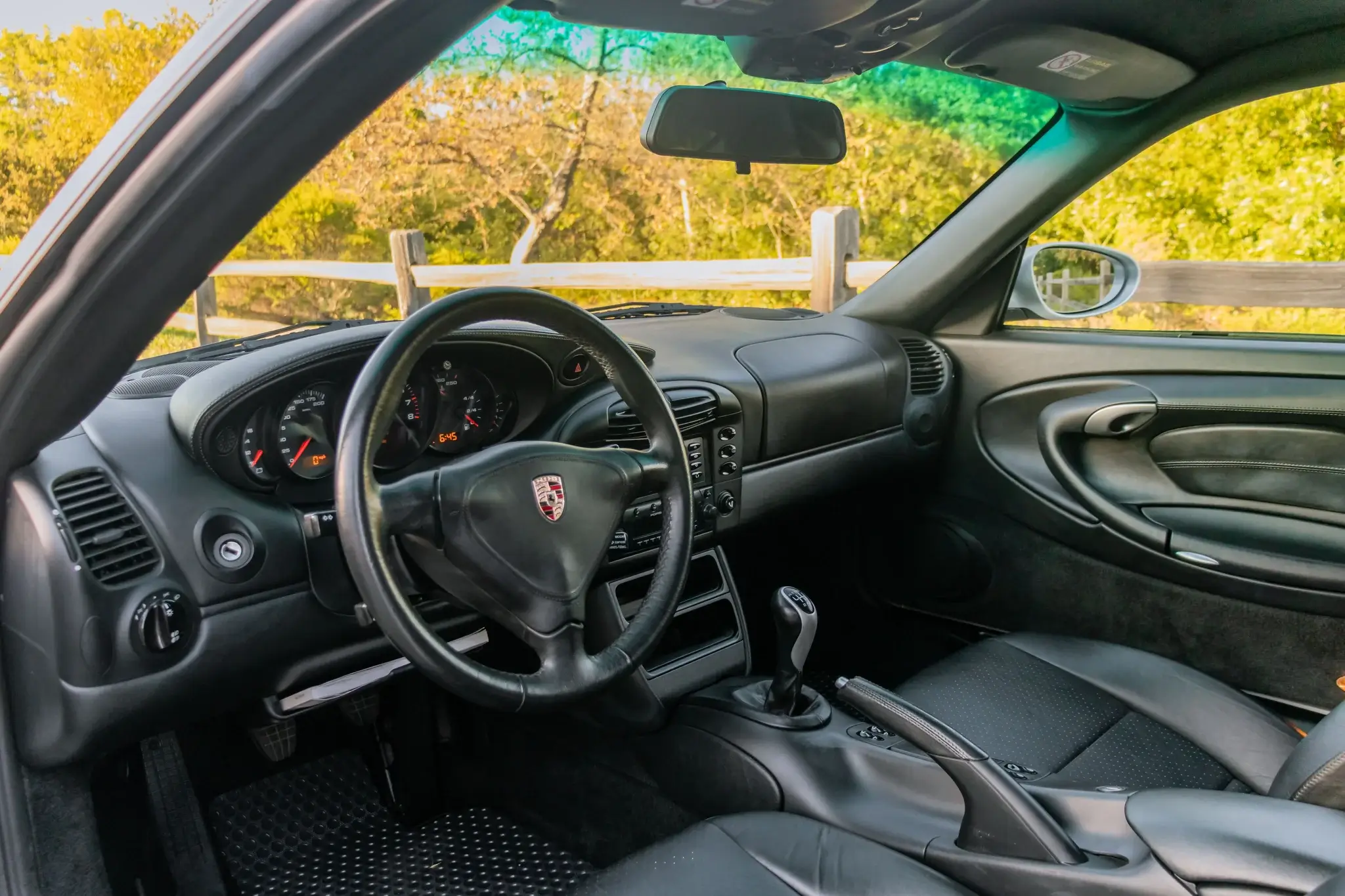
The cabin emphasized driver engagement combined with luxury appointments reflecting Porsche’s quality standards. High-quality leather sport seats provided excellent support during aggressive driving while maintaining comfort for extended journeys. The driving position was commanding and ergonomically balanced, with all controls falling naturally to hand. Comprehensive instrumentation displayed essential engine parameters including boost pressure monitoring, oil temperature, and performance metrics.
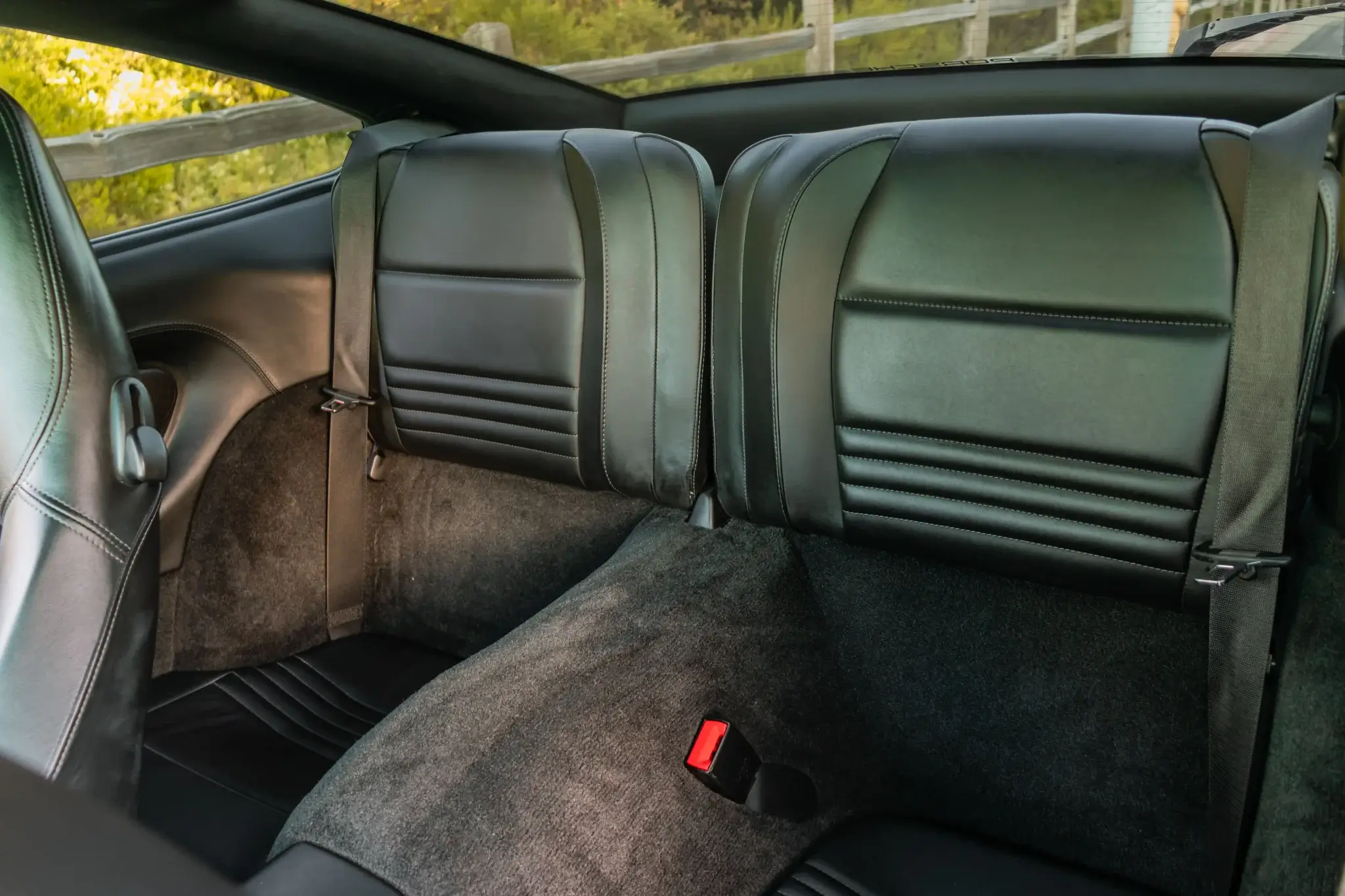
Standard equipment included functional climate control, quality audio systems, and sophisticated trim materials reflecting contemporary Porsche luxury standards. The overall atmosphere balanced turbocharged performance focus with genuine automotive refinement.
Specifications
- Engine: Porsche Mezger 3.6-liter twin-turbocharged flat-six, split-crankcase dry-sump design, DOHC per bank, four valves per cylinder
- Power: 420 PS / 414 hp at 6,000 rpm
- Torque: 413 lb-ft / 560 N·m at 2,700 rpm
- Transmission: Six-speed manual or five-speed automatic, all-wheel drive with viscous-coupling variable torque split
- Chassis: Unitary steel construction, 2,350mm wheelbase
- Suspension: MacPherson struts (front), multi-link independent (rear), coil springs with passive sport-tuned dampers
- Brakes: 4-piston Brembo calipers front and rear over 330mm ventilated discs (6-piston calipers optional with PCCB ceramic package)
- Wheels: 18-inch forged alloy, performance tires
- Weight: Approximately 1,540 kg / 3,395 lbs
- Performance: 189 mph / 304 km/h top speed, 0-60 mph in 4.0 seconds
Production and Legacy
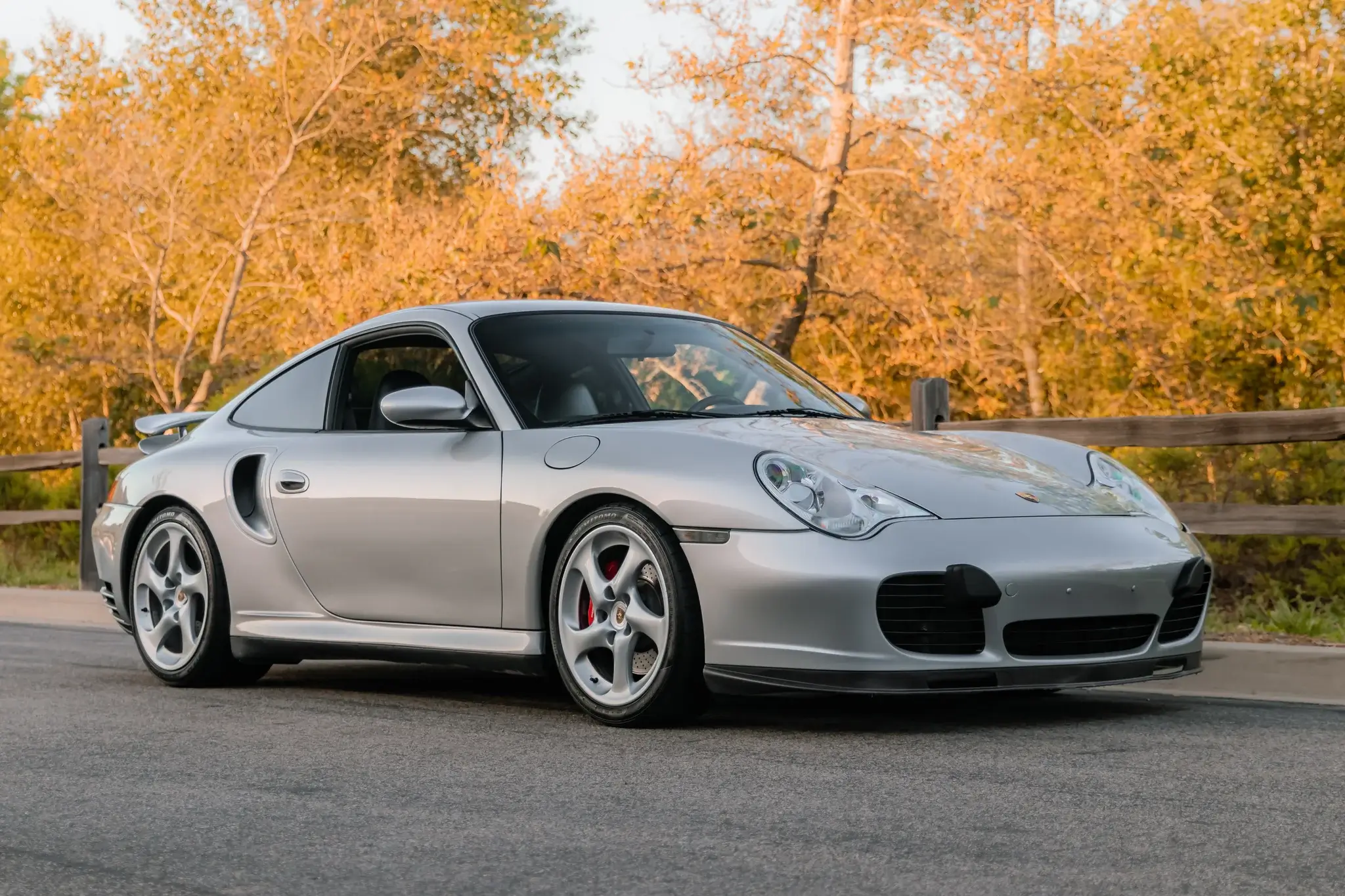
Porsche hand-assembled 16,965 examples of the 996 Turbo at Stuttgart facilities between 2001 and 2005. Production commenced in late 2000 for the 2001 model year, with initial European deliveries arriving in mid-2000. Each car received meticulous assembly reflecting Porsche’s manufacturing standards. The extended production run reflected sustained customer demand for accessible turbocharged flagship credentials with all-wheel-drive sophistication.
The 996 Turbo proved that twin-turbocharged engineering combined with all-wheel-drive sophistication could establish supercar-competitive performance within practical parameters. The combination of turbocharged responsiveness, Mezger reliability, and genuine all-weather capability established lasting appeal extending beyond conventional performance enthusiasts.
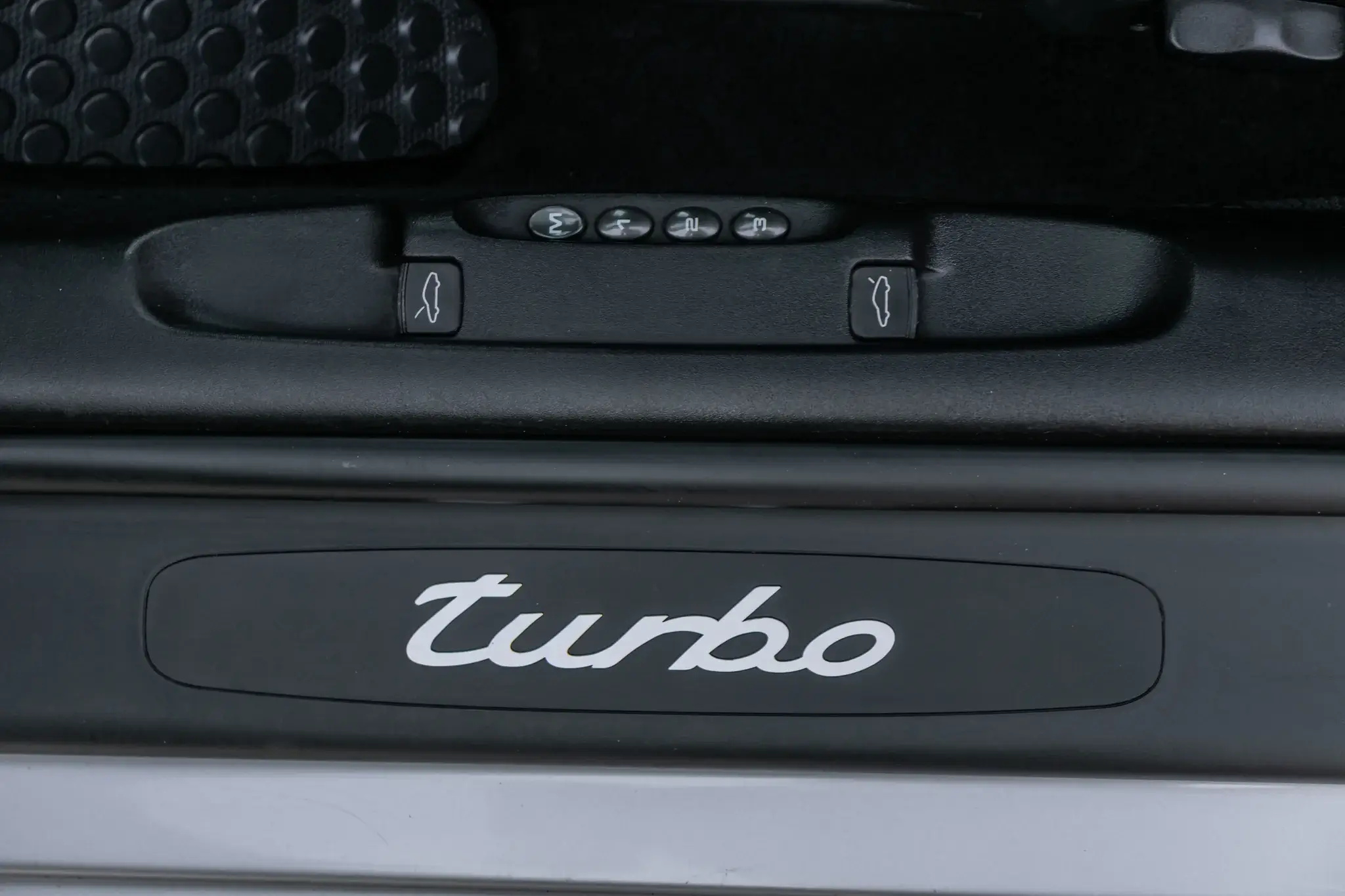
Today, 996 Turbo examples command strong collector appreciation reflecting their legendary status and engineering achievement. The turbocharged character, all-wheel-drive mastery, and authentic performance credentials ensure lasting appeal.
The Porsche 911 Turbo 996 represented Stuttgart at its most accomplished, proving that forced induction and sophisticated engineering could create something genuinely compelling. It remains one of the greatest turbocharged Porsches ever created, establishing an enduring legacy within modern performance tradition.