




1934 Packard Twelve Model 1106
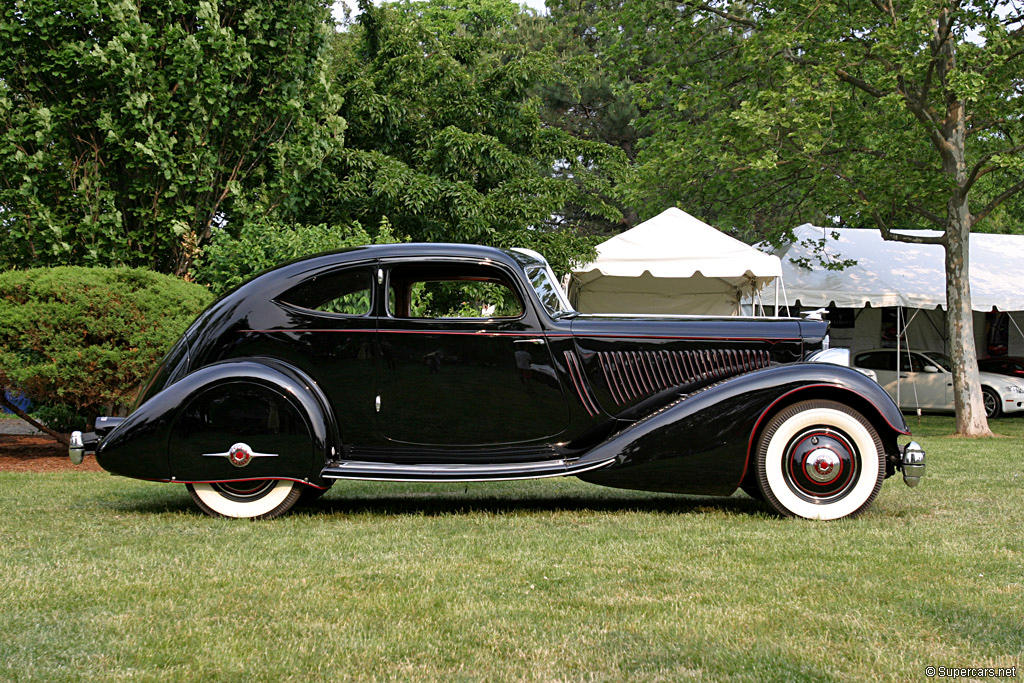
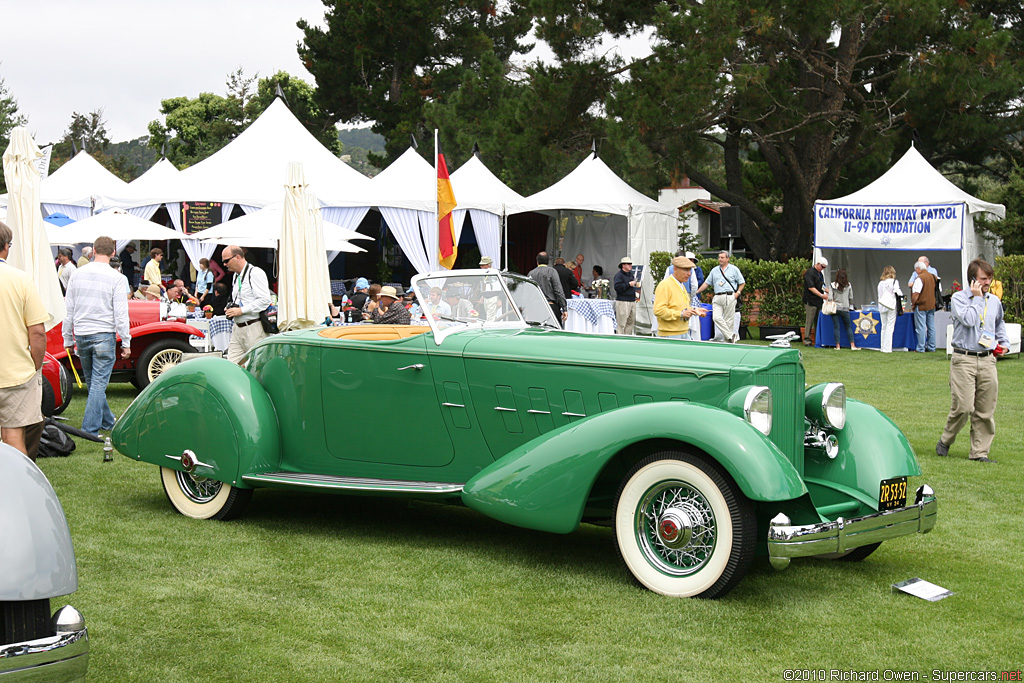
The Model 1106 of 1934 received only two different bodystyles, but they were two of the best designs in Packard’s long history. Customers ordering this model could only pick between either the Sport Coupe by Packard or Runabout Speedster by Lebaron.
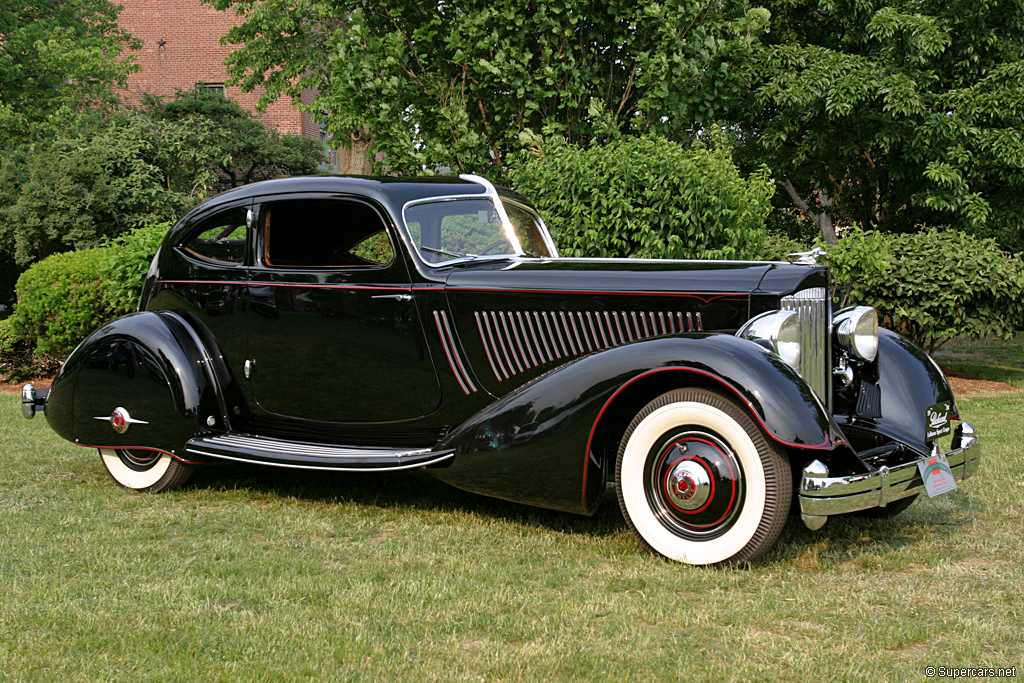
These designs were a radical departure from Packard’s typical style by having sweeping lines and pontoon fenders. Their profile begged for a little more length, but Packard wanted these models to be the most sporting cars of the range. They also benefited from the 11th series Packard engineering which had distinctive front fenders that sat closer to the bumper.
Both Coupe and Speedster were approved for production in 1933 by Packard’s chief stylist Edward Macauley and the Packard board of directors as halo models. Many were made with no expense spared to showcase Packard’s ability to produce the best cars in the world.
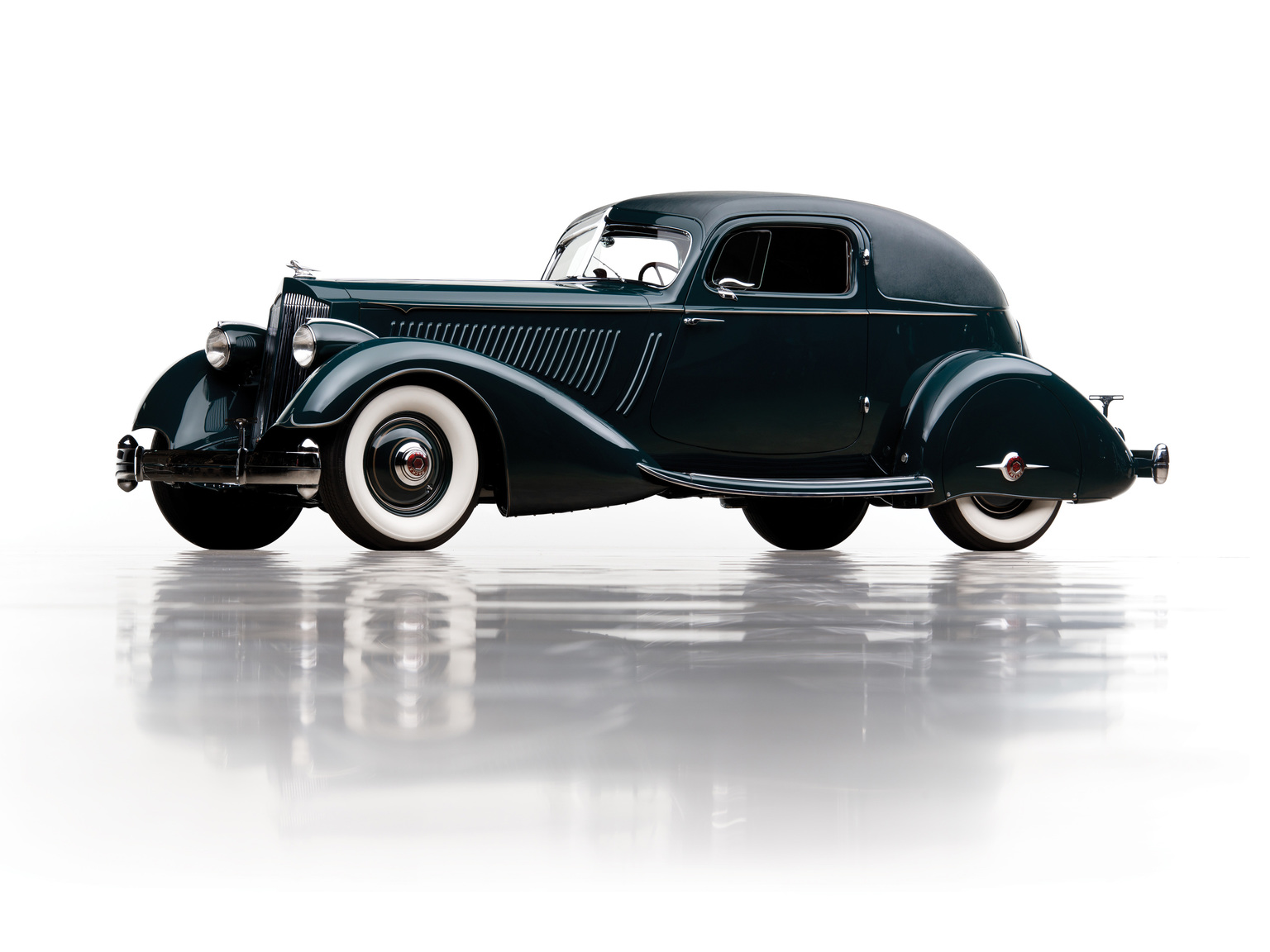
The shape for the Sport Coupe was laid down by LeBaron, but executed in Packard’s own facilities. The design was so far reaching that Mercedes-Benz modeled their own 540K Autobahnkurier after it and many other French companies later caught onto the act as well.
From every angle, the Sport Coupe reveals new detail. Curves included on the lower edge of the wheel skirts, in the running boards and around the door sill only reveal themselves after closer inspection. The cost of these special features was offset by the promotion Packard expected from touring the cars across America.
Both the Sport Coupe and Runabout Speedster where put into heavy show rotation. Up close these had walnut decor and gracious interior accents.
One of the cars designers, Alexis de Sakhnoffsky, was particularly proud of a feature he called the false hood that extended the perception of hood length. What he was referring to was the design of the front cowl which matched the hood and even continued its louvers and belt line.
Only four Runabout Speedsters were made and we estimate slightly more Sport Coupes were produced. Model 1106 production should be somewhere around 10 cars in total.
Sources & Further Reading.
1. Kimes, Beverley Rae. Packard, A History of the Motor Car and the Company. Princeton Publishing Inc: 1978.
1934 Packard Twelve Model 1107
See full 1934 Packard Twelve Model 1107 here
In Detail
| submitted by | Richard Owen |
| type | Series Production Car |
| built at | USA |
| production | 10 |
| engine | 67 Degree, Cast Iron, V12 w/Modified L-Head |
| position | Front Longitudinal |
| aspiration | Natural |
| valvetrain | 2 Horizonal Valves per Cyl w/Zero Lash Valve Silencers |
| fuel feed | Downdraft Stromberg EE-3 Carburetor |
| displacement | 7292 cc / 445 in³ |
| bore | 87.12 mm / 3.43 in |
| stroke | 101.6 mm / 4 in |
| compression | 6.0:1 |
| power | 119.3 kw / 160 bhp @ 3200 rpm |
| specific output | 21.94 bhp per litre |
| bhp/weight | 64.13 bhp per tonne |
| torque | 436.57 nm / 322 ft lbs @ 1400 rpm |
| redline | 4200 |
| body / frame | Steel Body over Press Steel Ladder-Type Frame w/X Center Brace |
| driven wheels | RWD, Hotchkiss Final Drive |
| wheel type | Wire or Wood |
| front tires | 17×7.5 |
| rear tires | 17×7.5 |
| front brakes | Cable Operated Adjustable Bendex Drums w/Bragg-Klierath Vacuum Assist |
| rear brakes | Cable Operated Adjustable Bendex Drums w/Bragg-Klierath Vacuum Assist |
| steering | Gemmer Worm & Roller |
| f suspension | Solid Axle w/Semi-Elliptic Leaf Springs |
| r suspension | Live Axle |
| curb weight | 2495 kg / 5500 lbs |
| wheelbase | 3607 mm / 142 in |
| front track | 1532 mm / 60.3 in |
| rear track | 1492 mm / 58.75 in |
| transmission | 3-Speed Synchromesh w/Optional Free Wheeling Clutch |
Auction Sales History
Auction Source: Paul & Chris Andrews Collection by RM Sotheby’s